Reviewed · MURALISM TOURS
Mexico City: Diego Rivera’s Murals Guided Walking Tour
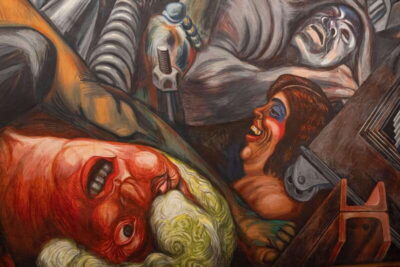
Diego Rivera’s murals are not just giant paintings. They are history lessons on public walls, filled with revolutionaries, workers, politicians, Indigenous figures, and arguments about what Mexico should become. This 3.5-hour walking tour links three important sites so you can follow Rivera’s ideas instead of seeing isolated works with no context.
I like the large number of murals covered in a short time, and I like the way the guides connect art to the Mexican Revolution, national identity, and Rivera’s relationship with Frida Kahlo. The main caution is timing: late departures can feel rushed when museums close, and access to certain sites can change because of holidays or security rules.
Key points to know before booking
- Begin at Museo Vivo del Muralismo: The tour starts with a strong focus on public art and Mexico’s post-Revolution cultural program.
- Spend 90 minutes at the Secretaría de Educación Pública: This is the longest stop and gives you time to examine Rivera’s murals closely.
- See Rivera in several settings: The route includes the Palace of Fine Arts and Diego Rivera Mural Museum, not just one famous wall.
- Expect history, politics, and art together: Your guide explains why the murals were created, not just what appears in them.
- Guide quality is central: Jorge, David, Laila, Francisco, and Leila have all led highly praised outings, with particular attention to questions and personal interests.
- Plan around closing times: A 3:00 p.m. start may leave too little breathing room, so an earlier departure is the safer choice.
Why Rivera’s walls tell Mexico’s story
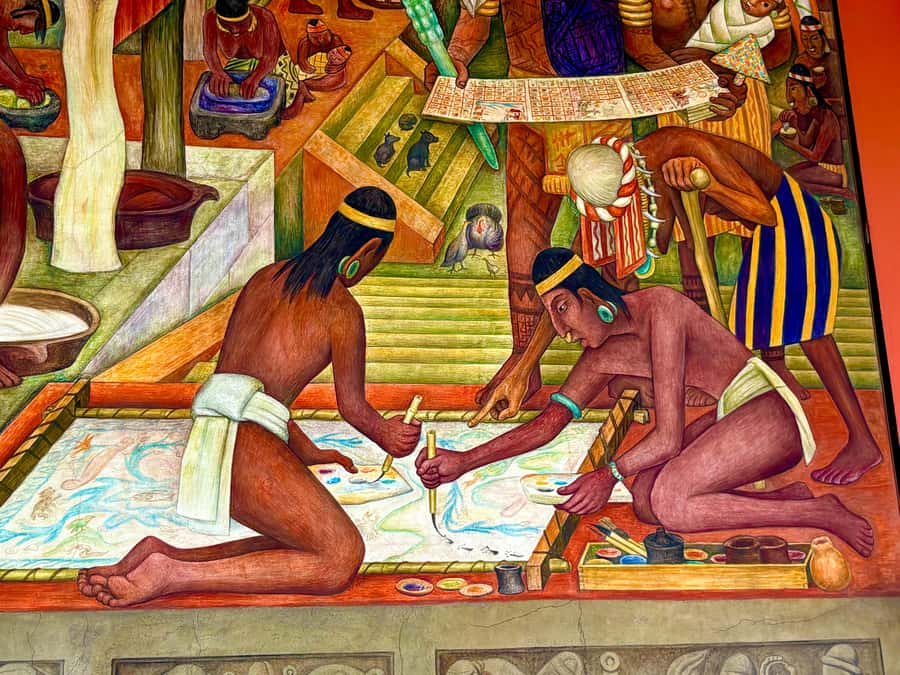
Mexico City can feel like an open-air museum, but Rivera’s murals reward more than a quick look. A painted crowd may represent workers, peasants, political leaders, or victims of social injustice. A historical figure may appear beside a modern machine. A religious-looking procession may actually point to colonial power or revolutionary change.
That is the value of a guide here. You do not need to arrive with an art degree, and you do not need to know every name in Mexican history. You do need someone to slow the scene down and explain what you are seeing.
Rivera was one of Los Tres Grandes, the three major muralists who shaped Mexico’s public art after the Revolution. José Clemente Orozco and David Alfaro Siqueiros are part of the wider story, too, and the tour can help you see how Rivera’s work fits into that movement.
The murals were meant for ordinary people, not only museum patrons. They used public buildings as classrooms. The subjects often include labor, Indigenous heritage, class conflict, political change, and the cost of building a new nation. I like that this tour treats the paintings as both art and public debate.
More Street Art Walking Tours in Mexico
- History and Murals: Walking Tour Guadalajara
★ 5.0 · 237 reviews - Walking Tour – Impressive murals in Historical Center of Mexico City
★ 5.0 · 224 reviews - Muralist Art Semi Private Walking Tour in Mexico City Downtown
★ 5.0 · 188 reviews
Starting at Museo Vivo del Muralismo
The meeting point is Museo Vivo del Muralismo. This gives the tour a sensible starting place because you begin with the idea of muralism before moving through individual works.
Bring your passport or another form of identification. The tour does not include transportation to the meeting point, meals, or drinks, so you will need to make your own way there and arrive ready to walk.
The starting point also matters for orientation. Mexico City’s historic center can be confusing at first, with grand government buildings, museums, busy streets, and courtyards that are easy to pass without noticing. A guide helps you get your bearings before the murals begin to compete for your attention.
Ninety minutes at the Secretaría de Educación Pública
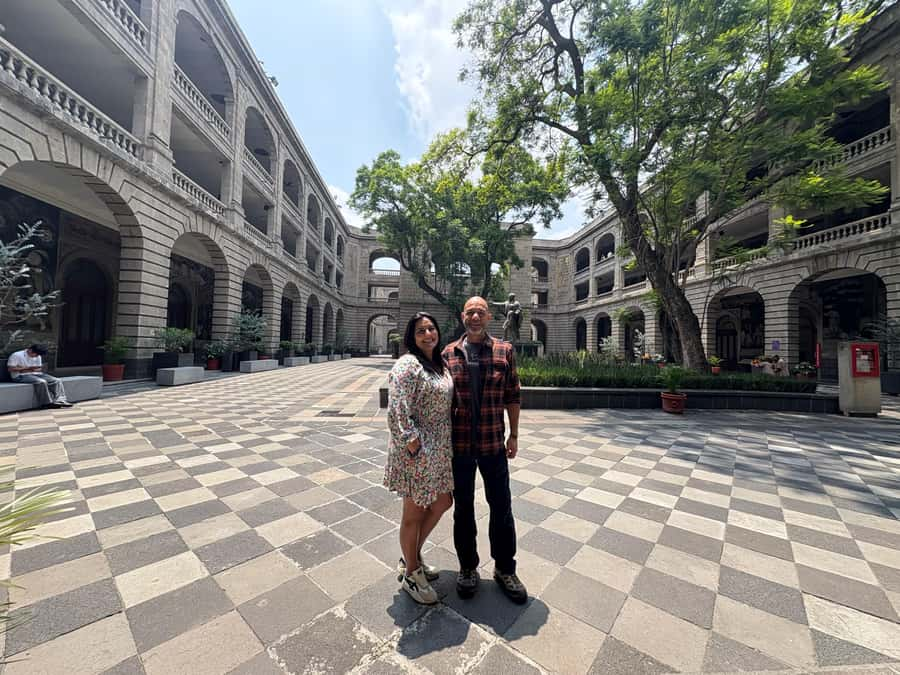
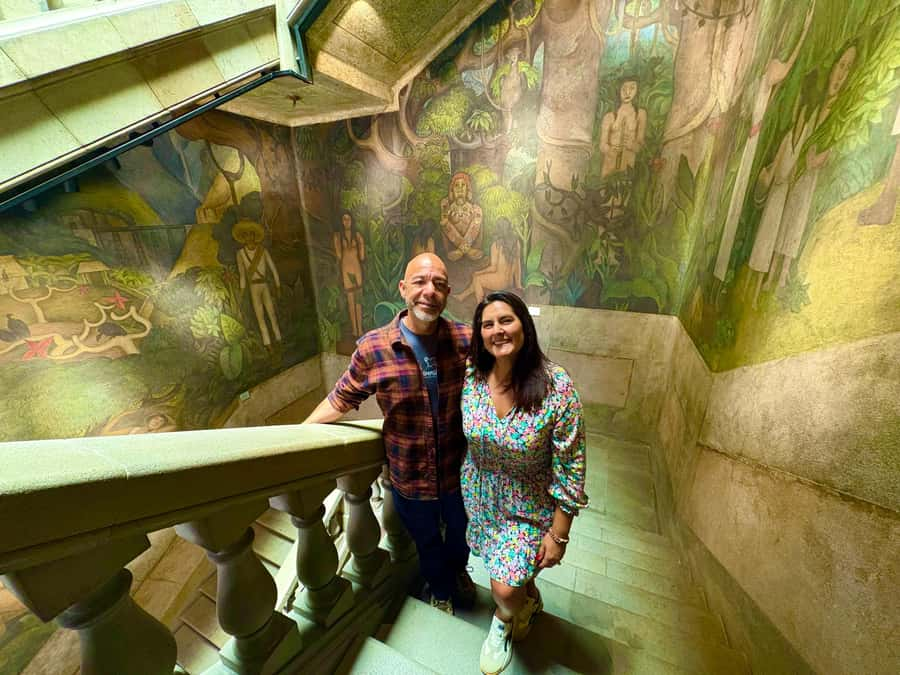
The longest stop is the Secretaría de Educación Pública, or SEP, where you spend about an hour and a half. This is likely to be the heart of the experience for anyone who wants to see a large body of Rivera’s work in one place.
The setting is important. Rivera did not treat murals as small art objects to be viewed in silence. He used walls, stairways, and public interiors to create a broad story that unfolds as you move. The experience is less like looking at one framed painting and more like reading several connected chapters.
Give yourself time to study the figures and details. Rivera’s scenes can look crowded at first. Your guide can help separate the visual threads, pointing out political messages, historical references, and the way ordinary people are placed at the center of national life.
This is also where the tour’s historical focus pays off. Instead of simply hearing that Rivera supported revolutionary ideals, you can discuss how those ideals appear in the artwork. You may also hear about the tension between art, government sponsorship, and political persuasion.
The SEP stop is long enough for questions, which is useful because Rivera’s work invites them. You can ask about symbols, historical figures, Rivera’s changing style, or the role of muralism in public education. Guides such as Jorge, David, Laila, and Francisco are especially praised for explaining the meaning behind the images and adapting the discussion to the group.
Palace of Fine Arts and Rivera’s larger artistic world
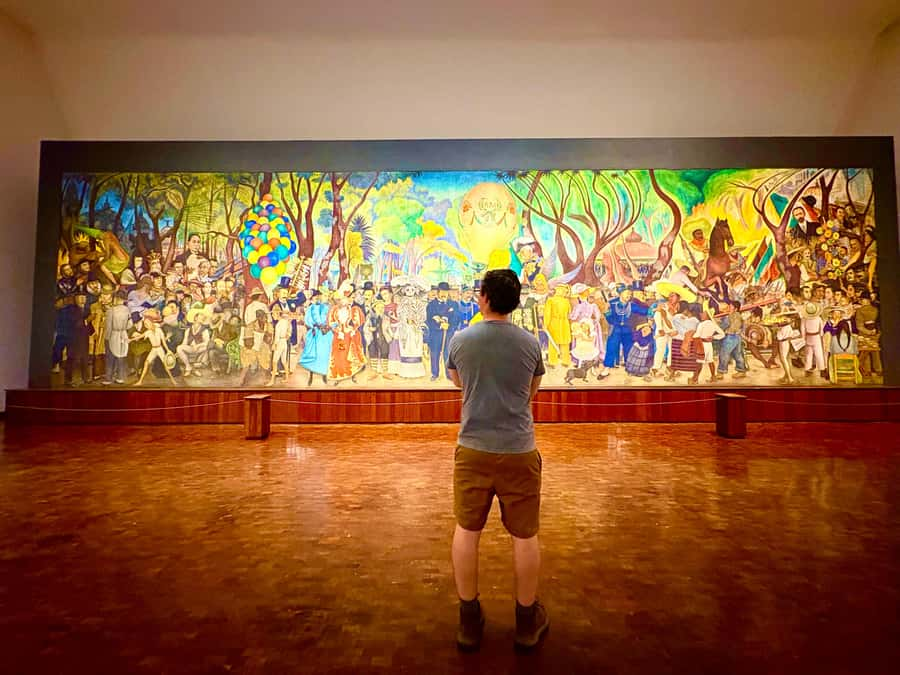
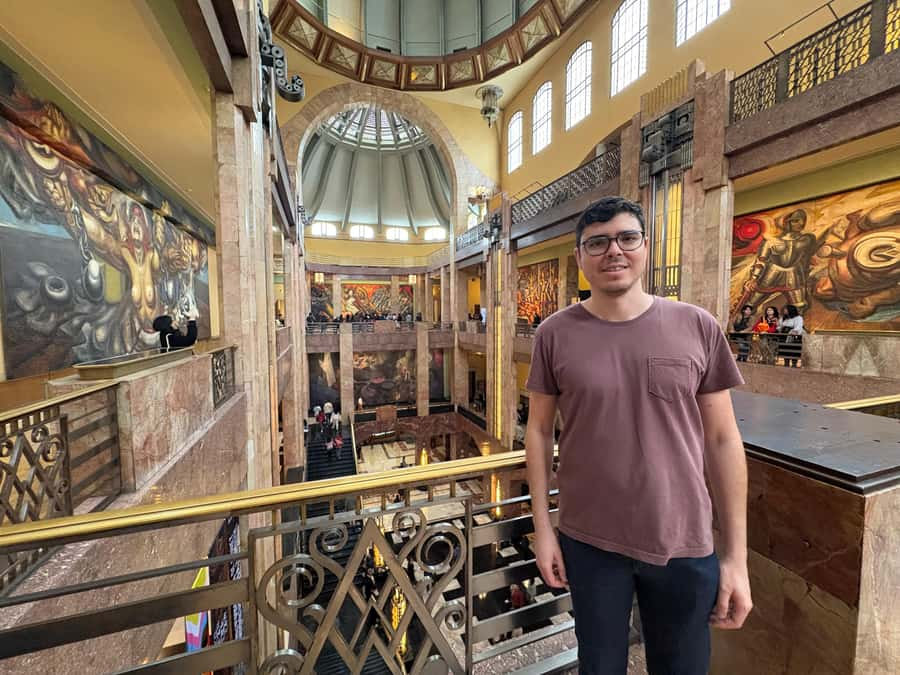
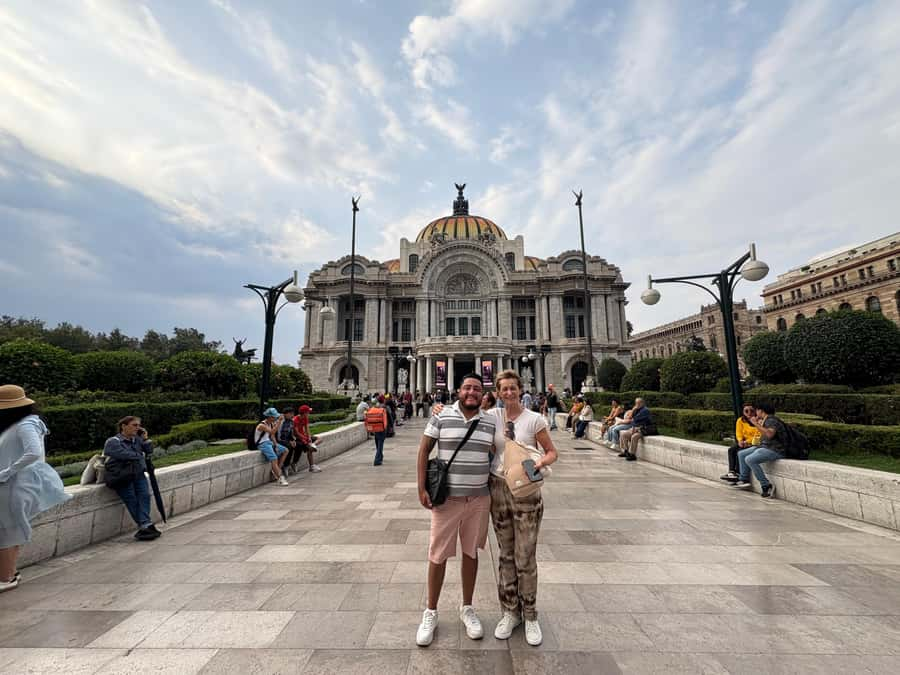
The route then moves to the Palace of Fine Arts for about 40 minutes. This stop brings Rivera’s work into one of Mexico City’s major cultural buildings and gives you a different setting from the public offices at the SEP.
The change of location helps you compare scale, architecture, and purpose. At the SEP, murals form part of a public building and a broad sequence. At the Palace of Fine Arts, the setting itself carries artistic weight. Your guide can help you consider how Rivera’s work functions when placed among other important Mexican artists and within a formal arts institution.
The guide’s role is especially useful here because a short visit can otherwise become a quick photo stop. You will get more from the building if you look at the relationship between the architecture and the murals, rather than focusing only on individual details.
Access can change. Several outings have been affected by holiday schedules or security procedures at major sites, including difficulty reaching murals associated with the National Palace. The supplied route lists the Palace of Fine Arts, while some guide experiences have also involved National Palace murals or alternate arrangements. Treat the exact order and site access as flexible, not guaranteed.
That is not a reason to avoid the tour. It is a reason to keep your schedule loose. Leila created an alternate Rivera-focused route when the Museo de Muralismo was closed, and David helped arrange a return opportunity when access to another mural site was blocked. Those examples suggest that flexibility is a real part of the service, though you should not assume every change can be repaired on the same day.
More Street Art Walking Tours in Mexico City
- Guided Walking Tour Describing UNAM Murals and Revolution
★ 5.0 · 8 reviews - Mexico City: Historic Center Walking Tour with Murals
★ 5.0 · 6 reviews - Mexico City: The Murals of Mexico Semiprivate Walking Tour
★ 5.0 · 2 reviews - Mexico City: History on Walls. Mexican Murals Walking Tour
★ 5.0 · 2 reviews
Twenty-five minutes at the Diego Rivera Mural Museum
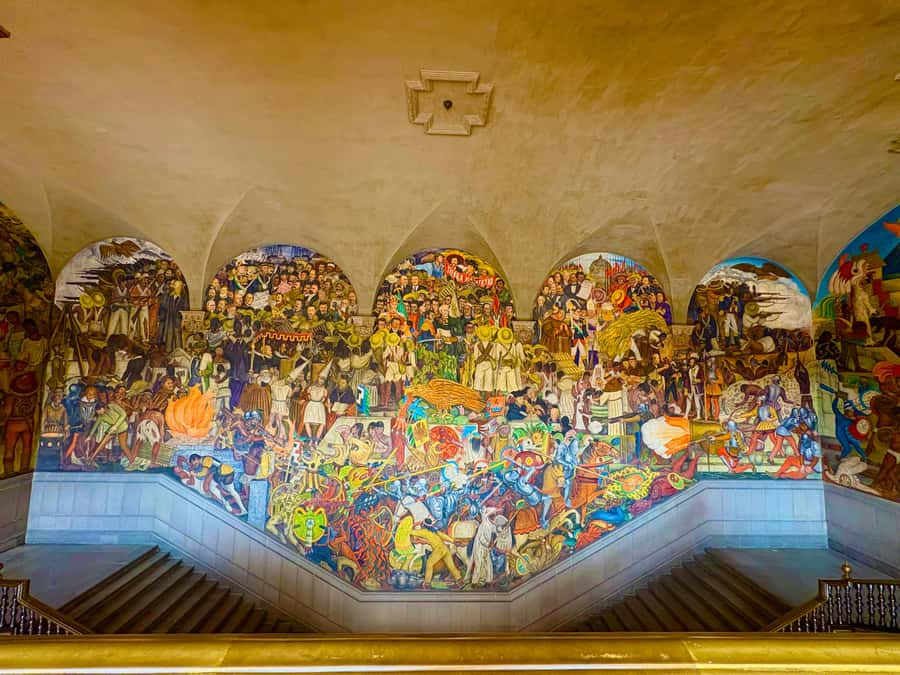
The Diego Rivera Mural Museum is the final major visit, with about 25 minutes planned. The shorter time means you will probably get a focused look rather than a leisurely museum visit.
This stop is useful because it gives you another chance to see how Rivera organized history through images. After the longer SEP visit and the Palace of Fine Arts, you can compare the different settings and notice how his approach shifts from one commission to another.
The museum also helps bring the tour back to Rivera himself. The wider mural movement matters, but this experience follows Rivera’s work in particular. You will come away with a better sense of his recurring concerns, his political outlook, and the visual methods he used to reach a broad public.
Twenty-five minutes is not long. If you prefer to read every label or linger with each painting, the pace may feel brisk. If you want a guided introduction that connects several sites in one afternoon, it is an efficient final stop.
What the guides add to the experience
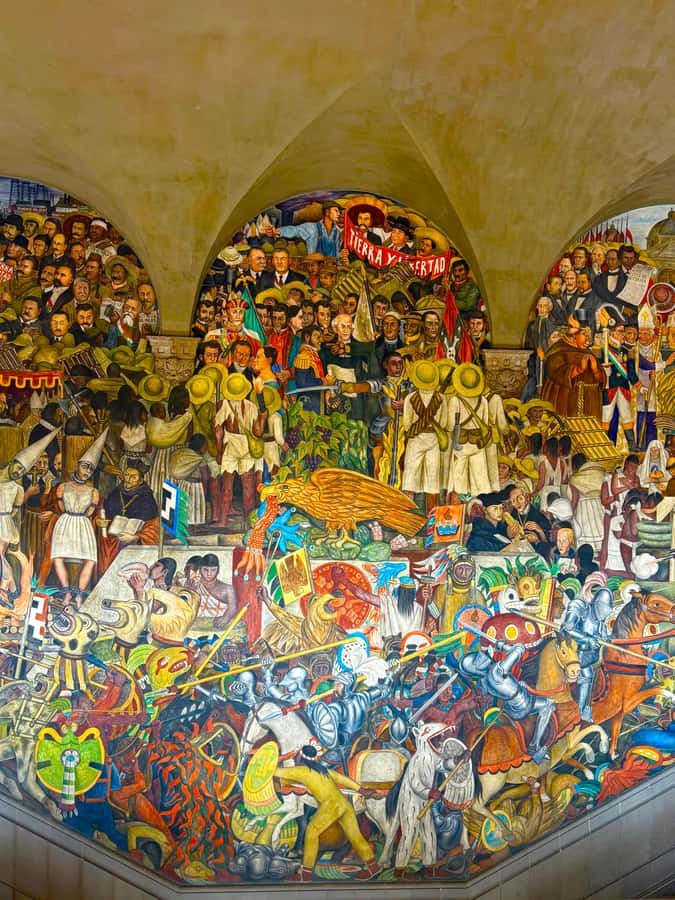
This tour rises or falls on the guide. The murals are there, but the meaning can be hard to grasp without someone who understands both the art and Mexican history.
Jorge is praised for his enthusiasm, patience, wit, and ability to explain the story behind the murals. He has also handled groups that included children, a stroller, and an older family member, adjusting the pace and paying attention to safety.
David is described as especially strong on Rivera and Mexican history. He is also an artist, which may add a practical perspective to discussions about technique and style. Several outings with him ran beyond the planned three and a half hours because the conversation continued.
Laila is praised for warmth, clear explanations, and good social skills. She has also adapted routes when a museum was closed. Francisco is noted for careful preparation, clear speech, and his ability to bring the artwork to life. He even spoke Italian with one visitor who was more comfortable in that language, although the stated tour languages are English, Spanish, French, and German.
These details matter because you are not buying museum admission alone. You are paying for interpretation, navigation, and the chance to ask questions. The quality of that human element is the strongest reason to choose a guided visit instead of seeing the buildings on your own.
How much the $78 price is worth
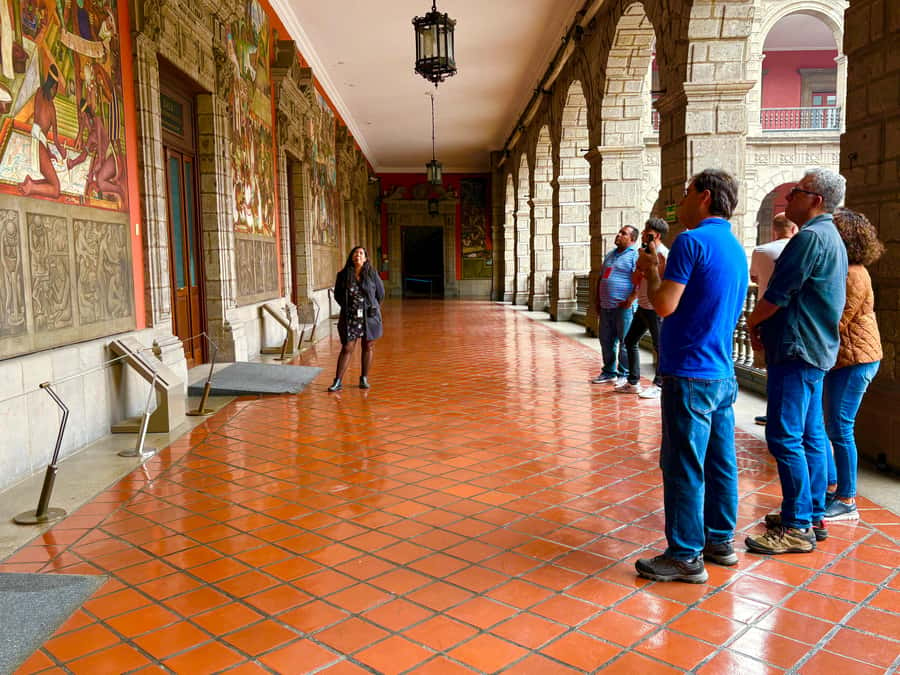
At $78 per person, this is not a budget walk. The price includes the guide and entrance tickets to all museums on the planned route, which makes the comparison with a self-guided visit more reasonable.
If you visited the sites alone, you would save the tour fee, but you would also need to work out the route, understand the opening hours, identify the key murals, and research the political and historical background. Rivera’s work can be impressive without explanation, but its arguments are easy to miss.
I consider the price fair for visitors who want a concentrated art and history lesson over half a day. It is less compelling for someone who prefers to wander slowly, read every museum label, or spend an entire afternoon with one building.
The value improves if you use the tour as a foundation for the rest of your Mexico City visit. Once you understand Rivera’s themes, you can look at other murals and public buildings with a sharper eye. You may also find yourself more prepared for museums connected to Frida Kahlo, Orozco, Siqueiros, and the wider mural movement.
Timing, walking, and practical comfort
The tour lasts three and a half hours and is conducted on foot. Wear comfortable shoes. That sounds basic, but the route combines indoor museum visits with movement through Mexico City streets, and the day will feel much better if your feet are comfortable.
Choose an earlier start when possible. One 3:00 p.m. departure was stressful because the venues closed around 5:30 or 6:00 p.m. A 2:30 p.m. departure was suggested as the latest sensible start, but even that may depend on the day’s opening hours and access rules.
The tour is wheelchair accessible, which is useful for many visitors, though site conditions and temporary closures can still affect the exact route. Ask about current arrangements if accessibility is a major concern.
The tour does not include food or drinks. Plan accordingly, especially if you are booking an afternoon slot. You will also need to arrange your own transportation to Museo Vivo del Muralismo.
Free cancellation is available up to 24 hours before the tour for a full refund. You can also reserve now and pay later, which helps if your Mexico City schedule is still shifting.
Who will enjoy this tour most
I would choose this tour if you want Mexican history explained through art rather than through a standard museum lecture. It suits first-time visitors who want a clear introduction, art lovers who want to compare Rivera’s styles, and returning visitors who want a more focused look at the historic center.
Families can also find it workable, especially with a patient guide such as Jorge. The murals are large, visual, and full of human stories, so children may connect with them more easily than with a room of small paintings. Still, the historical discussion lasts several hours, and younger children may need breaks.
You should think twice if your main goal is quiet, unhurried museum time. The route covers three sites in one outing, and the final museum visit is short. You should also avoid booking the latest departure if you dislike watching the clock.
Should you book the Diego Rivera mural walk?
Book it if you want the murals to make sense, not just look impressive. The strongest parts are the 90-minute SEP visit, the range of Rivera works across three locations, and guides who explain politics, history, symbols, and artistic development in plain language.
Choose an earlier start and keep your schedule flexible in case a site closes or security rules change. At $78, the tour is best value for visitors who would otherwise need to research Rivera and arrange several museum visits themselves.
If you prefer to explore alone, you can still visit these places independently. But you will likely miss much of the connection between the Revolution, public education, Mexican identity, and Rivera’s visual language. For a focused introduction to Mexico City’s mural tradition, this is a worthwhile half-day choice.
FAQ
Where does the tour begin?
The tour begins at Museo Vivo del Muralismo.
How long does the tour last?
The planned duration is 3.5 hours.
What sites are included?
The route includes Museo Vivo del Muralismo as the meeting point, the Secretaría de Educación Pública for about 1.5 hours, the Palace of Fine Arts for about 40 minutes, and the Diego Rivera Mural Museum for about 25 minutes before returning to Museo Vivo del Muralismo.
Is transportation included?
No. Transportation to and from the starting point is not included.
Are museum entrance tickets included?
Yes. Entrance tickets to all museums included in the tour are part of the price.
What languages are available?
The live tour guide service is offered in Spanish, English, French, and German.
Is the tour wheelchair accessible?
Yes, the activity is listed as wheelchair accessible.
What should I bring?
Bring your passport or another identification card, and wear comfortable shoes because the experience is a walking tour.
Can the itinerary change?
Yes. Site access, opening hours, holidays, and other conditions can change the route or timing without advance notice. The tour may also be affected by museum closures or security procedures.
More muralism tours in Mexico
- CDMX: Xochimilco, Coyoacan, Frida Kahlo Museum & Murals Tour
★ 4.4 · 3,025 reviews - La Catrina & Muralism: Diego Rivera’s Legacy & Frida Kahlo
★ 4.5 · 197 reviews - Xochimilco floating gardens, Coyoacan and UNAM murals
★ 4.0 · 53 reviews - Diego Rivera’s murals, hidden treasures
★ 5.0 · 21 reviews
New street art tours in Mexico
- Xochimilco floating gardens, Coyoacan and UNAM murals★ 4.0 · 6 reviews
- UNAM: Murals & Revolution★ 4.9 · 8 reviews
- Graffitis & Munchies biketour Playa del Carmen★ 4.5 · 18 reviews
- Street Art & Cemetery Cultural Tour – half day★ 5.0 · 3 reviews
- Street Art Walk★ 4.5 · 7 reviews
- Tour Women Muralists : Strokes that resist Mexico City★ 5.0 · 7 reviews
- Mexico City Private Tour with Teotihuacan, Murals, Guadalupe Basilica★ 3.0 · 2 reviews
- Diego Rivera’s murals, hidden treasures★ 5.0 · 21 reviews
Muralism Tours, side by side.
Xochimilco, Coyoacan, Frida Kahlo Museum & Murals Tour
Read our review →
La Catrina & Muralism: Diego Rivera’s Legacy & Frida Kahlo
Read our review →
Muralist Art Semi Private Walking Tour in Mexico City Downtown
Read our review →
Xochimilco floating gardens, Coyoacan and UNAM murals
Read our review →
La Catrina & Muralism: Diego Rivera’s Legacy & Frida Kahlo
Read our review →