Reviewed · STREET ART WALKING TOURS
Mexico City: History on Walls. Mexican Murals Walking Tour
Mexico City’s murals are not just decoration. They are history lessons painted at full size, showing revolution, class, labor, religion, Mesoamerican culture, and the political ideas of the 1920s and 1930s. This four-hour walk begins at Bellas Artes, where you see major works by Diego Rivera, David Alfaro Siqueiros, and José Clemente Orozco.
I like two things right away: the guide has a graduate degree in art history, history, or architecture, and the route connects famous paintings with the public project behind them. I also like the pause for coffee and a rooftop view of the Historic District. The main drawback is physical: this is a serious walking tour, often outdoors, and it is not suitable for people with mobility impairments.
Key points to know before booking
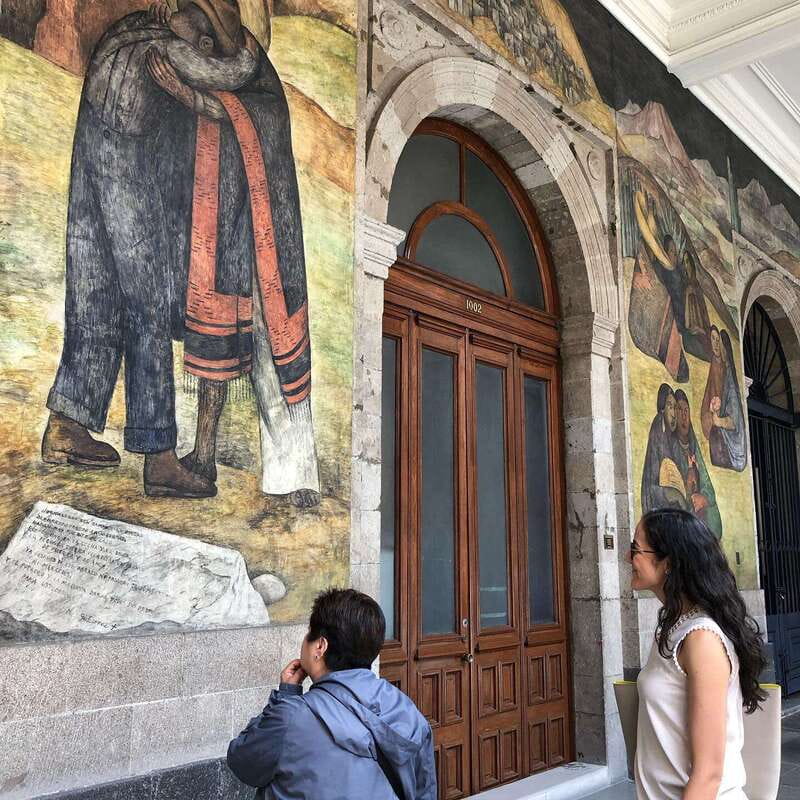
- Bellas Artes sets the artistic stage: See murals by Rivera, Siqueiros, and Orozco in Mexico City’s grand Fine Arts Palace.
- The tour explains the mural movement: You learn why post-Revolutionary Mexico funded large public paintings for education and national identity.
- The art reaches beyond three famous names: Works by Tamayo, González Camarena, and Rodríguez Lozano add variety to the story.
- A Holocaust mural adds a darker note: A painting from the Second World War era brings grief and persecution into a former colonial palace.
- You get a choice near the end: See Rivera’s scenes of Mexican work and festivals inside a market, or visit a former high school where Orozco attacked social divisions.
- The group is limited to 10: That is a useful size for asking questions, though headsets may be supplied for larger arrangements.
Why Mexico City’s murals matter
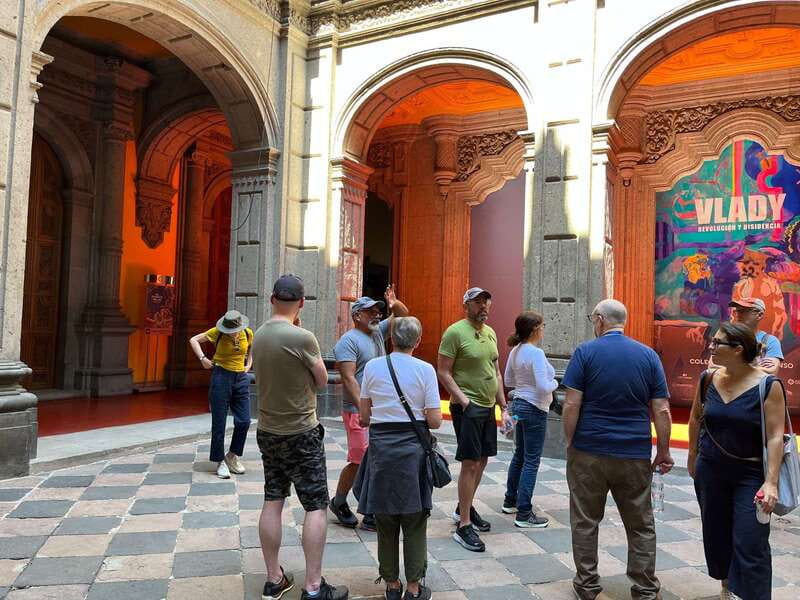
The mural movement grew in the 1920s, after the Mexican Revolution. The country needed a shared story, and the government turned to public art as a teaching tool. Paintings appeared in civic buildings, schools, markets, and other public places where people could see them without entering a private gallery.
That purpose changes the way you look at the art. You are not simply checking off famous painters. You are reading images made for ordinary people, many of whom may not have had access to formal education or museums. The walls present ideas about workers, farmers, indigenous cultures, political power, religion, and Mexico’s place in the modern world.
Your guide’s academic background should help connect those large images to their setting. That matters because muralism can feel overwhelming at first. The figures are big, the scenes are crowded, and the political references are not always obvious. A good explanation gives you a way into the paintings without turning the walk into a lecture.
More Street Art Walking Tours in Mexico
- History and Murals: Walking Tour Guadalajara
★ 5.0 · 237 reviews - Walking Tour – Impressive murals in Historical Center of Mexico City
★ 5.0 · 224 reviews - Muralist Art Semi Private Walking Tour in Mexico City Downtown
★ 5.0 · 188 reviews
Starting at Bellas Artes with three major muralists
The meeting point is in front of the main entrance to the Bellas Artes Palace. Arrive ready to walk, since the tour begins with museum visits and then moves through central Mexico City.
Inside, the focus is on the three best-known muralists: Rivera, Siqueiros, and Orozco. They shared an interest in public art, but their work does not feel interchangeable. Rivera often built broad narratives from workers, agriculture, industry, and national traditions. Siqueiros pushed toward forceful movement and political urgency. Orozco could be more severe, skeptical, and critical of human power.
The value here is comparison. Seeing these artists in the same setting helps you notice different approaches to the same national questions. Instead of hearing three isolated biographies, you can look at how each painter handled revolution, class, identity, and the role of the state.
Bellas Artes also introduces you to the scale of the project. These are not small canvases designed for quiet study. Their size and placement make the viewer part of the scene. Your guide can point out how the building itself affects the meaning of the work, especially when murals address public education and national memory.
The tour also includes other artists, such as Rufino Tamayo, Jorge González Camarena, and Rodríguez Lozano. Their inclusion is useful because Mexico’s mural tradition was never limited to the three headline names. You get a broader picture of the artists working within, alongside, or in response to the main movement.
A wartime mural in a former colonial palace
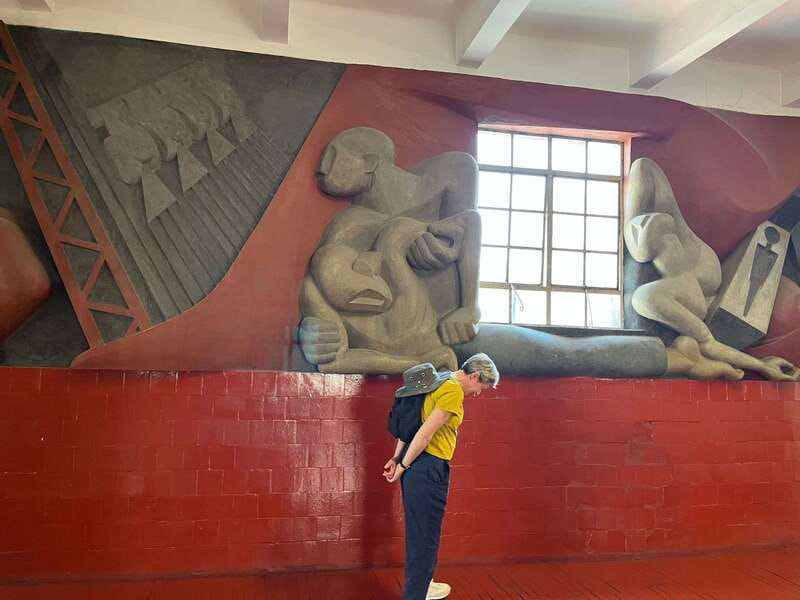
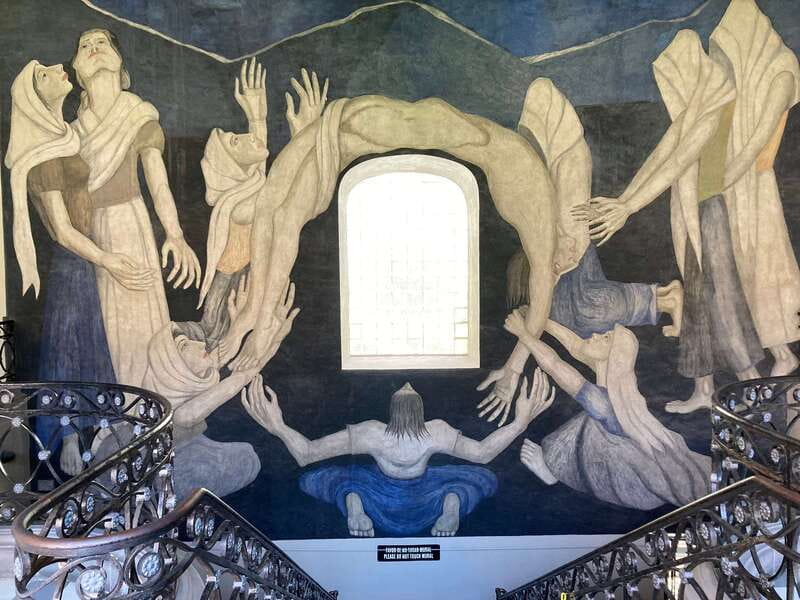
One of the more unusual stops brings you to a mural connected to the Second World War and the Holocaust. It is kept in a former colonial palace, a setting that adds another layer to the work.
This is a change of mood from the murals celebrating labor, national culture, or the promise of a new Mexico. The painting expresses grief, and its subject reaches beyond Mexican political history. You see how mural art could respond to global suffering as well as local events.
The location matters. A colonial palace carries the weight of an older social order, while the mural reflects a modern catastrophe. That contrast gives the stop a serious edge. It also prevents the tour from presenting muralism as one simple story of national pride.
You should expect the route to move between very different subjects. Some paintings explain Mexico through work and festivals. Others criticize social classes or confront mass violence. The range is one of the tour’s strengths, but it also means the walk is not light sightseeing.
A rooftop break with Historic District views
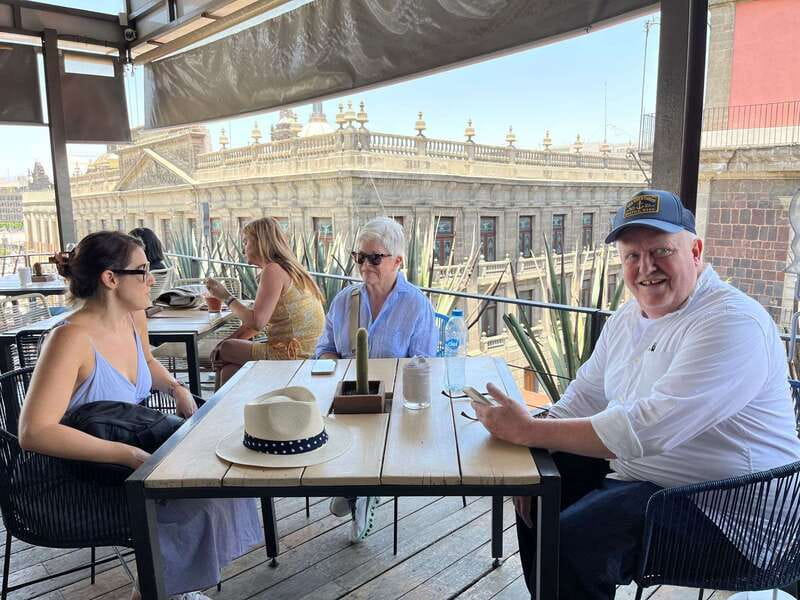
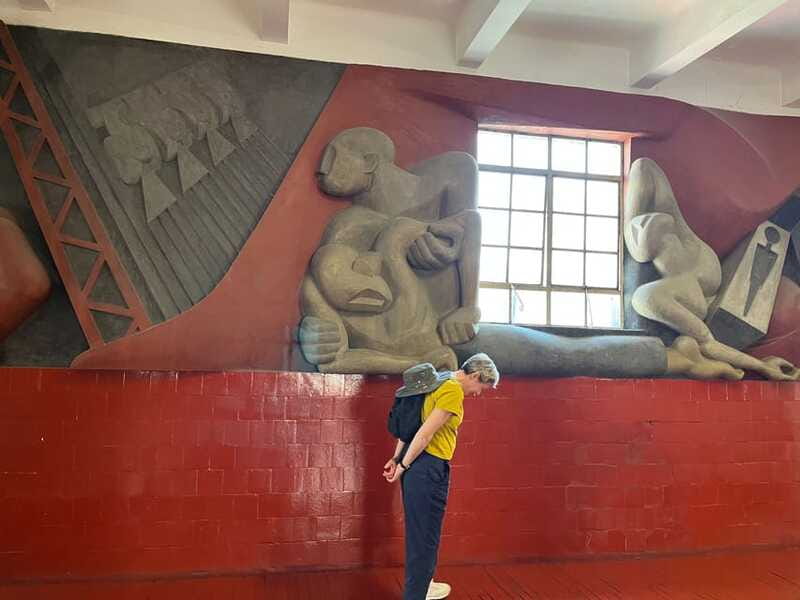
Four hours on foot can be tiring, especially in Mexico City’s sun. The planned rooftop stop gives you time to sit with a cup of coffee and look over the Historic District.
Food and drinks are not included in the tour price, so you should be prepared to pay for your own coffee. Still, this pause is more than a convenience. Looking down from above helps you connect the murals to the city around them, rather than treating each painting as an object sealed inside a museum.
Bring a hat and sunscreen. Comfortable shoes are essential, and rain will not cancel the tour. This is a rain-or-shine activity, so check the weather before leaving your hotel and dress for a changing day.
The rooftop stop also breaks up the visual intensity. After several large murals, a quiet view gives you time to sort out what you have seen. If you prefer a fast route with little sitting, this pause may feel less necessary. For most people, it is a sensible part of a four-hour schedule.
More Street Art Walking Tours in Mexico City
- Mexico City: Diego Rivera’s Murals Guided Walking Tour
★ 5.0 · 49 reviews - Guided Walking Tour Describing UNAM Murals and Revolution
★ 5.0 · 8 reviews - Mexico City: Historic Center Walking Tour with Murals
★ 5.0 · 6 reviews - Mexico City: The Murals of Mexico Semiprivate Walking Tour
★ 5.0 · 2 reviews
The market murals and the public art mission
One possible part of the route leads to a market containing murals from the 1930s. Mexican and foreign artists created these works as part of the wider mural project, bringing art and education into a place used by ordinary people.
This setting is important. A market is not a formal museum. It is part of daily life, which reflects the original public purpose of the mural movement. The paintings were meant to meet people where they lived, worked, and shopped.
The market option should appeal to you if you want to see how muralism functioned outside grand government buildings and art institutions. The art is tied to a working public setting, not just to elite culture. That gives the stop a practical, social quality.
The supplied schedule presents this as an alternative to the Orozco visit described below. Ask at booking or at the start of the walk which option applies to your departure. Since the exact choice can shape the final part of the tour, it is worth knowing what you will see.
Rivera’s Mexico through labor and celebration
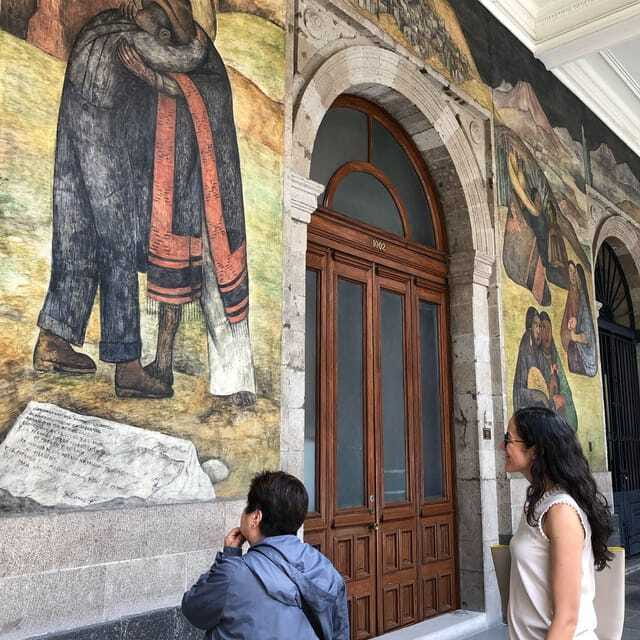
The route may instead include Diego Rivera murals showing the work and festivals of the country. These works were made in the 1920s and focus on the many forms of labor and celebration that Rivera used to describe Mexico.
The appeal is the breadth of the subject. Rather than focusing only on politicians or famous events, the murals bring daily work and public festivities into the national story. You can look for how different regions, trades, and traditions are brought together in one visual account.
Rivera’s scenes can be crowded with figures and activity. A guide is especially useful here, since it is easy to glance at the overall scene and miss the smaller links between people, tools, costumes, and celebrations. The tour’s historical focus should help you see why these details mattered in post-Revolutionary Mexico.
If you enjoy art that tells a broad national story, this is likely one of the most satisfying stops. If you prefer a quiet gallery and a single subject, the scale and number of figures may feel demanding.
Orozco’s former high school and social criticism
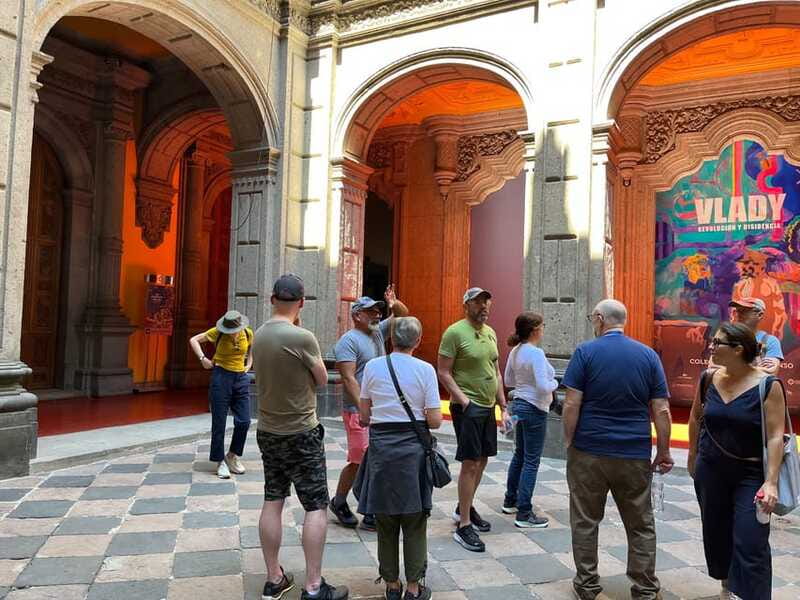
The other possible route returns you to post-Revolutionary Mexico through a former high school. Here, Orozco’s murals criticize the country’s social classes during the 1920s.
This is a different kind of historical lesson from Rivera’s scenes of labor and celebration. Orozco’s work can be read as a warning that political change does not automatically create social justice. The former school setting also fits the mural project’s educational aim. Students and the public could encounter difficult ideas in a place tied to learning.
The stop is a good choice for you if you want political criticism rather than a straightforward celebration of Mexican identity. It offers a sharper view of the tensions behind the mural movement, including class divisions and the problems left after revolution.
The school visit may also appeal to anyone interested in how public art worked as instruction. These murals were not placed in private collections for a small audience. They were made to challenge viewers in a public setting.
Four hours on foot, with practical limits
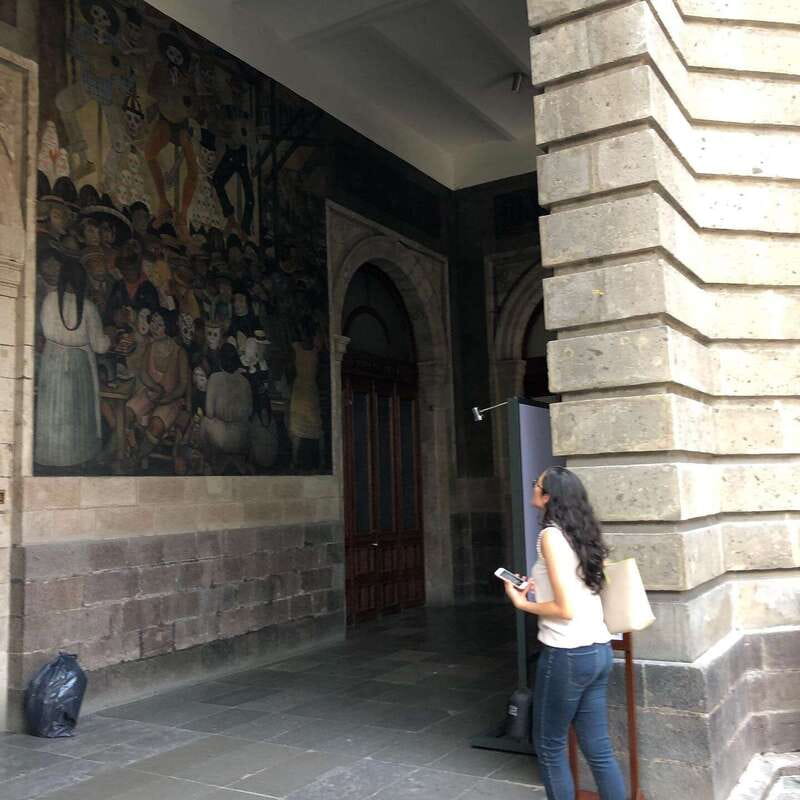
The tour lasts four hours and is designed for a small group of up to 10 people. That limit should make it easier to hear the guide and ask questions. The guide speaks English or Spanish, and a graduate degree in art history, history, or architecture is required for the guide role.
Headsets are provided in large groups. With a group capped at 10, you may not need them, but the equipment is useful if the setting becomes noisy or the guide needs to speak while the group is spread out.
There is no hotel pickup or drop-off. You meet at Bellas Artes, so plan your own way to the main entrance. The route is a walking experience, not a vehicle tour, and the activity information specifically says it is not suitable for people with mobility impairments.
Wear shoes you can use for four hours. Add a hat and sunscreen, and remember that the tour runs in rain or sunshine. Since food and drinks are not included, carry water and budget separately for the rooftop coffee.
Is the $218 price good value?
At $218 per person, this is not a cheap introduction to Mexico City. The price makes the most sense if you want an academic art tour built around several important mural sites, rather than a general city walk with a few quick photo stops.
You are paying for a four-hour guided route, museum admission, a specialist guide, and access to a carefully connected story. Bellas Artes alone would not explain the market murals, the wartime work, the rooftop setting, and the choice between Rivera and Orozco. The guide’s role is to make those connections clear.
The value is weaker if you already know Mexico’s mural movement well or mainly want to see one famous Rivera painting. It is also a poor match if you dislike walking, prefer an unstructured afternoon, or need hotel transportation.
For the right person, the cost buys context. You come away understanding why the murals were made, who they were meant to reach, and how art helped shape a post-Revolutionary national identity. That is more useful than simply collecting names and photographs.
Who should book this mural walk?
I would choose this tour if you care about art, public history, politics, or Mexico’s cultural identity. It is especially well suited to you if you want Rivera, Siqueiros, and Orozco explained together instead of visited as separate attractions.
The tour also fits a first visit to Mexico City when you want a strong introduction to the Historic District through art. The rooftop break helps with the pace, and the small group should keep the experience personal.
Think twice if you have limited mobility, want a short activity, or need every cost included. The four-hour duration, outdoor exposure, walking route, and separate payment for drinks all matter.
Should you book it?
Book this experience if the story behind Mexico’s murals interests you as much as the paintings themselves. The mix of Bellas Artes, lesser-known artists, public markets, a wartime mural, and either Rivera or Orozco gives the walk more range than a basic museum visit.
Skip it if you want a relaxed sightseeing tour or a low-cost way to see one landmark. At $218, the tour earns its price through expert interpretation and access to a connected set of sites. For an art-minded visitor who can comfortably walk for four hours, that is a fair reason to consider it.
FAQ
Where does the Mexican murals walking tour meet?
Your guide waits in front of the main entrance of the Bellas Artes Palace.
How long does the tour last?
The walking tour lasts four hours.
What languages are available?
The tour is offered in English and Spanish.
How large is the group?
The activity is described as a small-group tour limited to 10 participants.
Are museum tickets included?
Yes. Museum tickets are included in the tour price.
Is hotel pickup included?
No. Hotel pickup and drop-off are not included, so you must make your own way to Bellas Artes.
Are food and drinks included?
No. Food and drinks are not included. The route includes a break where you can enjoy a cup of coffee, but you should budget for it separately.
What should I bring?
Bring comfortable shoes, a hat, and sunscreen. The tour takes place rain or shine.
Is the tour suitable for people with mobility impairments?
No. The activity is not suitable for people with mobility impairments.
More history behind the walls in Mexico
- Private Walking Tour Guadalajara History and Murals with Guide
★ 5.0 · 6 reviews - Tour history of Muralism in Mexico
★ 5.0 · 5 reviews - Street Art & Cemetery Cultural Tour – half day
★ 5.0 · 3 reviews - Historic tour in the center and murals of Orozco
★ 5.0 · 2 reviews
New street art tours in Mexico
- Xochimilco floating gardens, Coyoacan and UNAM murals★ 4.0 · 6 reviews
- UNAM: Murals & Revolution★ 4.9 · 8 reviews
- Graffitis & Munchies biketour Playa del Carmen★ 4.5 · 18 reviews
- Street Art & Cemetery Cultural Tour – half day★ 5.0 · 3 reviews
- Street Art Walk★ 4.5 · 7 reviews
- Tour Women Muralists : Strokes that resist Mexico City★ 5.0 · 7 reviews
- Mexico City Private Tour with Teotihuacan, Murals, Guadalupe Basilica★ 3.0 · 2 reviews
- Diego Rivera’s murals, hidden treasures★ 5.0 · 21 reviews
Street Art Walking Tours, side by side.
Naples Spanish Quarters Walking Tour Street Art, Folklore & Sweet
Read our review →

Brooklyn Graffiti & Street Art Walking Tour in Bushwick
Read our review →