Reviewed · STREET ART WALKING TOURS
Private Walking Tour Guadalajara History and Murals with Guide
Guadalajara reveals itself through its murals on this private walk, from huge public paintings in Chapultepec to José Clemente Orozco’s powerful work inside government buildings and Cabañas. The route also gives you churches, theater architecture, market smells, and the shifting feel of a city that is both traditional and modern.
I like the private format, since Berenice Miramontes can adjust her pace and explain what catches your eye. I also like the route’s variety: the Expiatory Temple, the Cross of Plazas, Liberty Market, and Cabañas each show a different side of Guadalajara. The main consideration is physical effort. This is a 3 to 4 hour walk with no transport, and entry to Cabañas, food, and drinks cost extra.
Key points to know before booking
- Orozco murals anchor the walk: You’ll see major works at MUSA, the Government Palace, and Cabañas Museum.
- A true point-to-point route: The walk begins at Torre Chapultepec and finishes in front of Cabañas Museum.
- Berenice leads in English: Her warm, clear explanations are a major part of the experience.
- Liberty Market adds local flavor: You can look at Mexican foods, smell the cooking, and try hot sauce if you choose.
- Some interiors are not guaranteed: Private events can close MUSA or the Government Palace.
- Plan for walking: The route suits most people but is not recommended if you have walking problems.
Why the murals make this Guadalajara walk special
Many city walks give you a string of buildings and dates. This one has a stronger thread: Mexican muralism. That matters because the paintings are not just decoration. They offer a way to understand how public art, politics, religion, education, and Mexican identity meet in Guadalajara.
Berenice Miramontes guides the walk in English and explains the stories behind the places you see. The praise directed at her is consistent: she is warm, clear, attentive to different interests, and able to cover plenty of ground without turning the tour into a lecture. One particularly useful quality is her pacing. You get context, but the walk keeps moving.
The private setup is valuable here. If you want more time with Orozco, you can ask about the murals. If architecture interests you more than food, you can spend longer looking at the churches and theaters. You are not tied to the questions or pace of a large group.
The route also has a good visual rhythm. It begins with public art and changing neighborhoods, moves into a dramatic church and university museum, then reaches the grand civic center. After that come the theater, market, and Cabañas. You get a sense of Guadalajara as a living city rather than a collection of isolated monuments.
More Private Mural Tours in Mexico
- Muralist Art Semi Private Walking Tour in Mexico City Downtown
★ 5.0 · 188 reviews - Cancun Private Street Art Tour
★ 5.0 · 30 reviews - Private Mexico City Mural Art Tour
★ 5.0 · 13 reviews
Chapultepec begins with street art and old wealth
The meeting point is Torre Chapultepec in the Colonia Americana area. The walk opens along Paseo de las Artes Chapultepec, described as a hip district today and once one of the city’s wealthiest neighborhoods in the early 1900s.
That contrast gives Berenice a useful opening subject. You can look at how the area’s architecture has changed over time while also seeing what the tour calls Guadalajara’s other muralism: large wall paintings featuring iconic Mexican figures. These are not presented as museum pieces. They are part of the city streets, where art forms part of the daily setting.
This first stop lasts about 30 minutes. It is a good way to get your bearings before the more formal monuments begin. You will be on your feet from the start, so comfortable shoes are a practical choice.
The Chapultepec section is also a reminder that Guadalajara is not only about colonial plazas. Its identity includes newer cultural districts, painted walls, and neighborhoods with a more contemporary feel. If you want only old churches and historic facades, this opening may seem less focused. I think the change of mood helps the rest of the walk make more sense.
The Expiatory Temple brings Gothic drama
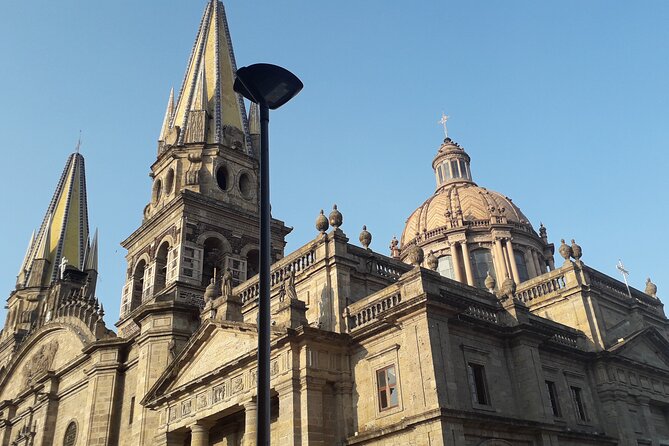
From Chapultepec, the route continues to the Templo Expiatorio del Santísimo Sacramento, usually called the Expiatory Temple. The building took almost a century to complete, and its neogothic design gives the walk a sharp change in tone.
You can expect to look closely at the pointed forms, detailed exterior, and stained glass. The church is one of Guadalajara’s most striking buildings, and the 15-minute stop gives Berenice time to explain its place in the city without letting the tour bog down.
This is one of the stops where a guide adds real value. A quick photograph can show the shape of the building, but it cannot explain why the church took so long to finish or how its style fits into Guadalajara’s wider architectural story. The listed admission is included, though the tour description does not promise a long interior visit.
MUSA and the Orozco murals
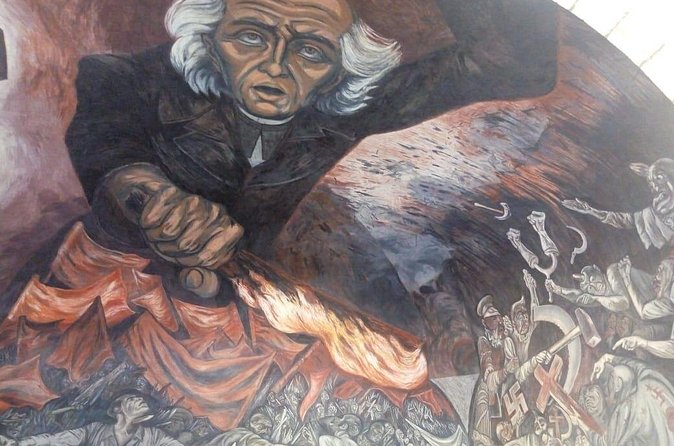
The next stop is MUSA, the Museo de las Artes of the University of Guadalajara. The key destination inside is the Paraninfo, where you can see murals by José Clemente Orozco, one of Mexico’s major muralists.
The scheduled visit is about 20 minutes. That is not a long museum visit, but the focus is narrow and useful. You are not being asked to cover an entire art collection. Instead, Berenice explains the murals and their place in Orozco’s work and Guadalajara’s cultural life.
There is an important limitation here. Entry to the Paraninfo may not be possible if the university is hosting a private event. If that happens, the building can still be admired from outside, but you should not book this walk with the assumption that every interior is guaranteed.
For anyone interested in Mexican art, this stop is one of the strongest reasons to choose the tour. Orozco’s work appears again later, so you begin to see a connected story rather than a single mural dropped into a sightseeing schedule.
More Street Art Walking Tours in Mexico
- History and Murals: Walking Tour Guadalajara
★ 5.0 · 237 reviews - Walking Tour – Impressive murals in Historical Center of Mexico City
★ 5.0 · 224 reviews - Mexico City: Diego Rivera’s Murals Guided Walking Tour
★ 5.0 · 49 reviews - Guided Walking Tour Describing UNAM Murals and Revolution
★ 5.0 · 8 reviews
Guadalajara Cathedral and the Cross of Plazas

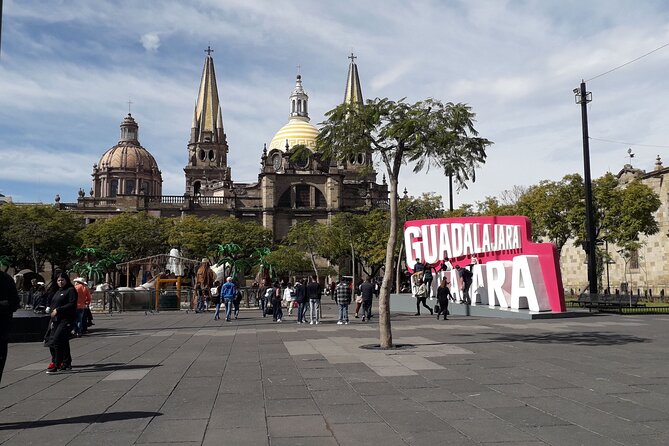
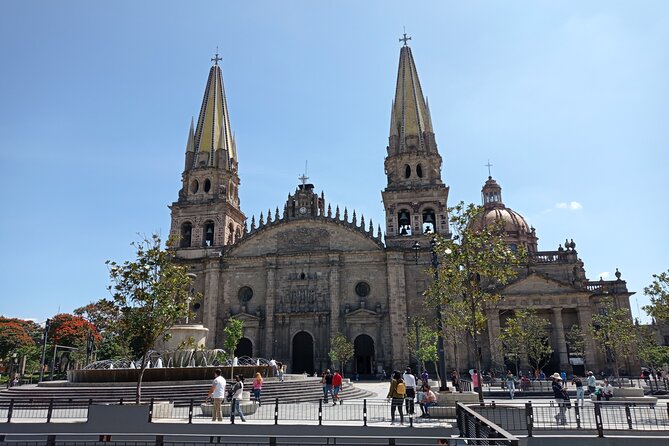
The walk then reaches historic downtown and Guadalajara Cathedral. The surrounding Cross of Plazas is designed around four public squares, creating one of the city center’s defining urban spaces.
You get around 30 minutes here. That allows time to take in the cathedral, the plazas, and the mix of people and buildings around them. Berenice explains how the area reflects both the city’s traditional identity and its modern daily life.
This is a useful point in the walk to pause and look at the city as a whole. The cathedral is the obvious landmark, but the surrounding plazas help explain how Guadalajara’s center works. You are not simply standing in front of a church. You are seeing a civic meeting place shaped by religion, public space, commerce, and local routine.
Admission is free at this stop. As with any working religious building, the experience may depend on what is happening inside at the time, but the tour’s focus includes the wider plaza area and the history around it.
Government Palace and the power of Orozco
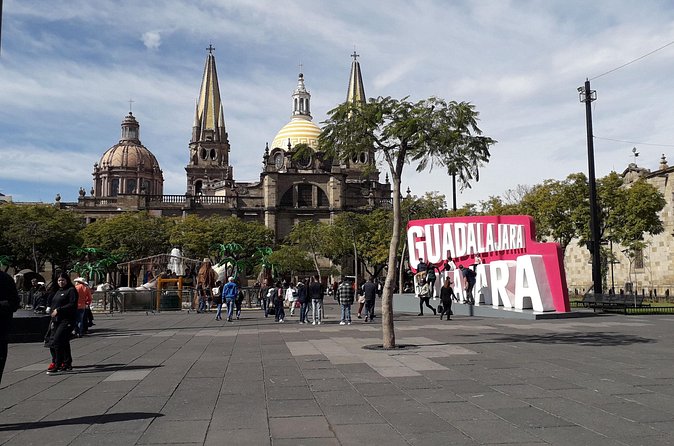
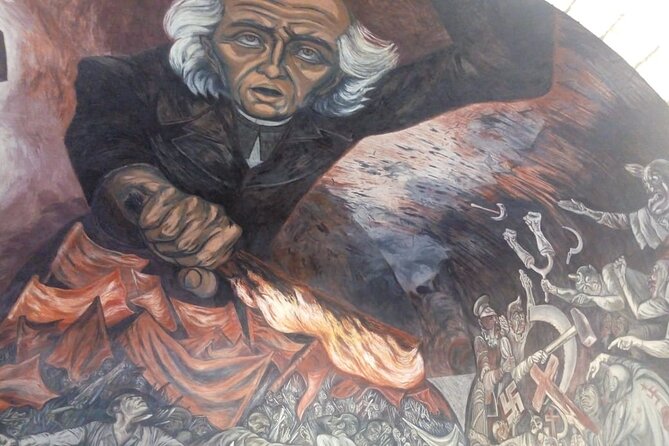
The Palacio de Gobierno del Estado de Jalisco was built in the 18th century and has been the setting for important events in Guadalajara’s past. It also contains murals by Orozco, making it another major art stop.
The scheduled time is about 30 minutes. This is enough for Berenice to connect the building’s political role with the paintings inside. That connection is one of the best features of the route. You see Orozco’s work not only in a university setting or former orphanage, but also in a building tied to government and public power.
Again, access can be affected by private events. If the interior is closed, the building can be viewed from outside, but the mural visit may not happen. This is worth keeping in mind if the Government Palace is your main reason for booking.
I like the way this stop broadens the art story. The walk is not treating murals as a single museum category. It shows how they appear across civic and cultural places, each with a different purpose.
Degollado Theater gives the route a grand facade
The Teatro Degollado is a short stop, about 15 minutes, and the visit is focused on the exterior. It is described as the best-preserved neoclassical theater in the Americas, and the point here is to admire its architecture while hearing part of its story.
You will not get a theater performance or an extended interior tour as part of this experience. That is a drawback if you hoped to go inside. Still, the stop works well in the sequence because the theater’s formal facade adds another architectural style after the Gothic temple and civic buildings.
This is also a good example of how the tour balances depth and coverage. Some stops are built around interiors and murals. Others are short explanations in front of important buildings. You see more of downtown without spending the entire afternoon in one location.
Liberty Market turns the walk toward food
Mercado Libertad, also known as San Juan de Dios Market, is one of the liveliest stops on the route. It is described as one of the largest markets in Latin America, with Mexican food, colors, scents, and plenty to inspect.
The scheduled time is about 30 minutes. Berenice introduces you to different kinds of Mexican food and hot sauce, and you can decide how much you want to try. Food and drinks are not included, so carry some money if you want a snack or tasting.
This stop is valuable because it moves the tour away from monuments and toward ordinary city life. You can look at what is being sold, notice the range of ingredients and prepared dishes, and ask Berenice what you are seeing. The market also gives the walk a welcome change of pace after several formal buildings.
Keep your expectations clear. This is not presented as a full food tour, and the price does not cover tastings. It is a market visit with the option to try things, not a set meal or structured series of food samples.
If hot sauce interests you, this is the moment to be adventurous, but go at your own speed. The description singles out a particularly delicious hot sauce, though your purchases remain your responsibility.
Cabañas Museum is the grand finish
The final stop is Instituto Cultural Cabañas, also known locally as El Hospicio. It served as an orphanage for almost 200 years and is now a UNESCO World Heritage site. The complex is also home to a major body of Orozco’s work.
This is the most substantial artistic finish to the route. After seeing murals in Chapultepec, MUSA, and the Government Palace, you arrive at a large historic institution where Orozco’s work forms the centerpiece of the visit. The setting matters as much as the paintings. A former orphanage with nearly two centuries of use gives the art a powerful civic and human setting.
The stop lasts about 30 minutes, and admission is not included. The tour ends outside the museum at Cabañas Museum, on C. Cabañas 8, so you can decide if you want to enter with your guide or continue on your own after the walking portion.
That extra ticket is an important part of the value calculation. At $71.36 per person, the tour is not a bargain-priced orientation walk, especially once you add museum admission, food, and drinks. But you are paying for a private English-language guide, a carefully connected route, and explanations at several places where a quick visit would leave you with little context.
What the $71.36 price gets you
The fee makes the most sense for two people or a small private group that values personal attention. You are not paying for transportation, meals, or a long list of included admissions. You are paying for Berenice’s time and for the ability to move through several important parts of Guadalajara with someone who can explain what you are seeing.
The strongest value comes from the route’s range:
- Street murals and neighborhood change in Chapultepec
- Neogothic design and stained glass at the Expiatory Temple
- Orozco murals at MUSA and possibly the Government Palace
- The Cathedral and Cross of Plazas
- Neoclassical theater architecture
- Market food and hot sauce
- Cabañas and its major Orozco collection
A group that wants a simple introduction to downtown may find the price high. A couple or family that would otherwise pay for several separate visits and still need to piece the stories together may find it fair.
The tour is generally booked well ahead, with an average of 35 days in advance. That suggests you should reserve early if your Guadalajara dates are fixed, particularly because this is a private experience led by one named guide rather than a large operation with many daily departures.
Timing, walking, and practical details
The experience lasts approximately 3 to 4 hours. The listed stop times add up to just under 3 hours, but actual walking between sites, questions, and time spent looking at murals can bring the outing toward the longer end. Leave room in your day rather than scheduling a tight lunch or transport connection immediately afterward.
There is no transport included. The route begins at Torre Chapultepec and ends in front of Cabañas Museum, so it is not a loop back to the starting point. That point-to-point design is useful if Cabañas is your next destination, but less convenient if you need to return to Chapultepec.
Most people can participate, and service animals are allowed. The tour is not recommended for people with walking problems. Since the route covers several districts and lasts much of a morning or afternoon, take the physical requirement seriously.
The experience is offered in English. Confirmation is provided at booking, and free cancellation is available up to 24 hours before the start time. If poor weather causes cancellation, you can receive a different date or a full refund.
Who will get the most from this tour
I would choose this walk if you want Guadalajara explained through art and architecture rather than reduced to a checklist of attractions. It suits first-time visitors who want a strong introduction, as well as repeat visitors who missed the mural sites on an earlier trip.
It is especially good for:
- People interested in José Clemente Orozco
- Visitors who prefer private guiding to a large group
- Couples and families who want to ask questions freely
- English-speaking visitors seeking local context
- Anyone who enjoys mixing museums, churches, public plazas, and food markets
- Visitors comfortable walking for several hours
I would think twice if you want a food-focused experience, a vehicle-based tour, or guaranteed entry to every interior. The tour includes the market, but food is extra. MUSA and the Government Palace can be closed for private events, and Cabañas admission is not included.
Should you book this Guadalajara walk?
Book it if you want a smart, human introduction to Guadalajara built around Orozco, public art, architecture, and local streets. Berenice’s strongest role is not simply leading you from one address to another. It is helping you connect a mural to a building, a building to a political or religious story, and a market to the city you are seeing beyond the postcard view.
The best reason to book is the private format and the guide’s high praise for clear English, warmth, good pacing, and strong command of Guadalajara’s past and present. The main reasons to hesitate are the price, the long walk, extra costs at Cabañas and the market, and the chance that private events will limit access to certain interiors.
For a traveler who wants a rich mix of major sights in one half-day, this is a strong choice. Wear comfortable shoes, keep the afternoon flexible, and treat the market and Cabañas costs as part of your planning.
FAQ
How long does the private Guadalajara walking tour last?
The tour lasts approximately 3 to 4 hours.
Where does the tour begin?
It begins at Torre Chapultepec in Colonia Americana, Obrera, Guadalajara.
Where does the tour end?
The walk ends in front of Cabañas Museum at C. Cabañas 8, Las Fresas, Guadalajara.
Is the tour offered in English?
Yes. The experience is offered in English and is led by Berenice Miramontes.
Are food, drinks, transportation, and museum admission included?
No. Food, drinks, and transportation are not included. Admission to Cabañas Museum is also not included. The tour does include a certified guide.
Can I cancel the tour for a full refund?
Yes, if you cancel at least 24 hours before the local start time. Cancellations or changes made less than 24 hours before the start time are not refunded or accepted. If poor weather causes cancellation, you will be offered another date or a full refund.
More history behind the walls in Mexico
- Mexico City: Historic Center Walking Tour with Murals
★ 5.0 · 6 reviews - Tour history of Muralism in Mexico
★ 5.0 · 5 reviews - Street Art & Cemetery Cultural Tour – half day
★ 5.0 · 3 reviews - Historic tour in the center and murals of Orozco
★ 5.0 · 2 reviews
New street art tours in Mexico
- Xochimilco floating gardens, Coyoacan and UNAM murals★ 4.0 · 6 reviews
- UNAM: Murals & Revolution★ 4.9 · 8 reviews
- Graffitis & Munchies biketour Playa del Carmen★ 4.5 · 18 reviews
- Street Art & Cemetery Cultural Tour – half day★ 5.0 · 3 reviews
- Street Art Walk★ 4.5 · 7 reviews
- Tour Women Muralists : Strokes that resist Mexico City★ 5.0 · 7 reviews
- Mexico City Private Tour with Teotihuacan, Murals, Guadalupe Basilica★ 3.0 · 2 reviews
- Diego Rivera’s murals, hidden treasures★ 5.0 · 21 reviews
Street Art Walking Tours, side by side.
Naples Spanish Quarters Walking Tour Street Art, Folklore & Sweet
Read our review →

Brooklyn Graffiti & Street Art Walking Tour in Bushwick
Read our review →