Reviewed · MURALISM TOURS
Muralist Art Semi Private Walking Tour in Mexico City Downtown
Mexico City’s murals are not just wall decoration. They are public arguments about revolution, class, religion, labor, and national identity. This three-and-a-half-hour walk takes you into buildings where Rivera, Orozco, Siqueiros, and other major artists made those arguments in paint.
I like two things right away: the group is capped at eight people, and the tour ends inside the Mural Museum of Palacio de Bellas Artes, so you finish with the art rather than being dropped at a street corner. I also like that admission to the museums is included.
The tradeoff is simple: this is a serious walking and standing tour. If you want a quick photo stop, it may feel long. If you want a clear guide to Mexican muralism and the history behind it, the pace gives the subject room to breathe.
Key points to know before booking
- Three major mural sites: See the Ministry of Education, Antiguo Colegio de San Ildefonso, and Palacio de Bellas Artes.
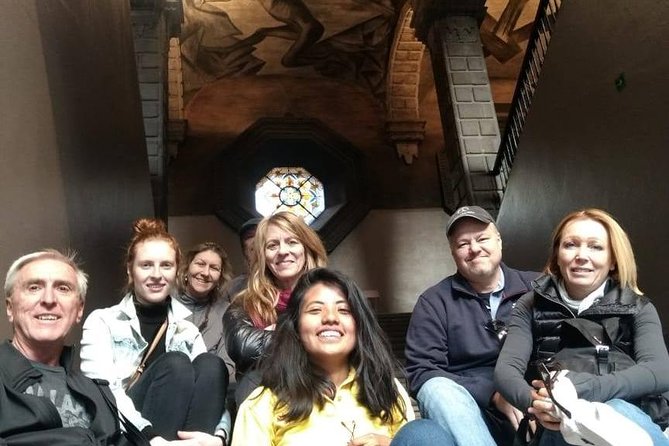
- Small group format: A maximum of eight people makes it easier to hear the guide and ask questions.
- Art and politics together: The murals are explained through Mexican history, social issues, and the artists’ ideas.
- English-language guidance: A certified bilingual guide leads the experience in English.
- Admission is included: Museum entry is covered, but you arrange your own way to the meeting point.
- Plan for your feet: The experience lasts about 3 hours and 30 minutes, with plenty of walking and standing.
Why Mexican muralism works best with a guide
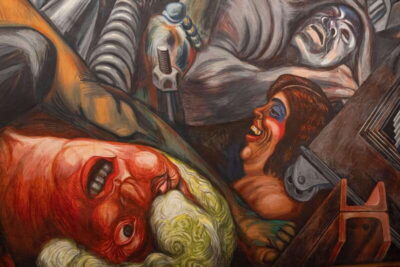
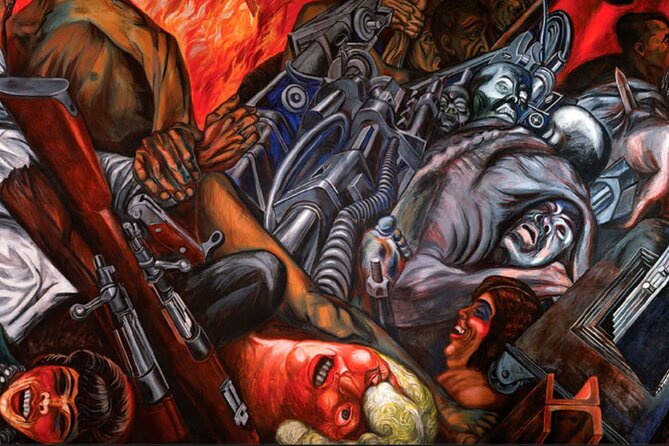
You can see a mural on your own and still miss its point. Mexican muralism is packed with people, symbols, historical references, and political messages. A painted worker may represent far more than a worker. A procession, a religious figure, or a group of machines can connect to the Mexican Revolution, industrialization, colonial power, or the struggle between social classes.
That is where this tour earns its keep. A strong guide can help you look at the picture in layers: first the colors and composition, then the people and symbols, then the historical moment that shaped the work. The best part is not simply learning who painted a mural. It is understanding why the mural was made for a public building in the first place.
The guides most often praised on this experience are Emilio and Emiliano. The descriptions of their approach point to a teacher rather than a guide who rushes through a script. Expect discussion of the art, the artists, Mexican politics, and the social questions woven into the walls. You may also be asked what you see before the explanation arrives, which makes the visit more active.
The English-language guiding is another practical strength. The experience is offered in English, and the feedback about the guides’ communication is especially strong. That matters here because a loose translation of a mural’s subject is not enough. You want the political and cultural meaning explained clearly.
More Private Mural Tours in Mexico
- Cancun Private Street Art Tour
★ 5.0 · 30 reviews - Private Mexico City Mural Art Tour
★ 5.0 · 13 reviews - Mexico City Private Street Art Tour
★ 5.0 · 11 reviews
Starting at the Ministry of Education
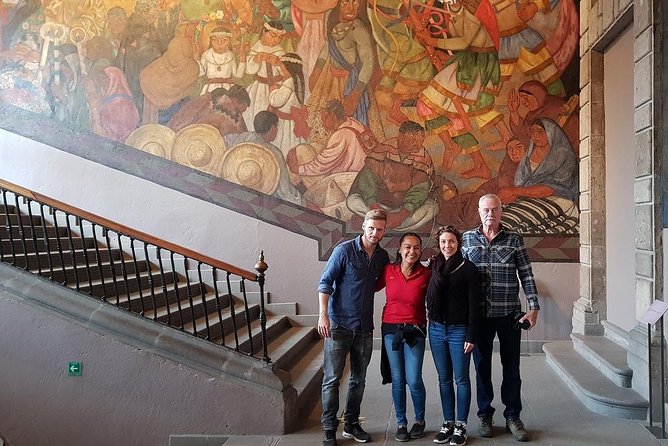
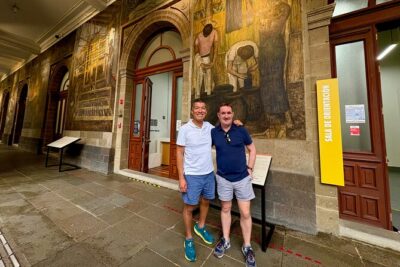
The tour begins at Portal de Escribanos in the Centro Histórico and includes a visit to the Ministry of Education, where Diego Rivera and other important muralists created work across the building.
This is an especially useful opening because it introduces the idea of murals as part of everyday public space. You are not beginning with a single framed painting in a quiet gallery. You are entering a government building whose walls were used to present ideas about Mexican society and national identity.
The Ministry of Education murals can be easy to miss if you are exploring alone. The building is not always the first place an art-focused visitor thinks to seek out, and the meaning is not always obvious at a glance. A guide helps you notice the scenes and connections that make the visit more than a walk through decorated corridors.
The available details do not specify a fixed time for this first visit, so the exact amount of time may depend on the guide, access, and the group’s questions. That flexibility can be useful. Mural tours work best when you have enough time to stop, look upward, step back, and compare one section with another.
Antiguo Colegio de San Ildefonso, the movement’s starting point
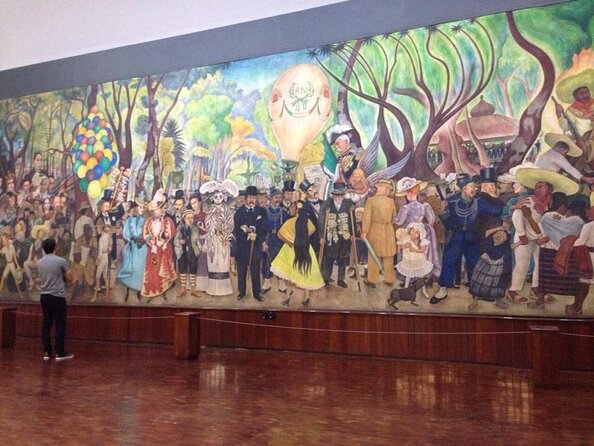
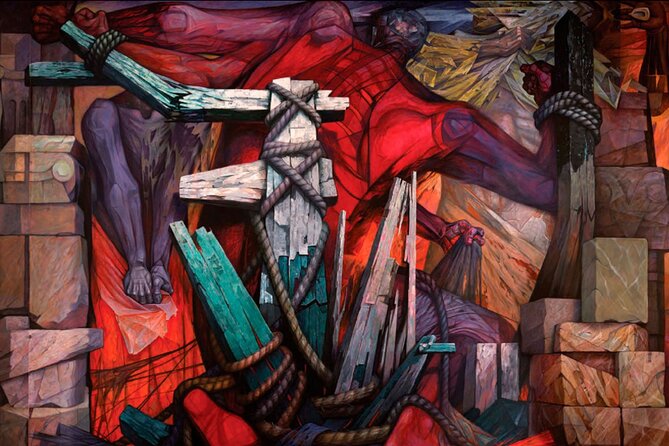
The first clearly timed stop is Antiguo Colegio de San Ildefonso, with about one hour inside and admission included. The building is described as the cradle of the Mexican muralist movement, and it contains work by José Clemente Orozco, Diego Rivera, and Jean Charlot.
This stop gives you a useful sense of beginnings. Mexican muralism did not appear as a finished style. Artists were testing how large-scale painting could address the public, use architecture, and tell stories that reached people beyond the traditional art world.
San Ildefonso is valuable because several important names come together in one setting. Rivera is only one part of the story. Orozco brings a different force and tone, while Jean Charlot helps broaden the picture of the movement’s early development. A guide can compare their choices instead of treating Mexican muralism as one uniform style.
You should expect to spend much of the hour looking carefully rather than moving constantly. The guide may point out historical figures, workers, religious imagery, or conflicts that are easy to overlook. This is the sort of stop where a small group pays off. With no more than eight people, questions can be handled without turning the visit into a lecture heard from the back of a crowd.
San Ildefonso is also where the tour may begin to feel more academic. That is not a flaw, but it is worth knowing. The experience is built for people who want to understand the art, not just photograph famous names. One description of the tour specifically notes that it is not meant to be superficial. If you like history and close looking, that is good news. If you prefer a fast-moving sightseeing walk, you may need patience.
Palacio de Bellas Artes and its 17 murals
The final major stop is Palacio de Bellas Artes, where you spend about an hour viewing 17 murals by different artists from different periods. Admission is included, and the tour ends inside the Mural Museum of Palacio de Bellas Artes.
This ending makes sense. By the time you reach Bellas Artes, you have already seen the movement’s early setting and Rivera’s work at the Ministry of Education. Here, you can place a wider group of murals in conversation with one another.
The number matters. Seventeen murals gives the guide plenty to work with, but it also means you will not study every piece at equal length. A good guide has to make choices. You may spend more time on the works that best explain Rivera, Orozco, Siqueiros, and the political concerns running through the collection.
The museum is one of the city’s most emblematic art buildings, and the setting adds weight to the visit. Still, the point is not simply that you are inside a famous building. The value lies in seeing how mural painting functioned in a major cultural institution and how different artists handled public art over time.
The end point is practical. You finish inside Bellas Artes, rather than needing to follow the guide back to the starting location. That leaves you in a useful part of central Mexico City for further sightseeing, though transportation after the tour is your responsibility.
More Private Mural Tours in Mexico City
- Private Street Art Tour in Rome
★ 4.0 · 4 reviews - Private Street Food & Mural Art Tour in Mexico City
★ 3.5 · 3 reviews - Mexico City Private Tour with Teotihuacan, Murals, Guadalupe Basilica
★ 3.0 · 2 reviews
A small group makes the art easier to discuss
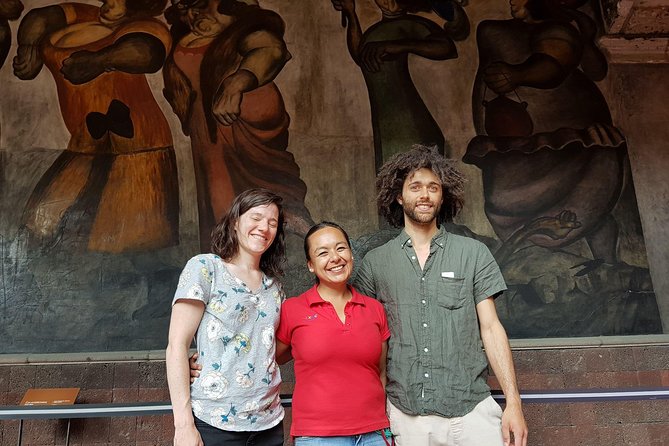
The maximum group size is eight. That is one of the clearest advantages of this experience.
With a small group, you can stand close enough to hear the guide and still view the work. You can ask why an artist used a certain figure, what a political symbol means, or how one mural differs from another. The guide can also adjust the explanation to the questions in front of him.
Some bookings may end up smaller than the stated maximum. A few people have described having a nearly private experience, including one group of four and another one-on-one visit. You should not assume that will happen on your date, but the cap keeps the tour from becoming a large procession.
The guide’s style seems to be a major part of the value. Emilio and Emiliano are repeatedly singled out for clear explanations, warmth, and passion for art and Mexican history. One detailed account described the experience as lasting nearly four hours because the discussion continued. That suggests the scheduled 3 hours and 30 minutes is an approximate duration, not a stopwatch promise.
This can be a benefit, but it also explains why the tour may run long. If you have a tight reservation immediately afterward, leave a cushion.
What the $58.12 price really covers
At $58.12 per person, this is not the cheapest way to spend a morning in the Centro Histórico. But the price includes entrance tickets to all museums visited and a certified bilingual guide, which changes the calculation.
If you visit the buildings alone, you may pay less for the walking portion, but you also take on the work of finding the murals, learning who made them, and sorting out the historical context. The Ministry of Education in particular may be easy to miss without a planned route. Here, the admissions and interpretation are bundled together.
The value is strongest if you are genuinely interested in art, architecture, Mexican history, or political ideas. It is less convincing if you only want to see a few famous Rivera images and move on. You are paying for the explanation as much as the entry tickets.
Group discounts are available, though the exact saving is not provided. If you are traveling with friends or family, check the price for your party before booking. A small group can also make the cost feel more reasonable because the experience has some of the attention of a private tour without requiring a fully private booking.
Tips for the guide are not included and are optional. Transportation to Portal de Escribanos is also not included, so plan that part separately.
Who should take this walk
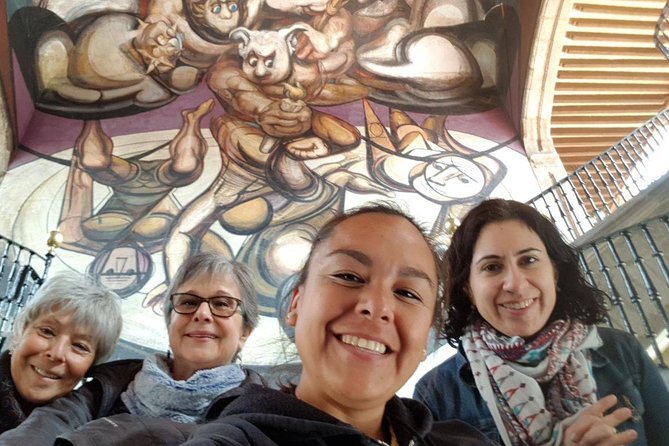
I would choose this tour early in a Mexico City visit if art and history are priorities. The muralists’ work touches so many parts of the city’s story that the context can improve later visits to museums and historic buildings.
It suits:
- First-time visitors who want a strong introduction to Mexican muralism.
- Art students, artists, and serious museum visitors.
- People interested in political history and social movements.
- Couples, families, and friends who enjoy discussion rather than a quick checklist.
- Solo visitors who value a small group and an English-speaking guide.
It may not suit you if long periods of standing are difficult, if you have less than four hours available, or if you want a tour centered on food, shopping, or general city landmarks. Most people can participate, and service animals are allowed, but the physical demand is still worth considering.
Wear comfortable shoes. That advice appears again and again for a reason. The tour is a walking experience through central Mexico City, with standing inside the museum buildings and time spent looking at works from different angles.
Meeting point, timing, and useful planning details
The meeting point is Portal de Escribanos, Santo Domingo, in the Centro Histórico. The tour ends at Museo del Palacio de Bellas Artes on Avenida Juárez, inside the mural museum.
You need to arrange transportation to the starting point. The tour is near public transportation, which helps, but no transfer from your hotel or between the sites is included. Since the route is on foot, give yourself extra time to reach the meeting point and avoid arriving rushed.
Confirmation is provided at booking. Free cancellation is available if you cancel at least 24 hours before the start time. Cancellations or changes made less than 24 hours before the start are not accepted for a refund.
The experience is offered in English and uses a certified bilingual guide. Museum entrance is included. Gratuities are optional and separate.
Should you book the Muralist Art Walking Tour?
Book it if you want Mexican muralism explained rather than simply displayed. The strongest feature is the link between art and history: Rivera, Orozco, Siqueiros, and other artists become easier to understand when you see the buildings, public purpose, and political questions around their work.
I especially like the small group limit, the included admission, and the final stop at Bellas Artes. The guide quality appears central to the experience, with Emilio and Emiliano receiving repeated praise for thoughtful explanations and strong English.
Skip it if you want a light, short stroll or dislike standing in museums. For everyone else, the $58.12 price is fair for a focused art-history tour that reaches places you could easily miss on your own. Book it near the start of your stay, wear good shoes, and leave enough time afterward for the conversation to run a little long.
FAQ
How long does the mural tour last?
The experience lasts approximately 3 hours and 30 minutes. The timing can vary, and you should leave extra room if your schedule is tight.
Where does the tour begin?
It begins at Portal de Escribanos, Santo Domingo, in Mexico City’s Centro Histórico.
Where does the tour end?
It ends inside the Mural Museum of Palacio de Bellas Artes on Avenida Juárez.
Which buildings are visited?
The tour includes the Ministry of Education, Antiguo Colegio de San Ildefonso, and Palacio de Bellas Artes.
Are museum entrance tickets included?
Yes. Entrance tickets to all museums visited during the tour are included.
Is the tour offered in English?
Yes. The experience is offered in English and led by a certified bilingual guide.
How large is the group?
The group has a maximum of eight people.
What happens if I need to cancel?
You can receive a full refund if you cancel at least 24 hours before the experience start time. Cancellations or changes made less than 24 hours before the start are not accepted for a refund.
More Street Art Walking Tours in Mexico City
- Mexico City: Historic Center Walking Tour with Murals
★ 5.0 · 6 reviews - Mexico City: The Murals of Mexico Semiprivate Walking Tour
★ 5.0 · 2 reviews - Mexico City: History on Walls. Mexican Murals Walking Tour
★ 5.0 · 2 reviews
More Street Art Walking Tours in Mexico
- History and Murals: Walking Tour Guadalajara
★ 5.0 · 237 reviews - Walking Tour – Impressive murals in Historical Center of Mexico City
★ 5.0 · 224 reviews - Mexico City: Diego Rivera’s Murals Guided Walking Tour
★ 5.0 · 49 reviews - Guided Walking Tour Describing UNAM Murals and Revolution
★ 5.0 · 8 reviews
New street art tours in Mexico
- Xochimilco floating gardens, Coyoacan and UNAM murals★ 4.0 · 6 reviews
- UNAM: Murals & Revolution★ 4.9 · 8 reviews
- Graffitis & Munchies biketour Playa del Carmen★ 4.5 · 18 reviews
- Street Art & Cemetery Cultural Tour – half day★ 5.0 · 3 reviews
- Street Art Walk★ 4.5 · 7 reviews
- Tour Women Muralists : Strokes that resist Mexico City★ 5.0 · 7 reviews
- Mexico City Private Tour with Teotihuacan, Murals, Guadalupe Basilica★ 3.0 · 2 reviews
- Diego Rivera’s murals, hidden treasures★ 5.0 · 21 reviews
Muralism Tours, side by side.
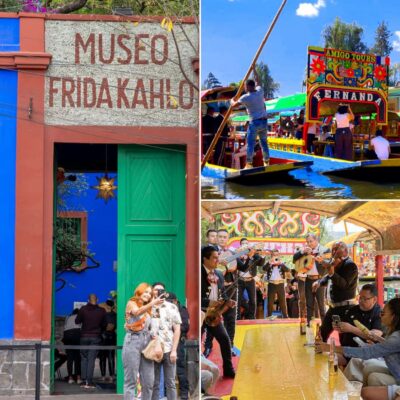
Xochimilco, Coyoacan, Frida Kahlo Museum & Murals Tour
Read our review →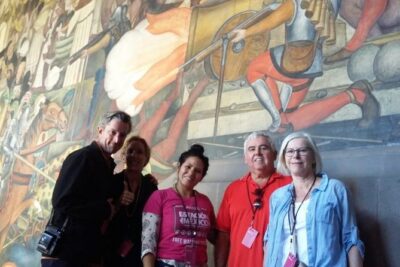
La Catrina & Muralism: Diego Rivera’s Legacy & Frida Kahlo
Read our review →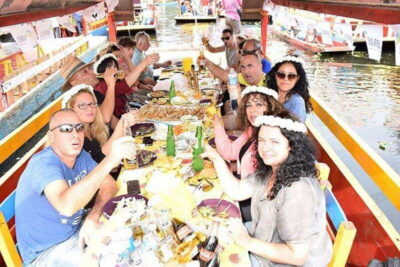
Xochimilco floating gardens, Coyoacan and UNAM murals
Read our review →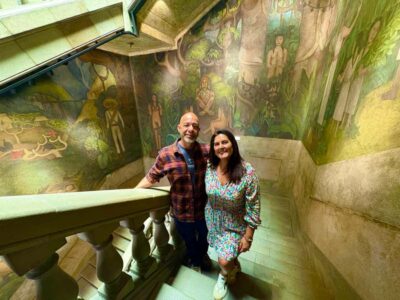
La Catrina & Muralism: Diego Rivera’s Legacy & Frida Kahlo
Read our review →