
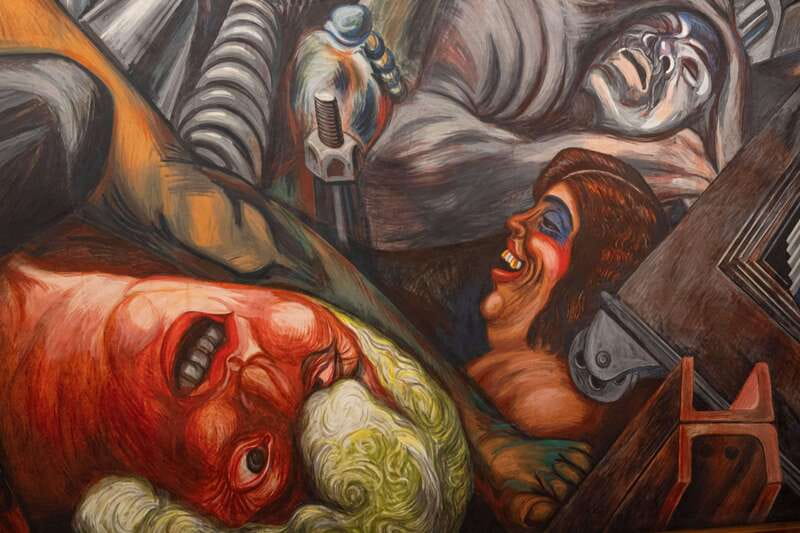
Reviewed · MURALISM TOURS
Mexican muralism with a true Art lover
Mexican muralism is not wall decoration with a political footnote. It is a public argument about conquest, class, revolution, religion, and national identity. This 2.5-hour walking tour puts those arguments in front of you at Bellas Artes, San Ildefonso, and the Museo Vivo del Muralismo, with a guide who encourages real conversation instead of rushing through dates.
I like two things right away: the route links major artworks to Mexico’s political story, and the small group, limited to 10 people, gives you room to ask questions. José Vicente Figueroa is the named experience provider, while past participants have praised guides called José and Fernando for thoughtful, engaging explanations.
The main consideration is cost beyond the $52 tour price. Museum tickets are not included and add about $8 per person, and the 2.5-hour schedule leaves little spare time if you want to study every mural at length.
Key points at a glance
- Rivera, Orozco, and Siqueiros in one morning: Compare the three major figures of Mexican muralism rather than seeing one artist in isolation.
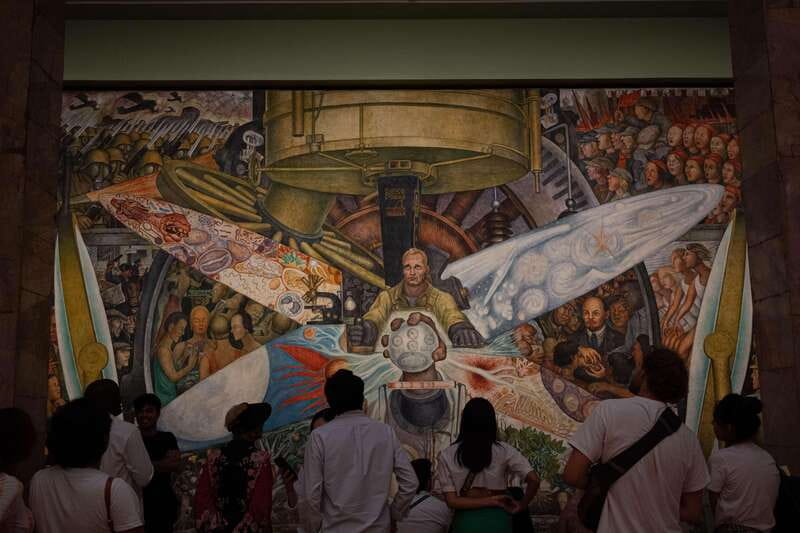
- Bellas Artes sets the political tone: Begin with Diego Rivera’s Man Controller of the Universe and discuss revolution, conquest, and modern politics.
- San Ildefonso shows where the movement began: The former college provides useful context for the early mural program and its setting.
- The route crosses the historic center: Walk along 5 de Mayo and Madero Street before reaching the Zócalo.
- Small groups keep the talk personal: Up to 10 people makes questions and back-and-forth discussion more practical.
- Budget about $60 total: The $52 experience price does not include roughly $8 in museum admission fees.
Why Mexican muralism works best with a guide
Mexican muralism can look easy to understand at first. You see workers, revolutionaries, Indigenous figures, machines, churches, and political leaders spread across enormous walls. Then the questions arrive. Who is being honored? Who is being criticized? How does a mural speak to people who may not visit a private gallery?
That is where this experience earns its keep. The guide does not treat the murals as isolated art objects. The conversation connects them to the Mexican Revolution, the Spanish conquest, and modern politics in Mexico and the United States. You are given a way to read the images, not just a list of names and dates.
I especially like this approach for anyone who has seen Rivera’s work before but wants a clearer sense of the larger movement. Rivera gets plenty of attention, but the route also brings in José Clemente Orozco, David Alfaro Siqueiros, Rufino Tamayo, Jorge González Camarena, and other artists. That wider view matters because Mexican muralism was never just a Diego Rivera show.
The tone also appears to be conversational rather than scripted. Questions are welcome, and the strongest feedback describes the guides as able to make the murals come alive while discussing both art and politics. If you are an art lover who dislikes a memorized speech, this is the right sort of format.
More muralism tours in Mexico:
- CDMX: Xochimilco, Coyoacan, Frida Kahlo Museum & Murals Tour
★ 4.4 · 3,025 reviews - La Catrina & Muralism: Diego Rivera’s Legacy & Frida Kahlo
★ 4.5 · 197 reviews - Muralist Art Semi Private Walking Tour in Mexico City Downtown
★ 5.0 · 188 reviews
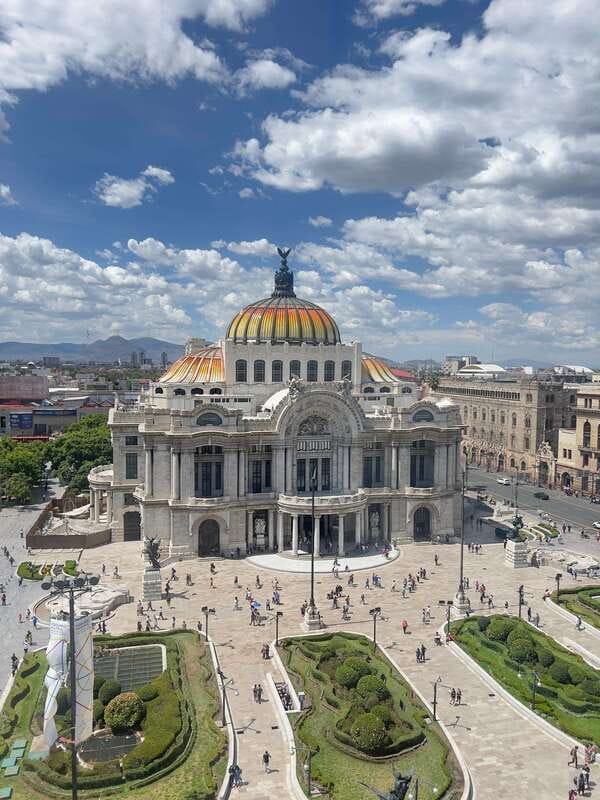
Starting at Palacio de Bellas Artes
Meet outside the main gate of Palacio de Bellas Artes, one of Mexico City’s most recognizable cultural buildings. Its neoclassical exterior gives the tour a grand opening, but the important part is inside, where the walls hold some of the country’s best-known public art.
The Bellas Artes portion lasts about an hour. That is a useful amount of time for a guided look, since the building contains more than one famous work and the political references can take a moment to unpack. You will focus on Diego Rivera’s Man Controller of the Universe, then use it as a starting point for discussing the three major muralists.
Rivera’s mural is especially useful for this purpose because it brings science, labor, social conflict, and political power into one enormous scene. You do not need a specialist art background to follow the discussion. The guide’s job is to point out what your eye might miss and explain why the figures and symbols matter.
This is also where the tour’s historical frame becomes clear. The Spanish conquest and the Mexican Revolution are not treated as distant textbook events. They are part of the visual argument in the murals, and the discussion moves toward the political concerns of the artists and their era.
Allow for the museum admission fee here. Bellas Artes costs 90 Mexican pesos, listed as about $5. That fee is separate from the tour price, but it is a modest addition for access to a major Mexico City art institution.
Walking 5 de Mayo and Madero Street
After Bellas Artes, the group walks for about 15 minutes along 5 de Mayo and Madero Street toward the Zócalo. This is more than a transfer between museums. The route gives you a look at the historic center’s neoclassical and baroque palaces.
You will not spend a long time at every building, so think of this stretch as a short guided orientation rather than an architectural walking tour. The value is in seeing the city’s public spaces in context. Murals belong to Mexico City’s streets, government buildings, schools, and cultural institutions, not only to quiet gallery rooms.
The walk also breaks up the museum time. You can reset your eyes, look upward at façades, and hear how the city’s architecture frames its public art. The group reaches the Zócalo before continuing to San Ildefonso, one of Mexico City’s key sites for understanding the early mural movement.
Wear comfortable shoes. The walking distance described is not extreme, but the tour moves through the historic center, and much of the experience takes place on foot.
San Ildefonso and the movement’s early setting
The former College of San Ildefonso is the most important stop for understanding how muralism developed as a public art form. The building is not just another museum on the route. It was one of the places where the first murals were painted, making the setting part of the story.
Here, the guide explains the dynamics of the movement in greater detail. You can think about why murals were placed in public institutions and how art could reach people outside elite galleries. The setting helps you understand muralism as a civic project, not simply a style defined by large scale.
This stop is likely to be especially useful if you are interested in the relationship between education and public art. A former college is an apt place to discuss how images communicate ideas to a broad audience. The guide can also help you compare San Ildefonso’s early works with Rivera’s later and more expansive political compositions.
Admission to San Ildefonso is 50 Mexican pesos, listed as about $3. That ticket is also separate. Together with Bellas Artes, the two admissions total roughly $8 per person, so add that amount when calculating the real price.
The schedule does not specify a fixed number of minutes for San Ildefonso. The overall tour lasts 2.5 hours, however, so you should expect a focused introduction rather than unlimited museum time. If you want to inspect every room slowly or return to a favorite mural, plan a separate visit.
More street art tours worth booking in Mexico:
- Cancun Street Food Tour with Food Stalls, Local Market and Murals
★ 5.0 · 723 reviews - Mexico City; ART NACO : Murals & Street Art Bike Tour
★ 5.0 · 284 reviews - History and Murals: Walking Tour Guadalajara
★ 5.0 · 237 reviews - Walking Tour – Impressive murals in Historical Center of Mexico City
★ 5.0 · 224 reviews
Finishing at the Museo Vivo del Muralismo
The final stop is the Museo Vivo del Muralismo, where the tour ends. This museum houses 248 murals by Rivera, along with more recent art by various artists, ceramics, and pre-Hispanic murals.
That combination gives the tour a broader finish. Instead of ending with only the three grandmasters, you see how Mexican art continues beyond Rivera, Orozco, and Siqueiros. The inclusion of ceramics and pre-Hispanic murals also widens the conversation beyond painted walls.
For me, this is a smart final stop because it lets you review the ideas from the morning. You have already talked about revolution, conquest, politics, architecture, and public education. At the Museo Vivo del Muralismo, those subjects can be considered alongside older traditions and newer artistic work.
The information provided does not give a separate admission price for this final museum, so confirm the exact ticket arrangement when booking. The tour details specifically identify the Bellas Artes and San Ildefonso tickets as extra and put the total additional cost at around $8 per person.
Because the experience ends here, you may want to check your plans for afterward before setting out. The tour does not return to Bellas Artes, so arrange your next stop from the Museo Vivo del Muralismo rather than assuming you will finish where you began.
The guide makes the difference
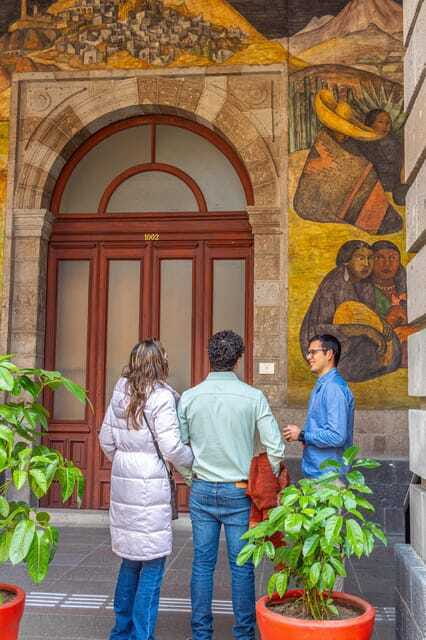
A mural tour rises or falls on the person explaining it. The strongest part of this experience is the guide’s role as an interpreter and conversation partner. José Vicente Figueroa is identified as the experience provider, and the guide feedback attached to the tour also refers to José and Fernando.
The praise is specific. The guides are described as able to answer detailed questions, explain Rivera, Orozco, and Siqueiros, and connect the art to the political relationship between Mexico and the United States. One particularly useful strength is the attention given to artists beyond Diego Rivera, including Tamayo, Camarena, Siqueiros, and Orozco.
That matters because Rivera is often the only name a first-time visitor knows. A good explanation should leave you with a more balanced picture, and this tour appears designed to do that. You will hear about different artistic approaches and political views rather than treating Mexican muralism as one unified voice.
The tour is offered in English, Spanish, Portuguese, German, Italian, and Russian. Since the guide can change, confirm your preferred language and, if having José Vicente specifically matters to you, check who will lead your departure.
Is $52 a fair price?
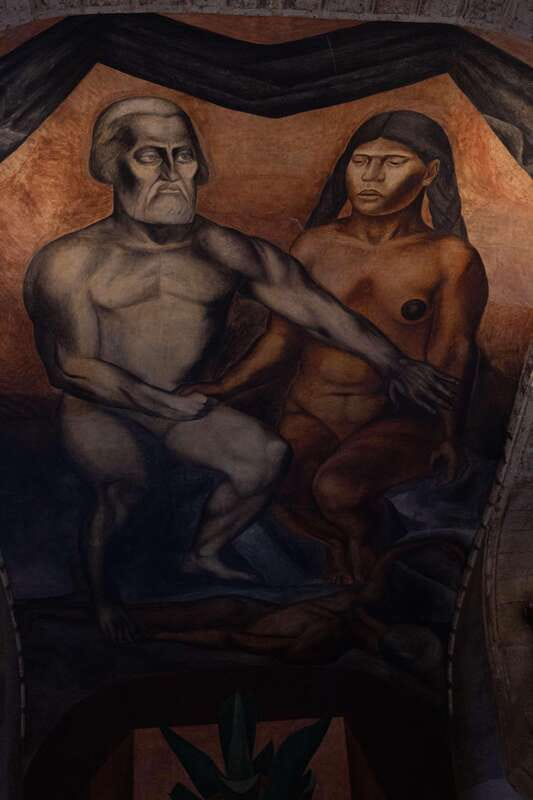
The advertised cost is $52 per person, before roughly $8 in museum tickets. That puts the likely total near $60 per person, using the supplied ticket estimates.
That is not the cheapest way to walk through Mexico City’s historic center. You could visit the museums independently for less, especially if you are comfortable researching the artists and reading wall labels. The value here is the structure: three important art sites, a clear route, and a guide who ties visual details to political and historical themes.
The small group also helps justify the price. With a maximum of 10 people, the format is better suited to questions than a large coach tour. If the group is smaller, the conversation can become even more personal. One reported departure became a solo experience after another participant cancelled, though you should not book expecting that outcome.
I would consider the price fair for an art-focused visitor who wants interpretation rather than simple entry. It is less compelling for someone who only wants quick photographs of famous murals or has already studied Mexican muralism in detail.
Who should book this experience?
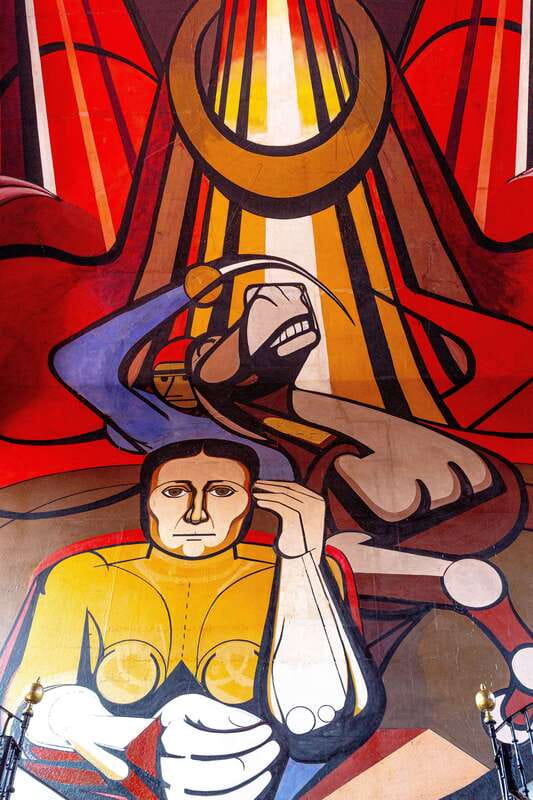
This tour suits you best if you want to understand why the murals were made, not merely where they are. It is a strong choice for art lovers, history readers, and anyone who prefers a thoughtful discussion to a rapid checklist of sights.
It also works well for a first visit to Mexico City because the route combines museums with a short walk through the historic center. You get art, architecture, the Zócalo, and a basic political frame in one compact outing.
You may want a different plan if you need lots of unstructured museum time. The route covers several sites in 2.5 hours, and each stop receives only part of that window. You will see a focused selection and hear an explanation, but you may not have time to linger over every mural.
The tour is also a good match for solo visitors. A small group and an active guide make it easier to ask questions and keep the experience social without the feel of a large organized group.
Practical details before you reserve
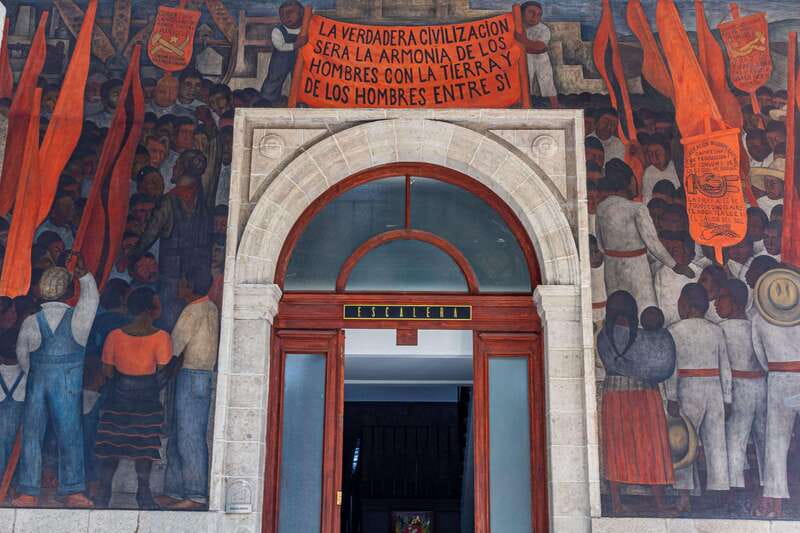
Meet outside the main gate of Palacio de Bellas Artes. Check the starting time when you book, since availability changes.
The activity includes a bilingual guide, with departures offered in English, Spanish, Portuguese, German, Italian, and Russian. Museum admission is not included. Budget about 90 pesos for Bellas Artes and 50 pesos for San Ildefonso, or about $8 total per person based on the listed estimates.
You can reserve now and pay later, which is useful if your Mexico City schedule is still moving around. Free cancellation is available up to 24 hours before the start time for a full refund.
Should you book it?
Book this experience if you want politics, art, and city history explained together by a guide who welcomes questions. The route is well chosen, the group stays small, and the coverage extends beyond Rivera to Orozco, Siqueiros, Tamayo, and Camarena.
Skip it if you prefer to explore museums at your own pace or want a tour devoted to architecture rather than muralism. For the right audience, though, the added guide fee turns several impressive walls into a connected story, which is the real reason to go.
FAQ
Where does the muralism tour begin?
It begins outside the main gate of Palacio de Bellas Artes in Mexico City.
Where does the tour finish?
The tour finishes at the Museo Vivo del Muralismo.
How long does the experience last?
The experience lasts 2.5 hours.
How much does the tour cost?
The listed price is $52 per person. Museum admission is extra.
How much should I budget for museum tickets?
Budget about $8 per person in total. Bellas Artes is listed at 90 Mexican pesos, about $5, and San Ildefonso at 50 Mexican pesos, about $3.
Which artists are covered?
The tour focuses on Diego Rivera, José Clemente Orozco, and David Alfaro Siqueiros. It also discusses artists including Rufino Tamayo and Jorge González Camarena.
What languages are available?
The tour is offered in English, Spanish, Portuguese, German, Italian, and Russian.
How many people can join the group?
The group is limited to 10 participants.
Can I cancel or pay later?
You can cancel up to 24 hours in advance for a full refund. You can also reserve now and pay later.
New street art tours in Mexico
- Xochimilco floating gardens, Coyoacan and UNAM murals★ 4.0 · 6 reviews
- UNAM: Murals & Revolution★ 4.9 · 8 reviews
- Graffitis & Munchies biketour Playa del Carmen★ 4.5 · 18 reviews
- Street Art & Cemetery Cultural Tour – half day★ 5.0 · 3 reviews
- Street Art Walk★ 4.5 · 7 reviews
- Tour Women Muralists : Strokes that resist Mexico City★ 5.0 · 7 reviews
- Mexico City Private Tour with Teotihuacan, Murals, Guadalupe Basilica★ 3.0 · 2 reviews
- Diego Rivera’s murals, hidden treasures★ 5.0 · 21 reviews
Muralism Tours, side by side.
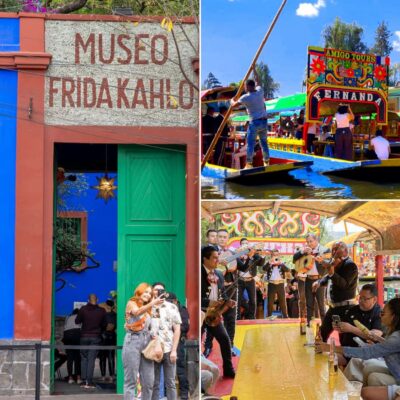
Xochimilco, Coyoacan, Frida Kahlo Museum & Murals Tour
Read our review →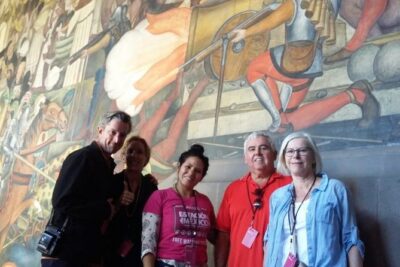
La Catrina & Muralism: Diego Rivera’s Legacy & Frida Kahlo
Read our review →
Muralist Art Semi Private Walking Tour in Mexico City Downtown
Read our review →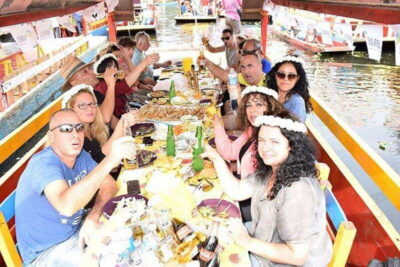
Xochimilco floating gardens, Coyoacan and UNAM murals
Read our review →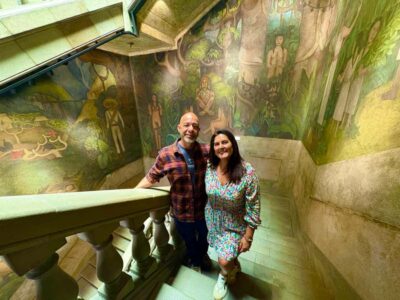
La Catrina & Muralism: Diego Rivera’s Legacy & Frida Kahlo
Read our review →Lists this wall walk turns up in