
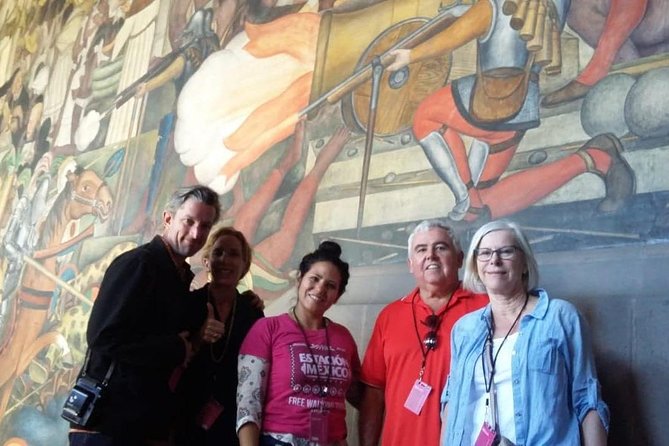
Reviewed · MURALISM TOURS
La Catrina & Muralism: Diego Rivera’s Legacy & Frida Kahlo
The most striking part of this three-hour tour is the way it links Diego Rivera’s murals to the people, politics, and traditions around them. You begin at San Ildefonso, where Rivera’s story and his connection with Frida Kahlo take shape, then follow his artistic legacy through several major art spaces.
I like the route’s range: you see murals in historic buildings, study La Catrina, and hear how technique and social criticism work together. I also like the local guide format. Guides such as Sam, Jesús, Luís, and Aldo have brought clear explanations, patience, and a strong sense of connection between Mexican history and art.
The main consideration is pace. You cover several sites in three hours, with a 20-minute public transport ride and plenty of walking. It is a smart introduction, but anyone wanting long, quiet museum visits should plan a separate return visit.
Key points at a glance
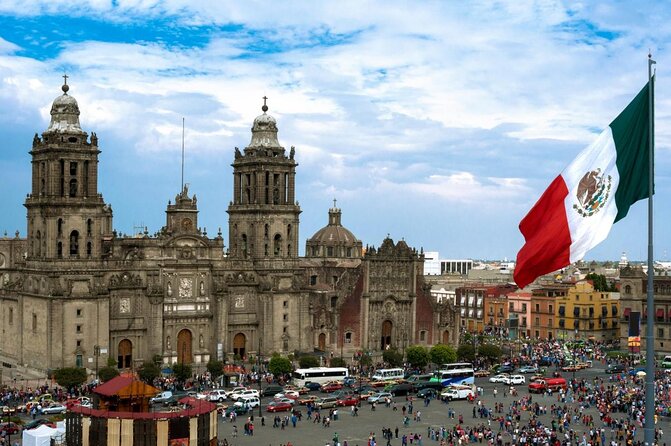
- Start where muralism took root: San Ildefonso gives the tour a strong historical setting and connects Rivera with Frida Kahlo.
- See La Catrina in context: The famous skeleton figure becomes more than a Day of the Dead image when you learn what it represents.
- Follow art through several institutions: The route includes Museo Vivo del Muralismo, the Diego Rivera Mural Museum, and the Palace of Fine Arts.
- Learn how murals work: Your guide explains symbolism, technique, historical setting, and social criticism rather than asking you to simply admire large paintings.
- Travel like a local: A 20-minute public transport segment breaks up the walking and connects the central stops.
- Good for families and first visits: The tour can give adults and children a useful foundation for a short stay in Mexico City.
Why this mural tour is more than a Diego Rivera biography
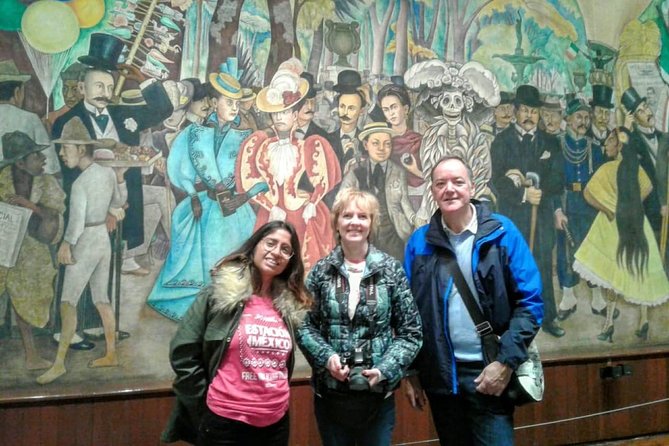
It is easy to treat Diego Rivera as a famous name attached to large paintings. This experience gives you a better starting point. It places Rivera inside Mexico’s cultural story, where mural painting became a way to discuss identity, class, politics, tradition, and the country’s many communities.
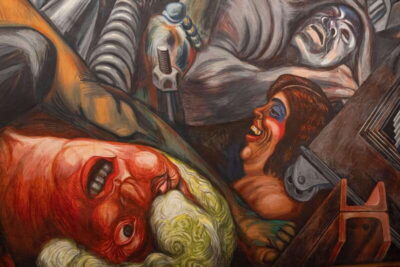
That matters because murals are not simply oversized canvases. They are public art. They were made for people who might never visit a formal gallery, and their subjects often reach beyond individual portraits or decorative scenes. A good guide helps you notice who appears in the image, who is missing, what symbols are repeated, and how the painting speaks to the period in which it was made.
I especially like that the tour does not stop with Rivera’s name. It also brings in Frida Kahlo, La Catrina, Mexican history, and the broader mural movement. That gives you several ways into the subject. If you already know Rivera’s work, you can focus on symbolism and technique. If you are new to Mexican art, you get a clear introduction without needing a background in art history.
More muralism tours in Mexico:
- CDMX: Xochimilco, Coyoacan, Frida Kahlo Museum & Murals Tour
★ 4.4 · 3,025 reviews - La Catrina & Muralism: Diego Rivera’s Legacy & Frida Kahlo
★ 4.5 · 197 reviews - Muralist Art Semi Private Walking Tour in Mexico City Downtown
★ 5.0 · 188 reviews
Beginning at San Ildefonso, where Rivera and Frida’s story starts
The meeting point is in front of the entrance to the former College of San Ildefonso. Look for the guides in pink shirts with umbrellas. This is a useful meeting arrangement in a busy city, though you should still arrive with enough time to locate the entrance rather than relying on a last-second search.
San Ildefonso is an important first stop because it gives the tour a sense of place before you begin moving between museums. Here, you learn about Rivera’s early artistic direction and his effect on Mexico’s cultural identity. The building also connects to the beginning of Rivera’s relationship with Frida Kahlo, a romance that was passionate, difficult, and closely tied to the artistic worlds they shared.
The Frida and Diego story can easily become gossip. The better use of it is as context. Their relationship helps explain why Rivera and Kahlo remain so closely linked in the public imagination, but the tour keeps the focus on art, memory, and the work itself. You hear about the site where their connection began while also considering how personal experience and national identity appear in Rivera’s murals.
Expect a guided visit rather than a quick photo stop. Your guide helps you read the site and explains why it matters in the development of muralism. This opening portion is especially useful for first-time visitors because it gives you terms and background that make the later stops easier to follow.
Museo Vivo del Muralismo and the first lessons in public art
The next stop is Museo Vivo del Muralismo. Its place in the route helps show that Mexican muralism is not limited to one artist or one famous building. You can look at murals as part of an ongoing cultural conversation, not just as old works preserved behind doors.
The strength of this stop depends heavily on the guide. A good explanation can turn a wall filled with figures into a readable scene. You may be asked to look at the arrangement of people, the use of scale, the historical references, and the visual choices that make a mural legible from a distance.
This is where the tour’s focus on technique becomes useful. Murals must function across a large surface, and their message needs to reach a public audience. Your guide discusses how the images carry social critique alongside beauty and tradition. That balance is central to understanding Rivera’s legacy.
The visit may feel quick if you want to inspect every section at leisure. The whole route is designed as a connected introduction, not as a deep study of one museum. I would note down the works or subjects that catch your attention, then return later if your schedule allows.
A 20-minute public transport ride connects the story
The route includes about 20 minutes on public transport. That is not just a transfer to tolerate. It gives you a short pause between the early mural sites and the next part of the tour.
You should be ready to walk and move through public spaces. The tour does not include transportation to the starting point, but the public transport segment during the experience is part of the planned route. Comfortable shoes matter more here than stylish ones. Mexico City streets and museum interiors can make a three-hour walking program feel longer than the clock suggests.
Bring sunscreen, especially if you are sensitive to the sun. Leave luggage and large bags behind. Food, flash photography, bags, and baby carriages are not allowed according to the activity rules. These restrictions can affect families and anyone arriving directly from a hotel checkout, so plan your day around them.
The tour is listed as wheelchair accessible, but the ban on baby carriages and large bags is worth keeping in mind. If you have specific mobility needs or equipment, confirm the details before booking so the route works comfortably for you.
More street art tours worth booking in Mexico:
- Cancun Street Food Tour with Food Stalls, Local Market and Murals
★ 5.0 · 723 reviews - Mexico City; ART NACO : Murals & Street Art Bike Tour
★ 5.0 · 284 reviews - History and Murals: Walking Tour Guadalajara
★ 5.0 · 237 reviews - Walking Tour – Impressive murals in Historical Center of Mexico City
★ 5.0 · 224 reviews
Diego Rivera Mural Museum and the meaning of La Catrina
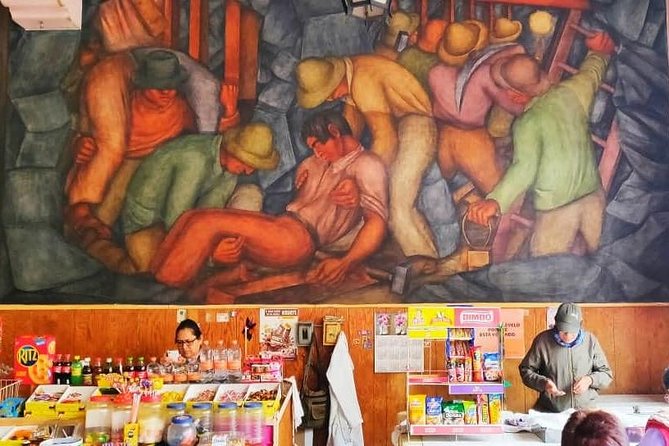
The Diego Rivera Mural Museum is the emotional center of the experience. This is where the tour’s attention to La Catrina comes into sharp focus.
La Catrina is now recognized around the world as a symbol of the Day of the Dead. You may have seen versions in films, popular art, or Mexico City’s well-known Day of the Dead parade. The tour helps you look past the familiar image and consider how the figure carries ideas about death, social status, tradition, and Mexican identity.
That context makes the stop worthwhile even if you already know La Catrina. The figure is not just a colorful skeleton for a holiday photograph. Its meaning changes when you understand the social criticism built into the image and the way Rivera used recognizable symbols to speak to a broad audience.
The museum also gives your guide room to explain Rivera’s artistic vision more closely. Look for the relationship between large-scale composition and small details. A guide may point out symbolism that you could miss while walking through on your own. One of the strongest features of the tour is precisely this attention to meaning beneath the surface.
The museum portion is not a substitute for spending an entire afternoon with Rivera’s work. You will be moving as part of a group and following a set schedule. Still, the guided explanation can make a short visit more useful than a longer visit without context.
Palace of Fine Arts and a fitting finish
The final stop is the Palace of Fine Arts, where the tour ends. This is a practical finish because you remain in the center of Mexico City and can continue exploring after the guide departs.
The Palace brings the story into a grand public setting. Here, you study murals and connect the works to the broader history of Mexican muralism. The building gives the tour a strong final frame: you have started with the movement’s early setting, followed Rivera’s story through several stops, and ended with major works in one of Mexico City’s best-known cultural spaces.
The guide’s role remains important. Rather than rushing you toward a final photo, the tour aims to connect what you have seen. Themes of social critique, beauty, tradition, memory, and national identity return here. You can compare how different murals tell stories and how their location changes the way you experience them.
Because the route finishes at Palacio de Bellas Artes, you are well placed to continue your day. The tour itself does not include meals or drinks, so plan a café or lunch stop separately. Its three-hour length works well as a morning or afternoon activity, depending on the available start time.
What the guides add to the experience
This is a guide-led art tour, and the person leading it makes a real difference. The guides named in the supplied information include Sam, Jesús, Luís, and Aldo, while the experience is provided by Diana Orozco. Guide assignments can vary, but the descriptions point to a style that is patient, enthusiastic, and focused on explaining ideas clearly.
Sam has been noted for explaining symbolism and meanings that are easy to miss. Jesús has worked well with families, including children ages 10 and 12, by connecting art and Mexican culture in a way that keeps younger visitors involved. Luís has presented the history and culture in clear terms, while Aldo has been praised for his patience and detailed explanations of historic places and Rivera’s paintings.
That range is useful to know if you are booking as a family or bringing someone who does not usually visit museums. You are not expected to recognize every artist or understand every reference before arriving. The guide gives you a way to look carefully without making the tour feel like a classroom lecture.
The intimate format is another benefit. You get a more personal connection to Rivera’s legacy than you would from a general city sightseeing program. Ask questions when something catches your attention, particularly if you want to understand La Catrina, Rivera’s social criticism, or the Frida Kahlo connection more fully.
Is $58 a fair price for three hours?
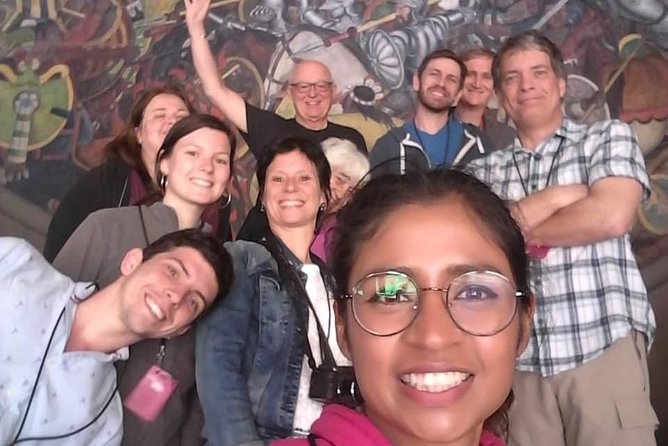
At $58 per person, this is not the cheapest way to see murals in Mexico City. Its value comes from the combination of several guided stops, the local perspective, and the explanations that connect the works.
If you visited the sites alone, you would have more freedom and possibly more time at each museum. You would also need to arrange your route, understand the public transport connection, and find reliable background information as you go. For a first visit, the guide can save time and give the art a clear structure.
The price makes the most sense if you want an introduction rather than a specialist seminar. You are paying for interpretation and a planned route through San Ildefonso, Museo Vivo del Muralismo, the Diego Rivera Mural Museum, and the Palace of Fine Arts. You are not paying for meals, drinks, transportation to the starting point, or an all-day museum program.
For families, the value improves if you want someone else to keep children engaged and explain the cultural setting. For serious art students, the tour may work best as an orientation before returning to the museums independently.
Who should book this experience?
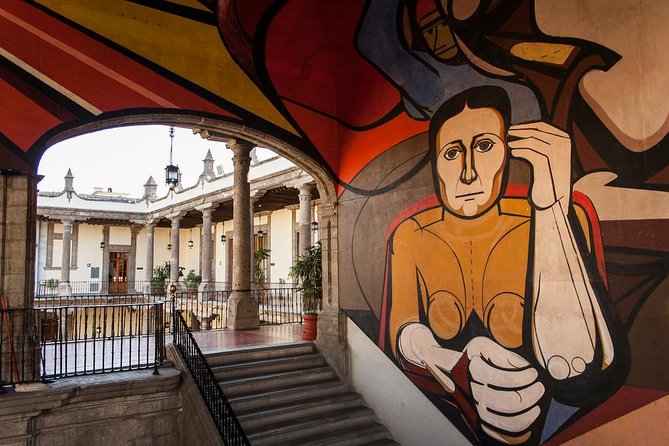
I would recommend it to first-time visitors who want a clear introduction to Mexican muralism without spending a full day in one museum. It also suits people who know Frida Kahlo but want to understand Diego Rivera’s public art and the traditions around it.
Families should find the structure manageable, provided children can handle walking and a three-hour schedule. The experience has already worked for children aged 10 and 12, with the guide connecting the art and history in an accessible way.
You should also consider it if La Catrina interests you. The tour places the figure inside a cultural and artistic setting rather than treating it as a simple Day of the Dead decoration.
This may not be the best choice if you dislike guided visits, need a slow pace, or want extended time for photography. Flash photography is not allowed, and large bags, food, and baby carriages are not permitted. The route is active, so comfortable shoes are essential.
Booking details worth knowing before you go
The tour lasts three hours, with starting times based on availability. It is offered in English and Spanish, and the activity is listed as wheelchair accessible.
You can cancel up to 24 hours in advance for a full refund. The reserve now and pay later option gives you some flexibility if you are still arranging a Mexico City schedule.
Meet your guide in front of the entrance to Colegio de San Ildefonso. Pink shirts and umbrellas are the visual markers. Arrive ready to walk, carry sunscreen, and leave large luggage elsewhere.
Should you book La Catrina and Muralism?
Book it if you want art explained through Mexican culture, public life, and personal stories rather than presented as a series of famous names. The route is thoughtfully connected, and the strongest guides make symbolism and historical context easier to see.
I would especially choose it near the start of a three-day Mexico City visit. It gives you a working introduction to Rivera, Kahlo, La Catrina, and muralism, then leaves you at the Palace of Fine Arts with ideas for further exploration.
Skip it only if your priority is complete independence or long, unhurried museum time. For most first-time visitors, $58 is reasonable for a focused three-hour introduction led by a local art enthusiast.
FAQ
Where does the tour begin?
The tour begins in front of the entrance to Colegio de San Ildefonso, also known as the former College of San Ildefonso. Look for guides wearing pink shirts and carrying umbrellas.
Where does the tour end?
The tour ends at the Palace of Fine Arts, also called Palacio de Bellas Artes.
How long does the experience last?
The experience lasts three hours. Starting times depend on availability.
Which languages are available?
The tour is offered in English and Spanish.
Is public transportation part of the tour?
Yes. The route includes a public transport segment of about 20 minutes between the scheduled stops.
What should I bring?
Bring comfortable shoes and sunscreen. The experience involves walking.
Can I bring luggage, food, or a baby carriage?
No. Large bags, luggage, food, flash photography, bags, and baby carriages are not allowed. The activity is listed as wheelchair accessible.
New street art tours in Mexico
- Xochimilco floating gardens, Coyoacan and UNAM murals★ 4.0 · 6 reviews
- UNAM: Murals & Revolution★ 4.9 · 8 reviews
- Graffitis & Munchies biketour Playa del Carmen★ 4.5 · 18 reviews
- Street Art & Cemetery Cultural Tour – half day★ 5.0 · 3 reviews
- Street Art Walk★ 4.5 · 7 reviews
- Tour Women Muralists : Strokes that resist Mexico City★ 5.0 · 7 reviews
- Mexico City Private Tour with Teotihuacan, Murals, Guadalupe Basilica★ 3.0 · 2 reviews
- Diego Rivera’s murals, hidden treasures★ 5.0 · 21 reviews
Muralism Tours, side by side.
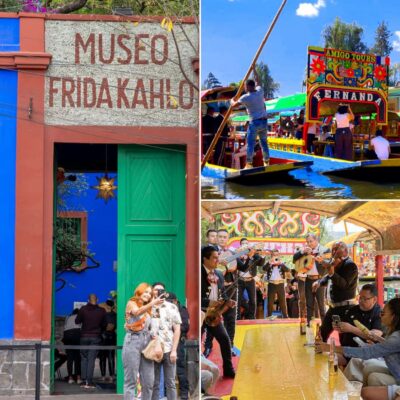
Xochimilco, Coyoacan, Frida Kahlo Museum & Murals Tour
Read our review →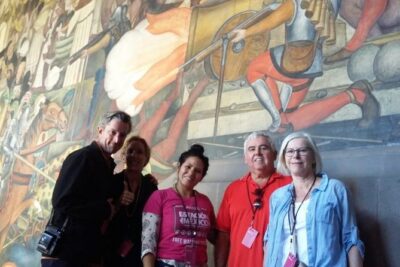
La Catrina & Muralism: Diego Rivera’s Legacy & Frida Kahlo
Read our review →
Muralist Art Semi Private Walking Tour in Mexico City Downtown
Read our review →
Xochimilco floating gardens, Coyoacan and UNAM murals
Read our review →
Lists this wall walk turns up in