
Reviewed · JOHANNESBURG MURAL TOURS
Johannesburg: Maboneng Street Art & Culture Tour
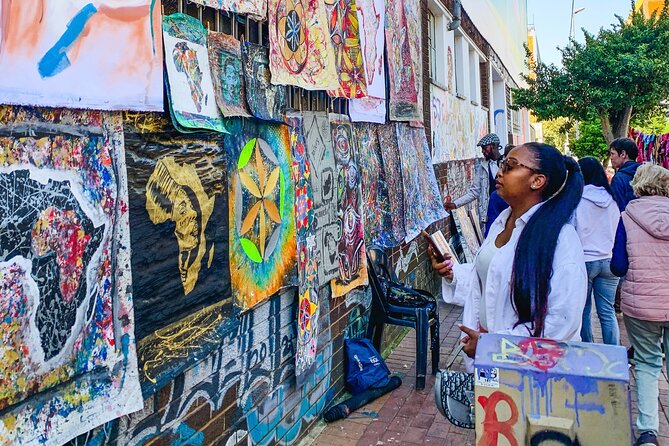
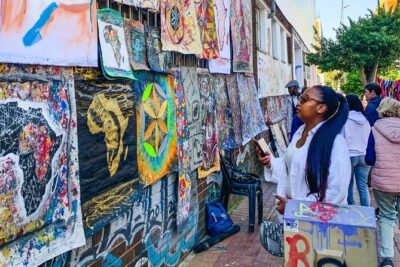
Maboneng’s best street art is not simply decoration. It carries stories about Johannesburg, local artists, activism, and a neighborhood still finding its footing. This two-hour walk takes you past murals, graffiti, galleries, and newer construction while a local guide explains what you are seeing and why it matters.
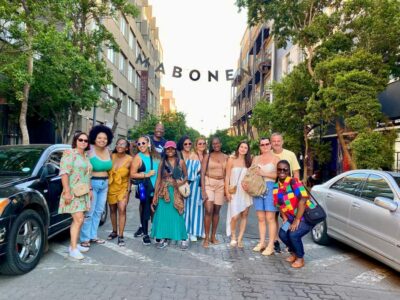
I like the personal context. Guides such as Refiloe and Mulalo are praised for explaining both the artwork and the wider culture of Johannesburg. I also like the small group limit of 10, which gives you a better chance to ask questions and keep a steady pace. The main consideration is that this is a walking tour with no listed inclusions, so bring water and budget separately for coffee, food, or shopping.
Key points to know before you book
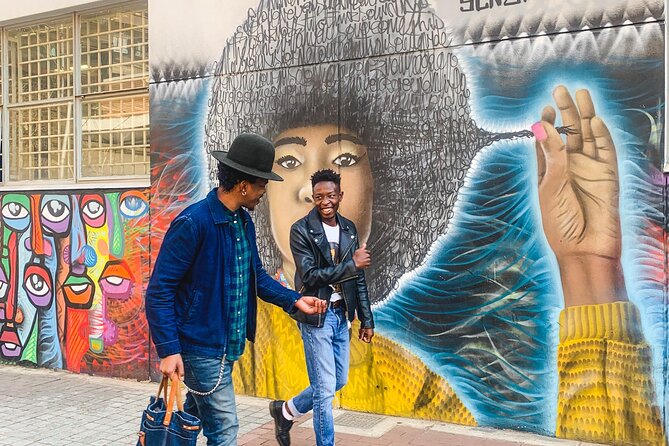
- Maboneng beyond the murals: You learn how the art connects with local artists, activism, community groups, and the changing identity of the neighborhood.
- A guide helps you find the good work: The streets contain more art than you are likely to spot on your own, and the route gives you a useful shortcut.
- Refiloe is a frequent guide: His lively, personal approach has helped solo participants and couples feel at ease.
- Two hours, with room to linger afterward: The formal walk ends where it starts, but Fox Street gives you options for coffee, food, and local shopping.
- Small groups help: The maximum group size is 10, though a private or nearly private departure may be possible depending on bookings.
- Plan for extra spending: The tour price is about $37.51 per person, while drinks, meals, purchases, and other extras cost more.
Why Maboneng works so well for a street art walk
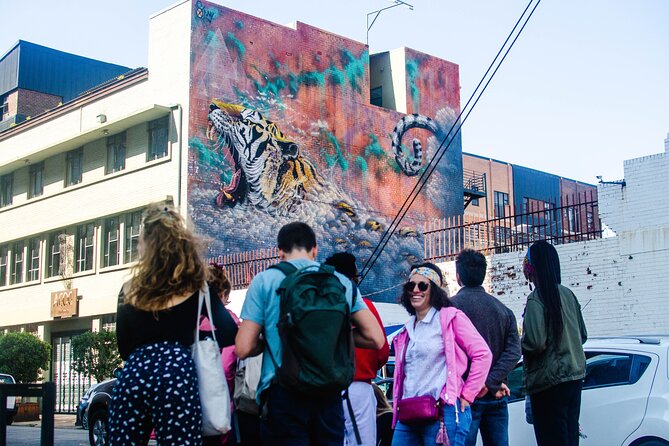
Maboneng is a neighborhood of contrasts. You see murals and galleries beside older industrial-looking buildings, newer construction, cafés, shops, and ordinary city streets. That mix gives the artwork some bite. You are not viewing paintings in a quiet gallery. You are seeing them in the setting they were made to affect.
The tour is designed to help you read the walls. A guide can point out the artists, explain the ideas behind the images, and connect the work to local community groups. That extra layer is the reason to book rather than simply wander through Maboneng with a camera.
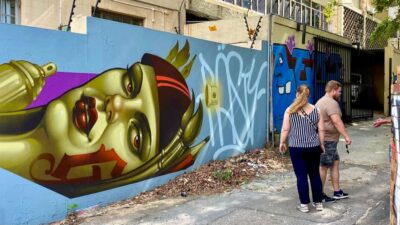
I especially like that the focus is not limited to famous murals. The walk includes different forms of public art, including graffiti and large painted walls. Some pieces may be polished and colorful. Others may feel rougher, more political, or harder to interpret at first glance. The guide’s explanation helps you understand how those differences fit into the area.
You should also keep your expectations sensible. Street art changes. Paint fades, walls are covered, and construction alters the view. The route is about seeing what is present now and understanding the neighborhood, not visiting a permanent museum collection.
More street art tours worth booking in the world:
- Medellin: Comuna 13 Graffiti Tour, Cable Car & Street Food
★ 4.8 · 9,046 reviews - CDMX: Xochimilco, Coyoacan, Frida Kahlo Museum & Murals Tour
★ 4.4 · 3,025 reviews - Amsterdam: Streetart Museum STRAAT Entrance Ticket
★ 4.8 · 2,137 reviews
Starting near Van Beek Street and the Home of the Bean
The listed meeting point is Maboneng Society at 26 Van Beek Street, New Doornfontein, Johannesburg. Arrival instructions also identify Home of the Bean, the coffee shop at the corner of Fox and Berea Street under the bridge. It is described as an old industrial building from the outside, and you are asked to wait inside the coffee shop if you arrive early.
That detail matters. Maboneng has several streets, buildings, and businesses close together, and a first-time visitor can waste time looking for the exact entrance. The operator plans to contact you by WhatsApp or message about 30 minutes before the start, especially if there is a change to the booking. Keep your phone available and check the meeting instructions before setting out.
The tour starts and finishes in the same general Maboneng location. That makes it easier to add the walk to a day of sightseeing, though the experience itself does not include transport or additional activities. Public transportation is nearby, and the meeting area is in the city rather than at a remote attraction.
A practical tip: arrive with enough time to identify Home of the Bean and settle inside. You do not need to arrive extremely early, but you do want to avoid beginning the tour flustered or standing on the wrong corner.
The first streets: getting a feel for Maboneng
The opening section introduces the neighborhood as a place of murals, art, galleries, and newer construction. Your guide begins putting the visual pieces together, explaining what makes this part of Johannesburg different from a standard sightseeing stop.
This is where the tour’s local perspective becomes useful. A wall can look impressive in a photograph, but the story may be about the artist, the community, political expression, or a shift in how people view the area. The guide gives you a way to move from taking pictures to understanding the purpose behind them.
The neighborhood is also described as part of an effort to change the reputation of a formerly dangerous area. That change is not presented as finished. You may see a district that feels creative and welcoming in one stretch, then more unfinished or subdued in another. This is a working urban neighborhood, not a sealed-off arts complex.
That unfinished quality is worth keeping in mind. If you want a perfectly polished art district with a fixed route and spotless public spaces, Maboneng may feel uneven. If you enjoy seeing art in a place still being reshaped, the mix is part of the interest.
Murals, graffiti, and the stories behind them
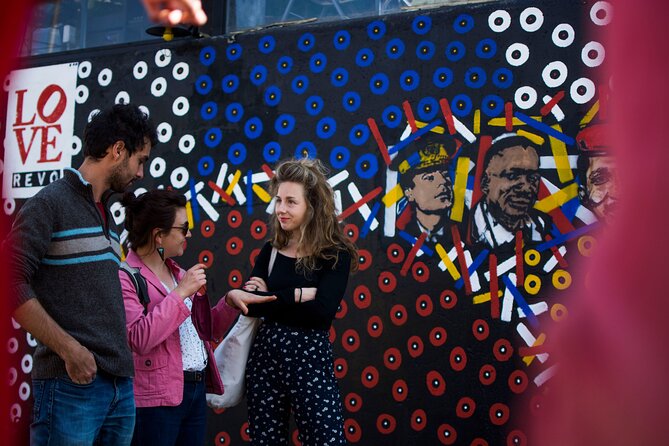
The central part of the walk focuses on a range of public art. You can expect murals and graffiti, with the guide discussing the artists and the inspiration behind their work. The most useful moments are likely to come when the guide explains details that are not obvious from the street.
The artwork also provides a way to discuss South African history and culture without turning the outing into a lecture. Guides have been praised for making the walk interactive, friendly, and easy to follow. Refiloe, in particular, is described as someone who helped participants feel at home in Maboneng while keeping the tour entertaining.
That personal approach is important. A street art walk can become a list of artist names and dates. Here, the strongest part is the connection between the walls and the people who live, work, create, and shop in the district. You are encouraged to look at how public art can shift the way a community is seen.
The art may also lead to conversations about activism. The area’s murals are not only pretty backdrops. Some carry social messages or show how artists use public space to question old assumptions. You may not connect with every piece, but the explanations give you a better chance of seeing why it matters.
Bring a camera, but do not let photography take over. The tour is short, and stopping for every picture could make you miss the next explanation. A phone is enough for most visitors, and there is no indication that special photography equipment is needed.
Same city, a different set of walls:
- Belfast: Murals Taxi Tour
★ 4.9 · 2,047 reviews - Wynwood Graffiti Golf Cart Small-Group Tour
★ 5.0 · 1,646 reviews - London: Street Art and Graffiti Guided Walking Tour
★ 4.9 · 1,354 reviews - Lisbon: Street Art Tour
★ 4.9 · 1,324 reviews
What the guide adds to the experience
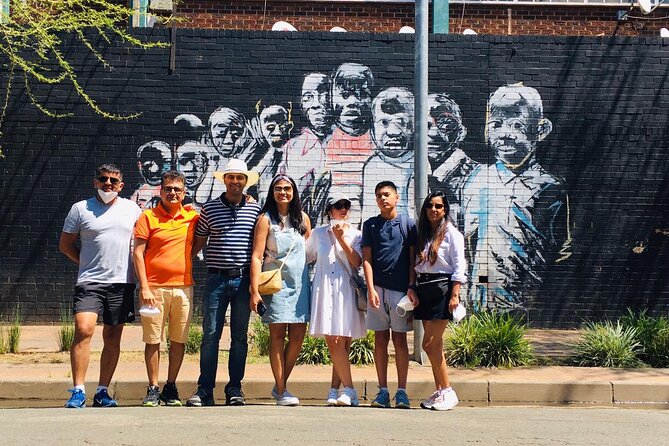
The guide is the main reason this tour can offer more than a self-guided walk. Names connected with the experience include Refiloe, Mulalo, Milalo Mphuma, and a guide who explained that his name translates to Given. Your assigned guide may vary, but the descriptions consistently point to local guides who bring personal insight to the area.
Refiloe receives especially strong praise for being professional, engaging, and easy to talk with. One solo participant had a one-to-one tour and did not feel awkward, which is useful if you are booking alone. A private-feeling departure can also let you ask more questions about the art, neighborhood, and city.
Mulalo is described as pleasant and engaging, with a good grasp of the art, artists, and past and present of Maboneng. Milalo Mphuma is also praised for explaining Johannesburg and local culture in a way that made the walk accessible.
You should not expect a formal art-history seminar. The strength is conversation on the street. Ask what a mural means, who created it, how the district has changed, and what the guide thinks about the area. The more curious you are, the more useful the two hours become.
Safety is another part of the guide’s role. Several participants felt comfortable walking with the guide and appreciated the reassurance. That does not mean you should switch off your usual city awareness. Keep an eye on your belongings, follow the guide’s route, and stay with the group.
The newer construction and the changing neighborhood
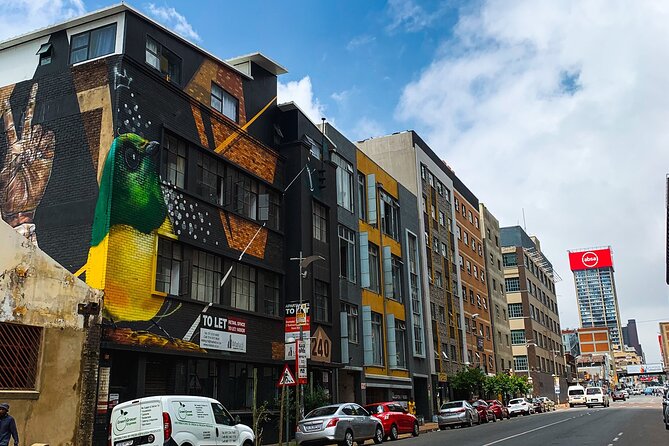
One part of the route highlights newly constructed sections of the neighborhood. This may seem less artistic than a wall covered in paint, but it helps you understand the larger story. Maboneng is not only about art. It is also about redevelopment, new businesses, changing perceptions, and the pressure that comes with urban renewal.
The result can feel exciting and complicated at the same time. Creative districts often attract cafés, galleries, shops, and visitors, but they also raise questions about who benefits from change and how local communities are affected. The tour’s focus on community perspectives gives you more to think about than a simple before-and-after story.
You may notice that the area has lively pockets and quieter stretches. One morning visit was described as having little action, though the participant still enjoyed being on the streets and felt comfortable. That is useful timing advice. A morning departure may offer a calmer walk, but it might not show the neighborhood at its busiest.
If you want a stronger sense of street activity, ask about the day and departure time when booking. The supplied details do not promise a particular level of activity, so it is better to see the walk as an art and culture experience rather than a guarantee of busy street life.
Ending near Fox Street
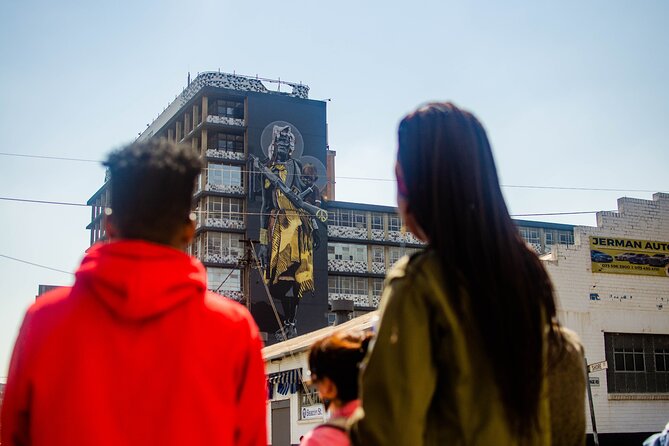
The tour returns to the Maboneng Society meeting area, with Fox Street nearby for continuing your visit. This is a practical finish. You can stop for coffee, browse local shops, or find something to eat without arranging another ride immediately.
Home of the Bean is specifically identified as a coffee stop at the corner of Fox and Berea Street under the bridge. It is not included in the tour price, but it gives you a clear place to wait before the walk or pause afterward. The end of the experience is therefore more useful than a simple drop-off point.
The neighborhood’s cafés, restaurants, galleries, and shops also make it easy to extend the outing. You can treat the walking tour as a two-hour introduction, then decide what deserves more of your time. That is better than trying to cover every part of Maboneng without context.
Do remember that purchases and food are extra. The tour includes no listed items beyond the guided experience, so keep some money aside if you want to shop or sit down after the walk.
Is $37.51 a fair price?
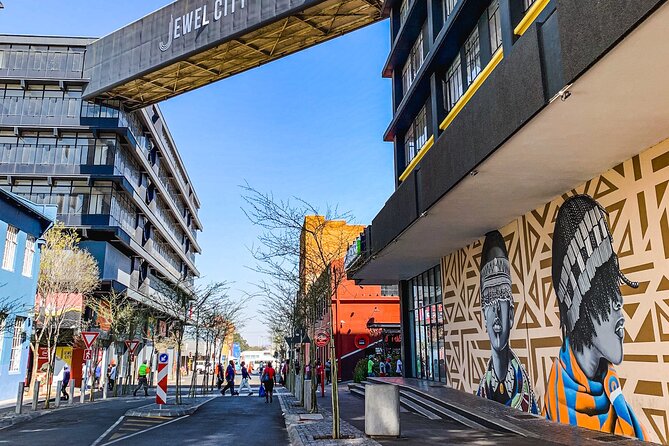
At about $37.51 per person, this is not the cheapest way to spend two hours in Johannesburg. You can walk through a neighborhood on your own for less. The value comes from the guide’s access to the stories, artists, and local context, not from admission to a paid attraction.
For a first visit to Maboneng, I think the price is reasonable if you want to understand the art rather than collect a few photographs. A maximum of 10 participants is also a useful feature. You are paying for a focused introduction, a route that saves time, and the chance to ask questions.
The value is stronger if you are traveling alone, are unsure about walking through an unfamiliar part of the city, or have limited time in Johannesburg. It is also a good fit if you enjoy public art but do not know how to interpret graffiti and murals on your own.
The value is weaker if you only want a quick photo stop, dislike walking, or already know Maboneng well. Since extra food, drinks, shopping, and other costs are not included, the final amount you spend can rise after the tour.
Who should book this walk?
This experience suits first-time visitors who want a short introduction to Johannesburg’s creative side. It also fits photographers, art fans, solo visitors, and anyone who prefers seeing a city through local stories rather than only through major landmarks.
The two-hour length makes it easy to fit into a broader Johannesburg schedule. You can place it on your first day to get your bearings in Maboneng, or on your final day as a relaxed cultural outing before leaving the city.
It is less suitable for anyone expecting a large museum, a fixed collection, or a fully polished district. The art is outdoors, the neighborhood is still changing, and the pace depends on the guide and group. Wear comfortable shoes and be ready to walk and listen.
The 4.9 rating from 140 reviews and 99 percent recommendation suggest strong overall satisfaction, but I would still read the format correctly. The guide and the local setting are the main attractions. The tour is not designed around included food, transport, or entry tickets.
Booking, timing, and cancellation details
Confirmation is provided when you book, and the activity accepts a maximum of 10 participants. It is typically booked about 13 days ahead, although a last-minute booking may be possible if space remains.
Free cancellation is available up to 24 hours before the start time for a full refund. Cancellations or changes made less than 24 hours before the local start time are not refunded or accepted.
The operator is One Day Africa. Since meeting instructions refer both to Maboneng Society at 26 Van Beek Street and Home of the Bean near Fox and Berea Street, check the final message carefully. The operator says it may contact you by WhatsApp or message around 30 minutes before the start.
Should you book the Maboneng Street Art and Culture Tour?
Book it if you want meaning behind the murals, a local guide, and an easy two-hour introduction to one of Johannesburg’s most creative districts. Refiloe, Mulalo, Milalo Mphuma, or another local guide can turn a wall-by-wall walk into a broader look at art, culture, community change, and the city itself.
Skip it if you want a fully self-directed stroll or a guaranteed busy street scene. For most first-time visitors, though, the price is fair, the group size is manageable, and the finish near Fox Street gives you room to continue exploring on your own.
FAQ
How long does the Maboneng Street Art and Culture Tour last?
The tour lasts approximately two hours.
Where does the tour start and finish?
The listed start and end point is Maboneng Society at 26 Van Beek Street, New Doornfontein, Johannesburg. Arrival instructions also identify Home of the Bean at the corner of Fox and Berea Street under the bridge.
How much does the tour cost?
The listed price is about $37.51 per person.
What does the tour include?
The experience includes the guided walking tour through Maboneng, with explanations of murals, graffiti, artists, and community stories. No additional items or costs are included.
How many people can join the tour?
The maximum group size is 10 participants.
Can I cancel for a full refund?
Yes. You can cancel at least 24 hours before the local start time for a full refund. Cancellations or changes made within 24 hours are not refunded or accepted.
New street art tours in the world
- Your Own Belgrade: Street Art and Hidden Gems Walking Tour★ 5.0 · 2 reviews
- Wynwood Walls Street Art & Neighborhood Walking Tour★ 4.9 · 9 reviews
- Xochimilco floating gardens, Coyoacan and UNAM murals★ 4.0 · 6 reviews
- Vancouver: Street Art & Craft Beer Walking Tour with Tasting★ 4.8 · 14 reviews
- Vancouver: Street Art & Craft Coffee Walking Tour w/ Tasting★ 4.8 · 11 reviews
- Zagreb Street Art Private Walking Tour with a Local Artist★ 5.0 · 12 reviews
- UNAM: Murals & Revolution★ 4.9 · 8 reviews
- Urban Canvas: Osaka Street Art Bike Tour★ 5.0 · 10 reviews
Johannesburg Mural Tours, side by side.
Colours of Johannesburg: A Graffiti & Street Art Tour
Read our review →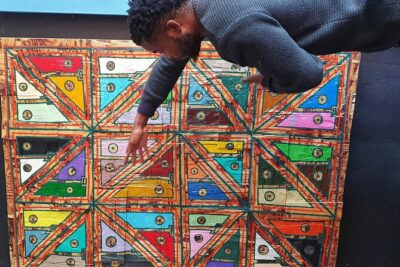
(Meet the Artist)Art Gallery & Street Art tour with lunch
Read our review →
Johannesburg Street Art & Museum Walking or E-scooter Tour
Read our review →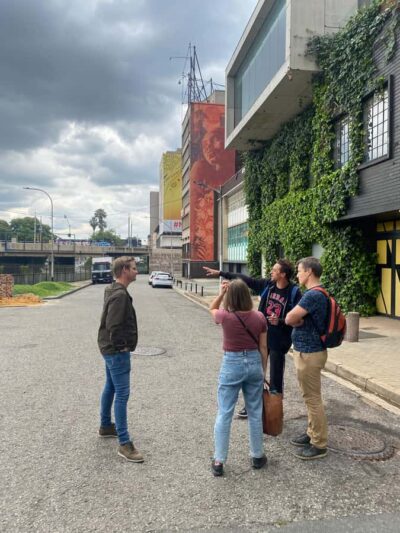
Lists this wall walk turns up in