
Reviewed · JOHANNESBURG MURAL TOURS
Johannesburg: Maboneng Street Art & Culture Tour
Johannesburg’s best stories are painted on its walls, and this Maboneng street art walk gives you the people and context behind them. You begin at Hallmark House, then move through murals, studios, markets, and creative spaces where art is tied to identity, protest, hope, and the city’s post-apartheid renewal.
I like the rooftop start, which helps you get your bearings before walking, and I like the human scale of the tour. Guides including Refiloe, Mulalo, and Clement are praised for explaining artists clearly, taking photos, and sharing useful restaurant and gallery tips. The main consideration is that Maboneng can feel unfamiliar to first-time visitors, so you should stay with your guide and avoid treating this as a wander-anywhere-alone outing.
Key points to know before you go
- Start with a city view: Hallmark House gives you a useful first look at Johannesburg before the walking begins.
- Art comes with context: Your guide explains the meaning, methods, and background of major murals instead of simply pointing them out.
- Meet the creative community: Galleries, vendors, artists, and craft spaces bring the district’s present-day culture into focus.
- A strong safety benefit: Guides know the area and are familiar with local people, which helps you feel more at ease.
- Good value for art lovers: At $37 for two hours, the tour costs more than a casual self-guided walk but adds access, interpretation, and local perspective.
- Plan for a walking morning or afternoon: Food, drinks, and hotel transfers are not included.
Why Maboneng makes a good first look at Johannesburg
Johannesburg is often introduced through gold mining, apartheid, and its large modern districts. Those subjects matter, but they can make the city feel like a history lesson viewed from a distance. Maboneng gives you a more immediate way in.
Here, old industrial and commercial areas are being reshaped through murals, studios, restaurants, markets, galleries, and small creative businesses. The result is not polished in every corner, and that is part of the point. You see a district still working out what it wants to become.
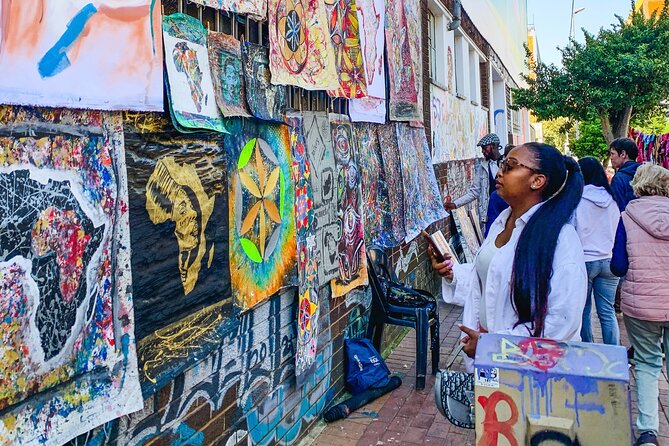
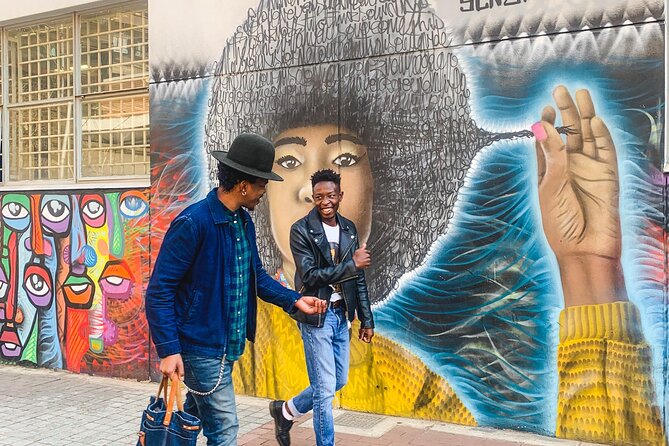
The art helps explain that process. A wall may carry a political message, a portrait, an abstract design, or a scene rooted in local life. Your guide gives those images a setting. You learn about the artists, the techniques, and the reasons certain works matter to the people who live and work nearby.
I especially value that the tour does not present street art as decoration alone. The murals are treated as public statements about identity, resistance, hope, and the right to shape the city’s image. That makes the walk more rewarding than a series of photo stops.
More street art tours worth booking in the world:
- Medellin: Comuna 13 Graffiti Tour, Cable Car & Street Food
★ 4.8 · 9,046 reviews - CDMX: Xochimilco, Coyoacan, Frida Kahlo Museum & Murals Tour
★ 4.4 · 3,025 reviews - Amsterdam: Streetart Museum STRAAT Entrance Ticket
★ 4.8 · 2,137 reviews
Starting at Hallmark House and getting your bearings
The meeting point is inside Hallmark House at the coffee shop. If you arrive early, wait there rather than standing outside and trying to guess where the group will gather. Hallmark House is also one of the key visual stops on the route.
The building’s rooftop is known for city views and sunset light, and the tour uses that high point to frame what you are about to see. From above, Johannesburg’s scale becomes easier to understand. You can begin to read the relationship between the old mining city, the inner-city districts, and the newer creative activity below.
This opening is useful because the rest of the experience takes place at street level. Once you start walking, your attention turns to walls, doorways, workshops, vendors, and small details. The rooftop pause gives you a broader picture before the close-up work begins.
The route then moves into Maboneng Precinct. The supplied schedule gives about 15 minutes to this first major area, though the full two-hour walk includes connected stops and time spent discussing artworks. Expect a guided introduction rather than a long visit at one single mural.
Maboneng’s murals tell more than one story
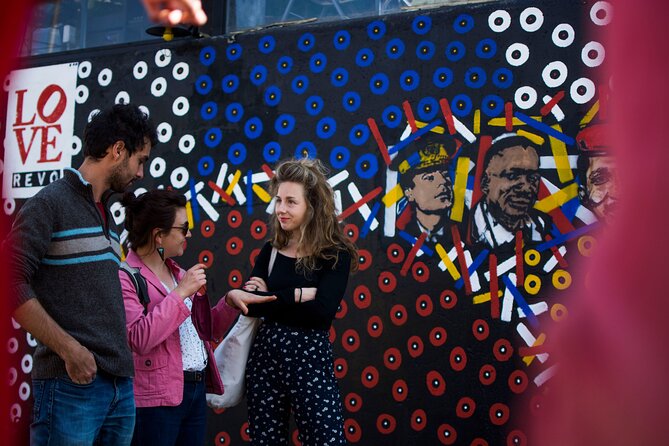
The strongest part of the walk is the explanation that comes with each artwork. You are not simply told who painted a wall. You hear why a particular image was made, how it fits into the area, and how public art can change the way people see an inner-city neighborhood.
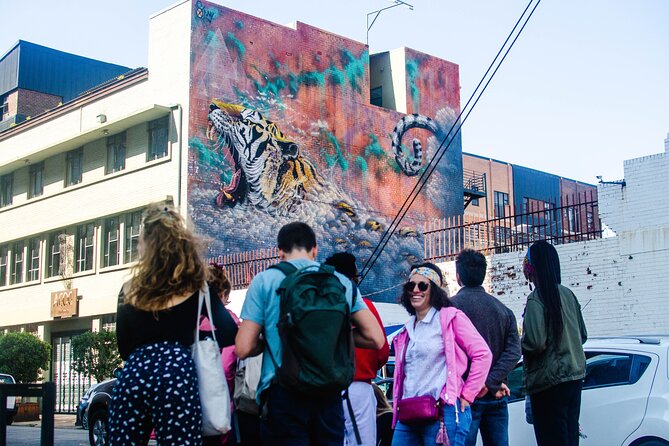
Several comments about the guides point to the same strength: they explain artists and their work in a way that makes the art easier to read. Refiloe is frequently singled out for his passion and warmth, while Mulalo is praised for linking art with Johannesburg’s history and present-day changes. Clement also receives credit for bringing energy and personal insight to the walk.
That variety matters because street art can be easy to skim. A large mural may look striking in a photograph, but its meaning can be missed if you do not know the subject, artist, or local setting. Your guide turns the wall into a conversation.
The walk also introduces you to different styles and materials. You may see legal graffiti and other public works, then hear about how artists use color, scale, portraiture, lettering, and visual symbols. The exact works can change, as outdoor art is exposed to weather, new building projects, and repainting, so focus on the guide’s interpretation as much as the individual photo.
Bring a phone or camera if you like taking pictures. Guides have also been praised for taking photos of participants, which is a small but welcome touch when you are traveling alone or want a group shot.
A quick look at the Cosmopolitan Lounge and Hallmark House
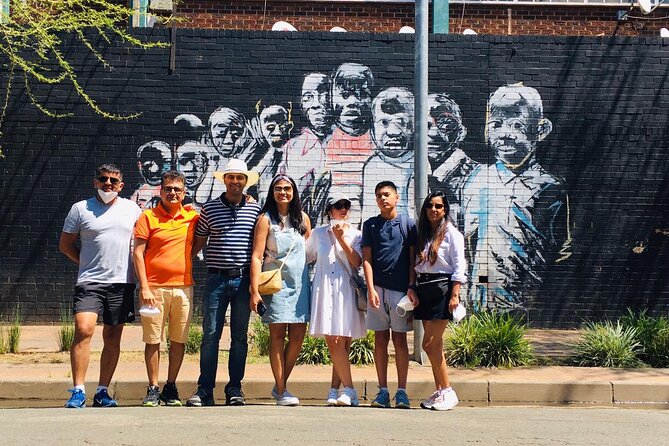
The Cosmopolitan Lounge is listed as a short five-minute stop. Do not expect a long meal or a full restaurant visit here. It works more as a brief point of interest along the route, with time for a look, a photo, and some local explanation.
Hallmark House receives another short stop of around ten minutes, with sightseeing and shopping included. The building is important to the experience because it links the starting view with the street-level creative scene. You get a chance to look around, and you may find useful ideas for returning later for coffee, food, or further exploration.
The short timing at these locations keeps the walk moving. The tradeoff is that you will not have time to linger at every business. If you see a shop or café you want to revisit, make a note of it and return after the tour.
Same city, a different set of walls:
- Belfast: Murals Taxi Tour
★ 4.9 · 2,047 reviews - Wynwood Graffiti Golf Cart Small-Group Tour
★ 5.0 · 1,646 reviews - London: Street Art and Graffiti Guided Walking Tour
★ 4.9 · 1,354 reviews - Lisbon: Street Art Tour
★ 4.9 · 1,324 reviews
Access City and Artisan Lofts show the working side of the district
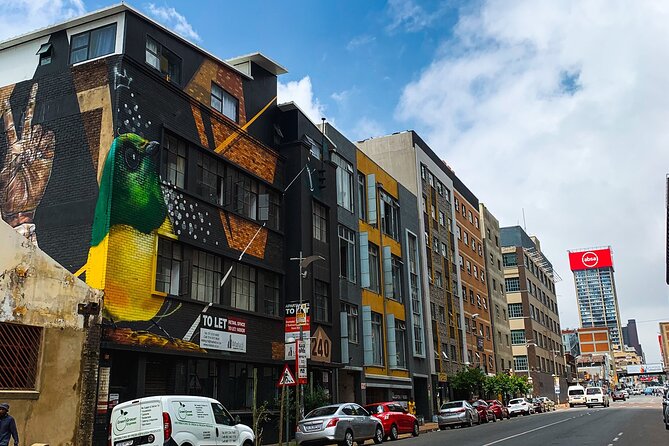
Access City brings in shopping and an arts-and-crafts market element. This is where the tour shifts from looking at finished murals to seeing the wider creative economy around them. You can browse, ask about local goods, and observe how design and small-scale trade fit into the neighborhood.
Artisan Lofts continues that theme. The stop is again short, about ten minutes in the planned schedule, so treat it as a focused introduction rather than a long shopping session. You may find artists, makers, or craft displays, but the important value is the chance to connect street art with indoor creative work.
I like this part because it keeps the tour from becoming a wall-by-wall art inventory. Johannesburg’s creative culture is not only outdoors. It also appears in studios, markets, galleries, and the people selling or making things nearby.
If you want to buy something, remember that purchases are your responsibility. The $37 tour price covers the guide, not shopping, food, or drinks. That separation is clear and helps you budget honestly.
Jewel City adds urban renewal and local voices
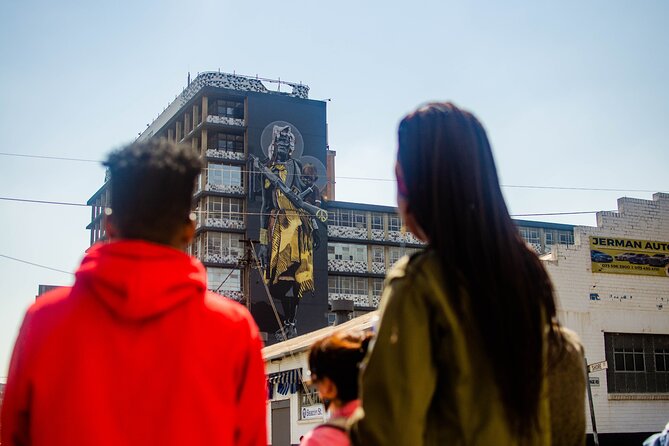
Jewel City is one of the more significant stops because it connects art with urban regeneration and South Africa’s modern art scene. The area gives you another setting in which to consider how buildings and public spaces are being reused or reshaped.
Here, the tour includes galleries, vendors, and arts-and-crafts activity. You may have a chance to meet local creatives and hear about emerging artists, their motivations, and the methods they use. This is a good moment to ask direct questions. What does an artist want people to notice? How is a work made? What local issue does it address?
The schedule allows about ten minutes at Jewel City, though the guide may spend more or less time depending on the group and what is open. I would not book this expecting an extended gallery crawl. It is better understood as a guided sampling of a changing creative district.
Jewel City also helps broaden the story beyond Maboneng’s most photographed walls. You see how public art, galleries, shops, and local enterprise can sit close together, sometimes comfortably and sometimes with tension. That imperfect mix is more revealing than a carefully staged cultural attraction.
Fox Street brings the walk back to street level
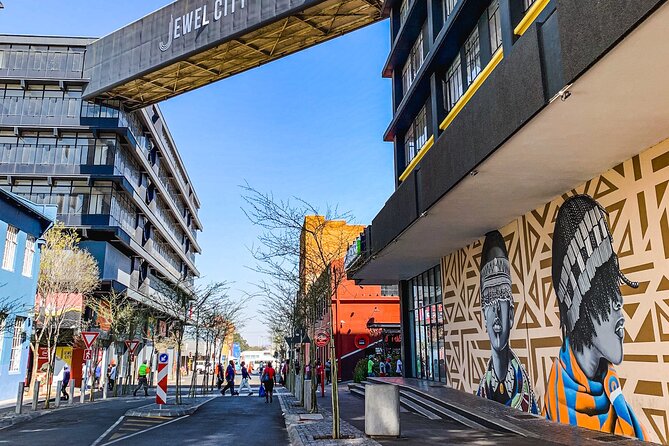
The route continues to 264 Fox Street, with a photo stop, guided sightseeing, and a final walking segment. Fox Street is part of the street life that gives this side of Johannesburg its character. Your guide can help you notice details that might otherwise pass quickly, including smaller artworks, local businesses, and the way people use the public space.
The final stop is also listed at 264 Fox Street, without a separate fixed duration. This suggests a natural finish to the walk rather than a formal finale. Use the last stretch to ask about nearby places to eat, drink, or continue exploring.
This is where guide quality matters most. You are no longer just following a set of attractions. You are deciding what to do next in an area you have only begun to understand. Refiloe has offered restaurant and artist suggestions to participants, and other guides have pointed out favorite places for later in the day.
What the guides add to the experience
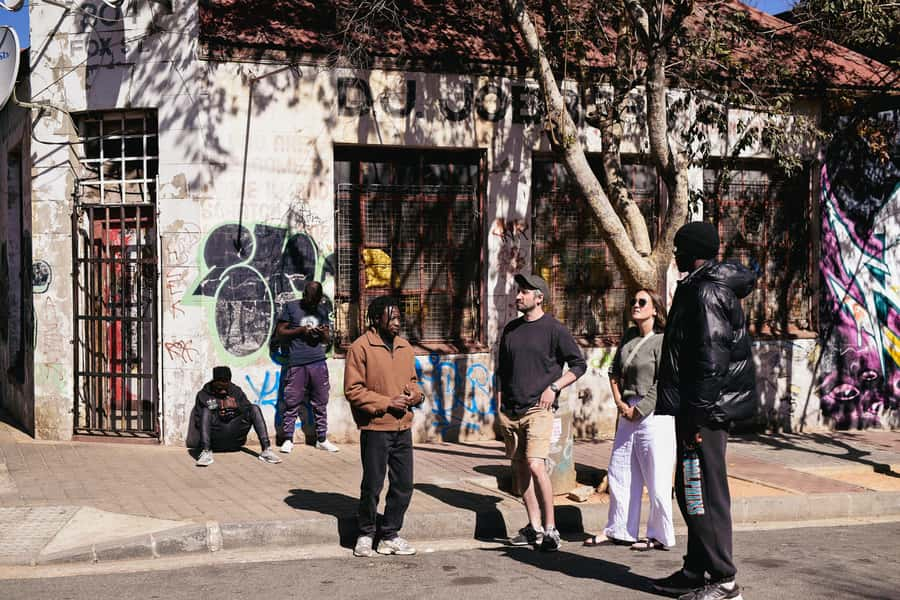
The clearest strength of this tour is the guides’ personal connection to the subject. Refiloe is repeatedly described as friendly, funny, engaged, and deeply interested in Johannesburg’s art scene. Mulalo is praised for explaining both the artwork and the city’s past, while Clement is noted for a warm, energetic style.
The names and guide assignments can vary, so you should not book on the assumption that one specific person will lead your departure. Still, the pattern is encouraging: the experience depends on local guides who know the district, speak English, and can answer questions beyond the basic route.
Guides also help with comfort. Maboneng may feel a little sketchy if you do not know the streets, especially when compared with a conventional sightseeing area. Participants have felt safer walking with a guide who knows local people and understands how to move through the neighborhood.
That is not a reason to switch off your common sense. Keep your valuables secure, stay with the group, and follow your guide’s advice. The safety benefit here comes from local awareness and group movement, not from a promise that every street feels touristy or controlled.
Is $37 fair for two hours?
At $37 per person, this is not the cheapest way to look at murals. You could walk through parts of Maboneng on your own without paying a guide. The question is what you would understand and how comfortable you would feel doing that.
For the price, you receive two hours with an English-speaking guide, an organized route through several creative areas, rooftop orientation, background on artists, and access to local knowledge that is difficult to gather from a map. The guide also saves you time by linking Maboneng, Hallmark House, Jewel City, Fox Street, and the smaller creative stops into one coherent outing.
I consider it good value if you are new to Johannesburg, care about art and urban culture, or want a practical introduction before exploring alone. It is less compelling if you have already spent several days in Maboneng with local friends or mainly want a long, relaxed café and shopping session.
The tour does not include hotel pickup, drop-off, food, or drinks. Plan your own transport to 54 Siemert Road and wait inside Hallmark House at the coffee shop if you arrive early. You can cancel up to 24 hours before the start for a full refund, and the reserve-now, pay-later option keeps your plans flexible.
Who should book this Johannesburg walk?
I would recommend it to first-time visitors who want more than the usual city viewpoint. It also suits people interested in public art, photography, architecture, youth culture, local enterprise, and South Africa’s difficult political past.
Families can take it too. One participant specifically described enjoying the walk with two adults and an 11-year-old, though you should remember that this is a city walk with history and social issues, not a child-focused attraction.
It is also a smart choice after time on safari. One participant described the walk as a welcome change after two weeks on a safari bus. You get movement, conversation, street scenes, and a closer look at daily urban life.
You may want a different activity if you dislike walking, want a formal museum tour, or prefer a tightly polished tourist district. The route is about discovery and interpretation, not luxury. Conditions, open businesses, and the exact art stops may change.
Should you book the Maboneng Street Art and Culture Tour?
Book it if you want to understand why Maboneng matters, not just photograph its walls. The rooftop opening, local guides, artist stories, gallery and market stops, and practical neighborhood advice make this a strong two-hour introduction to Johannesburg’s creative side.
I would be especially keen to book if I were new to the city or uneasy about exploring the inner city alone. Stay alert, keep the rest of your day flexible, and allow time to return to any café, gallery, or shop that catches your eye. At $37, you are paying for context and confidence, which is exactly what makes this walk worthwhile.
FAQ
Where does the Maboneng Street Art and Culture Tour begin?
The tour begins at 54 Siemert Road, inside Hallmark House. If you arrive before the start time, wait at the coffee shop inside Hallmark House.
How long does the tour last?
The walking experience lasts two hours. Starting times vary, so check availability when you book.
What language is the tour offered in?
The live tour is offered in English.
How much does the tour cost?
The price is $37 per person.
What does the tour include?
The tour includes a guide and a guided walk through Maboneng, Jewel City, Hallmark House, Access City, Artisan Lofts, and 264 Fox Street.
Are food and drinks included?
No. Food and drinks are not included in the price.
Does the tour include hotel pickup and drop-off?
No. Hotel pickup and drop-off are not included.
Can I meet local artists or creatives?
The experience includes opportunities to meet local vendors and creatives, visit galleries, and learn about emerging artists and their work.
Can I cancel for a full refund?
Yes. You can cancel up to 24 hours in advance for a full refund.
Do I have to pay when I book?
No. The reserve-now, pay-later option lets you reserve a place without paying immediately.
New street art tours in the world
- Your Own Belgrade: Street Art and Hidden Gems Walking Tour★ 5.0 · 2 reviews
- Wynwood Walls Street Art & Neighborhood Walking Tour★ 4.9 · 9 reviews
- Xochimilco floating gardens, Coyoacan and UNAM murals★ 4.0 · 6 reviews
- Vancouver: Street Art & Craft Beer Walking Tour with Tasting★ 4.8 · 14 reviews
- Vancouver: Street Art & Craft Coffee Walking Tour w/ Tasting★ 4.8 · 11 reviews
- UNAM: Murals & Revolution★ 4.9 · 8 reviews
- Urban Canvas: Osaka Street Art Bike Tour★ 5.0 · 10 reviews
- Zagreb Street Art Private Walking Tour with a Local Artist★ 5.0 · 12 reviews
Johannesburg Mural Tours, side by side.
Colours of Johannesburg: A Graffiti & Street Art Tour
Read our review →
(Meet the Artist)Art Gallery & Street Art tour with lunch
Read our review →
Johannesburg Street Art & Museum Walking or E-scooter Tour
Read our review →
Lists this wall walk turns up in