
Reviewed · LISBON MURAL TOURS
Lisbon: Street Art Tour
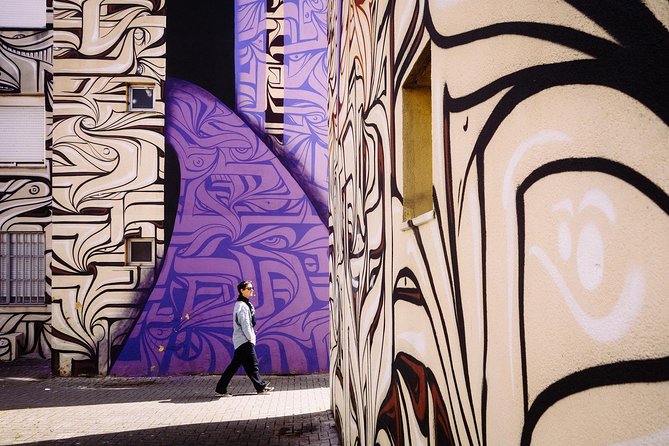
Lisbon’s street art is not confined to one gallery or wall. It appears in grand murals, tiny stickers, painted shutters, sculptures, and details you might pass without noticing. This three-hour walk connects those works with the neighborhoods around them, from Bairro Alto to Graça.
I like the small-group feel and the way guides such as Erica, Maria, and Laith explain both the art and the city behind it. I also like that the route includes less obvious corners, not just the large pieces made for photographs. The main drawback is the walking: Lisbon is hilly, some ground is uneven, and three hours can be demanding in poor shoes or rain.
Key points
- Five Lisbon neighborhoods: Bairro Alto, Chiado, Baixa, Mouraria, and Graça each bring a different setting and mood.
- Guides with art backgrounds: Erica, Maria, and Laith are praised for clear explanations, storytelling, and insight into artists and techniques.
- More than graffiti: The route covers murals, street sculptures, political work, small pieces, and the social meaning behind them.
- A useful city orientation: You finish in Graça, with a better sense of how Lisbon’s districts connect.
- A serious walking tour: Expect hills, narrow streets, unpaved patches, and about three hours on your feet.
- Strong value at $40: The price includes a live English-speaking guide and a focused look at art you would rarely understand on your own.
Why Lisbon’s street art works best on foot
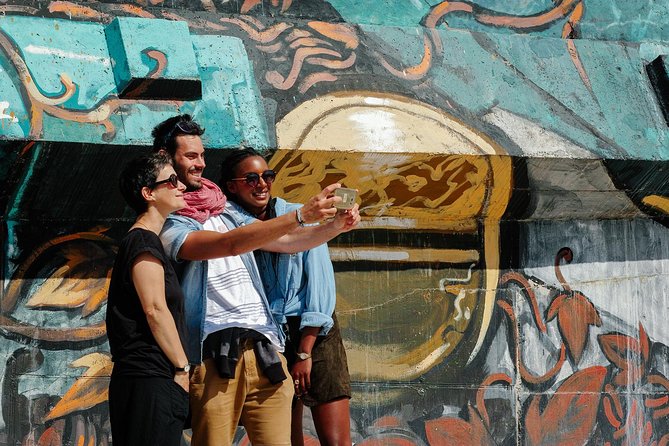
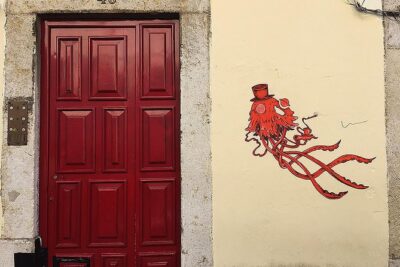
Lisbon rewards slow looking. You can admire a large mural from across a square, but you need to walk the side streets to notice the smaller work: a painted doorway, a stencil tucked beside a drainpipe, or a sculpture placed where the neighborhood seems to answer it.
That is the useful idea behind this tour. It is not simply a hunt for colorful walls. The guide explains how an artwork fits its surroundings, what it may say about Portuguese society, and how artists use different methods to make their point.
I especially like the cultural angle. The strongest parts of the experience connect art with Lisbon’s past, present-day politics, neighborhood life, and even Fado. You do not need an art degree. The explanations cover styles and techniques in plain English, and guides invite questions along the way.
The experience also helps you read the city after the tour ends. Several guests have said they began spotting pieces they would once have walked past. That is a real benefit. A good street art tour changes your eyes, not just your photo album.
More street art tours worth booking in Lisbon:
- Lisbon: Kickstart Street Art Walking Tour
★ 4.9 · 717 reviews - Lisbon: Street Art Tuk Tuk Tour
★ 4.9 · 372 reviews - LISBON Street Art Tour
★ 5.0 · 371 reviews
Starting at Rua Luz Soriano 67

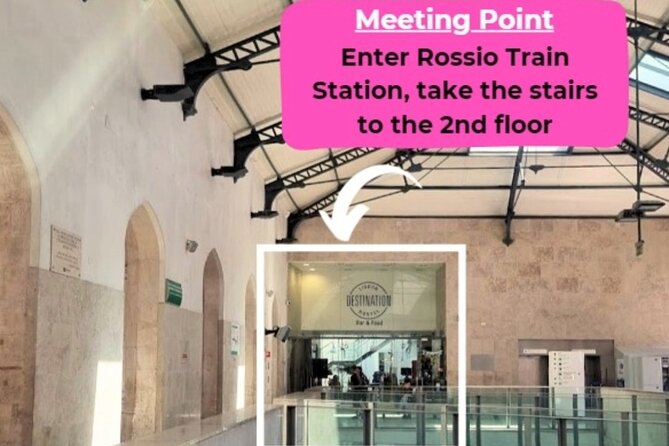
The meeting point is in front of the Interpress building at Rua Luz Soriano 67. This puts you in the Bairro Alto area, a practical starting point for a route that moves through central Lisbon before climbing toward Graça.
Arrive ready to walk rather than expecting a bus-based sightseeing trip. There is no hotel pickup, and food and drinks are not included. Bring water if you need it, though the key instruction is simpler: wear comfortable shoes.
The route can feel like a workout. Lisbon’s pavements are often made from small stones, and the route includes uneven or unpaved ground. Large luggage is not allowed, which is sensible when you are moving through narrow streets and crowded urban spaces.
Bairro Alto: art beside nightlife
The first guided section lasts about an hour in Bairro Alto. This is the longest single stop, and it gives the guide time to establish the main themes of the tour.
Bairro Alto is useful as an opening chapter because its streets show how art can sit beside ordinary city life. You will look at murals and other pieces while also learning how artists respond to the district around them. The guide may discuss the artists’ ideas, the techniques used, and the way residents view street art.
This is also where the guide’s personality matters most. Erica is repeatedly praised for her storytelling and ability to answer questions, while Maria is noted for linking art with Portuguese history and culture. Laith is also known for explaining the social and political side of the work without making the tour feel like a lecture.
The pace is generally relaxed, but an hour spent standing and walking through sloped streets is still real exercise. If your energy is limited, this is a good reason to ask about the pace at the start.
Chiado: small details in a busy center

The Chiado section lasts about 20 minutes. It is shorter than Bairro Alto, but that does not make it less useful. Chiado is a central district where you may already be focused on shops, tiled façades, cafés, and grand streets.
A guide helps you look sideways. The point here is likely less about one giant wall and more about how art appears among the familiar sights of central Lisbon. You may find small pieces that would be easy to miss without someone pointing them out.
This part also keeps the tour grounded in daily life. Street art is not always presented in a dedicated art zone. It shares space with businesses, homes, historic buildings, and passing pedestrians. That mixture is part of the story, and it also means the exact pieces can change over time.
Same city, a different set of walls:
- 3-Hour Guided Street Art Walking Tour of Lisbon
★ 5.0 · 278 reviews - Lisbon Street Art Walking Tour
★ 5.0 · 141 reviews - Lisbon: 3-Hour Street Art Tuk Tuk Tour
★ 4.8 · 86 reviews - Lisbon: Street Art Walk
★ 5.0 · 79 reviews
Baixa: art at the heart of the city
The Baixa section also lasts about 20 minutes. This central district offers a different setting from the steep lanes of Bairro Alto and the residential streets farther north.
The guide uses the art as a way to explain Lisbon’s changing identity. You may hear about the roots of street art, the difference between styles, and how public work can carry social or political messages. This is where the tour becomes more than a succession of photo stops.
I find the movement between districts one of the experience’s best features. You are not looking at art in isolation. You are walking through the city as its streets change, and the guide helps you connect those changes to the work on the walls.
Do not expect every piece to be enormous. Some of the most useful stops may be small works with a story attached. If you want only huge murals, you may find parts of the route less dramatic. If you enjoy context and close observation, the smaller works are often the better lesson.
Mouraria: neighborhood stories on the walls
The tour then gives about 30 minutes to Mouraria. This district adds another layer to the route, with a stronger focus on community, local culture, and the relationship between art and place.
Mouraria is also a good setting for discussing Fado and Lisbon’s cultural identity. One guide used the route to explain Fado in a way that added more than a standard museum visit. That kind of connection is valuable because it shows how music, memory, migration, and urban art can overlap in the same neighborhood.
The guide may also point out work that is not instantly obvious. Look up, check the edges of walls, and pay attention to small interventions. The lesson is not simply to find the biggest painted surface. It is to notice how artists claim space and communicate with people who live nearby.
This section can feel less polished than a formal museum visit, which is part of its appeal. Street art is exposed to weather, repairs, new construction, and competing tags. The city keeps changing, so the route is a snapshot rather than a permanent collection.
Graça: the final climb and the broadest view
The final hour takes place in the Graça Historic District. This is the longest closing section and may be the most rewarding for people who want to see a side of Lisbon beyond the main visitor routes.
Graça gives the tour room to slow down again. You can examine larger works, hear more about the artists, and place the art within a historic neighborhood. The route ends here, so plan for the finish rather than assuming you will return to the starting point.
One practical detail matters: Graça does not have a metro stop. A guide has helped participants work out onward transport, including the tram, but you should still check your own route after the tour. The finish is not a problem, but it is worth knowing before you set off.
By this point, you will have walked across several parts of Lisbon. You may be tired, especially in hot weather, but the final section gives the tour a sense of arrival. The route moves from central streets to a district with a different feel, and that change reinforces the idea that art belongs to neighborhoods, not just attractions.
Guides who make the art readable

The guide is the main reason to book this experience rather than follow a street art map on your phone. Erica, Maria, and Laith are among the guides named in the feedback, and each is praised for enthusiasm, clear English, and an ability to connect art with history.
Erica is especially suited to people who want detailed explanations of styles, artists, and techniques. She is also praised as a strong storyteller and for making newcomers feel comfortable asking questions.
Maria brings a similar mix of art and local history. Her easy manner is useful if you want practical help as well as cultural explanation. Laith is often praised for his links with the street art scene and for making the experience feel personal rather than formal.
Guide assignments can change, so you should not book on the assumption that one particular person is guaranteed. The consistent point is the style of guiding: expect an English-speaking expert who explains, interprets, and encourages conversation.
The group size can be small. Some departures may feel almost private, while others will include more people. Small groups are helpful here because you need to gather around walls and hear detailed explanations in busy streets.
What $40 gets you
At $40 per person, this is not the cheapest way to walk around Lisbon, but it is a fair price for a three-hour specialist tour. You are paying for a live guide who knows what to look for and can explain why it matters.
The value is strongest if you would otherwise pass through Lisbon without understanding its public art. A self-guided route can show you locations, but it will not easily explain an artist’s technique, a neighborhood’s response, or the political context behind a mural.
The price includes the walking tour and live English guide. It does not include meals, drinks, or transport after the finish. That makes the cost simple to judge: if you want expert interpretation and a focused introduction to Lisbon’s art scene, $40 is reasonable. If you prefer wandering alone and taking your own chances, you may not need it.
Who should book this walk
I would recommend it to first-time Lisbon visitors who want a different introduction to the city. It works especially well early in a stay, because you learn the layout of several neighborhoods and gain a way to notice art for the rest of your trip.
It also suits people who normally skip street art because they think it means random graffiti. The guide explains the difference between forms, methods, and intentions, so you leave with a broader view of public art.
You should be reasonably fit. The route lasts three hours, covers hills, and includes uneven ground. Comfortable shoes are not a minor suggestion here. The tour is not suitable for wheelchair users, and oversize luggage is not allowed.
Rain does not automatically ruin the experience, but it can make stone pavements and unpaved areas less pleasant. A little weather protection and sensible footwear will help.
Booking, timing, and flexibility
The tour lasts three hours, with starting times shown according to availability. It is offered in English. You can cancel up to 24 hours in advance for a full refund, and the reserve-now, pay-later option keeps your plans flexible.
Because the route ends in Graça, avoid scheduling a tight appointment immediately afterward. Give yourself time to find transport, stop for a drink, or continue exploring the district.
Should you book the Lisbon Street Art Tour?
Book it if you want to understand Lisbon through its walls, not just photograph them. The best parts are the small pieces, the links between art and neighborhood life, and the guides’ ability to explain social and political meaning without losing the fun of walking around town.
Skip it if three hours on steep, uneven streets sounds unpleasant, or if you want a short mural shuttle with little discussion. For most visitors who can manage the walking, this is a thoughtful and fairly priced way to see districts you might otherwise rush through. You will finish in Graça with tired feet and a sharper eye for the city.
FAQ
Where does the Lisbon Street Art Tour start?
Meet the guide in front of the Interpress building at Rua Luz Soriano 67.
How long does the tour last?
The walking tour lasts three hours.
Which Lisbon neighborhoods are included?
The route includes Bairro Alto, Chiado, Baixa de Lisboa, Mouraria, and the Graça Historic District.
What language is the tour offered in?
The live tour guide speaks English.
Is the tour suitable for wheelchair users?
No. The tour is not suitable for wheelchair users, and you must be able to walk over unpaved or uneven terrain.
What should I bring?
Wear comfortable shoes. Food and drinks are not included, hotel pickup and drop-off are not included, and oversize luggage is not allowed.
New street art tours in Lisbon
- Street Art – Tuk Tuk Tour★ 5.0 · 17 reviews
- Lisbon Street Art and Lookout Point Tour★ 5.0 · 17 reviews
- Private Tuk Tuk of the Old Town Lisbon and Street Art Highlights★ 5.0 · 20 reviews
- Street Art Tour by Tuk Tuk Joy★ 5.0 · 2 reviews
- Lisbon Street Art – Private Tuk Tuk Tour with pickup★ 5.0 · 17 reviews
- Lisbon Street Art Walk★ 5.0 · 17 reviews
- Discover Lisbon’s Best Street Art★ 5.0 · 6 reviews
- Street Art at Lisbon★ 5.0 · 2 reviews
Lisbon Mural Tours, side by side.


3-Hour Guided Street Art Walking Tour of Lisbon
Read our review →


Lisbon Street Art – Private Guided Tour in a Electric Tuk Tuk
Read our review →Lists this wall walk turns up in