Reviewed · STREET ART WALKING TOURS
Lisbon Street Art Walk
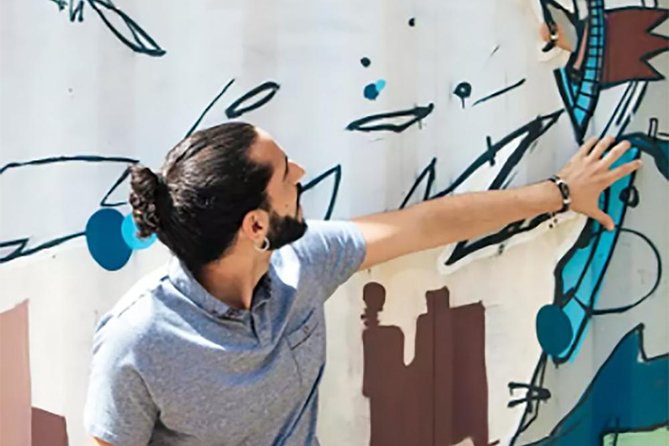
Lisbon’s street art is not confined to one gallery or one famous wall. It appears on shutters, side streets, aging facades, and tucked-away corners of old neighborhoods. This walk gives you a way to read that artwork while learning how Lisbon’s historic districts fit together. I especially like the small maximum of eight people and the chance to explore Mouraria’s narrow streets, not just the city’s postcard sights. The main drawback is that you need moderate fitness, and the listed stop times add up to longer than the advertised three-hour duration.
I also like that the walk includes a small artsy souvenir and a private guide rather than treating street art as a quick photo stop. Igor leads the English-language experience, and he is described as calm, friendly, and good at explaining the subject to a young teenager. Still, this is an outdoor walk, so poor weather or too few bookings can lead to a cancellation or rescheduled date.
Key Points at a Glance
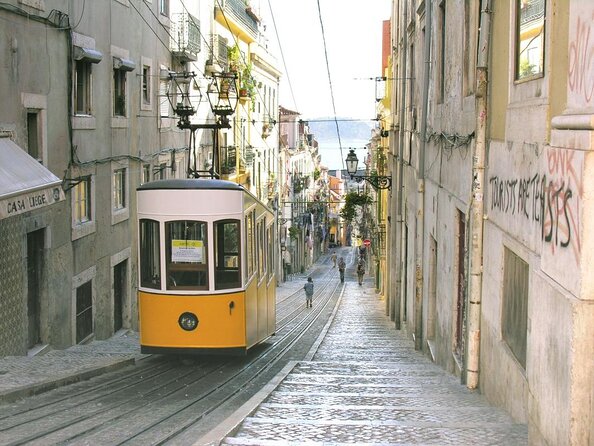
- Igor leads in English: Expect clear explanations, local stories, and plenty of background on Lisbon’s public art.
- Small groups matter: The maximum is eight people, making it easier to ask questions and keep the walk personal.
- Three contrasting areas: The route links Bairro Alto, Baixa Chiado, and Mouraria, with the final section focused on narrow old streets.
- An artistic souvenir is included: You receive a small keepsake rather than only photographs from the day.
- The route is active: A moderate fitness level is advised, and the tour takes place outdoors.
- Weather can affect plans: The experience may be moved or refunded if conditions are poor.
Why Lisbon Street Art Works Best on Foot
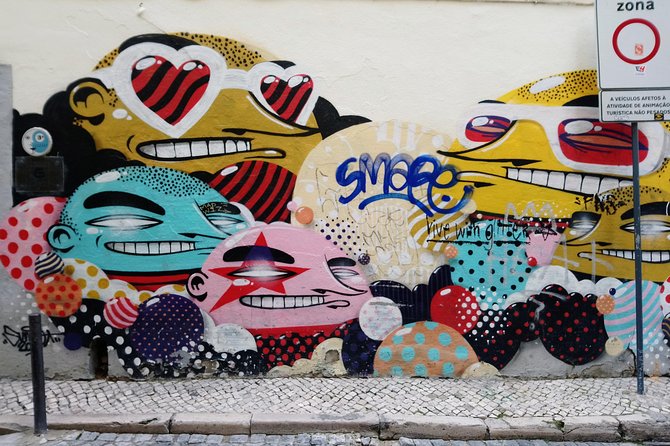
Lisbon rewards slow looking. A tram ride may show you a painted wall, but walking lets you notice the smaller work nearby: a stencil beside a doorway, a painted shutter, or a piece set into an old wall that you might otherwise pass without a glance.
This tour is built around that habit of looking. You are not simply being taken to a list of photo stops. The guide also explains the historic neighborhoods around the art, which gives the route more value than a collection of disconnected murals.
That context matters in Lisbon. Bairro Alto, Baixa Chiado, and Mouraria each have a different feel and street pattern. The route moves from well-known central areas toward older, tighter streets, giving you a broader sense of the city as you walk.
The experience is offered in English and lasts about three hours. The group limit of eight is one of its strongest features. Street art walks can become frustrating when a large crowd blocks a narrow pavement or only the people at the front can hear. A small group gives you a better chance to stop, ask Igor about a particular artist or image, and keep pace without constant crowding.
More Street Art Walking Tours in Lisbon
- Lisbon: Kickstart Street Art Walking Tour
★ 4.9 · 717 reviews - 3-Hour Guided Street Art Walking Tour of Lisbon
★ 5.0 · 278 reviews - Lisbon Street Art Walking Tour
★ 5.0 · 141 reviews
Starting at Graça and Getting Oriented
The meeting point is the bandstand at Largo da Graça, at Largo da Graça, 1170-165 Lisboa. Although the listed stops begin with Bairro Alto, you should pay attention to the actual meeting point when planning your day. It is not the same place as the ending point, so you should allow time to reach the start and arrange your own way back afterward.
The walk is not described as a hotel pickup service. You make your own way to the meeting point, and hotel transport is not included. That is normal for a city walking tour, but it is worth building into your schedule, especially if you are staying outside the central districts.
Graça is a useful place to begin because the experience promises an overview of Lisbon’s older neighborhoods rather than a narrow focus on art alone. From the outset, expect the guide to connect the walls and streets with the character of the area around them.
You should wear comfortable shoes and be ready for a fair amount of walking. The stated fitness requirement is moderate, and the route includes narrow streets and historic areas. No special equipment is listed, but this is not a sit-down gallery visit. Your attention and your feet do most of the work.
Bairro Alto: Street Art in a Historic Quarter
The first main section takes about an hour in Bairro Alto. The focus here is the art found around the neighborhood, with free admission because the work is displayed in public spaces.
Bairro Alto is a good setting for a street art walk because the art sits within an established urban district. You get to compare the newer work with older buildings, tight lanes, and everyday city life. The point is not simply to find the largest painting. It is to understand how art changes the way you see a street.
Igor’s role is important here. One strong detail from the experience is his ability to explain the subject in calm, accessible English. That makes the walk suitable for people who already follow street art, but also for beginners who might not know the difference between forms, techniques, or styles.
One participant described arriving with no real knowledge of street art and leaving with a new habit of noticing pieces that might otherwise be missed. That is a useful measure of the tour’s value. You are not expected to arrive as an art expert. The walk aims to train your eye.
The one-hour timing gives this part enough room for explanation without turning the entire day into a single neighborhood. If you like to stop for photographs, ask questions, and inspect details, the pace may feel more useful than a rushed route. If your main goal is to see a very large number of works, the guide’s storytelling and neighborhood context may mean fewer stops than you expect.
Baixa Chiado and Praça Dom Pedro IV

The route then passes through Baixa Chiado, with about 30 minutes around Praça Dom Pedro IV. This is a shorter section, but it helps connect the art-focused walk with Lisbon’s central historic area.
Praça Dom Pedro IV is a major urban space, so this part gives you a change of scale after the tighter streets of Bairro Alto. You can expect the guide to point out how the public art fits into the wider center, rather than treating each work as an isolated object.
This stop is also useful for orientation. If you are new to Lisbon, Baixa Chiado is one of the areas you are likely to cross during your own sightseeing. Learning to notice art here can improve the rest of your time in the city. After the tour, you may find yourself looking at walls and shopfronts more carefully instead of walking straight toward the next monument.
There is no admission fee for this stop. The walk does not include entry to monuments or art galleries, so do not think of this section as a museum visit. If you decide to enter a gallery or monument during the day, that cost is your responsibility.
The 30-minute allocation is brief. I would treat this as a connecting section with selected art and neighborhood commentary, not a full tour of Baixa Chiado. That is perfectly reasonable within a three-hour walk, but it helps set expectations.
More Street Art Walking Tours in Portugal
- Lisbon: Street Art Walk
★ 5.0 · 79 reviews - Lisbon: Street Art and Historical Walking Tour
★ 4.9 · 42 reviews
Mouraria: Narrow Streets and Less Polished Corners
The longest part of the route is in and around Centro Comercial Mouraria, where the experience spends about two hours exploring street art and narrow streets. This is the section most likely to feel different from a standard central Lisbon sightseeing walk.
The description emphasizes getting lost in the tight lanes and seeing a more authentic side of the city. That does not mean every street is untouched or free of visitors. It means the route moves beyond the broad, familiar squares and into a more intimate part of Lisbon, where the city is read at walking speed.
For me, this is the heart of the experience. Street art makes more sense when it is placed in a real neighborhood. You see the work alongside daily life, older buildings, and uneven streets rather than viewing it as a polished display arranged for an audience.
The two-hour section also gives Igor time to tell stories and answer questions. One especially useful detail is that the tour worked well for a 13-year-old because the guide spoke slowly enough for the teenager to follow in English. That suggests the explanations are not pitched only at art specialists. Families with older children may find the format approachable, provided everyone is comfortable walking.
The phrase totally lost should not be taken as a promise of confusion or poor organization. It points to the pleasure of wandering through a maze-like old district. Still, you should expect a route that feels less predictable than a straight walk between major sights.
This part may also be the most physically demanding. Narrow streets can mean frequent changes in direction and footing, and the overall experience requires a moderate fitness level. The information provided does not specify stairs, steep slopes, or exact accessibility details, so anyone with mobility concerns should ask the provider before booking.
The Guide Makes the Difference
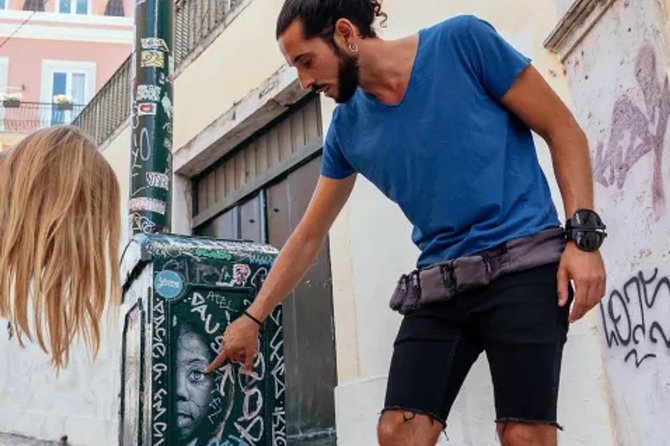
Street art changes quickly. A wall can be painted over, a temporary piece can disappear, and the meaning of a work may not be clear from a photograph. A guide gives you the background that a map or self-guided walk cannot provide as easily.
Igor is the named guide associated with the experience. The strongest details about his approach are practical: he is friendly, communicates clearly, explains with plenty of anecdotes, and adjusts his speaking pace so a younger English learner can follow.
That matters if you are new to the subject. A guide who assumes you already know the artists or terminology can make a street art walk feel like a private club. Here, the experience is presented as accessible to people who begin with little knowledge and want to learn how to look.
I would still suggest telling Igor what interests you at the start. If you care most about technique, local neighborhoods, photography, or the social side of public art, a small group makes it easier to steer the conversation. With no more than eight participants, you should have more room for questions than on a large group outing.
The walk has also been described as taking place during a street art festival, which can add energy and give you extra work to see. That is not guaranteed for every departure, so treat it as a possible bonus rather than a fixed part of the booking.
What the $40.84 Price Gets You
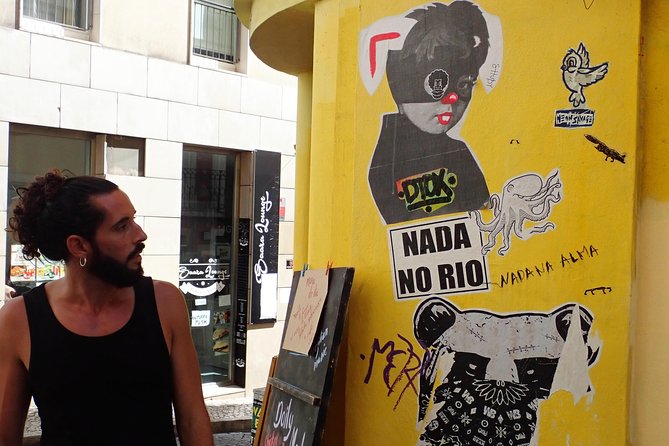
At $40.84 per person, this is not the cheapest way to spend three hours in Lisbon. You can see public art on your own for free. The price makes sense only if you value the guide, the route planning, the neighborhood background, the small group, and the included souvenir.
I think the value is strongest for first-time visitors who want a focused introduction without committing to a full art course. You are paying for interpretation and access to less obvious corners, not admission tickets. The tour also saves you the work of researching where to look and how to connect the art with the surrounding districts.
The maximum group size of eight improves that value. A private guide is included, but the supplied details also describe a small-group experience. You should confirm the exact group arrangement when booking if having a fully private walk is important to you.
The artistic souvenir is a modest but thoughtful extra. It will not replace the experience, but it gives you a physical reminder of the day. The more important takeaway is the new way of seeing Lisbon. One participant who began without any street art background said the walk made it impossible to move through the city without noticing work that might previously have been overlooked.
The experience is booked an average of 34 days ahead, which suggests you should not leave it until the last minute if your Lisbon dates are fixed. Confirmation arrives at booking, and free cancellation is available up to 24 hours before the start time.
Who Should Book This Walk
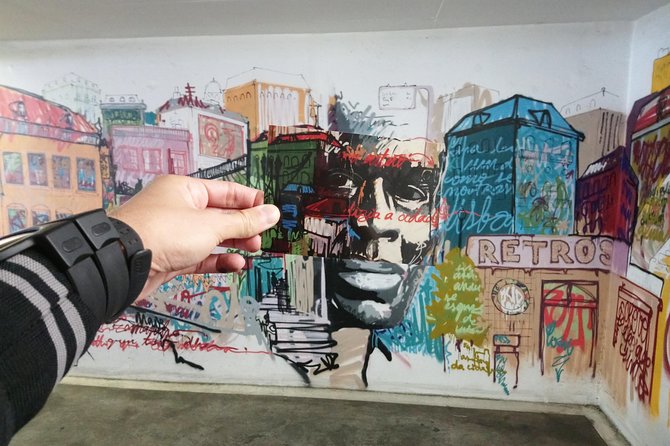
I would choose this experience if you like art, urban neighborhoods, photography, or city walks with a local angle. It is also a good fit if you have already seen Lisbon’s major monuments and want a different way to understand the city.
Beginners are welcome in practice. You do not need prior knowledge of street art, and the guide’s clear explanations make the subject easier to approach. Families with teenagers may also find it suitable, especially if the child is comfortable walking and can follow English.
The walk may be less suitable if you want a relaxed, seated activity or a fully predictable route. It is outdoors, active, and shaped by the streets themselves. You should also think twice if rain would make several hours outside unpleasant, since the experience requires good weather.
The end point is Escadinhas de São Cristóvão, 1100 Lisboa. That gives you a clear place to continue your day, but hotel drop-off is not included. Plan your next stop independently rather than assuming the guide will return you to your accommodation.
Final Call: Book It for the Way It Changes Your Eye
Book the Lisbon Street Art Walk if you want more than a list of murals. The best part is the combination of public art, old neighborhoods, and a guide who can explain the details without making beginners feel lost. The small group, Mouraria route, and included souvenir add real value to the $40.84 price.
Skip it if you dislike walking, need a fully accessible route, or mainly want museum interiors and formal art collections. For everyone else, this is a smart early-trip choice. Take it near the start of your Lisbon stay, then use your newly trained eye for the rest of the city.
FAQ
How long is the Lisbon Street Art Walk?
The experience is advertised as lasting approximately three hours. The listed sections total about three and a half hours, so you should allow extra time in your schedule.
What language is the tour offered in?
The tour is offered in English. Igor is described as speaking calmly and clearly enough for a 13-year-old English learner to follow.
How much does the experience cost?
The listed price is $40.84 per person.
Where does the tour start?
The meeting point is the bandstand at Largo da Graça, 1170-165 Lisboa, Portugal.
Where does the tour end?
The walk ends at Escadinhas de São Cristóvão, 1100 Lisboa, Portugal.
What neighborhoods are included?
The route includes Bairro Alto, Baixa Chiado around Praça Dom Pedro IV, and the Mouraria area around Centro Comercial Mouraria.
Is anything included besides the walking tour?
The experience includes an artistic souvenir, a private guide, access to lesser-known places in Lisbon, and an overview of historic areas and old neighborhoods. Entrance fees to monuments or art galleries are not included.
Can I cancel for a full refund?
Yes. You can cancel at least 24 hours before the start time for a full refund. Cancellations or changes made less than 24 hours before the start time are not accepted. Poor weather or too few bookings can also cause the experience to be rescheduled or refunded.
New street art tours in Lisbon
- Street Art – Tuk Tuk Tour★ 5.0 · 17 reviews
- Lisbon Street Art and Lookout Point Tour★ 5.0 · 17 reviews
- Private Tuk Tuk of the Old Town Lisbon and Street Art Highlights★ 5.0 · 20 reviews
- Street Art Tour by Tuk Tuk Joy★ 5.0 · 2 reviews
- Lisbon Street Art – Private Tuk Tuk Tour with pickup★ 5.0 · 17 reviews
- Discover Lisbon’s Best Street Art★ 5.0 · 6 reviews
- Street Art at Lisbon★ 5.0 · 2 reviews
- Street Art Lisbon: Tuk Tuk Tour★ 4.3 · 4 reviews
Street Art Walking Tours, side by side.

Naples Spanish Quarters Walking Tour Street Art, Folklore & Sweet
Read our review →

Brooklyn Graffiti & Street Art Walking Tour in Bushwick
Read our review →