Reviewed · STREET ART WALKING TOURS
Mexico City: Historic Center Walking Tour with Murals
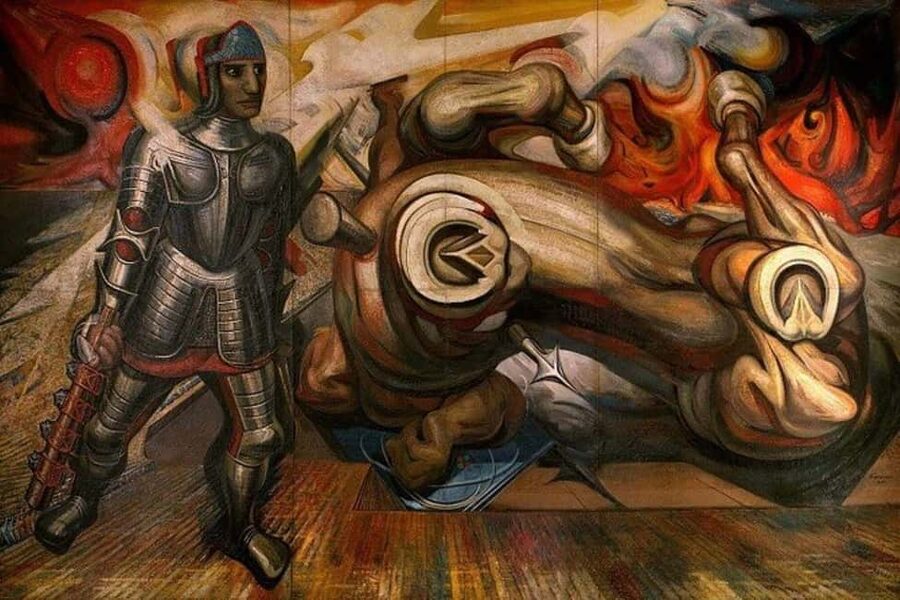
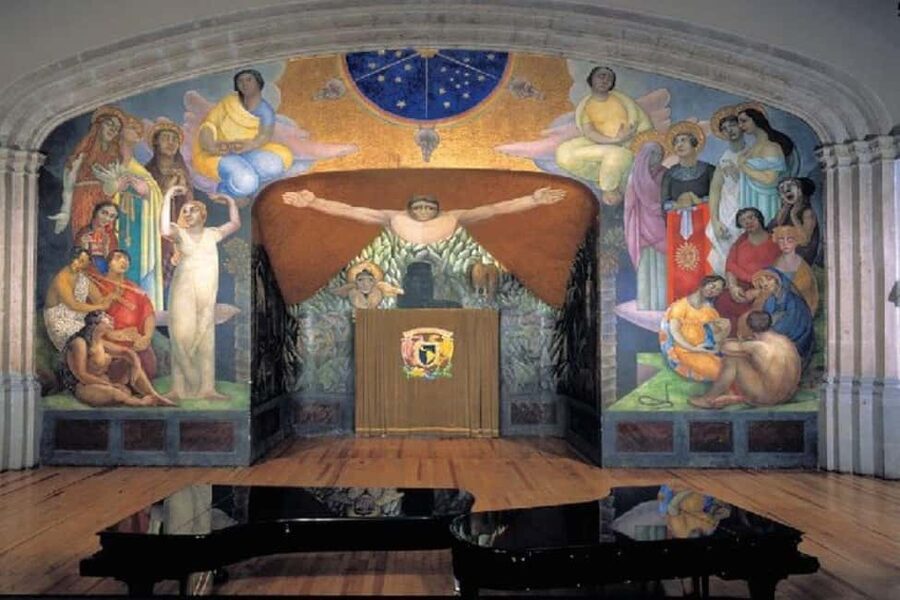
Mexico City’s mural movement comes alive when you see the paintings in the buildings they were made for. This three-hour walking tour links San Ildefonso, the Ministry of Public Education, Palacio de Bellas Artes, and the Diego Rivera Mural Museum, with the exact indoor stops changing by day.
I like the art-history focus, which gives you more than a parade of famous names. I also like the personal touch from guide Balaam, who brings expertise in history and archaeology, adapts his explanations, and has even treated guests to tamales. The main drawback is that the tour involves a fair amount of walking and is not suitable for wheelchair users.
Key points
- Murals explained in context: Learn how Mexican artists used public art to address politics, society, labor, and national identity.
- Three indoor venues in three hours: Visit three of the main mural sites, with the Ministry of Public Education replaced by the Diego Rivera Mural Museum on Tuesdays.
- Balaam may be your guide: He is known for clear explanations, good conversation, and a strong grasp of the artists and their work.
- Palacio de Bellas Artes is a major stop: Its murals bring together some of Mexico’s most important muralists in one grand cultural setting.
- Museum tickets are included: You do not need to budget separately for the listed entrance fees.
- Bring practical walking gear: Wear comfortable shoes, carry water, and leave your flash at home.
Why Mexican murals make a good walking tour
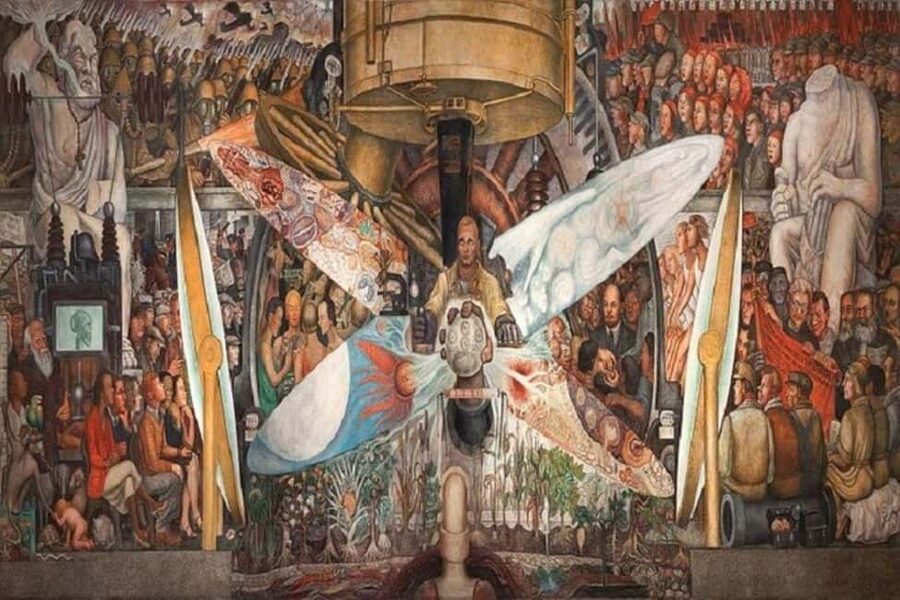
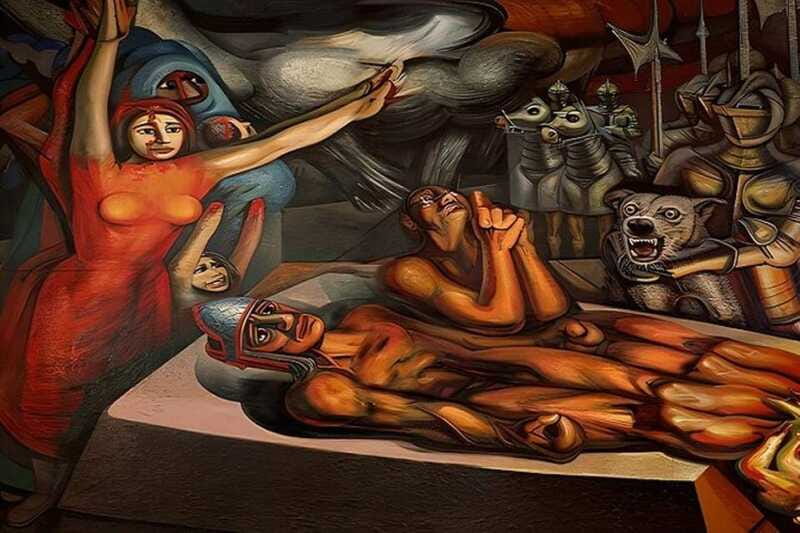
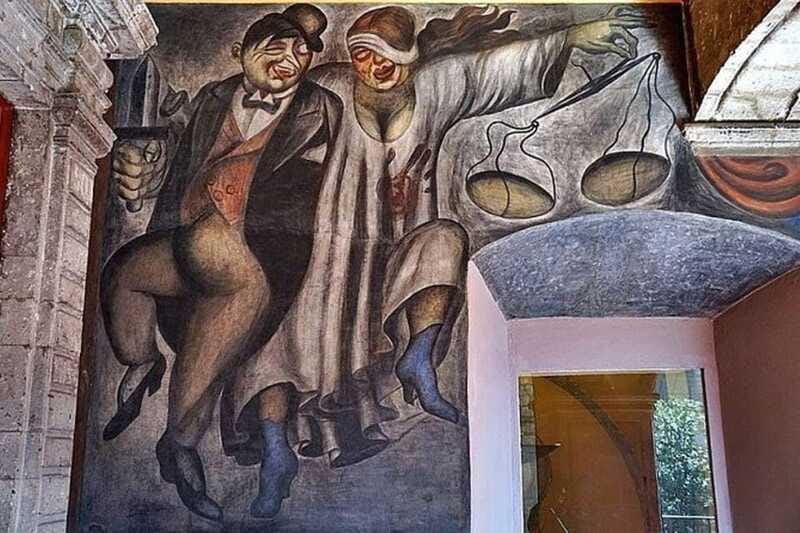
Mexican muralism is not art that sits quietly in a frame. It was made for public buildings, broad walls, and people who might never visit a formal gallery. The paintings tell stories about Mexico’s past, political struggles, working people, education, religion, revolution, and the shaping of national identity.
That public role matters. You are not simply looking at a Diego Rivera mural and asking if you like the colors. You are learning why the painting was placed there, who paid for it, who it was meant to reach, and what its symbols say about the country.
I find this approach useful in Mexico City because the murals can seem overwhelming at first. There may be crowded scenes, historical figures, strange visual details, and several stories unfolding at once. A good guide gives your eyes somewhere to start.
Balaam is the guide most strongly associated with this experience. He works as a historian and archaeology expert, and his style appears to suit people who want a conversation rather than a memorized speech. He can explain social and artistic symbols in plain terms, then adjust the discussion to your questions.
One especially nice detail is the occasional tamale offered during the walk. It is not the reason to book the tour, but it adds a small local touch to an outing centered on public culture and everyday Mexican life.
More Street Art Walking Tours in Mexico
- History and Murals: Walking Tour Guadalajara
★ 5.0 · 237 reviews - Walking Tour – Impressive murals in Historical Center of Mexico City
★ 5.0 · 224 reviews - Muralist Art Semi Private Walking Tour in Mexico City Downtown
★ 5.0 · 188 reviews
Starting at the Former College of San Ildefonso
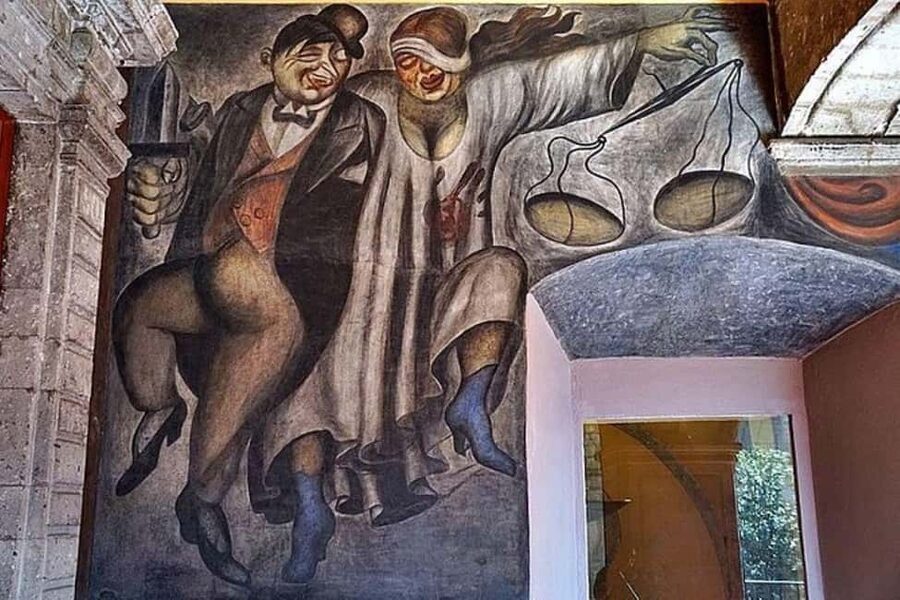
The tour begins at the Former College of San Ildefonso, one of the key places linked to Mexican muralism. Starting here gives you an immediate sense of how the movement grew inside grand educational and civic buildings rather than only in art museums.
The building itself provides useful context. You are looking at murals in a former college, a setting that connects education with public art. That link is important because muralism was meant to teach and reach a wide audience.
Expect to spend time looking closely at the painting rather than rushing from room to room. Your guide can point out techniques, figures, symbols, and political references that are easy to miss when you view the murals on your own.
The exact amount of time at San Ildefonso is not listed separately, so the three-hour schedule requires a steady pace. You will want to listen, ask questions, and still keep moving between sites. Comfortable shoes are a must, and water is worth carrying.
The Ministry of Public Education and its painted courtyards
The Museo de Sitio de la Secretaría de Educación Pública is scheduled for a 45-minute visit when it is open. The Ministry of Public Education is one of the tour’s three principal mural locations, and its setting fits the larger purpose of muralism: taking art into a public institution connected with learning.
This stop is especially useful if you want to understand the social side of the movement. The murals are not presented as isolated masterpieces. They are part of a larger effort to communicate ideas about Mexican society, work, class, politics, and culture.
Forty-five minutes is enough for a guided introduction without turning the visit into an exhausting art seminar. Still, you should expect the guide to move through important sections rather than give every painted detail equal time.
There is one important scheduling point. The Ministry of Public Education is closed on Tuesdays. If you take the tour that day, the Diego Rivera Mural Museum is used instead. Check the day of your booking so you know which version of the route you will receive.
Palacio de Bellas Artes and the major mural names
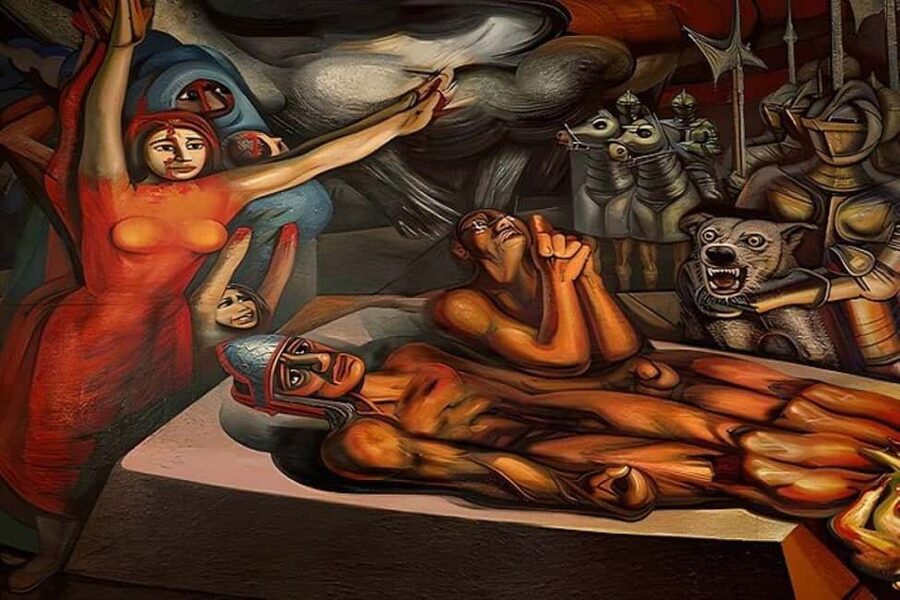
The 45-minute visit to Palacio de Bellas Artes is likely to be the visual centerpiece for many people. This grand cultural building houses major murals and gives you a chance to compare different artistic voices in one setting.
The appeal is not only the fame of the building. Bellas Artes lets you see how muralists used a formal cultural venue to discuss national identity and social change. The surroundings can make the paintings feel monumental, but a guide helps keep the focus on the images and ideas rather than the architecture alone.
This is where the connection between Diego Rivera and Frida Kahlo becomes especially interesting. Their relationship is often reduced to romance, personal drama, or a few famous photographs. On this tour, their story is used as a doorway into the art, the politics, and the artistic circles that shaped them.
You should expect the guide to discuss Rivera’s work and Kahlo’s place in Mexican art rather than turn the entire stop into a biography of their marriage. That balance is a strength. Their love story adds a human thread, but the murals remain the main subject.
The tour does not include transportation between sites. You walk from one location to the next, which helps you connect the buildings as part of the Historic Center. It also means the route requires attention to pace and footwear.
More Street Art Walking Tours in Mexico City
- Mexico City: Diego Rivera’s Murals Guided Walking Tour
★ 5.0 · 49 reviews - Guided Walking Tour Describing UNAM Murals and Revolution
★ 5.0 · 8 reviews - Mexico City: The Murals of Mexico Semiprivate Walking Tour
★ 5.0 · 2 reviews - Mexico City: History on Walls. Mexican Murals Walking Tour
★ 5.0 · 2 reviews
The Diego Rivera Mural Museum on the Tuesday route
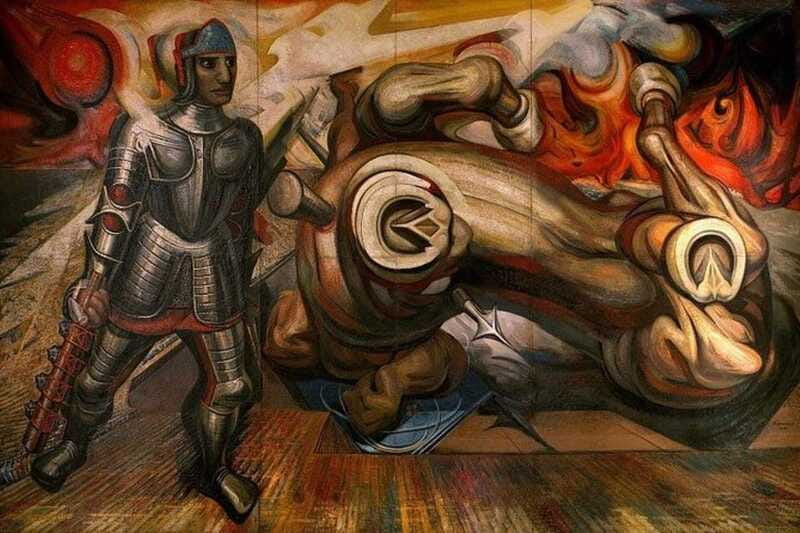
The Diego Rivera Mural Museum is the substitute visit when the Ministry of Public Education is closed on Tuesdays. It receives about 30 minutes in the planned route.
This stop offers a more focused look at Rivera’s work. It can be useful if you want to spend time with one major artist rather than compare several large mural programs across a government building.
The shorter visit means you should expect a compact explanation rather than a long museum session. Your guide’s role becomes especially important here. The value comes from knowing what to look for in Rivera’s composition, how the figures relate to Mexican society, and how the painting fits into the artist’s larger project.
If you are specifically hoping to see the Ministry of Public Education, avoid Tuesday. If you are open to a different but still significant Rivera experience, Tuesday gives you a sensible alternative.
What the guide adds to the murals
The strongest reason to book a guided mural tour is interpretation. You can enter these buildings alone, but you may not know which details matter or how the imagery connects to Mexican politics and culture.
The tour focuses on the symbolism behind each work. That might mean looking at the placement of figures, the use of historical references, the contrast between social groups, or the way an artist turns a wall into a public argument.
Balaam’s approach appears particularly suited to curious visitors who want to ask questions. His explanations are described as accessible, and he adjusts the level of detail rather than assuming everyone arrives with an art degree.
I would choose this tour over a general Historic Center walk if murals are high on your list. You get less time for unrelated landmarks, street food, and architecture, but far more attention to the art itself.
The guide’s background in archaeology also adds another layer. Mexican art often draws on older cultures, national symbols, and historical memory. An expert who can connect those references without burying you in technical language is valuable.
The National Palace confusion to avoid
Pay attention to the wording when you book. One description connected with this experience has led some people to expect a visit to the National Palace, but the actual route described here includes San Ildefonso, the Ministry of Public Education, Palacio de Bellas Artes, and the Diego Rivera Mural Museum.
The National Palace is not part of the stated itinerary. Do not book this tour expecting to enter it.
That does not weaken the mural route itself. In fact, the listed venues provide a strong three-hour program. But clear expectations matter, especially if you have planned your Mexico City days around seeing a particular building.
Time, walking, and practical comfort
Three hours is a good length for this subject. A shorter outing could feel rushed, while a much longer one might test your attention unless you already have a strong interest in art.
The schedule includes 45 minutes at the Ministry of Public Education, 45 minutes at Palacio de Bellas Artes, and 30 minutes at the Diego Rivera Mural Museum on the Tuesday route. The Former College of San Ildefonso is the starting point, and the remaining time covers other viewing and walking needs.
The tour does not include transportation. Plan to arrive at the starting point on your own and expect to walk between central locations.
Bring:
- Comfortable shoes
- Water
- A camera, if you like taking photos
Flash photography is not allowed. Follow the rules at each venue, since murals and historic interiors need careful treatment.
The tour is not suitable for wheelchair users. If mobility is a concern, this is a point to settle before booking, not after arrival.
English and Spanish guiding are available. That makes the experience practical for international visitors and Spanish-speaking guests alike.
What you are paying for
No tour price is provided here, so I cannot judge the exact cost in pesos. I can judge the value of what is included.
Your booking covers the guide service and museum entrance tickets. That matters because you are paying for access plus interpretation, not simply for someone to lead you through the Historic Center from the outside.
The value is strongest if you would otherwise struggle to understand the murals. A visitor who already studies Rivera, Kahlo, and Mexican muralism may prefer more time alone with the paintings. For most people, though, the explanations can turn a beautiful but confusing wall into a readable historical document.
There is no transportation included, and gratuity is separate. Those are normal costs to remember when planning your day. Since the tour lasts three hours, it also leaves room for lunch, another museum, or further sightseeing afterward.
The flexible booking terms are useful if your Mexico City schedule is still shifting. You can reserve and pay later, and cancellation is available up to 24 hours before the tour for a full refund.
Who should book this mural tour?
I would recommend it to you if you like art but want help reading it. You do not need a formal background in art history. The tour is designed to explain the paintings in a way that connects visual details to Mexican society and politics.
It is also a good pick if you are interested in Diego Rivera and Frida Kahlo but want more than a celebrity-style story. Their relationship is part of the discussion, yet the focus remains on the art and the culture around it.
History-minded visitors should get a lot from the route, especially with Balaam’s background in history and archaeology. His ability to explain symbolism and encourage conversation is a major part of the experience.
I would be less likely to choose it if you want a relaxed, open-ended stroll with many food stops or if you dislike spending long stretches inside museums and public buildings. The route has a clear purpose: understand Mexican muralism.
Should you book it?
Book this tour if murals are one of your priorities in Mexico City, particularly if you want the politics, symbolism, and personal stories explained as you look at the art.
The strongest reasons are the three-hour focus, included entrance tickets, English and Spanish guiding, and the chance to learn from Balaam, whose history and archaeology background adds real weight to the visit. Just confirm the Tuesday substitution, remember that the National Palace is not included, and plan for walking.
For a first look at Mexican muralism, this is a smart use of half a day. You leave with more than a set of photographs. You gain a way to read the city’s public art.
FAQ
How long does the Mexico City mural tour last?
The tour lasts three hours.
Which languages are available?
The live guide is available in English and Spanish.
Where does the tour begin?
The starting location is the Former College of San Ildefonso.
Which places are visited?
The route includes the Museo de Sitio de la Secretaría de Educación Pública, Palacio de Bellas Artes, and the Diego Rivera Mural Museum. The tour considers three emblematic mural sites, and the exact buildings depend on the day.
What happens on Tuesdays?
The Ministry of Public Education is closed on Tuesdays. On that day, the Diego Rivera Mural Museum is visited instead.
Are entrance tickets included?
Yes. Museum entrance tickets and guide service are included.
Is transportation included?
No. Transportation is not included, so you need to make your own way to the starting point and walk between the tour locations.
Is the tour suitable for wheelchair users?
No. The tour is not suitable for wheelchair users. Comfortable shoes, water, and a camera are recommended, and flash photography is not allowed.
More history behind the walls in Mexico
- Private Walking Tour Guadalajara History and Murals with Guide
★ 5.0 · 6 reviews - Tour history of Muralism in Mexico
★ 5.0 · 5 reviews - Street Art & Cemetery Cultural Tour – half day
★ 5.0 · 3 reviews - Historic tour in the center and murals of Orozco
★ 5.0 · 2 reviews
New street art tours in Mexico
- Xochimilco floating gardens, Coyoacan and UNAM murals★ 4.0 · 6 reviews
- UNAM: Murals & Revolution★ 4.9 · 8 reviews
- Street Art & Cemetery Cultural Tour – half day★ 5.0 · 3 reviews
- Graffitis & Munchies biketour Playa del Carmen★ 4.5 · 18 reviews
- Street Art Walk★ 4.5 · 7 reviews
- Tour Women Muralists : Strokes that resist Mexico City★ 5.0 · 7 reviews
- Mexico City Private Tour with Teotihuacan, Murals, Guadalupe Basilica★ 3.0 · 2 reviews
- Diego Rivera’s murals, hidden treasures★ 5.0 · 21 reviews
Street Art Walking Tours, side by side.

Naples Spanish Quarters Walking Tour Street Art, Folklore & Sweet
Read our review →

Brooklyn Graffiti & Street Art Walking Tour in Bushwick
Read our review →