
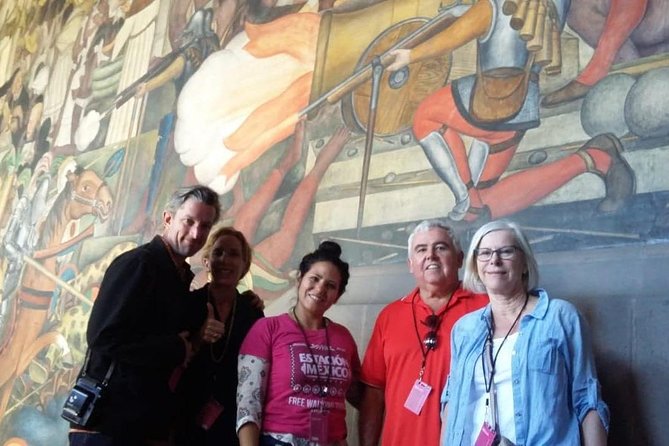
Reviewed · MURALISM TOURS
La Catrina & Muralism: Diego Rivera’s Legacy & Frida Kahlo
Mexico City’s mural tradition is not art meant to sit quietly in a private gallery. It covers school walls, government buildings, markets, and grand cultural halls with stories about revolution, class, Indigenous identity, religion, and daily life. This walking tour gives those pictures a voice, moving from the former San Ildefonso college to Palacio de Bellas Artes.
I like two things right away: the tour includes museum admission and public transportation, and the group is limited to 12 people. I also like the guide-led approach. Guides such as Sofía, Ulysses, Waryyor, Addy, and David bring the art together with Mexican history instead of simply pointing at painted walls.
The main caution is timing. The official length is about 2 hours 30 minutes, but some departures have lasted much longer, even more than four hours. Bring water and a snack, and do not schedule an important lunch or museum visit immediately afterward.
Why this mural walk is worth your morning
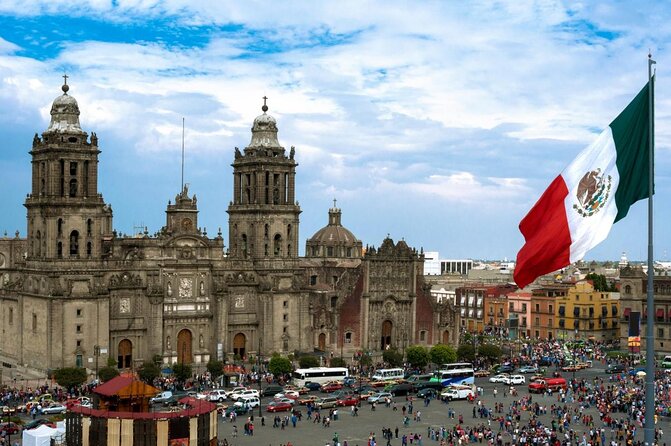
- La Catrina takes center stage: See Diego Rivera’s famous image in a work that connects Día de Muertos with Mexican identity.
- Four important stops: The route includes San Ildefonso, Museo Vivo del Muralismo, Museo Mural Diego Rivera, and Palacio de Bellas Artes.
- Art explained through history: Learn how muralism grew after the Mexican Revolution and how its artists presented competing ideas about Mexico.
- Small-group format: A maximum of 12 people allows room for questions and a more personal conversation.
- Public art beyond the obvious: Guides may show murals in markets and other places you might pass without noticing.
- Central start and finish: Begin in Centro Histórico at 11:00 a.m. and finish near Bellas Artes, with food suggestions from the guide.
San Ildefonso: where Rivera and Kahlo enter the story
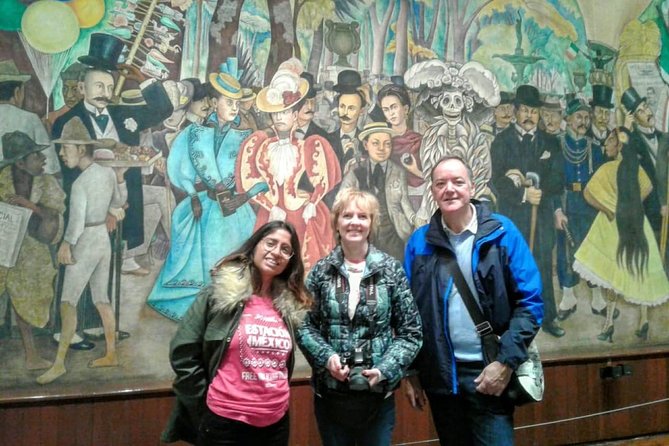
Meet at the former Colegio de San Ildefonso at Justo Sierra 16 in Centro Histórico. This is a practical starting point because the building itself matters to the story, not just as a meeting place.
The guide begins with Diego Rivera’s life and work, then explains how the building witnessed the start of the relationship between Rivera and Frida Kahlo. That personal connection gives the first stop an emotional hook, but the larger subject is Rivera’s place in Mexican art and the movement that made murals a public tool.
Plan on about 35 minutes here, with admission included. You will likely spend much of that time looking up and across large painted surfaces, so comfortable shoes and a little patience help. The opening discussion also sets up a useful question for the rest of the walk: what is a mural supposed to do besides decorate a wall?
For me, this is where the tour earns its fee. You can enter a historic building on your own, but without context it is easy to notice only colors, famous names, and attractive architecture. A good guide points out the choices, symbols, and political ideas that make the paintings worth studying.
The Rivera and Kahlo connection may attract art lovers, but you do not need to know their biographies before arriving. The tour is designed to introduce the subject in English, and the single-language format keeps the storytelling focused.
More muralism tours in Mexico:
- CDMX: Xochimilco, Coyoacan, Frida Kahlo Museum & Murals Tour
★ 4.4 · 3,025 reviews - Muralist Art Semi Private Walking Tour in Mexico City Downtown
★ 5.0 · 188 reviews - Xochimilco floating gardens, Coyoacan and UNAM murals
★ 4.0 · 53 reviews
Museo Vivo del Muralismo and the art of public walls
The next stop is Museo Vivo del Muralismo, a site with two courtyards and three levels. The scale matters. You are not looking at one isolated painting, but moving through a setting where architecture and mural art work together.
The planned visit lasts about 35 minutes. That is enough for a guided overview, but not necessarily enough for a slow examination of every work. If you are the kind of person who wants to read every label and study every corner, ask your guide how much time is available before settling in.
This stop helps explain why Mexican muralism carries such social weight. The movement grew as artists addressed the country’s revolution, inequality, workers, Indigenous communities, education, and national identity. Murals made these subjects visible to people who might never visit a formal art museum.
Guides on this route are often praised for making difficult ideas easy to follow. That is important here. Mexican muralism can become a blur of names, dates, battles, and symbols. A clear explanation gives you a way to read the walls rather than simply admire them.
You may also hear about artists beyond Rivera. The tour’s wider focus includes José Clemente Orozco and David Alfaro Siqueiros, two major muralists whose work can be sharper, more dramatic, and less comfortable than Rivera’s. Their different styles and political positions help you understand that Mexican muralism was never one single message.
La Catrina at Museo Mural Diego Rivera
The Museo Mural Diego Rivera holds the tour’s most recognizable image: La Catrina. The work brings together Día de Muertos imagery and a famous figure that has become closely associated with Mexican visual culture.
You have about 30 minutes here, and the admission ticket is included. The stop is compact but important. La Catrina is easy to recognize in photographs, yet a guide can explain how Rivera placed her within a larger scene and why the painting says more than this is a skeleton.
This is also a useful place to think about the way Mexico presents its past. Death, religion, social class, conquest, and national memory can appear side by side. The painting’s appeal is visual, but its meaning comes from the people and events surrounding the central figure.
I would not treat this as a quick photo stop. Give yourself time to look at the supporting characters and details. Ask your guide which figures matter most and how Rivera uses them to make a point about Mexican society.
The museum visit also gives the tour a change of pace. After larger public interiors, you are focused on one major work. If your interest is mainly Frida Kahlo, be aware that this is a Diego Rivera and Mexican muralism tour, not a dedicated Frida tour. Kahlo enters the story through her relationship with Rivera and the wider artistic world.
Bellas Artes and Rivera’s controversial American mural
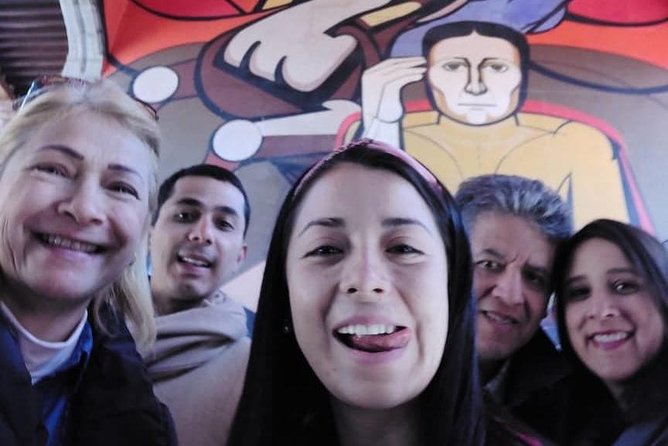
The route ends at Palacio de Bellas Artes, Mexico City’s leading cultural venue. The building is near Av. Juárez in Centro Histórico, so you finish in a useful part of town rather than at an out-of-the-way stop.
Here you see one of Rivera’s most controversial works, created in the United States and later preserved in Mexico. The subject gives the guide a chance to discuss the tension around Rivera’s politics, patronage, and public art. His murals were not neutral wall decoration. They could challenge powerful people, praise workers, and argue over the direction of modern society.
The planned visit lasts about 30 minutes. Since the museum schedule and access can change, the exact sites may vary. The experience provider notes that museums could be changed according to availability, so keep a little flexibility in your plans.
One practical advantage is the finish. Your guide offers suggestions for things to do nearby and places to eat. That is useful in Centro Histórico, where you have many possible next stops but may not want to waste time choosing among them.
Some departures have included Bellas Artes after a request from the group, so it is worth confirming the day’s plan with your guide. The advertised route ends here, but local conditions and museum availability can affect the details.
More street art tours worth booking in Mexico:
- Cancun Street Food Tour with Food Stalls, Local Market and Murals
★ 5.0 · 723 reviews - Mexico City; ART NACO : Murals & Street Art Bike Tour
★ 5.0 · 284 reviews - History and Murals: Walking Tour Guadalajara
★ 5.0 · 237 reviews - Walking Tour – Impressive murals in Historical Center of Mexico City
★ 5.0 · 224 reviews
The guides make the difference
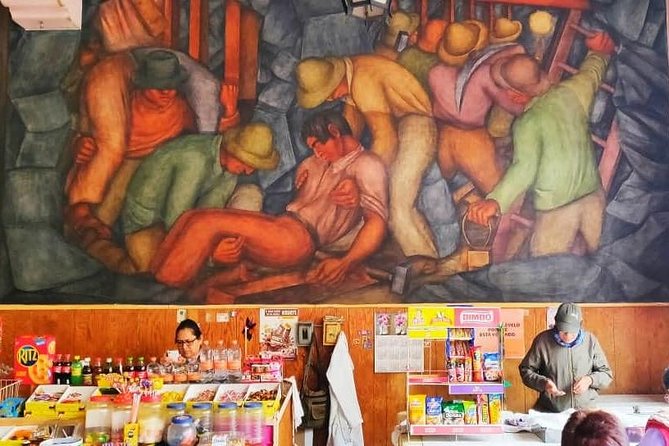
The strongest part of this experience is the guide’s ability to connect visual details with Mexican history. Addy has been praised for her warmth, clear communication, and ability to point out works that are easy to miss. Sofía is associated with passionate explanations and special access to murals in a market setting.
Ulysses has guided groups through murals that are difficult to locate independently, including parts of the Secretary of Education building. Waryyor, also called Warrior or Guerrero, is especially associated with energetic storytelling and a strong command of the city and its art.
Other named guides include David, Diana, and Erin. David is noted for explaining both mural history and Mexican culture along the route. Diana has covered Rivera, Orozco, and Siqueiros, which is helpful if you want a wider view than Rivera alone.
The guide quality may vary by departure, as it does on any small-group tour. Still, the repeated strengths are clear: passion, strong subject knowledge, easy communication, and a willingness to answer questions. The one-language format helps because the guide is not switching back and forth between languages.
A small group also changes the feel of the walk. With no more than 12 people, you have a better chance to ask why a figure appears in a mural, what a political symbol means, or where to look next. On one departure, a very small group allowed the guide to adjust the pace and answer more questions. That flexibility is one of the better reasons to choose this tour over a large city walk.
Timing, walking, and what to carry
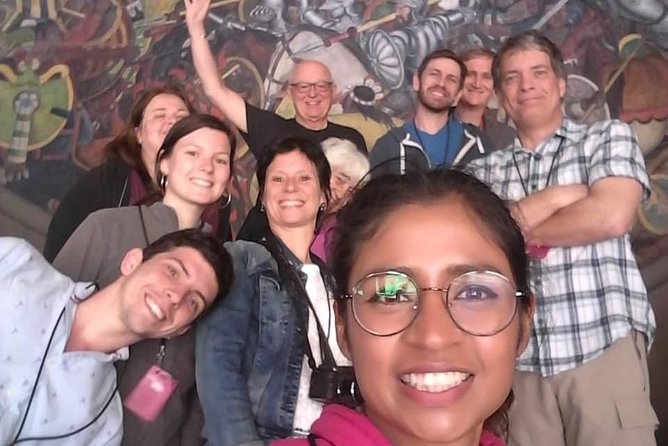
The meeting time is 11:00 a.m. at San Ildefonso, and the advertised duration is approximately 2 hours 30 minutes. The four planned stops add up to about 130 minutes before allowing for movement between sites, so the schedule is fairly active.
You will stand for much of the tour and walk between locations. One itinerary has used public transportation, which is included, and the route remains in or near Centro Histórico. Most people can take part, but this is not a seated museum visit.
The most useful packing advice is simple:
- Wear shoes you can walk and stand in.
- Carry water.
- Bring a small snack if you tend to get hungry before lunch.
- Leave room in your schedule in case the tour runs longer.
- Keep your phone charged for the meeting point and museum details.
The extra time may be welcome if you love art and questions. It may feel tiring if you expected a short morning outing. The tour has no stated food or drink inclusion, and you should not count on a formal water or snack break.
Price, group size, and overall value
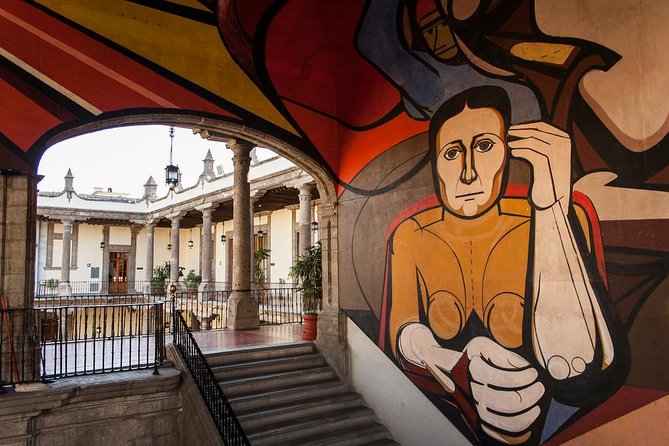
At $66.14 per person, this is not the cheapest way to see downtown. The price includes museum tickets, public transportation, and an English-speaking guide focused on one subject. Those inclusions make the cost easier to justify, especially if you want interpretation rather than a self-guided walk.
The real value is the context. You can find some major murals on your own, but locating smaller works in markets or less obvious parts of public buildings is harder. More important, you may see the pictures without understanding the historical argument behind them.
The tour has a 4.7 rating from 197 published ratings, with 93 percent recommending it. That matches the strongest practical impression: people who want art, history, and a guide-led walk are likely to get their money’s worth.
It is less suitable if you only want a quick look at La Catrina, or if you dislike long explanations. The experience is built around interpretation. You are paying for the story as much as the entry tickets.
Free cancellation is available up to 24 hours before the 11:00 a.m. start time. Changes or cancellations within 24 hours are not refunded, so make your plans before that cutoff.
Who should book this mural tour?
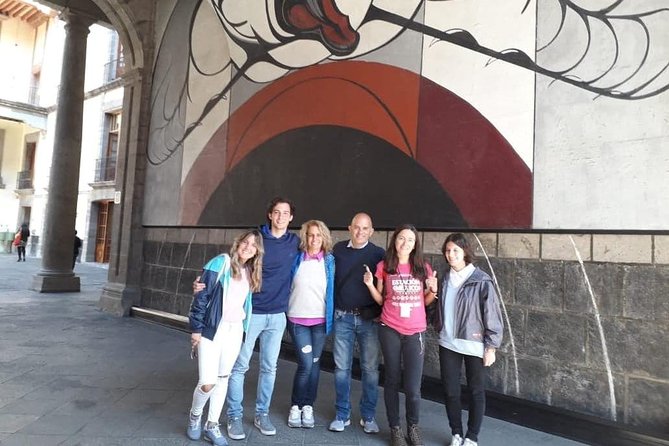
I would choose this experience if you are interested in Mexican history, public art, or the political role of artists. It also works well as a first introduction to Rivera, Orozco, Siqueiros, La Catrina, and the relationship between Rivera and Kahlo.
It suits solo visitors, couples, families with older children, and friends who enjoy learning while walking. A teenager interested in drawing, painting, or social issues could get a lot from it. The small group size is helpful for anyone who wants to ask questions instead of simply following a flag.
I would think twice if you need frequent sitting breaks, want a tightly fixed schedule, or are looking for a tour devoted mainly to Frida Kahlo. The route includes Kahlo in an important way, but Rivera and the muralist movement are the main subjects.
Should you book La Catrina and Muralism?
Book it if you want to understand why Mexico City’s murals matter, not just photograph famous paintings. The best parts are the expert storytelling, included admissions, central route, and access to art you might overlook alone.
Plan carefully around the uncertain length. Bring water and a snack, wear good shoes, and leave the afternoon open. If you do that, this is a strong choice for turning a few downtown museums and public walls into a connected story about Mexico, its artists, and its long argument over who gets to tell the national story.
FAQ
Where does the tour begin?
The tour begins at the former Colegio de San Ildefonso, Justo Sierra 16, Centro Histórico de la Ciudad de México.
What time does the tour start?
The stated start time is 11:00 a.m.
Where does the tour end?
It ends near Palacio de Bellas Artes at Av. Juárez in Centro Histórico.
How long is the tour?
The advertised duration is approximately 2 hours 30 minutes. Some departures have lasted longer, so allow extra time.
What language is the tour offered in?
The tour is offered in English and uses a one-language format.
What museums and sites are included?
The planned stops are Antiguo Colegio de San Ildefonso, Museo Vivo del Muralismo, Museo Mural Diego Rivera, and Palacio de Bellas Artes. Museums may change based on availability.
Are museum tickets and transportation included?
Yes. Museum admission and public transportation are included. Food and drinks are not included.
How many people can join the tour?
The maximum group size is 12 people.
New street art tours in Mexico
- Xochimilco floating gardens, Coyoacan and UNAM murals★ 4.0 · 6 reviews
- UNAM: Murals & Revolution★ 4.9 · 8 reviews
- Graffitis & Munchies biketour Playa del Carmen★ 4.5 · 18 reviews
- Street Art & Cemetery Cultural Tour – half day★ 5.0 · 3 reviews
- Street Art Walk★ 4.5 · 7 reviews
- Tour Women Muralists : Strokes that resist Mexico City★ 5.0 · 7 reviews
- Mexico City Private Tour with Teotihuacan, Murals, Guadalupe Basilica★ 3.0 · 2 reviews
- Diego Rivera’s murals, hidden treasures★ 5.0 · 21 reviews
Muralism Tours, side by side.
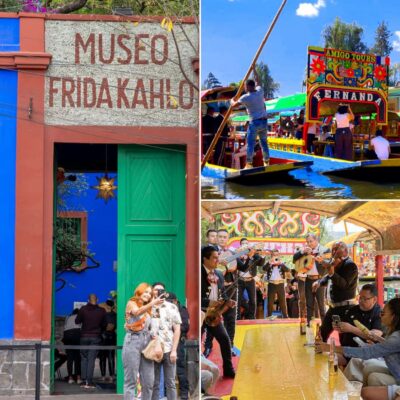
Xochimilco, Coyoacan, Frida Kahlo Museum & Murals Tour
Read our review →
Muralist Art Semi Private Walking Tour in Mexico City Downtown
Read our review →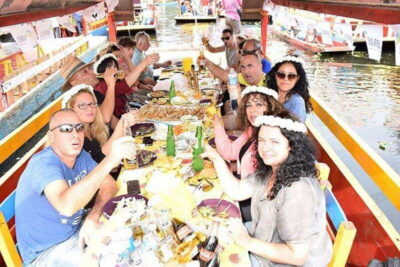
Xochimilco floating gardens, Coyoacan and UNAM murals
Read our review →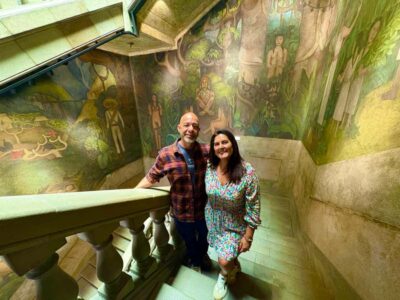
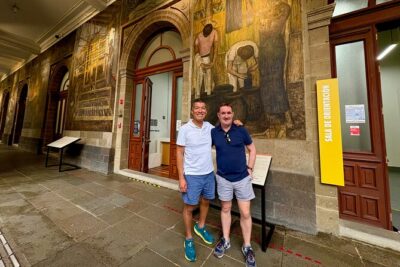
La Catrina & Muralism: Diego Rivera’s Legacy & Frida Kahlo
Read our review →
Lists this wall walk turns up in