
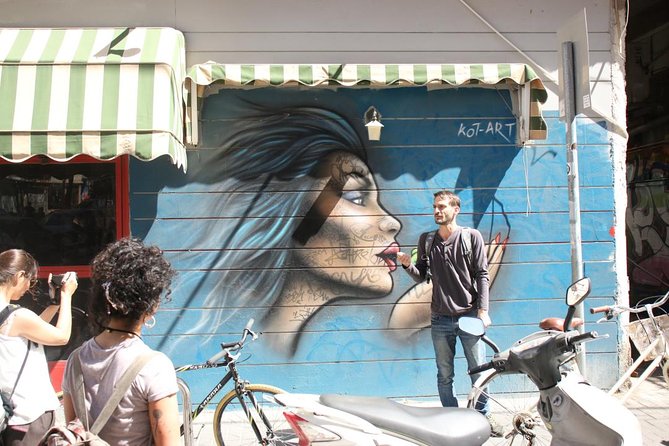
Reviewed · GRAFFITI TOURS
Tel Aviv Street Art & Graffiti Tour
Tel Aviv’s street art is not just decoration. It is a running conversation about politics, identity, humor, style, and the city’s changing neighborhoods. This 90-minute walking tour takes you into Florentine and Nachalat Binyamin, where walls, shutters, alleys, and pedestrian lanes tell stories you would likely miss on your own.
I like two things right away. First, the guide explains how to read the work, including artists’ signatures, methods, and messages. Second, the route reaches areas away from the usual sightseeing circuit, including street art near an old Ottoman rail route and newer urban renewal projects. The main consideration is the price: at $78 per person, it is not a cheap stroll, and much of what you see is free.
Key things to know before you book
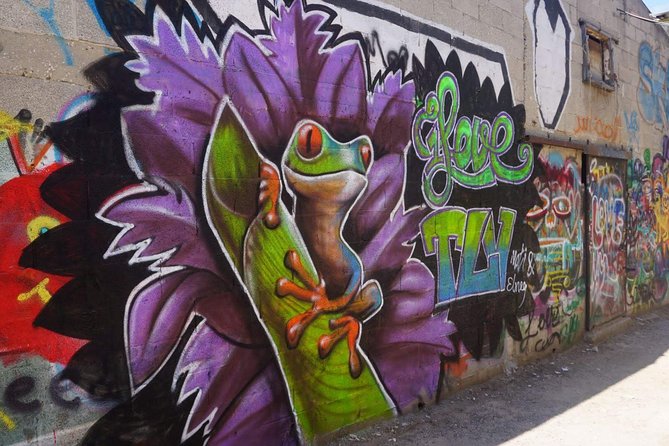
- Florentine is the main street-art setting: Expect side streets, walls, galleries, and works tucked into a neighborhood better known for its creative edge than for classic monuments.
- Nachalat Binyamin adds a different mood: Its pedestrian mall functions as an open-air art gallery, giving the tour a more public and organized setting.
- The guide makes the difference: Ari, Roey, Yan, Dina, Roni, Efrat, Orel, and Alef are among the guides praised for clear explanations, humor, and personal stories.
- The route connects old and new Tel Aviv: One section looks at graffiti near the former Ottoman rail line alongside urban renewal and gentrification.
- You walk for about an hour and a half: Wear comfortable shoes and expect to remain outdoors for the full experience.
- The group can reach 25 people: That is manageable for a walking tour, but it may feel less personal than a small private outing.
Why Tel Aviv graffiti deserves a closer look
A quick walk through Tel Aviv can make street art seem like a colorful backdrop. This tour asks you to slow down and look at the choices behind it. A tag may identify an artist. A large painted figure may carry a political point. A piece placed on a shutter or tucked into an alley may respond to the building, the street, or the neighborhood around it.
That extra context is the real value here. You are not simply collecting photographs. You are learning why the work is there, how artists sign it, and how the scene has changed over time. One guide, Roey, is described as pointing out pieces made only a few days earlier as well as older work. That matters because street art is temporary. A wall can change quickly, and a guide who follows current work can show you more than a fixed list of famous murals.
The experience also helps you keep looking after the tour ends. Several guides are praised for helping people recognize artists and styles later in the day. That is a useful result from a short tour: you leave with a better eye, not just a camera full of wall paintings.
More Graffiti Tours in the world:
- Medellin: Comuna 13 Graffiti Tour, Cable Car & Street Food
★ 4.8 · 9,046 reviews - Wynwood Graffiti Golf Cart Small-Group Tour
★ 5.0 · 1,646 reviews - London: Street Art and Graffiti Guided Walking Tour
★ 4.9 · 1,354 reviews
Florentine: Tel Aviv’s main graffiti quarter
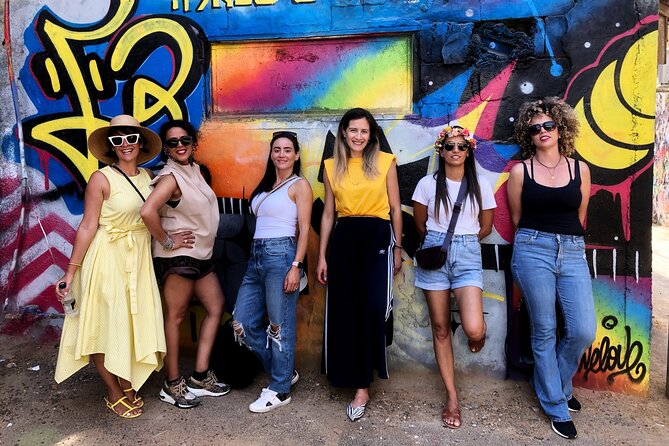
Florentine is the heart of the walk. It is presented as one of Tel Aviv’s top hipster neighborhoods and a major center for local graffiti. The appeal is not a single landmark. It is the density of creative work spread through streets and alleys, where you can move from one piece to another and see how art fits into daily city life.
You might find large wall paintings, quick tags, layered work, and small details that are easy to miss from a passing taxi. The guide’s job is to point out what deserves your attention and explain the people and ideas behind it. The strongest part of the experience seems to be this conversation between place and artwork.
Florentine also has galleries, which adds another layer to the walk. You are not limited to street walls. The route gives you a look at the connection between public art, local artists, and the broader creative scene. That makes the neighborhood useful for anyone who wants more than a photo stop.
There is a tradeoff. Street art is exposed to weather, paint-over jobs, construction, and changing ownership of buildings. A piece shown on one date may not look the same later. That is not a flaw in the tour, but it means you should think of the walk as a snapshot of a living scene rather than a permanent museum visit.
The guide’s storytelling is especially important here. Ari is praised for combining research with personal stories about artists. Yan is praised for explaining the social and political side of graffiti while keeping the walk enjoyable. A guide who can connect a particular mark or image to a wider issue turns a wall into a small piece of city history.
Nachalat Binyamin as an open-air gallery
The tour also visits Nachalat Binyamin Pedestrian Mall, described as an open-air street-art gallery. This gives the walk a different feel from Florentine. Instead of searching mainly through neighborhood side streets, you encounter art in a pedestrian setting where the public space itself becomes part of the display.
That contrast is useful. Florentine helps you understand graffiti as an informal, changing form of expression. Nachalat Binyamin shows how street art can become part of a more visible public area. The two settings let you compare work that appears in tucked-away corners with art encountered along a pedestrian mall.
The stop should appeal to photographers, but the guide’s explanations remain the reason to go with a group. A wall painting can look striking without being easy to understand. The guide may explain the artist’s style, the way a work is signed, or the message behind an image. Those details help you look beyond color and scale.
Nachalat Binyamin also gives the tour a natural change of pace. After the more irregular streets of Florentine, a pedestrian mall can feel easier to follow. Still, this is a walking tour, not a seated gallery visit. You will be on your feet and outdoors, and the quality of the experience will depend on your interest in looking closely rather than simply passing through.
The Ottoman rail route and a changing neighborhood
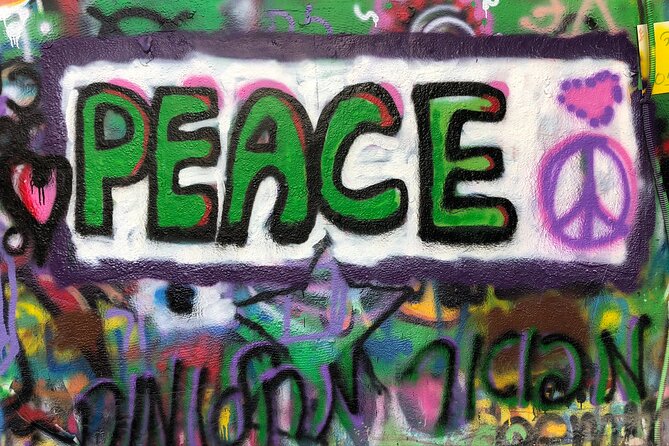
The newer route adds a particularly useful piece of context. Along the path of the ancient Ottoman rail line, a recently opened park brings old infrastructure and new urban development into the same view. Here, the subject is not only graffiti. It is also what happens when a city renews an area and property values and land use begin to change.
The tour uses graffiti to discuss urban renewal and gentrification. That makes this section more than a search for bright walls. You get a chance to see how older, less formal creative work sits beside newer public improvements. The contrast can raise questions about who a neighborhood is for, what gets preserved, and how street art changes when an area becomes more desirable.
This is one of the most useful aspects for anyone interested in cities. You do not need a background in art or planning to follow the discussion. The route connects visible changes in the streets to the lives and work of artists. It also explains why some pieces have remained hidden for years while newer works appear around them.
Because the itinerary information describes several Florentine-based sections, the exact order may vary. The published description places Florentine, Nachalat Binyamin, and a newer Florentine route among the main areas. Think of the tour as a guided walk through connected creative zones rather than a conventional set of museum stops.
More street art tours worth booking in the world:
- CDMX: Xochimilco, Coyoacan, Frida Kahlo Museum & Murals Tour
★ 4.4 · 3,025 reviews - Amsterdam: Streetart Museum STRAAT Entrance Ticket
★ 4.8 · 2,137 reviews - Belfast: Murals Taxi Tour
★ 4.9 · 2,047 reviews - Lisbon: Street Art Tour
★ 4.9 · 1,324 reviews
What the guides add to the walk
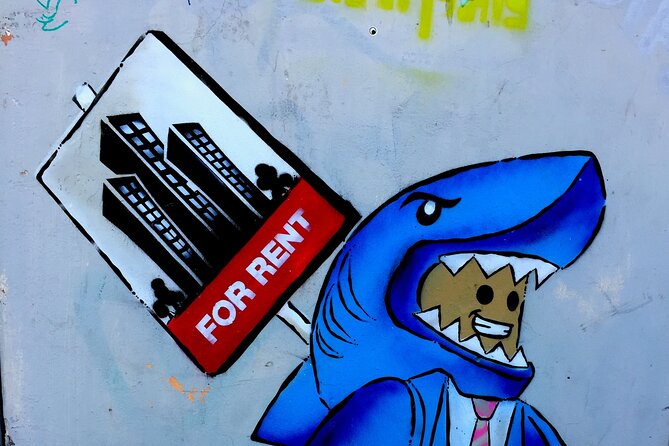
The guide is the central part of this experience. The art is free to see, and you could walk through these neighborhoods without paying an admission fee. What you are buying is the explanation, local awareness, and help finding work that you might otherwise walk past.
The named guides receive repeated praise for different strengths. Dina is described as making the subject interesting while explaining both graffiti and the surrounding area. Efrat is noted for being friendly and engaging. Orel is praised for combining fun with clear stories about street art.
Ari is singled out for well-researched knowledge and personal stories. Roey is described as up to date on recent work and generous with answers. Yan is praised for passion and for explaining the political and social ideas behind graffiti. Roni is associated with a lively walk and a useful tip from the experience itself: morning is more comfortable before the temperature rises and crowds arrive.
Alef is also praised for giving clear background on the art. These names do not guarantee which guide you will receive, but they show the kind of leadership the tour aims for: informed, approachable, and able to explain the scene without turning the walk into a lecture.
The strongest guides seem to make room for questions. That is important because graffiti can be personal, political, and sometimes difficult to interpret from a photograph alone. You should come ready to ask why a work was placed in a certain spot, how artists identify themselves, and what has changed in the neighborhood.
Is $78 a fair price?
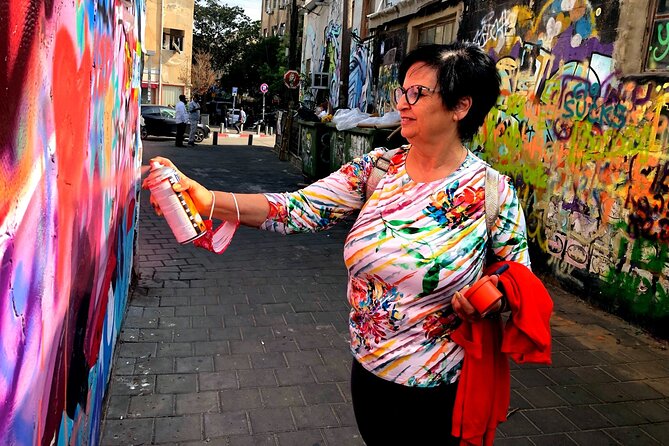
At $78 per person, this is a premium price for a 90-minute walk through places that have no admission charge. If you only want to see colorful walls, you can spend less by exploring Florentine and Nachalat Binyamin on your own.
The value improves if you want meaning and orientation. A good guide can save you time, point out recent work, identify artists, explain local references, and connect graffiti with Tel Aviv’s social changes. You are paying for access to that local reading of the streets, not for entry into a paid attraction.
I would consider the price reasonable for someone who has limited time in Tel Aviv and wants a focused introduction. It is also easier to justify if you plan to keep exploring street art afterward. The walk can give you enough background to recognize artists and styles as you continue around the city.
For a family or group, the cost adds up quickly. Children must be accompanied by an adult, and there is no separate child pricing given in the available details. If your group is mainly interested in major historic sights, the price may feel high. If you already enjoy public art, photography, or city culture, the extra context makes the fee more useful.
Timing, walking, and group size
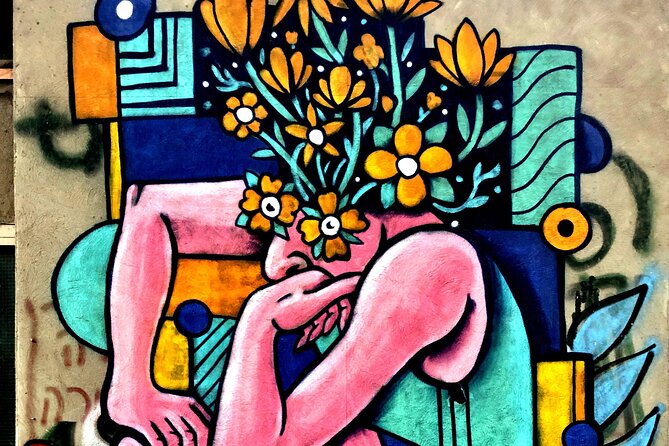
The tour lasts about one hour and 30 minutes and ends back at the meeting point. The meeting point is near public transportation, which makes it practical to add before or after another Tel Aviv activity. Hotel pickup and drop-off are not included, so you need to reach the start point yourself.
The highlights describe morning and evening departure choices, while the published start time is 12:00 pm. Those details do not fully match, so confirm the departure time when booking. If a morning option is available, it may be the better choice in hot weather. One guide’s advice specifically favors morning, before the temperature rises and crowds arrive.
You should wear comfortable shoes. The experience is entirely a walking tour, and the route includes side streets, alleys, a pedestrian mall, and park areas. No special health restrictions are listed, and most people can participate, but you should still be prepared to walk outdoors for the full 90 minutes.
The maximum group size is 25 people. That is not enormous, but it is large enough that you may need to stay close to the guide, especially in narrow streets or noisy areas. A larger group can also make questions harder to hear. If you prefer a very personal discussion, check if a smaller option is offered before paying.
Who will get the most from this tour?
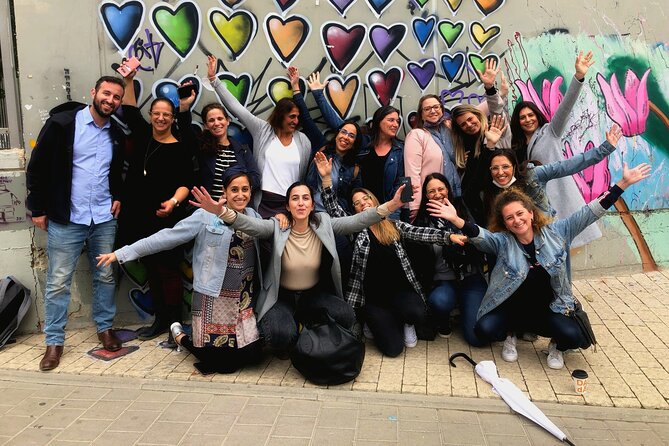
This is a strong match for you if you like public art, photography, neighborhood walks, or the social side of cities. It is also a good first activity in Tel Aviv because it gives you a practical sense of two creative areas and encourages you to keep looking around afterward.
Families can take part as long as children are accompanied by an adult. The subject may work well for older children and teenagers who enjoy drawing, design, or city culture, though the tour’s appeal depends on their interest in walking and listening.
You do not need art training. The guides explain the scene in accessible terms, and the best parts come from connecting specific works to artists, messages, and neighborhoods. If you already follow graffiti closely, the value will depend on how current the route is and how much the guide can add beyond what you already know.
This may not suit you if you want a traditional museum experience, a seated tour, or a long list of major landmarks. It is also not the best use of your money if you only want quick photographs. The art is free, and the fee makes sense mainly when you want the stories and local interpretation.
Booking and cancellation details
Confirmation is provided when you book. Free cancellation is available if you cancel at least 24 hours before the local start time. Cancellations or changes made less than 24 hours in advance are not accepted for a refund.
The tour requires a minimum number of participants. If that minimum is not reached and the activity is canceled, you are offered another date or experience, or a full refund. Keep the meeting point details handy because hotel transportation is not included.
Should you book the Tel Aviv Street Art and Graffiti Tour?
Book it if you want to understand what you are looking at, not just photograph it. The combination of Florentine’s informal walls, Nachalat Binyamin’s open-air gallery feel, and the discussion of the old rail route and gentrification gives the 90-minute walk real range.
I especially like it for a first visit to Tel Aviv, since the guide can help you find recent work and recognize artists afterward. Ari, Roey, Yan, Dina, Roni, Efrat, Orel, and Alef are all associated with strong guiding qualities, though your guide will depend on the date.
Skip it if $78 feels too steep for a free public-art route or if you prefer to explore independently. For everyone else, this is a focused, practical introduction to a creative side of Tel Aviv that is easy to miss when you stick to the main sights.
FAQ
How long does the Tel Aviv Street Art and Graffiti Tour last?
The tour lasts approximately 1 hour and 30 minutes.
Where does the tour take place?
The route includes Florentine and the Nachalat Binyamin Pedestrian Mall. It also includes a newer route near the path of the ancient Ottoman rail line and a recently opened park.
Does the tour include a professional guide?
Yes. A professional guide is included.
Is hotel pickup included?
No. Hotel pickup and drop-off are not included. You must make your own way to the meeting point.
Where does the tour end?
The activity ends back at the meeting point.
What time does the tour start?
The published start time is 12:00 pm. The tour details also describe morning and evening departure choices, so confirm the available time when booking.
How many people can join the tour?
The maximum group size is 25 people.
Can children join the tour?
Yes. Children can participate, but they must be accompanied by an adult.
Can I cancel for a full refund?
Yes, if you cancel at least 24 hours before the experience start time. Cancellations or changes made less than 24 hours before the start time are not accepted for a refund.
New street art tours in the world
- Your Own Belgrade: Street Art and Hidden Gems Walking Tour★ 5.0 · 2 reviews
- Wynwood Walls Street Art & Neighborhood Walking Tour★ 4.9 · 9 reviews
- Xochimilco floating gardens, Coyoacan and UNAM murals★ 4.0 · 6 reviews
- Vancouver: Street Art & Craft Beer Walking Tour with Tasting★ 4.8 · 14 reviews
- Vancouver: Street Art & Craft Coffee Walking Tour w/ Tasting★ 4.8 · 11 reviews
- Zagreb Street Art Private Walking Tour with a Local Artist★ 5.0 · 12 reviews
- UNAM: Murals & Revolution★ 4.9 · 8 reviews
- Urban Canvas: Osaka Street Art Bike Tour★ 5.0 · 10 reviews
Graffiti Tours, side by side.

Comuna 13 Graffiti Tour, Cable Car & Street Food
Read our review →


Brooklyn Graffiti & Street Art Walking Tour in Bushwick
Read our review →
Comuna 13 Tour with Snacks And Your Own Graffiti
Read our review →Lists this wall walk turns up in