
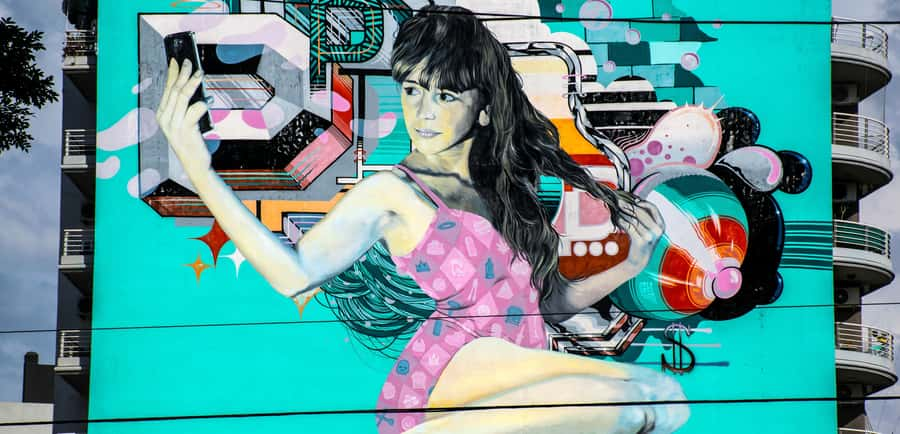
Reviewed · GRAFFITI TOURS
Palermo: Graffiti and Street Art Guided Tour in English
Palermo’s street art is more than colorful decoration. It is a public record of Argentine politics, football, protest, and neighborhood life. This two-hour English walking tour begins at Plaza Serrano and follows the art through Palermo Soho, ending at Plaza Inmigrantes de Armenia.
I like the way the tour connects what you see on the wall with Argentina’s political past. I also like the price, about $13 per person, and the guides’ lively approach. Juan, Vito, Victor, Ailen, and other guides are praised for mixing humor with clear explanations. The main drawback is that the group can sometimes be large, and one stop or two may feel more like a quick street viewing than a formal art visit.
Key points at a glance
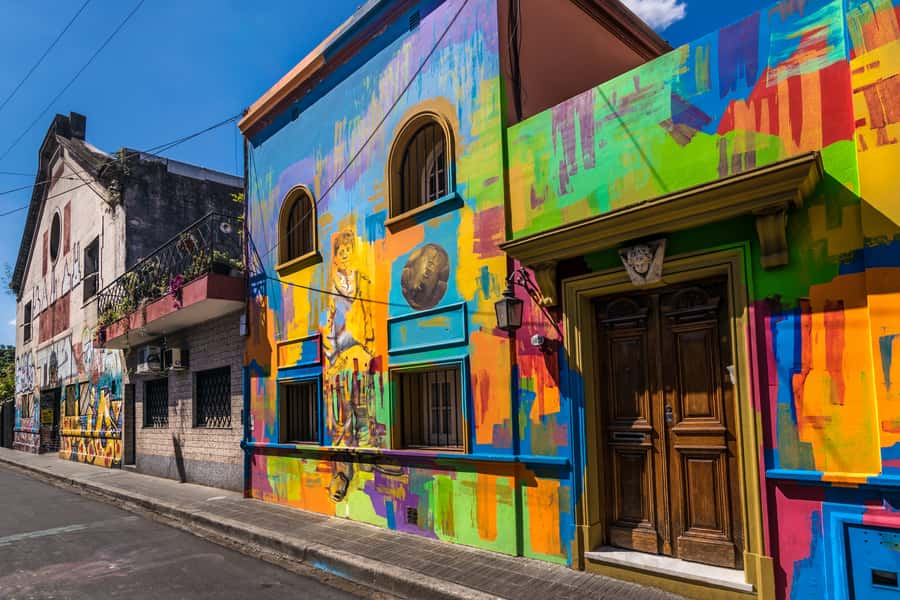
- See the Trump Wall at Madison Avenue Bar, one of the tour’s most memorable photo stops.
- Trace Argentine street art from the 1920s to today, including propaganda, election messages, protest, and football culture.
- Learn why aerosol paint changed urban expression in 1969, making messages quicker to write during a tense political era.
- Walk through Palermo Soho, a stylish part of Buenos Aires where murals and graffiti sit beside cafés, bars, and shops.
- Expect a guide-led experience with personality, especially with guides such as Juan, Vito, Victor, and Ailen.
- Finish near Plaza Inmigrantes de Armenia, with easy access to more of Palermo’s restaurants and nightlife.
Why Palermo’s walls tell a political story
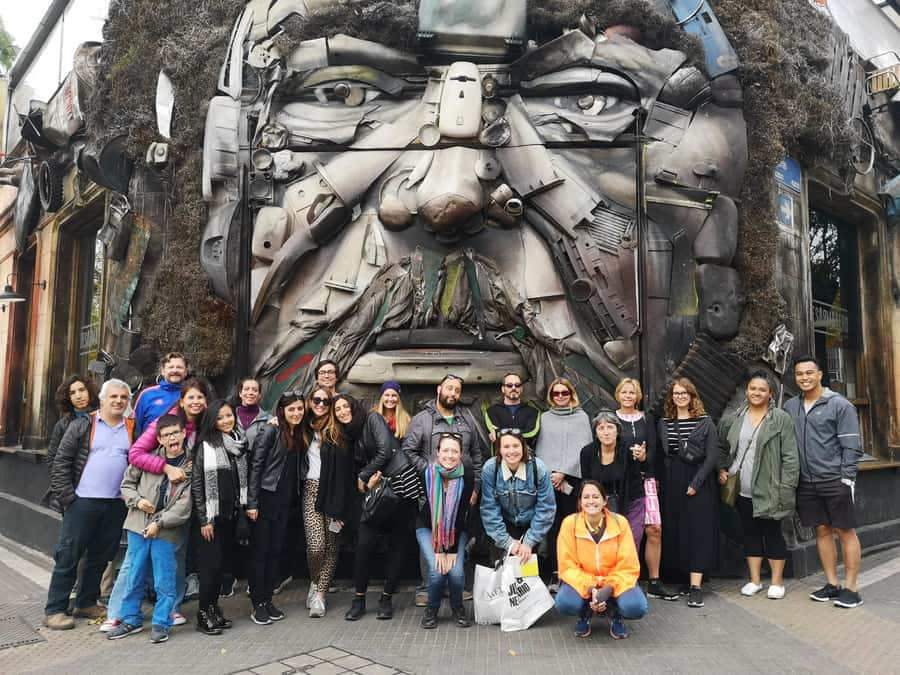
The best reason to take this tour is that it teaches you how to read the city. You are not simply shown a painted wall and told that it is pretty. You learn why public writing mattered in Argentina and how graffiti became tied to political movements.
The story reaches back to the 1920s, when writing and images in public spaces could signal political support, promote candidates, or spread propaganda. In that setting, graffiti was not just an act of personal expression. It could be a direct public statement, placed where people would see it during campaigns and periods of social change.
The tour then moves toward 1969, when aerosol paint arrived in Argentina. That new material mattered because it allowed people to write much faster than with older methods. Speed is important when public expression is politically risky. A message that could be painted quickly was easier to spread and harder to stop.
Your guide uses the walls of Palermo to explain how public protest developed through the 1970s. You hear about increasing social conflict and the way Argentinians became more involved in demonstrations and political action. The art gives the history a physical setting. Instead of hearing only dates in a museum, you are standing on a working street and looking at the sort of public space where those messages took shape.
More Graffiti Tours in the world:
- Medellin: Comuna 13 Graffiti Tour, Cable Car & Street Food
★ 4.8 · 9,046 reviews - Wynwood Graffiti Golf Cart Small-Group Tour
★ 5.0 · 1,646 reviews - London: Street Art and Graffiti Guided Walking Tour
★ 4.9 · 1,354 reviews
Starting at Plaza Serrano, also called Plaza Cortazar
The meeting point is Plaza Serrano, also known as Plaza Cortazar, at the corner of Jorge Luis Borges and Honduras streets. Look for the guide in an orange shirt beside the large PALERMO sign.
This is a sensible starting point because Plaza Serrano puts you in the middle of Palermo’s social scene. It is a useful place to get your bearings before walking into the side streets. The square is also called Plazoleta Julio Cortázar, so do not worry if you see more than one version of the name when checking maps or asking for directions.
The orange shirt helps, but arrive with the meeting point details saved on your phone. The tour does not include hotel pickup, so you need to make your own way to the square. Since the walk ends elsewhere, avoid bringing anything you do not want to carry for two hours.
Your guide will set the tone early. Juan is often praised for his humor, warmth, and ability to mix personal stories with historical facts. Vito is known for his enthusiasm for artists, sports, and Argentine culture. Victor and Ailen also receive strong praise for bringing energy and clear explanations. The individual guide can vary, but the format depends on someone who can keep a moving group focused on details that are easy to miss.
Walking Palermo Soho one wall at a time
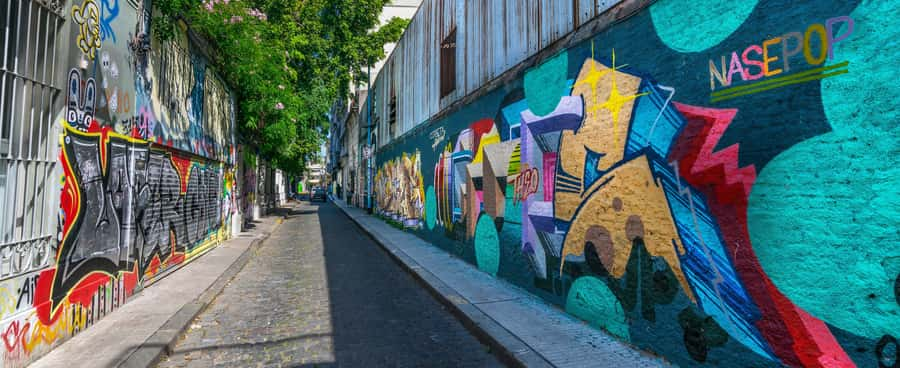
The route passes through Palermo, especially the Palermo Soho area. This is one of Buenos Aires’s more polished neighborhoods, with cafés, bars, clothing shops, and stylish streets. That setting creates an interesting contrast with the art. A painted wall may sit beside a fashionable business, yet its subject can be football, protest, national identity, or a local political memory.
You will see different styles rather than one single school of street art. The examples described on the walk include football murals and butterfly murals, along with other large-scale pieces and smaller graffiti. Some works are bold and easy to photograph. Others reward a closer look because the important detail is a symbol, face, slogan, or artist’s mark.
This is where a guide adds real value. You could walk through Palermo alone and notice plenty of color, but you would not necessarily know which pieces are tied to a particular artist or movement. You also might not understand why one painted wall is accepted as public art while another is treated as vandalism.
That distinction is one of the most useful parts of the experience. The tour explains how permission, purpose, ownership, and local attitudes affect the way a work is viewed. It does not reduce street art to a simple argument between good and bad. Instead, you get a better sense of how the city negotiates public space.
The walking pace is generally manageable, and two hours is a good length for the subject. You see enough to understand the story without spending half a day on your feet. Wear comfortable shoes, since the tour takes place outdoors and continues in wet weather.
The Trump Wall at Madison Avenue Bar
The Trump Wall at Madison Avenue Bar is a clear highlight. It gives you a memorable photo stop and shows how street art can respond to an international political figure through a Buenos Aires lens.
The wall also breaks up the historical discussion with a piece that feels immediate and familiar. You may already understand the basic reference, but the guide helps place the work within Palermo’s wider habit of using public art to comment on politics and culture.
Do not expect a museum-style viewing area. This is a street stop, so the experience depends on the condition of the art and the space around it on the day. You may have to share the best angle with other people in the group or with ordinary street activity. That is part of the appeal, but it also means your photographs are not guaranteed to look like polished gallery images.
More guided art walks in the world:
- Berlin: City Street Art Guided Walking Tour
★ 4.8 · 1,051 reviews - Glasgow: Street Art Guided Walking Tour
★ 4.8 · 385 reviews - Dresden: Neustadt District Street Art Guided Walking Tour
★ 4.3 · 333 reviews - 3-Hour Guided Street Art Walking Tour of Lisbon
★ 5.0 · 278 reviews
Football, artists, and everyday Argentine identity
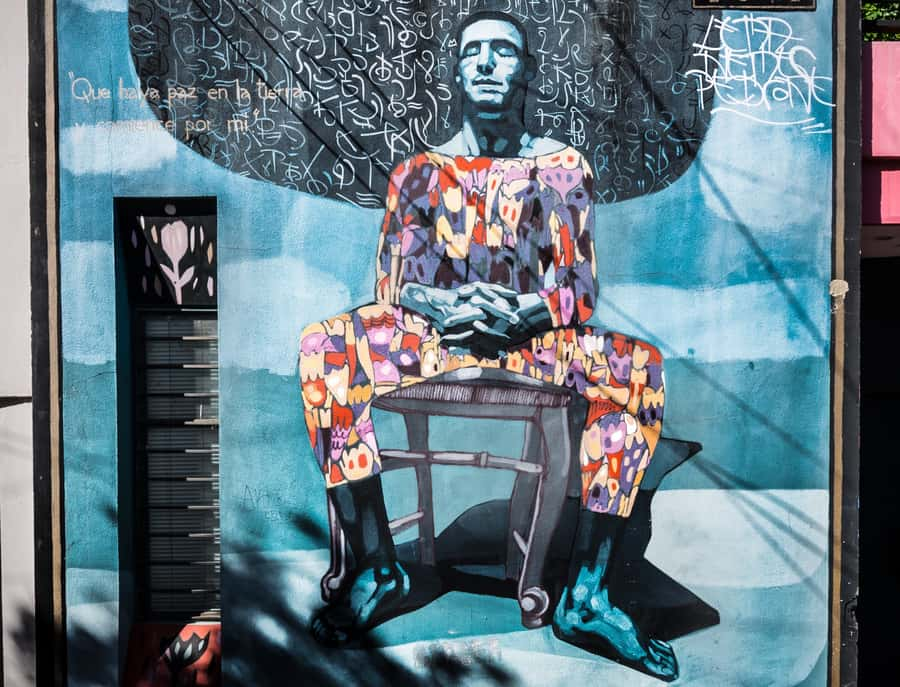
Football appears often in the stories and murals. The subject is not treated as a minor decoration. It is part of how many Argentinians express belonging, pride, rivalry, and memory.
The guide may connect sports imagery with broader Argentine life, politics, and national feeling. This helps explain why a football mural can carry more weight than a simple team logo. If you enjoy football, you will likely get extra pleasure from these stops. If you do not follow the sport, the guide’s context still helps you understand why it occupies so much public space.
The tour also introduces you to artists and recurring styles. One useful result is that you may begin recognizing certain signatures, color choices, or visual habits later in Buenos Aires. The city becomes easier to read after you have learned what to look for.
That is one reason I prefer this kind of walking tour to a quick list of famous walls. You leave with a method. You can keep noticing art after the two hours are over, even when there is no guide beside you.
What the history adds to the artwork
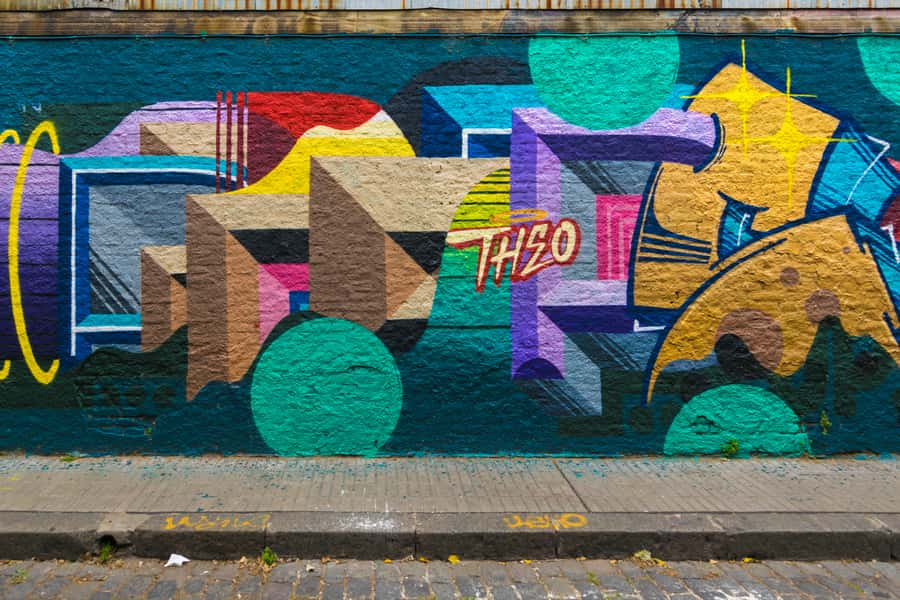
The political material is the tour’s strongest feature, but it also requires attention. This is not a purely visual outing. You will spend time listening to an explanation of political movements, military government, propaganda, elections, protest, and social conflict.
The subject can be serious. A good guide needs to keep the information clear without turning the walk into a lecture, and the strongest guides appear to do that through humor and personal stories. Juan is particularly praised for combining historical facts with touching details and jokes. Vito is often described as passionate and entertaining. Ailen is praised for explaining how murals and graffiti tell stories about Buenos Aires.
You should expect the exact tone to vary by guide and group. Some people prefer a tightly academic art tour. This is more informal and conversational. You get a broad story about street art and Argentine society rather than a technical study of paint, composition, or conservation.
That balance works well for most first-time visitors. You learn enough political background to understand the walls, but the walk remains social and accessible. Guides also make room for questions, and some continue answering questions about Buenos Aires after the official walk ends.
Group size, hearing the guide, and the walking pace
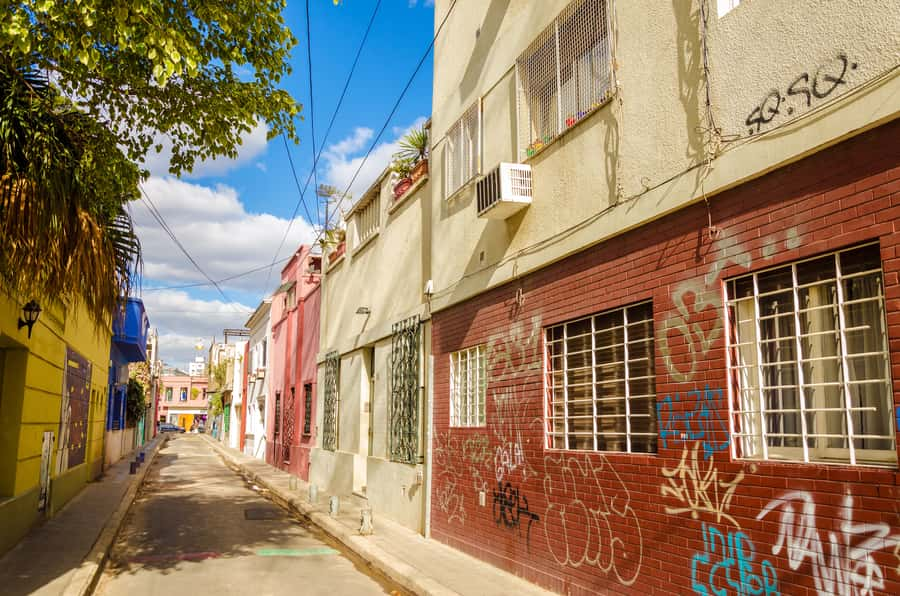
The tour can attract a large group. That is the main practical concern to keep in mind. A bigger crowd can make narrow sidewalks awkward, and you may need to position yourself near the guide to hear every detail.
Still, the guide is expected to manage the group while walking between stops. One strong feature of the format is that the commentary remains audible even when the group is not small. If you want the best experience, stay close during explanations, then move around for photographs once the guide finishes speaking.
Two hours gives the route a clear shape. You start in the Plaza Serrano area, move through Palermo’s art-filled streets, stop at notable murals and graffiti, and finish at Plaza Inmigrantes de Armenia. The tour does not try to cover every corner of the neighborhood. That is a good choice. A shorter route with a coherent story is easier to remember than a rushed catalogue of walls.
The walk continues if it rains. Bring suitable clothing and protect your phone or camera. Food and drinks are not included, so plan to eat before or after the tour. Ending near Plaza Inmigrantes de Armenia gives you a useful chance to continue exploring Palermo on your own.
Is $13 good value?
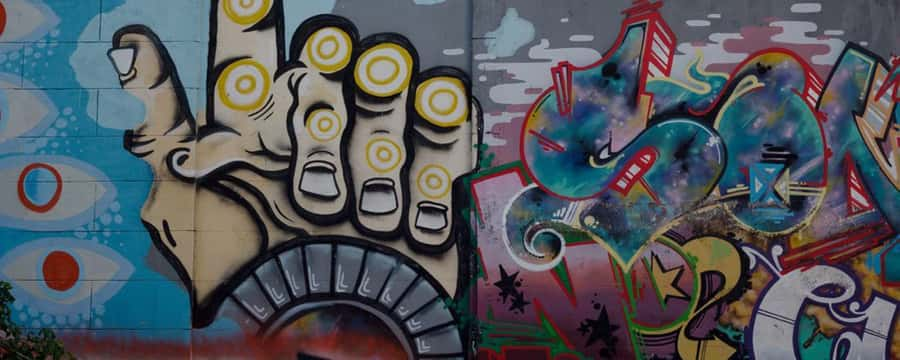
At about $13 per person, this is strong value if you want context rather than a self-guided photo walk. You are paying for two hours of local explanation, route planning, and access to details you might otherwise pass without noticing.
The value is especially good for a first visit to Buenos Aires. You learn about Palermo, Argentine public art, political expression, and football culture in one outing. The tour can also help you decide which parts of the city deserve a second look later.
The price does not include food, drinks, or transportation to and from the meeting point. You should also remember that street art changes. A mural may be painted over, altered, or partly blocked by ordinary city activity. The experience is about seeing public art in its real setting, not visiting a fixed exhibition.
Free cancellation up to 24 hours before the start and the option to reserve now and pay later make the booking fairly flexible. The tour is wheelchair accessible, though the group moves through public streets rather than a specially designed exhibition space.
Who should book this Palermo street art walk?
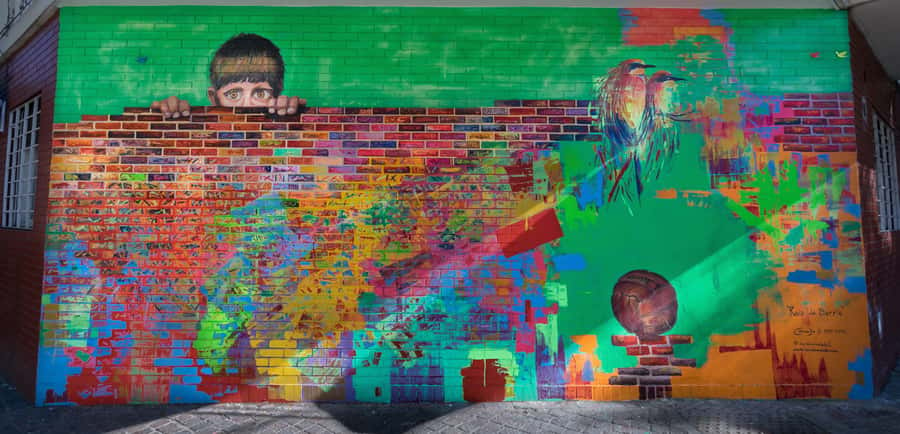
I would choose this tour if you enjoy cities through their walls, signs, and public spaces. It suits people interested in politics, modern Argentine history, football culture, photography, and urban art.
It is also a good fit if you want an easy introduction to Palermo. The route gives you a sense of the neighborhood without asking you to spend an entire day walking. Families with older children, solo visitors, couples, and small groups can all get something from it, provided they are comfortable listening while walking.
You may want to skip it if you are looking only for famous monuments or a formal gallery tour. The route focuses on street-level art, and the most useful information comes through the guide’s stories. If your main goal is to photograph murals without stopping for history, a self-guided walk may feel faster.
My verdict on the Palermo graffiti tour
Book it if you want to understand why Buenos Aires street art matters, not just take pictures of painted walls. The Trump Wall, football murals, and Palermo’s many styles make the walk visually rewarding, while the discussion of propaganda, aerosol paint, protest, and political change gives it substance.
The strongest reason to go is the guide. Juan, Vito, Victor, Ailen, and other guides bring different personalities, but the experience works best when you listen closely and ask questions. Allow for a possibly large group, wear walking shoes, and keep your camera ready. At $13, this is an inexpensive way to see Palermo with a sharper eye.
FAQ
Where does the Palermo graffiti tour start?
The tour starts at Plaza Serrano, also called Plaza Cortazar or Plazoleta Julio Cortázar, at the corner of Jorge Luis Borges and Honduras streets. Look for the guide wearing an orange shirt near the large PALERMO sign.
Where does the tour finish?
The walk finishes at Plaza Inmigrantes de Armenia in Palermo.
How long does the tour last?
The guided walking tour lasts two hours.
Is the tour conducted in English?
Yes. The tour has a live English-speaking guide. Guides who may lead the walk include Juan, Vito, Victor, Ailen, and others.
What is included in the price?
The price includes the two-hour guided walking tour. Hotel pickup and drop-off, food, and drinks are not included.
Does the tour operate in rainy weather?
Yes. The tour still takes place if it rains. You can cancel up to 24 hours in advance for a full refund, and the activity is wheelchair accessible.
New street art tours in the world
- Your Own Belgrade: Street Art and Hidden Gems Walking Tour★ 5.0 · 2 reviews
- Wynwood Walls Street Art & Neighborhood Walking Tour★ 4.9 · 9 reviews
- Xochimilco floating gardens, Coyoacan and UNAM murals★ 4.0 · 6 reviews
- Vancouver: Street Art & Craft Beer Walking Tour with Tasting★ 4.8 · 14 reviews
- Vancouver: Street Art & Craft Coffee Walking Tour w/ Tasting★ 4.8 · 11 reviews
- Zagreb Street Art Private Walking Tour with a Local Artist★ 5.0 · 12 reviews
- UNAM: Murals & Revolution★ 4.9 · 8 reviews
- Urban Canvas: Osaka Street Art Bike Tour★ 5.0 · 10 reviews
Graffiti Tours, side by side.
Comuna 13 Graffiti Tour, Cable Car & Street Food
Read our review →
Brooklyn Graffiti & Street Art Walking Tour in Bushwick
Read our review →
Comuna 13 Tour with Snacks And Your Own Graffiti
Read our review →
Lists this wall walk turns up in