
Reviewed · DENMARK MURAL TOURS
Street Art and Rooftops of Aarhus, Denmark
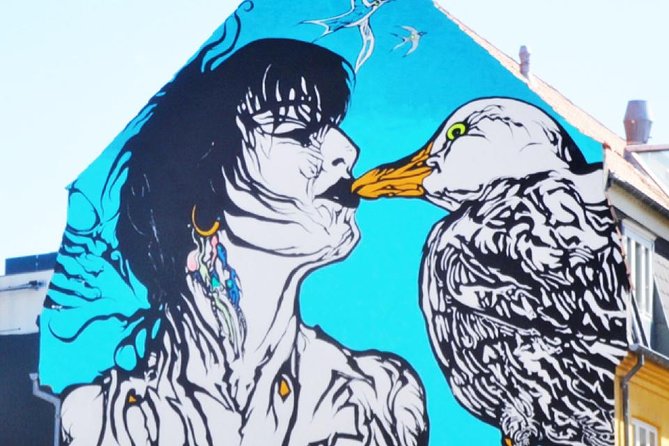
Aarhus reveals itself especially well through its public art. This small-group walk links harbor views, old streets, graffiti, sculpture, murals, and a former industrial site turned art space. Guide Marina brings the works to life with stories about the artists, the city, and the people who use these places.
I like the way the tour gives you both art and city context, rather than treating street art as decoration. I also like the limited group size, which makes it easier to ask questions and notice details you might miss on your own. The main drawback is that the route is a walking tour with a moderate fitness requirement, and the published information gives two different starting addresses, so confirm the meeting point before you go.
Key points to know before you book
- A walk from harbor to old town: The route begins near Aarhus’s waterfront and continues through the Latin Quarter, City Hall, and back toward the harbor.
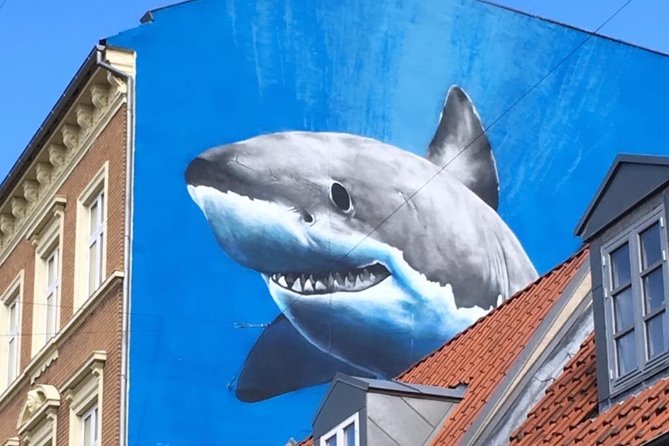
- Art with a story behind it: Expect graffiti, murals, sculptures, and installations, with explanations of styles, artists, and public reactions.
- A rooftop stop: You visit a creative hangout used by freelancers and other local creatives, with time to take in the setting.
- A former industrial site: An old industrial area has been converted into a modern art space that gives the tour a different feel from a standard city walk.
- A memorable high viewpoint: The route includes a viewpoint opened in 2017, which provides a broad look over Aarhus.
- A very small group: The maximum is 10 people, and the guide works in English, though the guide may be multilingual.
Why Aarhus works so well as an art walk
Aarhus is compact enough to explore on foot, but it has more public art than you might expect from a two-hour visit. The route uses that contrast well. You move from the open waterfront into older streets, then into newer creative spaces and formal civic areas.
That change of setting matters. A mural in a modern district tells a different story from a sculpture outside a civic building. Graffiti can speak about identity, politics, or neighborhood life, while a monument may present a more official version of the city. With a guide, you get a chance to compare those voices instead of simply passing them by.
I would choose this tour early in an Aarhus stay. It gives you a useful sense of direction, points out places you may want to revisit, and adds context to streets you might otherwise see only as a route between attractions. It also suits repeat visitors. One particularly useful feature is the attention to details that even people who have lived near Aarhus for years can overlook.
More street art tours worth booking in the world:
- Medellin: Comuna 13 Graffiti Tour, Cable Car & Street Food
★ 4.8 · 9,046 reviews - CDMX: Xochimilco, Coyoacan, Frida Kahlo Museum & Murals Tour
★ 4.4 · 3,025 reviews - Amsterdam: Streetart Museum STRAAT Entrance Ticket
★ 4.8 · 2,137 reviews
Starting by the water and moving toward the Latin Quarter
The walk begins in the harbor area, a practical place to meet if you are arriving by ship or starting your day in central Aarhus. The waterfront sets the tone: this is a city shaped by both its older center and its relationship with the sea.
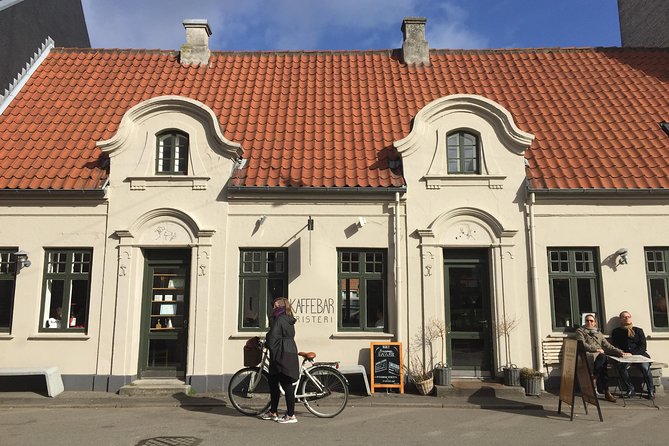
The route then heads toward the Latin Quarter, one of Aarhus’s most attractive older districts. Here, charming houses and smaller streets create a strong contrast with the broad harbor setting. The old buildings also make a good frame for public art. A piece placed against historic architecture can feel playful, jarring, or quietly integrated, depending on how the guide reads it.
You should expect to walk at a steady but manageable pace, with regular pauses for explanations. The stated physical requirement is moderate, so comfortable shoes are sensible. The tour lasts about two hours, although individual visits have run longer, around three hours. If your schedule is tight, leave a little extra time rather than planning another activity immediately afterward.
Seeing the city through murals, graffiti, and sculpture
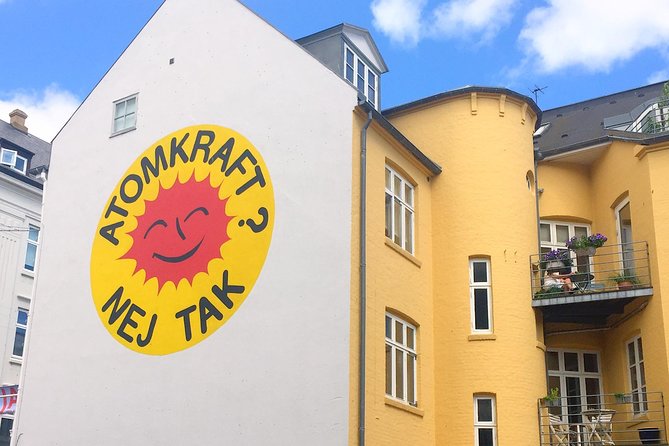
The art is not limited to one style. You may see murals, graffiti, sculptures, and installations, each with its own purpose and setting. That variety is one of the strongest reasons to choose this experience over a conventional architecture walk.
A good street art tour should help you look, not just tell you where to look. Marina’s approach focuses on details, styles, and the messages artists are trying to convey. She also connects the works to the wider community, including the way public art is supported and received in Aarhus.
That makes the experience useful even if you do not consider yourself an art expert. You do not need to know artistic terms in advance. Instead, you get a simple framework: notice the scale, the location, the materials, the audience, and the way a work changes the space around it.
The route may also include recently completed murals. That is a small but worthwhile advantage of seeing public art with a local guide. Street art changes. A work can be painted over, altered, or joined by something new, so the exact selection may differ from one visit to another.
You will also hear stories beyond the art itself. Marina is praised for adding facts and amusing details about buildings, places, and Aarhus life. That wider commentary keeps the walk from feeling like a string of unrelated art stops.
The rooftop stop in a creative corner of Aarhus
One of the route’s more unusual moments is a rooftop visit at a popular hangout for freelancers and other creative people. It is not presented as a formal museum visit. Instead, it offers a glimpse of how contemporary city life and creative work occupy the same spaces.
This stop adds a change of pace. After looking closely at street-level pieces, you get a different view from above. You can see how the city fits together, and the rooftop setting helps explain why this part of Aarhus attracts artists, independent workers, and people looking for an informal place to meet.
Do not expect a meal or a dedicated food tasting. Food and drinks are not included. The value here is the setting and the view, not a café package. If you want coffee, plan for that separately and do not assume it is part of the tour price.
The route does not take place entirely outdoors, which is useful to know in uncertain weather. Some stops are indoors or under cover, though the experience remains a walking tour and outdoor clothing still makes sense.
Same city, a different set of walls:
- Belfast: Murals Taxi Tour
★ 4.9 · 2,047 reviews - Wynwood Graffiti Golf Cart Small-Group Tour
★ 5.0 · 1,646 reviews - London: Street Art and Graffiti Guided Walking Tour
★ 4.9 · 1,354 reviews - Lisbon: Street Art Tour
★ 4.9 · 1,324 reviews
From old industry to a modern art space
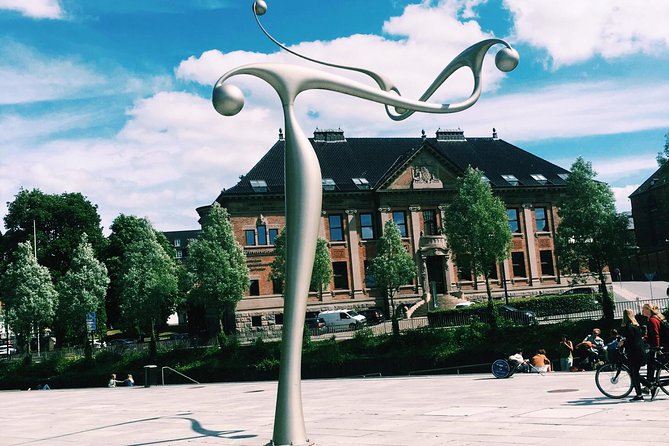
The visit to a former industrial site gives the tour one of its clearest shifts in mood. A place once built for work and production has been transformed into a modern art space. That change reflects a common pattern in European cities, where older industrial areas find new life through art, culture, and creative businesses.
Here, the setting is as important as the art. Industrial buildings tend to offer large surfaces, unusual rooms, and traces of their earlier purpose. That can make installations and contemporary works feel more at home than they would in a formal gallery.
This stop is particularly useful if you want to see how Aarhus supports art beyond traditional museums. The city’s creative life is not confined to a single institution. It appears in public spaces, repurposed buildings, rooftops, and street corners.
No admission tickets are required for the attractions included in the walk. That keeps the experience simple, and you are paying mainly for the guide’s time, interpretation, and route planning rather than entry fees.
City Hall, monuments, and the official face of Aarhus
The route continues into the official city center, where you hear about City Hall and the monuments around it. This part provides a useful counterpoint to the more informal street art stops.
City Hall and civic monuments represent the city in a formal way. They show what Aarhus chooses to commemorate and how it presents its public identity. By placing them alongside graffiti and murals, the tour gives you two ways to read the city: one through official symbols and one through the work of independent artists.
This is also where the guide’s broader city knowledge matters most. Marina does not focus only on artistic technique. She adds historical information, local quirks, and background about buildings, so the center becomes easier to understand as a living place rather than a collection of landmarks.
If you prefer a tour that sticks strictly to famous sights, this section may feel less direct. The route is designed to connect ordinary streets and public art with civic landmarks, not to provide a full architectural survey of every major building.
The final viewpoint above Aarhus
The route returns toward the harbor and includes a high viewpoint that opened in 2017. It has become one of the city’s most popular places to look out over Aarhus, and it makes a strong ending because you can finally see the areas you have just crossed on foot.
This final stop helps tie the route together. From above, the harbor, old center, newer districts, and creative areas become part of one picture. The view also gives you a better sense of Aarhus’s size and layout, which is useful if this is your first visit.
The viewpoint is not simply a bonus photo stop. It gives you a visual summary of the city’s changes, from waterfront development to older neighborhoods and repurposed industrial spaces. After two hours of close attention to individual artworks, the wider view lets you step back and see the whole setting.
The information provided does not specify the exact viewpoint by name, so I would not book this tour solely for one landmark. Think of it as the final piece of a broader city walk.
Marina’s guiding style and the small-group advantage
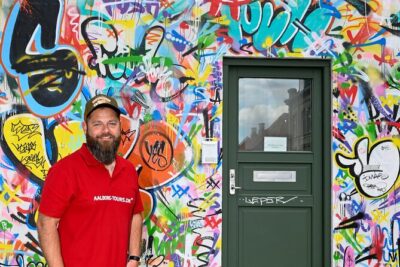
The guide is identified as Marina, and the feedback about her is unusually consistent. She is described as passionate about art, warm, entertaining, and good at linking public art with the history of Aarhus. Several comments also point to her ability to share unusual facts and stories without losing the main thread of the tour.
That matters because street art can be hard to interpret without context. A work may be striking but still leave you wondering who made it, why it is there, or what it means locally. Marina’s role is to fill in those gaps and help you notice styles, details, and messages.
The maximum group size is 10 people. That is small enough for a more personal atmosphere, and it gives you a fair chance to ask questions. It also makes it easier to stay together on city streets and gather around a piece without feeling like part of a large crowd.
The guide may be multilingual, but the tour is offered in English. If you need a fully English-only experience with no switching between languages, it is sensible to confirm that when booking. The core format is clear, though: an English-language walking tour led by a professional guide.
Is the $63.20 price good value?
At $63.20 per person, this is not the cheapest way to spend two hours in Aarhus. You are paying for a guided experience rather than transport, food, or paid admissions. Since no entry tickets are needed and food and drinks are excluded, the price is mainly about the route and the guide’s interpretation.
For me, the value depends on how much you want from public art. If you only want a quick look at murals, you can walk through the city on your own for much less. If you want to understand the works, learn how they fit into Aarhus, and find places you might otherwise miss, the price is easier to justify.
The small group improves that value. A guide can answer questions and adjust explanations more easily with 10 people than with a large coach group. The possibility of a private-feeling experience is real, especially if enrollment is low.
You also get a broad city overview in the same outing. The route covers the waterfront, Latin Quarter, creative rooftop, former industrial art space, City Hall area, monuments, and a high viewpoint. That is a lot of ground for one morning, though the art remains the main focus.
Timing, meeting point, and practical planning
The scheduled start is 10:00 am. That is a useful time for a city walk because it leaves your afternoon open for museums, shopping, or further exploring. It also works well for cruise passengers, but cruise guests must provide the ship name, docking time, disembarkation time, and re-boarding time when booking.
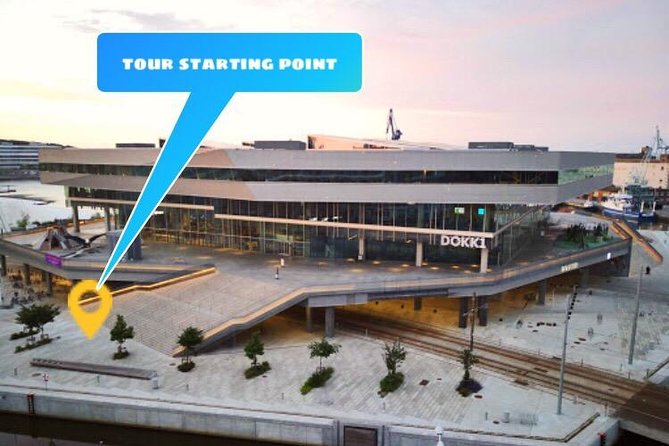
There is an important address detail to check. The general route information names Dokk 1, Hack Kampmanns Plads 2, as the starting point, while the meeting point section gives Europaplads 3. Both are in the central waterfront area, but they are not written as the same address. Confirm the exact place and arrive early.
The activity ends back at the meeting point. That makes planning simpler, especially if you are using the tour as a first orientation to Aarhus.
Wear shoes suitable for city walking. The route includes streets, public spaces, and a viewpoint, and a moderate fitness level is requested. No attraction admission is required, but not every part of the experience is outdoors, so a rain jacket remains a sensible choice in Danish weather.
Free cancellation is available up to 24 hours before the start time for a full refund. Cancellations or changes made within 24 hours are not accepted for a refund.
Who should book this Aarhus art walk?
I would recommend it to anyone who wants to understand Aarhus through contemporary public art rather than only through major museums. It is a particularly good fit for art lovers, first-time visitors, repeat visitors seeking less obvious corners, and people who enjoy asking questions along the way.
It also suits couples, solo visitors, and small groups who prefer a calm pace and direct contact with the guide. Families with older children may enjoy the variety, though the moderate walking requirement and art-centered commentary may not suit very young children.
I would choose another activity if your priority is food, shopping, formal museum collections, or a fast list of major sights. This is not a tasting tour, not a museum ticket, and not a full survey of Aarhus architecture. Its strength is the connection between art, streets, civic spaces, and local stories.
Should you book Street Art and Rooftops of Aarhus?
Book it if you want more than photographs of murals. The best reason to go is the way the route connects different sides of Aarhus: old houses in the Latin Quarter, informal creative spaces, transformed industry, official monuments, and broad harbor views.
The guide’s art background and personal enthusiasm are central to the experience, so this tour is worth more to a curious person than to someone who prefers to explore silently. Bring questions, wear comfortable shoes, and confirm the meeting address before setting out.
At $63.20, it is a considered purchase, but the small group, wide city route, and lack of entry fees make it fair value for an art-focused introduction. If public art is high on your list, I would book this near the start of your Aarhus visit.
FAQ
How long does the Street Art and Rooftops of Aarhus tour last?
The listed duration is approximately two hours. Some visits have lasted closer to three hours, so avoid scheduling another fixed activity immediately afterward.
What time does the tour start?
The scheduled start time is 10:00 am.
Where does the tour meet?
The meeting point section gives Europaplads 3, 8000 Aarhus, Denmark. The route description also refers to Dokk 1 at Hack Kampmann Plads 2, so confirm the exact meeting address before the tour.
Where does the tour end?
The activity ends back at the meeting point.
Is the tour offered in English?
Yes. English is listed as the tour language. The guide may also be multilingual.
How many people can join the tour?
The maximum group size is 10 people.
Are attraction entry tickets included?
No entry tickets are needed for the attractions visited on this route.
Are food and drinks included?
No. Food and drinks are not included in the price.
Can I cancel for a full refund?
Yes, if you cancel at least 24 hours before the experience start time. Cancellations or changes made less than 24 hours in advance are not eligible for a refund.
New street art tours in the world
- Your Own Belgrade: Street Art and Hidden Gems Walking Tour★ 5.0 · 2 reviews
- Wynwood Walls Street Art & Neighborhood Walking Tour★ 4.9 · 9 reviews
- Xochimilco floating gardens, Coyoacan and UNAM murals★ 4.0 · 6 reviews
- Vancouver: Street Art & Craft Beer Walking Tour with Tasting★ 4.8 · 14 reviews
- Vancouver: Street Art & Craft Coffee Walking Tour w/ Tasting★ 4.8 · 11 reviews
- UNAM: Murals & Revolution★ 4.9 · 8 reviews
- Urban Canvas: Osaka Street Art Bike Tour★ 5.0 · 10 reviews
- Zagreb Street Art Private Walking Tour with a Local Artist★ 5.0 · 12 reviews
Denmark Mural Tours, side by side.

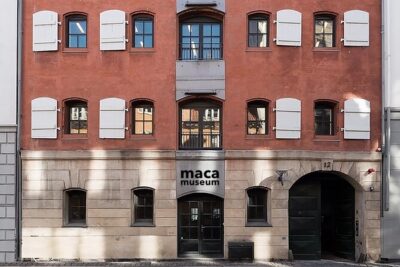
MACA Museum ‘Banksy & Street Art: The Early Years’ Art Exhibition
Read our review →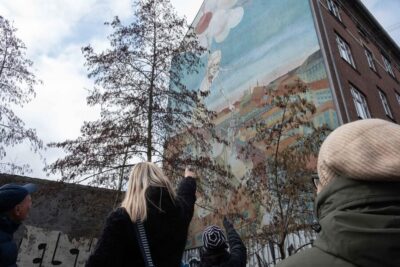

Small Group Guided Food Tour and Street Art Visit to Norrebro
Read our review →Lists this wall walk turns up in