
Reviewed · PRIVATE MURAL TOURS
N0 1 Belfast black cab Irish and British mural 2hr private tour
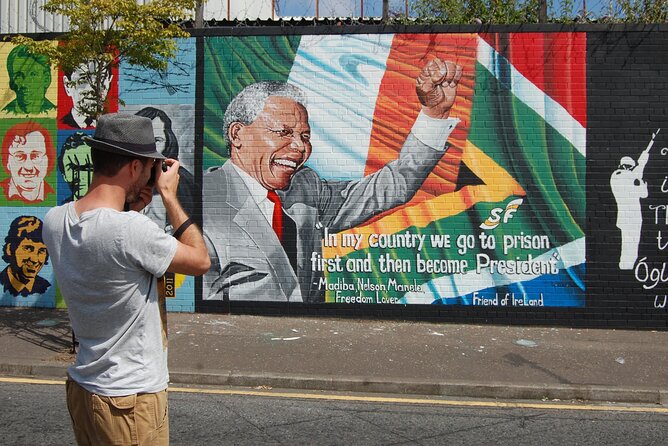
Belfast’s political story is painted across its walls, and this private black cab tour takes you straight to the places where that story unfolded. You pass through the Peacewalls, visit Bombay Street, see Crumlin Road Gaol, and compare Republican and Loyalist murals on the Falls and Shankill roads. I like the personal scale and the fact that your driver can explain what you are seeing without a large group crowding around you. I also like the convenient city-center pickup.
The main drawback is that the experience depends heavily on the driver’s vehicle and speaking style. One past passenger found a blue cab noisy and the driver difficult to understand, despite praising the route and historical content. Also, the supplied highlights mention Game of Thrones locations, but the stated route is a Troubles and mural tour, not a Game of Thrones excursion.
Key points at a glance
- Bombay Street shows where the 1969 violence began: You see the burned-out homes area often linked with the start of the Troubles.
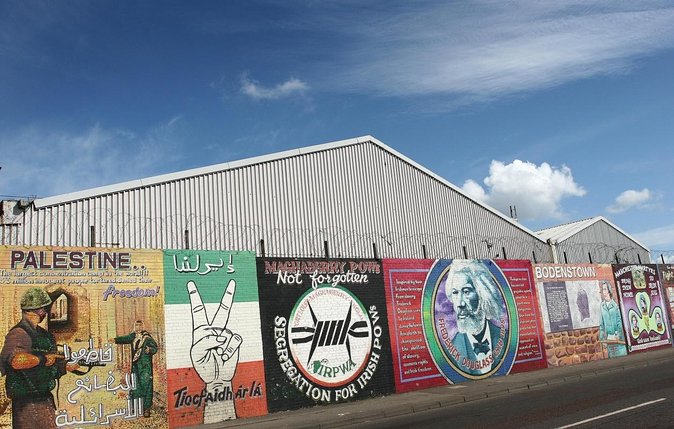
- The Peacewalls bring the division into view: These barriers still separate Republican and Loyalist communities across Belfast.
- Falls Road and Shankill Road offer contrasting political stories: Their murals, bonfire sites, and symbols reflect opposing traditions.
- Crumlin Road Gaol adds the prison and court side of the story: A tunnel once linked the courthouse and jail beneath the road.
- It is genuinely private: Only your own group takes part, with pickup in central Belfast.
- The vehicle matters: Ask ahead about the cab and request clear, measured commentary if hearing every word is important to you.
Why this Belfast tour is worth your time
I find this kind of tour most useful early in a Belfast visit. You quickly learn the basic geography: Falls Road is mainly associated with Republican communities, Shankill Road with Loyalism, and the Peacewalls mark the uneasy boundary between them.
That geography is not just a map exercise. The tour takes you through streets where houses were burned, prisoners were held, political talks took place, and public murals became a form of history book. A driver who has lived through the period can add details that are hard to get from a plaque or museum label.
The tour lasts about an hour and a half to two hours. That is long enough to cover the main sites without turning the day into a full historical seminar. I like this shorter format if you have only a weekend in Belfast, have a later departure, or want an introduction before visiting museums on your own.
The experience is private for your group, listed at $245.48 for up to two people. For a couple, that works out to about $122.74 each. It is not cheap for a two-hour outing, but the price includes a guide and pickup and drop-off in central Belfast. You are paying for a direct route, a private vehicle, and personal explanation rather than admission to a major attraction.
For three people, check the current booking terms carefully, since the stated price is for up to two. Cruise passengers should also note the extra charge of £25 each way per group for port pickup. The cabs can hold six people, but that does not automatically mean the quoted rate covers six.
More Private Mural Tours in Belfast
- Belfast: Private Black Taxi Cab Political Murals Tour
★ 4.9 · 425 reviews - 2 Hour Private Belfast Taxi Cab Tour of Troubles & Peace walls
★ 5.0 · 240 reviews - Private Political History & Murals Tour Belfast
★ 5.0 · 182 reviews
Bombay Street and the start of the Troubles
The tour begins by cutting through the Peacewalls into the Republican area around Bombay Street. This is one of the most important stops because it connects the political story to ordinary homes.
Houses on Bombay Street were burned in 1969, an event widely viewed as the beginning of the Troubles. You are not looking at a battlefield in the usual sense. You are looking at a residential street and learning how quickly neighborhood tension turned into forced movement, destruction, and long-term division.
The stop lasts about 10 minutes, so expect a short introduction rather than a detailed lecture. That brevity is useful at the start. It gives you a reference point for the murals and walls you see later.
I would listen closely here and ask direct questions. The history is painful and politically charged, and a good explanation should distinguish between what happened, who was involved, and how different communities remember it.
Crumlin Road courthouse and the old jail
Crumlin Road courthouse faces the former gaol, with a tunnel running beneath the main road. The arrangement tells you something about the justice system of the period. A person could receive a sentence at the courthouse and then be transferred through the tunnel to the prison.
The jail was built in the 1800s and operated as a Victorian prison and hanging jail until the 1960s. It held IRA, UVF, and UFF prisoners on remand. That mix makes the site useful for understanding the legal and prison side of the conflict, not only the street politics.
You should not expect an interior prison visit as part of this tour. The route describes viewing the courthouse and gaol area from the cab, with the driver explaining their role. That is enough for a quick overview, but visitors wanting cells, executions, and prison architecture in greater depth may want a separate visit to Crumlin Road Gaol if available during their stay.
The Peacewalls, Belfast’s lasting boundary
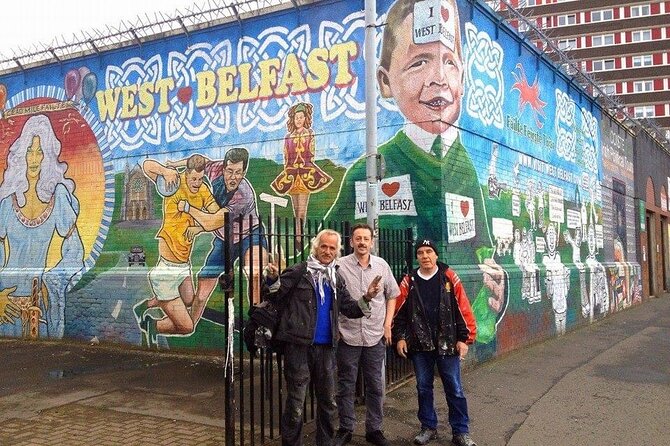
The Peacewalls are the visual heart of the tour. Belfast’s barriers are often compared with the Berlin Wall, but here the point is not a single historic monument. These walls and gates stretch across parts of the city, separating Republican and Loyalist communities for more than 50 years.
The tour describes the walls as much higher than the Berlin Wall. Exact comparisons are less important than the experience of seeing how a city street can be closed, diverted, and divided. You may pass through gates that still control movement between areas.
A section of the wall has become a place for peace messages and signatures. You can add your name beside messages associated with presidents and film stars. It is a small action, but it changes the visit from simply looking at a barrier to acknowledging what it represents.
This stop takes about 30 minutes and gives the driver time to explain the symbols. I would use that time to ask how the wall affects local life today, since the tour presents it as a continuing feature rather than a piece of history that disappeared with the ceasefires.
More Private Mural Tours in the UK
- IRA Troubles Conflict Private Tour Museum Graves Murals and Political Analysis
★ 5.0 · 67 reviews - Award Winning Private 2 Hour Belfast Political Black Taxi Tour
★ 5.0 · 53 reviews - World Famous Private Belfast Troubles Taxi Cab Tour 2 Hour
★ 4.5 · 14 reviews - Belfast political history and mural unique private 90 min tour
★ 5.0 · 10 reviews
Shankill Road and Loyalist murals
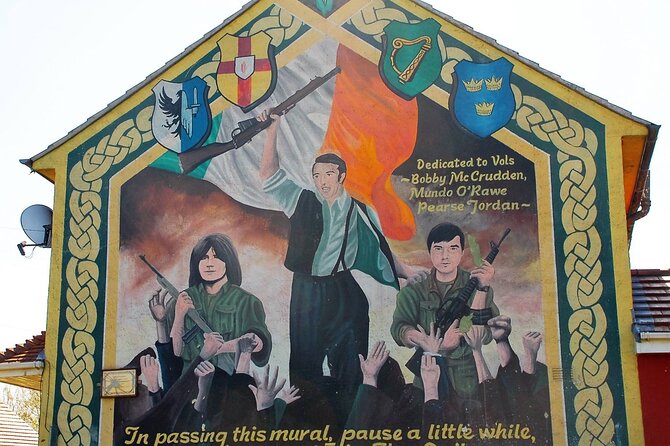
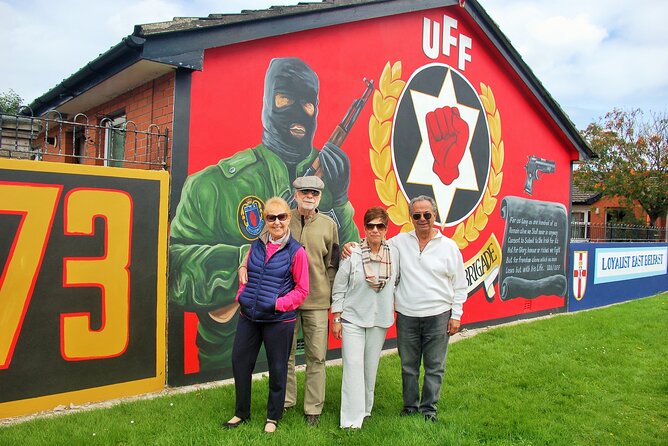
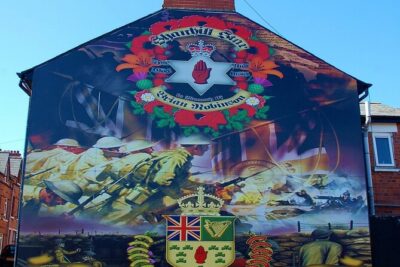
Shankill Road provides the Loyalist side of the story. The area has more than 500 years of history, while its modern political identity is linked with the UVF, UFF, and UDA.
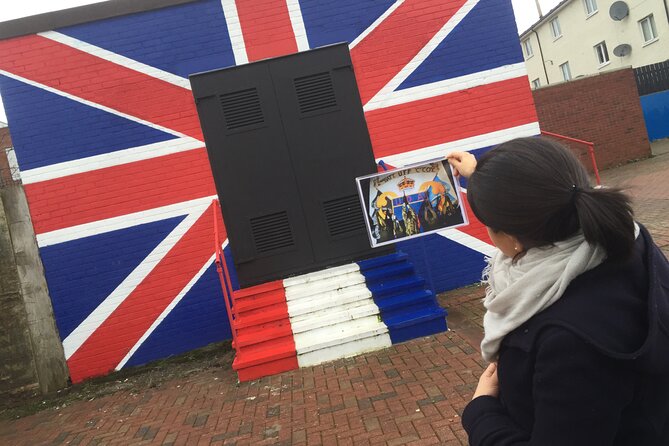
You see murals painted on the gable walls of local homes. These are not art galleries or isolated public installations. They are part of a living neighborhood, and that makes the stop more powerful and more sensitive. You may also see the sites of July bonfires and hear how they relate to Loyalist identity and the conflict with Republican communities.
The tour allows about 30 minutes here, one of the longer stops. That makes sense. The murals contain symbols, portraits, flags, dates, and references that can be difficult to interpret without help.
I like the comparison this creates with the Falls Road stops later. You are not given just one political viewpoint and sent home with it. The route shows how both communities used walls to state identity, honor dead members, and explain their version of the conflict.
Still, you should approach the area respectfully. These are residential streets, and the paintings can concern real families and political loyalties. Take the photos the tour allows, but avoid treating the murals as simple colorful backdrops.
Clonard Monastery and secret peace talks
Clonard Monastery offers a different kind of stop. Built in the 1800s, it became associated with secret peace talks involving Gerry Adams and John Hume.
Those discussions were later found to have been bugged by MI5. The detail adds a touch of spy-story intrigue, but the larger point is more serious. Peace negotiations often took place quietly, away from cameras and official announcements, while public life remained tense.
The visit lasts around 10 minutes. You are not signing up for a religious tour or a long architectural visit. The monastery serves as a setting for explaining how discreet contacts helped prepare the way toward the truce of 1994.
I find this stop valuable because it widens the story beyond murals and prisons. It reminds you that the end of the Troubles involved private conversations, risk, distrust, and gradual political change.
International Wall and the Falls Road murals
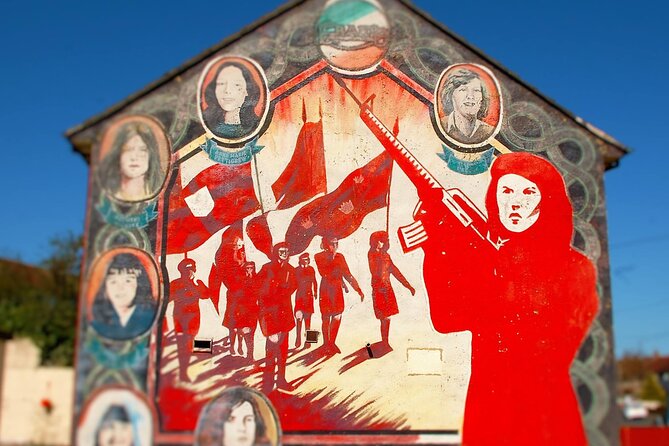
The International Mural Wall on Divis Street is one of the tour’s most recognizable photo stops. Local Republicans hand-painted murals there on subjects ranging from international conflicts to support for the Amazon rainforest.
This wall places Belfast’s politics in a wider frame. The murals are not limited to local history. They show how Republican artists connected their cause with other struggles around the world.
Allow about 10 minutes. That is enough to see the main designs and hear their meaning, but not enough to study every painting in detail. If you care about political art, note the subjects that interest you and return later on foot, if practical.
The driver’s explanation matters here. Without context, the wall can look like a collection of unrelated images. With context, you can see how public art became a way to communicate with people outside the neighborhood.
Bobby Sands and the hunger strike
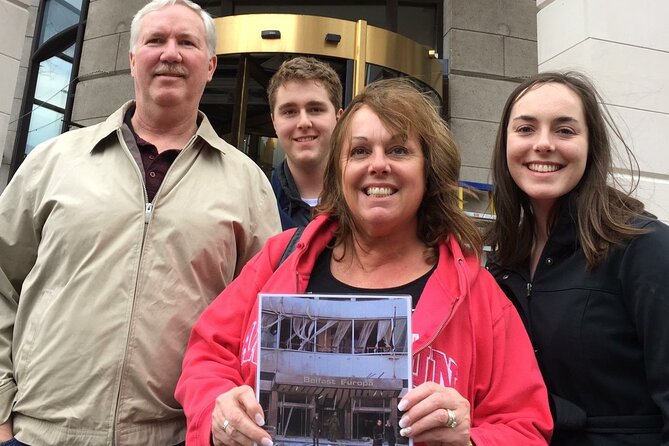
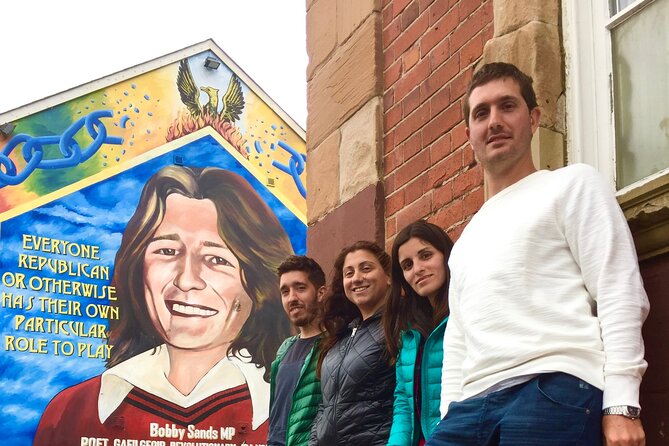
The route includes a Bobby Sands mural, described as one of the most famous murals in the world. Sands was a member of the Provisional IRA and died during the 1981 hunger strike.
The tour links the hunger strike to the 1994 truce, though the road from one event to the other was long and politically complicated. Listen for the distinction between the hunger strike itself, the public response, and the later political negotiations.
The Falls Road is presented as the birthplace of the Provisional IRA and as the part of Belfast most often seen in news footage about the Troubles. That makes the stop useful for connecting television images with actual streets.
The mural stop lasts about 10 minutes. You can take photographs and hear why Sands became such a powerful symbol. The subject is emotionally heavy, and the tour is best approached as political history rather than as a quick photo opportunity.
Timing, pickup, and the black cab experience
Pickup and drop-off are offered from Belfast city-center accommodation within a free one-kilometer zone of Belfast City Hall. Suggested start times run from 6:30 in the morning through 11:00, with several options in between.
Early departures can suit cruise schedules, airport connections, or a packed sightseeing day. The tour also lets you choose a start time, which is useful if you want to visit the murals before a museum or meal.
A restroom is listed on board, but food and drinks are not included. Since the experience is short, that is not a serious problem. Eat before pickup if you choose an early start, particularly because the route is built around discussion and stops rather than a café break.
The cab is central to the experience. One poor account described a large blue taxi with enough rattling noise to make the driver hard to hear. The same account still credited the driver with visiting the advertised sites and knowing the subject, but communication failed.
I would contact the operator before booking if clear audio is important to you. Ask what vehicle is likely to be used, especially if you are expecting the traditional black cab shown in promotional material. The service is offered in English, and a strong accent or fast delivery may make political details hard to follow.
Who should book this tour?
I would recommend it to first-time Belfast visitors who want a compact introduction to the Troubles, couples who prefer a private outing, and families with older children who can handle serious history. Child seats can be provided if requested in advance, and service animals are allowed.
It is also a good fit if you have limited time or do not want to work out the route between neighborhoods yourself. The driver handles the city-center transport and takes you directly to places that can be confusing to reach alone.
I would not choose it as your main Belfast activity if you want a gentle city tour, a long museum visit, or a Game of Thrones day. The supplied highlights mention more than 15 Game of Thrones filming locations, but none of those locations appears in the detailed route. The actual experience is clearly centered on Irish and British political murals and the history of the Troubles.
The rating shown for the experience is 4.5 from six reviews, with one five-star account praising the personal historical explanation and one two-star account raising concerns about the cab and clarity of speech. That small sample tells me to value the route but confirm the vehicle and communication details before paying.
Should you book it?
Book this tour if you want Belfast’s most important political sites explained in a private vehicle, with city-center pickup and no need to navigate the Peacewalls, Falls Road, and Shankill Road yourself.
Think twice if you are choosing it for Game of Thrones, if you dislike politically difficult subjects, or if you need guaranteed quiet and perfectly clear narration. For the best value, book with another person, request the vehicle details in advance, and ask the driver to slow down when explaining the history.
FAQ
How long does the Belfast black cab tour last?
The experience lasts approximately one hour and 30 minutes to two hours.
How much does the tour cost?
The listed price is $245.48 per group of up to two people.
Is this a private tour?
Yes. Only your own group participates in the activity.
Where can I be picked up?
Pickup and drop-off are offered from Belfast city-center accommodation within a one-kilometer free pickup zone of Belfast City Hall.
Is there an extra charge for cruise ship pickup?
Yes. Cruise ship pickup costs £25 each way per group. The cabs can hold six people.
What language is the tour offered in?
The tour is offered in English.
Can children join the tour?
Yes. Children can participate, and child seats can be provided if you request one before the tour.
Are service animals allowed?
Yes. Service animals are allowed.
Is food included?
No. Food and drinks are not included, although a restroom is listed on board.
New street art tours in Belfast
- Falls road Murals Walking Tour with former prisoners★ 5.0 · 19 reviews
- 2 Hours Republican & Loyalist Mural Black Taxi Tour from Belfast★ 5.0 · 21 reviews
- Belfast history of terror & mural 1 hr express private taxi tour★ 5.0 · 3 reviews
- 1 Hour Express Belfast Taxi/Cab Tour History, Murals, Troubles★ 5.0 · 17 reviews
- Private Belfast Mural & Giant’s Causeway Tour from Belfast (2 in 1)★ 5.0 · 5 reviews
- World Famous Private Belfast Troubles Taxi Cab Tour 2 Hour★ 4.5 · 14 reviews
- Belfast political history and mural unique private 90 min tour★ 5.0 · 10 reviews
- 2 Hour Terror and Mural History Belfast taxi Private Tour★ 5.0 · 7 reviews
Private Mural Tours, side by side.
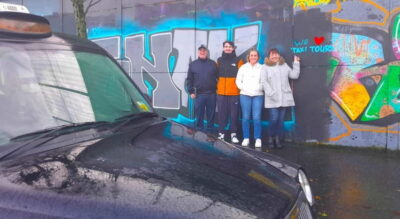
2 Hour Private Belfast Taxi Cab Tour of Troubles & Peace walls
Read our review →
Muralist Art Semi Private Walking Tour in Mexico City Downtown
Read our review →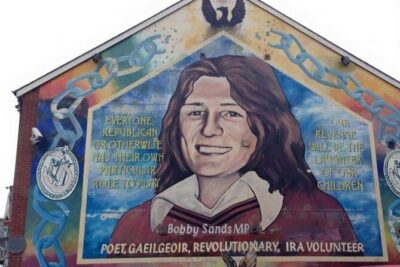
Private Political History & Murals Tour Belfast
Read our review →
Shoreditch Street Art and Graffiti Tour (Private Group Booking)
Read our review →
PRIVATE 2-Hour tour of Montréal in Convertible Cadillac + Murals
Read our review →Lists this wall walk turns up in