Reviewed · PRIVATE MURAL TOURS
2 Hour Terror and Mural History Belfast taxi Private Tour
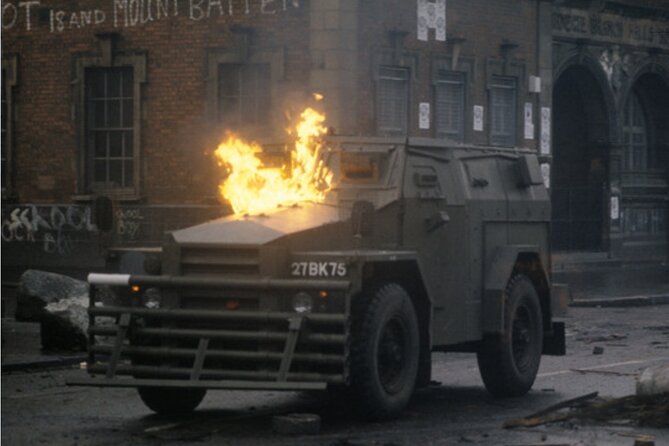
Belfast’s past is written across its walls. On this private taxi tour, you move quickly through West and North Belfast, seeing the Peace Walls, republican and loyalist murals, former flashpoints, memorial gardens, and places tied to the peace process. The most striking feature is the contrast between close-set communities and the barriers that once separated them, some of which still have gates that close at night.
I like the route for two clear reasons: it gives you both sides of Belfast’s political story, and it puts personal memory alongside major events. The guide featured in the tour’s feedback had been shot during the Troubles and offered an even-handed account, a rare chance to hear how the conflict affected ordinary people. I also like the efficient format, since you can cover sites spread across several neighborhoods without figuring out complicated bus connections.
The tradeoff is time. Two hours is enough for a sharp introduction, not a slow examination of every mural or memorial. The $190.59 per-person price also makes the most sense for a private experience or a small group that values a personal guide. A group of up to 25 may be accepted, so confirm the group size before booking if quiet conversation matters to you.
Key points to know before you book
- The Peace Walls frame the entire experience: You will see the barriers as real, working parts of Belfast rather than museum displays.
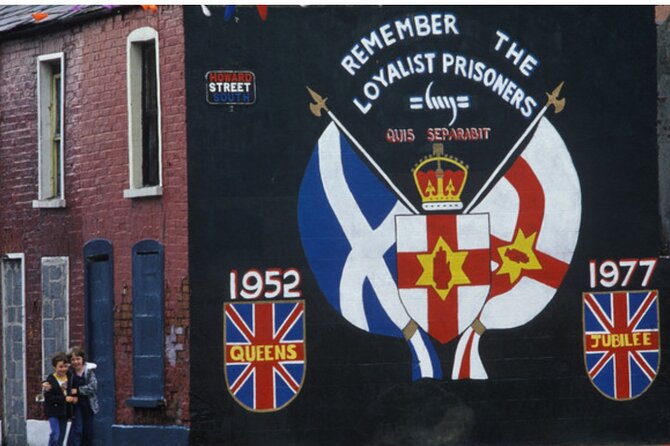
- The route covers republican and loyalist areas: Falls Road, Bombay Street, and the Bobby Sands mural are paired with Shankill Road and its loyalist murals.
- A personal guide can change the tone: One guide described in the tour information had been shot during the Troubles and gave a balanced account of both communities.
- The itinerary is tightly timed: Most stops last 10 to 20 minutes, so expect short walks, photographs, and explanation rather than extended visits.
- Clonard adds a peace-process perspective: The monastery and its memorial garden show how local religious figures and residents worked through the conflict.
- Pickup is easiest near Belfast City Hall: Cruise ship passengers need to take the shuttle into central Belfast, since direct cruise-port pickup is not offered.
Why Belfast’s walls matter more than a photo stop
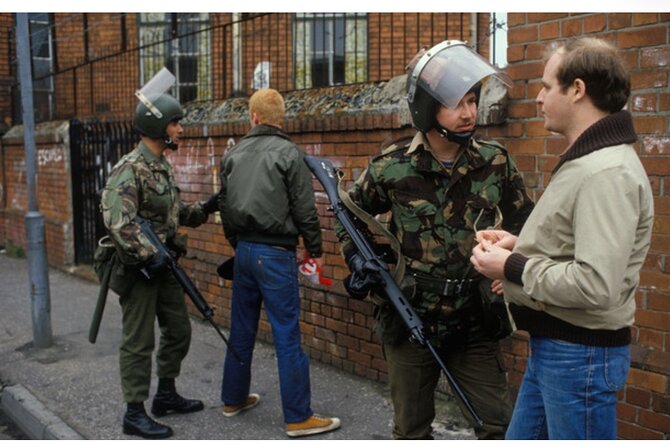
The first stop is the Peace Wall, where the scale of the division becomes clear. These barriers were built during the late 1960s as violence increased between mainly Protestant and mainly Catholic neighborhoods. Their original purpose was practical: keep opposing communities apart and reduce attacks.
That practical purpose is still part of the story. Gates in some areas close at night, a reminder that the peace process has not erased every fear. Murals and graffiti cover sections of the walls, turning them into public records of grief, politics, identity, and hope.
You get about 20 minutes here, with admission included. That is enough to take in the physical setting and hear why the walls were built. I would pay close attention to the guide’s explanation rather than treating the wall as a backdrop for photographs. The important point is that the barrier is not simply an old relic. It remains tied to how communities live and move.
More Private Mural Tours in Belfast
- Belfast: Private Black Taxi Cab Political Murals Tour
★ 4.9 · 425 reviews - 2 Hour Private Belfast Taxi Cab Tour of Troubles & Peace walls
★ 5.0 · 240 reviews - Private Political History & Murals Tour Belfast
★ 5.0 · 182 reviews
Divis Flats and the view from Fort Apache
The short stop at Divis Flats brings you into one of West Belfast’s most contested settings. Built in the late 1960s, the high-rise complex became a center of unrest in a largely Catholic area. A British Army base was placed on the roof of the tallest building, earning the nickname Fort Apache.
That location mattered. Soldiers had a commanding view of the surrounding streets, while residents experienced the base as a constant sign of surveillance and military control. The arrangement intensified distrust and led to repeated confrontations.
You have about 10 minutes here, and no admission fee is listed. This is best understood as a quick orientation stop, not a full visit inside the flats. Your guide’s explanation will give the buildings meaning that is difficult to see from the road alone. If you want lengthy time at each site, the short schedule may feel rushed.
The International Wall and the politics of public art
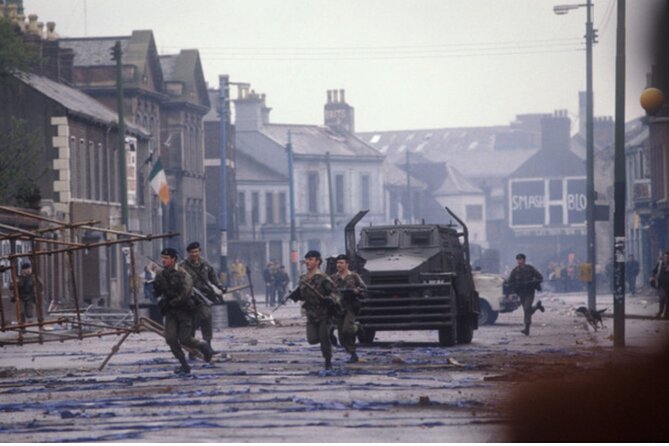
The International Wall on Divis Street presents a wider political picture. Its murals address Belfast’s conflict alongside international causes and human rights struggles. The artwork changes over time, so what you see reflects both past themes and newer messages.
This is one of the strongest parts of the tour for anyone who wants to understand murals as political communication. The images are not decoration added after the Troubles. They were part of how communities expressed identity, remembered deaths, honored allies, and argued for a particular future.
The stop lasts about 10 minutes. That gives you time to look closely at selected pieces while the guide explains their meaning. You may not have time to study every mural, but the quick visit works well when paired with the later stop on Shankill Road. Together, the two areas show that Belfast does not have one single mural tradition or one shared political message.
The Bobby Sands mural and a difficult legacy
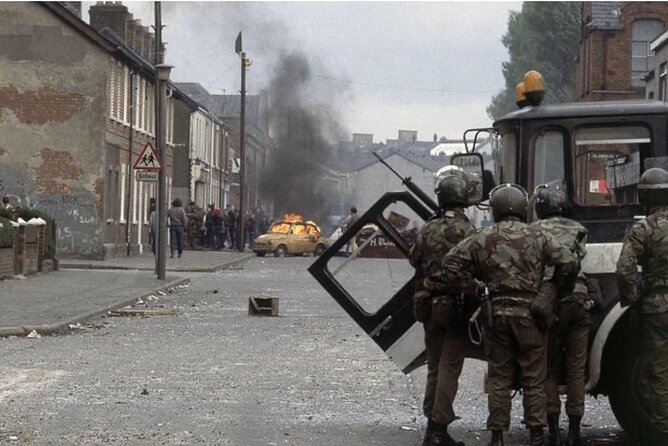
The Bobby Sands mural is among the most recognizable images on Falls Road. It honors Sands, a Provisional IRA member who died during the 1981 hunger strike. During the strike, he was elected to Parliament, making his death an international political event as well as a local one.
For many Irish republicans, Sands represents sacrifice, resistance, and the demand for Irish unity. For others, the mural is inseparable from the IRA’s armed campaign and the deaths caused by the conflict. A good guide should explain both facts without asking you to accept one political reading.
The visit lasts about 10 minutes and is free. I would treat this as a place for careful listening. The mural carries strong emotion, and the guide’s job is to explain why it means different things to different people. The tour information specifically promises an equal view of both sides, and that balance matters most at sites such as this.
More Private Mural Tours in the UK
- IRA Troubles Conflict Private Tour Museum Graves Murals and Political Analysis
★ 5.0 · 67 reviews - Award Winning Private 2 Hour Belfast Political Black Taxi Tour
★ 5.0 · 53 reviews - World Famous Private Belfast Troubles Taxi Cab Tour 2 Hour
★ 4.5 · 14 reviews - Belfast political history and mural unique private 90 min tour
★ 5.0 · 10 reviews
Clonard Monastery and the work behind the peace process
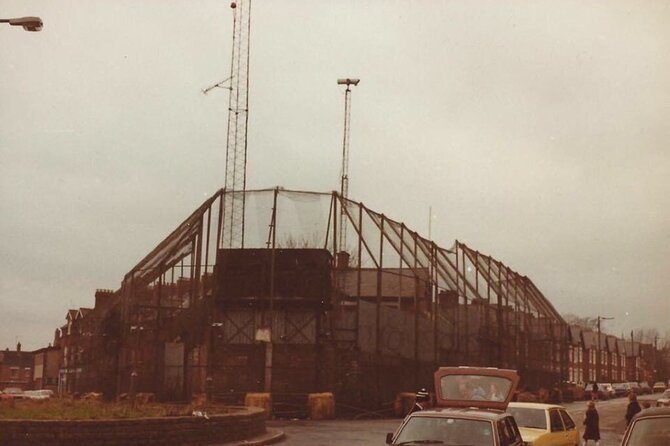
Clonard Monastery changes the pace of the tour. Its red-brick church has a calm presence, but its importance is tied to years of conflict and negotiation. Priests connected with the monastery, especially Father Alec Reid, worked behind the scenes to open communication between enemies.
Those efforts helped create conversations that eventually contributed to the Good Friday Agreement in 1998. You will not get a full political history of the agreement in a 10-minute stop, but the monastery gives you a useful reminder: peace was not made only in government offices. Local religious figures and community members also helped create channels for dialogue.
This stop is valuable because it moves beyond the most familiar images of barricades, guns, and murals. It asks you to consider the patient work required after violence. You can see the architecture and hear about its role, though the short timing means this is not a long church visit.
A quiet pause at the Clonard Martyrs Memorial Garden
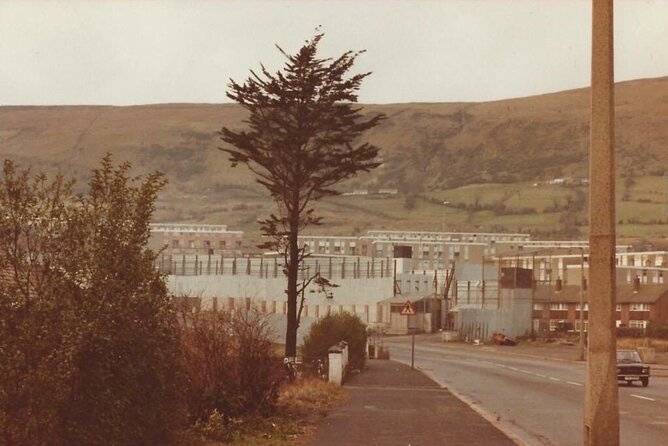
Next to the monastery, the Clonard Martyrs Memorial Garden offers a more personal view of the Troubles. Plaques and memorials honor people from the local community who died during the conflict. The garden is a quiet place, and that quiet is part of its meaning.
After several politically charged stops, you may find this one more reflective. It connects national events to individual families and streets. The community’s losses were not abstract numbers. They affected neighbors, relatives, and people who shared the same churches and shops.
The tour allows about 15 minutes here. That is a sensible amount of time for reading the memorials and gathering your thoughts. You should not expect a large formal garden or a long independent visit. Its value comes from the pause and the explanation.
Crumlin Road Gaol from the outside
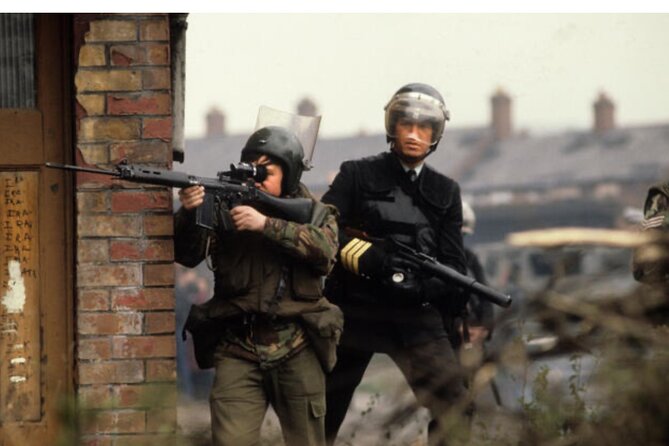
Crumlin Road Gaol and the adjoining courthouse are linked to both criminal justice and the Troubles. The jail held political prisoners from republican and loyalist groups, as well as ordinary criminals. Escapes, hunger strikes, and riots made it one of the conflict’s most charged institutions.
A tunnel connected the jail and courthouse, allowing prisoners to be moved directly to trial. That physical link says a great deal about the old system: imprisonment, prosecution, and political conflict were concentrated in one place.
The scheduled stop is about 10 minutes, with no admission fee listed. Read that detail carefully. This tour gives you a brief look and explanation, not the longer paid guided visit offered at the restored gaol. If walking through prison cells is a priority, plan a separate visit. If you mainly want to place the jail within Belfast’s wider story, this stop is useful and efficient.
Bombay Street and the birth of a new IRA faction
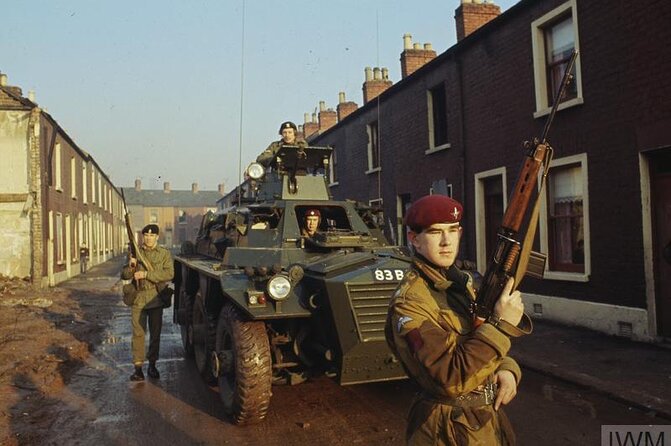
The stop at Bombay Street addresses the violence that erupted in August 1969. Homes were destroyed, and many Catholic families were forced out. The attacks left residents feeling unprotected by the state and by the existing IRA structures.
In that setting, the Provisional IRA formed as a faction focused on defending nationalist neighborhoods and pursuing Irish reunification through armed resistance. The organization’s later actions had terrible consequences, but understanding its formation requires seeing the fear and displacement that marked this moment.
You have roughly 15 minutes here. Memorials and restored homes help you connect the political story to a real street. This is a good place to ask questions, especially if you want to understand how local insecurity shaped later events. As with the other sites, the visit is mainly from the vehicle or roadside, rather than a long walk through the neighborhood.
Shankill Road and the loyalist view
Shankill Road provides the clearest counterpoint to Falls Road. It is associated with loyalist groups including the Ulster Volunteer Force and the Ulster Freedom Fighters, organizations that sought to keep Northern Ireland within the United Kingdom. Murals along the road commemorate loyalist figures, events, military symbols, and community identity.
You may find this section challenging if you arrive expecting Belfast’s murals to present one side only. The point is to see how each community used public space to tell its own story. The Shankill murals are not neutral art, and the Falls Road murals are not neutral either. A balanced tour should explain the beliefs, fears, and violence linked to both.
The final stop lasts about 20 minutes, the longest allocation after the Peace Wall. That extra time helps, since the murals require context. Ask the guide to explain which images refer to particular groups or events. The visual language can be hard to read without local knowledge.
What the $190.59 price buys you
At $190.59 per person, this is not a cheap sightseeing ride. You are paying for a private taxi format, parking fees, an English-speaking guide, and a route that crosses several parts of Belfast in two hours. The price is easier to justify if you are traveling with others and can share the cost of the vehicle and guide.
The value comes from access to context, not from admissions. The listed stops are free, and the tour does not include coffee, tea, or alcoholic drinks. You are buying the guide’s interpretation and the convenience of moving from the city center to West and North Belfast without arranging separate transport.
Group size matters. Up to 25 people may be accepted, which could make the experience feel more like a group outing than a private conversation. Confirm the expected number before paying if you want a quieter ride. The tour is offered in English, and confirmation arrives when you book.
Pickup is offered within a one-kilometer radius of Belfast City Hall. The listed meeting point is outside the Leonardo Hotel Belfast on Great Victoria Street, and the tour returns to the meeting point. Cruise passengers cannot receive direct ship pickup, but the cruise shuttle stops near Visit Belfast, across from City Hall, where collection can be arranged at the front gates.
Who will get the most from this short tour
I would choose this experience if you want a serious introduction to the Troubles and have only a short time in Belfast. It is especially useful for students, politically curious visitors, and anyone who wants to see both republican and loyalist areas rather than relying on a single neighborhood’s story.
The tour also suits anyone who prefers a car over long walks or public transport. Most stops last 10 to 20 minutes, so you can see a lot without spending the day on foot. Service animals are allowed, and the activity is listed as suitable for most participants.
I would choose something longer if your main goal is detailed mural study, extended conversation, or a full interior visit to Crumlin Road Gaol. The schedule is tightly packed, and some stops will feel like brief roadside explanations. That is not a flaw if you understand the format, but it is important to set the right expectation.
Should you book it?
Book this tour if you want Belfast’s political story presented through real streets, memorials, murals, and personal testimony. Its strongest feature is the balance between Falls Road and Shankill Road, supported by stops at the Peace Walls, Clonard, Bombay Street, and Crumlin Road Gaol.
Think twice if $190.59 per person feels high for a two-hour ride or if you want extended time inside the sites. For a first look at Belfast’s divided neighborhoods, however, the route is focused and meaningful. Confirm pickup and group size, listen carefully to the guide, and treat the murals as evidence of lived experience rather than simple photo stops.
FAQ
How long is the Belfast taxi tour?
The tour lasts approximately two hours and returns to the meeting point.
Where does the tour start?
The listed meeting point is the Leonardo Hotel Belfast on Great Victoria Street, Belfast BT1 6DY. Pickup can also be arranged near Belfast City Hall.
Can cruise ship passengers receive direct pickup?
No. Direct pickup from the cruise ship is not offered because the port is several miles outside Belfast city center. The cruise shuttle stops near Visit Belfast, across from City Hall, where pickup can be arranged at the front gates.
What language is the tour offered in?
The tour is offered in English.
Does the price include entrance fees?
Parking fees are included. The listed stops do not charge admission for this tour, but coffee, tea, and alcoholic drinks are not included.
How far in advance can I cancel?
You can cancel for a full refund up to 24 hours before the experience begins. Changes or cancellations made less than 24 hours before the start time are not accepted for a refund.
More two-hour art walks in Belfast
- Award Winning Express 2 Hours Belfast Black Taxi/Cab tours
★ 5.0 · 35 reviews - 2 Hours Republican & Loyalist Mural Black Taxi Tour from Belfast
★ 5.0 · 21 reviews - 2-Hour Food, History and Street Art Tour of Ponce City Market
★ 5.0 · 159 reviews - Vienna: 2-Hour Street Art Tour
★ 4.5 · 76 reviews
More history behind the walls in Belfast
- 1 Hour Express Belfast Taxi/Cab Tour History, Murals, Troubles
★ 5.0 · 17 reviews - Belfast history of terror & mural 1 hr express private taxi tour
★ 5.0 · 3 reviews - 3-Hour Atlanta Beltline Food, Street Art and History Tour
★ 5.0 · 345 reviews - History and Murals: Walking Tour Guadalajara
★ 5.0 · 237 reviews
New street art tours in Belfast
- 2 Hours Republican & Loyalist Mural Black Taxi Tour from Belfast★ 5.0 · 21 reviews
- Falls road Murals Walking Tour with former prisoners★ 5.0 · 19 reviews
- Belfast history of terror & mural 1 hr express private taxi tour★ 5.0 · 3 reviews
- 1 Hour Express Belfast Taxi/Cab Tour History, Murals, Troubles★ 5.0 · 17 reviews
- Private Belfast Mural & Giant’s Causeway Tour from Belfast (2 in 1)★ 5.0 · 5 reviews
- World Famous Private Belfast Troubles Taxi Cab Tour 2 Hour★ 4.5 · 14 reviews
- Belfast political history and mural unique private 90 min tour★ 5.0 · 10 reviews
- Best of Belfast Driving Taxi Tour with Political Murals★ 5.0 · 9 reviews
Private Mural Tours, side by side.
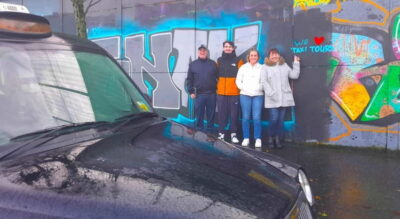
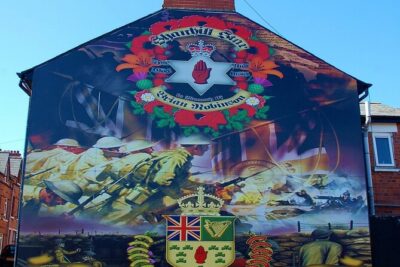
2 Hour Private Belfast Taxi Cab Tour of Troubles & Peace walls
Read our review →
Muralist Art Semi Private Walking Tour in Mexico City Downtown
Read our review →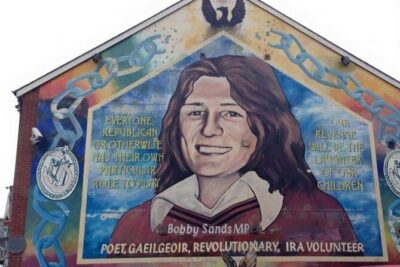
Private Political History & Murals Tour Belfast
Read our review →
Shoreditch Street Art and Graffiti Tour (Private Group Booking)
Read our review →