
Reviewed · MURALISM TOURS
Mexican Muralism in Guadalajara. A Cultural PRIVATE TOUR
Guadalajara’s murals are not just decoration. They are bold lessons in revolution, power, suffering, and hope, painted on a scale that can make a room feel like a theater. This private tour puts José Clemente Orozco’s murals at the center, with time at the Cabañas and Government Palace.
I like the small-group format and the way the art is tied to Guadalajara’s old buildings. I also like having hotel pickup, English guiding, and admission handled together. The main caution is transportation: one group of ten was given a vehicle suited to six, so confirm the vehicle size if your party is larger than six.
Key points
- Orozco’s Cabañas murals: Spend about an hour with one of Mexico’s major mural cycles, with admission included.
- Private English guiding: Ask questions freely and take your time with the symbolism instead of following a large group.
- Five central Guadalajara stops: The route combines the Cabañas, Cathedral, Opera House, Plaza Tapatía, and Government Palace.
- Hotel pickup at 9:30 a.m.: This saves you from arranging a taxi before a busy morning in the city center.
- Small-group value: Bookings are limited to six people, though larger parties should confirm transportation before paying.
- Art plus old Guadalajara: The day works well if you want both mural interpretation and a first look at the historic center.
Why Orozco makes this four-hour tour worth considering
Mexican muralism grew after the Mexican Revolution as artists painted public walls for ordinary people, not only for private collectors. The murals were meant to communicate. They could honor workers, question authority, present national history, and force viewers to face violence and inequality.
José Clemente Orozco was one of the movement’s most powerful and serious artists. His work is not usually gentle or decorative. Figures twist, crowds suffer, and fire, machinery, soldiers, and rulers can carry strong political meaning. A good guide helps you read the scene instead of merely pointing out its size.
That is where a private tour earns its keep. You can stop, ask why a figure appears in a certain position, and return to a detail that caught your eye. The guides associated with this experience, including Luis, Louis, and Jaime in the available feedback, are described as English-speaking and deeply engaged with Guadalajara and its art. The names appear in different forms, so confirm your guide when booking.
I especially like the combination of serious art and city orientation. You are not shut inside a museum for four hours. You move through the old center, see important buildings, and gain a basic map of Guadalajara while learning why the murals matter.
More Private Mural Tours in Mexico
- Muralist Art Semi Private Walking Tour in Mexico City Downtown
★ 5.0 · 188 reviews - Cancun Private Street Art Tour
★ 5.0 · 30 reviews - Private Mexico City Mural Art Tour
★ 5.0 · 13 reviews
Instituto Cultural Cabañas and the power of Orozco’s walls
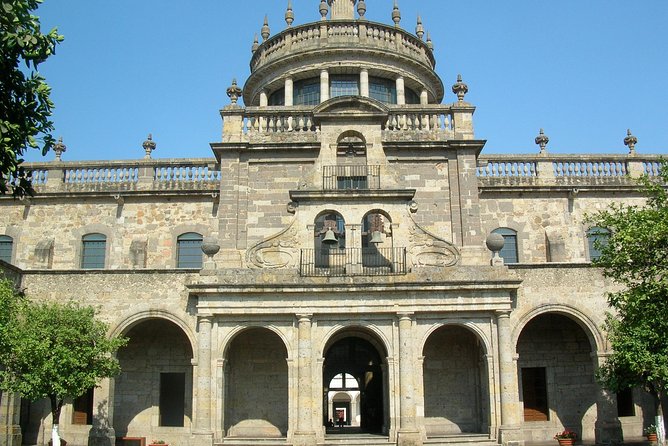
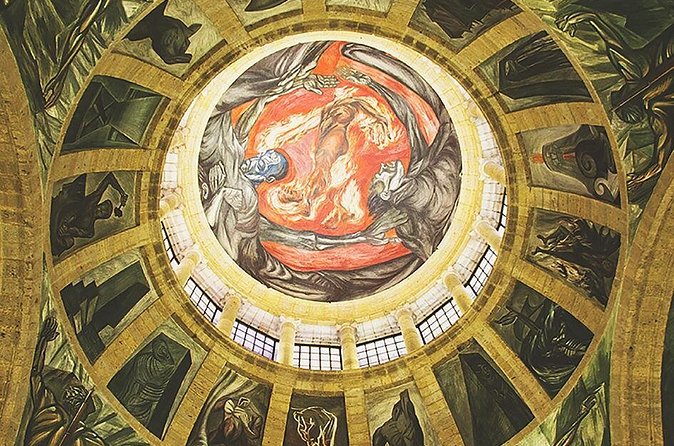
The tour begins at the Instituto Cultural Cabañas, also known as the Cabañas. You have about an hour here, and admission is included. The visit focuses on José Clemente Orozco’s murals.
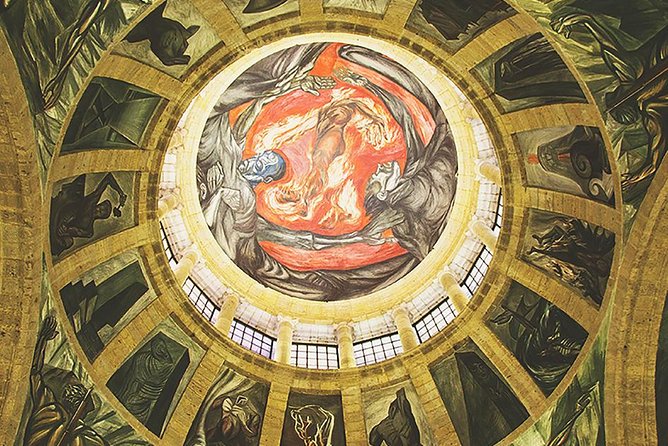
This is the artistic high point of the outing. The former orphanage provides a large architectural setting for Orozco’s work, so the murals are part of the building rather than isolated pictures hung on white walls. Look up, step back, and let your eyes adjust to the scale. A guide can point out how the architecture, figures, and movement work together.
The Cabañas visit rewards patience. You may first notice the dramatic overall effect, then begin to pick out faces, bodies, flames, weapons, or other forms that carry meaning. The point is not to memorize every symbol. It is to understand how Orozco used a public building to make history and political ideas impossible to ignore.
An hour is enough for a guided introduction, but art lovers may wish it were longer. This is one reason the private format helps. If your group is absorbed in one section, you can ask questions without worrying about a large party waiting behind you. The tour does not promise unlimited time, though, so tell your guide early if you want a slower art-focused pace.
Skip-the-line access is listed for the Cabañas. That matters most when the entrance is busy, since a short wait can otherwise eat into a four-hour schedule. The entry fee is included, so you do not need to budget separately for this stop.
Guadalajara Cathedral and the colonial center
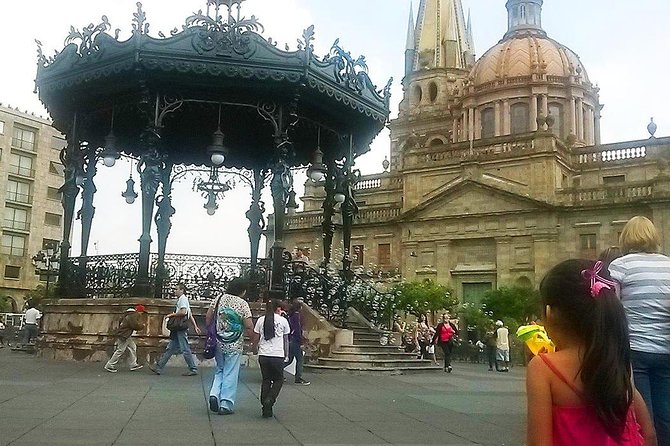
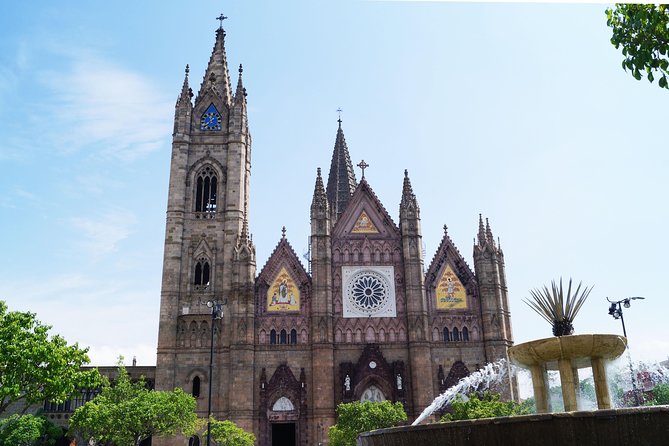
From the Cabañas, the route continues to Guadalajara Cathedral, with about 45 minutes listed for the visit. The cathedral adds a different visual language to the day. After Orozco’s forceful modern murals, you shift to one of the city’s best-known historic religious buildings.
The value here is contrast. You can look at the building’s religious purpose, structure, and interior details, then compare them with the political and social messages of the murals. A guide can also connect the cathedral to the wider old center, helping you understand how Guadalajara’s public spaces and major institutions sit close together.
Admission is included according to the tour details. Since the visit is part of a larger route, expect an orientation rather than an extended religious-art study. If you want quiet time for prayer or close architectural observation, mention that to your guide.
The cathedral stop also gives the tour a useful pause. The first Cabañas visit asks you to concentrate on a large and demanding body of art. The cathedral helps break up the pace before you continue through the center.
The Opera House and Guadalajara’s public buildings
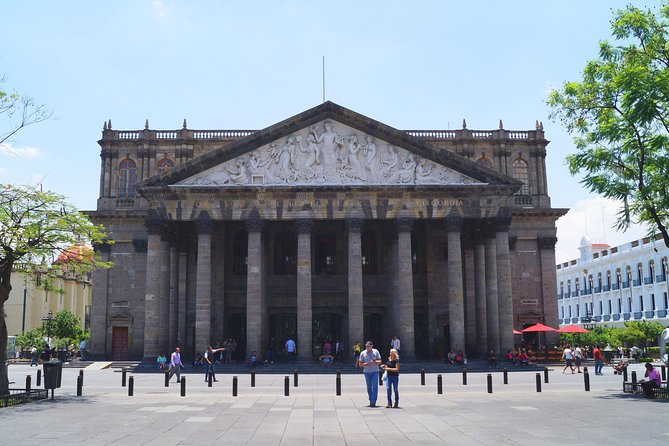
Guadalajara’s Opera House is included as another point on the central-city route. The supplied details do not give a separate duration or specify exactly what you will see inside, so think of this as a stop within the broader architectural walk rather than a full performance venue visit.
That distinction matters. You should not book this expecting an opera performance or an extended backstage tour. Instead, the building helps round out the city picture. The experience is built around the relationship between art, architecture, government, religion, and public life.
With a private guide, you can ask how the Opera House fits into Guadalajara’s cultural identity and how its design compares with the other buildings on the route. The answer will depend on the guide and the day’s timing, but the stop gives you another reason to look up from the pavement and pay attention to the city around you.
More muralism tours in Mexico:
- CDMX: Xochimilco, Coyoacan, Frida Kahlo Museum & Murals Tour
★ 4.4 · 3,025 reviews - La Catrina & Muralism: Diego Rivera’s Legacy & Frida Kahlo
★ 4.5 · 197 reviews - Xochimilco floating gardens, Coyoacan and UNAM murals
★ 4.0 · 53 reviews - Mexico City: Diego Rivera’s Murals Guided Walking Tour
★ 5.0 · 49 reviews
Plaza Tapatía, one hour among the central sights
The tour allows about an hour at Plaza Tapatía, a pedestrian area in the historic center. This is a practical part of the day because it gives you room to move between major sights rather than spending the entire outing inside buildings.
A pedestrian zone is also a good place to get your bearings. You can see how the old center connects, watch the pace of daily life, and understand the scale of the district. The guide’s role here is less about explaining one masterwork and more about tying the buildings and public spaces together.
This stop may appeal most if you are new to Guadalajara. A walking tour can make a large city feel easier to navigate, and one person specifically prefers starting a city visit this way. The private setup also means you can ask for practical help, such as where to eat afterward. Luis was praised for offering food suggestions at reasonable prices, though the tour itself does not include food or drinks.
Keep your expectations measured. Plaza Tapatía is not presented as a separate museum or ticketed attraction. Its value comes from the open space, the pedestrian setting, and the way it links the historic sights.
Government Palace and another Orozco statement
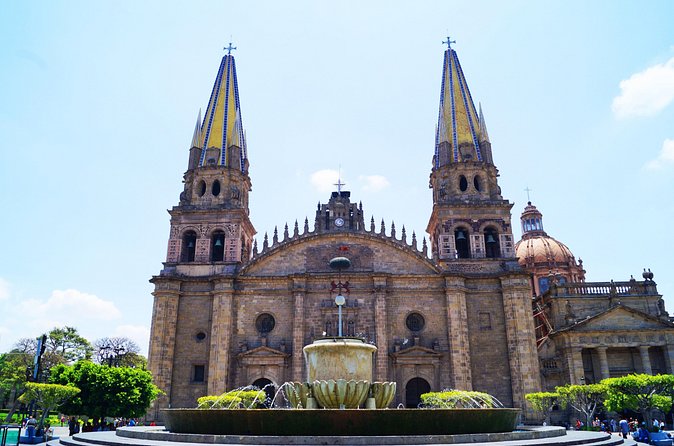
The final major stop is the Government Palace, identified in the tour materials as Guadalajara es Mexico. You have about an hour here, with more José Clemente Orozco murals to examine.
This stop gives you a useful second look at Orozco after the Cabañas. Instead of treating the artist as a one-building subject, the tour shows how his ideas appear in more than one major public setting. You can compare the mood, scale, figures, and symbolism across the two locations.
Government buildings also add a political layer. Public art placed in a government setting raises questions about who controls the story of a nation and how art can challenge the people who hold power. Your guide’s interpretation will shape how much of that context you receive, so ask direct questions if politics, revolution, or Orozco’s view of authority interests you.
One hour is a sensible amount of time for a guided visit. You get enough space to look carefully without turning the entire day into a single extended museum stop. Admission is included, which makes the final visit easy to fit into the schedule.
What the private format changes
A private tour is not automatically better than a group tour, but mural interpretation is a strong case for having your own guide. These paintings contain details that can be missed when you are standing at the back of a crowd or listening through a headset.
Here, only your group participates, with a maximum of six people per booking. That means you can hear the explanation clearly and interrupt with questions. A small party can also move at a more natural pace. If one person wants to spend extra time with Orozco and another wants more information about the buildings, the guide can usually adjust the emphasis within the time available.
The guide is a major part of the value. Luis, also written as Louis in the supplied comments, is described as speaking excellent English and bringing broad life experience to his explanation of Guadalajara. Jaime is also named positively. Since guide assignments can vary, do not assume a particular person unless the provider confirms it.
The private format costs more than joining a large group, but the value is clearest for people who care about art, want a detailed explanation, or are starting a visit to Guadalajara. If you only want quick photographs of the main sights, you may not use the format to its full potential.
Pickup, timing, and the vehicle question
Pickup is scheduled for 9:30 a.m., with hotel pickup and drop-off included. That is convenient for a first morning in Guadalajara. You do not need to find the meeting point, work out a taxi, or arrive at the Cabañas on your own.
The tour lasts about four hours. With a 9:30 start, you should expect the main activity to take up much of the morning and approach lunchtime. Food and drinks are not included, so plan to eat afterward or carry anything you need within the provider’s rules.
Transportation needs a little attention. The booking limit is six people, but one group of ten was supplied with a car for six and had to pay for extra taxis and an Uber while moving around the city. That is the clearest practical warning attached to this experience.
If your group has more than six people, ask before booking how the party will be transported. Even for six, it is sensible to confirm whether everyone will ride together and whether the vehicle is appropriate for your luggage. The provider lists hotel pickup and drop-off, but the details do not specify the vehicle type for every group.
The route is also near public transportation, which gives you a backup if needed. Most people can participate, but children must be accompanied by an adult.
How to get the best experience
I would approach this as an art and orientation tour, not as a checklist of attractions. Before pickup, choose one or two questions you want answered. You might ask how Mexican muralism developed after the Revolution, how Orozco differed from other major muralists, or how the murals were intended to reach people outside elite art circles.
Wear something comfortable for a morning that combines indoor visits and pedestrian areas. The supplied details do not promise a fully walking-only route, since hotel transportation is provided, but you will still be moving through historic sites and Plaza Tapatía.
Give your guide a clear preference at the start. You can ask for more art analysis, more architectural context, or more general Guadalajara history. The tour includes several stops, so a little direction helps the guide use the four hours well.
Take notes on restaurant suggestions if food is part of your Guadalajara plans. The guide is described as offering help with local dining, but no meal is included. Souvenir photographs are also not included, though they may be available to purchase.
The experience requires good weather. If poor weather forces a cancellation, you are offered another date or a full refund. Otherwise, the booking is non-refundable and cannot be changed, so choose your date carefully.
Who should book this Guadalajara mural tour?
I would recommend it to you if Orozco’s work is a main reason for visiting Guadalajara, if you want an English-speaking guide, or if you prefer asking questions instead of following a large group. It also suits a first morning in the city because it combines orientation, major historic buildings, and practical hotel transportation.
Families can participate, provided children are accompanied by an adult. The private format is useful for families because the guide can adjust the explanation and pace, though young children may not enjoy a full hour of serious mural interpretation.
I would think twice if you want a relaxed food tour, an evening activity, or a performance at the Opera House. Food and drinks are not included, and the Opera House stop is not described as a show. Large groups should also confirm vehicle arrangements before paying.
For art-minded visitors, the best value comes from the guide’s interpretation. The Cabañas and Government Palace are not just places to collect photographs. They are the reason to spend a morning understanding how public art helped Mexico argue with itself.
FAQ
How long is the Mexican Muralism in Guadalajara tour?
The tour lasts approximately four hours.
What time does hotel pickup begin?
Pickup is scheduled for 9:30 a.m.
Is the tour offered in English?
Yes. The experience is offered in English, with a professional guide.
Which places are included?
The route includes the Instituto Cultural Cabañas, Guadalajara Cathedral, Guadalajara’s Opera House, Plaza Tapatía, and the Government Palace.
Are entrance fees included?
Admission to the listed stops is included, including the Cabañas, Cathedral, Plaza Tapatía, and Government Palace.
Is this a private tour?
Yes. Only your group participates, and each booking can include a maximum of six people.
Should you book it?
Book this tour if you want Guadalajara’s murals explained rather than simply photographed. The Cabañas and Government Palace give you two substantial encounters with Orozco, while the Cathedral, Opera House, and Plaza Tapatía add the old center around them.
The main decision comes down to pace and interest. Art lovers will likely find the private format worthwhile, especially with an English-speaking guide who can explain symbolism and answer questions. If your party is larger than six, confirm the vehicle before booking. With that point settled, this is a focused way to meet Guadalajara through its public art and historic center.
New street art tours in Mexico
- Xochimilco floating gardens, Coyoacan and UNAM murals★ 4.0 · 6 reviews
- UNAM: Murals & Revolution★ 4.9 · 8 reviews
- Graffitis & Munchies biketour Playa del Carmen★ 4.5 · 18 reviews
- Street Art & Cemetery Cultural Tour – half day★ 5.0 · 3 reviews
- Street Art Walk★ 4.5 · 7 reviews
- Tour Women Muralists : Strokes that resist Mexico City★ 5.0 · 7 reviews
- Mexico City Private Tour with Teotihuacan, Murals, Guadalupe Basilica★ 3.0 · 2 reviews
- Diego Rivera’s murals, hidden treasures★ 5.0 · 21 reviews
Muralism Tours, side by side.
Xochimilco, Coyoacan, Frida Kahlo Museum & Murals Tour
Read our review →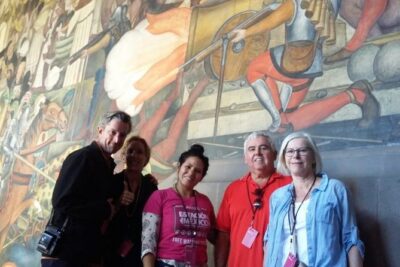
La Catrina & Muralism: Diego Rivera’s Legacy & Frida Kahlo
Read our review →
Muralist Art Semi Private Walking Tour in Mexico City Downtown
Read our review →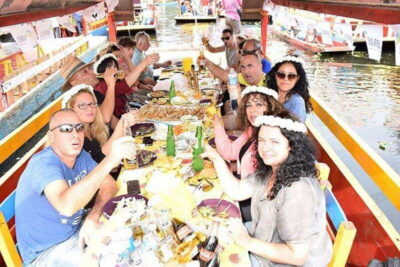
Xochimilco floating gardens, Coyoacan and UNAM murals
Read our review →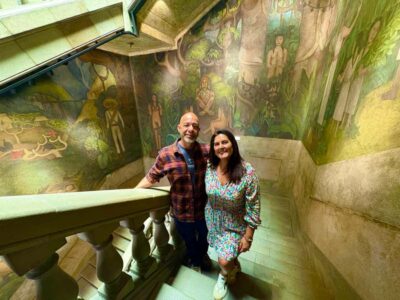
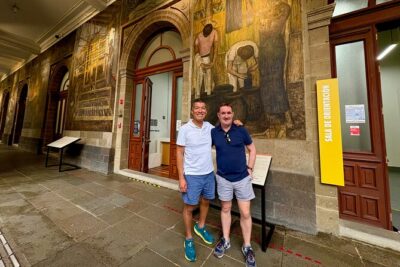
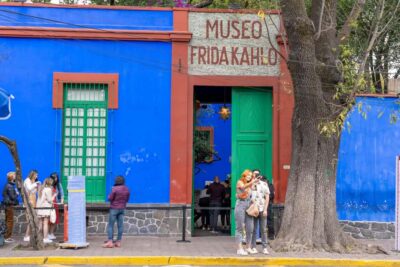
La Catrina & Muralism: Diego Rivera’s Legacy & Frida Kahlo
Read our review →Lists this wall walk turns up in