Reviewed · STREET ART WALKING TOURS
Mexico City: The Murals of Mexico Semiprivate Walking Tour
Mexico’s mural movement turned public walls into classrooms, political forums, and pictures of national identity. This three-hour walk brings that story to life inside three major cultural buildings, where you can see how artists used scale, color, and bold public messages to reach ordinary people.
I like the small group of eight or fewer, which gives you a better chance to ask about a particular figure or technique. I also like the clear focus on identifying artists by their visual methods, not just memorizing names. The main drawback is that the tour covers serious historical material at a brisk pace, and photography permits inside the museums cost extra.
Key points to know
- See three important mural venues: Enter the Antiguo Colegio de San Ildefonso, the Secretariat of Public Education, and the Museo del Palacio de Bellas Artes.
- Follow art after the Revolution: Learn how murals helped communicate ideas about culture, politics, progress, and Mexican identity.
- Compare individual artists: Your guide helps you notice the different techniques used by artists including Orozco and Siqueiros.
- Walk a manageable distance: The route covers about 1.5 kilometers, or roughly one mile, over three hours.
- Keep the group personal: The tour is limited to eight participants and is conducted in English.
- Bring practical gear: Wear comfortable shoes, since the tour runs outdoors and indoors in rain or shine.
Why Mexican murals became public history
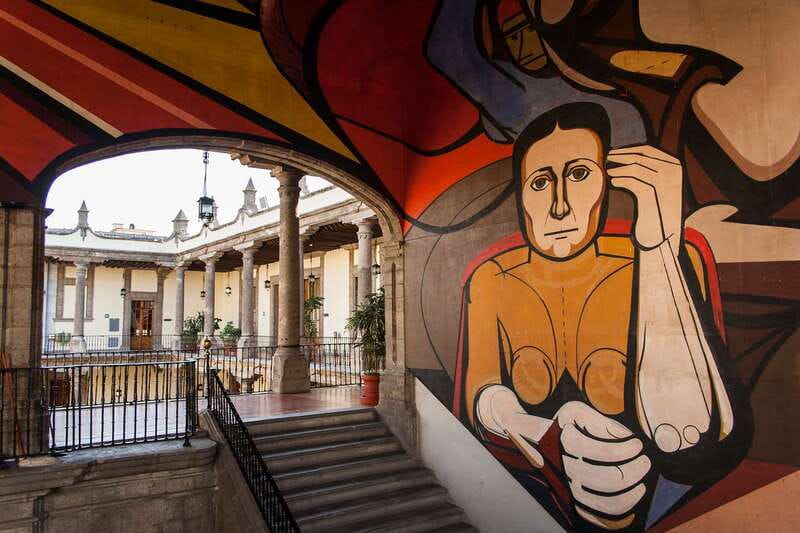
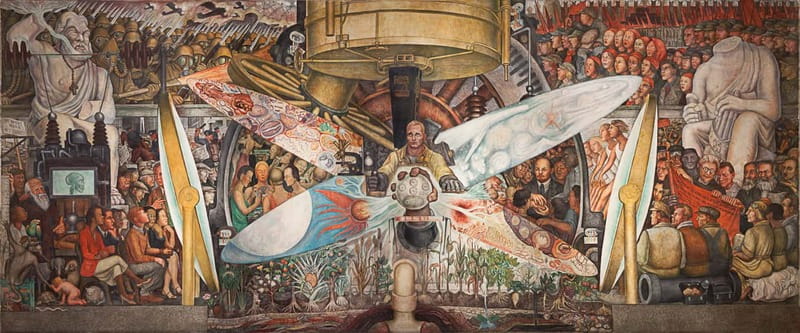
The Mexican mural movement grew after the Mexican Revolution of 1910 to 1920. The country was rebuilding its public identity, and murals offered an unusually direct way to speak to a broad audience.
A painting in a government building did not require a museum ticket or a high level of education. People encountered it while working, studying, or walking through the city. The images could address Indigenous heritage, labor, revolution, religion, politics, social inequality, and the future of Mexico in a single public space.
That purpose gives this tour more weight than a simple art walk. You are not only looking at large paintings. You are learning why the paintings were placed where they were and why the artists made their messages so clear.
The tour also helps you understand the difference between a mural and a decorative wall painting. These works were intended to communicate. They were often large, forceful, and designed to be understood by people who might never enter a formal gallery.
More Street Art Walking Tours in Mexico
- History and Murals: Walking Tour Guadalajara
★ 5.0 · 237 reviews - Walking Tour – Impressive murals in Historical Center of Mexico City
★ 5.0 · 224 reviews - Muralist Art Semi Private Walking Tour in Mexico City Downtown
★ 5.0 · 188 reviews
Starting at Santo Domingo Square
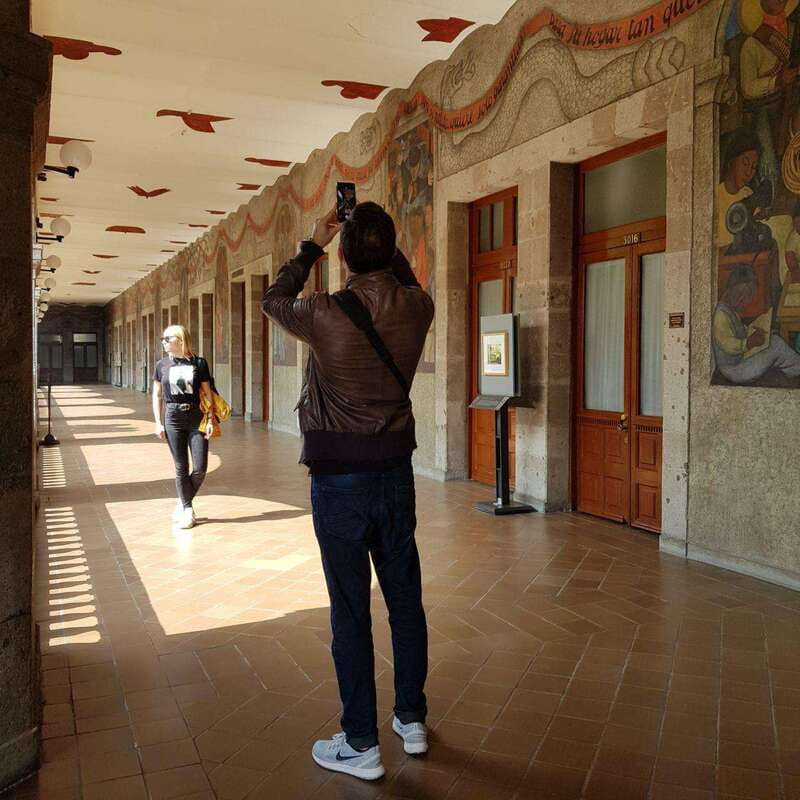
The meeting point is on the corner of Santo Domingo Square and República de Cuba Street, just outside Domingo Santo Hotel Boutique. I would arrive a little early, since a busy city corner is easier to handle when you are not also trying to locate your guide at the last moment.
You will meet an English-speaking professional guide before setting out on foot. If Orosco is leading your departure, look for the guide by the hotel entrance and confirm the tour before joining the group.
There is no hotel pickup or drop-off, so you need to make your own way to the square. That is worth noting if you are staying outside the central area. The walk itself is only about 1.5 kilometers, but the total time is three hours because the stops involve close looking, discussion, and museum visits.
The route takes place rain or shine. A light rain jacket and shoes with a firm sole make sense, particularly because you will move between city streets and large historic interiors. Comfortable shoes are specifically recommended.
Antiguo Colegio de San Ildefonso and the origins of the movement
The Antiguo Colegio de San Ildefonso is one of the key stops for understanding the early mural movement. The former school gives the art an important setting: these paintings were created for a public institution rather than a private collector’s home.
Here, your guide can explain how muralism opened a new path for Mexican artists in the 1920s. The point is not simply to admire the size of the paintings. You will look at how the works use walls, stairways, arches, and architectural spaces to guide your eye.
This is where the tour’s focus on technique becomes useful. A strong guide can help you separate the artists by their handling of figures, movement, composition, and political message. Instead of leaving with a list of famous names, you begin to build a visual memory.
The building also helps show how murals work differently from paintings on a small canvas. You may need to step back to understand the overall scene, then move closer to inspect faces, gestures, and smaller details. The guide’s explanations give that looking a structure.
A possible limitation is that the stop can feel dense if you prefer a quick introduction to Mexican art. The subject covers politics, national identity, and changing artistic goals. Still, the small group should make it easier to ask your guide to slow down or explain a point in simpler terms.
The Secretariat of Public Education and art for ordinary people
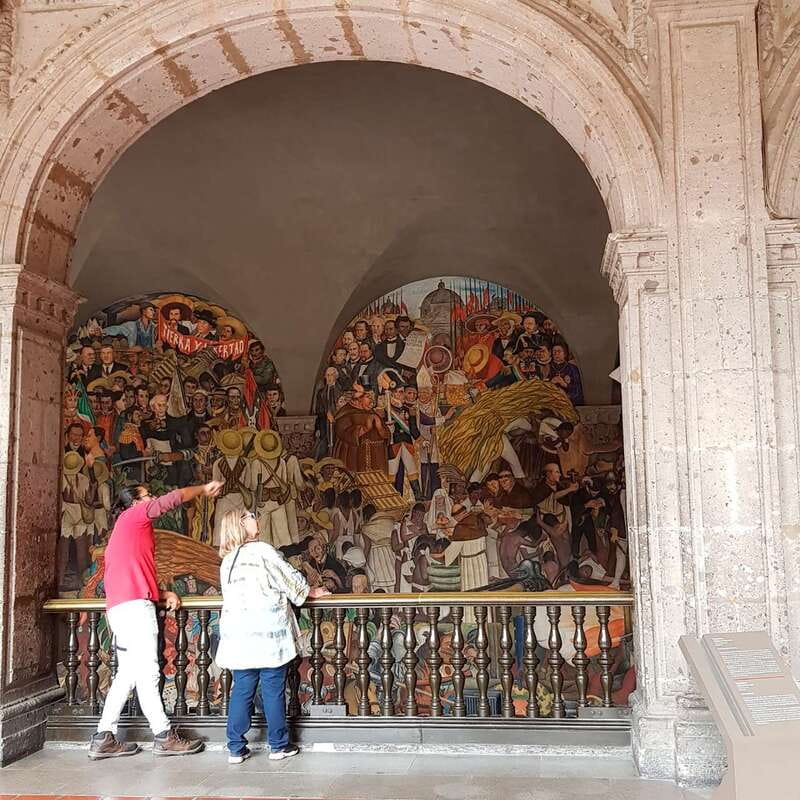
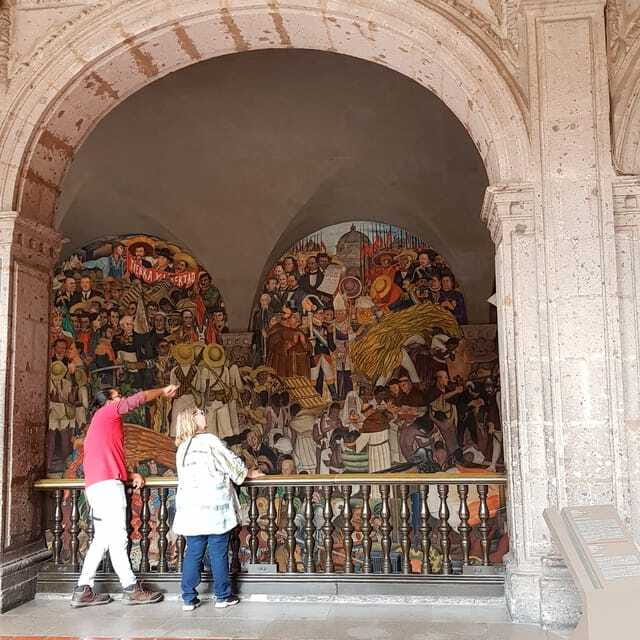
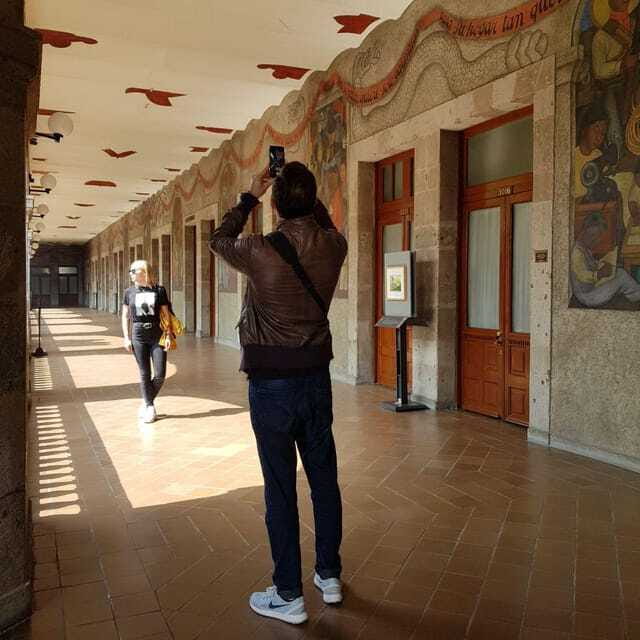
The Secretariat of Public Education is another major part of the route. Its murals make the connection between art and public education especially clear. These were not hidden works created for a private audience. They were placed in a working government setting, where the images could reach many people.
This is one of the most valuable ideas on the tour: Mexican muralism treated public space as a place for learning. A person did not need to buy a ticket, attend an art school, or understand European art traditions to encounter the paintings.
Your guide will help connect the murals to the concerns of early 20th-century Mexico. Expect discussion of cultural identity, politics, progress, and the social questions that followed the Revolution.
The building also offers a chance to compare the approaches of different artists. You may notice that one painter creates a stronger sense of motion, while another relies on clearer groupings or more direct visual statements. The tour is designed to help you recognize those differences the next time you see their work elsewhere.
That skill is one of the experience’s strongest features. Many art tours give you facts that disappear after a few days. Learning a few visual clues gives you something practical to carry through the rest of your time in Mexico City.
More Street Art Walking Tours in Mexico City
- Mexico City: Diego Rivera’s Murals Guided Walking Tour
★ 5.0 · 49 reviews - Guided Walking Tour Describing UNAM Murals and Revolution
★ 5.0 · 8 reviews - Mexico City: Historic Center Walking Tour with Murals
★ 5.0 · 6 reviews - Mexico City: History on Walls. Mexican Murals Walking Tour
★ 5.0 · 2 reviews
Palacio de Bellas Artes and the grand finale
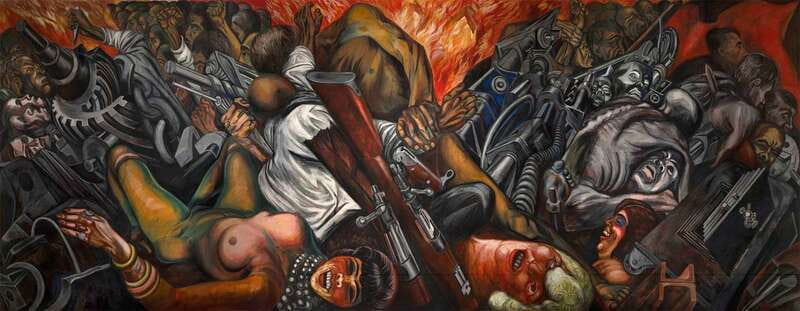
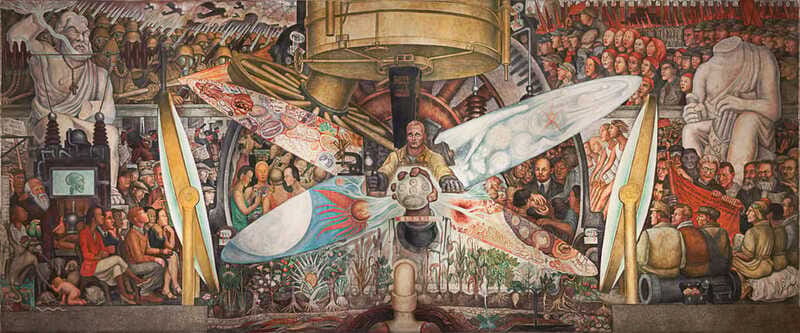
The Museo del Palacio de Bellas Artes brings the tour to one of Mexico City’s best-known cultural buildings. Its murals place the Mexican mural movement in a grand public setting and give you another chance to compare scale, style, and subject matter.
This stop is particularly useful after the first two buildings. By this point, you have already discussed the social purpose of muralism and seen works in institutional settings. At Bellas Artes, you can apply that background to a more formal museum experience.
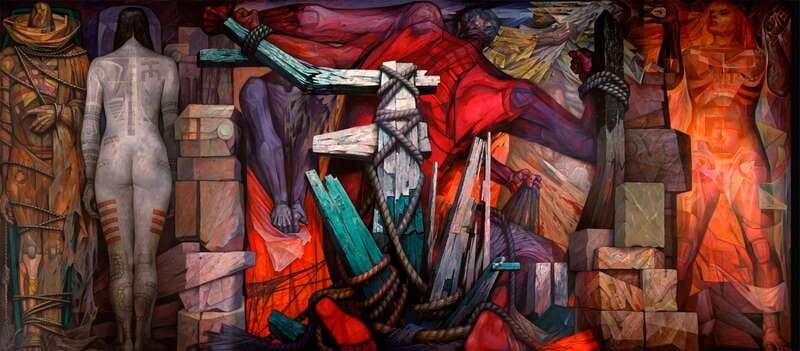
The guide will point out the major murals and explain what makes each artist distinct. Orozco and Siqueiros are central names in the mural tradition, and the tour helps you connect their names with methods and ideas rather than treating them as interchangeable figures.
If Orosco is your guide, his name may be familiar from the feedback connected with this experience. The useful question to ask is not only who painted a work, but how you can recognize that artist in another building.
Photography permits are not included. If you want to take pictures inside the museums, you can purchase a permit at the box office. I would decide before the tour starts how important photography is to you, since stopping to arrange a permit may affect your pace.
Learning to recognize Orozco, Siqueiros, and other artists
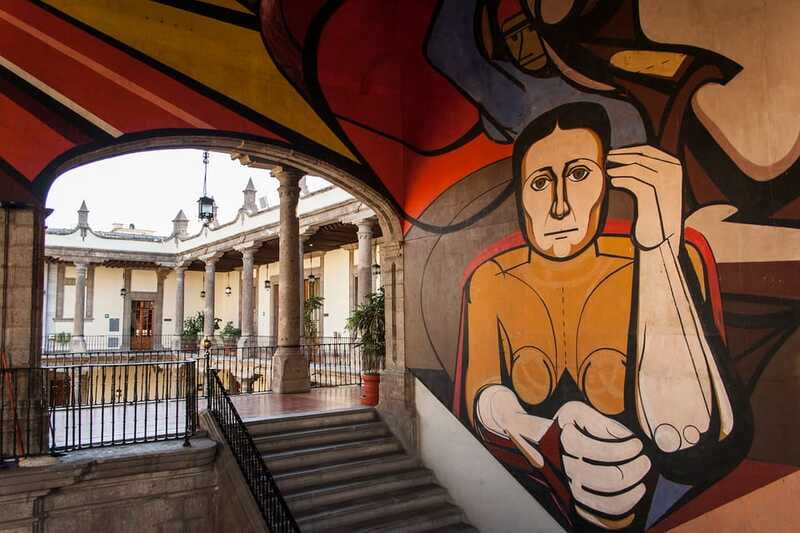
The tour’s promise to help you identify artists is more useful than it may first sound. Mexico City contains murals in museums, public buildings, schools, and civic spaces. Once you learn a few basic visual habits, later encounters become more rewarding.
Siqueiros is known for forceful, direct communication, and his approach fits the public mission of muralism. His work often demands attention through dramatic movement and strong visual impact.
Orozco offers a different kind of experience. The short comment about Orosco being a discovery points to one of the pleasures of this subject: visitors may arrive expecting only the most famous muralists and leave with a new favorite.
I would ask your guide to repeat the names of the artists as you move from room to room. It is also worth asking what details to look for in a work before the guide explains it. That small pause lets you test your own eye instead of simply receiving a lecture.
The group size matters here. With no more than eight people, the guide can usually address individual questions more easily than on a large coach-style excursion. You still need to be comfortable listening while standing and walking, but the format is well suited to discussion.
How the three-hour format affects your day
Three hours is long enough to give the mural movement proper attention, but short enough to fit into a larger Mexico City itinerary. The walking distance is modest, yet the tour does not feel like a quick stroll because the museums provide much of the content.
You should plan for a focused morning or afternoon rather than treating this as a casual neighborhood walk. The route includes entrance visits, explanations, and time to look at large works from different distances.
The experience is wheelchair accessible, which is important for a walking tour that includes several buildings. Still, the supplied information does not describe the exact accessibility arrangements at every entrance or interior space, so it is sensible to confirm any specific mobility needs before booking.
The tour is not suitable for people with visual impairments. That limitation matters because the experience depends heavily on looking at color, composition, scale, and painted detail. Much of the guide’s teaching is visual.
Is $52 a fair price?
At $52 per person, the tour is not the cheapest way to see murals in Mexico City. The price includes a professional English-speaking guide and admission to all three museums, so you are paying for more than a walk through public streets.
The value depends on how much structure you want. If you already know Mexican muralism well, you might prefer to visit the buildings independently and spend more time with the works that interest you. You would give up the artist comparisons and historical framework, though.
For a first serious look at the movement, the cost is easier to justify. Three admission tickets, a three-hour guided program, and a group limited to eight create a reasonably focused package. The guide’s role is especially important because the buildings can contain more visual information than you can easily sort out alone.
Photography permits are an extra cost, so include that in your budget if photographs matter to you. The price also does not include transportation to or from Santo Domingo Square.
Who will enjoy this mural walk most?
I would choose this tour if you like art with a strong social and political purpose. It is also a good fit if you want Mexican history explained through visual evidence rather than through a general city lecture.
You do not need an art degree. The focus on identifying techniques suggests that beginners can take something practical from the experience. You only need curiosity and a willingness to look closely.
The tour suits visitors who prefer a small group to a private guide but still want room for questions. A maximum of eight people gives you a more personal format without the higher price of a fully private outing.
It may be less suitable if you want a relaxed, unstructured walk or if you dislike extended discussion inside museums. The material is serious, and the tour takes place in all weather. People with visual impairments should choose another activity.
Practical advice before you go
Wear shoes that you can comfortably use for three hours. The total route is about one mile, but standing and moving through several sites can make the day feel longer than the distance suggests.
Arrive at the corner of Santo Domingo Square and República de Cuba Street with enough time to find Domingo Santo Hotel Boutique. Since there is no hotel pickup, check your route in advance.
Bring rain protection because the tour operates rain or shine. If you plan to take photographs, ask about the museum permit at the box office and remember that it is not included.
I would also bring a small notebook or use your phone for names, since the tour’s real payoff is learning to recognize artists later. Write down one visual clue for each painter rather than trying to record every historical detail.
Should you book the Mexico City mural tour?
Book it if you want a compact, guided introduction to the artists and public purpose behind Mexico’s mural movement. The three museum admissions, English-language instruction, and small group make $52 reasonable for someone who values context and does not want to sort out the art alone.
Skip it if you prefer to move at your own pace, need a photography-focused visit, or want a general Mexico City sightseeing tour. This is a focused art and history walk, not a broad city orientation.
For most first-time visitors interested in Mexican culture, I would put it high on the list. The best reason is simple: after three hours, you should be better equipped to look at a mural and ask who made it, what techniques they used, and what they wanted the public to understand.
FAQ
How long does the mural tour last?
The experience lasts three hours.
How far will I walk?
You will walk about 1.5 kilometers, or approximately one mile.
Where does the tour meet?
The guide meets participants at the corner of Santo Domingo Square and República de Cuba Street, outside Domingo Santo Hotel Boutique.
What language is the tour conducted in?
The tour is conducted in English with a live English-speaking guide.
How large is the group?
The group is limited to eight participants.
Which museums are included?
Admission is included for the Antiguo Colegio de San Ildefonso, the Secretariat of Public Education, and the Museo del Palacio de Bellas Artes.
Are photography permits included?
No. Photography permits inside the museums are not included, but they can be purchased at the box office.
Is the tour wheelchair accessible?
Yes, the activity is listed as wheelchair accessible. It is not suitable for people with visual impairments.
New street art tours in Mexico
- Xochimilco floating gardens, Coyoacan and UNAM murals★ 4.0 · 6 reviews
- UNAM: Murals & Revolution★ 4.9 · 8 reviews
- Graffitis & Munchies biketour Playa del Carmen★ 4.5 · 18 reviews
- Street Art & Cemetery Cultural Tour – half day★ 5.0 · 3 reviews
- Street Art Walk★ 4.5 · 7 reviews
- Tour Women Muralists : Strokes that resist Mexico City★ 5.0 · 7 reviews
- Diego Rivera’s murals, hidden treasures★ 5.0 · 21 reviews
- Private Street Food & Mural Art Tour in Mexico City★ 3.5 · 3 reviews
Street Art Walking Tours, side by side.
Naples Spanish Quarters Walking Tour Street Art, Folklore & Sweet
Read our review →

Brooklyn Graffiti & Street Art Walking Tour in Bushwick
Read our review →