
Reviewed · MURAL TOURS BY TUK-TUK AND TAXI
Lisbon: Street Art Tuk Tuk Tour
Lisbon’s best street art is not confined to the postcard center. This private tuk-tuk tour takes you into Marvila and other eastern neighborhoods, where huge murals cover old industrial buildings and forgotten walls. I like the mix of art and city life, especially the chance to see how creative work is changing areas that once sat outside the usual sightseeing route.
I also like the guides’ strong personal connection to the subject. Tiago, Mario, Frederico, Raquel, Nuno, and others are praised for explaining both the artists and the social changes behind the murals. The main drawback is the ride itself: a tuk-tuk can be bumpy, and this tour is not suitable for young children, wheelchair users, pregnant women, or people with back problems.
Key points to know before booking
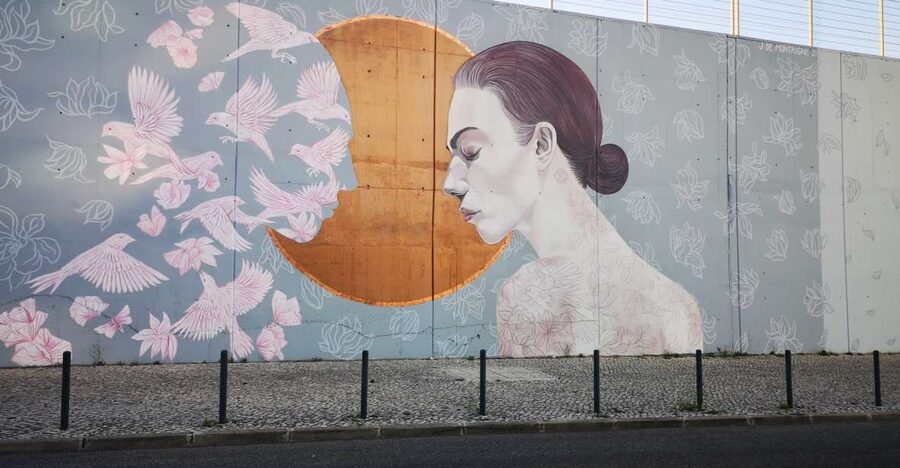
- Marvila’s 15 large murals form the visual heart of the outing, with work by Portuguese and international artists.
- The tuk-tuk saves time and energy, linking scattered walls and neighborhoods that would be difficult to cover on foot.
- The tour adds history beyond street art, including convents, palaces, worker housing, art deco warehouses, and urban gardens.
- Guides tailor the experience, with Tiago, Mario, Frederico, Raquel, and other guides praised for their humor, local insight, and flexibility.
- A two-hour tour gives you the main sights, while four hours allow more time for photographs, stories, and outlying areas.
- The $165 price covers a private group of up to two, so the value improves if you are sharing the cost with a companion.
Why Marvila is the right place for a street art tour
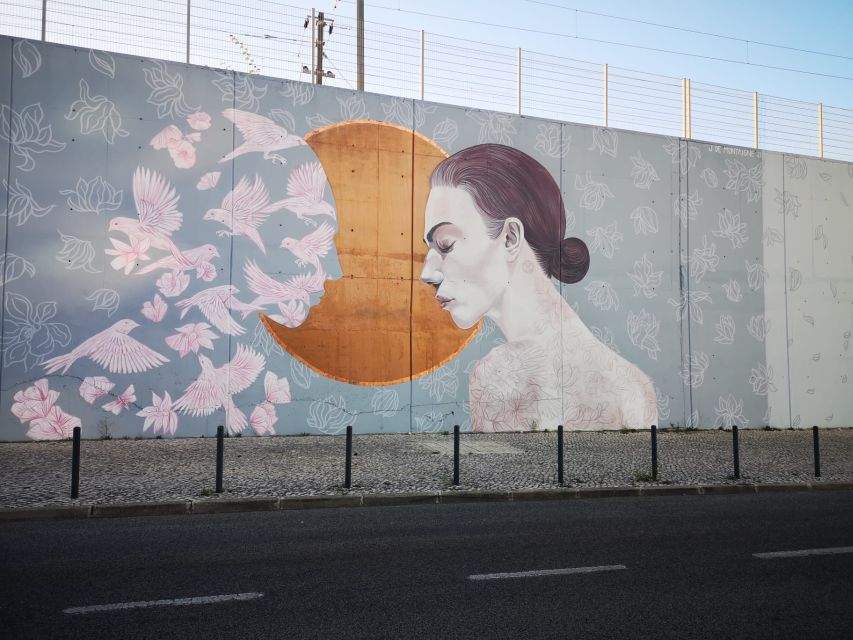
Marvila gives you a different view of Lisbon. Instead of the tiled facades and crowded lanes around Baixa, you find broad walls, old factories, working-class streets, and large-scale public art. The area has an industrial past, and many of its buildings now carry murals that would be easy to miss without a guide.
The tour focuses on about 15 major pieces painted high on building walls. These are not small tags glimpsed from a passing tram. They are enormous works designed to be seen from a distance, often covering several stories. The tuk-tuk can stop near the murals so you can look properly and take photographs.
You might see work connected with artists such as Okuda San Miguel, Vhils, Bordalo II, OzeArv, Daniel Eime, Isa Silva, Pichiavo, Shepard Fairey, and Jaqueline de Montaigne. The exact selection can change because street art is temporary. New work appears, older pieces fade or disappear, and buildings may be repainted or redeveloped.
That changing quality is part of the point. Your guide can explain what is new, what has become locally important, and how public art affects the area. Tiago is especially praised for discussing the connection between street art, housing, economics, and neighborhood change. This gives the art more meaning than a simple list of artist names.
More mural runs by tuk-tuk and taxi in Lisbon:
- Lisbon: 3-Hour Street Art Tuk Tuk Tour
★ 4.8 · 86 reviews - Lisbon Street Art – Private Guided Tour in a Electric Tuk Tuk
★ 5.0 · 72 reviews - Mon Ami Maravilha – Lisbon Street Art Private Tuk Tuk Tour
★ 5.0 · 42 reviews
What the tuk-tuk adds to the experience
Lisbon is hilly, and the street art is spread across several neighborhoods. A walking tour would give you more time at each wall, but covering this much ground on foot would be tiring and slow. The tuk-tuk lets you reach widely separated works while keeping the focus on the city around you.
You sit close to the streets rather than behind the glass of a bus. That makes it easier to notice old facades, side streets, gardens, and daily activity between the major stops. The open-sided vehicle also gives you good views as you move through the city.
The tradeoff is comfort. The ride can jolt over uneven streets, and people with back problems may find it difficult. It is also not a quiet vehicle, so you may occasionally need to ask your guide to repeat a point. On the other hand, the intimate private format makes conversation easy. Guides are able to adjust the pace, stop for photos, and focus on the kind of art you want to see.
The advertised rate is $165 per group of up to two people, rather than $165 per person. For a couple or two friends, that makes the cost easier to justify, especially since transportation and a private driver-guide are included. If you are traveling with a larger party, confirm the current arrangement before paying, since the published rate specifically refers to two people.
The mural route: large art with room for context
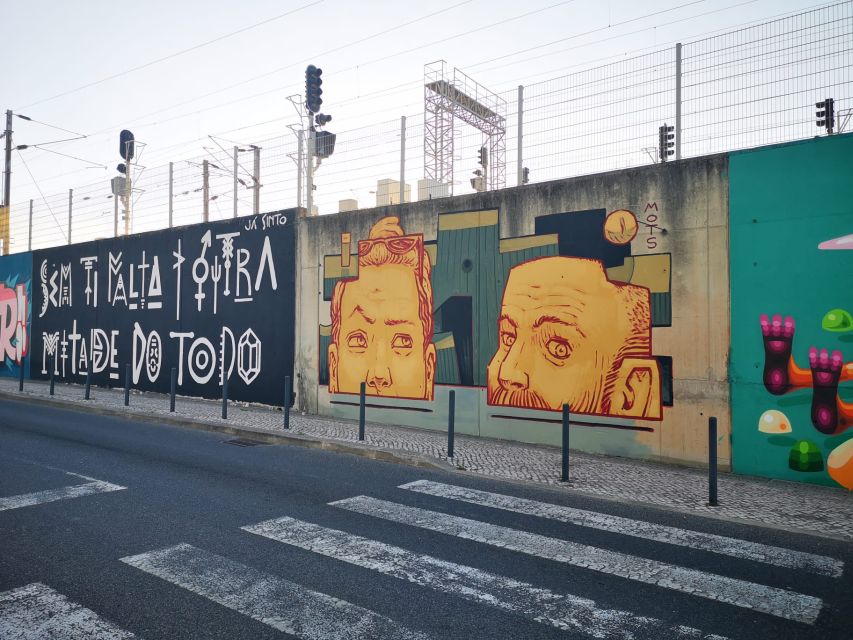
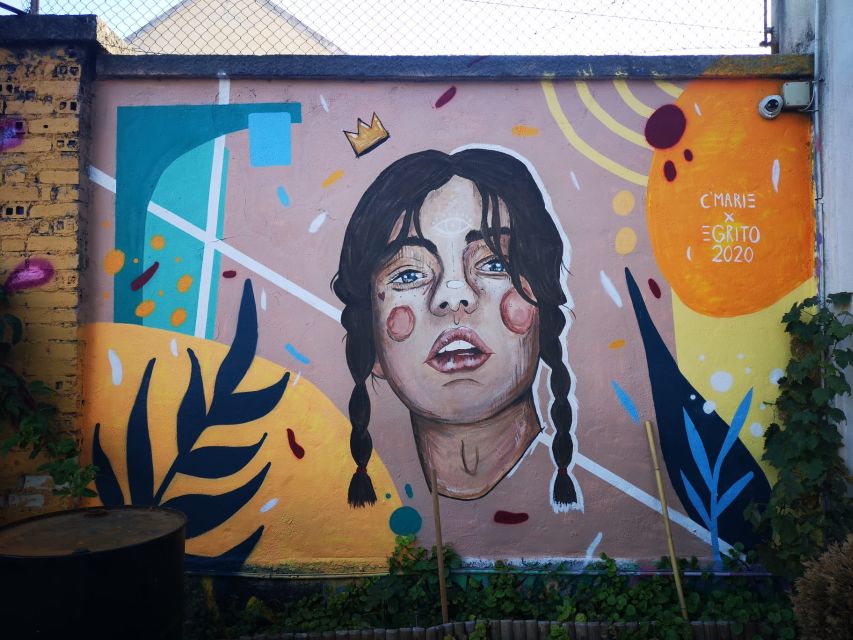
The main mural stops are the reason to book this outing. You will see walls used as enormous canvases, often with bold colors, symbolic figures, animals, portraits, or geometric forms. Some pieces are playful and decorative. Others address identity, politics, the environment, or the character of the neighborhood.
Your guide’s explanation matters here. Without context, a large mural can become a quick photo stop. With the right background, you begin to notice the artist’s methods and the relationship between the artwork and its setting. Several guides are praised for giving enough time to look and photograph rather than rushing from one wall to the next.
Mario is known for taking people to outlying areas with more authentic street art and for explaining the districts along the way. Frederico is often praised for combining artist information with broader lessons about Lisbon and Portugal. Raquel is described as bringing art, history, and Portuguese life together in an engaging way.
The route is not only about famous names. You may also see work by lesser-known artists and pieces that reflect local projects. This is valuable because Lisbon’s street art scene is larger than its most photographed murals. The walls show both international influence and local creative energy.
Do not expect a museum-style collection with labels, climate control, and a fixed route. The city itself is the gallery, and the conditions are informal. You may stand on a roadside, look up at a very tall wall, or view a piece from several angles. Bring sunglasses and consider a hat on bright days, since many stops are outdoors.
Convents, palaces, and the old industrial city
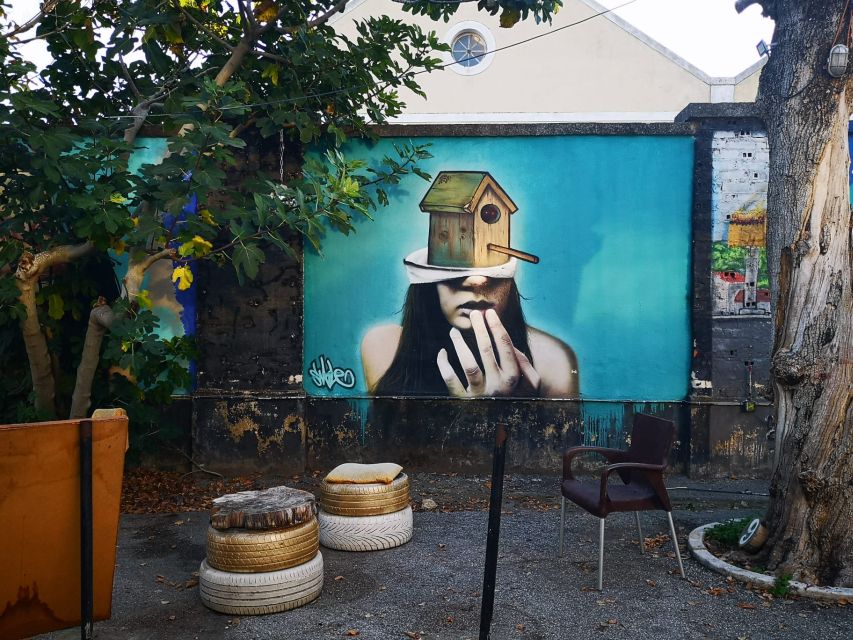
The art is only half of the tour. As you move through Marvila, the guide points out older buildings that help explain how the district developed. You may see 17th and 18th-century convents and palaces, remnants of an earlier Lisbon that feel far removed from the industrial walls nearby.
This contrast is one of the outing’s strongest features. A grand religious or aristocratic building may sit not far from a warehouse, factory settlement, or urban garden. You get a visual lesson in how the city changed over time, rather than seeing each period in isolation.
The art deco industrial buildings are especially useful for understanding Marvila. Their clean lines and practical design reflect the district’s manufacturing past. Nearby vilas, or small residential areas built for factory workers, show how employment and housing once fit together.
Your guide may also point out urban vegetable gardens. These small growing spaces add another layer to the neighborhood, showing how residents use leftover city land for practical purposes. They are not grand attractions, but they make the route feel connected to ordinary life.
This is where the tour becomes more than a mural hunt. You are not simply collecting photographs. You are watching a neighborhood move between old uses and new ones, with art acting as one visible sign of that change.
More street art tours worth booking in Lisbon:
- Lisbon: Street Art Tour
★ 4.9 · 1,324 reviews - Lisbon: Kickstart Street Art Walking Tour
★ 4.9 · 717 reviews - LISBON Street Art Tour
★ 5.0 · 371 reviews - 3-Hour Guided Street Art Walking Tour of Lisbon
★ 5.0 · 278 reviews
Views toward the Tejo and the eastern side of Lisbon
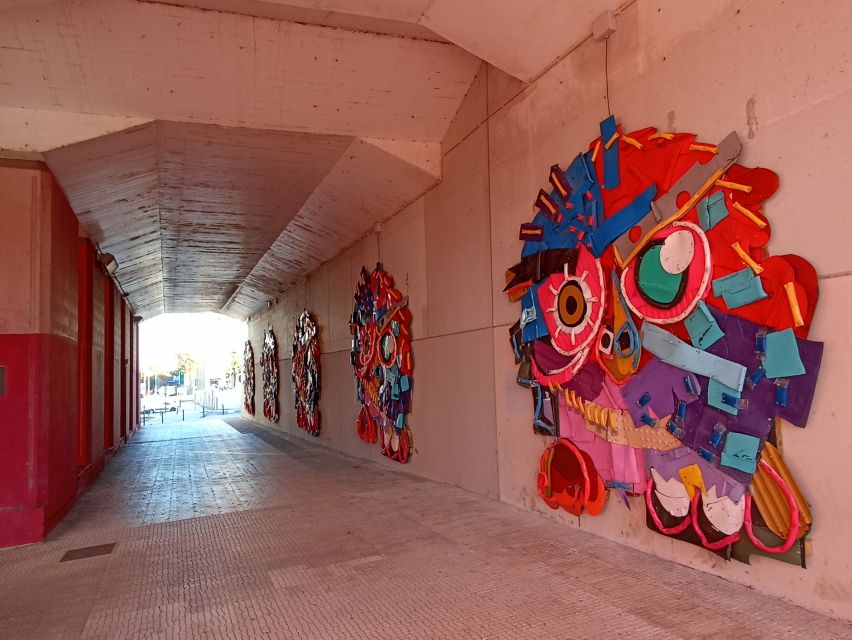
The route includes views toward the Tejo, especially from higher ground near the large murals. The river appears in the distance rather than as the sole focus of the outing, but it gives the city a wider sense of place.
I like this pause because it helps you understand Lisbon’s geography. The city rises and falls, industrial areas spread along the river, and older neighborhoods sit above newer developments. From a hill, the murals become part of the view rather than isolated painted surfaces.
The height also explains why some works are so large. Artists are working on buildings meant to be seen across open space. You may need to step back to take in an entire piece, which is another reason the tuk-tuk format works well. It can move you to a suitable viewing point without requiring a long walk between walls.
The view depends on the day and the exact route. Do not book this as a river cruise or a dedicated lookout tour. The Tejo is a welcome part of the experience, not the central attraction.
The guides make or break the outing
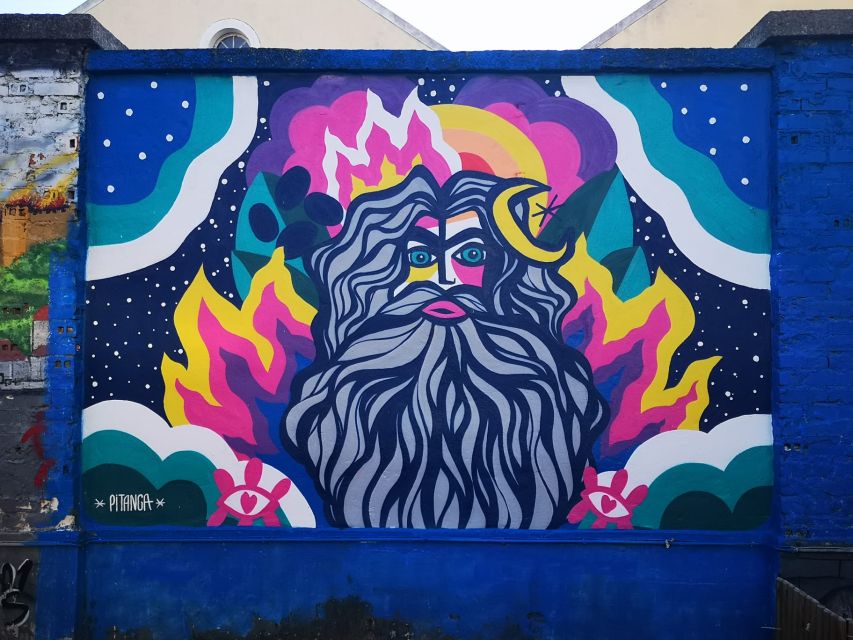
The strongest part of this tour is the human side. Tiago receives repeated praise for his passion, humor, and ability to explain how Lisbon’s street art developed. Mario is described as warm, flexible, and deeply familiar with the city. Frederico is praised for safe driving, historical background, and giving people time to photograph the work.
Other guides, including Nuno, Flavio, Raphael, and Raquel, are also associated with personalized tours. Flavio is noted for bringing together art, city life, culture, and music. Nuno is praised for explaining the work of many international artists. Raphael has taken people to special events and unusual sites when local activity happened to coincide with the tour.
Guide availability is not guaranteed, so you should not book on the assumption that you will receive one particular person unless the operator confirms it. The consistent pattern is more important: the guides are expected to do more than drive. They explain the city, answer questions, and adjust the route to your interests when possible.
When booking, it is worth telling the operator what you want. If you prefer large murals, political art, Portuguese artists, photography, or neighborhood history, say so. A private tour gives you a better chance of shaping the conversation than a large group outing.
Choosing two hours or four hours
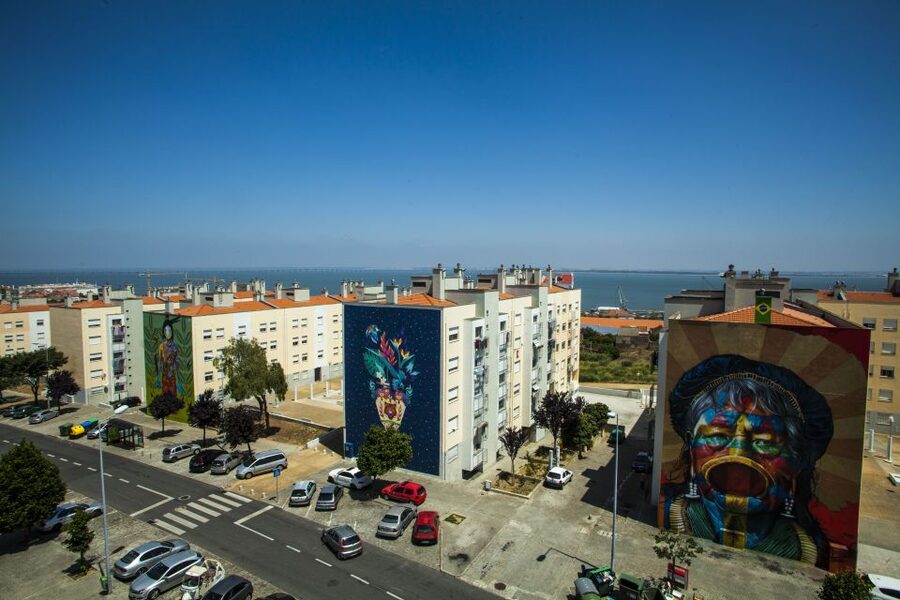
The duration is listed as two to four hours, with the available start times shown during booking. A two-hour trip suits you if you want a focused introduction to Lisbon’s street art or have only a short window in the city.
In two hours, you can expect a brisk route through key mural areas, several photo stops, and a useful introduction to Marvila and the eastern side of Lisbon. This is also a good choice near the start of your stay, since guides often provide suggestions for restaurants and other places to visit afterward.
Choose four hours if street art is a major reason for your trip. The longer version gives you more time to reach outlying districts, compare different types of work, and stop for the historical details between murals. It also allows a less hurried pace for photography.
Four hours does not mean four hours inside museums or monuments. Entrance fees are not included, and the experience centers on outdoor viewing from the tuk-tuk and short stops. If you want detailed interior visits, this is not the right format.
Who should book this tour
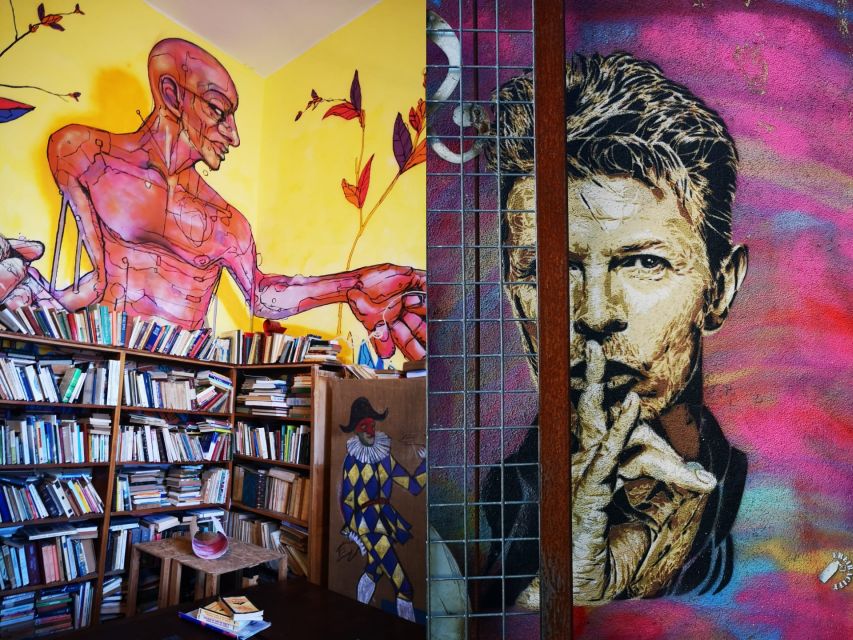
I would recommend it most strongly to you if you have already seen Lisbon’s central sights and want a different side of the city. It also works well on a first visit if you prefer local neighborhoods, public art, and social context to a standard monument route.
Teenagers and older children may enjoy the tuk-tuk and the scale of the murals. The experience has attracted families with teenagers, but children under five are not accepted. The vehicle is not suitable for wheelchair users, pregnant women, or people with back problems.
You should also be comfortable with an outdoor tour. Food and drinks are not included, and museums or monuments may require separate admission if you choose to visit them independently. Wear practical shoes for short walks and bring a camera or phone with enough battery for many large walls.
Pickup is offered within the city center. If your accommodation is too far away, you will be contacted about a meeting point. Check this before booking if you are staying outside central Lisbon, since a distant pickup could reduce the time available for the actual route.
Is the $165 price fair?
For two people, $165 works out to $82.50 each. That is not a budget sightseeing ride, but you are paying for private transportation, a dedicated guide, and access to areas that are inefficient to reach alone.
The value is strongest when you use the tour as an introduction to the eastern side of Lisbon. You save time moving between scattered murals, avoid planning your own route, and gain explanations that are hard to get from a quick internet search. The price is less attractive if you only want to photograph one or two well-known walls.
The four-hour option can make better financial sense if street art is a priority. You get more time with the guide and a broader look at the city. If you are unsure, two hours is enough to test whether the subject holds your attention.
Free cancellation is available up to 24 hours before the start time, and you can reserve while paying later. Those policies are useful if your Lisbon plans are still shifting, but check the final booking terms for your selected date.
Should you book it?
Book this tour if you want large-scale street art, local history, and neighborhoods beyond the center in one outing. The best reason to go is not simply the murals. It is the way the tuk-tuk connects them with convents, palaces, factories, worker housing, gardens, and the distant Tejo.
Skip it if you dislike bumpy rides, need full wheelchair access, or want a formal museum tour. For most art-minded visitors, the two-hour version is a smart introduction, while four hours is the better choice for serious street art fans and photographers.
FAQ
Where does the Lisbon street art tuk-tuk tour take place?
The tour takes place in the Lisbon District, with a focus on Marvila and nearby neighborhoods outside the main tourist center.
How long does the tour last?
The duration is between two and four hours. Starting times depend on availability when you book.
What is included in the price?
A driver-guide and transportation in a tuk-tuk are included. Museum or monument entrance fees, food, and drinks are not included.
What languages are available?
The live guide service is available in English, Portuguese, and Spanish.
Is hotel pickup available?
Pickup is offered for locations within Lisbon’s city center. If your accommodation is too far away, the operator will contact you to arrange a suitable meeting point.
Who should not take this tour?
The experience is not suitable for children under five, people with back problems, wheelchair users, or pregnant women.
New street art tours in Lisbon
- Street Art – Tuk Tuk Tour★ 5.0 · 17 reviews
- Lisbon Street Art and Lookout Point Tour★ 5.0 · 17 reviews
- Private Tuk Tuk of the Old Town Lisbon and Street Art Highlights★ 5.0 · 20 reviews
- Street Art Tour by Tuk Tuk Joy★ 5.0 · 2 reviews
- Lisbon Street Art – Private Tuk Tuk Tour with pickup★ 5.0 · 17 reviews
- Lisbon Street Art Walk★ 5.0 · 17 reviews
- Discover Lisbon’s Best Street Art★ 5.0 · 6 reviews
- Street Art at Lisbon★ 5.0 · 2 reviews
Mural Tours by Tuk-Tuk and Taxi, side by side.



Murals of Nashville Instagram Tour by Golf Cart
Read our review →
Wynwood Art District 1-Hour Street Art Tour by Golf Cart
Read our review →

2 Hour Private Belfast Taxi Cab Tour of Troubles & Peace walls
Read our review →
Phnom Penh’s Morning Market and Street Art Tour by Tuk tuk
Read our review →
Lists this wall walk turns up in