
Reviewed · LISBON MURAL TOURS
Lisbon Street Art Tour
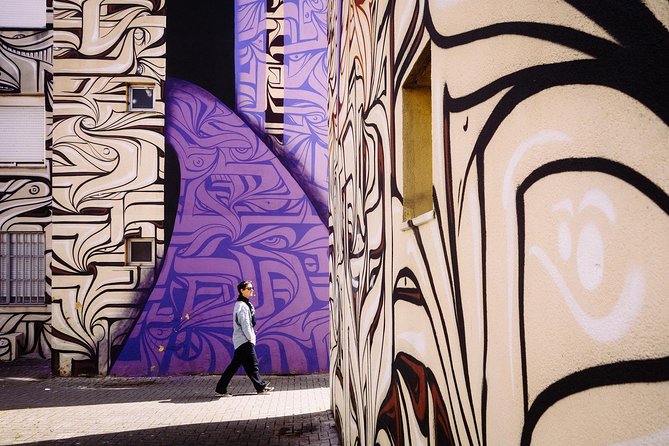
Lisbon’s street art is not confined to one gallery or a single famous wall. It appears on broad avenues, tucked into side streets, and mixed with the city’s old tiles and worn façades. This two-hour walk brings that scattered collection into focus, with Graça and Mouraria as its main stage and artists such as Vhils, Bordalo II, and Shepard Fairey on the bill.
I like the tour’s small limit of eight people, which should make it easier to stop, look up, and ask questions. I also like that it treats street art as more than colorful decoration, connecting each work to technique, politics, social questions, and the debate over what belongs in public space. The included pastel de nata or ginginha is a neat Lisbon touch.
The main drawback is practical: you walk through hilly, uneven old neighborhoods, so this is not suitable for people with mobility impairments. The guide speaks French, and coffee or other drinks cost extra. Fado may also appear as a pleasant surprise, but it is not listed as a guaranteed part of the tour.
Key points at a glance
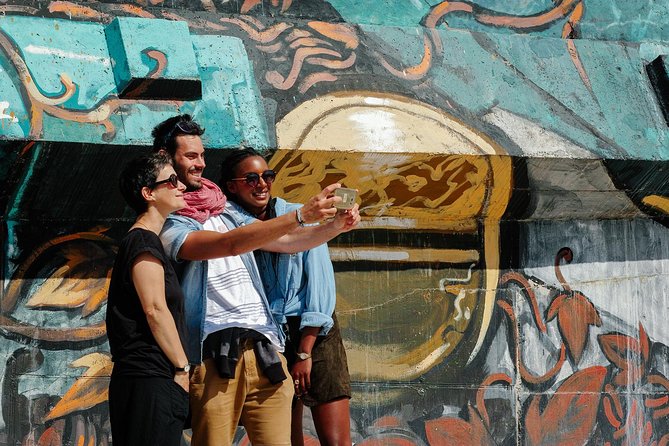
- Graça and Mouraria focus: See two Lisbon neighborhoods with especially strong collections of public art.
- Artists from Portugal and abroad: Look for work by Vhils, Bordalo II, Shepard Fairey, TV Boy, Joana Vasconcelos, Andrea Tarli, Urban Solid, and Utopia.
- Art explained, not simply spotted: Discuss materials, methods, artist statements when available, and the social questions behind the work.
- Women in street art: Learn how women are making space in a field long dominated by men.
- Small French-speaking group: Guide Peter leads a group limited to eight people.
- Local flavor included: Choose a pastel de nata or ginginha during the outing.
Why Lisbon works so well as an open-air gallery

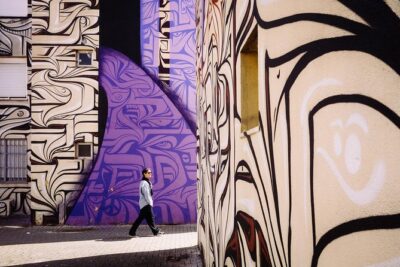
The first thing to understand is that Lisbon’s street art does not replace the old city. It works alongside it. A large mural may share a wall with chipped plaster, patterned azulejos, iron balconies, and a laundry line. That contrast is part of the appeal.
You will not see every notable work in two hours. No walking tour could manage that. Instead, the route concentrates on Graça and Mouraria, two neighborhoods where public art is plentiful and where a short walk can bring several different styles together.
That focus is useful. A citywide hunt would spend too much time moving between stops. Here, the walking itself becomes part of the experience. You get a closer look at how art changes from one street to the next, and you have time to discuss what you are seeing rather than racing from wall to wall.
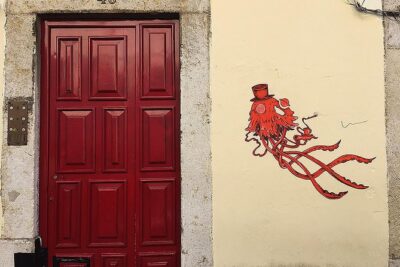
I especially like the attention given to small works. Large murals are easy to notice, but smaller pieces can reward a slower eye. Some may sit in side streets or less obvious corners, while others are placed where the city’s ordinary details become part of the composition. The route includes both the huge pieces that stop you in your tracks and the modest works that you might miss alone.
More street art tours worth booking in Lisbon:
- Lisbon: Street Art Tour
★ 4.9 · 1,324 reviews - Lisbon: Kickstart Street Art Walking Tour
★ 4.9 · 717 reviews - Lisbon: Street Art Tuk Tuk Tour
★ 4.9 · 372 reviews
Graça and Mouraria, two different moods in one walk
Mouraria is an especially useful setting for this subject. It is one of Lisbon’s old central neighborhoods, with a dense street plan and plenty of visual change from one block to the next. A street art tour here is not only about painted walls. You also see how new public art sits among older architecture and daily city life.
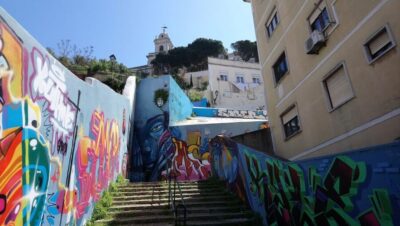
Graça brings another side of Lisbon to the walk. Its streets and viewpoints are associated with the city’s traditional character, yet they also carry large-scale contemporary art. That mixture gives the tour a clear purpose: you are not being taken to a detached art district built only for visitors. You are looking at art in places where people live, work, pass through, and carry on with ordinary routines.
The exact order of the stops can vary, so I would think of the outing as a guided walk through two art-filled neighborhoods rather than a fixed museum-style sequence. Peter, the guide, comments on each work as you go. His explanations are a major part of the value because the meaning of street art is often tied to its location.
Wear comfortable shoes. The route involves walking, and the older parts of Lisbon are not known for flat, easy paving. Bring water, too. The two-hour length is manageable for most people who are comfortable walking, but it is not a sit-down art lecture with a few short steps between galleries.
Meeting Shepard Fairey and Lisbon’s major names
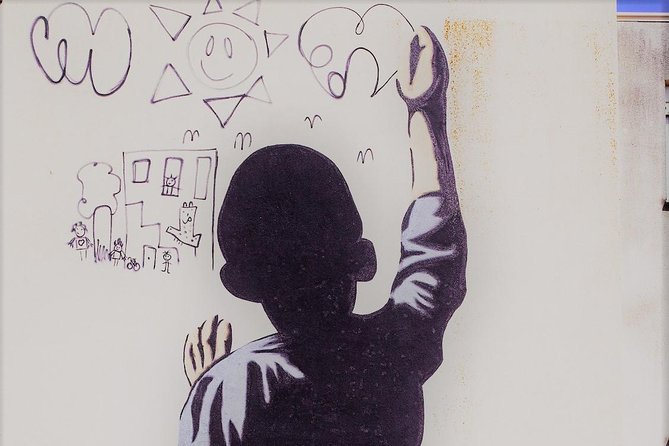
Shepard Fairey gives the tour an international reference point. His work is widely recognized for its graphic power and political edge, so seeing one of his pieces in Lisbon helps you compare an international street art language with local approaches.
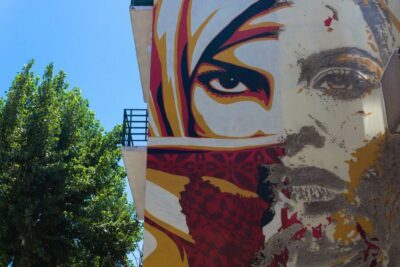
The Portuguese artists are just as important. Vhils is known for a distinctive way of working directly into surfaces, and his pieces encourage you to look closely at the wall itself rather than treating it as a blank canvas. Bordalo II is associated with large works made from discarded materials, linking public art with waste, consumption, and environmental concerns.
The tour also includes names such as TV Boy, Joana Vasconcelos, Andrea Tarli, Urban Solid, and Utopia. That range matters. You are not getting one definition of street art. Some works may be graphic, some sculptural, some built from found material, and some more difficult to classify.
This is where the guide’s comments make a difference. You discuss the tools and methods used to create each work, along with the words of the artist when those are available. A mural becomes more interesting when you know how it was made, what problem it addresses, or why its location matters.
The list also includes emerging local artists. That keeps the walk from becoming a greatest-hits tour focused only on internationally known names. Lisbon’s public art changes over time, and a guided route can point you toward work that lacks the fame or signage of a major landmark.
The questions behind the paint

A strong street art tour should leave you thinking, not just photographing. This one uses the works to open conversations about the role of art in society, political and social issues, and the basic question of what art is.
That last question can sound academic, but the streets make it practical. Is a mural art if it is commissioned? Is it still street art when it appears with official approval? Does a piece change meaning when a wall is demolished or repainted? Who gets to decide what belongs in a shared public space?
The route also addresses women entering a field long treated as male territory. This is an important part of the tour because it widens the story beyond the most familiar names. You are not simply learning a list of artists. You are also looking at who gets visibility, who gets space, and how public art reflects wider changes in society.
You should expect discussion rather than a silent sightseeing circuit. The topics may be political, and the art itself may not offer tidy answers. That is a strength if you enjoy asking questions. It may be less appealing if you want only attractive backdrops and quick photo stops.
Same city, a different set of walls:
- LISBON Street Art Tour
★ 5.0 · 371 reviews - 3-Hour Guided Street Art Walking Tour of Lisbon
★ 5.0 · 278 reviews - Lisbon Street Art Walking Tour
★ 5.0 · 141 reviews - Lisbon: 3-Hour Street Art Tuk Tuk Tour
★ 4.8 · 86 reviews
Tiles, sculpture, and the art beyond the walls
Lisbon’s famous tiles are not treated as background scenery. They are part of the larger public-art story. The city’s azulejos turn ordinary buildings into patterned surfaces, and their presence changes how you read newer work nearby.
The tour also includes sculptures and other public art. That makes the experience broader than a mural hunt. You see how artists use three-dimensional forms, existing architecture, discarded objects, and shared spaces. It also helps explain why Lisbon can feel like an open-air gallery even when no painted wall is in sight.
I appreciate this wider view. If the tour focused only on spray-painted murals, you might leave with a narrow idea of Lisbon’s creative life. By including tiles and sculpture, it shows that public art can be old or new, official or unofficial, decorative or confrontational.
There is also a practical benefit. Street art can be temporary. A work may fade, be painted over, or disappear with a building. The city’s tiles and sculptures provide a more lasting thread, giving the walk interest even when a particular mural has changed.
What the two hours feel like
The pace is built around short walks and stops for explanation. You move through Graça and Mouraria, pause at selected works, and hear about the artist, the technique, and the ideas involved. Because the group is capped at eight, you should have a better chance of hearing Peter clearly in narrow streets and asking a question without interrupting a large crowd.
The small group also suits this subject. Street art is easy to pass without noticing, especially when a guide is trying to control a large party. A compact group can gather around a smaller work and give the guide room to point out details.
Two hours is enough for a useful introduction, not a complete survey of Lisbon’s art. That is the right length for a first look, especially if you are combining it with the rest of a busy city visit. If you already know the major pieces and want a longer specialist tour, this may feel brief.
Past visits led by Peter have included an unexpected stop involving a Fado singer. That kind of moment fits the character of the neighborhoods, but you should not book the tour expecting a concert. The dependable elements are the street art, the commentary, the two neighborhoods, and the Lisbon specialty.
Pastel de nata or ginginha
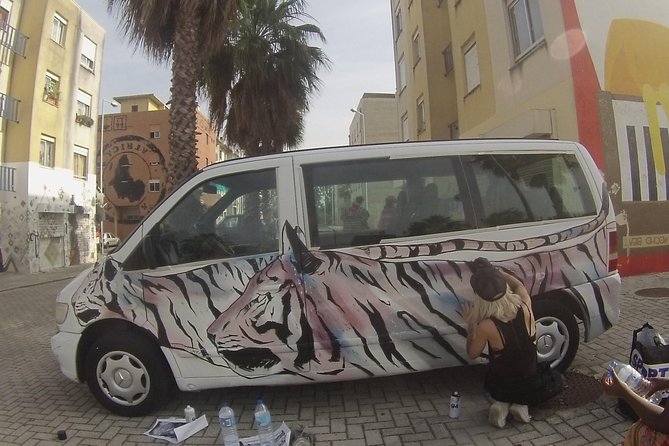
The included tasting adds a small but welcome local reward. You choose between a pastel de nata, Lisbon’s familiar custard tart, and ginginha, a sour-cherry liqueur.
This is not a full meal, so plan to eat separately. Coffee and other hot or cold drinks are not included. Still, the choice gives the walk a friendly finish and connects the art outing with local food and drink.
If you do not drink alcohol, choose the tart. If you want to sample a classic Portuguese liqueur, ginginha provides that option. The inclusion also improves the value of the $41 price, particularly for visitors who want a guided experience with a local taste rather than a bare walking lecture.
Is $41 a fair price?
At $41 per person, the tour sits in a reasonable range for a two-hour guided experience, especially with a maximum of eight people and a tasting included. You are paying for interpretation, not simply access to public walls. The guide helps you find works you might miss and gives you a way to connect them to technique, politics, gender, and place.
The value depends on your interest. If you are happy to photograph murals on your own and do not need context, you can explore Lisbon’s streets without paying for a guide. But you will lose the artist background and the discussion of how the works were made.
For me, the strongest value comes from the combination of local and international names. Shepard Fairey may draw you in, but Vhils, Bordalo II, and lesser-known Portuguese artists make the walk specific to Lisbon. The tile and sculpture stops add another layer, and the small group keeps the experience personal.
The price does not include drinks beyond the selected pastel de nata or ginginha. That is a minor cost issue, not a major weakness, but you should know it before setting out.
Who should book this walk?

I would recommend it to anyone who wants to understand Lisbon’s street art rather than simply collect mural photographs. It suits first-time visitors who want a clear introduction, art lovers who enjoy technique and context, and people curious about how public art deals with social and political issues.
It is also a good match for French-speaking visitors. The live guide language is French, and Peter has been specifically praised for explaining the works and artists in a friendly, detailed way.
I would be more cautious if you have mobility limitations, dislike walking on older streets, or want a formal museum-style tour. The route is active and outdoors. It is also not the right choice if you need a guaranteed Fado performance, since that appeared as an extra moment rather than a stated feature.
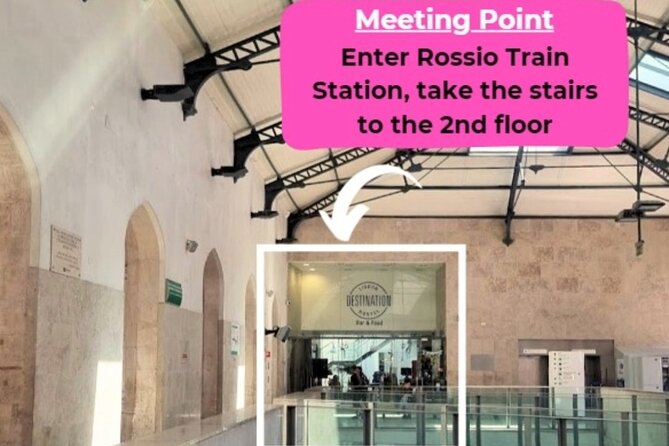
The booking terms are flexible: you can cancel up to 24 hours before the activity for a full refund, and you can reserve now and pay later. Meet in front of the church, check the available starting time, wear comfortable shoes, and bring water.
Final recommendation
Book this tour if you want Lisbon’s street art explained by a guide who can connect major international artists with local names, smaller works, tiles, sculpture, and the social questions behind public art. The compact group, French commentary, and included Lisbon specialty make $41 a fair spend.
Skip it if you prefer to wander independently or cannot manage a walking route through Graça and Mouraria. For most French-speaking visitors who enjoy art and city streets, this is a lively, thoughtful introduction to a side of Lisbon that is easy to miss on your own.
FAQ
How long does the Lisbon Street Art Tour last?
The tour lasts two hours.
Which neighborhoods does the tour visit?
The route focuses on Graça and Mouraria, two Lisbon neighborhoods with large collections of street art.
Which language is the tour conducted in?
The live tour guide speaks French.
How many people can join the group?
The group is limited to eight participants.
Which artists might I see?
The tour includes works by Shepard Fairey, Vhils, Bordalo II, TV Boy, Joana Vasconcelos, Andrea Tarli, Urban Solid, and Utopia, along with other local and international artists.
Is food or drink included?
You receive a choice of a pastel de nata or ginginha. Coffee and other hot or cold drinks are not included.
Is the tour suitable for people with mobility impairments?
No. The activity is not suitable for people with mobility impairments. Comfortable shoes and water are recommended.
New street art tours in Lisbon
- Street Art – Tuk Tuk Tour★ 5.0 · 17 reviews
- Lisbon Street Art and Lookout Point Tour★ 5.0 · 17 reviews
- Street Art Tour by Tuk Tuk Joy★ 5.0 · 2 reviews
- Private Tuk Tuk of the Old Town Lisbon and Street Art Highlights★ 5.0 · 20 reviews
- Lisbon Street Art – Private Tuk Tuk Tour with pickup★ 5.0 · 17 reviews
- Lisbon Street Art Walk★ 5.0 · 17 reviews
- Discover Lisbon’s Best Street Art★ 5.0 · 6 reviews
- Street Art at Lisbon★ 5.0 · 2 reviews
Lisbon Mural Tours, side by side.

3-Hour Guided Street Art Walking Tour of Lisbon
Read our review →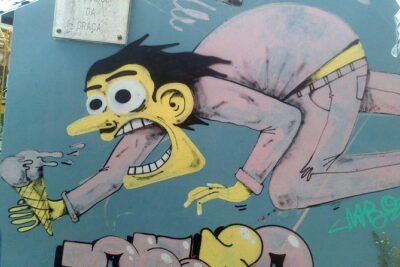
Lists this wall walk turns up in