
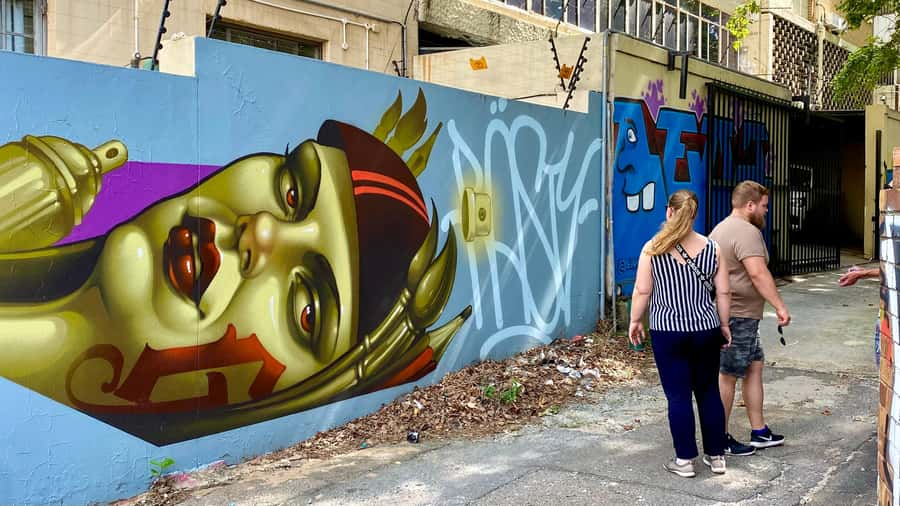
Reviewed · GRAFFITI TOURS
Colours of Johannesburg: A Graffiti & Street Art Tour
Johannesburg’s walls tell stories that guidebooks often miss. This three-neighborhood street art tour links Braamfontein, Newtown, and Maboneng, showing you how murals, tags, and public art fit into the city’s changing culture.
I like the mix of local history and art instruction, especially the clear look at how graffiti and commissioned street art differ. I also like that guide Ayanda brings personal knowledge of Johannesburg and its artists, rather than treating the walls as simple photo backdrops.
The main drawback is that this is a walking tour with several outdoor stops, so comfortable shoes, water, and a willingness to walk are essential. The graffiti store may be closed, and a guest artist may join only when available.
Key points to know before booking
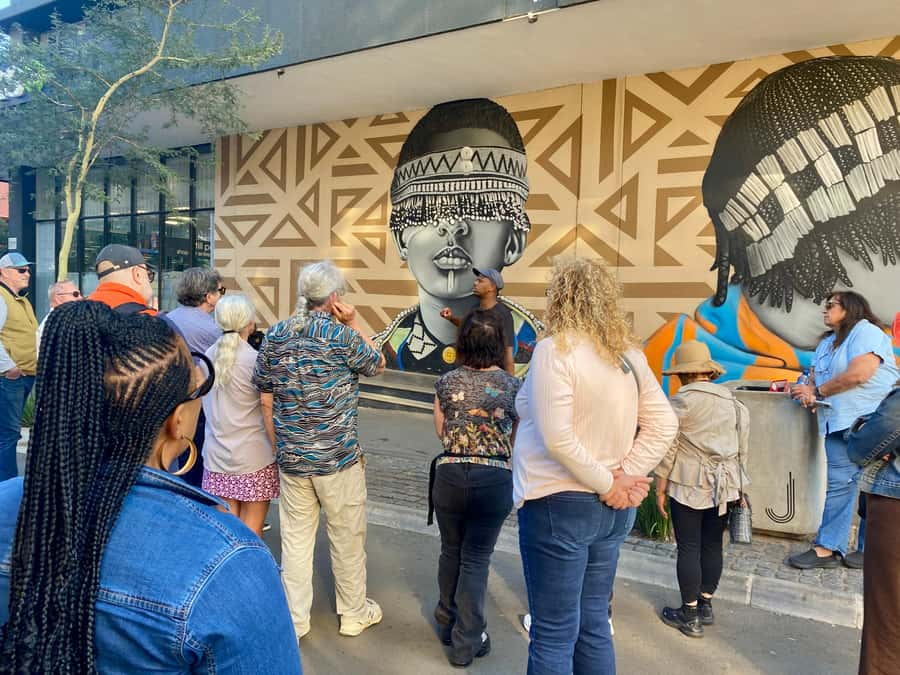
- Three distinct art districts: See Braamfontein, Newtown, and Maboneng in one 210-minute outing.
- More than mural spotting: Learn the difference between graffiti writing and street art, including the role of tags, artists, and public walls.
- Guide Ayanda adds local context: He grew up in the areas covered and can connect the art to Johannesburg and South African history.
- Transport is included between neighborhoods: You walk within the districts, then use transport during the tour to move between them.
- A useful creative stop: Visit a local graffiti supply store and exhibition space when it is open.
- English only, with some uncertainty built in: A graffiti artist may join, but this depends entirely on availability.
Why Johannesburg’s walls are worth your afternoon
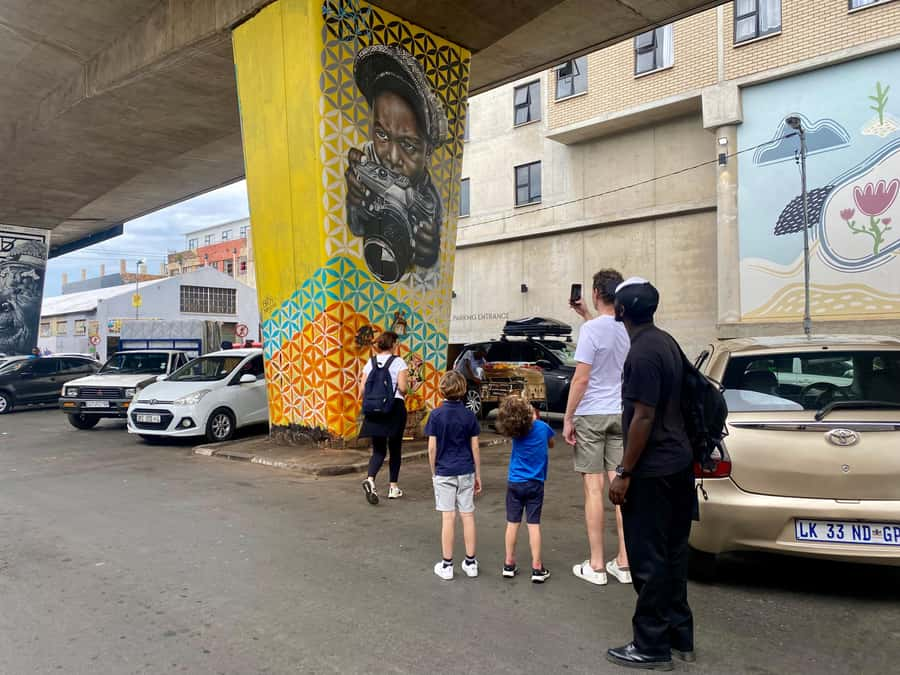
Johannesburg can change sharply from one block to the next. On this tour, that change becomes part of the lesson. A painted wall in Braamfontein is not treated the same way as a tag in Newtown, and an international mural in Maboneng may serve a different purpose from a quick piece made by a local graffiti writer.
That distinction is one of the best reasons to book. Without context, graffiti can look like a collection of colorful marks. With a guide who understands the scene, you begin to notice lettering styles, repeated tags, scale, placement, and the difference between a planned mural and a piece made for the graffiti community.
Ayanda also places the art within the story of Johannesburg. The tour explains how street art helped shape the public character of Braamfontein from 2003 onward, and how art has contributed to the identity of Maboneng. Newtown brings a different angle, with its long connection to arts and culture and its strong place in the city’s underground creative scene.
This is not a tour built around famous buildings or formal galleries. It is a look at art in ordinary public space, where walls, pavements, shopfronts, and side streets become part of the experience. That makes it especially useful if you want to understand how people express local identity outside traditional museums.
More Graffiti Tours in the world:
- Medellin: Comuna 13 Graffiti Tour, Cable Car & Street Food
★ 4.8 · 9,046 reviews - Wynwood Graffiti Golf Cart Small-Group Tour
★ 5.0 · 1,646 reviews - London: Street Art and Graffiti Guided Walking Tour
★ 4.9 · 1,354 reviews
Starting at Skinner Café on Juta Street
The meeting point is inside Skinner Café at 70 Juta Street. Look for the green café at the corner, with large see-through windows and a small outdoor seating area facing Juta Street.
Starting at a café is practical. You have a clear landmark, and the tour begins with a 15-minute safety briefing at a local restaurant or café setting. Use this time to fill your water bottle, ask about the walking pace, and make sure you are ready for a few hours outside.
The tour is conducted in English only. If you want detailed explanations about local slang, art terms, and South African history, a good working level of English will make a real difference.
The route lasts 210 minutes, or three and a half hours. That is long enough to cover three areas without making every stop feel rushed, although you should still expect a fairly full afternoon. Wear shoes you can walk in comfortably. Bring water, since the tour includes outdoor walking and repeated stops for discussion and photographs.
Braamfontein: where the art becomes part of the neighborhood
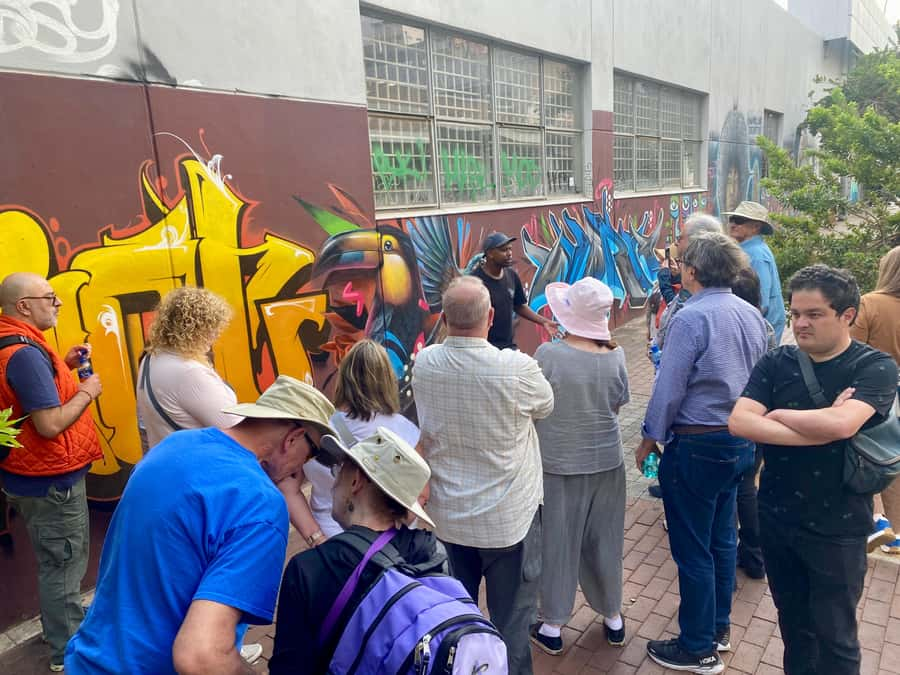
Braamfontein is the first major stop, with about an hour set aside for walking, sightseeing, and explanation. The area has murals large enough to catch your eye from a distance, along with smaller works that reward a closer look.
Here, Ayanda explains how street art affected the development of the precinct from 2003. That context matters because the art is not simply decoration. It becomes part of how a neighborhood presents itself, attracts creative activity, and gives artists a public platform.
I would pay attention to the relationship between the large painted walls and the smaller marks nearby. A polished mural and a quick tag can occupy the same street, but they do not necessarily belong to the same tradition or serve the same audience. The tour is designed to explain that relationship rather than flatten everything into one category called graffiti.
Braamfontein is also a good place to begin because it gives you a broad introduction to Johannesburg’s street art scene. You see how color, scale, and placement affect the feel of a district, then carry that vocabulary into the later stops.
The drawback is that street art changes. Paint can fade, walls can be repainted, and access to some spots can vary. The exact mix of works may not be identical every day. That is normal for an outdoor art tour, but it is worth knowing if you expect a fixed gallery-style display.
The local graffiti store and the art beyond the walls
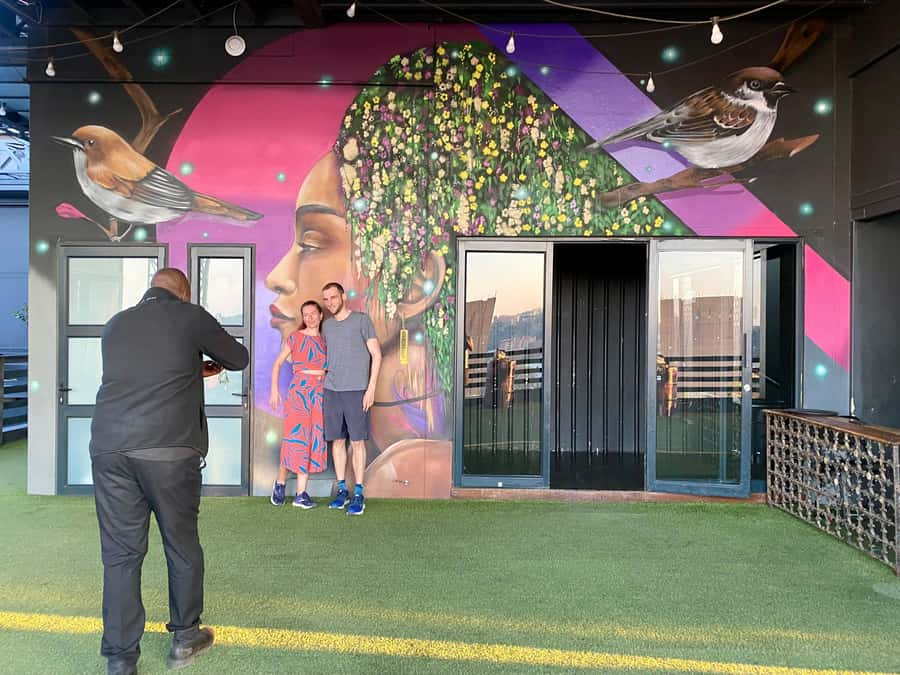
The tour includes a stop at a local graffiti store, usually during the Braamfontein portion of the route. This is more than a shopping break. It gives you a look at the supplies used by local artists and a chance to engage with the scene in a more direct way.
When open, the store may also have an exhibition room with works on display. You can browse merchandise designed by local graffiti artists, including shirts and other items. One person on the tour bought a locally designed T-shirt and later received compliments on it during a safari trip, which makes this a more personal souvenir than a generic Johannesburg keepsake.
There is one important limitation. The store is closed during the festive period from December 24 through January 20, so you should not count on this stop if you are visiting during those dates. The tour itself still has its other neighborhoods and art stops, but the store visit will not be available.
A graffiti artist may sometimes join the tour. This is not guaranteed, and the decision depends on the artist’s availability. If that happens, it could add a useful first-hand voice. Still, book the experience for the guide-led tour, not on the assumption that an artist will appear.
More street art tours worth booking in the world:
- CDMX: Xochimilco, Coyoacan, Frida Kahlo Museum & Murals Tour
★ 4.4 · 3,025 reviews - Amsterdam: Streetart Museum STRAAT Entrance Ticket
★ 4.8 · 2,137 reviews - Belfast: Murals Taxi Tour
★ 4.9 · 2,047 reviews - Lisbon: Street Art Tour
★ 4.9 · 1,324 reviews
Newtown: Johannesburg’s creative core
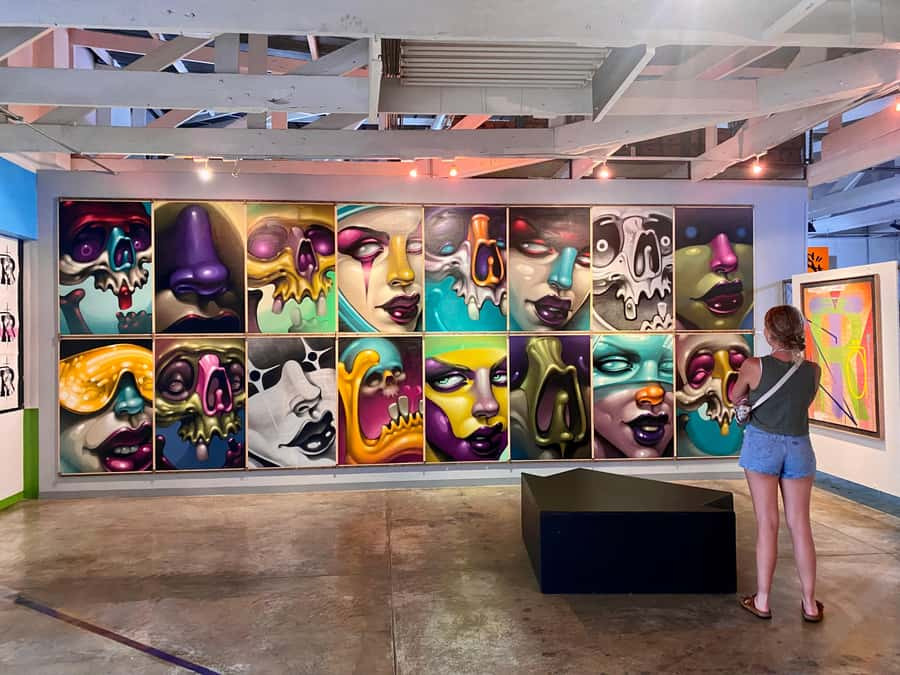
From Braamfontein, the route continues to Newtown, with about 45 minutes for walking, sightseeing, and photographs. Transport between the neighborhoods is included, so you are not left to arrange your own taxi or work out the connections between districts.
Newtown is described as the spiritual home of arts and culture in the inner city. Its story reaches back to 1886, and the area has long been linked with the city’s underground cultural movements. For a graffiti tour, that makes Newtown an important contrast to Braamfontein.
The art here is presented as some of the city’s strongest graffiti, with an emphasis on writers, tags, and the local scene. This is where the distinction between street art and graffiti becomes especially useful. A large mural may be designed for broad public viewing, while a tag can function as a signature, a claim, or a sign of a particular artist’s presence.
You should expect a stop with plenty of visual detail rather than a single headline attraction. Take photographs, but listen closely when Ayanda points out recurring names and styles. The value lies in learning how to look at the walls, not simply collecting pictures.
Newtown also helps tie the tour to Johannesburg’s wider past and present. Ayanda has been praised for placing the art within South African history and city life, which gives the stop more weight than a basic wall-by-wall description.
Maboneng: murals, tags, and a strong finish
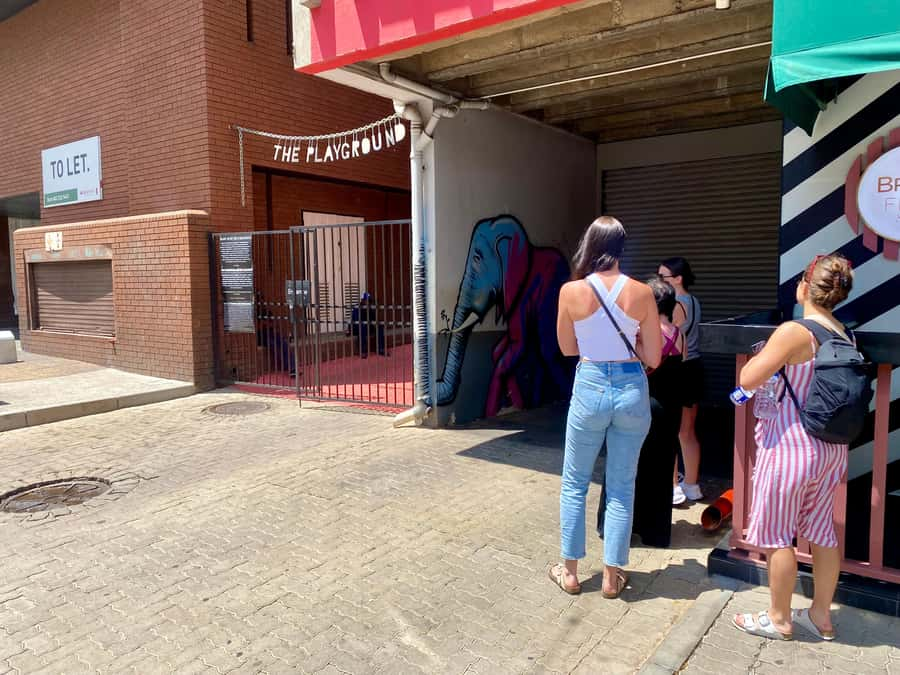
The final neighborhood is Maboneng, where the tour ends after about 45 minutes. You will walk, see murals, browse some areas, and take in views from the precinct before finishing at Home of the Bean.
Maboneng is known on this route for its mix of large murals, work by international artists, and familiar tags from local graffiti writers. That combination makes it a fitting final stop. By this point, you have seen enough examples to compare different approaches rather than accepting every painted wall as the same kind of art.
The area also provides a good reminder that public art can help shape how a place is experienced. The murals give the precinct a distinct visual character, while the tags connect it to the wider graffiti community. The tour celebrates that contrast instead of trying to make the art look uniform.
Ending at Home of the Bean is convenient if you want to pause after the walk. The provided details do not include a meal or drink as part of the tour, so plan on paying for anything you order there.
Maboneng can be a lively place to explore, but the art is not presented as a sealed-off attraction. You are moving through an active city district, so stay with the guide, listen to the safety advice, and keep your belongings secure.
The guide’s role makes the difference
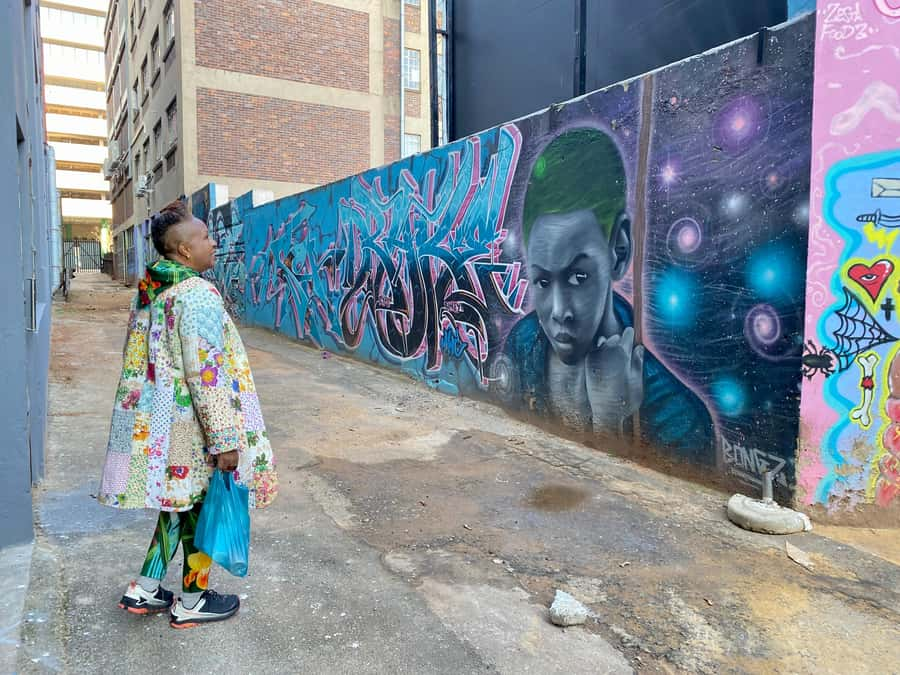
The strongest part of this experience is the guide-led interpretation. Ayanda is described as the founder of the tour company and as someone who grew up in the areas covered. That gives him a personal connection to the neighborhoods and to the artists whose work appears on the walls.
His role is not limited to naming painters. He explains the background of murals and graffiti, answers questions, and connects street culture to Johannesburg’s complicated past and present. You can ask about the art, the districts, or broader questions about the city.
That flexibility matters. One person who took the tour alone found that Ayanda was happy to answer questions even when they moved beyond graffiti and street art. If you enjoy conversation and want a guide who can respond to curiosity, this is a useful feature.
The available feedback gives the tour a perfect 5 rating from 21 reviews, with repeated praise for Ayanda’s passion, warmth, and command of Johannesburg’s street culture. The consistent point is not just that he knows the art, but that he cares about the city and communicates that interest clearly.
Do keep the praise in perspective. A strong guide cannot guarantee that every wall will be freshly painted or that every preferred artist will be represented on your date. The appeal is the way the guide reads the city as it is, including its changes.
What the $43 price gets you
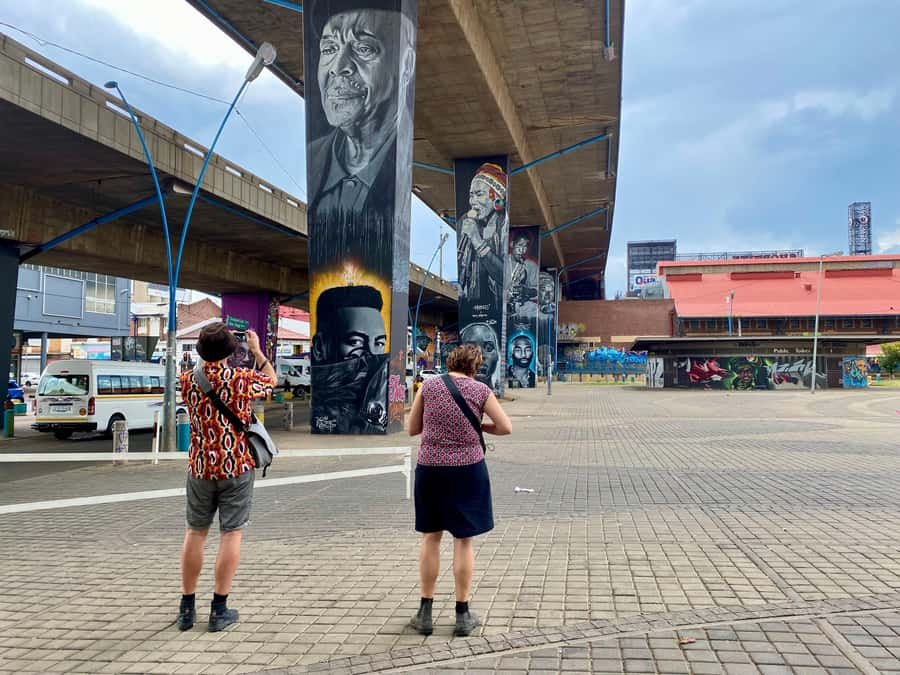
At $43 per person, the price is reasonable if you value interpretation and included movement between districts. You are paying for three and a half hours with a live English-speaking guide, walking tours in three parts of Johannesburg, transport between the neighborhoods, and the chance to visit a local graffiti store when it is open.
It is not the cheapest way to see a few murals. You could walk around one precinct on your own for less. The value comes from the route, the comparisons between districts, and the explanation of how graffiti and street art developed in relation to the city.
The included transport is important. Braamfontein, Newtown, and Maboneng are separate areas, and moving between them on your own would take extra planning. The tour removes that practical hurdle while keeping the walking sections where they matter.
The store visit can add value if you want local merchandise or supplies, but it should be viewed as an extra rather than the main reason to book. It may be closed during the festive period, and there is no promise that an exhibition will be on display.
You can cancel up to 24 hours before the start for a full refund, and the reserve-now, pay-later option lets you hold a place without paying immediately. Those policies make the booking less rigid, especially if your Johannesburg schedule is still changing.
Who will enjoy this street art tour most
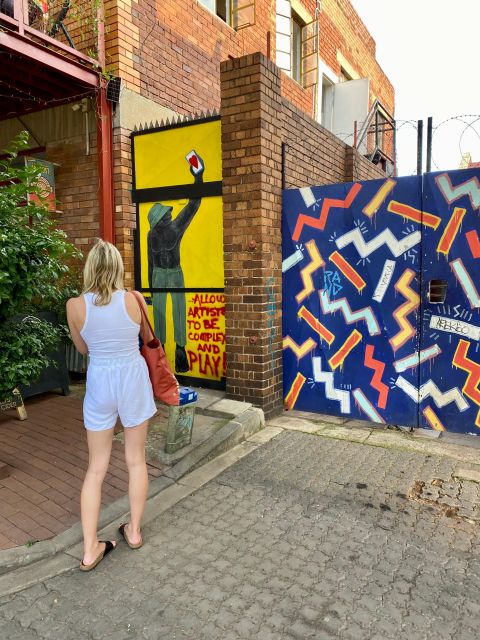
I would recommend this experience if you:
- Want to see Johannesburg through local art and city culture
- Prefer a guide who can explain context rather than just point at murals
- Enjoy walking and photography
- Are curious about the difference between graffiti writing and commissioned street art
- Want to visit several inner-city districts in one afternoon
- Like buying locally designed art merchandise
- Have a good level of English
It is also a strong choice for a first Johannesburg visit if you want an introduction to the inner city that is focused and easy to follow. The tour gives you a route through three areas without requiring you to arrange transport between each one.
I would choose something else if you dislike walking, want a private vehicle-only sightseeing experience, or need a tour in a language other than English. This is also not the right pick if you want guaranteed access to the graffiti store or a guaranteed artist-led session.
Practical tips for making the most of it
Arrive at Skinner Café a little early so you can identify the meeting point without stress. The green exterior and large windows make it fairly easy to spot, but Juta Street can still feel busy when you are trying to find a guide.
Wear comfortable shoes with good support. The route includes walking in Braamfontein, Newtown, and Maboneng, and the timetable leaves enough room for several substantial walks rather than a few quick photo stops.
Bring water and a phone or camera. The tour includes photo opportunities in Newtown and Maboneng, but do not let photography replace the explanations. The best part is learning to recognize the marks, names, and styles that you might have overlooked alone.
If you are visiting between December 24 and January 20, assume the graffiti store will be closed. You can still enjoy the neighborhood walks, but adjust your expectations about shopping and the exhibition room.
Finally, treat the possible artist appearance as a pleasant bonus. The tour’s dependable features are Ayanda’s guiding, the three districts, the street art context, and the included transport between neighborhoods.
Should you book Colours of Johannesburg?
Yes, if you want an informed look at Johannesburg’s street culture rather than a quick mural hunt. The combination of Braamfontein’s public art, Newtown’s graffiti scene, and Maboneng’s mix of local and international work gives you a useful sense of how different parts of the city use walls to express identity.
The $43 price makes the most sense for you if you value Ayanda’s local knowledge and want transport between districts included. Book it early in your Johannesburg stay if possible, since it can help you understand the city before exploring more on your own.
Skip it if you are not comfortable walking for several hours, need another language, or are mainly interested in a guaranteed store visit or artist workshop. For everyone else, this is a focused, personal way to see Johannesburg through the people who paint it.
FAQ
How long does the Colours of Johannesburg tour last?
The tour lasts 210 minutes, or three and a half hours.
Where does the tour start?
It starts inside Skinner Café at 70 Juta Street. The café is green, has large see-through windows, and has a small seating area outside on Juta Street.
Where does the tour finish?
The tour finishes at Home of the Bean in the Maboneng Precinct.
Which neighborhoods does the tour visit?
The route includes Braamfontein, Newtown, and Maboneng.
Is transport included?
Yes. Transport between the neighborhoods during the tour is included. Hotel pickup and drop-off are not included.
Is the tour offered in English?
Yes. The live tour guide and the tour itself are offered in English only.
Will a graffiti artist join the tour?
A graffiti artist may sometimes join, but this depends on the artist’s availability. There is no guarantee that an artist will attend your scheduled tour.
Can I visit the local graffiti store?
The tour includes a visit to the local graffiti store when it is open. The store is closed during the festive period from December 24 through January 20.
What should I bring?
Bring comfortable shoes and water.
Can I cancel the booking?
Yes. You can cancel up to 24 hours in advance for a full refund. You can also reserve the tour and pay later.
New street art tours in the world
- Your Own Belgrade: Street Art and Hidden Gems Walking Tour★ 5.0 · 2 reviews
- Wynwood Walls Street Art & Neighborhood Walking Tour★ 4.9 · 9 reviews
- Xochimilco floating gardens, Coyoacan and UNAM murals★ 4.0 · 6 reviews
- Vancouver: Street Art & Craft Beer Walking Tour with Tasting★ 4.8 · 14 reviews
- Vancouver: Street Art & Craft Coffee Walking Tour w/ Tasting★ 4.8 · 11 reviews
- Zagreb Street Art Private Walking Tour with a Local Artist★ 5.0 · 12 reviews
- UNAM: Murals & Revolution★ 4.9 · 8 reviews
- Urban Canvas: Osaka Street Art Bike Tour★ 5.0 · 10 reviews
Graffiti Tours, side by side.

Comuna 13 Graffiti Tour, Cable Car & Street Food
Read our review →


Brooklyn Graffiti & Street Art Walking Tour in Bushwick
Read our review →
Comuna 13 Tour with Snacks And Your Own Graffiti
Read our review →Lists this wall walk turns up in