
Reviewed · GRAFFITI TOURS
Mostar Street Art & Graffiti Tour
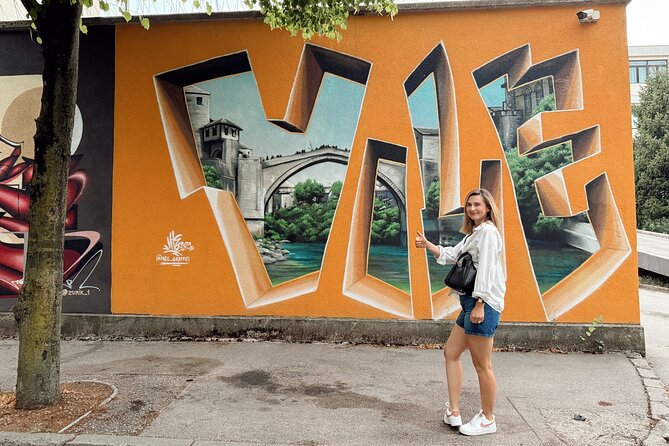
Mostar’s street art is not just decoration. It appears on war-damaged walls, cultural spaces, and old facades, where paint becomes a record of memory, protest, and renewal. This 90-minute walk is led by a local artist, so you get the stories behind the work rather than a quick list of photo stops.
I especially like the personal stories tied to the murals and the small group size, which gives you room to ask questions. The route also adds a useful layer to a visit focused on the Old Bridge and old town. The drawback is simple: it is entirely on foot, lasts only about an hour and a half, and may feel brief if you want a broad survey of Mostar’s art scene.
Key points to know before booking
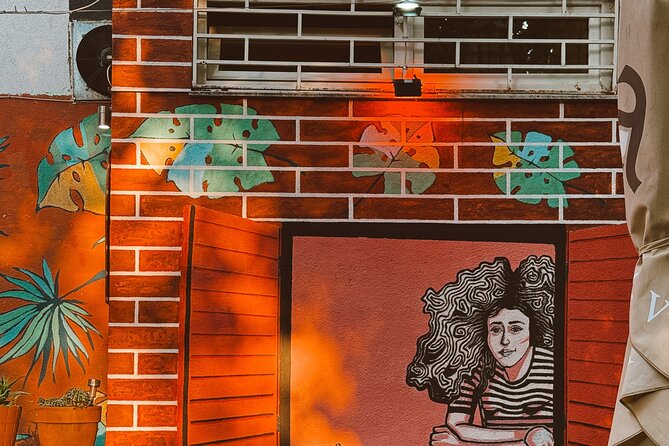
- Hotel Neretva begins the story: See how an Austro-Hungarian building moved from wartime ruin toward restoration.
- The murals come with personal context: Hear about the artists, their process, and the time spent around the walls as the work was created.
- OKC Abrašević adds a living cultural stop: This creative and activist center helps explain how young people use art and shared spaces.
- Spanish Square links art with memory: Graffiti and stencils appear beside the Mostar Gymnasium and the Monument to the Spanish Fighters.
- The group is limited to eight people: That matters on a walking tour built around questions and conversation.
- The price is $36.01: It is fair if you want interpretation and local context, less so if you only want a quick self-guided look at murals.
Why Mostar’s street art deserves a closer look
Mostar is easy to reduce to one famous bridge, a short walk through the old bazaar, and a few dramatic war reminders. This tour asks you to look again at the walls between those better-known sights.
Graffiti and murals in Mostar often sit in places where the city’s recent past remains visible. A painted facade may be next to a damaged building, an elegant Austro-Hungarian structure, or a gathering place for young artists. That setting matters. The art is not presented in a gallery with a clean border around it. It shares space with daily life.
I like this approach because it gives you a different way to read the city. You are not only asking what a mural depicts. You are also asking why it was painted there, who made it, what the neighborhood remembers, and how people live beside it now.
The guide’s role is central. You are accompanied by a local artist who explains the creative work and the wider history around it. One strong feature is the attention to personal memories from the period when murals were being painted, including time spent with the artists during their breaks. That sort of detail can make a wall feel less like a finished object and more like a moment in an ongoing conversation.
More Graffiti Tours in the world:
- Medellin: Comuna 13 Graffiti Tour, Cable Car & Street Food
★ 4.8 · 9,046 reviews - Wynwood Graffiti Golf Cart Small-Group Tour
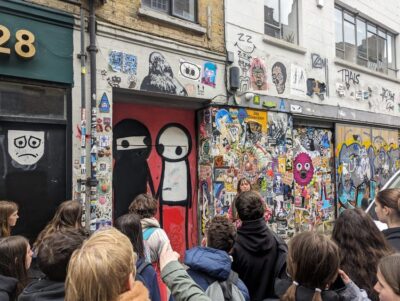
★ 5.0 · 1,646 reviews - London: Street Art and Graffiti Guided Walking Tour
★ 4.9 · 1,354 reviews
Starting at Hotel Bristol and Hotel Neretva
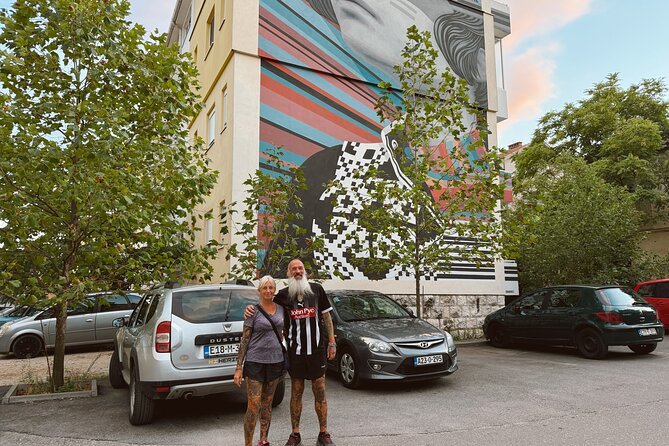
The walk begins at Hotel Bristol, at Mostarskog bataljona bb. From there, the first listed stop is Hotel Neretva, reached as part of the opening section of the route.
Hotel Neretva carries the kind of visual tension that makes Mostar worth exploring beyond the postcard center. Its original Austro-Hungarian elegance has recently been restored, but the building was once left in ruins after the war. For years, it served as a stark symbol of destruction, with raw graffiti and informal street art around it.
You spend about 10 minutes here. There is no admission charge, and the stop is less about entering a paid attraction than learning how a building can hold several periods of the city at once. You see the restored architectural character, then hear about the years when decay and graffiti shaped how people encountered the site.
This is a good opening because it sets up a question that returns throughout the walk: who gets to reclaim a public wall or building? Restoration brings back an older architectural identity. Graffiti and street art add a newer, less official voice. Neither part can be understood fully without the other.
The stop is short, so do not expect a long architectural tour of the hotel. Its value comes from the connection between place, war memory, and visual expression.
Forty minutes with Mostar’s painted facades
The longest part of the experience, about 40 minutes, focuses on the painted facades known as Fassadenmalerei. This is where the tour shifts from one important building to a wider look at the people and work behind Mostar’s street art.
You hear about the artists, how the pieces were made, and what it means to live among the finished work every day. The guide also shares personal memories from the time the murals were being painted and from spending time with the artists during breaks. That detail gives this section a more human scale.
I would give this part your full attention. It is the best opportunity to ask what a particular image means, how the artists worked together, and how the local community related to the project. The tour includes time for questions and photos, so you are not pushed from wall to wall without a chance to look.
For photographers, the facades offer several kinds of subjects: color, lettering, damaged surfaces, and the contrast between large painted areas and older architectural details. Still, this is not a photography workshop. The guide’s explanations are the main reason to book, while the photos are a useful extra.
The word street art covers many things, from carefully planned murals to fast, informal marks. This stop appears to give you room to consider that range instead of treating every painted wall as the same. That makes the experience more useful than a simple list of locations.
If you have only one day in Mostar, this section also makes the tour practical. It gives you a guided introduction to parts of the city you might otherwise pass without understanding.
OKC Abrašević, where art meets community
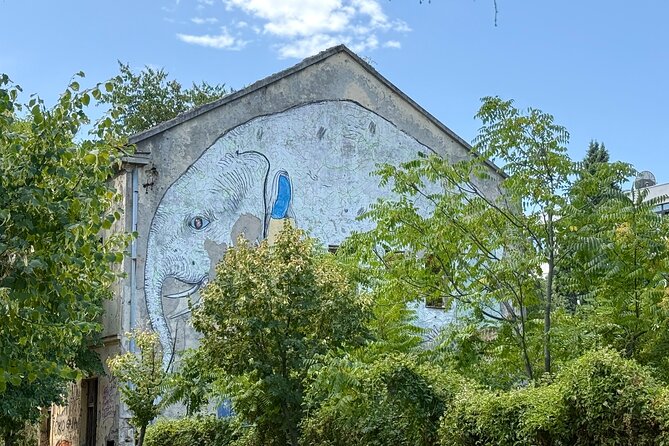
The next stop is OKC Abrašević, a cultural hub for young creatives, activists, and artists. You spend around 10 minutes here, surrounded by raw urban textures and experimental murals.
The setting helps explain why street art is often tied to more than personal style. A place such as this can function as a meeting point, a platform for ideas, and a space where people test new work. You are not simply looking at a mural on a random wall. You are seeing art in relation to a cultural center.
This stop is short, but it gives the tour needed balance. Hotel Neretva connects art with architecture and wartime damage. The facades focus on artists and the act of painting. OKC Abrašević shows the social side of the scene, including the role of shared spaces for younger people.
Do not expect a full event program or a long visit inside the center. The information provided describes a brief stop within a walking route. Its importance is the context it adds, not the amount of time spent there.
I also like that this part keeps the tour from becoming too solemn. Mostar’s past is unavoidable, but the presence of young creatives and experimental work shows that the city is also making room for new voices.
More street art tours worth booking in the world:
- CDMX: Xochimilco, Coyoacan, Frida Kahlo Museum & Murals Tour
★ 4.4 · 3,025 reviews - Amsterdam: Streetart Museum STRAAT Entrance Ticket
★ 4.8 · 2,137 reviews - Belfast: Murals Taxi Tour
★ 4.9 · 2,047 reviews - Lisbon: Street Art Tour
★ 4.9 · 1,324 reviews
Spanish Square and the final contrast
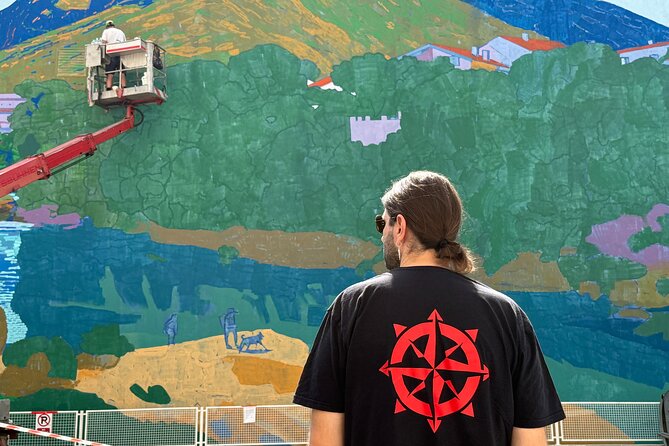
The walk ends at Španski trg, or Spanish Square, after about 30 minutes in the area. This is the longest individual stop and one of the most layered.
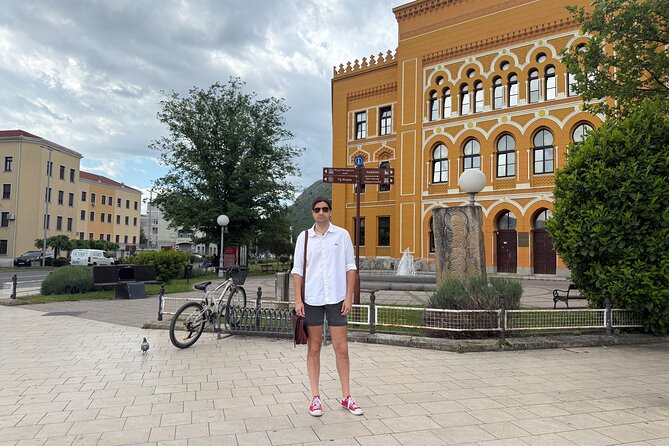
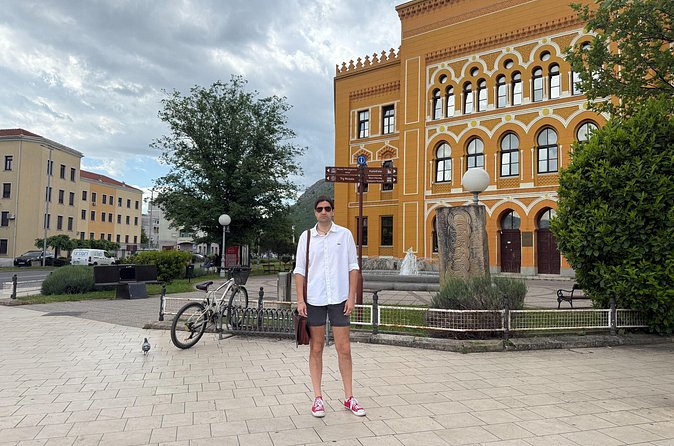
The Mostar Gymnasium, with its elegant Austro-Hungarian design, reflects the city’s multicultural past. Nearby, graffiti and stencils show how younger artists reclaim public space. The contrast is direct: formal architecture on one side, informal marks on the other.
You also see the Monument to the Spanish Fighters. Here, the guide explains how the area changed from a place shaped by wartime division into a setting for expression, protest, and quiet reflection. That combination gives the ending some weight without turning the whole walk into a memorial tour.
Spanish Square is a strong final stop because it brings together several themes from earlier in the experience. Architecture, political memory, street art, and public life all appear within the same area. You can finish with photos, ask final questions, and then continue exploring Mostar on your own.
The tour ends here rather than returning to Hotel Bristol. That is worth noting when planning your day. Spanish Square is also a useful point from which to continue sightseeing, but the experience does not include transportation afterward.
What the $36.01 price buys you
At $36.01 per person, this is not the cheapest way to see painted walls. You could walk through parts of Mostar independently and photograph public art without paying an admission fee.
The difference is interpretation. Your fee covers a local artist guide, stories behind the murals and festivals, and time for questions. You are paying for access to context that may not be visible on the surface. The group is capped at eight people, which makes the price easier to justify if you value conversation rather than a large group lecture.
I see the tour as good value for three types of visitors. First, it suits anyone who has already seen the Old Bridge and wants another side of Mostar. Second, it works well for a first-time visitor who wants a short introduction to the city’s recent past and creative culture. Third, it fits a quick visit. One person who had only 24 hours in Mostar found the experience worthwhile, and the 90-minute length makes it possible to fit around other plans.
The value is weaker if you want a long art tour, a museum-style presentation, or guaranteed access inside every location. The route is short and fully on foot. You should book it for the guide’s knowledge, local connections, and interpretation, not simply for the number of stops.
Timing, walking, and group size
The experience lasts approximately 1 hour and 30 minutes. Four stops are included, with the largest blocks of time at the painted facades and Spanish Square.
Because the tour is fully on foot, wear comfortable shoes and plan for normal city walking. Transportation is not included, and food and drinks are also your responsibility. The starting point is Hotel Bristol, while the ending point is Španski trg.
A maximum of eight people is a real advantage here. Street art tours work better when you can stop without blocking a large group and when you can ask why a certain piece matters. The small size should also make it easier to hear personal stories and follow the guide’s explanation of local events.
The tour is offered in English. Confirmation is provided at booking, and service animals are allowed. Most people can participate, though the supplied information does not describe the exact walking surface or step-free route, so you should ask the provider if you have specific mobility needs.
The activity is commonly booked about 12 days ahead. That is not a rule, but it is a useful planning signal if your dates in Mostar are fixed.
Who will get the most from this walk
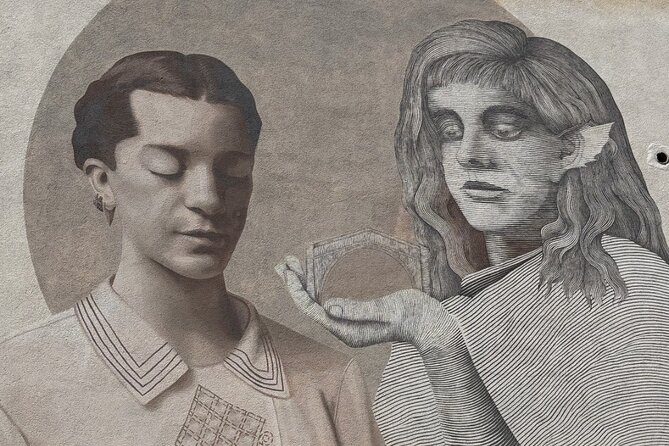
I would choose this tour if you want Mostar to feel like a lived-in city rather than only a historic backdrop. It is particularly well suited to:
- Art lovers who want stories about the people and process behind murals
- Visitors interested in the effects of war on public spaces
- First-time visitors looking for a compact introduction beyond the Old Town
- People spending only one day in Mostar
- Photographers who enjoy walls, lettering, architecture, and visual contrasts
- Independent travelers who prefer a small group and plenty of questions
It may not suit you if you dislike walking, want a long formal art lecture, or prefer to explore entirely at your own pace. You also should not expect food, drinks, transportation, or a broad tour of every creative venue in Mostar.
The best plan is to combine it with your own time around the Old Bridge and old town. The street art walk works as a counterpoint to the polished, heavily photographed center. One experience gives you the famous view. The other helps you notice the city’s harder edges and newer voices.
Booking and cancellation details
The tour costs $36.01 per person, includes a mobile ticket, and is offered in English. You can cancel up to 24 hours before the local start time for a full refund.
Cancellations or changes made less than 24 hours before the start are not refunded or accepted. Keep that deadline in mind if your transportation into Mostar is uncertain.
The experience is provided by Touristica, Mostar Tourist Guide. Since the guide is a local artist and the experience depends heavily on conversation, arrive ready to look closely and ask questions rather than treating it as a quick photo walk.
Should you book the Mostar Street Art and Graffiti Tour?
Book it if you want a short, thoughtful walk that connects murals with Mostar’s architecture, wartime scars, young artists, and public life. The strongest reasons are the local artist guide, the personal stories behind the facades, and the small group limit of eight.
Skip it if your main goal is simply to see the Old Bridge, or if you want a long, museum-like art tour. At $36.01, the price makes sense when you value explanation and local perspective. For a visitor with only 24 hours, it is a useful way to see more of Mostar without giving up most of the day.
FAQ
How long does the Mostar Street Art and Graffiti Tour last?
The tour lasts approximately 1 hour and 30 minutes.
Where does the tour begin?
The meeting point is Hotel Bristol, Mostarskog bataljona bb, Mostar 88000, Bosnia and Herzegovina.
Where does the tour end?
The tour ends at Španski trg, 88000 Mostar, Bosnia and Herzegovina.
Is transportation included?
No. The tour is fully on foot, and transportation is not included.
What language is the tour offered in?
The tour is offered in English.
How many people can join the tour?
The group has a maximum of eight travelers.
What is included in the price?
The price includes a guided tour by a local artist, insider stories behind murals and festivals, and time for photos and questions.
Can I cancel for a full refund?
Yes. You can cancel at least 24 hours before the experience start time for a full refund. Cancellations made less than 24 hours in advance are not refunded.
New street art tours in the world
- Your Own Belgrade: Street Art and Hidden Gems Walking Tour★ 5.0 · 2 reviews
- Xochimilco floating gardens, Coyoacan and UNAM murals★ 4.0 · 6 reviews
- Wynwood Walls Street Art & Neighborhood Walking Tour★ 4.9 · 9 reviews
- Vancouver: Street Art & Craft Beer Walking Tour with Tasting★ 4.8 · 14 reviews
- Vancouver: Street Art & Craft Coffee Walking Tour w/ Tasting★ 4.8 · 11 reviews
- Zagreb Street Art Private Walking Tour with a Local Artist★ 5.0 · 12 reviews
- UNAM: Murals & Revolution★ 4.9 · 8 reviews
- Urban Canvas: Osaka Street Art Bike Tour★ 5.0 · 10 reviews
Graffiti Tours, side by side.
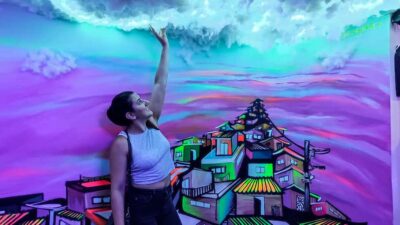
Comuna 13 Graffiti Tour, Cable Car & Street Food
Read our review →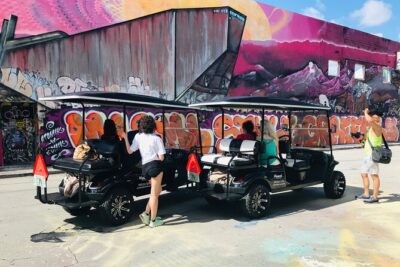

Brooklyn Graffiti & Street Art Walking Tour in Bushwick
Read our review →
Comuna 13 Tour with Snacks And Your Own Graffiti
Read our review →Lists this wall walk turns up in