
Reviewed · NEW YORK CITY MURAL TOURS
Street Art Tour in New York City with Local Expert Guide
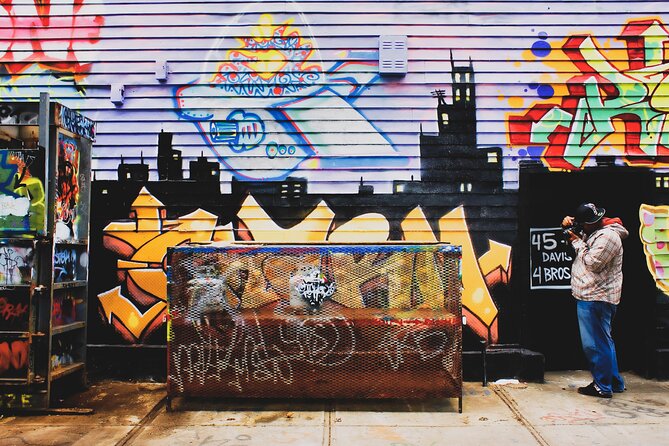
New York’s street art changes fast, and this tour gives you a broad look at that moving target, from the planned murals of DUMBO Walls to raw tags in Freeman Alley and major works on the Bowery wall. You also cross several neighborhoods, so the city itself becomes part of the lesson. I like the mix of famous walls and smaller art spaces. I also like the small group, capped at 10, which makes it easier to hear the guide and ask questions. The main catch is that the advertised two hours covers a lot of ground, and subway rides may be needed and cost extra.
I especially like the way this experience connects street art with New York’s bridges, trains, hip-hop, and changing neighborhoods. Guide Adam has been praised for his city knowledge and for helping visitors see parts of New York they might otherwise miss. Still, you should know what you are signing up for: some stops feature polished murals, while others are mostly graffiti and tagging. This is a walking and city-orientation tour as much as an art tour.
Key points to know before you book
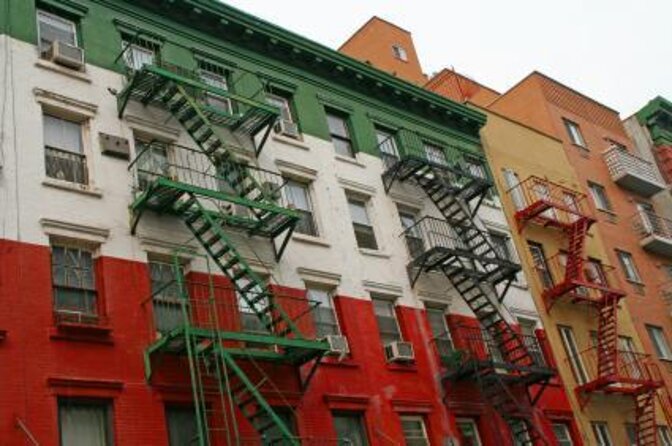
- Eight art stops across several neighborhoods: The route links DUMBO, Little Italy, the Lower East Side, the Bowery, SoHo, and the High Line area.
- A wide definition of street art: You may see large commissioned murals, spray-painted pieces, construction-site art, graffiti tags, and references to hip-hop culture.
- Small group of 10 people: The limit helps you stay close to the guide and see the work without a large crowd around you.
- Expect plenty of walking: The tour runs about two hours, but moving between distant areas can involve public transportation.
- Good city context: Guides can add information about bridges, trains, neighborhoods, artists, and nearby sights.
- Extra costs are possible: Food, drinks, tips, museum admissions, and subway fares are not included.
From DUMBO Walls to a changing New York art scene
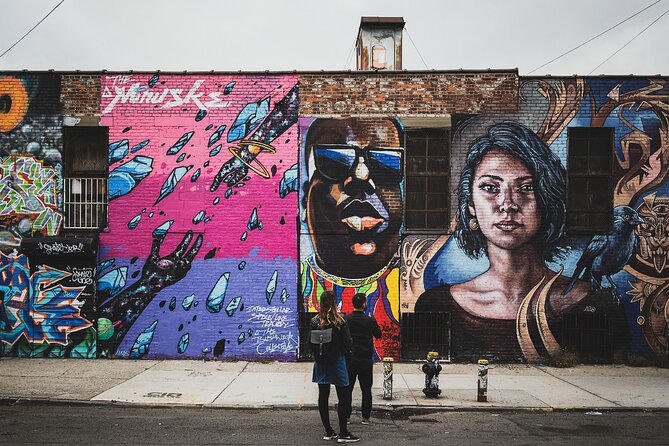
The tour starts at DUMBO Walls near 20 Jay Street, a useful first stop because it shows the planned side of public art. The project uses eight walls and has featured artists such as Shepard Fairey, Faith47, MOMO, Stefan Sagmeister, Yuko Shimizu, CAM, DALeast, and Eltono.
This is not random spray paint on a warehouse. The walls were organized through cooperation among the DUMBO Improvement District, Two Trees Management, and Jonathan Levine Gallery. That gives you a chance to talk about how public art is selected, funded, and displayed in a neighborhood shaped by old industrial buildings and new development.
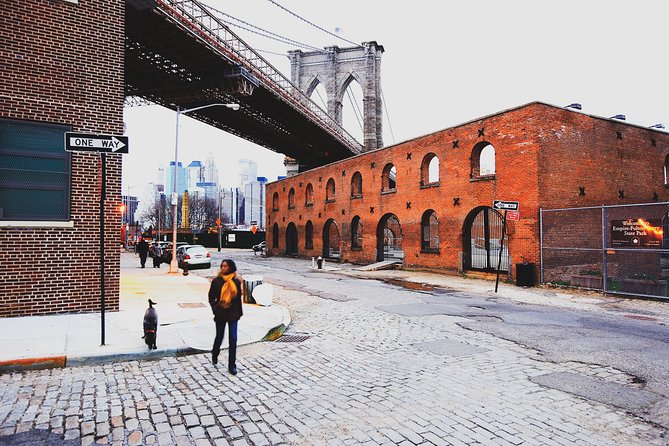
DUMBO is also a strong place to begin a New York day. You can look toward the Brooklyn Bridge and Manhattan Bridge, see the brick architecture, and possibly browse the Brooklyn Flea if it is operating. The tour information also points to the Museum at Eldridge Street along the wider route, though you should not assume there will be time to visit it during the two-hour experience.
The practical issue arrives quickly: DUMBO is far from several later stops. If the group moves from Brooklyn into Manhattan, you may cross a bridge or use the subway. The route description does not include subway fares, and one participant specifically found the transportation cost unexpected. Ask about the exact route before setting out.
More guided art walks in New York City:
- London: Street Art and Graffiti Guided Walking Tour
★ 4.9 · 1,354 reviews - Berlin: City Street Art Guided Walking Tour
★ 4.8 · 1,051 reviews - Palermo: Graffiti and Street Art Guided Tour in English
★ 4.8 · 684 reviews
Little Italy’s L.I.S.A. murals bring art to Mulberry Street
The second art area is the L.I.S.A. Project on Mulberry Street in Little Italy. The project has commissioned artists from around the world, working with the local merchants association to place large works on neighborhood walls.
This stop gives you a different view of public art. The pieces are not confined to one gallery or park. They sit beside shops, restaurants, sidewalks, and daily city traffic. Recent artists connected with the project include Sonny Sundancer, Nick Walker, GATS, KaNOkid, Crash, and BKFOXX.
I like this stop for the way it links art with the life of a working neighborhood. You can look at the scale of the murals, the condition of the walls, and how the art changes your sense of the street. The art is also temporary in the practical sense. Walls get repainted, buildings change hands, and a piece that exists now may not be there on your next visit.
The nearby Tenement Museum and International Center of Photography Museum add useful options after the tour. They are not included admissions, so think of them as possible follow-up visits rather than part of the package. If you want time inside either museum, plan a separate visit.
Freeman Alley shows the rougher side of street art
Freeman Alley, in the Lower East Side, is a narrow passage filled with graffiti and painted work. Artists associated with the alley include ASVP, Army of One, and Hanksy. James Goldcrown’s Love Wall, with its spray-painted hearts, adds a more recognizable image to the mix.
This is where your expectations matter most. Some people see layered tags, quick pieces, and unauthorized marks as a key part of New York street culture. Others may see mostly vandalism. The tour includes both kinds of visual expression, so it is not limited to large, official murals.
The alley is also a good place to ask the guide about ownership and permission. Who controls a wall? How long does a piece last? When does graffiti become public art? A strong guide can make these questions more useful than a simple list of artist names.
On the way onward, the Basilica of St. Patrick’s Old Cathedral provides a sharp change of mood. It is a large, imposing church with a long story tied to the city. The contrast is part of the appeal: in a few blocks, you can move from a narrow wall covered in spray paint to a formal religious building.
The Bowery wall carries heavyweight names
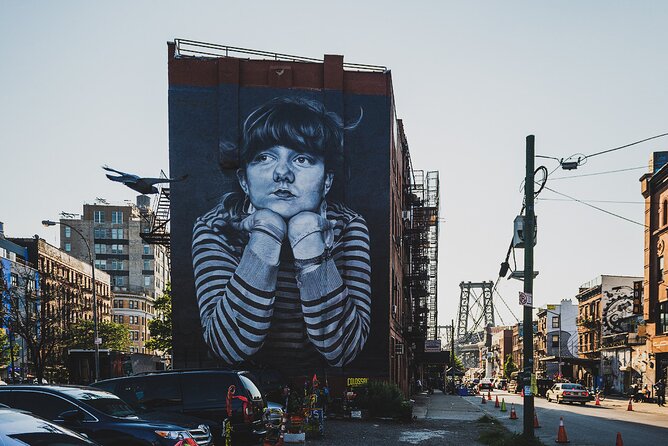
At 76 East Houston Street, the Bowery Mural offers one of the tour’s best-known stops. The wall has a long connection with New York art. Keith Haring painted there decades ago, and later artists covered and changed the surface.
The current public art program has involved artists including Os Gemeos, Shepard Fairey, Kenny Scharf, and Ron English. The wall is large, visible, and made for a discussion of how street art can shift from unofficial marking to an organized public project.
I like this stop because it raises a useful question: does a sponsored mural lose something when it becomes part of an art program? You do not need a single answer. The wall lets you see how New York has used public surfaces as places for art, advertising, protest, identity, and business.
The Bowery area can also be crowded and noisy. You will be standing outdoors, often on a busy sidewalk, so this is not a quiet viewing experience. The benefit is scale and context. The drawback is that you may not have long to study every detail before the group moves on.
More street art tours worth booking in New York City:
- NYC: Brooklyn Graffiti Workshop with Local Artist
★ 4.8 · 570 reviews - NYC: Brooklyn Graffiti & Street Art Walking Tour in Bushwick
★ 4.8 · 492 reviews - Brooklyn: Bushwick Street Art Walking Tour
★ 4.7 · 462 reviews - Brooklyn Graffiti Workshop
★ 5.0 · 287 reviews
First Street Green and Centre-Fuge show art in public spaces
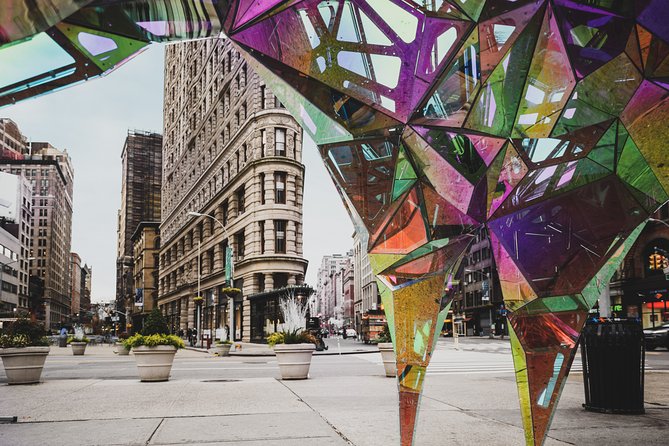
At 33 East First Street, First Street Green Cultural Park provides another kind of art setting. It is an open space founded in 2008, with works by local and international artists. Names connected with mural competitions there include Vernon O’Meally, Karlis Rekevics, Jeromy Velasco, Alexis Duque, Emily Noelle Lambert, Justin Rodier, Marc Pelletier, Paul Paddock, Robert Plater, Phlegm, and See One.
The park matters because it gives artists a place to work outside a conventional gallery. You can compare styles, look at how artists use the available walls, and see how a small public area can become a place for changing art.
Nearby, the Centre-Fuge Public Art Project uses construction trailers as temporary canvases. Lower East Side residents Jonathan Neville and Pebbles Russell began the project in 2011 to add art to otherwise plain construction sites. Artists linked with recent work include Cycle 21, Julia Cocuzza, Mike Kuhn, Damien Miksza, Col Wallnuts, and Kwue Molly.
These two stops are useful for understanding temporary art. A park can change its walls through competitions, while a trailer mural may disappear when construction ends. If you want a permanent museum-style collection, this is not it. If you want to see how artists work with whatever surfaces a city provides, it is much more rewarding.
SoHo connects street art with old-school hip-hop
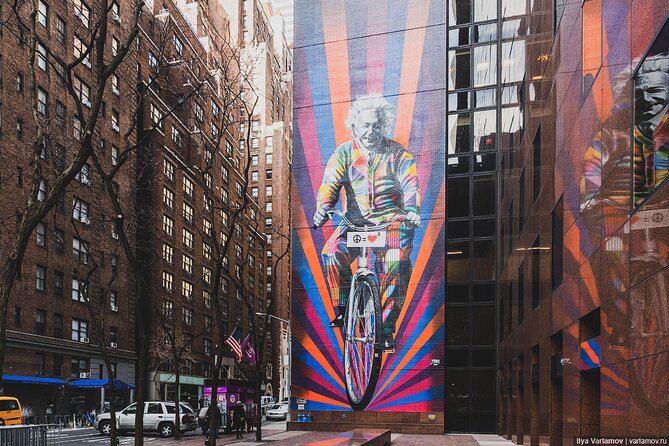
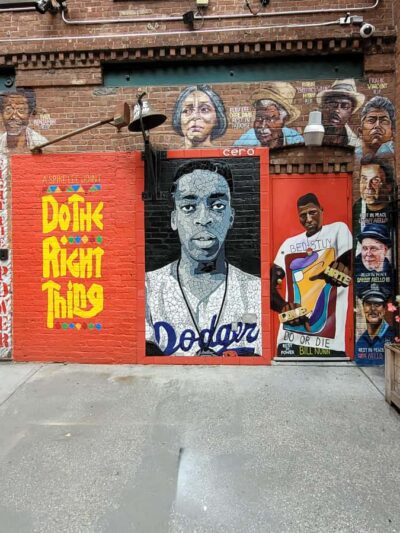
The SoHo portion focuses on a mural honoring the people who helped keep hip-hop alive. The work refers to graffiti, rap, and the New York break-dancing era of the 1970s.
Its details are deliberately packed with references. A graffiti-covered subway train appears on a cap, a boombox plays Planet Rock by Afrika Bambaataa, and a Mugsy pin painted by Rock Steady Crew member Doze Green sits on an old-school tracksuit top.
This is a stop where a guide can add real value. If you know little about New York hip-hop, the images may seem like a collection of colorful objects. With context, the mural becomes a compact history lesson about music, dance, trains, clothing, and street identity.
SoHo also puts you near major cultural stops, including the Whitney Museum of American Art, Ground Zero Museum Workshop, and David Zwirner gallery. The route mentions these as nearby possibilities, not included visits. Do not expect to tour them during the street art experience. Use the guide’s suggestions to plan another part of your day.
High Line Art finishes the route on a bigger scale
The final area is the High Line, the raised park on Manhattan’s West Side. Along and near the walkway, you can see public art and large works on nearby building walls.
The Friends of the High Line art program has invited artists from different parts of the world. Examples include JR’s large portrait mural from the Inside Out Project in 2011 and Eduardo Kobra’s colorful work from 2012, inspired by Alfred Eisenstaedt’s famous 1945 photograph of a sailor kissing a woman in Times Square.
The High Line gives you a strong finish because it combines art with views over lower Manhattan. You can look down on city streets, across at building walls, and along the park itself. It also shows how art can become part of a major public space rather than sit only on a back street.
The problem is timing. DUMBO, Little Italy, the Lower East Side, SoHo, and the High Line are spread across the city. A two-hour tour can introduce you to these places, but it cannot provide long, thoughtful viewing time at all eight stops. If the route includes subway travel, the actual art time becomes even tighter.
What the small group and guide add
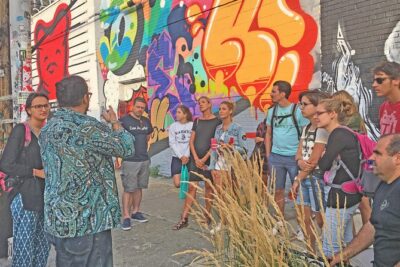
The maximum group size is 10. That is one of the strongest features here. You can stay near the guide, hear explanations more easily, and ask about a specific artist or wall without trying to speak over a large crowd.
Adam has earned strong praise for his city knowledge, friendliness, and ability to connect art with bridges, trains, neighborhoods, and other New York subjects. That matters because the route is not just a series of wall addresses. The best version of this tour helps you read the city around the artwork.
The guide may also recommend what to see and do after the tour. That can be useful if this is your first New York visit or if you want to build an afternoon around the Lower East Side, museums, SoHo, or the High Line.
Still, guide quality cannot solve every route problem. The experience has been criticized for moving back and forth, not following the expected order, and showing too much tagging for someone seeking only official murals. Before booking, ask whether your preferred route and transportation plan can be confirmed.
Is $159 a fair price for two hours?
At $159 per person, this is an expensive two-hour outing. The price includes the local guide, taxes, and the small-group format, but not food, drinks, tips, possible admissions, or subway fares.
The value depends on what you want. If you are looking for a private-style introduction to New York neighborhoods, artist names, mural projects, and city connections, a group of 10 can make the fee reasonable. You are paying for orientation and interpretation, not just access to walls that you could visit on your own.
If your main goal is to photograph a few famous murals, the cost is harder to defend. Many of the stops are free, and the route covers a wide area. A person comfortable with the subway and city maps could visit some locations independently.
I would compare this experience with the cost of your time. A guide can help you understand why a wall matters and point out nearby places worth returning to. But you should budget for transport and accept that the route may feel more like a fast city sampler than a slow art study.
Practical tips for making the morning work
The start time is 9:00 a.m., and pickup is offered. Confirm the pickup arrangement and the first meeting location before the day begins, especially since the listed starting point is DUMBO Walls at 20 Jay Street, while pickup may involve a hotel.
Wear comfortable shoes and expect a moderate level of physical activity. The tour includes substantial walking, and one strong point of feedback was the reminder to prepare for a lot of it.
Ask in advance whether the route uses the subway. The transportation details are not fully clear, and subway fares are not included. Keep a payment method ready for your ride.
Take photographs quickly but respectfully. Murals can be large, and the group may need to keep moving. If one stop matters most to you, tell the guide early so you can make the most of the time available.
The cancellation rule is simple: cancel at least 24 hours before the local start time for a full refund. Changes or cancellations within 24 hours are not refunded.
Who should book this street art tour?
You should consider it if you want a broad first look at New York street art and prefer a guide to connect the pieces with neighborhoods, bridges, trains, and hip-hop. It is also a good fit if you value a small group and want suggestions for the rest of your day.
I would be cautious if you want only polished, officially commissioned murals. You will see those, but you will also see tagging, graffiti, and temporary work. I would also think twice if you dislike long walks, subway transfers, or a quick pace.
Book it if your priority is city context and variety. Skip it if your priority is a slow, tightly organized art walk in one neighborhood. The tour’s best quality is its range. Its main weakness is that the range may be too wide for two hours.
FAQ
Where does the street art tour start?
The first listed art stop is DUMBO Walls at 20 Jay Street, with a 9:00 a.m. start time. Pickup is offered, so confirm the exact arrangement before the tour.
How long does the experience last?
The tour lasts approximately two hours.
How many people can join the tour?
The tour has a maximum of 10 participants.
Is transportation included?
Transportation details are not fully included in the tour price. The route may require subway travel between neighborhoods, and subway fares are extra.
What kinds of art will I see?
You can see graffiti, tagging, digital work, painted murals, temporary construction-site art, and large commissioned public art projects.
Does the tour visit more than one borough?
Yes. The route begins in Brooklyn at DUMBO and continues through several Manhattan neighborhoods, including Little Italy, the Lower East Side, SoHo, and the High Line area.
Are museum admissions included?
No. Museum entrance fees are not included and depend on which places you choose to visit separately.
What happens if I need to cancel?
You can receive a full refund if you cancel at least 24 hours before the experience start time. Cancellations or changes made less than 24 hours before the start are not refunded.
New street art tours in New York City
- Street Art & Graffiti Tour in NYC Private Tour★ 5.0 · 7 reviews
- Street art tour at Soho★ 5.0 · 7 reviews
- Bushwick Brooklyn’s Award Winning Graffiti & Street Art Tour★ 5.0 · 2 reviews
- NYC: Private Graffiti & Street Art Walking Tour★ 5.0 · 22 reviews
- New York: Hip-Hop, Murals, Sports & Dangerous Neighborhoods Tour★ 5.0 · 36 reviews
- New York: Hip-Hop, Murals, Sports, and Dangerous Neighborhoods Tour★ 4.7 · 143 reviews
- Brooklyn street art and hipster culture tour in French★ 5.0 · 132 reviews
- Brooklyn Street Art Tour★ 4.5 · 164 reviews
New York City Mural Tours, side by side.
Brooklyn Graffiti & Street Art Walking Tour in Bushwick
Read our review →
Hip-Hop, Murals, Sports, and Dangerous Neighborhoods Tour
Read our review →
Brooklyn street art and hipster culture tour in French
Read our review →Lists this wall walk turns up in