
Reviewed · GRAFFITI TOURS
Shared Tour Cali’s Salsa, Graffiti & Resistance Experience
Cali’s salsa scene is more than nightlife. This tour connects the music to Afro-Caribbean emancipation, popular culture, and protest, then follows that story through murals and public spaces. You see the city’s musical pride alongside the social causes that shaped its streets.
I like the tour’s strong local focus and the way it joins salsa, graffiti, and resistance instead of treating them as separate attractions. I also like that guides such as Cristian bring energy, music, and practical advice about where to eat and dance afterward.
The main drawback is the walking. The route covers about 8 kilometers in roughly 150 minutes, with stops to listen, so comfortable shoes and water are essential. It is not suitable for wheelchair users, and you should expect a shared group rather than a private guide.
Key points to know before you go
- Salsa as social history: Learn how music grew from Afro-Caribbean roots into a force within Cali’s popular culture.
- Eight kilometers through central Cali: See major public spaces, murals, tunnels, boulevards, and salsa landmarks on foot.
- A tour with a point of view: The route links music to protests, social movements, solidarity, and resistance.
- Guides who bring the subject alive: Cristian and other Beyond Colombia guides use stories, music, and an interactive style.
- Useful nightlife advice: Finish with recommendations for salsa bars, food, and places to keep the evening going.
- Good value at $13: You get a live English or Spanish guide, city orientation, cultural context, and no surprise entrance fees.
Salsa in Cali is a story of movement and resistance
The best reason to take this tour is that it gives salsa a wider meaning. In Cali, salsa is not simply a dance style to learn before a night out. It is part of how the city expresses joy, identity, memory, romance, struggle, and pride.
The tour traces salsa from the Caribbean Antilles through its development in New York and then into Cali’s major cultural period from the 1960s through the 1980s. That path helps explain why Cali became so strongly associated with salsa, and why local people treat it as part of daily life rather than a stage performance reserved for visitors.
You will hear how music created links among communities and working groups. You will also learn how lyrics could speak about love, revolution, historic events, and social demands. That context changes the way you hear a salsa song. The rhythm remains joyful, but the story behind it can carry anger, grief, humor, and hope.
I especially like the way this experience places salsa beside graffiti and activism. A mural honoring a famous musician may be close to artwork with a sharper political message. The tour asks you to see both as part of the same public conversation.
More Graffiti Tours in Colombia:
- Medellin: Comuna 13 Graffiti Tour, Cable Car & Street Food
★ 4.8 · 9,046 reviews - Medellín: Comuna 13 Tour with Snacks And Your Own Graffiti
★ 4.9 · 311 reviews - Bogotá: La Candelaria Graffiti & Urban Art Guided Tour
★ 4.7 · 250 reviews
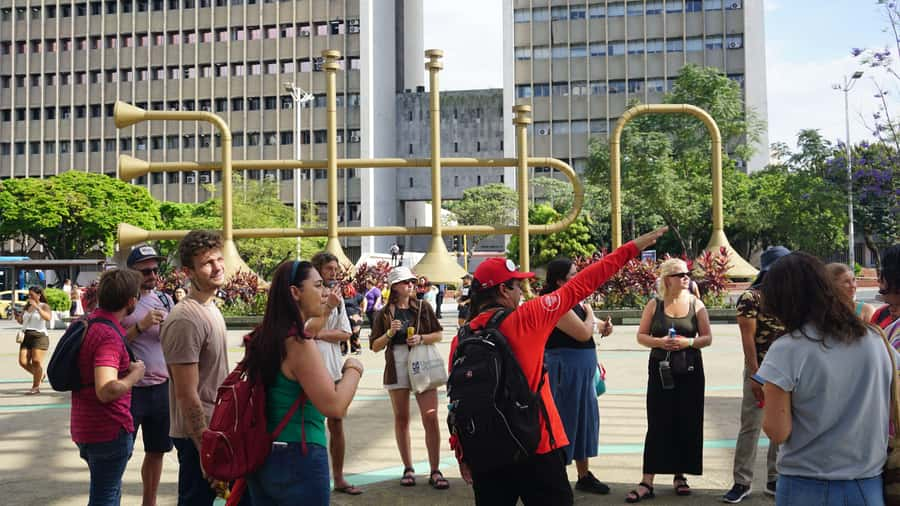
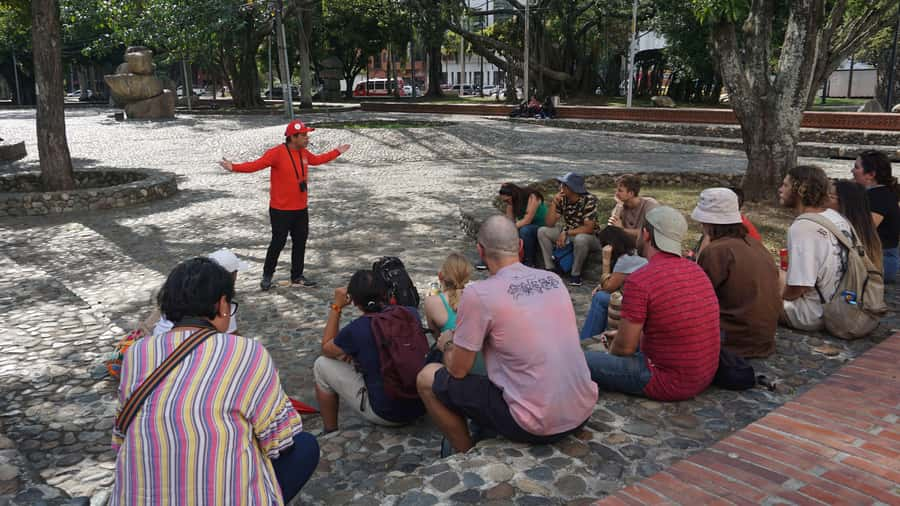
Meeting at the Plazoleta Jairo Varela
The meeting point is the Plazoleta Jairo Varela, where you should look for the red umbrellas. It is a practical starting place in central Cali and gives the group an immediate connection to the city’s salsa identity.
From the beginning, expect a walking tour rather than a bus outing or a sequence of indoor visits. The guide leads you through public spaces and explains what you are seeing as the city continues around you. That makes the experience feel connected to everyday Cali, but it also means noise, crowds, heat, and uneven walking conditions can affect the pace.
The tour is offered in English and Spanish. An optional Spanish audio guide is also available. If you want the richest exchange with the guide, join with an open mind and be ready to ask questions. The subject is not just dates and names. It involves identity, social conflict, art, music, and the way people claim space in their own city.
The guides are a major part of the experience. Cristian is described as animated, interactive, and particularly passionate about Cali and salsa. That matters here because a flat delivery would make the subject feel academic. You need someone willing to play music, tell stories, explain symbols, and keep the group moving.
Plazoleta de la Caleñidad and the meaning of popular culture
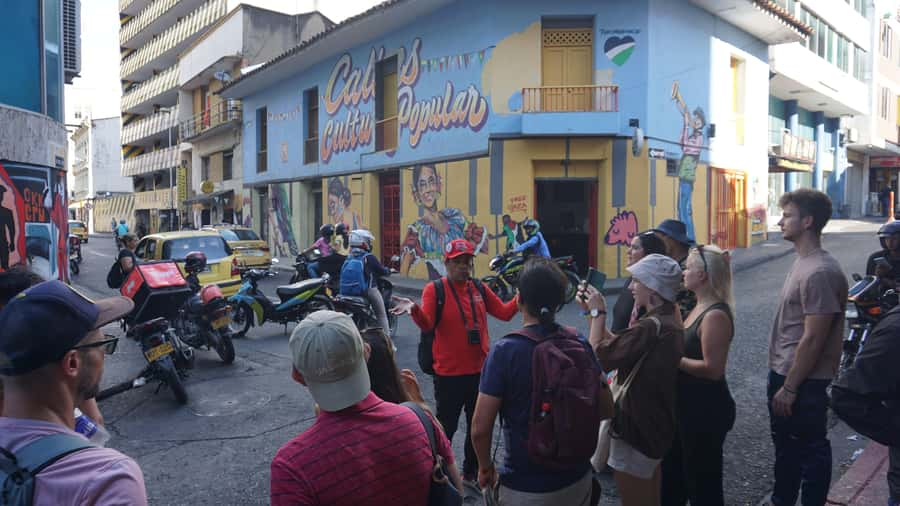
One of the key stops is the Plazoleta de la Caleñidad. The name itself points toward local identity and pride. Here, the guide sets up the idea of cultura popular, or popular culture, as something created and carried by ordinary people.
This is an important distinction. Salsa did not become meaningful in Cali only because clubs promoted it or because visitors liked its dance steps. It grew through communities, musicians, dancers, family traditions, neighborhood life, and shared memories. The tour uses the public square to show how culture can belong to the people who live it.
You should expect the guide to explain how music can connect groups and give people a way to describe their lives. That helps you understand why salsa remains central to Cali’s image and why many people come to the city specifically to learn the local style.
The route is not built around a dance lesson, so do not book it if your main goal is formal instruction. You may be encouraged to respond to the music and feel its rhythm, but the main purpose is cultural understanding. For a first visit to Cali, that wider context is more useful than learning a few steps without knowing where they came from.
Calle del Pecado and the city’s flavor
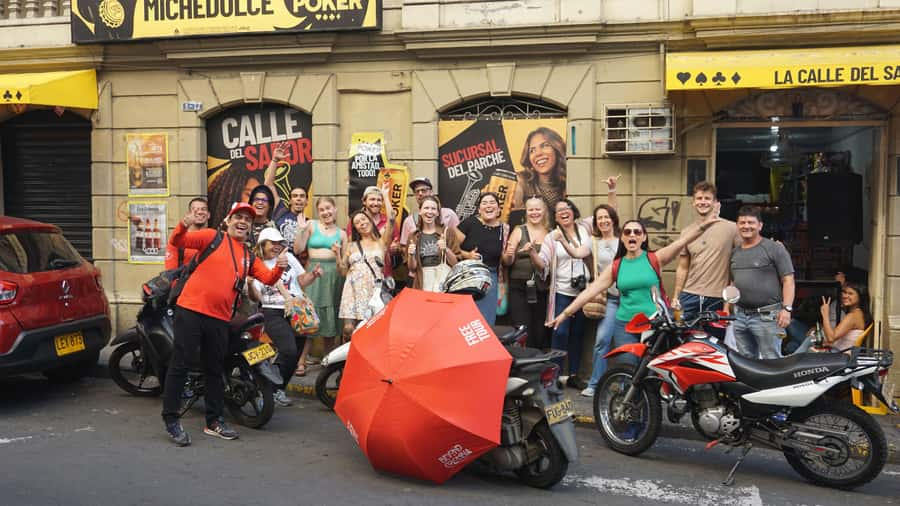
The route continues to Calle del Pecado, also known as the street of flavor. The name suggests the playful, outgoing side of Cali’s nightlife and social life.
This section helps balance the serious parts of the tour. Resistance and social struggle are central themes, but Cali is not presented only as a city of conflict. The guide also shows the pleasure, romance, humor, and appetite that shape local culture.
You may find this one of the more colorful parts of the walk, but the tour is still more about interpretation than entertainment alone. Listen for the connections between nightlife, music, and local identity. Salsa is not kept in a museum. It is heard in social spaces, danced in bars, and passed through the city as a living habit.
The route may be crowded in places. Keep your belongings close and avoid showing valuables. The local expression no dar papaya means not making yourself an easy target. That is sensible advice for any crowded city walk, especially when your attention is on murals, music, and the guide.
More street art tours worth booking in Colombia:
- Medellín: Comuna 13 and Graffiti Guided Tour with a Local
★ 4.9 · 239 reviews - Historical Shared Tour Salsa, Graffiti & Resistance in Cali
★ 5.0 · 107 reviews - Medellín: Private Comuna 13 Street Art Tour
★ 4.8 · 88 reviews - Fun Graffiti Workshop: The Art of Aerosol and Color
★ 5.0 · 73 reviews
River Boulevard and the Curve
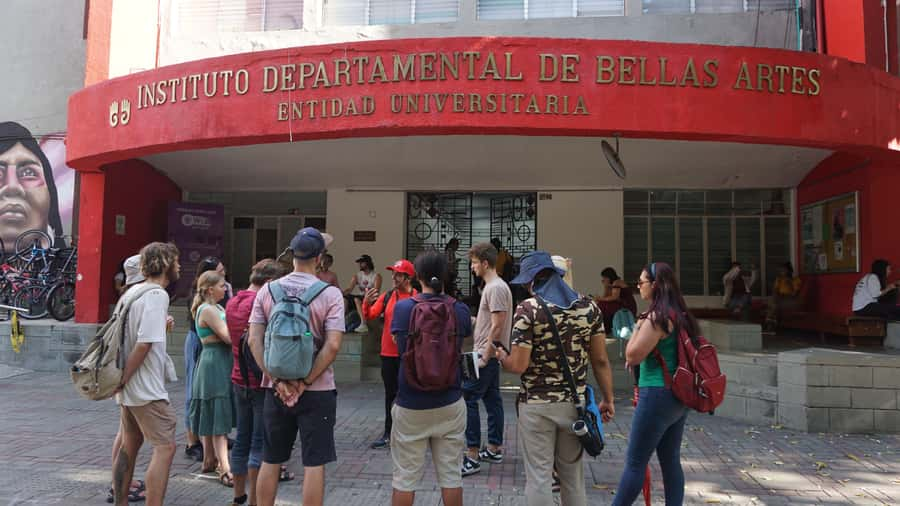
At the River Boulevard, including the section known as the Curve, the tour moves through one of the city’s important public corridors. This is a good place to see how Cali’s public spaces carry several layers at once.
A boulevard can be a place to pass through, meet friends, display art, and make a political statement. The guide uses the setting to explain how public life and popular movements overlap. The route is not only showing you attractive corners. It is asking you to notice who uses these spaces and what messages appear there.
The stops also provide needed breaks during the walk. The full route covers around 8 kilometers, and the guide pauses to speak, so the tour is not a nonstop march. Still, the distance is substantial for 150 minutes. Wear shoes you would happily use for a long city walk, and carry water or another drink.
The timing is worth noting. The experience is advertised as approximately two hours and also as 150 minutes. Either way, plan for a substantial morning or afternoon commitment, not a quick introductory stroll. Some people find the longer format worthwhile because the subject needs room to develop. If you prefer short sightseeing stops and frequent transport, this is not the best fit.
The World Cup Tunnel and 5th Avenue
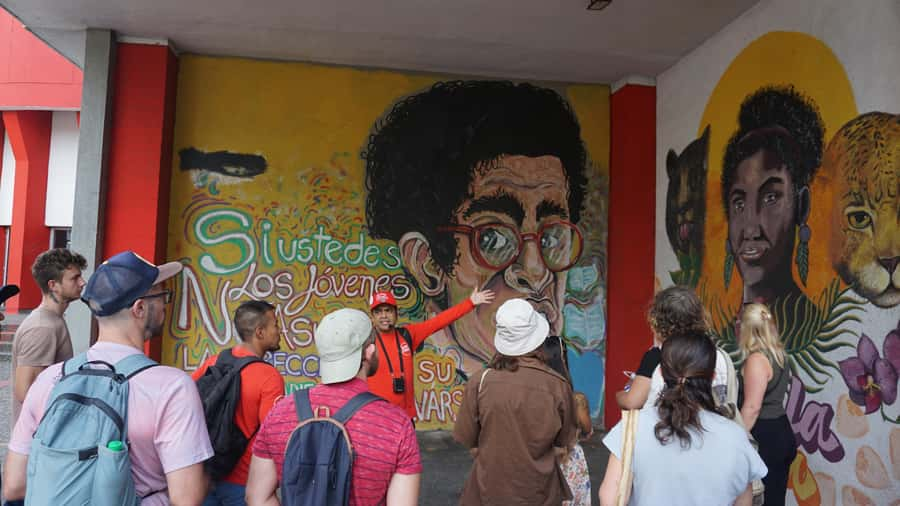
The World Cup Tunnel and 5th Avenue add another layer to the city’s public art and civic memory. These stops help move the tour from salsa as entertainment toward salsa and art as public expression.
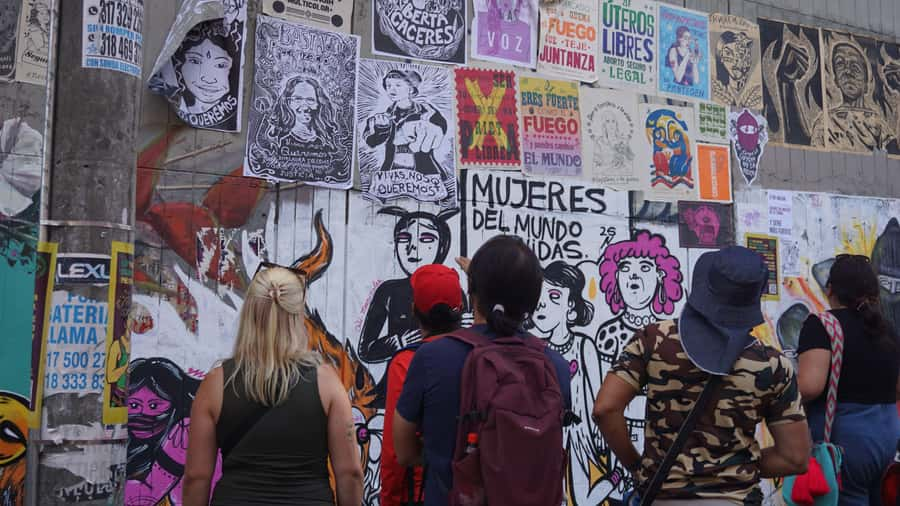
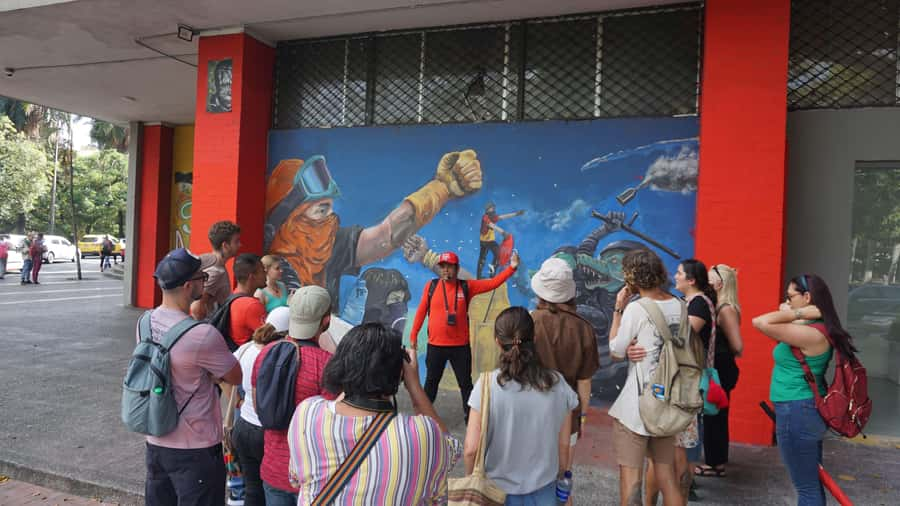
The guide points out how Cali uses images of musicians and cultural figures to honor contributions to music and society. Nearby, you may see graffiti tied to more radical activist messages. The contrast is useful. It shows that public art can celebrate a shared cultural identity while also challenging political decisions and social conditions.
The guide’s role is especially important here. A mural can look striking but say little to you if you do not know who is represented or why the image was painted. The tour supplies that missing context and explains how art can become a tool of memory and resistance.
Bring a camera if you like street art, but do not let photography replace listening. Some of the meaning is in the placement of the mural, its relationship to nearby messages, and the stories about the people or causes it represents. The tour is strongest when you look at the city as a conversation rather than a collection of colorful walls.
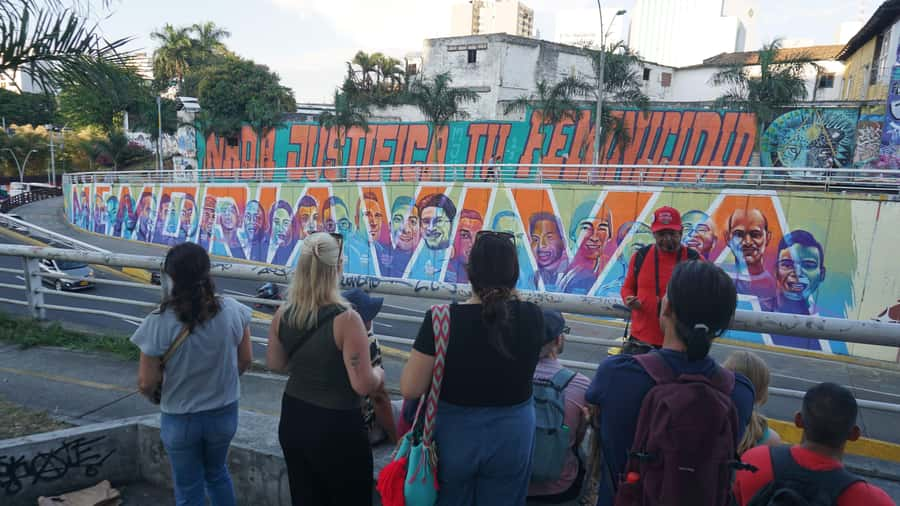
The graffiti monument to victims N21
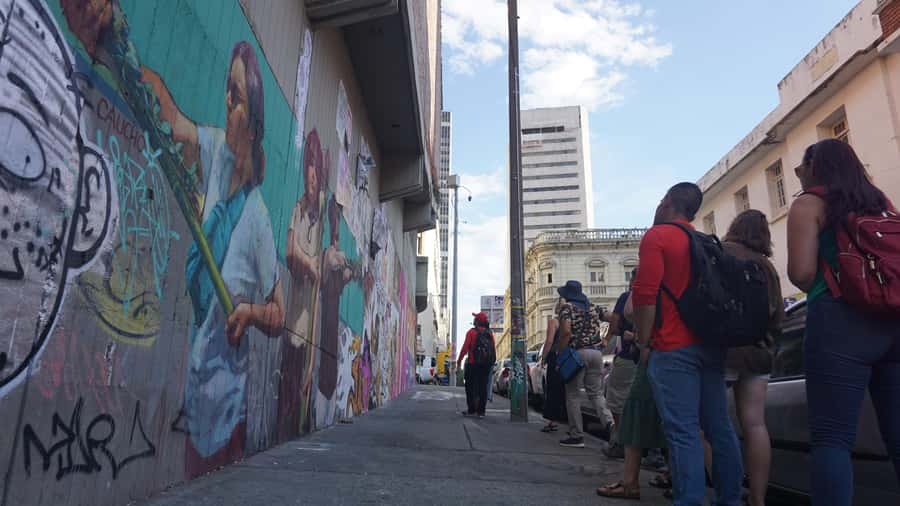
The graffiti monument to victims N21 is one of the tour’s more serious stops. It connects art to loss, protest, and the memory of people affected by social conflict.
This is where the tour’s title becomes clear. Salsa, graffiti, and resistance are not three unrelated topics. Music can express a community’s hopes and frustrations. Graffiti can preserve names, demands, and grief. Public gatherings can turn streets into places of solidarity.
The tour does not treat these subjects as decoration. You should be prepared for discussion of protests, social outbreaks, and struggles for solidarity. That is why the request for an open mind matters. If you want only cheerful dance stories, parts of the experience may feel heavier than expected.
For me, that seriousness is part of the value. It prevents a shallow image of Cali as only music, nightlife, and easy fun. The city’s energy has also come from people confronting hard conditions and using art to speak when other channels fail.
Salsa bars and advice for the rest of your night
The route includes recommendations for cult salsa bars. The tour does not include drinks, food, or entry tickets, so any evening plans afterward will cost extra.
Still, this advice can be one of the most practical parts of the experience. A guide who understands Cali’s salsa culture can help you decide where to continue listening or dancing after the walk. You also receive recommendations for food, and the guide may point you toward recommended local partners.
The experience includes access to benefits and discounts with certain partners when you show the Beyond Colombia Free Walking Tour Map through its Linktree. Check the current details when booking, since the specific offers are not listed here.
Do not expect the tour to take you into a club for a full evening program. Its purpose is to explain the culture and point you toward places where you can continue on your own. Some guides may encourage you to dance or respond to the music during the walk, so bring a relaxed attitude. You do not need to look polished. Comfortable clothes are the better choice.
What $13 buys you
At $13 per person, this is a strong value if you want context rather than a quick photo walk. The price covers a live professional Beyond Colombia guide, the route through major salsa and street-art areas, explanations of Cali’s social movements, and recommendations for bars and local partners.
There are no ticketed attractions or sudden entrance charges built into the route. That keeps the cost clear, although you will pay separately for anything you choose to eat, drink, or visit afterward.
The shared format also helps keep the price low. You do not receive an exclusive guide, and the group may include people with different interests and walking speeds. The benefit is a social setting where you can meet others and share a lively subject. The tradeoff is less flexibility than with a private tour.
Beyond Colombia presents itself as a large local guiding group with operations across Colombia and a long record of creating original walks. What matters most to you is the guide on the day. Cristian has been praised for his energy, storytelling, and clear passion for Cali. A strong guide makes a major difference here because the route depends on explanation, not just scenery.
Who should book this Cali walk?
I would choose this tour if you want to understand why salsa matters to Cali, not simply watch people dance. It suits first-time visitors who want an introduction to the city’s culture, music fans curious about salsa’s development, and anyone interested in the link between art and social movements.
It also works well before a night out. You can learn the background first, then use the bar recommendations to plan your evening. Food advice is another useful bonus.
I would hesitate if you have limited mobility, dislike long walks, or want a quiet museum-style experience. The 8-kilometer route is active, and central streets can be crowded. The subject also includes protest, loss, and political expression, so it asks for more attention than a standard sightseeing tour.
Free cancellation is available up to 24 hours before the start, and you can reserve while paying later. Bring water, comfortable shoes, a camera, and secure storage for your belongings. Smoking is not allowed on the tour.
Should you book the Salsa, Graffiti and Resistance Experience?
Book it if you want the human story behind Cali’s salsa reputation. At $13, the tour gives you a useful city orientation, local interpretation, street art, social history, and a way to plan the rest of your visit.
The best reason to go is the combination of subjects. You will see salsa as music and dance, but also as a popular way of life shaped by African heritage, community memory, social struggle, and artistic resistance.
Skip it if you want a short route, a private guide, or a dedicated dance class. For everyone else, especially visitors ready to walk and listen, this is a thoughtful way to meet Cali on its own terms.
FAQ
Where does the tour meet?
Meet at the Plazoleta Jairo Varela. Look for the red umbrellas.
How long does the tour last?
The tour lasts approximately 150 minutes, or about two and a half hours.
How far will I walk?
You will walk about 8 kilometers, with stops to rest and listen to the guide.
Which languages are available?
Live guiding is available in English and Spanish. An optional audio guide is available in Spanish.
Is transportation included?
No. Transportation to and from your hotel is not included, and the tour itself is done on foot.
Are food and drinks included?
No. Food, drinks, and souvenirs are not included.
Is this a private tour?
No. This is a shared tour, so you will join other people rather than have an exclusive guide.
Is the tour suitable for wheelchair users?
No. The tour is not suitable for wheelchair users.
What should I bring?
Bring comfortable shoes, water or another preferred drink, a camera, and comfortable clothes. Keep your belongings close in crowded areas.
New street art tours in Colombia
- Comuna 13 Neighborhood & Street Art Private Tour★ 4.7 · 12 reviews
- Medellin: Graffiti Tour Comuna 13★ 4.1 · 14 reviews
- Medellín Comuna 13 local guides snacks and your own graffiti★ 4.9 · 13 reviews
- Graffiti Tour: a fascinating walk through a street art City★ 5.0 · 5 reviews
- Comuna 13: Recorrido de Arte Urbano, Cultura y Resiliencia★ 5.0 · 3 reviews
- Fun Graffiti Workshop: The Art of Aerosol and Color★ 5.0 · 3 reviews
- Comuna 13: Graffiti tour & Street Food/drink with telesferic★ 4.4 · 19 reviews
- Comuna 13: Graffiti Tour with Tasting, Live Show, & Gallery★ 5.0 · 4 reviews
Graffiti Tours, side by side.
Comuna 13 Graffiti Tour, Cable Car & Street Food
Read our review →
Brooklyn Graffiti & Street Art Walking Tour in Bushwick
Read our review →
Comuna 13 Tour with Snacks And Your Own Graffiti
Read our review →Lists this wall walk turns up in