
Reviewed · BRAZIL MURAL TOURS
Rio Street Art Tour
Rio’s street art is not just decoration. On this private tour, murals become a way to understand slavery, politics, Carnival, architecture, and the changing port district. Guide Wellington leads you from the Municipal Theater through central Rio and on to Porto Maravilha, using the city’s subway, VLT, and sidewalks along the way.
I like the local transportation and the way it connects separate parts of the city without putting you behind a coach window. I also like Wellington’s personal approach: he explains the people and issues shown in the art, then adds useful context about samba schools, architecture, and daily life. The main drawback is simple: three hours includes plenty of walking, and the route can feel brisk if you want long stops for photographs.
Key points to know before booking
- Start at the Municipal Theater: The meeting point is Praça Floriano in central Rio, a useful location for reaching the old city.
- Travel by subway and VLT: Public transportation is part of the experience, not just a way to get from one sight to another.
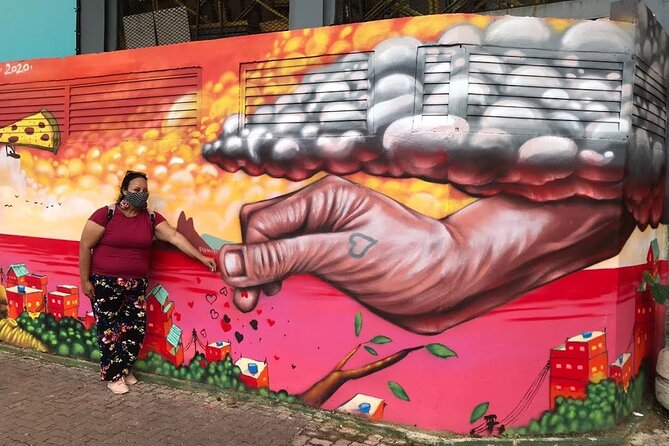
- See the Etnias mural: The tour finishes near the world-famous large-scale mural in Porto Maravilha.
- Connect art with history: Expect discussion of Afro-Brazilian culture, slavery, politics, Carnival, architecture, and city life.
- Private format: Only your group participates, so Wellington can answer questions and adjust the conversation.
- Allow for walking: Bring water and wear comfortable shoes. One review specifically noted that the route involves lots of walking.
Why Rio’s street art tells a bigger story
The best part of this experience is its range. You are not taken to one wall, given a few dates, and sent on your way. The route links central Rio’s grand civic buildings with steep tiled steps, old port streets, museums, and enormous modern murals.
That makes the tour useful early in your stay. You get a quick introduction to Rio’s geography and history while also seeing places you might skip if you only visit the city’s famous viewpoints and beaches. Wellington brings in the stories behind the images, including the people depicted, the social questions raised by the art, and the politics surrounding public space.
I would not book this expecting a gallery-style lesson in artistic technique. The focus is broader. You are learning how art reflects Rio, and how Rio’s past still shapes its streets.
The tour is also a good choice if you want a more active introduction to the city. Rather than sitting on a bus while landmarks pass outside, you walk, ride local transport, stop to look closely, and move between neighborhoods. That approach takes more effort, but it gives you a better sense of how the city fits together.
More street art tours worth booking in the world:
- Medellin: Comuna 13 Graffiti Tour, Cable Car & Street Food
★ 4.8 · 9,046 reviews - CDMX: Xochimilco, Coyoacan, Frida Kahlo Museum & Murals Tour
★ 4.4 · 3,025 reviews - Amsterdam: Streetart Museum STRAAT Entrance Ticket
★ 4.8 · 2,137 reviews
Meeting Wellington at the Municipal Theater
The tour begins at the Municipal Theater of Rio de Janeiro, on Praça Floriano in Cinelândia. This is a strong starting point because the square places you among some of central Rio’s grandest civic buildings.
The first part introduces the city’s European architectural influence and the older center around Cinelândia. Wellington also points out Rio’s first legalized graffiti, giving you an immediate sense of how street art moved from an unofficial activity into a recognized part of the city’s cultural life.
Expect the guide to move beyond dates and building names. His explanations also cover the city’s politics, culture, and changes over time. Several visitors specifically praised his English, his ability to answer questions, and his habit of adding stories from his own experience as a native of Rio.
This is where the private format helps. With only your group, you can stop to ask why a mural was created, how a neighborhood changed, or what a particular symbol means. If you are alone, the tour still operates as a private experience rather than requiring you to join a larger group.
Cinelândia, the Selarón Steps, and central Rio
Cinelândia provides a useful architectural counterpoint to the graffiti. The area is associated with the city’s main theater and libraries, and the tour uses these buildings to explain how Rio developed as a civic and cultural center.
From there, the route includes the Selarón Steps, one of Rio’s most photographed sights. The colorful staircase is a tourist favorite, but it works well here because it connects directly to the tour’s wider theme: public art that changes the feel of a neighborhood.
You get about 20 minutes at the staircase. That is enough to see the tiled surface and take photographs, but not enough for a slow, unhurried visit. If you want a long photo session, tell Wellington at the start and keep an eye on the clock.
The steps can also be a busy stop. Their popularity means you will not have the quiet, overlooked setting found at some of the murals later in the route. Still, the staircase is worth including because it shows a different form of street-level creativity from the large painted walls in Porto Maravilha.
One useful touch from the tour is its food advice. After finishing at the staircase on one occasion, Wellington pointed out places to eat where the group could have lunch among local residents. That does not turn the tour into a food walk, but his recommendations can help you continue the afternoon with a meal nearby.
Taking the subway and VLT as part of the lesson
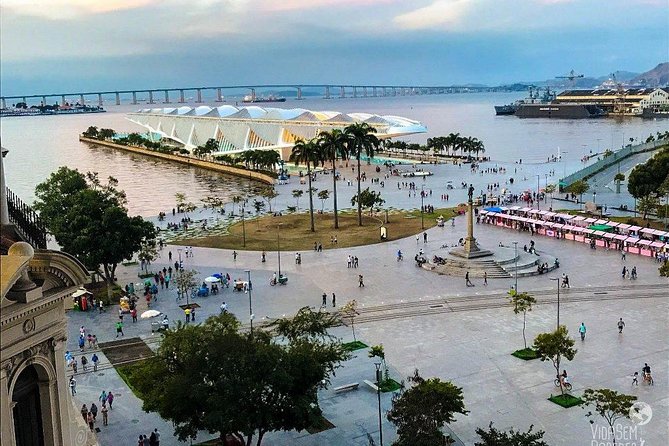
Public transportation is not an afterthought here. The route uses the subway to reach the starting area around Glória and the VLT to connect central Rio with the Olympic Boulevard and port district.
For you, that means the tour feels more like a guided introduction to Rio than a series of isolated sightseeing stops. Wellington can point out how the neighborhoods connect as you travel between them, and you get a little practice with the transport system you may use during the rest of your visit.
The practical side deserves attention. You will be walking to stations, boarding trains, and changing the pace of the tour around public transit. Wear comfortable shoes, carry water, and keep your belongings secure in crowded areas.
One person specifically appreciated Wellington handling a train ticket, avoiding the risk of a fine. Since ticket arrangements can vary, ask at the beginning how fares will be managed. The price of the tour does not list admission tickets, and the scheduled stops themselves have no admission charge.
Same city, a different set of walls:
- Belfast: Murals Taxi Tour
★ 4.9 · 2,047 reviews - Wynwood Graffiti Golf Cart Small-Group Tour
★ 5.0 · 1,646 reviews - London: Street Art and Graffiti Guided Walking Tour
★ 4.9 · 1,354 reviews - Lisbon: Street Art Tour
★ 4.9 · 1,324 reviews
The Olympic Boulevard and Porto Maravilha
The route eventually reaches the Olympic Boulevard, home to several of Rio’s major museums. The area was reshaped for the Olympic period and now serves as one of the city’s main public zones for museums, open space, and large-scale art.
This section gives you a change of scale. Earlier stops focus on historic streets, architecture, and smaller urban details. Here, the murals are designed to be seen across broad walls, and the port district provides a much larger setting.
The final stop is Porto Maravilha, where you see the Etnias mural, described as the largest graffiti mural in the world. The tour allows about an hour in this area, making it the longest stop on the schedule.
The mural is not simply a huge photo background. Wellington explains its imagery and messages, along with the port’s connection to enslaved Africans. That context is one of the strongest reasons to choose this experience. You are not just looking at scale and color. You are learning why this part of Rio matters and how public art can address identity, memory, and social issues.
The area also brings you close to the Museum of Tomorrow and the Museum of Art of Rio. The tour does not include admission to those museums, but their presence helps you understand Porto Maravilha as a modern cultural district rather than only a mural stop.
Little Africa and the Afro-Brazilian story
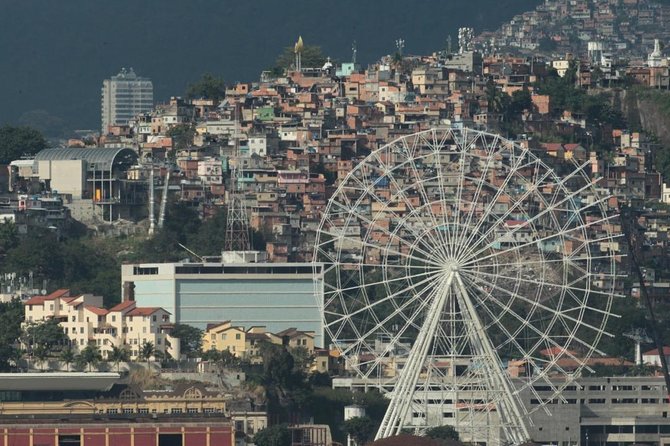
A particularly meaningful part of the route is its connection with Little Africa, the area associated with the history of enslaved Africans in Rio. The exact emphasis can change depending on your interests, but Wellington has adapted the experience for people who wanted to focus more closely on this subject.
That flexibility is important. If you want only a quick introduction to street art, the standard route gives you plenty. If you want to understand the African roots of Rio’s culture, ask Wellington about spending more time on Little Africa and its history.
The tour also brings in Carnival and samba schools. One account described a visit to an area connected with Carnival floats, and another mentioned seeing floats from a past Carnival. The supplied schedule does not promise this as a fixed stop, so treat it as a possible addition rather than a guaranteed feature.
Still, these details show how the guide approaches Rio. He does not treat street art as separate from music, Carnival, race, politics, or neighborhood life. That wider view gives the murals more meaning.
Wellington’s guiding style
The strongest praise for this tour centers on Wellington’s manner and subject knowledge. He is described as animated, friendly, clear in English, and willing to answer questions. His explanations cover art, city history, architecture, politics, Carnival, samba schools, and current social issues.
I would choose this tour mainly for the guide, not just for the route. You can find many murals independently, but it is harder to know what they mean, who created them, or how they relate to Rio’s past. Wellington’s value is in connecting those pieces.
The personal tone also suits families and solo visitors. A family can ask basic questions without feeling out of place. A solo participant still gets a private experience. People interested in practicing Portuguese have also found room for that during the walk, while English remains available.
One small caution: the quality of the experience depends partly on your willingness to listen and ask questions. If you only want a fast collection of photo stops, a self-guided route may be enough. Wellington’s strength is explanation, so give the stories time.
Is $68.61 a fair price?
At $68.61 per person, this is not the cheapest way to see public art in Rio. The murals and outdoor stops do not charge admission, so you are paying for Wellington’s time, planning, transportation guidance, and interpretation.
For a private three-hour tour, the price is reasonable if you value conversation and local context. It becomes better value when you are sharing the booking with friends or family, since the experience is private and only your group participates.
The route also covers several parts of central Rio and uses two forms of public transportation. Reaching all of these places alone would cost less, but you would spend time planning the route and researching the art. The choice comes down to what you want to buy: inexpensive access to murals, or a guided explanation that links them to Rio’s culture and history.
No admission ticket is required at the scheduled stops. You should still budget for your own transportation details if the guide does not cover a fare, food, and any museum visit you decide to add afterward.
Who should book this tour?
I would recommend it to you if you:
- Want an introduction to Rio beyond beaches and major viewpoints
- Care about public art, architecture, politics, or Afro-Brazilian culture
- Prefer walking and local transportation to a coach tour
- Are visiting Rio for the first time and want help understanding central neighborhoods
- Enjoy asking questions and learning the story behind what you see
- Want a private experience that can respond to your interests
It is less suitable if you have limited mobility, dislike walking, or want a slow photographic tour. The schedule covers a lot in three hours, and the route includes stations, sidewalks, and public transportation.
The tour requires good weather. If rain or other poor conditions cancel it, you can choose another date or receive a full refund. You can cancel for a full refund up to 24 hours before the start time, but changes or cancellations inside that window are not accepted.
Should you book the Rio Street Art Tour?
Book it if you want Rio explained through its walls, streets, transport system, and neighborhoods. The most valuable part is not simply seeing the Etnias mural or Selarón Steps. It is hearing how those places connect to slavery, Carnival, politics, architecture, and modern Rio.
I would especially choose it near the beginning of a stay, when Wellington’s suggestions can help you decide what to explore next. Bring water, wear good walking shoes, and expect a full three hours rather than a quick photo outing.
If you want a relaxed, private cultural tour with a guide who can adjust the conversation, this is a strong choice. If you prefer to wander alone and spend as long as you like at each wall, save the $68.61 and make your own route.
FAQ
Where does the Rio Street Art Tour start?
The tour starts at the Municipal Theater of Rio de Janeiro, at Praça Floriano in central Rio.
Where does the tour finish?
The tour finishes at a different location from the starting point, in the Porto Maravilha and Olympic Boulevard area near the large Etnias mural.
How long does the tour last?
The tour lasts approximately three hours.
How much does the tour cost?
The listed price is $68.61 per person.
Is this a private tour?
Yes. Only your group participates in the activity.
Does the tour include public transportation?
Yes. The route uses the subway and the VLT, or light rail, as well as walking.
Are admission tickets included?
The scheduled stops are listed without admission charges. Admission to nearby museums is not listed as part of the tour.
Is the tour suitable for solo participants?
Yes. A solo participant can book the private activity, and the tour operates for groups as small as one person.
What happens if the weather is poor?
The experience requires good weather. If it is canceled because of poor conditions, you can select another date or receive a full refund.
New street art tours in the world
- Your Own Belgrade: Street Art and Hidden Gems Walking Tour★ 5.0 · 2 reviews
- Wynwood Walls Street Art & Neighborhood Walking Tour★ 4.9 · 9 reviews
- Xochimilco floating gardens, Coyoacan and UNAM murals★ 4.0 · 6 reviews
- Vancouver: Street Art & Craft Coffee Walking Tour w/ Tasting★ 4.8 · 11 reviews
- Vancouver: Street Art & Craft Beer Walking Tour with Tasting★ 4.8 · 14 reviews
- Zagreb Street Art Private Walking Tour with a Local Artist★ 5.0 · 12 reviews
- UNAM: Murals & Revolution★ 4.9 · 8 reviews
- Urban Canvas: Osaka Street Art Bike Tour★ 5.0 · 10 reviews
Brazil Mural Tours, side by side.
Private Street Art Tour of São Paulo with Batman´s Alley Visit
Read our review →
Sao Paulo, Pinheiros – Food & Graffiti Tour | in English
Read our review →Lists this wall walk turns up in