
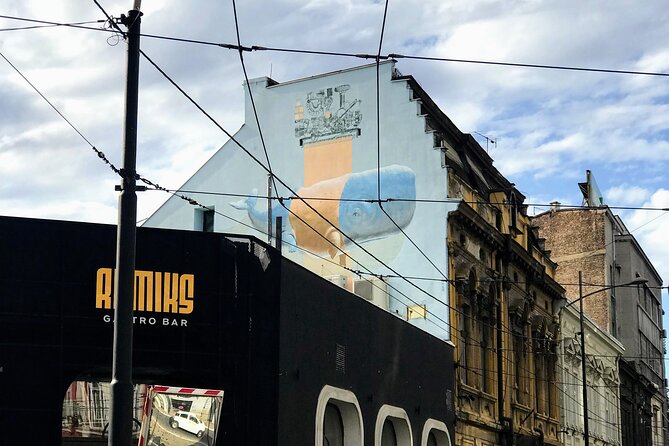
Reviewed · STREET ART WALKING TOURS
Private Belgrade Street Art and Adventures Walking Tour
Belgrade’s street art is more than wall paint. It is a map of the city’s past, politics, faith, youth culture, and independent spirit. This private walk uses murals, old industrial spaces, and alternative art centers to show you parts of Belgrade that a standard sightseeing route skips.
I like the small private format, since you can ask questions as the city unfolds. I also like the mix of serious art and everyday hangouts, from an old brewery turned cultural quarter to unusual bars and vintage shops. The main drawback is the price: at $219.94 per person, it makes the most sense for a small group that values a tailored guide and niche subject.
Key points at a glance
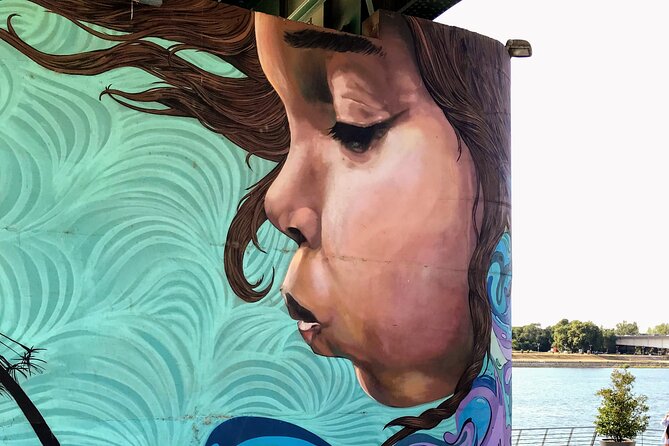
- Murals with a story: The REMED mural at Karađorđeva 31 connects Belgrade’s past with religious imagery and festival culture.
- Five distinct stops: You move from Magacin and an outdoor gallery to a designer district and a former brewery.
- Private attention: Only your group takes part, so the walk can focus on your questions and interests.
- Street art beyond the postcard: The route includes squats, underground art, abandoned spaces, vintage stores, galleries, and alternative clubs.
- Three hours on foot: The schedule allows about 30 minutes at each main stop, plus walking between them.
- Extra spending is separate: The guide is included, but snacks and alcoholic drinks are not.
Why this Belgrade walk feels different
Most first visits to Belgrade focus on the fortress, major churches, grand squares, and the Danube and Sava rivers. Those sights matter, but they do not fully explain how the city’s younger creative circles work.
This tour takes another route. You look at the city through murals and independent spaces, then connect what you see to local life. A painted wall may point to Serbian history, a former shopping mall may show how young designers use neglected buildings, and a passageway gallery may reveal the concerns of new artists.
That makes the walk useful even if you are not an art specialist. You do not need to know the difference between street art, graffiti, and muralism before you arrive. The guide provides the context, explains symbols, and answers questions as you go.
The strongest part of the experience is its range. You are not simply led from one mural to the next. The route includes an open-calendar cultural center, a large mural, working design spaces, an independent gallery, and a nightlife quarter. Together, they show how Belgrade’s creative life often grows in places that were abandoned, overlooked, or used for another purpose.
More Private Mural Tours in the world:
- Belfast: Private Black Taxi Cab Political Murals Tour
★ 4.9 · 425 reviews - 2 Hour Private Belfast Taxi Cab Tour of Troubles & Peace walls
★ 5.0 · 240 reviews - Muralist Art Semi Private Walking Tour in Mexico City Downtown
★ 5.0 · 188 reviews
Starting at Terazije Fountain
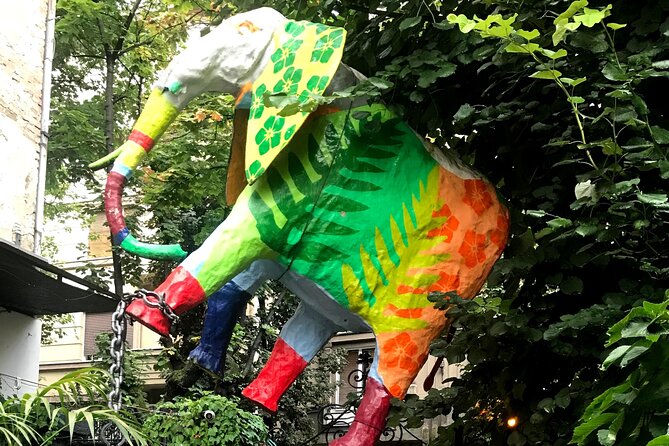
The walk begins at Terazije Fountain, in central Belgrade. This is a practical meeting point near public transportation, and the tour ends back there after roughly three hours.
From the start, you are in a central part of the city rather than at a remote suburb. That matters because the tour is built around walking through connected urban areas, not traveling by vehicle from attraction to attraction.
Wear comfortable shoes. The supplied details do not specify the exact walking distance or surface conditions, but the experience includes several stops and movement between them. Most people can participate, though anyone with mobility concerns should ask the provider for more precise route information before booking.
Because the tour is private, you can use the time well. If you want more historical context, ask for it. If you care most about current artists, design, or nightlife, say so early. A private format is most valuable when you treat it as a conversation rather than a fixed lecture.
Magacin, where culture runs on an open calendar
The first stop is Magacin, one of Belgrade’s oldest alternative cultural centers. It is also a street art focal point and a place for cultural and social activity.
What makes Magacin interesting is its open-calendar model. Instead of functioning like a conventional institution with a tightly fixed program, it gives different groups room to organize events and use the space. That helps you understand how independent culture operates in Belgrade.
The stop is free, and about 30 minutes is set aside for it. You may see a space that feels unfinished or rough around the edges. That is part of the point. Magacin is not presented as a polished museum. Its character comes from use, experimentation, and the people who keep cultural activity moving outside the usual commercial system.
This is a good place to ask how squats, independent art spaces, and alternative centers fit into Belgrade’s wider cultural life. The answer can make later stops feel less random. You begin to see a connection between street art and the city’s broader habit of reusing old or neglected places.
The REMED mural at Karađorđeva 31
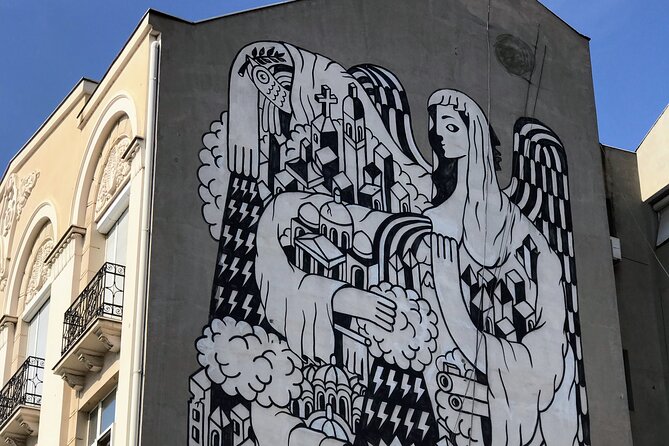
At Karađorđeva 31, you see a mural painted in 2008 during the BELEF festival by French artist Guillaume Alby, known as REMED.
The work draws on Belgrade’s history and sacred art. That detail gives the stop more weight than a quick photo break. You are looking at a contemporary mural that borrows from older visual traditions, so the guide can help you consider how public art carries local memory into the present.
Allow about 30 minutes here. That is enough time to look closely, discuss the imagery, and place the work in the setting around it. Street art changes as buildings, traffic, weather, and new paintings alter the surrounding area. The guide’s explanation is especially useful because a mural can be easy to photograph but harder to read.
This stop also shows why the tour is not limited to local artists. Belgrade’s street art scene has attracted people from many countries, and the city’s walls have become a meeting place for different artistic styles. You get a sense of Belgrade as both a local subject and an international art city.
More Street Art Walking Tours in the world:
- London: Street Art and Graffiti Guided Walking Tour
★ 4.9 · 1,354 reviews - Berlin: City Street Art Guided Walking Tour
★ 4.8 · 1,051 reviews - Naples Spanish Quarters Walking Tour Street Art, Folklore & Sweet
★ 5.0 · 797 reviews - Lisbon: Kickstart Street Art Walking Tour
★ 4.9 · 717 reviews
Belgrade Design District in a former mall
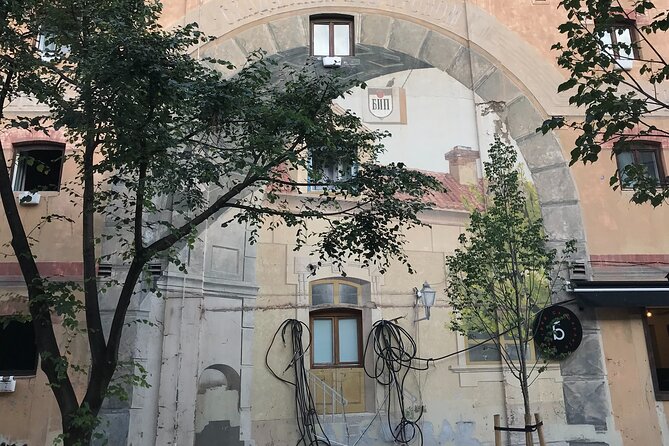
The Belgrade Design District occupies an abandoned shopping mall from the 1990s that has been taken over by young designers and artists.
This may be the most practical stop for understanding how creative people make use of old city spaces. The building’s original purpose was commercial, but its current role is tied to design, independent work, and small-scale creative businesses.
The contrast is the attraction. Rather than entering a purpose-built arts complex, you see designers working in a place shaped by an earlier economic period. The setting gives the visit a sense of how Belgrade’s creative community adapts to the city it has inherited.
You have about 30 minutes here. That is enough for an introduction, but not a full shopping session or studio tour. The information provided does not promise purchases or access to every workspace, so treat the stop as a guided look at the district rather than a guaranteed retail opportunity.
If you like graphic design, fashion, interiors, or independent makers, this part may be more appealing than the large murals. It also adds balance. The tour is not only about protest art or abandoned buildings. It includes people trying to build working creative lives.
Street Gallery in a narrow passage
Street Gallery is an independent outdoor gallery in a concealed passage. It focuses on critical work by young artists.
The setting matters. An outdoor gallery in a passage does not have the formality of a major museum, and its location changes how you encounter the art. You may arrive without noticing the space at first, then find a concentrated display of work in an unexpected corner of the city.
The gallery’s focus on critical art gives the guide a chance to explain current concerns and local viewpoints. The exact exhibition can change, so the work on display may not be the same on every visit. That is a normal part of an independent gallery, not a weakness, but it means you should come ready to see a temporary snapshot rather than a permanent collection.
The planned time is about 30 minutes. That is enough for a careful look at the current works and a conversation about why public art matters. If you want a quiet, formal gallery experience, this stop may feel too informal. If you enjoy art that responds to its surroundings, it should suit you well.
Cetinjska 15, from brewery to night spot
The final main stop is Cetinjska 15, a former brewery transformed into a cluster of bars, clubs, galleries, and street art.
This is where the tour’s art and social themes meet. The area is not just a place to view paintings. It is also a gathering point, with spaces for nightlife, exhibitions, and informal culture.
The former brewery setting gives the district a strong sense of reuse. You see how an old industrial site can take on a new life without losing all traces of its past. The mix of venues also makes clear that Belgrade’s alternative culture is not confined to studios. It extends into evening spaces where people meet, drink, listen to music, and see art.
The tour description includes the chance to try craft beer from Belgrade breweries and handmade sweets. However, alcoholic drinks and snacks are not included in the tour price. Plan to pay separately if these tastings form part of your visit, and confirm with the guide what is available on the day.
Cetinjska 15 is a useful final stop because it leaves you with somewhere to return later. If you like the area, you can come back independently for a drink, gallery visit, or night out. The guide can also help you understand which parts fit your interests.
What the private format adds
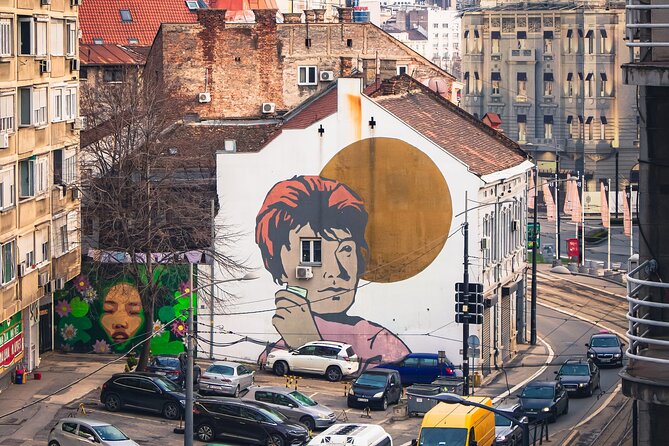
A private walking tour costs more than a shared group outing, so the value comes from personal attention. You are not paying only for the route. You are paying for the chance to ask about a mural, pause at a gallery, or spend less time on a stop that does not interest you.
The tour costs $219.94 per person. That is a high price for three hours if you are booking alone or as a pair and mainly want a quick list of street art locations. It becomes easier to justify when several people share the private experience, especially if the group discount lowers the effective cost.
The format also helps with the tour’s subject. Street art and alternative culture are not always easy to explain through a fixed script. Your questions can shape the conversation. You can ask about the city’s history, local attitudes toward public art, independent culture, abandoned buildings, or the role of young designers.
There is no promise of a particular guide in the available information. Past feedback highlights an enthusiastic, informative guide who answered questions and explained the meaning and social role of street art. That is the quality to look for when you book, and you can make the most of it by arriving with a few questions of your own.
Timing, costs, and practical planning
The experience lasts about three hours. Each of the five listed stops has roughly 30 minutes, leaving the rest of the time for walking and transitions.
The tour includes a guide, but not snacks or alcoholic drinks. The mention of craft beer and handmade sweets should not be read as a prepaid tasting menu. Bring a payment method for anything you choose to buy.
Confirmation is provided when you book. The meeting point is Terazije Fountain, and the activity ends there. Public transportation is nearby, which makes it easier to reach the start and continue with your day afterward.
Free cancellation is available if you cancel at least 24 hours before the local start time. Changes or cancellations made inside that window are not accepted for a refund. Keep that deadline in mind if your Belgrade plans are still shifting.
Who should book this experience?
I would choose this tour if you have already seen some of central Belgrade and want a more local, creative angle. It is especially suitable for people interested in murals, independent art, design, urban change, alternative nightlife, and the way communities reuse old buildings.
It also fits a private group with mixed interests. Someone who likes history can focus on the mural at Karađorđeva 31. Someone interested in design can spend more time at the former mall. Someone who wants a sense of local nightlife can pay close attention to Cetinjska 15.
I would be more cautious if you have only one day in Belgrade and have not yet visited the city’s major historic sights. In that case, a conventional orientation walk may cover more essential landmarks. This tour works best as a focused addition, not as a complete introduction to every side of the city.
You should also consider the cost. At $219.94 per person, it is not a bargain walking tour. The private setting, specialist subject, and flexible conversation need to matter to you. A shared option or self-guided mural walk may be better for a tight budget, though it will not provide the same explanation of context or access to the full selection of cultural spaces.
Should you book the Belgrade street art tour?
Book it if you want Belgrade explained through its walls, independent spaces, and creative communities rather than through only its major monuments. The route is varied, the private setup supports questions, and the stops show several sides of the city’s alternative culture.
Skip it if you want a low-cost walk, a conventional history tour, or a guaranteed food-and-drink tasting included in the fee. For the right group, this is a lively three-hour way to see how Belgrade’s artists and cultural organizers use old spaces and public streets to tell their own story.
FAQ
Where does the Belgrade street art tour begin?
It begins at Terazije Fountain, Terazijska česma, in Belgrade.
Where does the tour end?
The activity ends back at the meeting point at Terazije Fountain.
How long does the walking tour last?
The tour lasts approximately three hours.
Is this a private activity?
Yes. Only your group participates in the private tour.
How much does the tour cost?
The listed price is $219.94 per person.
Is a group discount available?
Yes. Group discounts are listed as a feature of the experience.
What is included in the tour price?
A guide is included.
Are snacks included?
No. Snacks are not included.
Are alcoholic drinks included?
No. Alcoholic beverages are not included. Craft beer may be available during the experience, but you pay separately.
What places does the tour visit?
The route includes Magacin, the mural at Karađorđeva 31, Belgrade Design District, Street Gallery, and Cetinjska 15.
Can I cancel for a full refund?
Yes, if you cancel at least 24 hours before the experience start time. Cancellations made less than 24 hours in advance are not refunded.
New street art tours in the world
- Your Own Belgrade: Street Art and Hidden Gems Walking Tour★ 5.0 · 2 reviews
- Wynwood Walls Street Art & Neighborhood Walking Tour★ 4.9 · 9 reviews
- Xochimilco floating gardens, Coyoacan and UNAM murals★ 4.0 · 6 reviews
- Vancouver: Street Art & Craft Beer Walking Tour with Tasting★ 4.8 · 14 reviews
- Vancouver: Street Art & Craft Coffee Walking Tour w/ Tasting★ 4.8 · 11 reviews
- Zagreb Street Art Private Walking Tour with a Local Artist★ 5.0 · 12 reviews
- UNAM: Murals & Revolution★ 4.9 · 8 reviews
- Urban Canvas: Osaka Street Art Bike Tour★ 5.0 · 10 reviews
Street Art Walking Tours, side by side.
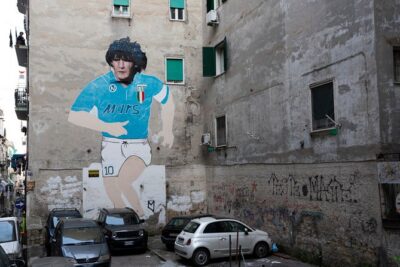
Naples Spanish Quarters Walking Tour Street Art, Folklore & Sweet
Read our review →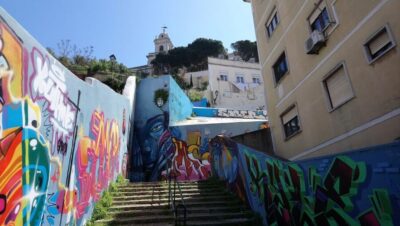
Brooklyn Graffiti & Street Art Walking Tour in Bushwick
Read our review →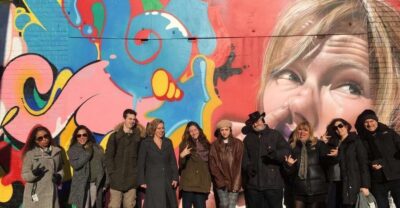
Lists this wall walk turns up in