
Reviewed · GRAFFITI TOURS
Bogotá: Graffiti Tour el mejor recorrido de arte urbano
Bogotá’s walls tell a story that many museums cannot. On this two-hour graffiti walk, you follow the city’s art from bold political statements to collaborative murals made with building owners and local communities. Guides such as Lifred, Ivonne, Luis, and Giovanni explain not only what you see, but why it was painted.
I like the way the tour connects street art with Colombian history, rather than treating murals as mere decoration. I also like the chance to learn basic graffiti ideas and spot small details you might miss alone. The main thing to check before booking is the price and format: the experience is advertised at $13 per person, yet it is also called a free graffiti tour and a private tour.
Key points to know before you go
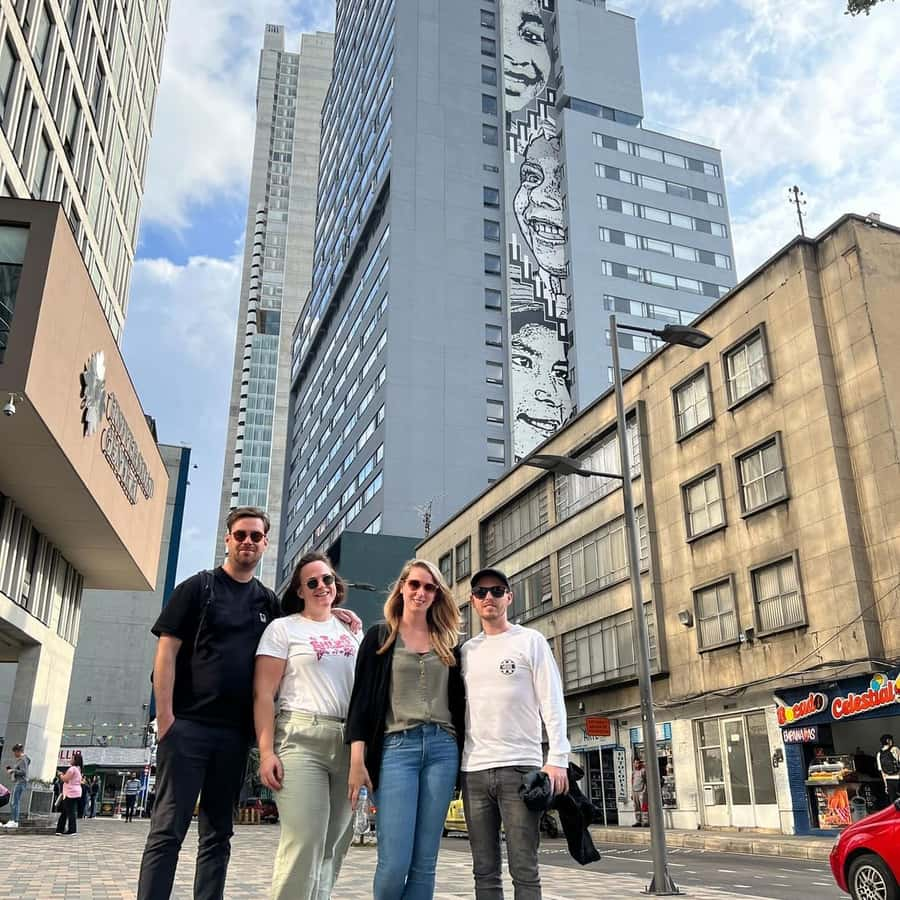
- Journalists Park is the meeting point: Find the group at Jimenez Avenue and Carrera 4 in central Bogotá.
- The art comes with context: Guides explain artists, techniques, protest art, city history, and Colombian culture.
- English tours run daily: Listed times are 10:00 a.m. and 2:00 p.m., though the published time windows suggest you should confirm the exact start.
- The tour has strong guide feedback: Lifred, Ivonne, Yvonne, Luis, Giovanni, Christian, and Fabian are all named as guides who bring different stories and personalities.
- It is more than a photo walk: The company supports urban-art projects with artists, communities, schools, cultural centers, and foundations.
- The practical deal is flexible: You can reserve now and pay later, and cancellation is free up to 24 hours before departure.
Why Bogotá’s walls make a useful city introduction
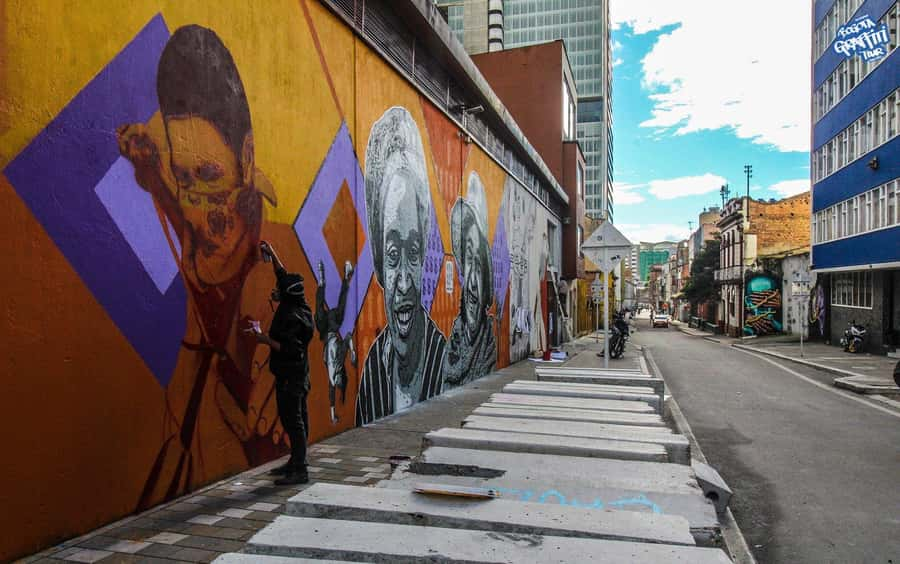
This is not simply a stroll past colorful walls. The tour uses graffiti to explain how Bogotá’s artists, residents, and public spaces connect. You see the city through paint, lettering, characters, symbols, and political messages, while your guide adds the human story behind each piece.
That approach matters in Bogotá, where street art can be playful one minute and pointed the next. A mural may show a recognizable figure, a local concern, a protest message, or a collaboration between an artist and a property owner. The guide’s job is to help you read those choices instead of reducing every wall to a background for a photograph.
I find this kind of introduction useful early in a stay. It gives you a way to look at the city afterward. A painted wall is no longer just something bright on a gray building. You begin to ask who made it, what it responds to, and how it fits into the neighborhood.
The company has operated the tour since 2011 and presents it as an urban-art initiative as well as a sightseeing walk. Its wider work includes artists from Colombia and abroad, community houses, cultural centers, foundations, district schools, and local graffiti groups. That community focus gives the tour a larger purpose than showing off a few attractive walls.
More Graffiti Tours in Colombia:
- Medellin: Comuna 13 Graffiti Tour, Cable Car & Street Food
★ 4.8 · 9,046 reviews - Medellín: Comuna 13 Tour with Snacks And Your Own Graffiti
★ 4.9 · 311 reviews - Bogotá: La Candelaria Graffiti & Urban Art Guided Tour
★ 4.7 · 250 reviews
Starting at Journalists Park
You meet at Parque de los Periodistas, at the junction of Jimenez Avenue and Carrera 4. This central location is a practical place to begin because the tour puts you near the city’s older streets and its well-known street-art areas.
The meeting point is specific, but it is still smart to allow time to find the exact gathering spot. Bogotá traffic and crowded central streets can make a short journey take longer than expected. Have the booking information and the contact email, [email protected], available if you need to confirm the guide or meeting details.
The opening part of the walk sets the tone. Your guide introduces the Bogotá graffiti movement and explains how it relates to the country’s past and present. You should expect the emphasis to be on interpretation, not on racing from wall to wall.
This is also where the guide’s personality matters. Lifred has been praised for being warm and clear, while Ivonne and Yvonne have been singled out for explaining both the art and its links to Bogotá and Colombia. Luis is described as particularly strong at answering questions and adding background. Giovanni brings attention to artists, protest graffiti, and collaborations with building owners.
Those names do not mean you can choose a particular guide. They do tell you that the experience is delivered by several guides, each with a slightly different voice. If you enjoy asking questions, this seems to be a good setting for it. Several guides are described as patient and willing to explain details rather than rushing through a prepared speech.
Reading the first murals and learning the basics
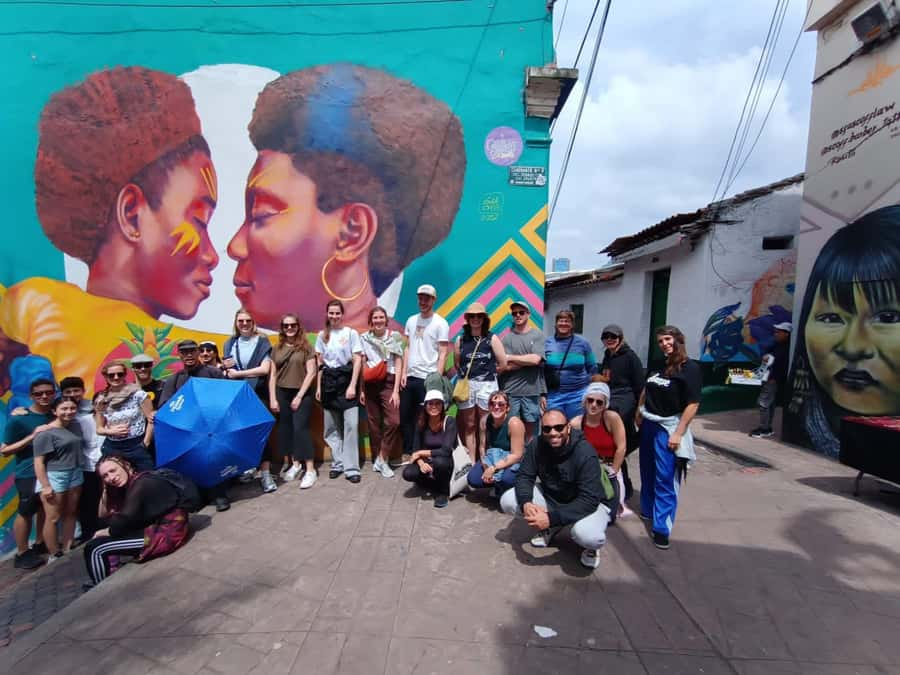
As the walk continues, your guide explains the basic language of graffiti and street art. That may include how artists use lettering, characters, color, scale, and placement, although the exact examples depend on the day’s route and the walls available.
This part is helpful if you do not already follow urban art. A large mural can seem easy to understand at first glance, but the smaller marks often carry the clue. A guide can point out a signature, a technique, a reference to another artist, or a visual choice that changes the meaning of the whole wall.
You will also hear about the artists behind the work. The tour is designed to introduce Bogotá’s graffiti movement through its people, not just its finished paintings. That makes the walk feel less like a collection of public images and more like an account of a creative scene.
One useful feature is the attention to graffiti as protest. The art is presented as part of a conversation about Colombia, not as an isolated style imported from elsewhere. Your guide may explain how artists use public walls to question authority, record social concerns, or claim space in the city.
The tour does not ask you to agree with every message. Instead, it gives you the tools to understand why graffiti can matter to the person who paints it and to the people who live around it. That is a much more useful lesson than simply hearing that a mural is colorful or famous.
From decoration to protest and public discussion
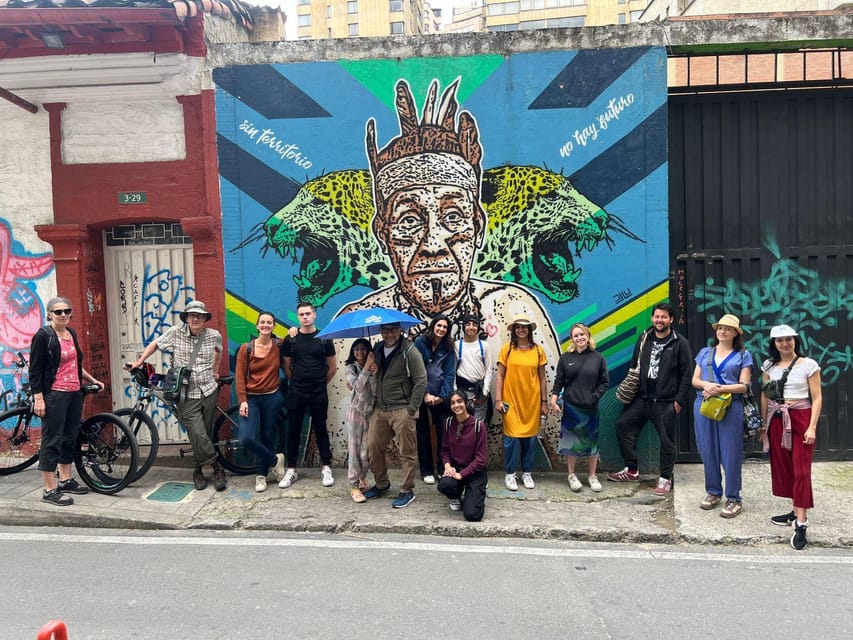
The strongest part of the experience is likely the shift from art appreciation to civic context. The tour explains how street art can be playful, critical, collaborative, or personal. It also shows that the boundary between graffiti and commissioned mural work is not always clear.
Some pieces are made with the cooperation of property owners. Others can function as protest or public commentary. Seeing both kinds of work helps you avoid the lazy idea that all graffiti is either vandalism or decoration.
Your guide also connects the art to broader Colombian culture and history. The exact stories will vary, but the subject is larger than Bogotá’s paintwork. You might hear how national events, city life, artists’ experiences, or community concerns appear in the images around you.
This is where Christian’s reported passion for street art and Colombian culture would be especially useful, as would Giovanni’s focus on the background behind individual works. Fabian has been described as keeping the walk relaxed and easygoing. Those qualities matter because two hours of explanation can feel heavy if the guide treats every wall like a lecture.
The tone appears conversational. You can ask questions, compare styles, and stop to look closely. If you want a quick collection of photo stops with little talking, this may not be your ideal tour. If you want to understand what you are seeing, the discussion is the point.
More street art tours worth booking in Colombia:
- Medellín: Comuna 13 and Graffiti Guided Tour with a Local
★ 4.9 · 239 reviews - Historical Shared Tour Salsa, Graffiti & Resistance in Cali
★ 5.0 · 107 reviews - Medellín: Private Comuna 13 Street Art Tour
★ 4.8 · 88 reviews - Fun Graffiti Workshop: The Art of Aerosol and Color
★ 5.0 · 73 reviews
A tour that supports local urban art
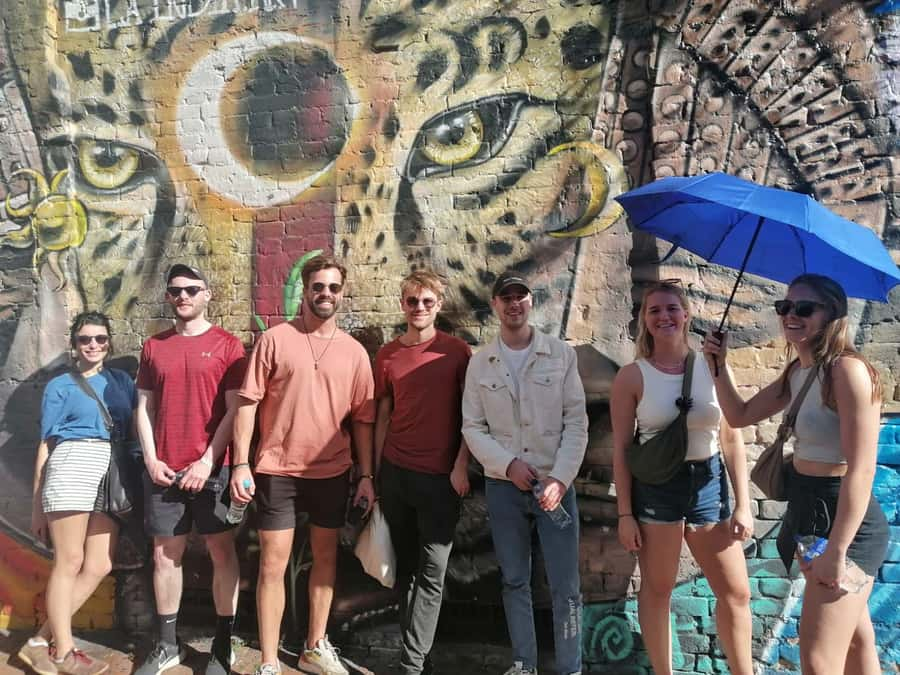
The operator describes its work as an effort to promote urban art and support social projects. Its activities extend to local, national, and international artists, communities at risk, community centers, foundations, schools, and graffiti groups in different locations.
You should treat this as part of the tour’s identity, not as a promise that you will visit each type of organization. The two-hour walk is primarily a city tour through walls. Still, knowing that the company presents graffiti as a tool for community ownership and change adds useful context to what you see.
It also helps explain why collaborations matter. When a building owner and an artist work together, the wall can become part of the neighborhood rather than a temporary mark that disappears without discussion. Your guide can point out that relationship and show how public art may be negotiated, shared, and maintained.
The company also offers urban-art workshops, cycling tours, city tours, private and business tours, and design services. Those options are not part of the standard experience described here, but they may interest you if the walking tour leaves you wanting more time with the subject.
Timing, route, and walking demands
The advertised duration is two hours. The published schedule lists daily departures at 10:00 a.m. and 2:00 p.m., with time windows shown as 10:00 a.m. to 12:30 p.m. and 2:00 p.m. to 4:30 p.m. Because those windows are longer than two hours, confirm the exact start time when you reserve.
No detailed stop-by-stop route is provided, so you should not expect a fixed list of named murals. The walls available, the guide, and current city conditions may shape the walk. That flexibility is normal for street art, since public artwork can change, be painted over, or become inaccessible.
Wear comfortable shoes and plan for an outdoor walk. The tour is wheelchair accessible, which is useful information, but the description does not explain the exact pavement, slopes, or access at every stop. If you use a wheelchair, contact the operator in advance at [email protected] and ask about the current route.
Morning and afternoon departures give you a useful choice. The morning slot leaves the rest of the day open for museums, markets, or another part of the city. The afternoon option can work well if you prefer a slower morning, but you should still allow time to reach the meeting point through central Bogotá.
What $13 gets you
At $13 per person, this is a modestly priced way to add a guided experience to a Bogotá visit. You receive a live English guide for about two hours, plus access to a subject that is difficult to understand fully from a map or self-guided walk.
The value comes from the explanation. You can photograph walls for free, but you cannot easily identify every artist, understand the local references, or connect the images to Colombian history without help. If your guide is as patient and engaging as the named guides described above, the price pays for interpretation rather than transportation or admission.
There is one pricing wrinkle. The experience is called a free graffiti tour in its description, while the listed price is $13 and another line calls it a private tour. Those details do not match neatly. I would ask the operator what the $13 covers, whether the tour is private or shared, and if any extra payment is expected before you commit.
The reserve-now, pay-later option is useful if your plans are still shifting. You can hold a place without paying immediately, and cancellation up to 24 hours before departure is listed as free with a full refund. These terms make it easier to fit the tour into a changing Bogotá schedule.
Who will enjoy this walk most
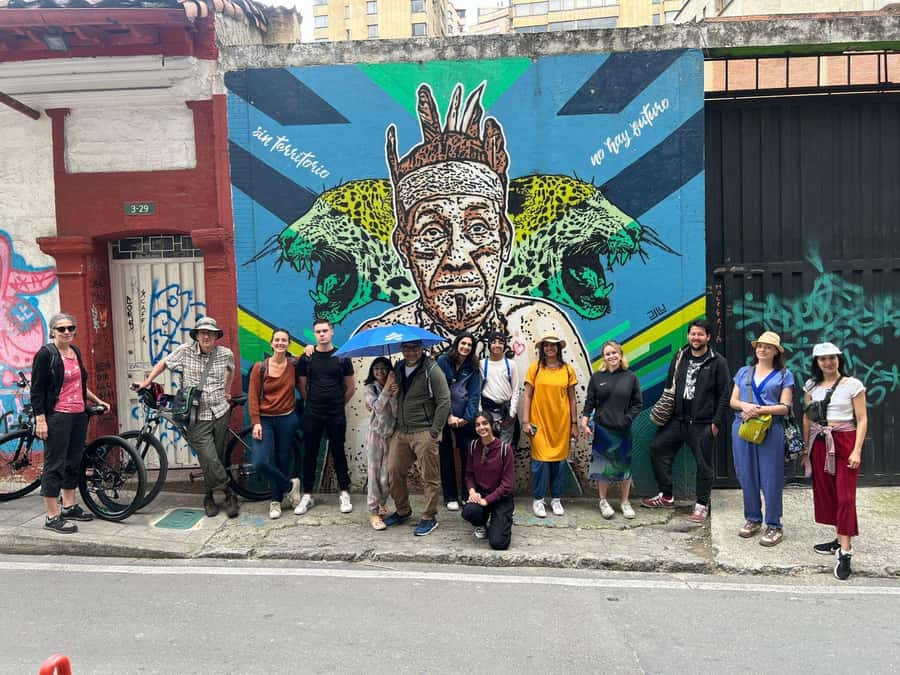
I would choose this tour if you want a cultural introduction that keeps you outdoors and moving. It suits first-time visitors who want to understand Bogotá beyond major sights, photographers who want more meaning behind their pictures, and anyone interested in politics, public space, or contemporary art.
It is also a good choice if you are unsure how to read graffiti. You do not need prior art knowledge. The guides explain basic ideas, introduce artists, answer questions, and connect individual walls to larger issues.
Families and mixed-age groups may find the format easier than a formal museum visit, though the operator does not provide a specific age recommendation. The tour is wheelchair accessible, but ask about current street conditions if mobility is a concern.
You may want something else if you dislike walking, need a tightly fixed itinerary, or prefer quiet sightseeing with little explanation. The art changes, and the route is not presented as a guaranteed sequence of famous murals. This is a guided conversation through public streets, not a gallery with numbered rooms.
The language listed for this activity is English. The operator also says to ask about Spanish, German, and French tours, but you should confirm availability for your date instead of assuming those departures run every day.
Should you book the Bogotá Graffiti Tour?
Yes, I would book it if you want a short, affordable way to see Bogotá through its artists and public debates. The repeated strengths are clear: guides such as Lifred, Ivonne, Luis, Giovanni, Christian, and Fabian are described as friendly, clear, patient, and deeply engaged with the subject. The tour also goes beyond pretty walls by explaining protest, Colombian culture, artists, and community projects.
Before booking, clarify the $13 price, the private-tour wording, and the exact departure time. Once those points are settled, this is a strong pick for a first or second day in Bogotá, especially if you want the city’s street art to mean more than a colorful photo backdrop.
FAQ
Where does the Bogotá Graffiti Tour meet?
The meeting point is Parque de los Periodistas in Bogotá, at Jimenez Avenue and Carrera 4.
How long does the tour last?
The stated duration is two hours.
What time does the tour run?
Daily departure times are listed at 10:00 a.m. and 2:00 p.m. The published time windows run to 12:30 p.m. and 4:30 p.m., so confirm the exact start time when booking.
What language is the tour offered in?
The activity is listed with an English-speaking live guide. The operator also says to ask about tours in Spanish, German, and French.
How much does the tour cost?
The listed price is $13 per person. The description also uses the term free graffiti tour, so contact the operator to clarify the exact payment arrangement.
Is the tour private?
The information describes it as a private tour, but it also presents the experience as a free graffiti tour. Ask the operator whether your booking is private or shared.
Is the tour wheelchair accessible?
Yes, the activity is listed as wheelchair accessible. Contact the operator at [email protected] for current route details.
Can I cancel or pay later?
You can reserve now and pay later. Cancellation up to 24 hours before the tour is listed as eligible for a full refund.
New street art tours in Colombia
- Comuna 13 Neighborhood & Street Art Private Tour★ 4.7 · 12 reviews
- Medellin: Graffiti Tour Comuna 13★ 4.1 · 14 reviews
- Medellín Comuna 13 local guides snacks and your own graffiti★ 4.9 · 13 reviews
- Comuna 13: Recorrido de Arte Urbano, Cultura y Resiliencia★ 5.0 · 3 reviews
- Graffiti Tour: a fascinating walk through a street art City★ 5.0 · 5 reviews
- Fun Graffiti Workshop: The Art of Aerosol and Color★ 5.0 · 3 reviews
- Comuna 13: Graffiti tour & Street Food/drink with telesferic★ 4.4 · 19 reviews
- Comuna 13: Graffiti Tour with Tasting, Live Show, & Gallery★ 5.0 · 4 reviews
Graffiti Tours, side by side.
Comuna 13 Graffiti Tour, Cable Car & Street Food
Read our review →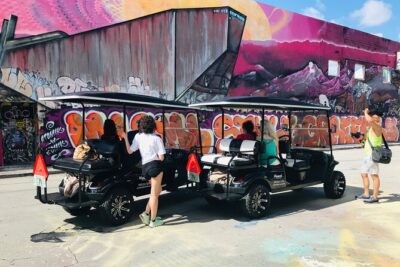
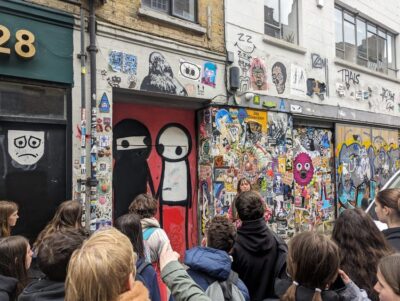
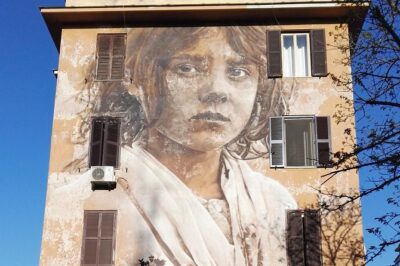
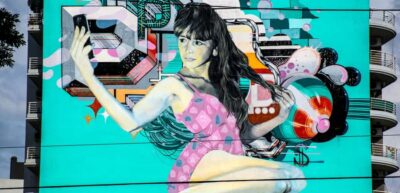
Brooklyn Graffiti & Street Art Walking Tour in Bushwick
Read our review →
Comuna 13 Tour with Snacks And Your Own Graffiti
Read our review →Lists this wall walk turns up in