

Reviewed · STREET ART WALKING TOURS
Athens: Guided Street Art Walking Tour
Athens reveals its modern character on walls, shutters, and abandoned facades. On this three-hour street art walk, a local artist guide helps you read the symbols, styles, and political ideas behind works by WD, iNO, Moralez, and others. You see parts of Psyrri, Gazi, and Monastiraki that many archaeology-focused visitors miss.
I like two things especially. First, the guide is not simply pointing at murals and naming artists. Guides such as Nikos, also known as Rude, explain how graffiti and street art developed in Greece and how artists responded to the country’s economic and social crises. Second, the route gives you a useful look at contemporary Athens, including local cafés, side streets, and neighborhoods beyond the Acropolis circuit.
The main consideration is the walking itself. The tour covers several central districts in three hours, and it is not suitable for wheelchair users or people with mobility impairments. You also need to arrange your own transport to Thissio and back from Psyrri.
Key points at a glance
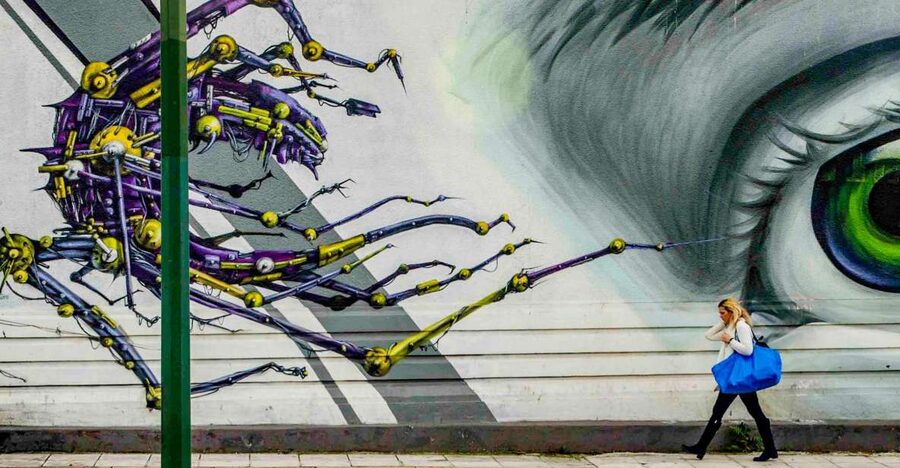
- Read Athens through its walls: Learn how political, social, and purely artistic messages appear in the city’s street art.
- Meet the artists behind the images: Hear about WD, iNO, Moralez, and other Greek creators from a guide who works in the local art scene.
- See three central neighborhoods: The route connects Thissio, Psyrri, Gazi, and Monastiraki, with the tour finishing in Psyrri.
- Go beyond ancient Athens: This is a useful counterpoint to the Acropolis, museums, and classical monuments.
- Expect a personal guiding style: Nikos, Pavlina, Elisabeth, and other guides have been praised for friendly conversation and strong local insight.
- Pay for context, not just photographs: At $57 per person, the value comes from interpretation, neighborhood knowledge, and access to art you could easily walk past.
Why Athens is best read one wall at a time
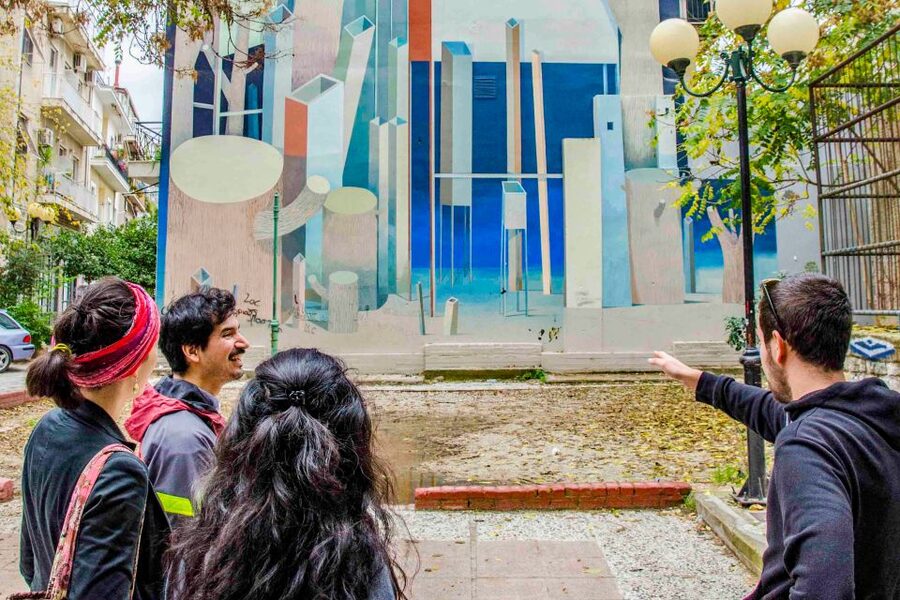
Athens is full of graffiti, but seeing it is not the same as understanding it. Without context, a wall can look like a mass of paint, letters, faces, and symbols. With a street artist beside you, the city becomes easier to read.
The guide introduces the difference between street art and graffiti, a useful starting point for anyone new to the subject. You learn to notice the artist’s style, placement, scale, color choices, and likely purpose. Some pieces are political. Others are personal, playful, decorative, or made simply to claim space.
That distinction matters. Athens does not have one single street art style, and the art changes over time. Works disappear beneath new paint, construction, weather, or another artist’s work. A guide can point out recent pieces as well as older examples and explain why a particular wall matters.
The strongest part of the experience is the connection between art and modern Greek life. The country’s economic crisis, unemployment, political tensions, and social frustrations have all found their way onto Athens walls. You are not given a dry lecture about national politics. Instead, you look at images in the places where they were created and discuss what they may be saying.
That makes this more than a photography walk. You begin to see street art as a public conversation, sometimes direct and angry, sometimes coded, and sometimes simply expressive.
More Street Art Walking Tours in Athens:
- Athens Street Art Walk
★ 5.0 · 309 reviews - Private Tour: Athens Street Art Walking Tour
★ 5.0 · 23 reviews - Athens: Street Art Walking Tour
★ 4.7 · 23 reviews
Starting in Thissio beside the archaeological world
The meeting point is in front of the Association of Greek Archaeologists in Thissio. This is a practical location because you can reach Thissio station on the green metro line. You can also use Monastiraki station on the blue line and walk along Adrianou Street to the meeting point.
Starting near Thissio creates a useful contrast. You are close to some of Athens’ best-known ancient sights, yet the tour quickly shifts attention from temples and ruins to contemporary city life. That change of focus is part of the point. Athens is not only an ancient capital preserved in stone. It is also a present-day city where artists respond to rent, politics, identity, and daily pressure.
The exact number of artworks you see is not specified, and the route can depend on current conditions and the guide’s knowledge of recent work. That is normal for street art tours. A fixed museum collection stays put. Outdoor art does not.
Wear comfortable shoes. You may spend much of the three hours on uneven pavements, side streets, and ordinary urban roads rather than in formal cultural sites. There is no transport included, so you should plan to walk between the districts.
Psyrri: Athens’ art, nightlife, and everyday edge

Psyrri is one of the central neighborhoods that gives the tour its character. It is close to Monastiraki and easy to reach, but its side streets can feel quite different from the main tourist routes.
Here, your guide may use murals and smaller works to explain how art fits into the life of the neighborhood. You can expect a mix of walls, shopfronts, older buildings, and changing street scenes. Psyrri is also where the tour finishes, making it convenient for lunch, coffee, or further exploring after the walk.
Several people who took the tour appreciated the guides’ local recommendations at the end. Nikos has pointed people toward nearby restaurants, bars, and cafés, while another guide showed the group a good place to stop for coffee during the walk. These suggestions are a useful bonus, but they are not the main reason to book. The real value is having someone explain why a neighborhood looks the way it does.
The area is also a good place to discuss the tension between old and new Athens. You may see historic buildings beside newer commercial activity and walls covered with very different artistic voices. The guide can connect those details to the wider story of the city without turning the walk into a standard architecture tour.
Gazi: industrial character and a different side of town

The route includes Gazi, an area known for its urban character and its place in Athens’ contemporary social life. The tour uses Gazi as another setting for understanding how street art changes from one neighborhood to another.
The important point is not simply that you visit another district. It is that the same city can produce different kinds of public art depending on the surroundings. A wall in a former industrial area may carry a different tone from one beside a busy market street or café district.
Your guide explains the artists and works in place, rather than asking you to remember a long list of names. Artists such as WD, iNO, and Moralez are part of the discussion, and iNO’s work has been a particular highlight for many participants. The guide’s own experience as an artist helps with questions about technique, scale, and how a piece may have been made.
Do not expect every work to be a polished mural. Street art includes large painted figures, lettering, quick tags, stencils, pasted images, and pieces that are difficult to classify. That variety can be rewarding, but it may not suit you if you want a tidy collection of monumental murals with clear labels.
Gazi also reinforces the tour’s alternative focus. You are not being taken from one famous monument to the next. You are walking through active neighborhoods and paying attention to the surfaces most people ignore.
More guided art walks in Athens:
- London: Street Art and Graffiti Guided Walking Tour
★ 4.9 · 1,354 reviews - Berlin: City Street Art Guided Walking Tour
★ 4.8 · 1,051 reviews - Palermo: Graffiti and Street Art Guided Tour in English
★ 4.8 · 684 reviews - Glasgow: Street Art Guided Walking Tour
★ 4.8 · 385 reviews
Monastiraki and the route back to Psyrri
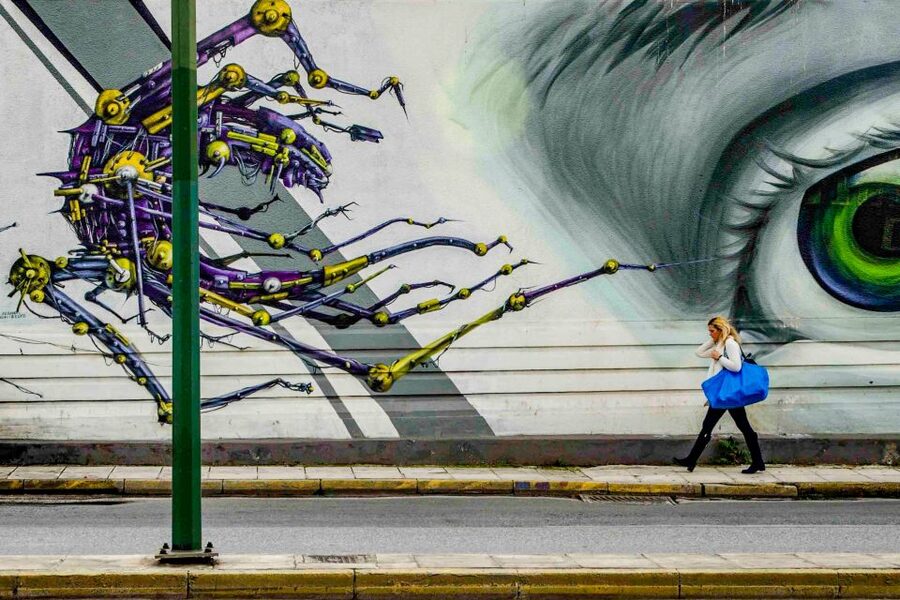
Monastiraki is one of the easiest places in Athens to find, thanks to its major metro station and central position. It is also one of the city’s busiest visitor areas. Including it in the route gives you a chance to compare a heavily visited part of Athens with the quieter streets and less familiar corners nearby.
The tour does not treat Monastiraki as just a meeting point or transport hub. Its walls and surrounding streets become part of the story. You may notice how street art sits alongside souvenir shops, markets, old façades, and major pedestrian routes.
From there, the experience finishes in Psyrri. This ending works well because you are not left far from central Athens or required to find a separate return meeting point. You can continue on foot, use the metro, stop for food, or head back toward the historic center.
The itinerary information lists three starting location options in Thissio and the same general central area, so check the exact meeting instructions when booking. The practical detail is simple: meet in front of the Association of Greek Archaeologists, near Thissio, and allow enough time to arrive without rushing.
What the artist guide adds

A standard city guide can tell you where a mural is and perhaps name its creator. An artist guide can talk about decisions that are harder to see: why a wall was chosen, how a style differs from another artist’s work, and how a piece communicates without using ordinary language.
Nikos, also called Rude, is repeatedly identified as a friendly and engaging guide. Other named guides include Pavlina, Elisabeth, and Achilles. The experience is not built around one scripted personality, but the guide’s direct connection with Athens’ art scene is central to its appeal.
You should expect conversation rather than a one-way speech. Guides have encouraged questions, invited opinions, and adjusted the pace for different groups. This has worked well for adults, art students, families, and teenagers. Several families found that children around 12 to 18 engaged with the subject, especially because the tour offered something different from ancient sites.
The tone also seems informal. One guide was described as treating the group more like friends than a formal tour party. That can make a three-hour walk feel relaxed, though it also means the experience may be less structured than a museum tour with fixed stops and printed explanations.
The advertised languages are English and French. Private groups are available, which may suit families, school groups, or friends who want more time for questions and discussion.
Street art as a record of Greece’s recent struggles

The tour’s most valuable subject is the way art reflects Greece’s recent social and economic problems. You do not simply see attractive walls. You learn how artists use public space to express anger, doubt, resistance, humor, and hope.
The messages are not always obvious. Some are hidden in symbols or visual references. Others depend on knowing something about local politics or the economic hardship of recent decades. Your guide helps you make those connections without claiming that every image has one fixed meaning.
That open approach is important. Art in a public space can be read in more than one way, and the tour encourages discussion rather than giving you a single official answer. You can ask why an artist used a certain image, how locals may respond, or what separates political street art from simple decoration.
This is also where the walk complements an ancient-history tour. The Acropolis explains an earlier Athens. Street art shows a city still arguing with itself and with the present. If you have only two days in Athens, this tour gives you a strong counterpoint to the usual classical itinerary.
Is $57 a fair price for three hours?
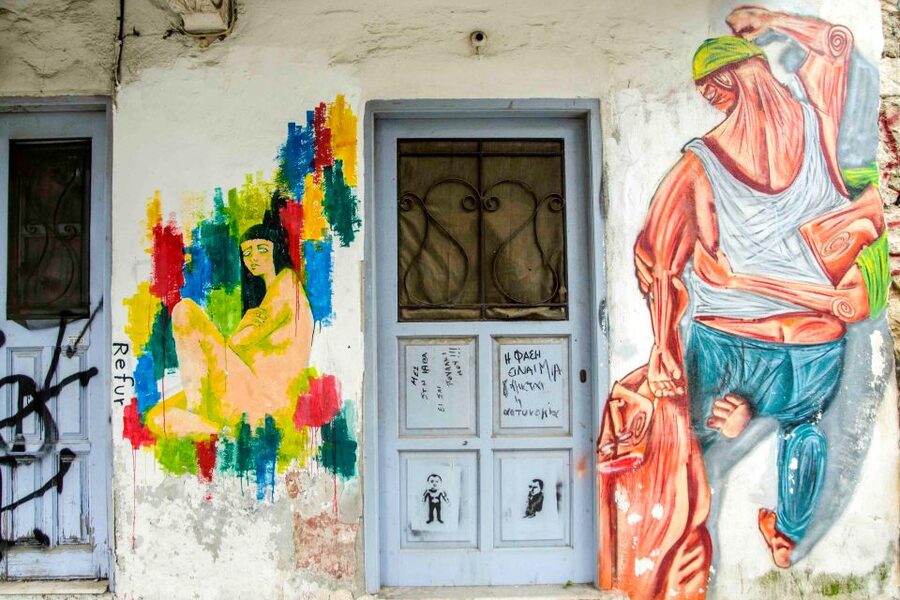
At $57 per person, this is not the cheapest way to walk around central Athens. You could see plenty of graffiti on your own for free. The question is what you want from the experience.
If you only want photographs, the price is harder to justify. You can wander through Psyrri, Gazi, and Monastiraki without paying for a guide, although you may not know which works are important or what has recently changed.
If you want interpretation, the price makes more sense. You are paying for three hours with a local street artist, an organized route through several neighborhoods, and explanations that connect individual works with Greek society. You also avoid spending half a day walking randomly and missing the pieces that are difficult to find.
The value is strongest for people who are interested in art, politics, architecture, urban culture, or modern Greek life. It is also a good choice if you have already seen the Acropolis and want a fresh way to understand Athens.
The tour has a rating of 4.9 from 182 ratings, with particularly strong praise for the guides’ personal style, local recommendations, and ability to explain the meaning behind the art. That does not guarantee that every group will have the same guide or route, but it does point to a consistent strength: the human interpretation.
Who should book this Athens walk?

I would recommend it to:
- Art lovers: You will hear about artists, styles, methods, and symbolism from someone connected to the local scene.
- First-time Athens visitors: The route introduces neighborhoods you may not reach on a classical sightseeing plan.
- Repeat visitors: If you have already seen the Acropolis and major museums, this offers a more current view of the city.
- Families with older children: Teenagers and young adults may find the political art and informal format more engaging than a traditional monument tour.
- People curious about modern Greece: The walk links public art with economic and social events from recent decades.
- Small private groups: A private option allows a more personal conversation and may work well for friends or families.
I would hesitate if you dislike urban walking, want a fully accessible route, or prefer art presented in a quiet gallery. This is a street-level experience, with ordinary city conditions and no guarantee that every work will suit your taste.
Free cancellation is available up to 24 hours before the activity, and you can reserve now and pay later. Those policies are useful if your Athens schedule is still shifting, but the more important planning point is physical: wear good shoes and allow three hours on foot.
Should you book it?
Book this tour if you want Athens to feel like a living city rather than a collection of ancient monuments. The combination of local artists, political context, and lesser-seen neighborhoods gives the walk real purpose.
At $57, it is best viewed as a guided introduction to contemporary Athens, not a simple mural checklist. If you are curious about how people use public walls to discuss their city, book it. If you only want the famous sights, spend your money elsewhere. For many visitors, especially those with a spare half-day or teenagers in tow, this is a smart way to see Athens from the street up.
FAQ
How long is the Athens street art tour?
The walking tour lasts three hours.
How much does the tour cost?
The listed price is $57 per person.
Where does the tour meet?
The meeting point is in front of the Association of Greek Archaeologists in Thissio.
How can I reach the meeting point?
Take the green line to Thissio station, or take the blue line to Monastiraki station and walk along Adrianou Street.
Which neighborhoods does the tour visit?
The route includes Psyrri, Gazi, and Monastiraki, with the tour finishing in Psyrri.
Where does the tour finish?
The tour finishes in Psyrri.
Is transportation included?
No. Transportation is not included, so you must make your own way to the meeting point and arrange onward travel after the tour.
Which languages are available?
The tour is offered in English and French.
Can I book a private group?
Yes. A private group option is available.
Is the tour accessible to wheelchair users?
No. The activity is not suitable for wheelchair users or people with mobility impairments.
What should I bring?
Bring comfortable shoes for the three-hour walking route.
Can I cancel for a refund?
Yes. You can cancel up to 24 hours in advance for a full refund.
New street art tours in Athens
- Explore Athens Street Art & Street Food Extravaganza★ 5.0 · 18 reviews
- Athens Street Art Bike Tour★ 5.0 · 20 reviews
- Athens Food and Wine Walk from Street Art to Greek Dinner★ 5.0 · 11 reviews
- Street Art Tour & Graffiti Painting Workshop in Athens★ 5.0 · 6 reviews
- Athens Street Art – Private Walking Tour★ 5.0 · 9 reviews
- Athens: Greek Life and Street Art Electric Bicycle Tour★ 4.7 · 16 reviews
- Private Athens Street Art & Culture Tour★ 5.0 · 9 reviews
- Athens: Street Art Treasure Hunt with Food Stop★ 4.2 · 9 reviews
Street Art Walking Tours, side by side.


Naples Spanish Quarters Walking Tour Street Art, Folklore & Sweet
Read our review →


Brooklyn Graffiti & Street Art Walking Tour in Bushwick
Read our review →

Lists this wall walk turns up in