
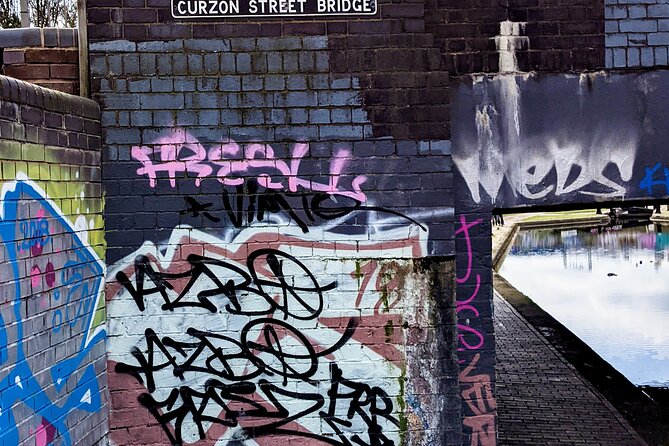
Reviewed · GUIDED
Guided Tour of Street Art in Birmingham
Birmingham’s street art tells a bigger story than bright walls and clever tags. This 5km route links the canals, Digbeth, the Custard Factory, and several striking murals while explaining how the city’s own artists shaped the scene. You’ll hear why the 2019 Banksy mural mattered, and why Birmingham’s graffiti culture began long before that famous name appeared.
I like the home-grown focus, which keeps the tour rooted in Birmingham rather than treating the city as a backdrop for international names. I also like the mix of canals, old industrial buildings, creative venues, and public art. The main consideration is the weather-dependent schedule: the experience can be canceled in poor weather, and the booking is normally non-refundable.
Key points
- A 5km route through Birmingham’s canals, Digbeth, and the Custard Factory
- Choose a two-hour walk or a faster one-and-a-half-hour run
- Meet your guide in orange at the Eagle and Ball pub
- Hear the stories behind local artists, activism, and Birmingham’s street art roots
- See Pongo the orangutan, a mural at suki10c, and decorated canal spaces
- Small enough to feel manageable, with a maximum group size of 25
Why Birmingham’s street art is worth your time

Birmingham is often introduced through its industrial past, shopping center, canals, and Victorian buildings. Street art adds another layer. It shows how artists use old walls, car parks, lock cottages, music venues, and former factories to talk about identity, politics, animals, race, and city life.
That is what makes this tour more useful than a simple mural walk. You are not just taken from one colorful wall to another. The guide explains how graffiti and street art developed in Birmingham, how local artists fit into the wider international picture, and how the city’s attitude toward public art has changed.
The tour also gives you a reason to look closely. A mural can seem decorative from a distance, but its location and subject often matter just as much as its colors. A work beside a canal has a different feel from one painted on a private venue or hidden in a car park. You will be asked to think about who commissioned the art, who owns the wall, and what happens when street art becomes part of a commercial area.
The available tour length is practical for a day in Birmingham. At around 90 minutes to two hours, it fits before lunch, after a city-center visit, or between other plans. The route covers about 5km, so you should wear comfortable shoes and be ready to walk at a steady pace.
More guided art walks in the UK:
- London: Street Art and Graffiti Guided Walking Tour
★ 4.9 · 1,354 reviews - Glasgow: Street Art Guided Walking Tour
★ 4.8 · 385 reviews - Belfast Music and Street Art Small Group Guided Experience
★ 4.5 · 62 reviews
Meeting an orange guide beside the canal
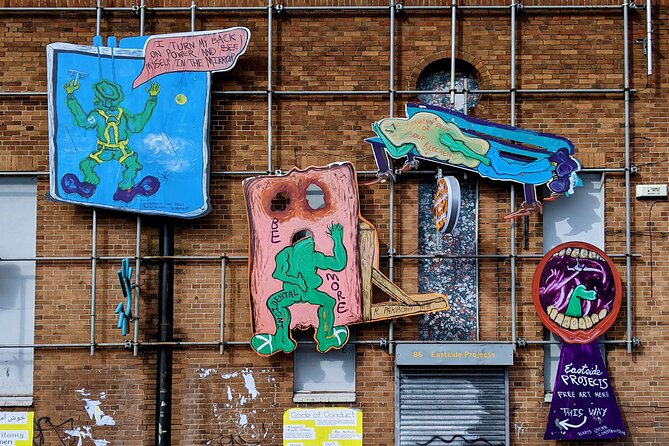
The tour begins at the Eagle and Ball on Gopsal Street, in Birmingham’s B4 7RJ area. Look for the guide wearing orange. That simple marker matters in a city setting, especially if the group gathers near a pub or busy street.
The opening discussion sets the tone. You will hear how Birmingham’s graffiti and street art scene began, then learn why the Banksy mural that appeared in the Jewellery Quarter in 2019 became such a talking point. The useful point is that Birmingham’s street art did not begin with Banksy. The mural drew attention, but local artists and earlier work had already made the city’s walls part of a longer story.
From the Eagle and Ball, the group takes a less obvious route along decorated canals toward Digbeth. This is one of the tour’s strongest design choices. Instead of walking directly through the most familiar city-center streets, you get a change of pace and a look at how art appears along Birmingham’s waterways.
The first section lasts about 15 minutes. Admission is free, and the meeting point is also the return point at the end. That makes the tour easy to combine with a separate visit to central Birmingham, though you should allow time to get back to the Eagle and Ball if you have a tight onward booking.
Digbeth, where the route finds its focus
Digbeth is the main stage for the experience. The district’s old industrial buildings, independent venues, car parks, and rougher edges give street artists plenty of wall space. It also makes a good place to discuss the tension between informal graffiti and planned public art.
You will stop at several works rather than rushing past them. The guide points out the details, explains the artists behind them, and gives the work a place in Birmingham’s story. That extra information is important because street art can be easy to photograph and easy to forget. The stories help you understand why a particular mural is there and what it is trying to say.
The Digbeth section takes about 25 minutes. Because the tour covers several works, the exact mix of art can feel less fixed than a museum visit. Street art changes, gets painted over, or is affected by new building work. That is part of the appeal, but it also means you should expect a living scene rather than a permanent collection.
This part should suit families well. The bright colors are easy for children to enjoy, while the social and political subjects give older visitors something to discuss. One published account especially praised the strong colors and the information about the art, noting that children enjoyed the experience. You should still remember that the walk is about 5km overall, so younger children need to be comfortable with that distance.
The Lock Keepers Cottage and canal-side storytelling
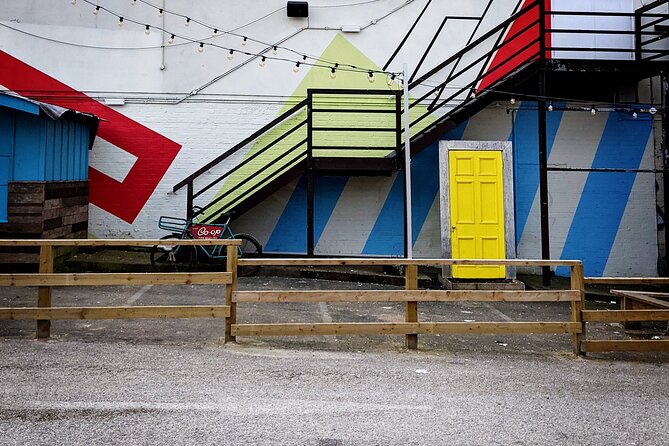
The Lock Keepers Cottage is a shorter stop, lasting around 10 minutes, but it adds a different scale to the route. Instead of a large urban wall, you see a smaller historic canal building with decoration by one of Birmingham’s female artists.
The value here is the story attached to the cottage. Street art is often associated with broad walls and major projects, yet a small building beside a lock can carry its own local meaning. This stop also helps broaden the picture of who creates Birmingham’s public art.
You will want to listen closely rather than treat the cottage as a quick photo stop. The tour’s point is not simply to collect images. It is to show how art can change the way you read an ordinary piece of infrastructure.
More street art tours worth booking in the UK:
- Belfast: Murals Taxi Tour
★ 4.9 · 2,047 reviews - Belfast’s Political Mural Taxi Tour
★ 5.0 · 1,180 reviews - London Bike Tour: Landmarks, Secret Gems, Pub Stop & Street Art
★ 5.0 · 943 reviews - Glasgow Street Art Daily Walking Tour: 2pm
★ 5.0 · 648 reviews
Pongo the orangutan on Lower Trinity Street
At Lower Trinity Street, the group visits a car park to see Pongo the orangutan. The mural was created by Louis Masai as part of animal-rights activism.
This is a good example of how the tour connects Birmingham to issues beyond the city. The subject is instantly readable, but the guide adds the reason behind it. You can look at the work as a large, memorable image, then consider how public art can carry a campaign into places where people may not expect to encounter it.
The stop takes about 10 minutes. The car park setting is part of the story. It reminds you that street art does not need a grand gallery wall to command attention. At the same time, a car park may offer less comfort than a formal attraction, so do not expect seating, shelter, or museum-style facilities at every stop.
The Custard Factory and the question of ownership
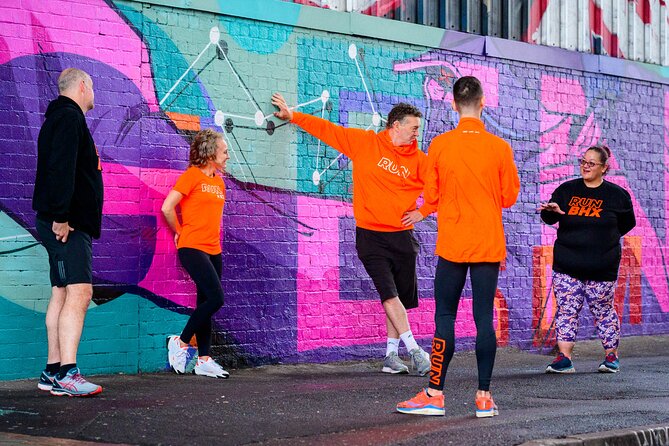
The Custard Factory is one of the route’s most substantial stops. The former home of Bird’s Custard now covers about 15 acres of restored Victorian factory buildings, with shops, cafes, bars, restaurants, and creative businesses close to the Bullring.
This is where the tour asks a useful question: does private support improve an area’s street art, or does it change the work into something more controlled and commercial? That question gives the stop real purpose. The art is not treated as decoration alone. You are encouraged to think about who decides what appears on a wall and how a creative district uses public-looking art to shape its identity.
The visit lasts around 20 minutes. It is also a practical pause in the route because the Custard Factory has places to eat and drink, although the tour price does not include food. If you want to stay in Digbeth after the tour, this is a natural place to do it.
The Custard Factory can appeal to visitors who like creative districts as much as murals. You get the art, the old industrial setting, and the chance to see how a former factory has been put to new use. If you prefer street art in a rawer, less organized setting, you may find this section more polished than the canal and car-park stops.
suki10c and Birmingham’s recent social history
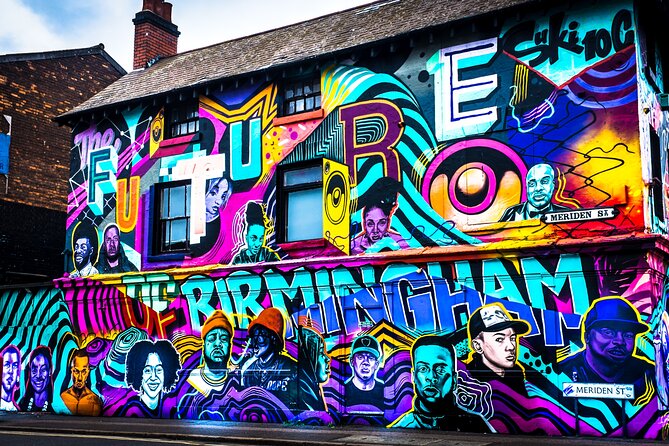
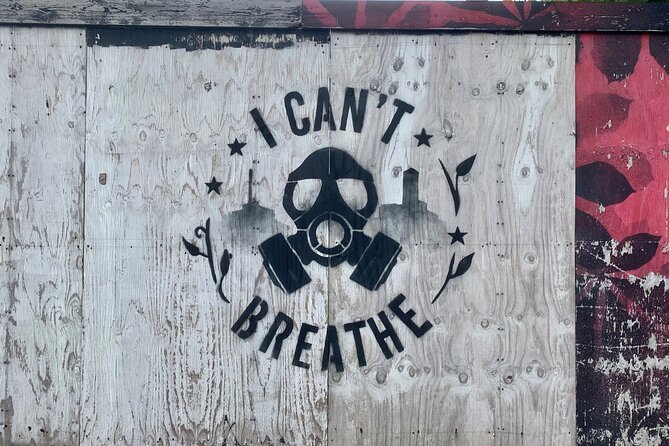
The final listed stop is suki10c, an eco-friendly live music venue covered by a mural made during Black History Month. The work celebrates Birmingham’s young Black creatives and also connects to the public response after George Floyd’s murder.
This gives the tour a more recent and direct social focus. The mural is not simply about technique or color. It reflects how local creative spaces respond to events that affect communities far beyond Birmingham.
The visit lasts about 10 minutes. Admission to the venue is not included, so you should not assume that a separate entry ticket is part of the tour. The stop is best understood as an exterior art visit, with the guide explaining the mural, its setting, and the wider context.
The subject matter may lead to a more serious conversation than the earlier animal-rights mural or the colorful canal work. That range is a strength. The tour moves from local street art origins to environmental and animal activism, private development, Black creative identity, and responses to racial injustice.
Walk or run, and how the timing affects the experience
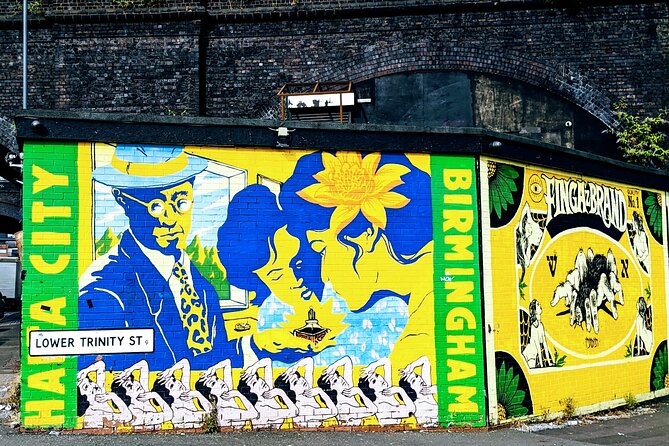
You can take the route as a walk of about two hours or as a run lasting around 90 minutes. The running option is unusual for a sightseeing activity and may appeal to visitors who want to see Birmingham while keeping an active schedule.
The choice changes more than the pace. On the walking version, you have more time to study details, take photographs, and ask questions. The running version is better suited to people who are already comfortable moving quickly and do not need long pauses at each work.
The tour has a maximum of 25 people. That is not a private experience, but it keeps the group within a manageable size for a moving city walk. You should still expect to gather on public paths and beside working streets, rather than in quiet museum rooms.
The route is near public transportation, and service animals are allowed. Most people can take part, but the 5km distance and outdoor setting are worth considering before you book. A mobile ticket makes the start simple, and confirmation is sent when you book.
Is the $54.74 price fair?
At $54.74 per person, this is not a cheap way to spend two hours if you only want to see murals. You can walk through Digbeth independently and spot plenty of public art without paying an admission fee.
The value comes from the interpretation. You are paying for the guide’s route, the background on Birmingham’s artists, the explanation of activism and venue ownership, and the chance to notice works you might otherwise pass without understanding. You also get a planned walk that links several parts of the city instead of leaving you to work out the route alone.
Group discounts may improve the price for families or friends booking together. The recorded responses praise the art itself, the historical information, and the company of the experience. One also points to the simple pleasure of combining the outing with food in Digbeth, which makes the tour easier to fit into a longer day.
I would call the price reasonable for people who care about the stories behind public art. It is less convincing for visitors who want a quick photo walk with little commentary.
Weather, cancellations, and who should book
The experience needs good weather. If poor conditions force a cancellation, you are offered another date or a full refund. The booking itself is non-refundable and cannot normally be changed, so check the forecast and your schedule before paying.
The tour can also be canceled if the minimum number of participants is not reached. In that case, you are offered another date or experience, or a full refund.
I would recommend this experience to:
- Families who want an active city outing with colorful, memorable subjects
- First-time visitors curious about Birmingham beyond the main shopping streets
- Art fans who prefer public walls and working neighborhoods to formal galleries
- People interested in activism, local identity, and the social role of art
- Runners who want a faster version of a sightseeing route
- Repeat visitors looking for a different way to see Digbeth and the canals
I would think twice if you dislike outdoor walks, need a fully weather-proof plan, or want a slow photography session. The route moves between public spaces, and the running option is not designed for lingering.
Should you book the Birmingham street art tour?
Book it if you want more than a list of murals. The strongest part is the link between art and place: canals, lock buildings, car parks, former factories, and music venues all become part of the story.
The best reasons to go are the local artist focus, the unusual route into Digbeth, and the subjects covered at Pongo, the Custard Factory, and suki10c. Families should appreciate the colors and approachable format, while adults get thoughtful discussion about activism, race, development, and public space.
Skip it if you are looking for a low-cost self-guided walk or if poor weather would disrupt your plans. For everyone else, the tour offers a lively, useful introduction to Birmingham’s changing walls, with enough history and social context to make the city look different after you leave.
FAQ
How long does the Birmingham street art tour last?
The walking version lasts about two hours. A running version takes around one and a half hours.
How far is the route?
The tour covers about 5km.
Where does the tour start?
You meet at the Eagle and Ball on Gopsal Street, Birmingham B4 7RJ. Look for the guide wearing orange.
Where does the tour finish?
The activity finishes back at the meeting point.
Is admission included at every stop?
The listed outdoor stops do not require admission. Entry to suki10c is not included.
What happens if the tour is canceled because of bad weather?
You are offered a different date or a full refund. The experience can also be canceled if the minimum number of participants is not reached, with the same type of alternatives.
New street art tours in the UK
- Manchester Street Art: Quest Experience★ 4.0 · 6 reviews
- London Street Art Tour of the East End Semi-Private 12ppl Max★ 5.0 · 23 reviews
- The Great Street Art Experience★ 5.0 · 2 reviews
- London Street Art Tour of the East End Exclusive Walking Tour★ 5.0 · 12 reviews
- Shoreditch Street Art Private Photography Tour including Brick Lane★ 5.0 · 5 reviews
- London Unexpected Private Tour – Markets, Street Art & Camden Town★ 5.0 · 2 reviews
- Private Royal London Bike Tour with pub & street art★ 5.0 · 2 reviews
- 3-Hour Private Tour of East London Graffiti & Street Art★ 4.5 · 5 reviews
Guided, side by side.
Neustadt District Street Art Guided Walking Tour
Read our review →
3-Hour Guided Street Art Walking Tour of Lisbon
Read our review →
Comuna 13 and Graffiti Guided Tour with a Local
Read our review →Lists this wall walk turns up in