
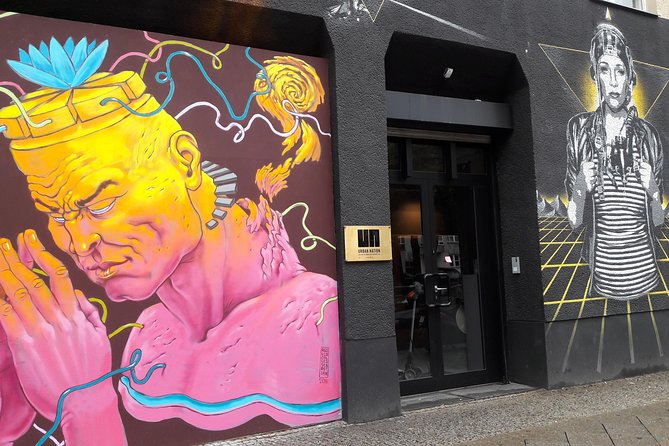
Reviewed · PRIVATE MURAL TOURS
Berlin Private Street Art Tour – Off The Grid
Berlin’s best street art is not behind glass. It is on rolling shutters, railway corridors, factory walls, bridges, and the sides of apartment blocks. This private three-hour walk gets into the rules and language of graffiti, from tags and throw-ups to trainbombing, stencils, stickers, and giant murals.
I like two things here. First, working artists lead the walk, so you get technique and personal stories rather than a quick list of famous walls. Second, the route links Friedrichshain, Kreuzberg, and Schöneberg, giving you a broad look at Berlin’s urban art rather than one small patch of town.
The main drawback is cost: at $432.15 per person, this is a serious splurge, especially for a three-hour walk. You also need to buy your own AB transit ticket, and the route requires a moderate level of fitness.
Key points at a glance
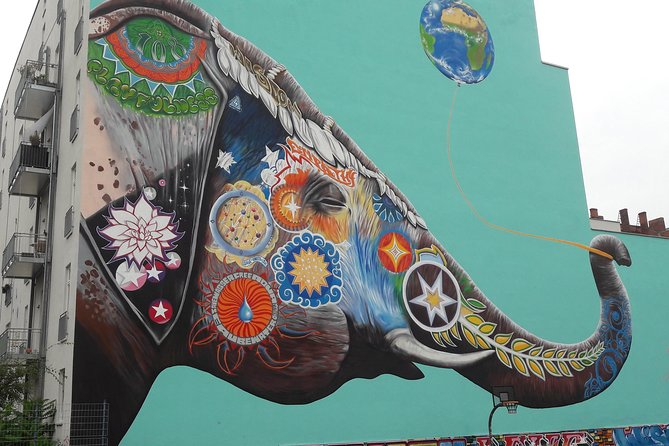
- Graffiti explained by artists: Learn how tags, throw-ups, stencils, paste-ups, stickers, and murals differ.
- A route across three districts: See street art in Friedrichshain, Kreuzberg, and Schöneberg rather than staying in one area.
- Urban Nation gallery included: The walk adds an indoor art stop to its outdoor walls.
- Private attention: Only your group takes part, so the guide can adjust the conversation to your interests.
- A real Berlin culture lesson: Topics include trainbombing, graffiti codes, nightlife, squatters, artists, and gentrification.
- Finish near the U1: The walk ends in Kreuzberg around Wrangelkiez, close to the U1 line.
Why Berlin’s walls make a better classroom than a museum
Berlin has an unusually strong connection between public space and political expression. A painted wall can carry a name, a protest, a joke, a territorial signal, or a carefully planned image. The point is not always beauty. Sometimes the mark is about speed, risk, recognition, or simply being seen.
That is why this tour’s focus on graffiti matters. A huge mural is easy to photograph, but a small tag may tell you more about the local culture. Your guide explains why a high-pressure fire extinguisher can be used as a painting tool, how a throw-up differs from a finished piece, and why a train can become a moving canvas.
You will also hear about the culture around the work. The tour covers rules, techniques, personal stories, and the unwritten codes that shape the scene. I like that approach because it keeps street art from becoming a parade of pretty walls stripped of context.
The guides have included artists and street-art specialists such as Jason, Trevor, JR, Jake, Dave, Antonio, Rob, Becca, and Jonathan. Your actual guide depends on availability, but the range of names attached to the experience suggests a team with strong ties to Berlin’s art world. One useful distinction: some guides also lead broader tours about counterculture and modern Berlin life. This experience is narrower. Its focus is specifically off-grid graffiti and street art.
More Private Mural Tours in Germany
- Berlin: Private Kreuzberg Street Art Walking Tour
★ 4.8 · 57 reviews - Alternative Berlin Private Tour with Jacob – Graffiti and Squats
★ 5.0 · 6 reviews - Alternative Berlin / Street art tour – Private group
★ 5.0 · 6 reviews
Starting at Warschauer Strasse in Friedrichshain
The meeting point is Wursthain at Warschauer Strasse 54, with a 10:00 am start. Warschauer Strasse is a practical beginning for this subject. Friedrichshain is one of the Berlin districts most closely associated with large-scale murals, industrial remnants, nightlife, and the city’s changing creative culture.
Expect to begin outdoors, so dress for the weather. One guide earned praise for keeping the experience engaging despite cold conditions, which is a useful warning for anyone booking in the cooler months. Berlin’s art is outside, and paint does not wait for a sunny day.
The first part of the walk is likely to set up the basic vocabulary. You will learn to look for tags, throw-ups, stencils, paste-ups, and stickers instead of treating every painted mark as the same thing. That shift changes how you see the city. A wall stops being background scenery and becomes a record of different artists, styles, crews, and moments.
The route is not presented as a fixed list of named monuments. Street art changes. A piece can be painted over, removed, damaged, or replaced. The value of a guide here is knowing what is current and worth seeing on the day.
Reading tags, throw-ups, and huge murals
The tour promises a mix of major murals, heaven spots, and throw-ups. These terms matter because they describe different levels of ambition, scale, and risk.
A mural may take time, planning, and permission, though not every large work fits neatly into that category. A throw-up is quicker and more direct. A tag is often small and fast, but it can be central to an artist’s identity. A heaven spot is a difficult-to-reach location where visibility and danger are part of the appeal.
You will also hear about trainbombing, one of the more controversial parts of graffiti culture. The term refers to painting trains, an activity tied to speed, danger, and getting a piece seen across a whole city. It is not simply another painting technique. It reflects a particular attitude toward public space and risk.
This is where an artist-led guide can add value. Instead of telling you only who painted a wall, the guide can explain how it was made, why that location matters, and what the artist may have been trying to achieve. You should expect interpretation, not a hands-on workshop. The supplied details describe a walking tour, and no workshop is included in this version.
From stencils and stickers to paste-ups
Graffiti is only one part of Berlin’s street-art scene. The route also covers stencils, paste-ups, stickers, and other forms of unsanctioned or semi-sanctioned public art.
Stencils can be fast and repeatable. Paste-ups can be prepared indoors and installed quickly. Stickers can travel far beyond the original neighborhood. These methods create a different relationship with the city than spray paint does. They may appear on a traffic box, signpost, doorway, or construction barrier rather than on a giant wall.
The variety keeps the walk from becoming a hunt for murals alone. You will be encouraged to look up, down, and around corners. A small sticker beside a doorway may be as important to the local scene as a five-storey image on a major building, even if it receives less attention in photographs.
I also like the way this subject connects technique with city life. The art is not separated from Berlin’s arguments about ownership, public space, policing, commerce, and redevelopment. A guide can explain why some artists welcome commissioned walls while others prefer unauthorized work. The tour data specifically points to rules and personal stories, so you should expect these questions to be part of the conversation.
More Private Mural Tours in Berlin:
- Private Alternative Berlin Tour -Murals, Graffiti and Squats
★ 4.8 · 5 reviews - Street Art Workshop & Tour – Private Group
★ 5.0 · 2 reviews - Berlin : Private Street Art Walking Tour (Private Tour)
★ 5.0 · 2 reviews - Mega Street Art, Mural, Graffiti Private Tour
★ 5.0 · 2 reviews
Crossing Friedrichshain, Kreuzberg, and Schöneberg
The route covers three districts, which gives the experience useful range. Friedrichshain and Kreuzberg are especially important for Berlin’s alternative culture and street art, while Schöneberg adds another part of the city to the picture.
That broader route is a plus if you want to understand how art appears in different urban settings. You are not simply standing in front of one famous mural, taking a picture, and moving on. You are walking between pieces and seeing how the art fits into streets, buildings, businesses, transport routes, and residential areas.
The trade-off is physical. The tour lasts about three hours and requires moderate fitness. You should be comfortable walking for much of that time, standing outdoors, and moving between districts. The exact route can change, so do not plan a tight appointment immediately afterward.
Your AB metro ticket is not included. Bring the correct public-transport ticket for the route and confirm the current fare before you go. The meeting point is in Friedrichshain, and the finish is in Kreuzberg near the U1 line, so the ending is useful if you want to continue exploring that area.
What Urban Nation adds to the walk
Urban Nation gallery is included, giving the experience an indoor element alongside the street route. That contrast helps you think about the difference between art made for a public wall and art presented in a gallery.
Outside, you are looking at work in its original setting, with all the mess, weather, traffic, and neighborhood context that come with it. Inside Urban Nation, the presentation is more controlled. The gallery stop can help place Berlin’s street-art culture within a wider art world, where work may be collected, documented, and shown to a formal audience.
For some people, this will be the most useful part of the day. If you already spend time photographing outdoor murals, the gallery offers a change of pace and another way to understand the movement. If your main interest is unauthorized graffiti, you may find the outdoor sections more compelling than the indoor stop.
The supplied information confirms the gallery is included but does not provide a detailed list of exhibitions or the amount of time spent there. Conditions can change, so treat it as an important part of the route, not a promise of a particular display.
A private format that changes the conversation
This is a private activity, so only your group participates. That matters more here than it would on a standard sightseeing walk. Street art can raise personal and political questions, and a small group makes it easier to ask about technique, risk, permission, and local attitudes.
A private format may also help if your group has mixed interests. One person can ask about spray-paint methods while another asks about Berlin’s changing neighborhoods. Families, couples, small friend groups, and art students can steer the discussion in different directions.
Several guides have been praised for being friendly, relaxed, and generous with their time. Becca, for example, has been described as laid-back while still offering plenty of information, and Trevor was noted for explaining both street art and Berlin’s history. JR was remembered as fun to spend time with. These comments point to a conversational style rather than a formal lecture.
Still, a private tour does not automatically make the price good value. At $432.15 per person, the cost is high for three hours. It makes more sense if you place a premium on individual attention, artist access, and a route shaped around your group. If you mainly want to see a few famous murals, a lower-cost group walk or self-guided route may suit you better.
What past guide pairings tell you about the experience
The guide roster gives you a sense of the human side of this activity. Jason has been singled out for offering fresh insight even to someone who had visited Berlin several times. That is important because repeat visitors may worry that a street-art walk will cover only the obvious photo stops.
Antonio has been associated with an inside perspective on the graffiti and street-art movement. Rob has led a one-to-one version of the walk, while Becca has worked with larger private groups. Jake and Dave have been praised for combining Berlin’s music, art, history, and current culture.
Jonathan is also connected with tours about contemporary Berlin, squatters, nightlife, artists, and gentrification. Be aware that those subjects can belong to a broader counterculture route, while this particular experience is specifically about off-grid street art and graffiti. If those wider social themes interest you, ask the provider which tour you are booking so your expectations match the route.
The names are useful, but they are not a guarantee of who will lead your walk. The booking information does not promise a specific guide. Confirmation is sent within 48 hours, subject to availability.
Who should book this three-hour walk
I would choose this experience if you want more than a mural checklist. It suits you if you care about how street art is made, why artists choose certain locations, and how graffiti fits into Berlin’s culture.
It is also a good first-day activity for a visitor who wants a sense of contemporary Berlin. One guide pairing was used as an introduction to the city, and the route can help you understand themes you will notice elsewhere, including nightlife, redevelopment, alternative culture, and public expression.
You should think twice if you dislike outdoor walking, need a highly predictable route, or want a quiet museum-style art tour. You should also compare the price carefully. The private format has real benefits, but $432.15 per person is difficult to justify for a short visit unless your group strongly values personal access and specialist guidance.
Free cancellation is available until 24 hours before the 10:00 am start. Cancellations inside that window are not refunded, and late changes are not accepted. The activity also requires a minimum number of participants, so an alternative date or a full refund may be offered if the provider cancels for that reason.
Should you book Berlin Private Street Art Tour: Off The Grid?
Book it if Berlin’s graffiti culture is a main reason you are visiting, or if you want an artist-led view of the city that a normal sightseeing tour will not provide. The combination of outdoor pieces, street-art vocabulary, personal stories, three districts, and Urban Nation makes the experience more substantial than a simple mural walk.
Skip it if your interest is casual or your budget is tight. For the best value, book it early in your stay, wear comfortable shoes, bring weather protection, and arrive ready to walk. You will get the most from the tour if you ask questions and treat tags, stickers, and quick throw-ups with as much attention as the giant walls.
FAQ
How long does the tour last?
The tour lasts approximately three hours.
What time does the tour start?
The scheduled start time is 10:00 am.
Where does the tour begin?
It begins at Wursthain, Warschauer Strasse 54, 10243 Berlin, Germany.
Where does the tour finish?
It finishes in Wrangelkiez in Berlin’s Friedrichshain-Kreuzberg area, close to the U1 line.
Which parts of Berlin does the route cover?
The route covers Friedrichshain, Kreuzberg, and Schöneberg.
Is Urban Nation gallery included?
Yes. Urban Nation gallery is included in the experience.
Is public transportation included?
No. An AB metro ticket is not included, so you need to purchase your own.
Is this a private tour?
Yes. Only your group participates in the activity.
What fitness level is required?
A moderate level of physical fitness is recommended because the experience is a walking tour lasting about three hours.
Can I cancel for a full refund?
Yes, if you cancel at least 24 hours before the experience start time. Cancellations made less than 24 hours before the start are not refunded.
New street art tours in Berlin
- Open graffiti workshop in the Mauerpark in Berlin★ 5.0 · 2 reviews
- Graffiti Workshop Berlin with professional graffiti artists★ 4.0 · 4 reviews
- Alternative Berlin Private Tour with Jacob – Graffiti and Squats★ 5.0 · 6 reviews
- Alternative Berlin & Street Art Tour★ 4.5 · 14 reviews
- Private Alternative Berlin Tour -Murals, Graffiti and Squats★ 4.8 · 5 reviews
- Street Art Workshop & Tour – Private Group★ 5.0 · 2 reviews
- Street Art & Berlin Gay, Queer, Trans History + Free Gay Map★ 4.9 · 15 reviews
- Berlin : Private Street Art Walking Tour (Private Tour)★ 5.0 · 2 reviews
Private Mural Tours, side by side.
2 Hour Private Belfast Taxi Cab Tour of Troubles & Peace walls
Read our review →
Muralist Art Semi Private Walking Tour in Mexico City Downtown
Read our review →
Private Political History & Murals Tour Belfast
Read our review →
Shoreditch Street Art and Graffiti Tour (Private Group Booking)
Read our review →

PRIVATE 2-Hour tour of Montréal in Convertible Cadillac + Murals
Read our review →Lists this wall walk turns up in