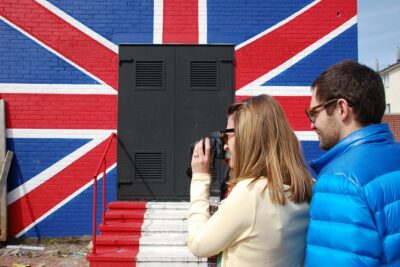
Reviewed · POLITICAL AND PROTEST MURAL TOURS
IRA Troubles Conflict Private Tour Museum Graves Murals and Political Analysis
Belfast’s past is not tucked away in a museum. It is painted on gable walls, marked on cemetery stones, and built into the gates that still separate neighborhoods. This private tour takes you through that living history from an Irish Republican viewpoint, with stops on Falls Road, Shankill Road, at the peace walls, and in Milltown Cemetery.
I like the access to the Eileen Hickey Irish Republican History Museum, which is not normally open to the public, and I like the private format. You can ask direct questions, linger over a mural, or steer the conversation toward the political issues that interest you. The main caution is clear: this is not a neutral, two-sided account. If you want equal treatment of Republican, Loyalist, and British perspectives, choose a separate balanced tour.
Key details before you book
- A Republican account of The Troubles: The tour explains the conflict, the IRA, imprisonment, hunger strikes, and the peace process through a specifically Republican lens.
- Private museum access: The Eileen Hickey museum adds photographs, objects, and accounts connected to Irish Republican history.
- Personal guides: Barry, Paula, Joe, Brendan, Ciarán, Kieran, and Anton are among the guides used for this experience, so the exact style and personal background can vary.
- A packed three-hour route: You cover Falls Road, Shankill Road, Divis, Ballymurphy, Clonard, Milltown Cemetery, murals, memorial gardens, and peace walls.
- Private transport and hotel pickup: Central Belfast pickup is included from the Leonardo hotel meeting point, with added charges for several other locations.
- Best for serious history learners: The subject is emotional and political, so bring curiosity, patience, and a willingness to hear a strongly framed account.
What this Belfast tour is really about
This is a political history tour conducted from inside the Republican story of Belfast. You are not simply driven past painted walls while a guide recites dates. The route shows how streets, cemeteries, churches, memorials, and barriers connect to one another.
The focus reaches back beyond the 1969 outbreak of The Troubles. Your guide may place the conflict within centuries of British rule, resistance, partition, discrimination, and competing ideas of Irish and British identity. The modern section follows the Provisional IRA, Loyalist groups, the British Army, imprisonment, hunger strikes, and the peace process.
The private format matters here. On a large coach, sensitive questions can be hard to ask. In a private vehicle, you can stop to clarify a term, ask how a memorial is interpreted, or request more time at a particular site. Several guides, including Barry, Paula, and Joe, are described as bringing personal memories of Belfast into the tour. That can make the history more immediate, but it also reinforces the need to listen critically.
The experience is advertised at $255.50 per person. That is a serious price for three hours, especially for a solo visitor. For a couple, family, or small group, the cost buys private transport, a tailored route, hotel pickup from the central meeting point, and access to places many standard tours do not include. The value is strongest if you want a focused political tour rather than a broad introduction to Belfast.
More Private Mural Tours in Belfast
- Belfast: Private Black Taxi Cab Political Murals Tour
★ 4.9 · 425 reviews - 2 Hour Private Belfast Taxi Cab Tour of Troubles & Peace walls
★ 5.0 · 240 reviews - Private Political History & Murals Tour Belfast
★ 5.0 · 182 reviews
Falls Road murals and the first look at the divide
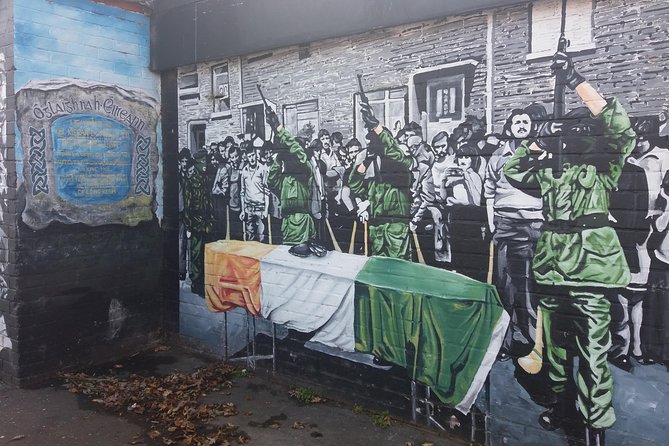
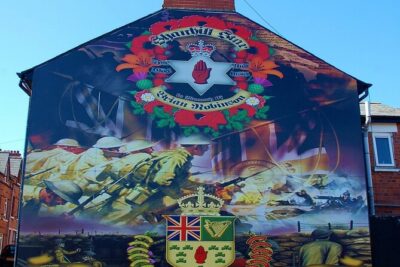
The tour begins around the International Mural Wall on Divis Street and the wider Falls Road area. This is the Republican heartland, where murals cover walls with images of prisoners, hunger strikers, political leaders, international struggles, and Irish national identity.
Your guide explains how the conflict developed after 1969 and how former prisoners helped create many of the politically charged murals. The point is not only to identify famous paintings. You learn why murals became a public record for communities that felt excluded from official accounts.
You may spend only about ten minutes at the first mural stop, but the driving route adds more context. Ask your guide to explain the symbols and names you see. Republican murals can be dense with references, and a quick photograph without explanation misses much of what makes them important.
One practical point: this is a photographic stop, but it is also a residential area. Listen to your guide about where it is appropriate to stand and take pictures. The tour is designed to explain the neighborhood, not treat it as a backdrop.
Peace walls, peace gates, and writing your name
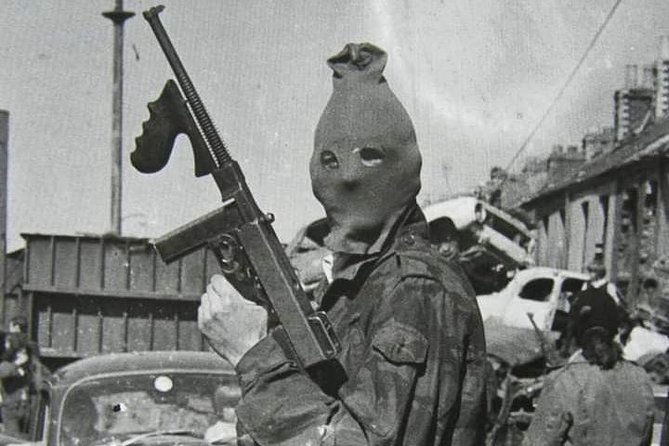
The peace walls are among Belfast’s most striking sights because they remain part of ordinary city life. These barriers separate mainly Republican and Nationalist Catholic districts from mainly Loyalist and Unionist Protestant districts.
You visit both sides of a peace wall and hear why the barriers were built. The first walls appeared after sectarian violence in 1969, when homes and streets were attacked and burned. They were meant as a temporary safety measure. Instead, many remained, grew longer, and multiplied. Around one-third were built or extended after the IRA ceasefire of 1994.
The best part of this stop is the chance to see the wall from both communities rather than viewing it from only one side. You can also write your name and a message of peace. That small act is easy to dismiss as tourist decoration, but it gives you a moment to consider how unusual it is for a city in Europe to maintain such visible divisions.
The famous barrier between Shankill Road and Falls Road stretches for about 800 metres and rises in several levels. The scale makes the separation physical, not symbolic. Gates on some roads still close at night, a reminder that the peace process did not erase fear or mistrust.
Shankill Road and the Loyalist side
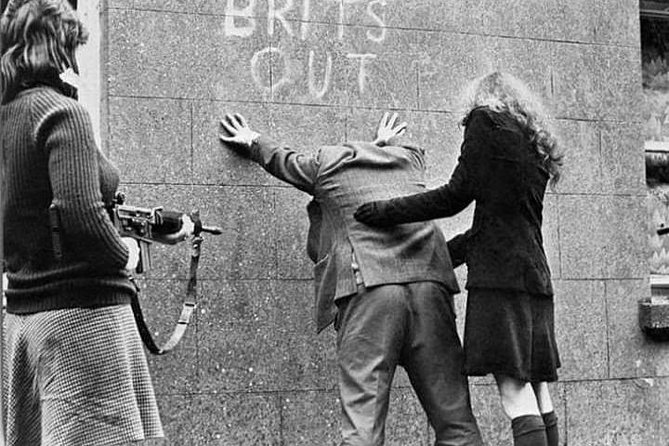
The route crosses into Shankill Road, the historic center of Ulster Loyalism. Here the murals feature Loyalist paramilitary groups such as the UDA, UFF, and UVF, often showing masked men, weapons, flags, and memorial references.
This stop is important even on a Republican-focused tour. You cannot understand the Falls Road without seeing the community directly across the interface. The guide explains how Loyalism developed, why union with Britain matters to many residents, and how paramilitary groups operated during the conflict.
Still, the treatment is not designed as a full Loyalist history tour. The overall narrative returns to Republican experience and Republican interpretations of events. If you want a carefully balanced account of competing claims, victims, and political goals, you will need another tour or additional reading. That limitation is not hidden, but you should be comfortable with it before paying.
More Private Mural Tours in the UK
- Award Winning Private 2 Hour Belfast Political Black Taxi Tour
★ 5.0 · 53 reviews - World Famous Private Belfast Troubles Taxi Cab Tour 2 Hour
★ 4.5 · 14 reviews - Belfast political history and mural unique private 90 min tour
★ 5.0 · 10 reviews - 2 Hour Terror and Mural History Belfast taxi Private Tour
★ 5.0 · 7 reviews
Clonard, Bombay Street, and the memory of 1969
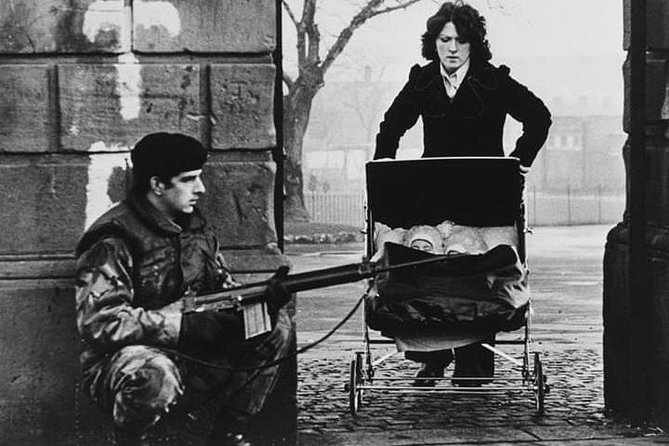
At Clonard, you see the area around Bombay Street, one of the places most closely linked with the violence of August 1969. Loyalist attacks forced Catholic residents from their homes, and much of Bombay Street was burned.
The Clonard Martyrs Memorial Garden carries a heavy load of names and symbols. Its black gates include a rising phoenix and the phrase Out the Ashes Arose The Provisionals. Inside are Celtic crosses, memorial plaques, lists of Republican volunteers, civilian victims, and deceased Republican prisoners from different periods.
The memorial does not attempt distance. It honors those remembered as Republican volunteers and those killed by Loyalist groups or British forces. Your guide can explain the language of the inscriptions and how the garden fits into local commemorations.
You also visit Clonard Monastery, a Catholic Redemptorist monastery located near the interface between Falls Road and Shankill Road. Priests from the monastery worked to protect residents and later played important roles in peace efforts. Fathers Alec Reid and Gerry Reynolds are especially associated with attempts to build communication across the divide.
The monastery adds a different note to the tour. It shows that religious buildings were not only places of worship during The Troubles. They could also serve as shelters, meeting places, and channels for negotiation.
Milltown Cemetery and Bobby Sands
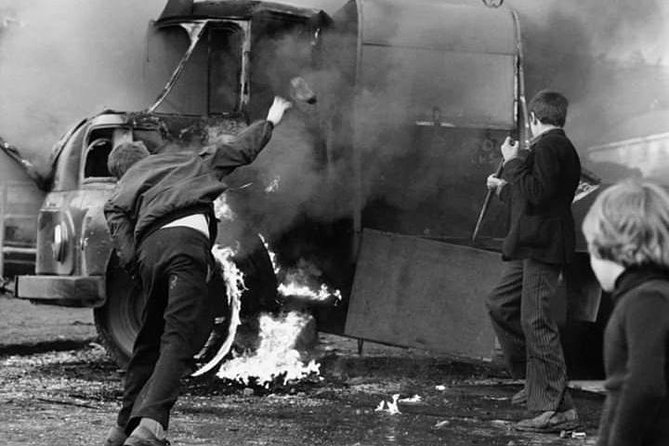
Milltown Cemetery is one of the most emotionally demanding stops. In the Republican plots, you see the graves of volunteers from different periods, including the 1920s, the 1940s, and the later conflict.
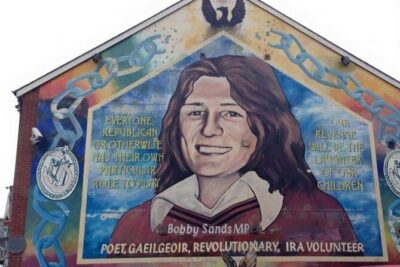
The cemetery is also associated with Bobby Sands, the IRA prisoner who died after 66 days on hunger strike in 1981. Sands had been elected as a Member of Parliament while imprisoned, and his death became an international political event. Your guide explains the blanket protest, the dirty protest, the removal of special category status, and the hunger strikes that followed.
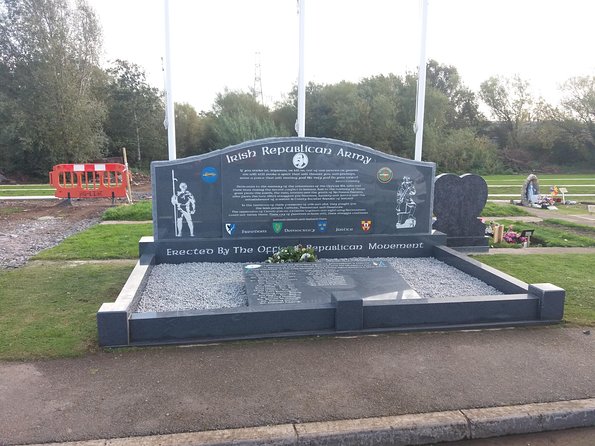
The Republican plots are maintained by the National Graves Association, Belfast. Graves are marked with the Red Hand, and the New Republican Plot includes the remains of 77 IRA volunteers, including Mairéad Farrell.
Allow yourself time here. The official stop is about 25 minutes, longer than many of the mural visits. That makes sense because the cemetery requires attention to names, dates, and competing memories. One drawback is that some people may find this section too long within a three-hour tour, especially if their main interest is murals and contemporary politics. If you have a family grave to visit, the private format can help: one guide even stopped so a couple could buy flowers for a relative.
Bobby Sands murals and gardens of remembrance
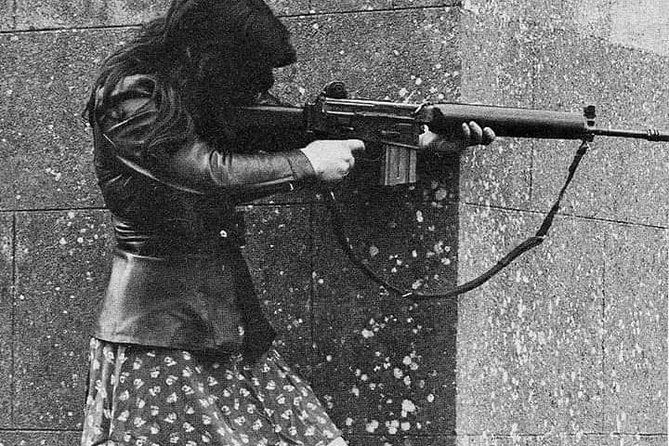
The route includes the well-known Bobby Sands mural, where you learn more about his political background and the 1981 hunger strike. It also visits the D Company, or Dogs, Garden of Remembrance and the Second Battalion IRA memorial area.
These gardens remember local volunteers and connect personal names to the wider Belfast Brigade. The brigade was organized into battalions covering districts such as Falls Road, Clonard, Ballymurphy, Andersonstown, Ardoyne, the Markets, and Short Strand.
You also see photographs of 12 of the 22 hunger strikers. That detail gives the hunger strike a human scale. It is no longer only a political episode described in textbooks. You are looking at faces, names, and local connections.
At the same time, remember that memorial gardens present a particular moral view of the conflict. They honor people as volunteers and patriots. They do not offer equal space to all victims or describe the same actions in the language used by their opponents. Your guide can explain that framing, but you should not mistake a memorial for a complete account.
The private Irish Republican History Museum
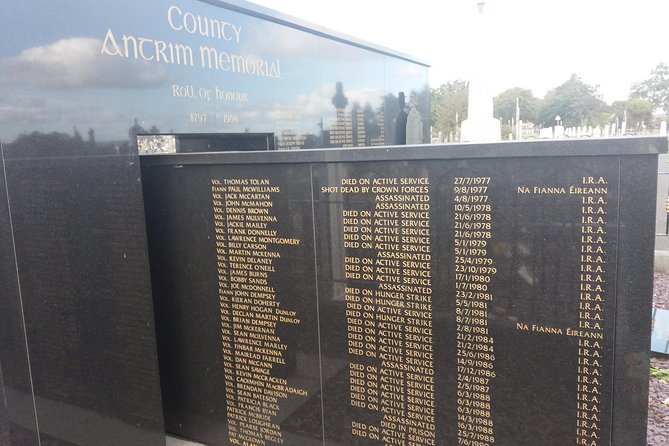
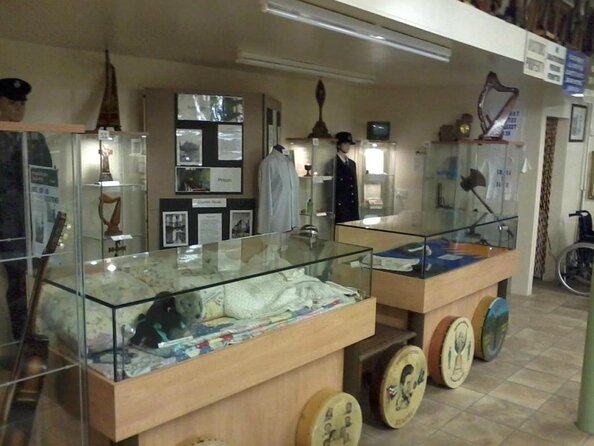
The Eileen Hickey Irish Republican History Museum is the tour’s most unusual feature. It is normally open only from 10 a.m. to 2 p.m., Tuesday through Saturday. If it is closed, the route substitutes a visit around Ballymurphy.
The museum covers resistance to British rule across a long period, with particular attention to Irish Republican activity. You may meet former prisoners of war who share their experiences of The Troubles. You can also see and handle plastic and rubber bullets used by British Crown forces, adding a physical element that photographs cannot provide.
This is the point where the private tour has its clearest advantage over a standard city drive. Access to a small collection and the chance to ask questions of people connected to the conflict can make the visit feel direct and personal.
Do not expect a neutral national museum. The collection reflects Republican memory, language, and priorities. That is exactly why it is valuable, provided you approach it as one viewpoint among several. I would read a little beforehand and take notes. The museum section can move quickly, and the subjects are too dense to absorb in a casual glance.
Divis Tower, Ballymurphy, and local memory
Divis Tower rises over the Falls area and became associated with British Army surveillance, including a sniper position and observation post that remained until 2005. The tower also overlooks murals and memorials connected with the first victims of The Troubles.
The drive continues through Ballymurphy, where murals reference An Gorta Mór, the Great Famine, and local Republican volunteers. You may see the mural dedicated to Jim Bryson and the large machine gun known as Big Louie. The guide explains how local streets became part of the conflict and how residents remember those who took part.
Divis also includes a welcome wall and views into the Republican heartland. These stops are brief, often around five minutes each, so they work best as part of the driving commentary rather than as long independent visits. If a particular mural catches your attention, use the private format and ask whether the route can pause there.
The guide makes or breaks the experience
The exact guide matters. Barry is repeatedly associated with detailed historical explanations, flexible routing, and personal memories. Paula is described as warm, accommodating, and strong at connecting sites with her own experiences. Joe is noted for sharing first-hand memories, while Brendan, Ciarán, Kieran, and Anton also appear among the guides connected with the tour.
Because several people lead the experience, you should expect differences in tone and emphasis. One guide may focus on political history, another on local stories, and another on personal experience. Accent clarity can vary, too, so ask questions if you miss a name or date.
The private setting lets the guide adjust the route. If you are especially interested in prisons, murals, the peace process, cemetery memorials, or the history before 1969, say so at the start. The strongest version of this tour is conversational rather than scripted.
Pickup, price, and practical matters
Free pickup is offered from the Leonardo hotel meeting point in central Belfast. Other locations can cost extra, including Lanyon train station, St George’s Market, the Titanic museum, Crumlin Road Gaol, Queen’s University, the Botanical Gardens, and the Ulster Museum. Cruise ship pickup and drop-off cost extra, and airport pickup is not offered.
The vehicle is private, air-conditioned, and handles the driving between stops. The listed duration is about three hours, and most travelers can participate. The tour is offered in English and includes mobile ticketing.
A Mercedes-Benz V-Class upgrade may be available for an additional £25. Group discounts are offered, which can make the $255.50 per-person price easier to justify for a small party. Tips are not included.
The cancellation rule is simple: cancel at least 24 hours before the start time for a full refund. Changes or cancellations inside that window are not accepted.
Who should book this tour?
Book it if you want a concentrated look at Belfast’s Republican history, prefer a private vehicle, and value access to a small museum and memorial sites. It suits people who already have some interest in Irish history and want local detail rather than a quick city overview.
You should also book it if you want room for questions. The private format is especially useful for families or friends with a shared interest in politics, conflict, and memory.
Think twice if you want a neutral account of The Troubles. The tour openly favors the Irish Republican perspective, and one guide may frame the conflict more strongly than another. In that case, pair it with a tour that gives equal weight to Loyalist and British viewpoints.
FAQ
How long does the tour last?
The tour lasts approximately three hours.
What perspective does the tour present?
It presents The Troubles and Irish Republican history from an Irish Republican perspective. It discusses Loyalist groups and British forces, but they are not given equal treatment as part of a fully balanced account.
Is the tour private?
Yes. Only your group participates, and private transportation is included.
Where is pickup offered?
Free pickup is offered from the Leonardo hotel in central Belfast. Extra charges apply for several other central locations, train stations, the cruise port, and destinations outside central Belfast. Airport pickup is not offered.
Is the Irish Republican History Museum always open?
No. The museum is open from 10 a.m. to 2 p.m., Tuesday through Saturday. If it is closed, the tour visits Ballymurphy instead.
Can I visit Milltown Cemetery?
Yes. The tour visits the Republican plots at Milltown Cemetery and the resting place associated with Bobby Sands.
Can I write a message on the Peace Wall?
Yes. The tour includes the chance to sign your name and write a message of peace on the wall.
What is included in the price?
Private transportation, an air-conditioned vehicle, central hotel pickup, the private itinerary, guide service, visits to the murals, peace walls, Milltown Cemetery, and the Irish Republican History Museum when open are included. Tips and certain pickup charges are not included.
More street art museums and galleries in Belfast
- CDMX: Xochimilco, Coyoacan, Frida Kahlo Museum & Murals Tour
★ 4.4 · 3,025 reviews - Amsterdam: Streetart Museum STRAAT Entrance Ticket
★ 4.8 · 2,137 reviews - STRAAT Museum – Museum for Street Art Amsterdam Admission Ticket
★ 5.0 · 192 reviews - Miami: Wynwood Walls, Galleries, and Murals Guided Tour
★ 4.6 · 171 reviews
More political and protest murals in Belfast
- Belfast’s Political Mural Taxi Tour
★ 5.0 · 1,180 reviews - Political Wall Murals and Peacewall
★ 4.9 · 247 reviews - Belfast Troubles Murals Street Art and Peace Wall Walking Tour
★ 5.0 · 163 reviews - Belfast Troubles : Murals, Street Art, and Peace Wall Tour
★ 4.7 · 99 reviews
New street art tours in Belfast
- 2 Hours Republican & Loyalist Mural Black Taxi Tour from Belfast★ 5.0 · 21 reviews
- Falls road Murals Walking Tour with former prisoners★ 5.0 · 19 reviews
- Belfast history of terror & mural 1 hr express private taxi tour★ 5.0 · 3 reviews
- 1 Hour Express Belfast Taxi/Cab Tour History, Murals, Troubles★ 5.0 · 17 reviews
- Private Belfast Mural & Giant’s Causeway Tour from Belfast (2 in 1)★ 5.0 · 5 reviews
- World Famous Private Belfast Troubles Taxi Cab Tour 2 Hour★ 4.5 · 14 reviews
- Belfast political history and mural unique private 90 min tour★ 5.0 · 10 reviews
- 2 Hour Terror and Mural History Belfast taxi Private Tour★ 5.0 · 7 reviews
Political and Protest Mural Tours, side by side.
2 Hour Private Belfast Taxi Cab Tour of Troubles & Peace walls
Read our review →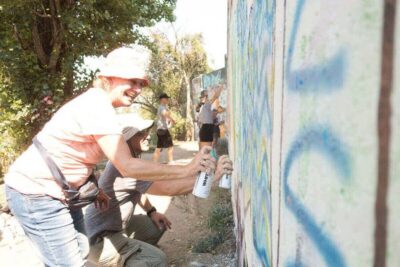
Private Political History & Murals Tour Belfast
Read our review →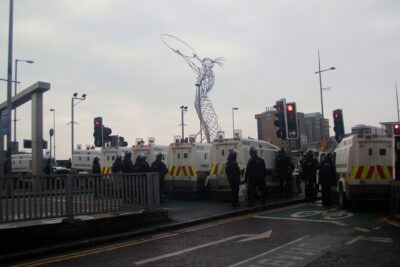
Belfast Troubles Murals Street Art and Peace Wall Walking Tour
Read our review →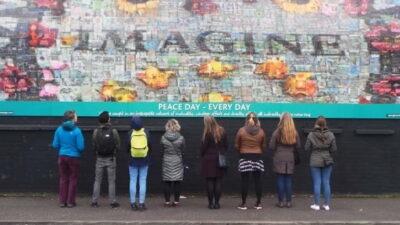
Belfast Troubles : Murals, Street Art, and Peace Wall Tour
Read our review →