
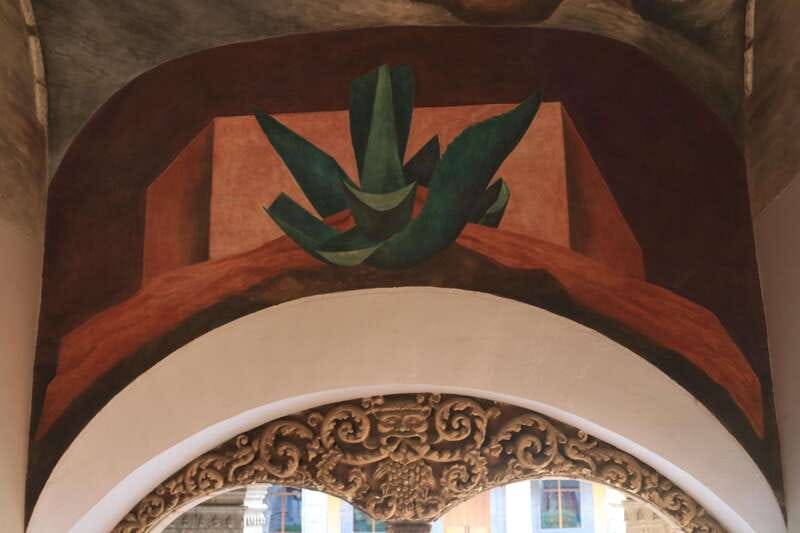
Reviewed · STREET ART MUSEUMS AND GALLERIES
Mexico City: Murals at the Museum of San Ildefonso
The key to this experience is not simply seeing murals, but learning how they turned Mexican social movements into painted history. At the former College of San Ildefonso, historian Cristina Ríos explains each fresco in front of the artwork, with special attention to José Clemente Orozco and the artists who helped shape post-Revolutionary muralism.
I like two things right away: Cristina’s detailed, enthusiastic teaching, and the small group limit of 10, which makes a long discussion about art far easier to follow. The possible drawback is the pace. Two hours inside a museum, with close attention to several murals, may feel slow if you prefer a quick look and a few photographs.
Key points
- Orozco takes center stage: Follow the work of Mexico’s most important post-Revolutionary painter through his powerful frescoes.
- Cristina Ríos leads the visit: She explains each mural’s history, artist, symbols, and political meaning in English or Spanish.
- San Ildefonso is part of the experience: The former college has a 17th-century Baroque facade and murals across two stair levels.
- Small groups keep the lesson personal: The maximum is 10 participants, with headsets provided when more than six people attend.
- Pre-Hispanic images meet social ideals: The murals use popular and ancient references as symbols of education and social transformation.
- Plan for a focused morning: The visit lasts about 2.5 hours and takes place rain or shine.
Why San Ildefonso is the right place for mural history
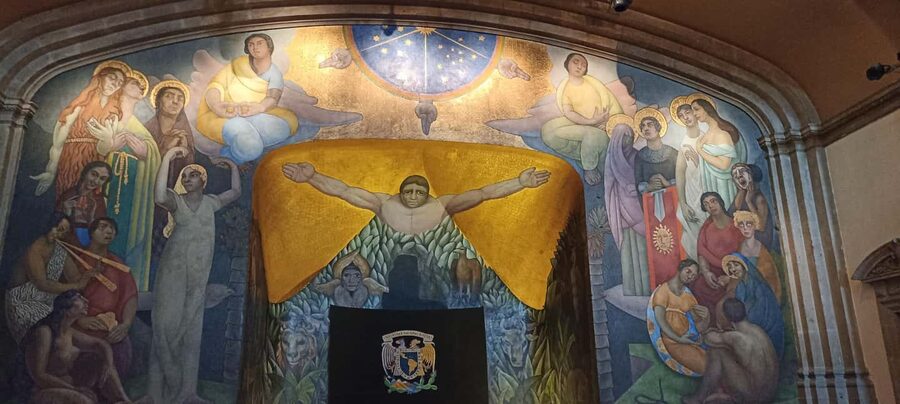
The former College of San Ildefonso gives this tour a useful setting before the first explanation even begins. You meet at the museum entrance on Justo Sierra, near the information desk. The exterior has a 17th-century Baroque facade, while the interior holds murals on two stair levels.
That combination matters. You are not entering a neutral gallery filled with paintings removed from their original setting. The building itself frames the visit, and the stairways make the murals part of the movement through the old college.
For orientation, the meeting point is across from the Templo Mayor ruins and Porrúa’s Library. Cristina Ríos waits with a wine-colored identification card bearing her name around her neck. That detail helps you find her in a busy historic area without a long search.
The location also makes this a practical stop if you are already exploring central Mexico City. Still, the tour does not include transportation, so you need to arrange your own way to Justo Sierra and arrive at the museum entrance.
More street art museums and galleries in Mexico:
- CDMX: Xochimilco, Coyoacan, Frida Kahlo Museum & Murals Tour
★ 4.4 · 3,025 reviews - Diego Rivera at the Living Museum of Muralism
★ 5.0 · 5 reviews - Explore Modern Art & Murals in Mexico City’s Best Museums
★ 5.0 · 2 reviews
What the two-hour museum visit actually covers
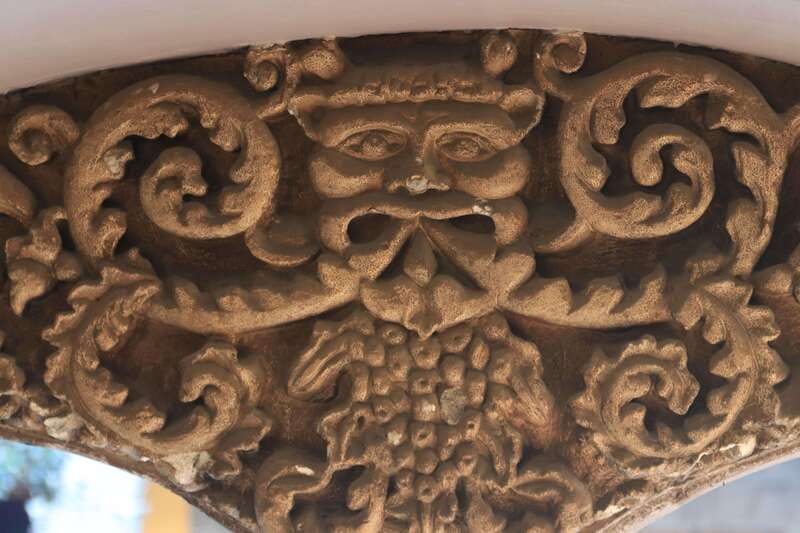
The formal visit lasts about two hours, while the full activity is listed at 2.5 hours. The extra time allows for meeting, getting organized, and moving through the museum at a thoughtful pace.
Expect a guided walk rather than a lecture delivered from one fixed point. Cristina explains the frescoes in front of each work, linking what you see to the artist’s life, style, and the social movements that shaped post-Revolutionary Mexico.
That format is a strong match for mural art. A mural can look crowded at first, with figures, symbols, gestures, and historical references competing for your eye. Hearing the explanation at the wall gives you a way to sort those details without trying to remember them from a general talk at the entrance.
You will spend much of the visit looking closely and listening. This is not a tour built around a fast checklist of rooms. If you want time to think about what the images mean, the pace works in your favor.
Orozco and the founders of Mexican Muralism
José Clemente Orozco is the main figure here. The tour presents his work as a way to study Mexican society after the Revolution, not just as a series of attractive public paintings.
That distinction is important. Orozco’s murals provide a view of social movements through the eyes of an artist who dealt with conflict, public education, political ideals, and the human cost of change. Cristina’s explanations help place the artwork inside that larger story.
You also learn about Jean Charlot, Fernando Leal, and Ramón Alva de la Canal. These artists help show that Mexican Muralism was not created by one painter working alone. The movement grew through several artists who used public art to reach people beyond private galleries and elite collections.
I especially like this part of the tour because it widens the subject. If you came expecting only Orozco, you still get him, but you also leave with a better sense of the circle of artists around him and the ideas they shared.
The tour focuses on the spirit of post-Revolutionary painters through their drawings and murals. The central question is not simply who painted what. It is how art could help create a shared national story and support a new ideal of popular education.
Reading pre-Hispanic and popular references
The murals use pre-Hispanic and popular references as integrative metaphors. In plain terms, older symbols and familiar cultural images are brought into a new political and educational story.
This gives the paintings several layers. A figure or symbol may point backward to Mexico’s pre-Hispanic past while also speaking to a modern hope for social change. The murals do not treat history as decoration. They use it as a tool for thinking about identity, power, and the future.
Cristina’s detailed explanations are most useful here. Without context, you might notice the dramatic figures but miss why certain references matter. With her help, you can connect the visual choices to the idea of building a social utopia through education and public art.
I would not book this tour if you want only a quick introduction to Mexican art. The pleasure comes from following the connections between image, politics, and history. You need to be willing to listen carefully and look at each fresco for more than a few seconds.
More street art tours worth booking in Mexico:
- Cancun Street Food Tour with Food Stalls, Local Market and Murals
★ 5.0 · 723 reviews - Mexico City; ART NACO : Murals & Street Art Bike Tour
★ 5.0 · 284 reviews - History and Murals: Walking Tour Guadalajara
★ 5.0 · 237 reviews - Walking Tour – Impressive murals in Historical Center of Mexico City
★ 5.0 · 224 reviews
The value of a historian-led explanation
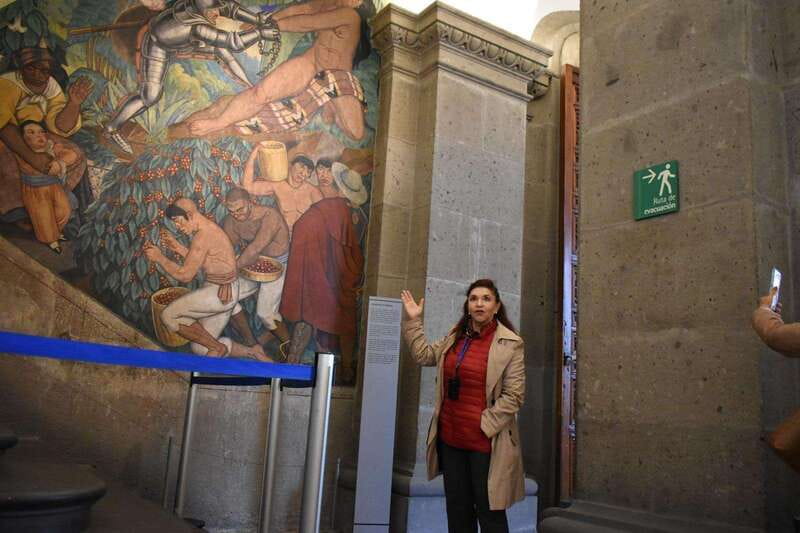
The strongest part of the experience is Cristina Ríos herself. The two verified ratings provided for this activity give her the top score, with particular praise for her detailed narratives, enthusiasm for murals, and ability to explain the artists’ distinctive styles.
Those qualities matter in a museum like San Ildefonso. A guide who simply names the painter and dates the work would leave much of the experience untouched. Cristina’s role is to explain what the mural is doing, where it fits in Mexico’s post-Revolutionary story, and how the artist’s style shapes the message.
The tour is offered in English and Spanish. That makes it easier to choose the language in which you can follow a complex discussion about symbols and political ideas.
The group limit is 10 people. If more than six participants attend, headsets are provided so you can hear Cristina clearly. That is a small but important feature, especially when the group is standing near large walls and museum acoustics are less than perfect.
A private tour is not promised, so you may share the visit with other participants. The 10-person limit still keeps the group small enough for a focused experience, but do not expect an entirely solitary museum visit.
The building, stairways, and physical demands
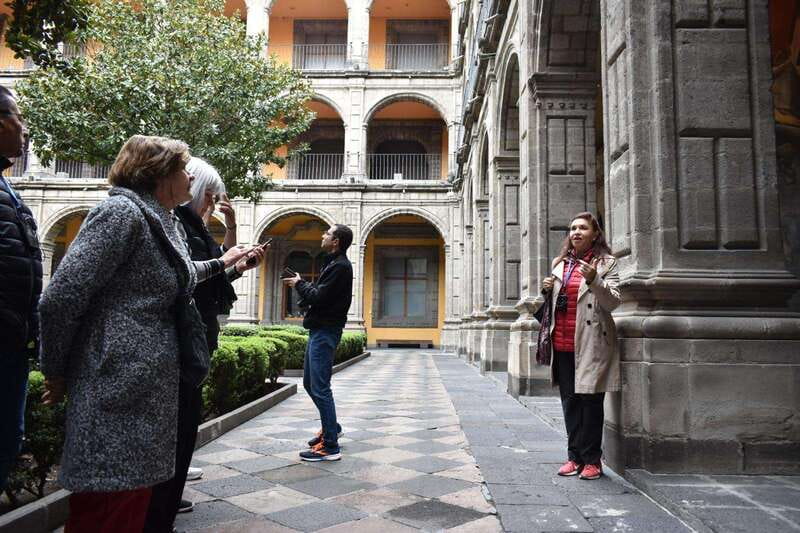
San Ildefonso has two stair levels with frescoes on the walls. Those stairways are part of the route, not just a way to pass between rooms, so you should be prepared for a visit that involves walking and changing levels.
Wheelchair access is available, with elevator assistance offered by the museum. If you use a wheelchair, it is sensible to mention this when arranging the tour so the elevator assistance is ready when needed.
The activity is not intended for children under 10 or people over 95, according to the stated restrictions. That does not tell you how every child or older adult will manage the visit, but it does signal that the experience is designed for a mature audience and a sustained museum discussion.
Strollers, large bags, luggage, food, drinks, bikes, pets, and vaping are not allowed. Assistance dogs are permitted. Travel light and avoid arriving with a suitcase, since this is a museum visit rather than a place to store your day’s belongings.
Is $37 a fair price?
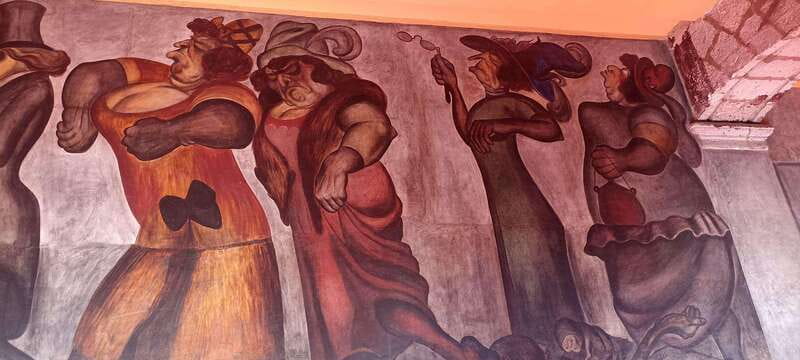
The price is $37 per person. It includes admission to the Museum of San Ildefonso and a live guide with explanations at each fresco. Headsets are included when the group is larger than six.
I see the value in the guide rather than the ticket alone. You can look at murals without help, but the social and political references are much easier to follow when someone explains them beside the artwork. The tour also saves you from having to build your own reading list before visiting.
The price makes the most sense if you care about Mexican history, public art, or the role of painting in social change. It may feel less worthwhile if you mainly want to enter the museum, take a few pictures, and move on.
The small group limit helps support the cost. You are paying for a structured visit with Cristina Ríos, not only admission. Since the total time is about 2.5 hours, this is a substantial part of a morning, so make sure the subject matches your interests.
The booking terms add flexibility. You can cancel up to 24 hours before the activity for a full refund, and you can reserve now and pay later. Starting times vary, so check availability before planning the rest of your day.
Who will get the most from this visit?
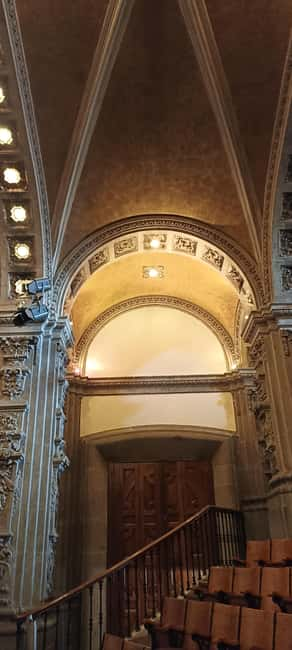
I would recommend this tour to you if you enjoy museums more after someone explains the setting, symbols, and arguments behind the art. It is especially suited to adults and older children who can follow a sustained discussion about social movements and political aesthetics.
Art students, teachers, history readers, and anyone interested in Mexico’s post-Revolutionary period will find plenty to think about. The focus on Orozco and the other early muralists gives you a useful base for seeing public murals elsewhere in Mexico City.
It also works well for visitors who want something more serious than a general sightseeing walk. You are not just passing through an old building. You are spending time with a major art movement and asking what public art was supposed to accomplish.
I would choose another activity if you need a family outing for young children, have large luggage with you, or want a short, informal museum stop. The two-hour visit requires attention, and the no-stroller rule removes an easy option for families with small children.
Practical tips for a smoother morning
Meet Cristina at the entrance of the Museum of San Ildefonso on Justo Sierra, by the information desk. Look for the wine-colored identification card with her name, Cristina Ríos, around her neck.
Give yourself enough time to reach the museum and find the entrance. The nearby Templo Mayor ruins and Porrúa’s Library are useful reference points, but they are not substitutes for confirming the exact meeting location.
Wear something suitable for a museum visit that includes walking and two stair levels. Since food, drinks, large bags, and luggage are not allowed, carry only what you need.
The tour operates rain or shine. A rainy morning will not cancel the indoor portion, but you still need to handle the trip to the meeting point in bad weather.
If hearing clearly is important to you, the headset policy is worth noting. Headsets are provided when more than six people attend. In a smaller group, Cristina will speak without that equipment.
Should you book the San Ildefonso mural tour?
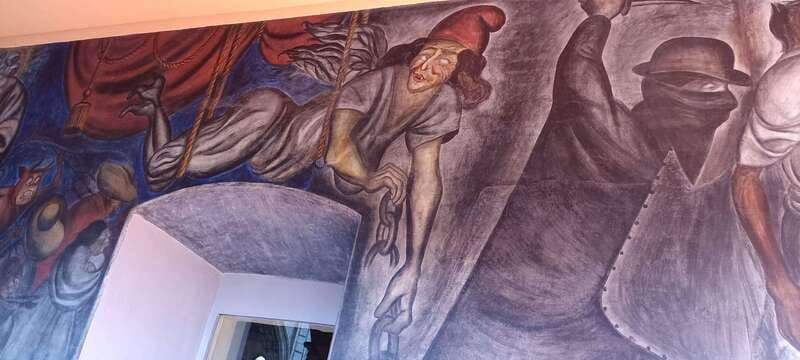
Book it if you want to understand why Mexican muralism mattered, not simply see colorful walls. Cristina Ríos brings the tour’s main strength: careful, enthusiastic explanations that connect Orozco, his fellow muralists, pre-Hispanic references, and post-Revolutionary hopes for education and social change.
The strongest reasons to go are the small group, the fresco-by-fresco teaching, and the chance to study several founding figures rather than one famous name. The main caution is the focused pace. This is a serious museum lesson lasting about two hours, not a quick photo stop.
At $37, I think it is a good choice for curious adults and older children who want context with their art. Arrive light, meet Cristina at the Justo Sierra entrance, and give the murals enough time to speak through her guidance.
FAQ
Where does the tour meet?
Meet Cristina Ríos at the entrance of the Museum of San Ildefonso, the former College of San Ildefonso, near the information desk on Justo Sierra.
How will I recognize the guide?
Cristina Ríos will be wearing a wine-colored identification card with her name around her neck.
How long does the activity last?
The full activity lasts about 2.5 hours. The museum visit itself takes about two hours.
What languages are available?
The live tour guide is available in English and Spanish.
Is the museum visit wheelchair accessible?
Yes. Wheelchair access is available, and elevator assistance is offered. The museum also has two stair levels with frescoes on the walls.
Are entry tickets included?
Yes. Admission to the Museum of San Ildefonso is included, along with the live guided explanations.
What should I not bring?
Food, drinks, luggage, large bags, bags, baby strollers, baby carriages, bikes, and pets are not allowed. Assistance dogs are permitted. Vaping is also not allowed.
New street art tours in Mexico
- Xochimilco floating gardens, Coyoacan and UNAM murals★ 4.0 · 6 reviews
- UNAM: Murals & Revolution★ 4.9 · 8 reviews
- Graffitis & Munchies biketour Playa del Carmen★ 4.5 · 18 reviews
- Street Art & Cemetery Cultural Tour – half day★ 5.0 · 3 reviews
- Street Art Walk★ 4.5 · 7 reviews
- Tour Women Muralists : Strokes that resist Mexico City★ 5.0 · 7 reviews
- Mexico City Private Tour with Teotihuacan, Murals, Guadalupe Basilica★ 3.0 · 2 reviews
- Diego Rivera’s murals, hidden treasures★ 5.0 · 21 reviews
Street Art Museums and Galleries, side by side.
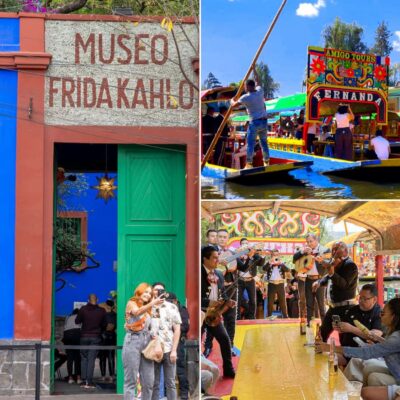
Xochimilco, Coyoacan, Frida Kahlo Museum & Murals Tour
Read our review →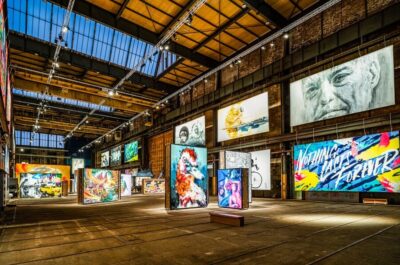

STRAAT Museum – Museum for Street Art Amsterdam Admission Ticket
Read our review →
Wynwood Walls, Galleries, and Murals Guided Tour
Read our review →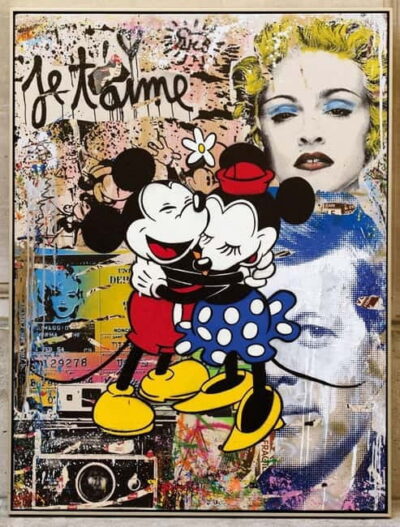
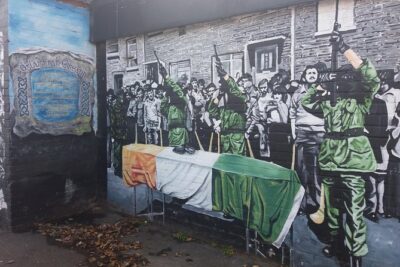
IRA Troubles Conflict Private Tour Museum Graves Murals and Political Analysis
Read our review →
MACA Museum ‘Banksy & Street Art: The Early Years’ Art Exhibition
Read our review →Lists this wall walk turns up in