Reviewed · STREET ART WALKING TOURS
Lisbon: Street Art Walk
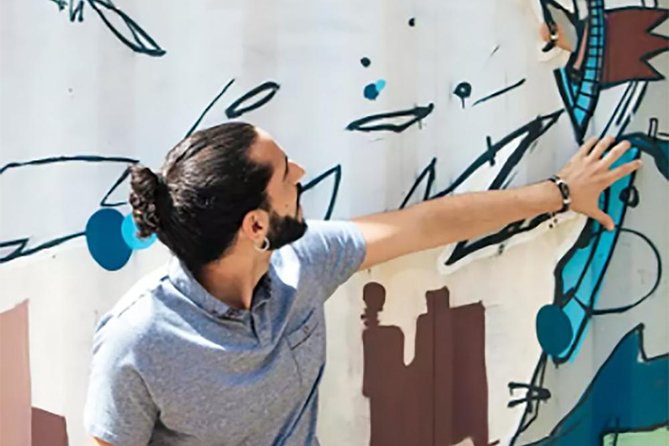
Lisbon’s best street art is not always on the main sightseeing route. This three-hour walk takes you through Graça, Mouraria, and historic Alfama, where painted walls, stencils, murals, and small surprises appear around corners, stairways, and side streets. The guide is presented as artist Mr.Red, while most published comments identify him as Igor. One names him Iwan, so confirm the guide’s name when booking.
I especially like two things here: you get an artist’s view of the work, and the walk connects the art to Lisbon’s old neighborhoods rather than treating each wall as a stand-alone photo stop. The main consideration is the hills. Lisbon is up and down, and one person found three hours a little long, with two hours feeling more suitable.
Key points to know
- Artist-led route: Mr.Red, usually identified as Igor, explains techniques, artists, local rules, and the difference between street art and simple tagging.
- Graça is the main stage: Expect work by Obey Giant, Vhils, Bordalo II, Ozearv, Daniel Eime, and others.
- Fresh walls can change: Caracol da Graça and Rua Josefa de Obidos may feature recently painted work, and you might see artists working.
- History comes with the murals: The walk gives you a broad view of Alfama and Lisbon’s older districts as you move between artworks.
- Small-group feel: Private or small-group arrangements are available, with groups of up to 10 people.
- Plan for hills: Comfortable shoes, sunscreen, sunglasses, and light clothing matter. Large bags and luggage are not allowed.
Meeting your artist-guide at Largo da Graça
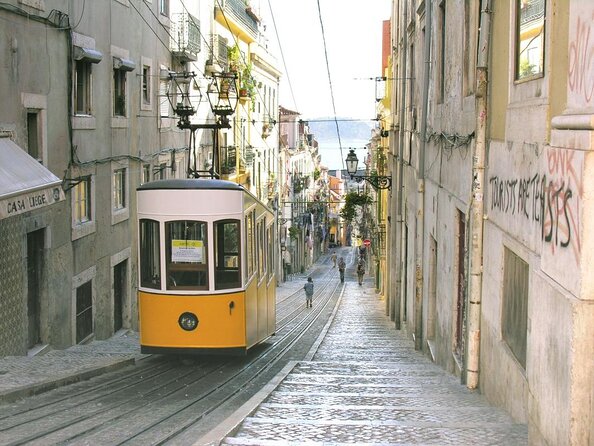
The walk begins at the Coreto da Graça, the small bandstand at Largo da Graça, in front of Desgraça Restaurant. Arrive about 10 minutes early. This is a useful start point because Graça quickly puts you among Lisbon’s steep streets, old buildings, viewpoints, and painted surfaces.
The guide is described as Mr.Red, an artist who works in the local street-art scene. Most of the detailed comments call him Igor and praise his enthusiasm, clear explanations, and personal links to artists. One comment names Iwan instead. That small naming difference is worth checking before you set off, especially if meeting your guide depends on a phone contact.
You do not need to be an art expert. The walk is built for curious people who want help reading what they see. Igor’s style, based on the available descriptions, includes stories about materials, methods, motives, and the informal rules of street art. He also explains why a carefully made piece can be painted over or tagged later. That point gives the subject some useful honesty: public art is temporary, and artists cannot assume their work will remain untouched.
More Street Art Walking Tours in Lisbon
- Lisbon: Kickstart Street Art Walking Tour
★ 4.9 · 717 reviews - 3-Hour Guided Street Art Walking Tour of Lisbon
★ 5.0 · 278 reviews - Lisbon Street Art Walking Tour
★ 5.0 · 141 reviews
Graça: Lisbon’s open-air art classroom
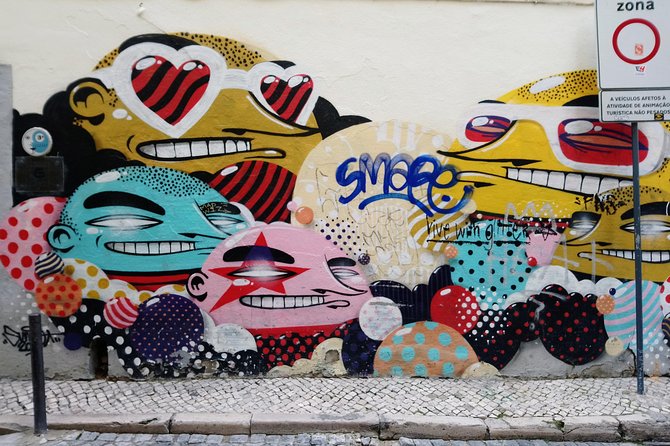
Graça is where the tour’s strongest material appears to be concentrated. The neighborhood’s lanes and slopes create a natural route between larger murals and smaller works. Keep looking both up and down. Art can sit high on a wall, low beside a doorway, or tucked into a passage you would probably miss alone.
You may see work linked to Obey Giant, Vhils, Bordalo II, Ozearv, and Daniel Eime. These names represent different approaches to street art, so the guide’s explanations matter. A mural by Vhils, for example, is not simply something to photograph. The point is to understand how the artist’s method changes the wall itself. Other works may use bold graphic shapes, recycled material, paste-ups, or painted portraits.
The route is not just a hunt for famous signatures. It also shows how street art shares space with ordinary Lisbon life. A painted wall might sit beside a residence, restaurant, or worn stairway. That mix is part of the appeal, but it also means the exact route and artwork selection can change. Public art is exposed to weather, construction, new commissions, and fresh paint.
The tour is particularly useful if you have already seen Lisbon’s grand monuments and want a different way to read the city. Instead of moving from one formal attraction to another, you notice how artists respond to old walls, narrow streets, and neighborhood identity.
Obey Giant, Vhils, and the major works
The itinerary specifically includes pieces connected with Obey Giant, Vhils, Add Fuel, Mário Belem, Aka Corleone, and Ozearv. Seeing several artists in one walk gives you a broad introduction to Lisbon’s street-art scene, rather than focusing on only one famous mural.
The guide’s role is important here. Without context, you may simply see a large image and move on. With an artist leading the walk, you can ask about technique, meaning, the artist behind the work, and the local response to it. Several detailed accounts praise the way the guide explains the difference between art and tagging. That distinction is valuable in Lisbon, where polished murals, quick tags, political pieces, and temporary works can appear within the same block.
Do not expect every named artist to be represented by a permanent stop on every departure. The information says you will see work from these artists, but street art changes. A wall may be covered, restored, or replaced. Think of the names as a guide to the scene and the kind of work you are likely to encounter, not a guarantee that every listed piece will look exactly as expected.
Photography is an obvious pleasure here, but I would give the guide your attention first. The visual details are easy to capture later. The explanation of why a piece was made, how it was produced, or why it remains in place may be the part you cannot recreate by walking around with a map.
Secret places and the International Women’s Day gallery

One special stop is described as a street-art gallery created for International Women’s Day 2025. This is the kind of place that makes a guided route worthwhile. It may not be part of the standard monument circuit, and its meaning is tied to the event and the artists involved.
The word gallery here refers to an artistic setting in the streets, not necessarily an indoor museum. That matters if you expect ticketed rooms, opening hours, or formal displays. No entrance fees are included because the walk focuses on public art and neighborhood spaces.
The route also includes less obvious locations in and around the old districts. These secret spots are not named in full, which is sensible: their appeal comes partly from finding them with someone who knows where to look. You should expect discovery rather than a fixed checklist. The guide may point out a piece that is easy to miss, then explain how it fits into Lisbon’s wider street-art culture.
This is also where the tour differs from a standard city walk. You are not only learning dates and buildings. You are learning how a living art scene uses shared space, deals with unwanted paint, and changes from month to month.
More Street Art Walking Tours in Portugal
- Lisbon: Street Art and Historical Walking Tour
★ 4.9 · 42 reviews - Lisbon Street Art Walk
★ 5.0 · 17 reviews
Caracol da Graça and fresh paint
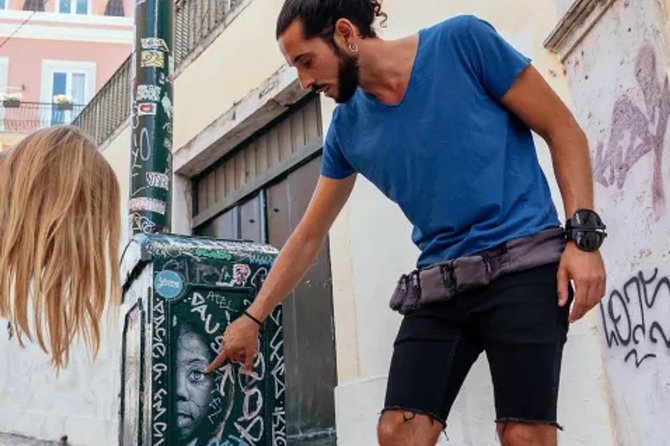
Caracol da Graça is highlighted as a place to find some of the freshest work. You might even see artists painting there if the timing is lucky. That possibility adds a little uncertainty, but it is the good kind. You are seeing public art as an active process, not just as finished decoration.
Fresh work can also mean the route is not identical throughout the year. Lisbon’s walls change. A new mural may appear, while an older piece fades or disappears. If your main goal is one particular artist or wall, ask about current conditions before booking. If your goal is to understand the scene and spot work you would miss on your own, the changing route is a benefit.
Rua Josefa de Obidos is another location associated with newly painted pieces. These stops should appeal to anyone who likes the current moment of street art more than a fixed museum collection. You may not get a perfect lineup of famous works, but you have a better chance of seeing what is new.
Alfama context between the walls
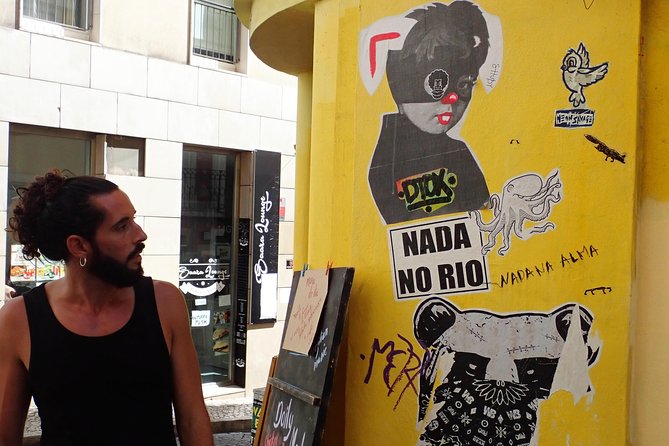
The walk also gives you an overview of the historical Alfama district and other old neighborhoods. The art is the main subject, but the setting adds meaning. Narrow streets, steep passages, old facades, and layered buildings help explain why Lisbon is such a strong place for large-scale public work.
The guide does not simply move you from mural to mural. The broader route helps place the art within the city. One especially useful strength is the way the walk can connect a wall to Lisbon’s past and present. You see how new images sit against older buildings, and how artists work within neighborhoods that have long been shaped by change.
Do not treat this as a replacement for a dedicated Alfama history tour. The supplied information promises an overview, not a full monument visit or museum program. Entrance fees to monuments and galleries are not included, and no formal indoor attractions are part of the package.
Still, this context is a good reason to book early in a Lisbon stay. After the walk, you will likely notice painted details in areas you revisit. The tour gives you a way to look at the city, not just a list of stops.
Three hours, hills, and a group of up to 10
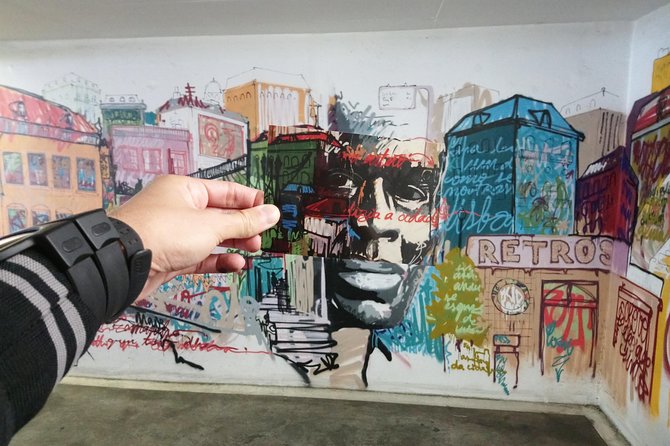
Three hours is enough time to cover several neighborhoods without turning the experience into a quick photo chase. It also gives the guide room to explain artists and answer questions. Several accounts describe the time as passing quickly, but one person felt that two hours would have been ideal. Your interest level matters.
If you love art, three hours should feel useful. You will have time to compare different styles and hear the stories behind more than a few pieces. If you have limited patience for long walks or mainly want a handful of photographs, the duration may feel heavy.
The route is described as private or available to small groups, with up to 10 people. That is a sensible size for narrow streets and discussion. A smaller group also makes it easier to ask questions and stop without blocking the route.
The physical side deserves more attention than it often gets in city-tour descriptions. You should be ready to climb. Comfortable shoes are essential, and sunglasses, sunscreen, and comfortable clothing are sensible choices. The experience is not recommended for people with mobility impairments. Large bags and luggage are not allowed, so leave your suitcase at your accommodation.
There is no hotel pickup or drop-off. You meet at Largo da Graça and finish after the walk, so plan your day around that location. Hand sanitizer is included, as is a small street-art souvenir.
Is $40 a fair price?
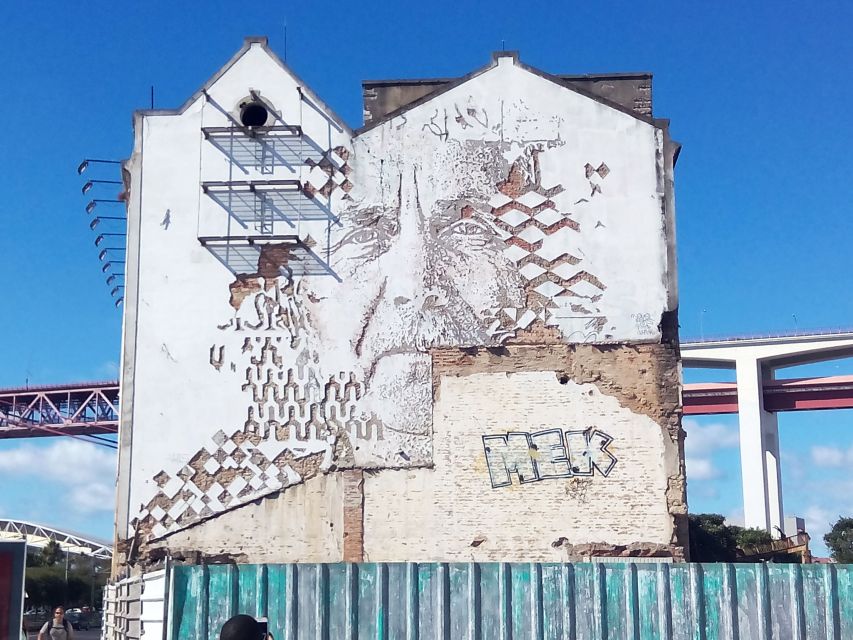
At $40 per person, this is not the cheapest way to walk through Lisbon. You can see public walls for free, and a self-guided route costs nothing beyond your time. The question is what you want from the experience.
The price makes more sense if you value access to places you would not find easily, a small group, and an artist’s explanation of the work. A guide can also save you from spending an afternoon finding isolated murals that have already changed or vanished. The included souvenir is a pleasant extra, but it is not the reason to book.
The value is strongest for first-time street-art visitors and for people who want cultural context rather than a collection of photo stops. If you already follow Lisbon artists closely and know the city’s major walls, you may prefer exploring independently. Even then, the artist’s insider view could add something you would not get from a map.
Free cancellation up to 24 hours before the start and reserve-now, pay-later booking make the commitment easier. Starting times vary, so check availability for the day you want.
Who should book this walk?
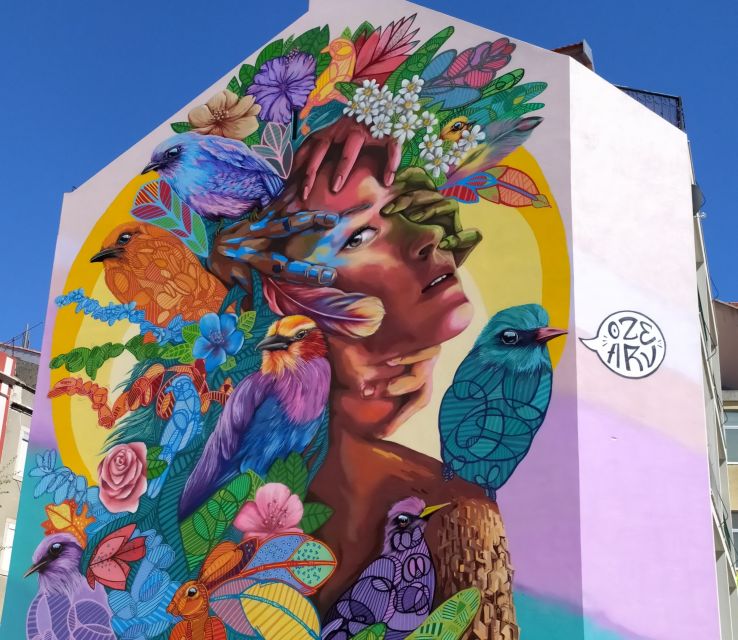
I would choose this for an art-minded visitor who has three hours, can handle steep streets, and wants to see Lisbon beyond the postcard sights. It also suits photographers, design fans, and anyone curious about how public art works in real neighborhoods.
Families with older children may enjoy the visual variety, but the hills and three-hour length are worth considering. People with mobility limitations should not book this route, since the activity is specifically not recommended for them.
If you want a formal museum tour, this is not it. If you want a polished list of guaranteed murals, public art may disappoint because walls change. But if you like a little uncertainty, local stories, and the chance of finding fresh paint at Caracol da Graça, the format has real appeal.
Should you book Lisbon Street Art Walk?
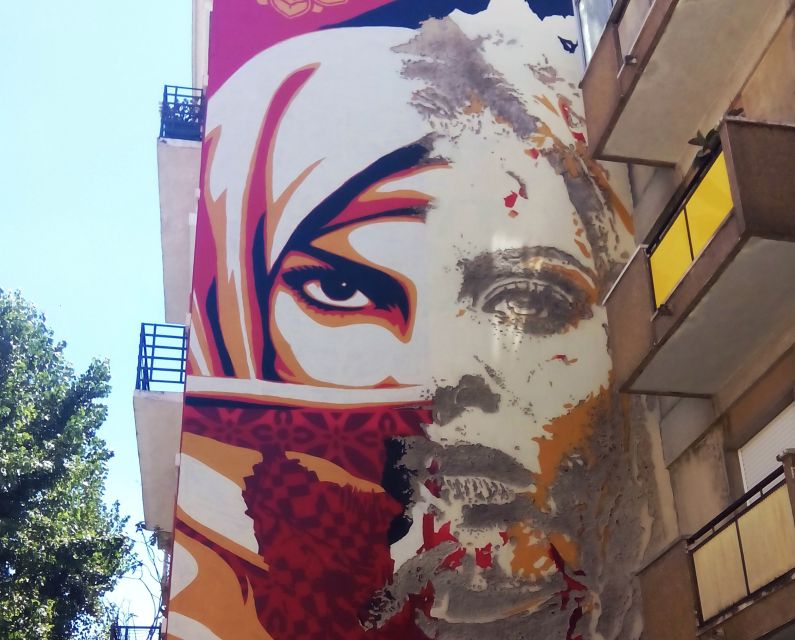
Book it if you want street art explained by an artist, not just photographed from the sidewalk. The strongest reasons are the guide’s personal connection to the scene, the Graça and Alfama setting, and access to less obvious work by artists such as Vhils, Obey Giant, Add Fuel, and Bordalo II.
Skip it if steep walking is a problem, if you dislike three-hour tours, or if you only want a short list of famous murals. For most able walkers with even a small interest in urban art, $40 is a reasonable price for a focused introduction to one of Lisbon’s most changeable and engaging cultural scenes.
FAQ
Where does the street-art walk begin?
Meet your guide in front of the Coreto da Graça at Largo da Graça, in front of Desgraça Restaurant in the Graça neighborhood.
How long does the tour last?
The walk lasts three hours. Starting times vary, so check availability for your chosen date.
Who leads the tour?
The guide is presented as the artist Mr.Red. Most detailed accounts identify the guide as Igor, while one names Iwan. Confirm the guide’s name when booking.
Which neighborhoods does the walk visit?
The route includes Graça, Mouraria, and the historical Alfama area, along with other old neighborhoods and street-art locations.
Is the tour suitable for people with mobility impairments?
No. The walk includes Lisbon’s steep streets and is not recommended for people with mobility impairments.
What should I bring?
Bring comfortable shoes, sunglasses, sunscreen, and comfortable clothing. Large bags and luggage are not allowed.
New street art tours in Lisbon
- Street Art – Tuk Tuk Tour★ 5.0 · 17 reviews
- Lisbon Street Art and Lookout Point Tour★ 5.0 · 17 reviews
- Private Tuk Tuk of the Old Town Lisbon and Street Art Highlights★ 5.0 · 20 reviews
- Street Art Tour by Tuk Tuk Joy★ 5.0 · 2 reviews
- Lisbon Street Art Walk★ 5.0 · 17 reviews
- Lisbon Street Art – Private Tuk Tuk Tour with pickup★ 5.0 · 17 reviews
- Discover Lisbon’s Best Street Art★ 5.0 · 6 reviews
- Street Art at Lisbon★ 5.0 · 2 reviews
Street Art Walking Tours, side by side.


Naples Spanish Quarters Walking Tour Street Art, Folklore & Sweet
Read our review →

Brooklyn Graffiti & Street Art Walking Tour in Bushwick
Read our review →