
Reviewed · STREET ART MUSEUMS AND GALLERIES
Amsterdam: Streetart Museum STRAAT Entrance Ticket
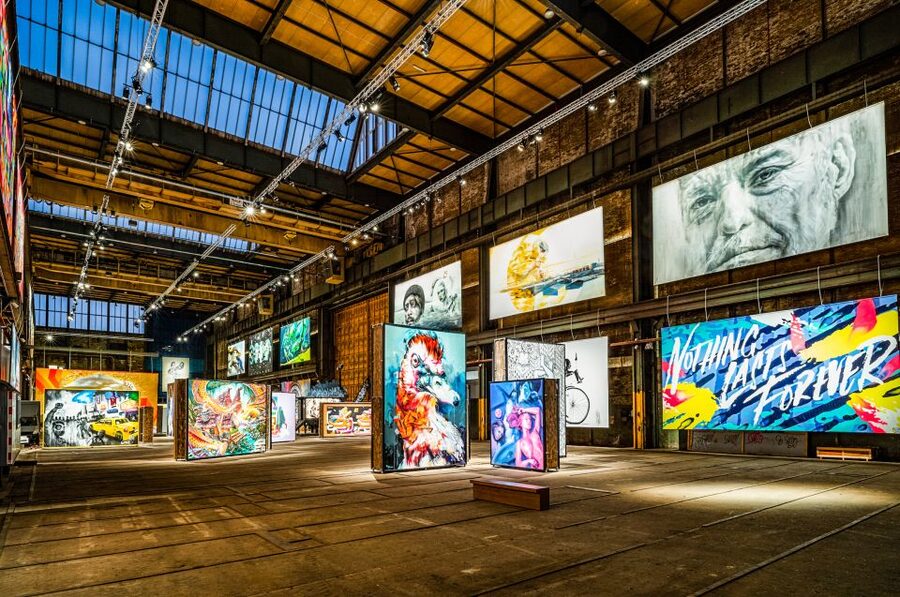
STRAAT Museum puts house-sized street art inside a huge former industrial building, and that scale is the main event. More than 180 works by over 170 artists fill the space, from painted walls to sculptures and large installations. I like the way the museum keeps the rough warehouse character instead of taming the art into tidy little rooms.
I also like that the works were made onsite, so the building feels like part gallery and part working art space. The free ferry from behind Amsterdam Centraal makes the trip easy and pleasant, and the café gives you a warm place to sit above the exhibition. The main drawback is value: at about $25 per person, you may finish in 90 minutes to two hours, and the large hall can feel chilly in colder months.
Key points to know before you go
- 180-plus works in one enormous hall: Expect paintings, sculptures, and installations by more than 170 international street artists.
- A former industrial building: STRAAT’s rough, monumental NDSM setting is a major part of the experience.
- Art made onsite: Many works were created inside the museum, giving the collection a changing, work-in-progress feel.
- Easy ferry access: Free ferries from behind Amsterdam Centraal take you across the IJ to the NDSM area.
- Plan for the cold: The warehouse can be chilly, particularly in autumn and winter, so keep your layers on.
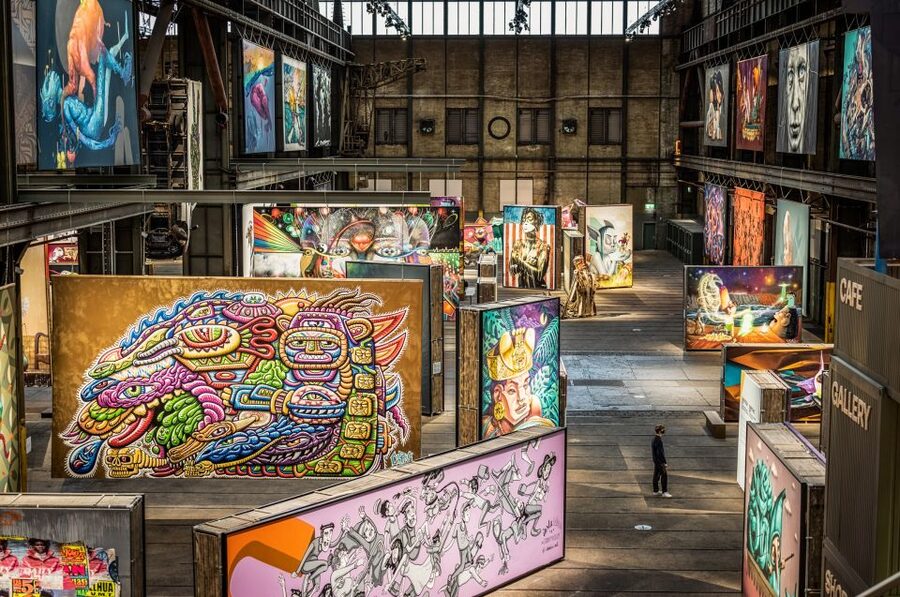
- A café with a high view: Stop for food or a drink and look down across the huge exhibition space from the panoramic deck.
Why STRAAT feels different from a normal museum
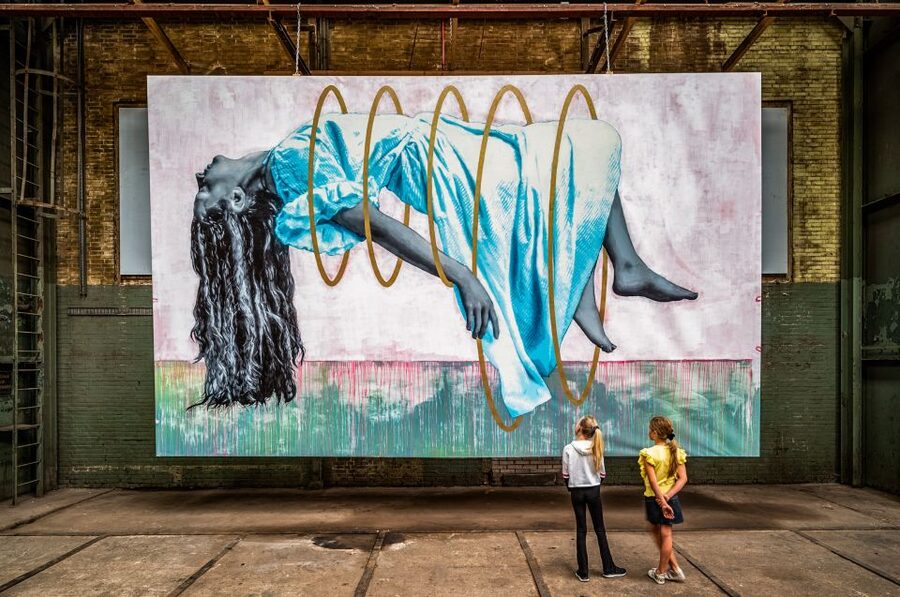
STRAAT is not a quiet collection of small framed paintings. It is a broad industrial hall where the artwork often reaches from floor to ceiling. Some murals are tall enough to feel like the outside wall of a building, while sculptures and installations occupy the open floor around them.
That scale changes how you look. From close up, you notice paint texture, lettering, faces, and tiny details. Step back, and the work becomes part of the architecture. I found this two-level way of looking more rewarding than simply walking from one label to the next.
The building itself is a listed monumental structure, and its quirks suit the collection. Exposed industrial space, high ceilings, and broad sightlines give the art room to breathe. You are not being asked to imagine these pieces on a city wall. The museum shows you what street art can do when it has plenty of room.
This also makes STRAAT a useful stop for people who do not normally seek out graffiti or urban art. You do not need a background in the subject. The colors and scale grab you first, then the information panels and QR codes help explain the artists, ideas, and techniques.
More street art museums and galleries in the Netherlands:
- STRAAT Museum – Museum for Street Art Amsterdam Admission Ticket
★ 5.0 · 192 reviews - CDMX: Xochimilco, Coyoacan, Frida Kahlo Museum & Murals Tour
★ 4.4 · 3,025 reviews - Miami: Wynwood Walls, Galleries, and Murals Guided Tour
★ 4.6 · 171 reviews
The main hall: paintings, sculptures, and giant installations
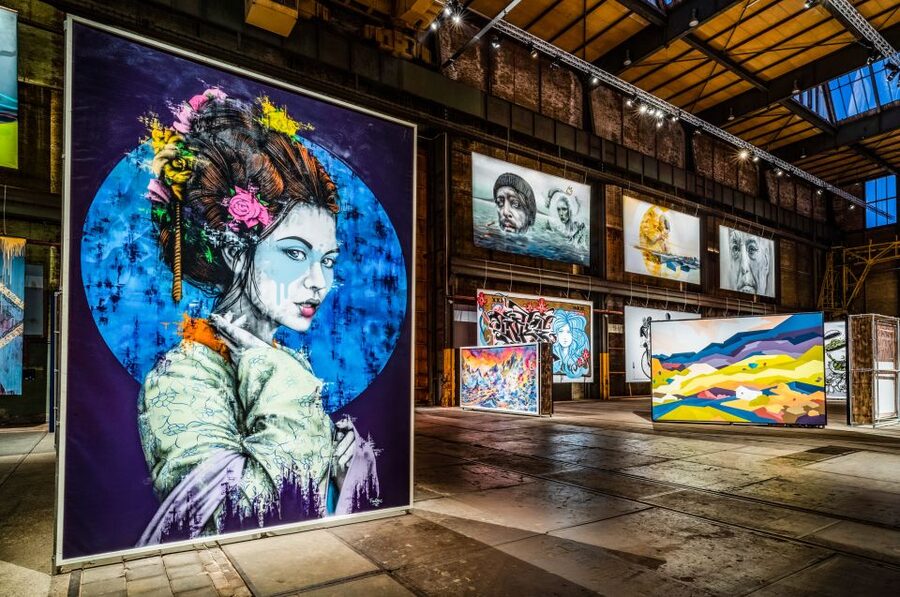
The central exhibition contains more than 180 objects by over 170 artists. That number matters because the collection is not built around one look. You will find bold lettering, figurative murals, abstract work, political ideas, playful imagery, and pieces that sit somewhere between painting and sculpture.
The variety keeps the visit moving. One wall may reward a close look at detail, while the next works mainly because of its size. Some pieces are colorful and cheerful. Others are darker or more thought-provoking. The museum aims to show the range of the street-art scene rather than reduce it to a single style.
I would allow at least 90 minutes if you want a proper look, and two hours if you read the panels and scan the QR codes. You can move faster, but that means you will miss much of what makes the collection useful. The art is large, yet the smaller details often carry the meaning.
A useful approach is to walk once through the main space to get your bearings, then return to the works that caught your eye. The open layout makes this easy. You are not locked into a fixed route, and the self-guided format lets you set your own pace.
There is no guided tour included with the ticket. That is a drawback if you want a specialist explaining the artists as you go. On the other hand, the information panels and QR codes provide context without forcing everyone into the same schedule. A free audio tour has also been available, which can add background as you walk.
Art made inside the museum
One of STRAAT’s most interesting features is that the works were created in situ. The artists did not simply send finished paintings to Amsterdam for display. The museum’s scale allowed many of them to work directly on the walls or within the building.
That gives the collection a different feel from a standard gallery. You can sense the relationship between artwork and space. A mural may use a wall’s height, a pillar, or the open floor in a way that would be hard to recreate elsewhere.
It also explains why STRAAT feels connected to the living street-art scene. The collection is not presented as a finished chapter. New pieces are regularly produced, and focused exhibitions in the STRAAT Gallery look at both the past and future of urban contemporary art.
For you, the practical result is simple: a return visit may not feel identical to the first. The main collection remains the reason to come, but the exhibition can change as new work appears and temporary shows rotate.
The NDSM setting and the free ferry
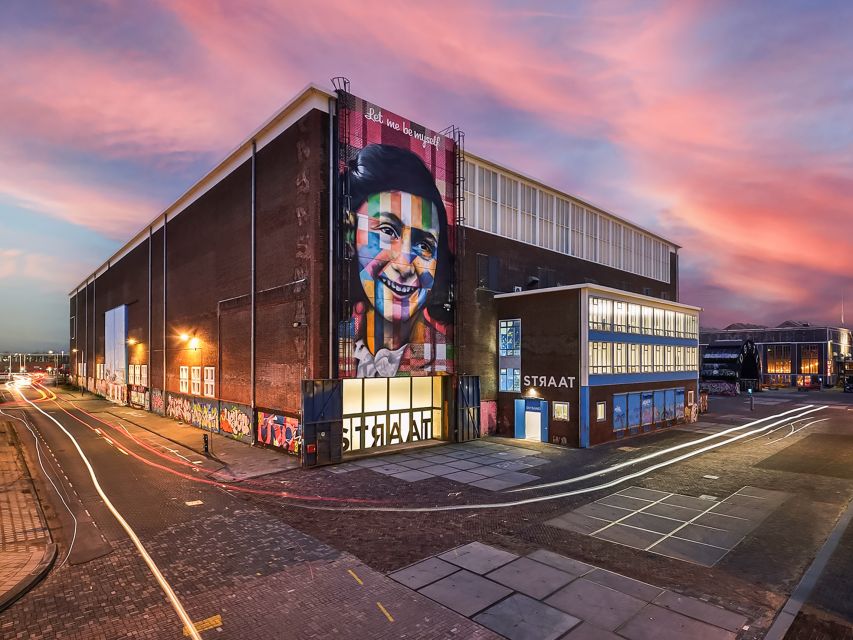
STRAAT is across the IJ in Amsterdam Noord, at the NDSM area. The location may look far from the central canal belt if you study a map, but the free ferry makes it straightforward.
From behind Amsterdam Centraal, take the free ferry toward NDSM. The crossing gives you a short break from central Amsterdam and brings you close to the museum. The ferry is frequent, with departures noted at roughly 15-minute intervals in visitor information, though you should check the current sailing details on the day.
From the ferry landing, it is only a short walk to STRAAT. Some people choose to walk to the museum and return by ferry, but the water route is the simplest way to make the visit feel like part of your Amsterdam day. You can also combine STRAAT with time outside around the NDSM grounds, where there are bars, cafés, and more large-scale art nearby.
The setting is one reason I would not treat this as a quick museum stop between central attractions. Plan the ferry crossing and some time around NDSM. The trip away from the historic center is part of the appeal, even if the museum is your main goal.
More entry tickets in the Netherlands:
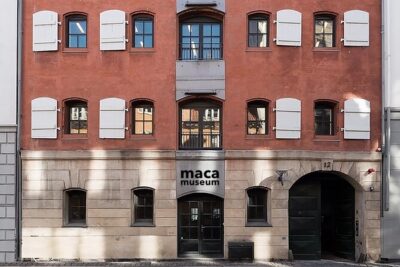
- Copenhagen: MACA Museum: Banksy & Street Art Entry Ticket
★ 4.5 · 142 reviews
A café break above the art
The café is on the museum’s panoramic deck, giving you a view down over the main exhibition. This is more useful than a basic snack counter because it lets you look at the works from another angle.
From ground level, you notice wall texture and small details. From above, you see the scale of the hall and how the works relate to one another. I would save the café for the middle or end of your visit, especially in winter when the warehouse may feel cold.
Food and drinks are not included in the ticket. The café has a good selection of food and drinks, but prices have been described as high. You can keep your costs down by treating the café as an optional viewpoint rather than part of the admission.
The warm seating is a real advantage in colder weather. Several people have found the exhibition chilly, particularly in November and winter. Wear layers, and do not assume that a museum visit means an indoor temperature as warm as a conventional gallery.
How long should you spend at STRAAT?
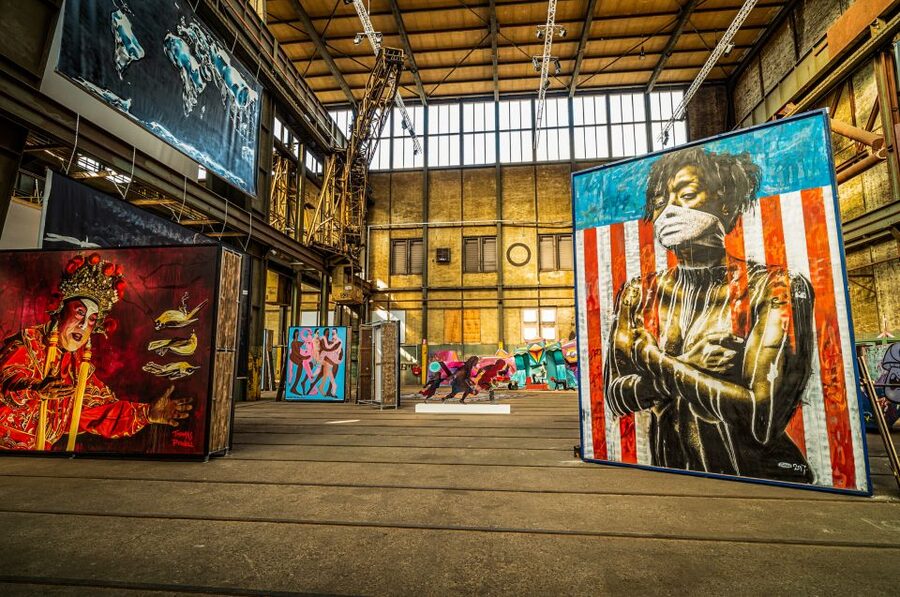
The ticket is valid for one day, so you have flexibility rather than a tightly timed visit. Most people can see the main collection in about 90 minutes to two hours. If you read every panel, use the audio material, visit the gallery, stop at the café, and explore outside, you can easily make it a longer outing.
The large works are quick to photograph but slower to understand. Give yourself extra time if you enjoy reading about artists and the development of graffiti and urban art. The museum includes information about street art and graffiti culture up to the present era, which adds more substance than a simple photo stop.
Families and groups can also set their own rhythm. One person can linger over a piece while another moves ahead. Teenagers and young adults may especially appreciate the size, color, and directness of the art, but you do not need to be an art specialist to enjoy the space.
Is the $25 ticket good value?
At about $25, STRAAT is not a bargain museum ticket. Amsterdam’s major attractions can be costly, and this admission deserves a little thought if you are watching your budget.
I think the price is fair if you have a real interest in street art, large-scale painting, or unusual exhibition spaces. You are getting access to a substantial collection, not a small room with a few murals. The building, ferry trip, viewing deck, and changing works add to the outing.
The calculation is less favorable if you only want a fast visit. You may see the main highlights in around 90 minutes, and one person found the ticket somewhat expensive for the time needed. The café costs extra, and guided tours are not included.
For a couple, family, or group already planning time in Amsterdam Noord, the ticket makes more sense. The free ferry keeps transport costs down, and you can combine the museum with nearby food and outdoor art. If you are crossing the city only for a brief look, decide first how much time you want to spend with the collection.
Who will enjoy this most?
I would recommend STRAAT to anyone who likes street art, graffiti, murals, contemporary art, or large industrial spaces. It is especially good for people who want art that feels direct and physical rather than formal or traditional.
It also works well for mixed groups. An art enthusiast can study technique and context, while someone less interested in museums can still enjoy the color, size, and building. The collection’s range helps prevent the visit from becoming repetitive.
Families with older children and teenagers may find this more engaging than a conventional art museum. One teenager described it as the highlight of a museum-heavy Amsterdam trip, and the easy ferry crossing adds a small sense of adventure.
I would be more cautious if you dislike large open halls, cold indoor spaces, or art without a conventional story. The exhibition can feel less intimate than a small gallery, and some pieces need time and curiosity before their ideas become clear.
Practical details that affect your visit

The museum is wheelchair accessible, which makes the broad industrial layout easier to use for people who need step-free access. English and Dutch are the listed languages, and the host or greeter service is available in those languages.
The museum opens at noon on Mondays rather than 10:00 a.m. That is the detail most likely to catch you out, so check the day before you go. On other days, the stated opening time is 10:00 a.m.
Your ticket covers museum entry only. Food, drinks, guided tours, and purchases from the gift shop cost extra. Cancellation is free up to 24 hours before the visit, and a reserve-now, pay-later option is available if you want to keep your plans flexible.
Should you book STRAAT Museum?
Book it if you want Amsterdam art with scale, color, and an industrial edge. The huge works, onsite production, ferry ride, and NDSM setting make this more than a standard indoor gallery visit.
I would choose it over another museum if you have already seen enough traditional paintings or if your group includes someone who claims not to like museums. Just bring a warm layer, allow at least two hours if you want to read and think, and use the free ferry from Amsterdam Centraal.
Skip it only if $25 feels high for a self-guided visit or if your schedule allows less than an hour. For most people with a free afternoon, STRAAT is a strong choice, especially when paired with the NDSM area and its cafés.
FAQ
Where is STRAAT Museum located?
STRAAT Museum is in the NDSM area of Amsterdam Noord, across the IJ from central Amsterdam.
How do I reach STRAAT from Amsterdam Centraal?
You can take a free ferry from behind Amsterdam Centraal to the NDSM area, followed by a short walk to the museum.
How much does admission cost?
The listed price is about $25 per person.
How long is the ticket valid?
The ticket is valid for one day.
How long should I allow for the visit?
Allow about 90 minutes to two hours for the main collection. You may spend longer if you read the panels, use the audio material, visit the gallery, stop at the café, or explore outside.
What does the ticket include?
The ticket includes entrance to STRAAT Museum.
Are food and drinks included?
No. Food and drinks are not included, but you can buy them at the museum café.
Is a guided tour included?
No. Guided tours are not included. The visit is self-guided, and a free audio tour has been available.
What time does the museum open on Mondays?
On Mondays, STRAAT opens at 12:00 p.m. instead of 10:00 a.m.
Is STRAAT Museum wheelchair accessible?
Yes. The museum is wheelchair accessible.
New street art tours in the Netherlands
- Private Highlights & Art Walking Tour: Markthal, Zadkine, Street Art and Depot★ 5.0 · 2 reviews
- Rotterdam’s Street Art Private Walking Tour★ 5.0 · 2 reviews
- Eindhoven: Self guided Individual Street Art Tour★ 4.0 · 2 reviews
- Street Art Walking Tour, private local Dutch guide★ 5.0 · 7 reviews
- 1,5 hour private guided Mural Street Art tour in Arnhem★ 5.0 · 5 reviews
- Eindhoven: Self-Guided Individual Street Art Tour★ 4.0 · 4 reviews
- Rotterdam Street Art tour: Including specialised guide★ 5.0 · 5 reviews
- Amsterdam: Urban Bike Tour, Graffiti Art & Magnet Fishing★ 5.0 · 9 reviews
Street Art Museums and Galleries, side by side.
Xochimilco, Coyoacan, Frida Kahlo Museum & Murals Tour
Read our review →
STRAAT Museum – Museum for Street Art Amsterdam Admission Ticket
Read our review →
Wynwood Walls, Galleries, and Murals Guided Tour
Read our review →

IRA Troubles Conflict Private Tour Museum Graves Murals and Political Analysis
Read our review →
MACA Museum ‘Banksy & Street Art: The Early Years’ Art Exhibition
Read our review →
Lists this wall walk turns up in