
Reviewed · STREET ART WALKING TOURS
Dusseldorf: Urban Art Walk / Street Art Tour
Düsseldorf’s art scene does not stop at museum doors. On this two-hour walk through Friedrichstadt and Bilk, Klaus Rosskothen of Pretty Portal gallery points out murals, paste-ups, stickers, and installations that are easy to miss when you stick to the usual sights. You’ll see work by artists including MadC, Innerfields, Harald Naegeli, L.E.T., and Alexis Stephens, also known as Bust.
I like the personal guide and the way the route links international urban art with local artists and the story of these districts. I also like that the walk reaches real art locations rather than simply presenting a polished gallery circuit. The main consideration is language: the tour is in German, and one participant found the explanations too quick to follow.
Key points at a glance
- A personal tour with Klaus Rosskothen: The Pretty Portal gallery owner brings 18 years of urban-art experience to the walk.
- A 3 km route through Friedrichstadt and Bilk: Expect a city walk, not a single concentrated mural zone.
- Street art beyond the famous names: The route includes stickers, paste-ups, installations, and urban interventions.
- Artists from Düsseldorf and abroad: Works by MadC, Innerfields, Harald Naegeli, L.E.T., Marc Woehr, Alexis Stephens, and PDOT may appear along the way.
- A German-language experience: Strong background information is part of the appeal, but the pace and language may challenge some participants.
- Good value for art-minded visitors: At $23, the price is modest for a small-group, two-hour guided experience with a specialist.
Seeing Düsseldorf beyond museum walls
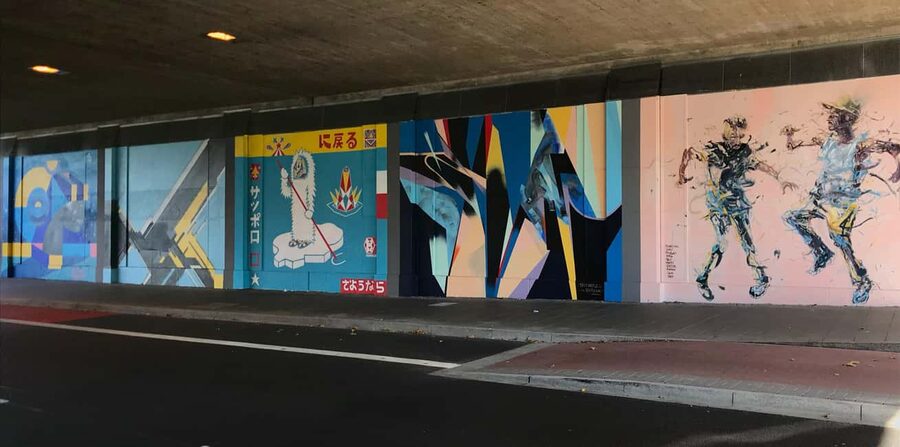
Düsseldorf is known for major museums and galleries, yet some of its most interesting contemporary art sits outdoors, exposed to weather, construction, public opinion, and time. That changes how you look at it. A mural may be large and hard to miss, while a sticker or paste-up can disappear into a wall until your guide draws your attention to it.
I like this kind of tour because it treats the city itself as the exhibition space. You are not only looking at finished images. You are also considering where an artist placed a work, how it interacts with the building, and what happens when the public encounters art without entering a museum.
The Urban Art Walk focuses on Friedrichstadt and Bilk, two districts with their own cultural development and urban character. The route covers about 3 kilometers, so you should expect steady walking over roughly two hours. This is a useful amount of time for a first look at Düsseldorf’s outdoor art without turning the activity into an all-day commitment.
The walk begins at the corner of Ellerstrasse and Willi Becker Allee. From there, the route moves through selected public art sites rather than following Düsseldorf’s standard sightseeing path. You may pass places you would otherwise ignore, which is one of the strongest reasons to book this experience.
More Street Art Walking Tours in Germany
- Berlin: City Street Art Guided Walking Tour
★ 4.8 · 1,051 reviews - Dresden: Neustadt District Street Art Guided Walking Tour
★ 4.3 · 333 reviews - Berlin Street Art Walking Tour – Off The Grid
★ 5.0 · 270 reviews
Meeting Klaus Rosskothen at the starting point
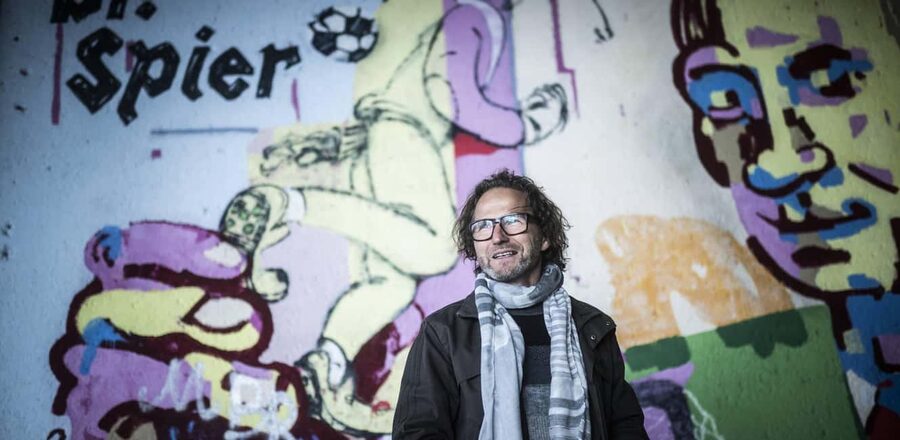
The guide is Klaus Rosskothen, a curator and gallery owner who runs Pretty Portal. His professional connection to urban art matters here because the tour is not simply a list of walls and artist names. The experience includes discussion of how the works came about, what techniques the artists use, and how urban art gained recognition as part of contemporary art.
Rosskothen has 18 years of experience in the urban-art field. That background gives the walk a clear focus. You can ask about the difference between a mural, an installation, a paste-up, a sticker, and other forms of public intervention. You also get a sense of how a work can be assessed as art even when it was not made for a museum or gallery.
The group size is capped at 20 people. That is not a private tour, but it is small enough to feel more personal than a large city group. The format should suit you if you want room for questions and prefer a guide who can spend time explaining an artist or technique instead of rushing through a long checklist.
One practical point deserves attention. The tour is offered in German, and some content is presented in its original language. If you do not understand German well, the visual art may still be enjoyable, but you will lose some of the background that makes the experience worthwhile.
Friedrichstadt and Bilk as an outdoor gallery
The route through Friedrichstadt and Bilk is one of the activity’s main strengths. You are taken to selected art sites in public space, including places you might not reach during a first visit to Düsseldorf. The route is described as being away from the standard tourist circuit, so it is best suited to people who want another view of the city.
The districts are not used merely as a backdrop. The walk includes brief explanations of their history and cultural development. This gives the art a setting. A work placed on a particular wall, beside a certain type of building, or within a changing neighborhood can say something different from the same image in a white gallery room.
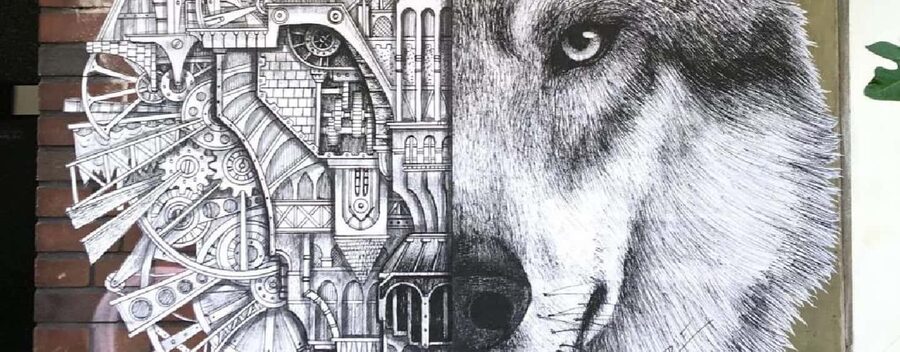
You should not expect every stop to be a huge mural. Urban art works at many scales. Some pieces are built into public space, some are pasted onto it, and some may be small enough to miss without a guide. The walk includes murals, installations, stickers, and paste-ups by regional and international artists.
That range is useful because it shows how broad the term urban art has become. It is not limited to spray-painted images. You may be looking at a large painted wall one minute and then considering a much smaller intervention the next. The constant change of public art is part of the subject. Pieces can weather, be removed, painted over, or disappear during building work.
The artists and styles you may encounter
The tour features work associated with several established names. Alexis Stephens, known as Bust, is included among the artists you may encounter, along with Marc Woehr, MadC, Innerfields, Harald Naegeli, and L.E.T. You will also see the characteristic spirits connected with PDOT, as well as work by regional and international artists.
These names give the walk a useful range. The tour is not limited to one look or school. Different artists use different methods, from large painted compositions to paste-ups, stickers, and interventions that rely on the existing city setting.
MadC and Innerfields are part of the international and regional art conversation presented on the route. Harald Naegeli connects the walk with an important figure in European urban art. L.E.T. and PDOT add further examples of how repeated symbols, pasted images, and recognizable figures can become part of a city’s visual language.
You do not need to arrive with a working knowledge of these artists. The point is to see the pieces in place and learn why they matter. Still, I would take a few minutes before the walk to look at the artists’ names so they are easier to remember when the guide introduces them.
The list of artists should not be read as a promise that every named artist will appear on every departure. Public art changes, and the precise selection depends on what remains in place. The valuable part is the method: you are shown a selection of works and given tools for reading them.
Same city, a different set of walls:
- Berlin: 3-Hour Street Art Tour
★ 4.7 · 778 reviews - Berlin: Graffiti Workshop at the Berlin Wall
★ 4.6 · 234 reviews - Cologne: Ehrenfeld District Street Art Walking Tour
★ 4.9 · 202 reviews - East Meets West: Berlin Food Culture & Street Art
★ 5.0 · 157 reviews
Why the small pieces deserve your attention
A large mural announces itself. A sticker may be tucked onto a sign, while a paste-up can blend into a wall until you know where to look. This is where the guide’s role becomes especially useful.
One concern raised by the tour’s feedback is that a participant hoped to see more small, unofficial works. It is possible to enjoy the walk and still wish for a greater emphasis on small or illegal pieces. If that is your main interest, ask at the start how much of the route deals with those forms.
The tour clearly includes stickers and paste-ups, but it is not presented as a hunt for every unsanctioned mark in the city. Instead, it focuses on selected works and gives context about their artistic strategies and development. That distinction matters. You are getting a guided art discussion in public space, not an unstructured search for every fresh tag or sticker.
I see this as a fair trade for many visitors. A guide can help you understand why a modest piece matters, how it was made, and how it relates to wider urban art. You may see fewer works than you would on a fast, self-guided walk, but you get more explanation for the ones included.
What the two hours feel like
The route covers about 3 kilometers, so the pace is active but not designed as a strenuous hike. The guide takes you from site to site, stopping for background information about the work, the artist, and the surrounding district.
At each selected spot, you can expect a mix of looking and listening. The exact order and works can change because public art is temporary. This is not a fixed museum display, and that is part of the experience. A wall may be altered before your visit, or a sticker may no longer be there.
The walk combines three subjects:
- The art itself, including murals, installations, stickers, and paste-ups
- The techniques and ideas behind the works
- The history and cultural development of Friedrichstadt and Bilk
That combination keeps the experience from becoming a simple photo walk. It also means you should allow time to listen. The background information is one of the most praised parts of the experience, and it may be the main reason to choose this tour over exploring the districts alone.
The pace is an important practical issue. One participant with a leg injury found the walk too fast and missed parts of the explanation. If you walk slowly or need frequent pauses, contact the provider before booking or tell the guide at the beginning. The published distance is about 3 kilometers, and the tour is intended to cover that distance within two hours.
How the German-language format affects the experience
This is a German-language tour. That is clear and should shape your decision. If you speak German, the format lets you receive the full explanations directly from the guide. If you do not, you may still follow the visual side of the walk, but you should not book it expecting an English presentation.
The language issue is not only about translating artist names. The guide explains artistic strategies, techniques, the origins of works, and the growth of urban art as a recognized contemporary art form. Those details can be harder to pick up if the guide speaks quickly or if you are relying on partial understanding.
I would choose this walk confidently if German is comfortable for you and you want serious context. If your German is limited, consider how much you value the art-history discussion compared with simply seeing public art. The route itself may still lead you to interesting places, but the experience will be less complete.
Some content is shown in its original language. That is normal for an art-focused walk, yet it reinforces the need to understand the main language of the tour before reserving.
Is $23 a fair price?
At $23 per person, the tour offers two hours with a specialist guide, a route of about 3 kilometers, and a small group capped at 20 participants. I consider that a reasonable price, particularly if you would otherwise have no idea where to find Düsseldorf’s urban art or how to interpret it.
The value comes from access and explanation rather than admission to a paid attraction. There is no indoor collection included, and you are not paying for a long list of famous sights. You are paying for the guide’s selection, local context, and knowledge of the city’s urban-art scene.
A self-guided walk costs less, of course, but it also requires you to find the places yourself. The tour takes you to locations that are not part of the classic sightseeing route and points out work that could easily be missed. For me, that makes the price worthwhile for art lovers and curious repeat visitors.
The value is weaker if you need an English-language tour, dislike walking at a steady pace, or want a large number of tiny unofficial pieces. In those cases, the format may not match what you are seeking.
You can reserve now and pay later, and cancellation is available up to 24 hours before the activity for a full refund. Those policies are useful if your Düsseldorf schedule is still changing.
Who should book this walk?
I would recommend it to you if you enjoy contemporary art, photography, local neighborhoods, or the small details of city streets. It also suits anyone who has already seen Düsseldorf’s main museums and wants a different look at the city.
The experience is especially useful for:
- Art lovers who want public art placed in its real setting
- Visitors interested in how urban art developed as a recognized art form
- People who prefer small-group walks to large sightseeing tours
- Repeat visitors looking for places outside the standard route
- German speakers who want detailed explanations from a specialist
- Curious walkers who enjoy murals, stickers, paste-ups, and installations
I would be more cautious if you need an English-language guide, have difficulty walking 3 kilometers, or want a fast-moving survey of many small illegal works. The tour has a clear structure and an educational purpose. It is not a casual stroll with a few random photo stops.
My recommendation for Düsseldorf’s Urban Art Walk
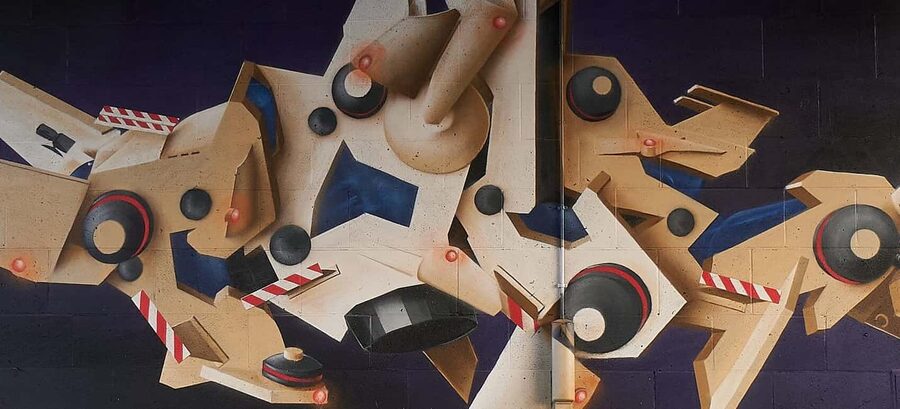
Book this tour if you want to see how art changes the way you read a city. The strongest features are Klaus Rosskothen’s personal guidance, the off-route locations in Friedrichstadt and Bilk, and the useful background on artists, techniques, and local cultural development.
The main questions are simple: Can you follow a German-language tour, and are you comfortable walking about 3 kilometers in two hours? If the answer to both is yes, $23 is a fair price for a focused introduction to Düsseldorf’s public art scene.
If you need English or prefer a slow walk, contact Pretty Portal before booking. If small illegal works are your top priority, ask how much of the current route includes them. For everyone else, this is a smart way to see a side of Düsseldorf that is easy to miss from the museum path.
FAQ
Where does the Urban Art Walk meet?
The meeting point is at the corner of Ellerstrasse and Willi Becker Allee.
How long is the tour?
The tour lasts about two hours.
How far do you walk?
The route covers about 3 kilometers through Friedrichstadt and Bilk.
Which districts does the tour visit?
The walk takes place in Düsseldorf’s Friedrichstadt and Bilk districts.
What types of urban art are included?
You may see murals, installations, stickers, paste-ups, and other interventions in public space.
Who leads the tour?
Klaus Rosskothen leads the walk. He is the curator and owner of Pretty Portal gallery and has 18 years of urban-art experience.
What language is the tour in?
The live tour is in German. Some content is shown in its original language.
How large is the group?
The group size is limited to a maximum of 20 participants.
How much does the experience cost?
The listed price is $23 per person.
Can I cancel the booking?
You can cancel up to 24 hours in advance for a full refund. You can also reserve now and pay later.
New street art tours in Germany
- Art Nouveau Meets Street Art in Munich (Max. 12 guests)★ 5.0 · 3 reviews
- Alternative Hamburg Private Alternative Street Art Tour★ 4.5 · 6 reviews
- Street Art Tour Dresden Neustadt★ 4.0 · 15 reviews
- 3-Hour Cologne Street Art Bike Tour in Small Group with Guide★ 4.5 · 20 reviews
- Explore Cologne’s best Street Art Quarter★ 4.5 · 4 reviews
- Open graffiti workshop in the Mauerpark in Berlin★ 5.0 · 2 reviews
- Graffiti Workshop Berlin with professional graffiti artists★ 4.0 · 4 reviews
- Alternative Berlin Private Tour with Jacob – Graffiti and Squats★ 5.0 · 6 reviews
Street Art Walking Tours, side by side.
Naples Spanish Quarters Walking Tour Street Art, Folklore & Sweet
Read our review →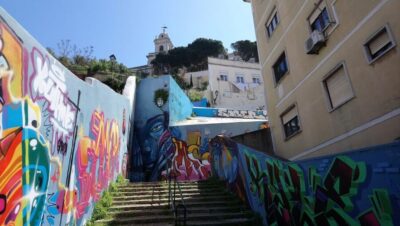
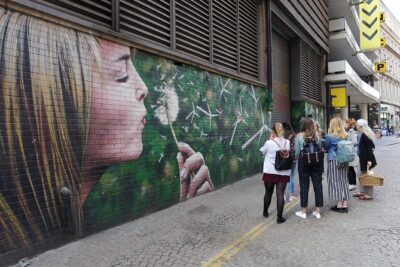
Brooklyn Graffiti & Street Art Walking Tour in Bushwick
Read our review →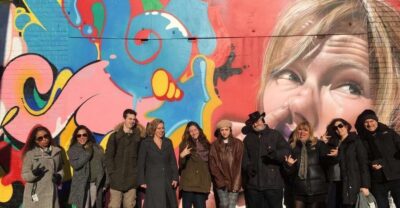
Lists this wall walk turns up in