
Reviewed · STREET ART WALKING TOURS
Best Street Art in Valencia Walking Tour
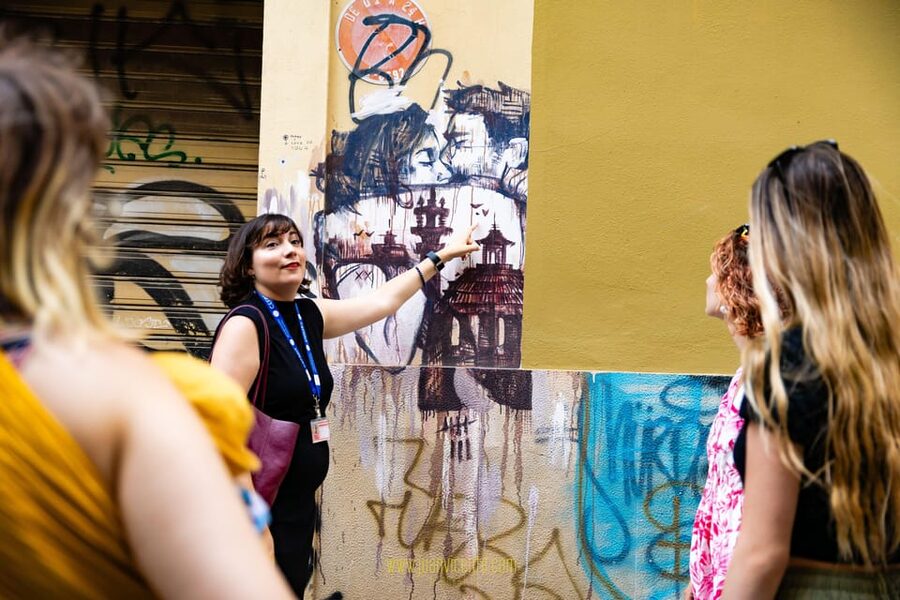
Valencia’s street art is not just decoration on old walls. It is a living record of the city’s ideas, arguments, humor, and creative energy. This two-hour walk takes you from the Torres de Serranos through El Carmen, behind the IVAM, and into Velluters, where large-scale works fill otherwise easy-to-miss corners. The guide explains the people and politics behind the paint, rather than leaving you with a camera full of anonymous murals.
I like the tour’s small group size, limited to 10, because you can ask questions without shouting across a crowd. I also like the visit to the CCCC museum, which gives you a useful indoor look at Valencia’s street art scene and its development. The main caution is timing: two hours goes quickly, and the CCCC visit is not available on Mondays, so the experience changes slightly by day.
Key points
- Start behind the Torres de Serranos: Meet on the Plaça dels Furs side, not at the more obvious front entrance.
- Follow artists with distinct signatures: Look for work by Escif, Hyuro, David de Limón, Disneylexia, Deih, La Nena Wapa Wapa, and Julieta XLF.
- Learn how the art is made: The guide covers stencil, paste-up, and yarn art, not only painted murals.
- Add the CCCC museum: The visit brings indoor context to the outdoor work, except on Mondays.
- Finish with giant Velluters murals: The last neighborhood offers large collaborative pieces that make a strong final stop.
- Use the artist Instagram guide: The included document helps you keep track of artists after the walk.
Why Valencia’s street art deserves a guided walk
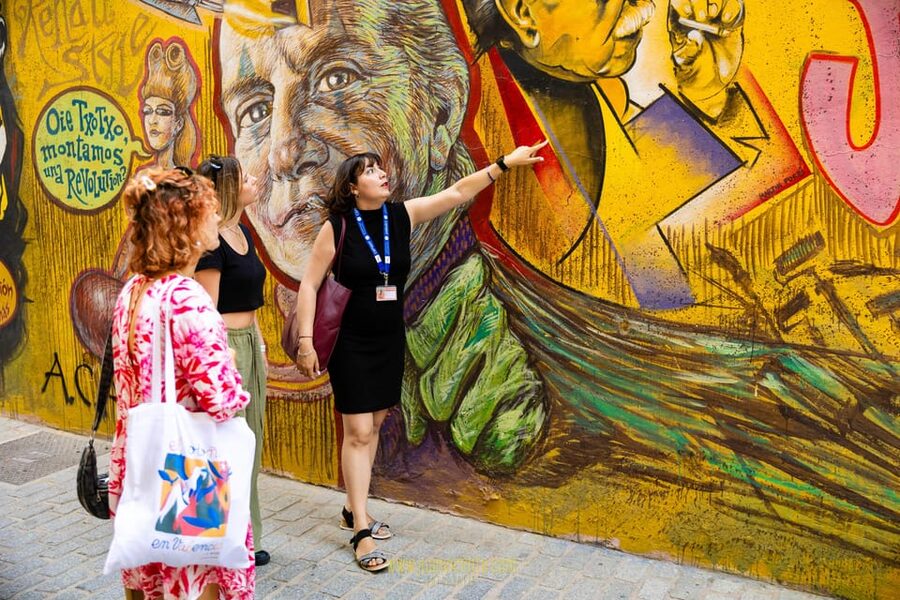
You can find painted walls on your own in Valencia, especially around Ciutat Vella. The problem is knowing which pieces matter, who made them, and what you are looking at. Street art changes quickly. One mural may be painted over, partly damaged, or tucked into a side street that you would pass without noticing.
A good guide changes the walk from a photo hunt into a lesson in visual language. You learn how a stencil differs from a paste-up, why yarn art belongs in the conversation, and how artists develop recognizable symbols. That information helps you spot work later in the city.
The guide also adds social and political context. Maria, one of the guides associated with this experience, has been praised for her friendly manner, clear Spanish, and personal contact with several well-known street artists. When she leads the walk, you can expect more than names and dates. Her approach includes the ideas behind the work and the forces shaping Valencia’s street art scene.
The tour is especially useful if you are new to street art. By the end, you should be able to recognize several artists and understand why a technically simple-looking image may take careful planning.
More Street Art Walking Tours in Spain
- Barcelona: Raval Street Art and Graffiti Walking Tour
★ 4.9 · 60 reviews - Bilbao: Art District Walking Tour
★ 4.8 · 27 reviews - Granada: “Street Art & The Caves” Unique Guided Walking Tour
★ 5.0 · 27 reviews
Meeting at the Torres de Serranos
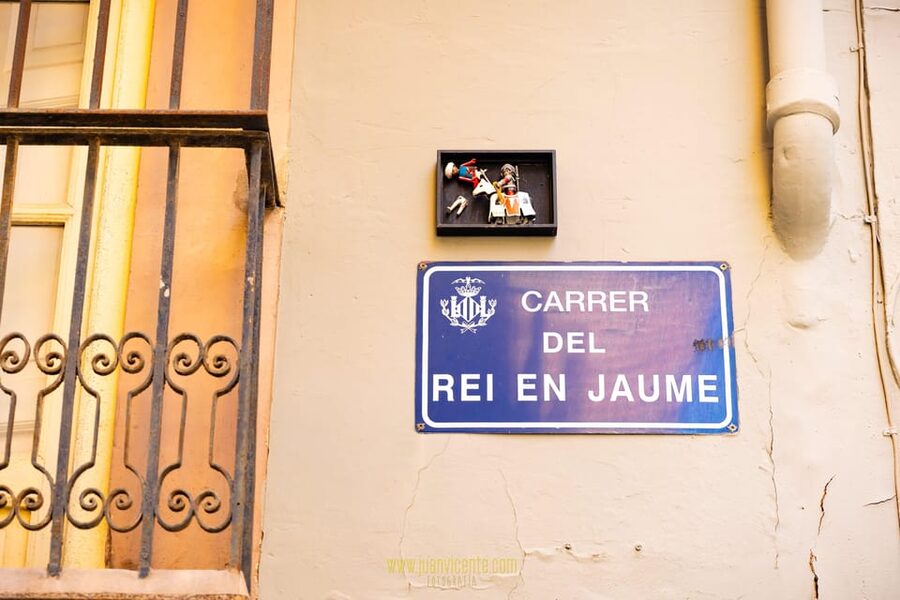
The walk begins behind the Torres de Serranos, on the Plaça dels Furs side. This detail matters because the towers have more than one approach, and the front entrance is the place many visitors naturally choose. Arrive with enough time to walk around to the back.
The towers provide a fitting opening point. They are one of Valencia’s best-known historic landmarks, while the nearby walls and lanes offer a very different kind of public art. The contrast sets up the tour nicely: old stone architecture beside temporary, experimental work.
From here, the guide leads you into the surrounding streets, where some murals are visible and others are easy to overlook. You are not simply stopping at a checklist of famous walls. The appeal is the search, followed by the explanation of why each work deserves attention.
Bring a charged phone. The included document with the artists’ Instagram accounts is useful, especially if you want to follow their work after the tour or identify new pieces on your own.
Reading the murals of El Carmen
The route continues through Barrio del Carmen, one of the key areas for Valencia’s street art. The neighborhood’s narrow streets and old façades create plenty of surfaces for murals, small paste-ups, stencils, and other temporary pieces.
This is where a guide can save you time. You may notice the largest painted wall, but miss a small image placed beside a doorway or above eye level. The tour focuses on works that are easy to pass without context, including pieces by David de Limón, Disneylexia, Deih, Hyuro, La Nena Wapa Wapa, Julieta XLF, and Escif.
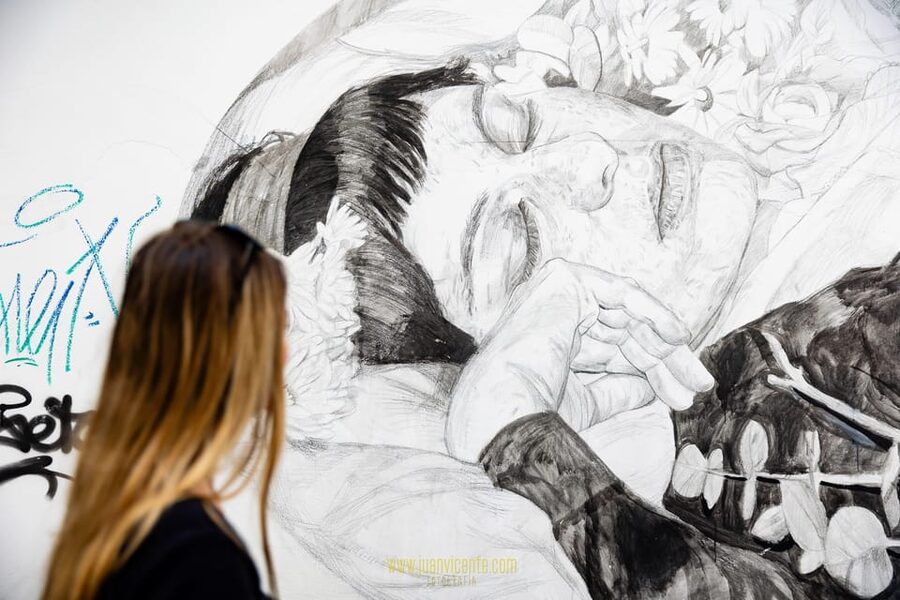
Each artist brings a different visual approach. Some work is immediately readable. Other pieces use repeated figures, strange forms, or visual jokes that make more sense after the guide explains the artist’s habits and themes. You learn to look for a signature rather than treating every painted wall as the same kind of work.
The explanations also cover technique. A stencil can create a crisp repeated image. A paste-up allows an artist to prepare work away from the wall and install it quickly. Yarn art changes the surface through thread rather than paint. These distinctions matter because they reveal how artists work within public space, often with limited time and uncertain permission.
You will take pictures here, but leave room to listen. The best part of a street art walk is rarely the mural alone. It is the connection between the image, the wall, the neighborhood, and the person who made it.
The CCCC adds an indoor chapter
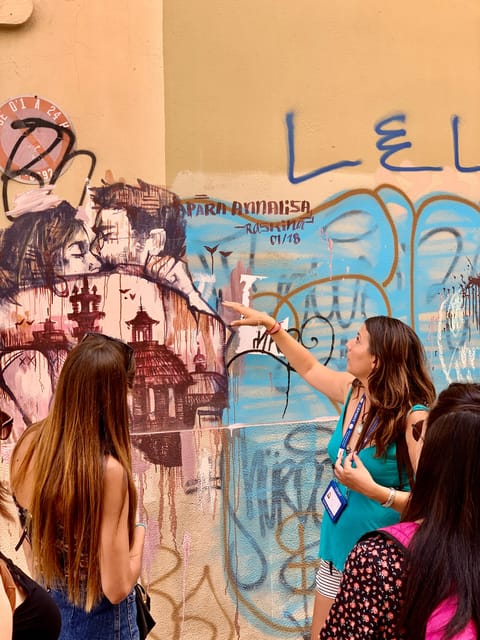
The tour includes a visit to the CCCC, the Centre del Carme Cultura Contemporània, except on Mondays. Inside, you can see more murals and learn about the development of Valencia’s street art scene in a setting designed for cultural exhibitions.
This stop breaks up the outdoor walking and gives you a chance to consider the difference between street art in a public lane and art shown within a cultural center. The location also adds useful context. Work that may seem spontaneous outdoors can involve deliberate composition, planning, and a clear artistic point of view.
The CCCC visit is one of the strongest reasons to choose this experience instead of simply walking around with a map. You are not only shown individual pieces. You are given a frame for understanding how street art has become part of Valencia’s cultural conversation.
Plan around the Monday exception. The tour still takes place, but the CCCC portion is not available that day. If the museum matters to you, choose another day and confirm the current opening arrangement when booking.
Same city, a different set of walls:
- Barcelona Street Art and Graffitti Bicycle Tour
★ 5.0 · 361 reviews - Madrid: Street Art Tour with Local Graffiti Hunter
★ 4.8 · 270 reviews - Street Art Guided Tour in Madrid
★ 5.0 · 175 reviews - Barcelona Street Art Tour with Exclusive Artist Studios Visit
★ 5.0 · 152 reviews
Behind the IVAM: Escif and large-scale ideas
The walk then reaches the area behind the IVAM, Valencia’s modern art museum. This section is known for impressive murals by Escif and other artists. Escif is one of the names most closely associated with the tour, and seeing his work in this setting helps explain why a street art guide is valuable.
Large murals can seem simple from a distance. Up close, you may notice scale, placement, empty space, and the way an image interacts with the building. The guide helps you read those choices instead of treating the wall as a flat background for a photograph.
This area also gives the tour a good balance. El Carmen offers many smaller discoveries and varied techniques. Behind the IVAM, the focus shifts toward major walls and more forceful visual statements. You get both the intimate side of street art and the public, monumental side.
The route remains an urban walk, so comfortable shoes are important. Sunscreen and comfortable clothes are sensible, particularly on a bright day. There is no food or drink included, although you can buy refreshments during the tour.
Ending among Velluters’ massive murals
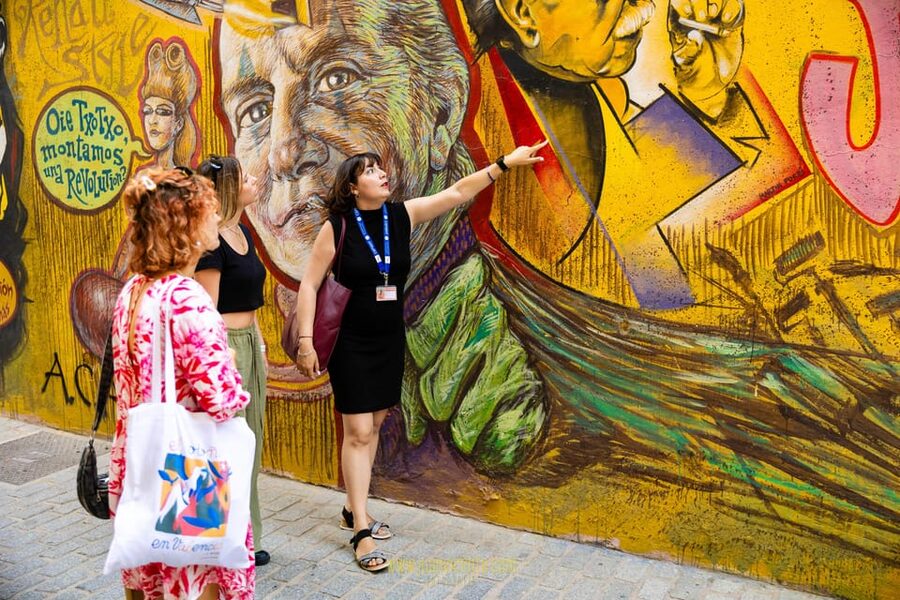
The final section takes you into Velluters, where the walk ends at Plaça de la Botxa. Here, you see massive murals made by a group of artists. After the close-up work in El Carmen and the major pieces behind the IVAM, this provides a broad finish.
Collaborative murals are worth seeing because they show how several artistic voices can occupy one wall. The result may be more complex than a single-author piece, with different marks, figures, and approaches sharing the same surface. The guide can help you separate those elements and understand the group effort.
Ending in Velluters is practical as well as visually strong. You finish in central Valencia rather than returning to the starting point, giving you freedom to continue exploring. The exact next stop depends on your plans, but the ending point keeps you in the Ciutat Vella area.
Keep the route in mind when planning your day. This is not a bus tour that drops you back where you started. You walk between neighborhoods and finish elsewhere, so comfortable footwear and a charged phone are more useful than elaborate equipment.
What the $41 price gets you
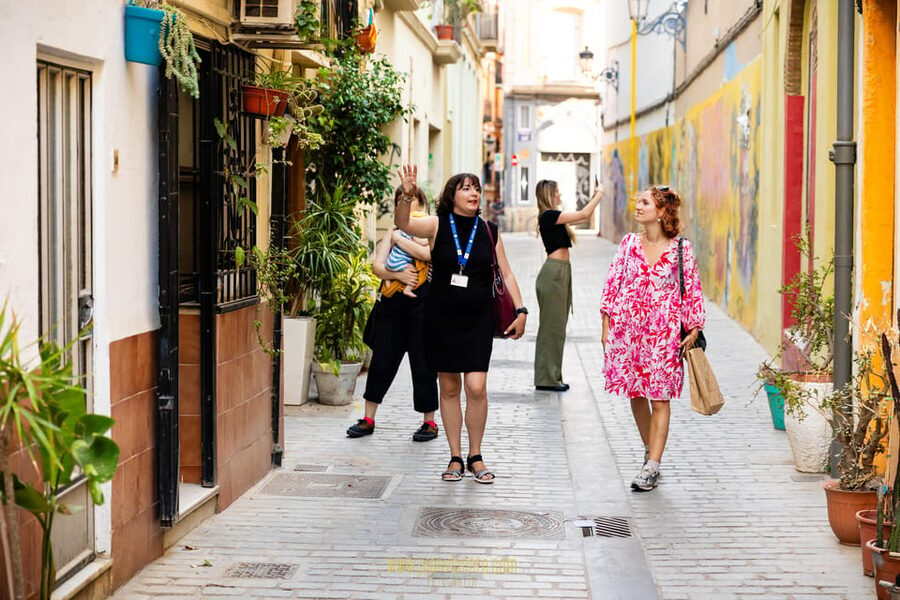
At $41 per person, this is not the cheapest way to see painted walls. You can walk through El Carmen without paying for an organized tour. The value comes from the guide’s interpretation, the small group, the museum visit, and access to a prepared list of artists and their social media accounts.
The group limit of 10 is important. In a narrow lane, a huge group would make it hard to see the wall or hear the explanation. A smaller group also suits a subject that works best through questions. You can ask why a technique was used, how a piece relates to the neighborhood, or how to recognize a certain artist’s work.
The price makes the most sense for first-time visitors to Valencia’s street art scene, art students, photographers, and anyone who enjoys understanding what they see. If you already know the city’s artists well, you may find the guided explanations less necessary, though the route and CCCC visit can still add value.
The tour has received a current rating of 5 out of 5 from seven reviews. The strongest praise centers on the guide’s enthusiasm, clear explanations, and ability to connect art with political and social subjects. That is a useful clue about the tone: expect a discussion-based walk, not just a succession of quick photo stops.
Language, access, and practical planning
Live guiding is available in Spanish, English, French, and Catalan. One especially useful detail is that Maria has been praised for speaking clear, easy-to-follow Spanish. If you are learning Spanish, that may make the tour more approachable, though you should select your preferred language when booking.
The activity is listed as wheelchair accessible. Since the experience moves through city streets and includes the CCCC, confirm current access details if you have particular mobility needs. Street surfaces and individual wall locations can affect comfort even when a tour is marked accessible.
The walk lasts two hours. That is long enough for a focused introduction without taking over your day. It is also short enough to pair with other Ciutat Vella sights, but do not expect a slow, leisurely café crawl. You will cover several areas and stop often for explanations.
Free cancellation is available up to 24 hours before the start for a full refund, and you can reserve now and pay later. Those options help if your Valencia plans are still shifting. Starting times vary, so check availability before arranging other activities.
Bring:
- Comfortable shoes
- Sunscreen
- Comfortable clothes
- A camera
- A charged smartphone
A camera is helpful, but your phone has another job. Use it for the artist Instagram document and for taking notes about names, techniques, and locations. Street art can disappear, so your photos may become a record of work that is later changed.
Who will enjoy this walk most
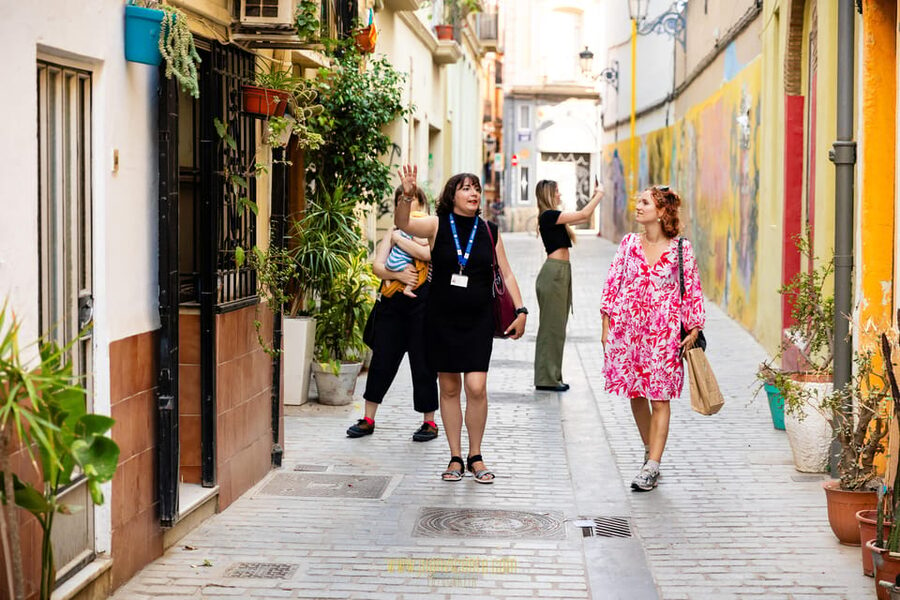
I would choose this tour if you want to understand Valencia through its creative side. It suits curious first-time visitors, people who like photography, and anyone who prefers local neighborhoods to a standard list of monuments.
It also works for visitors who do not know much about art. You do not need a background in contemporary art to follow the tour. The discussion of stencils, paste-ups, yarn art, and artist signatures gives you a clear starting point.
Families with older children may enjoy the visual subject, although the tour is not described as a children’s program. The two-hour length is manageable, but the value depends on everyone being interested in walking and listening.
I would think twice if your schedule is extremely tight, if you dislike walking in the sun, or if you only want famous landmarks. This is a specialist tour. Its appeal comes from small details, local artists, and the stories behind walls you might otherwise overlook.
Should you book the Valencia street art tour?
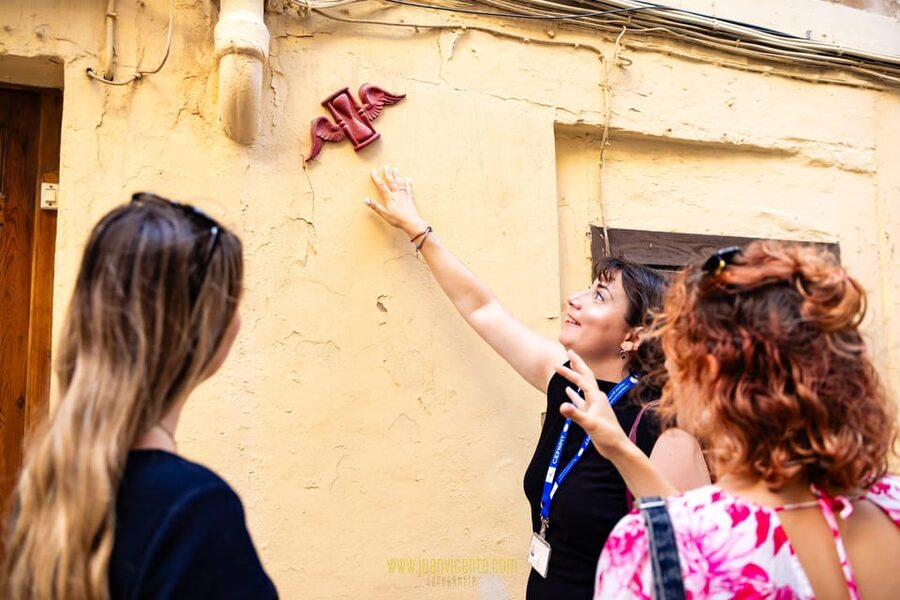
Book it if you want more than attractive photographs. The combination of El Carmen’s tucked-away work, the CCCC visit, Escif’s murals behind the IVAM, and the large Velluters pieces gives you a well-shaped introduction to Valencia’s street art.
Maria’s personal connection to several artists and her clear, lively approach are valuable when she leads the group. The small size also gives the tour a more personal feel than a large city walk.
Choose a day other than Monday if the CCCC is important to you. Wear practical shoes, arrive at the back of the Torres de Serranos, and leave space in your schedule after the tour because it ends at Plaça de la Botxa rather than at the starting point.
For $41, I think the tour earns its price if you want context, not just directions. If you would rather explore alone, save the money and wander El Carmen with your phone. You will see some art, but you will miss much of the story.
FAQ
How long does the street art tour last?
The tour lasts two hours.
Where does the tour begin?
It begins behind the Torres de Serranos, on the Plaça dels Furs side.
Where does the tour finish?
It finishes at Plaça de la Botxa in Ciutat Vella, Valencia.
Which neighborhoods does the tour visit?
The route includes Barrio del Carmen, the area behind the IVAM, and Velluters.
Is the CCCC museum included?
Yes. The tour includes a visit to the CCCC, except on Mondays.
Which languages are available?
The live guide is available in Spanish, English, French, and Catalan.
How many people are in the group?
The group is limited to 10 participants.
Is the tour wheelchair accessible?
Yes, the activity is listed as wheelchair accessible.
What should I bring?
Bring comfortable shoes, comfortable clothes, sunscreen, a camera, and a charged smartphone. Food and drinks are not included, but you can buy them during the tour.
New street art tours in Spain
- Small-Group Graffiti Tour and Workshop in El Carmen★ 5.0 · 2 reviews
- Bilbao Urban and Street Art Walking Tour★ 5.0 · 2 reviews
- Barcelona Street Art, Graffiti and Tapas Tour★ 4.0 · 5 reviews
- Salamanca: Private Guided Street Art Walking Tour★ 5.0 · 2 reviews
- Private Barcelona Street Art Tour★ 5.0 · 2 reviews
- Barcelona | StreetArt Bike Tour Moco Museum★ 4.6 · 13 reviews
- Madrid Street Art Tour (Malasaña Chueca Gran Via & Lavapies)★ 3.5 · 8 reviews
- Málaga: Street Art Tour in the Soho District★ 5.0 · 4 reviews
Street Art Walking Tours, side by side.
Naples Spanish Quarters Walking Tour Street Art, Folklore & Sweet
Read our review →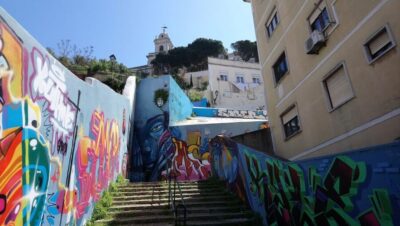
Brooklyn Graffiti & Street Art Walking Tour in Bushwick
Read our review →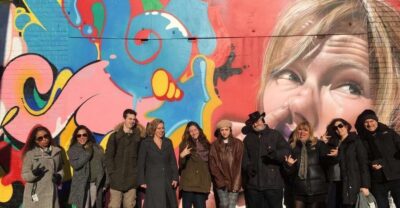
Lists this wall walk turns up in