

Reviewed · HISTORICAL TOURS
Street Art: The Modern History of the Northern Quarter
Manchester’s Northern Quarter is not simply a backdrop for colorful murals. It is a record of what happens when a city loses its businesses, finds a new cultural voice, and then faces the pressures of gentrification and lost public space. This two-hour walk uses street art to tell that story, from the area’s decline in the 1970s to its later revival.
I like two things right away. First, the tour looks beyond the usual photo stops, including a ceramic art trail and works you could easily miss while shopping or eating. Second, it treats art as part of a living argument about Manchester, not as decoration. The fact that 10 percent of profits support local causes adds practical value.
The main consideration is its subject matter. This is not a light mural-spotting stroll. You will hear about social justice, commercial change, and the loss of public space, and some stops may be more interesting to curious city readers than to anyone seeking a quick list of Instagram locations.
Key points about the Northern Quarter art walk
- A 25-year story told through street art: See how public art followed the Northern Quarter’s change from decline to cultural district.
- A ceramic art trail helped turn the area around: This unusual part of the route shows how small-scale public art can affect a neighborhood.
- Manchester’s counterculture is central: The tour connects murals and installations with the people and ideas that shaped the district.
- The discussion is frank about gentrification: You will hear about commercial growth, social justice, and the shrinking role of public space.
- The route includes lesser-known works and film locations: It goes beyond the familiar places found in standard city guides.
- A small social contribution is built into the price: Ten percent of profits goes to local causes.
Why this Northern Quarter tour tells a bigger story
The clever idea here is to use public art as a guide to urban change. Instead of treating the Northern Quarter as a finished entertainment district, the walk asks how it got here, who helped shape it, and what may be lost as property values and commercial interest rise.
That matters because the area was not always Manchester’s creative quarter. In the 1970s, it was in decline after the opening of the Arndale Centre, the city’s first American-style shopping mall. Businesses moved away, leaving streets and buildings with little commercial life.
The district has the highest density of protected buildings in Manchester. That gives the route an important physical setting: old structures survived even when the businesses and people that animated them had gone. In the early 1990s, cultural figure Tony Wilson referred to the area as our Detroit, a sharp way of describing mass business departures and urban decline.
The tour then follows the role of public art in changing that mood. Abandoned and ruined spaces offered room for artists, installations, and alternative culture. The result was not just prettier streets. Art helped give the Northern Quarter a new identity and helped draw people back into an area that had been overlooked.
I find that framing more useful than a simple list of mural artists. You get a way to read the streets. A painted wall, a ceramic piece, or an installation becomes evidence of a city trying to repair itself, market itself, and argue with itself at the same time.
More history behind the walls in the UK:
- Private Political History & Murals Tour Belfast
★ 5.0 · 182 reviews - 1 Hour Express Belfast Taxi/Cab Tour History, Murals, Troubles
★ 5.0 · 17 reviews - Belfast political history and mural unique private 90 min tour
★ 5.0 · 10 reviews
Starting at Shudehill and reading the streets
The walk begins at Shudehill at 11 a.m. That starting point puts you close to Manchester’s public transport network, and the meeting area is near public transportation. You receive a mobile ticket, so you do not need to manage a paper voucher before setting off.
From there, expect the guide to establish the Northern Quarter as a place shaped by changing fortunes. The route is not presented as a neat sequence of famous buildings. Instead, it follows the area’s social and artistic shifts, giving you context before asking you to look closely at individual works.
This is where the guide matters. Hayley is named in the supplied information, and the comments about her point to a lively, engaging way of explaining the district. She also offers practical suggestions about places to eat and other things to do, which is useful because the route finishes near Black Dog Ballroom on Church Street.
The group can include up to 30 people. That is not an intimate private walk, but it is still small enough for a guide-led outing rather than a large coach-style experience. The tradeoff is simple: a full group may make conversation less personal, while the larger limit can make the tour easier to run at a reasonable price.
The ceramic art trail and the mechanics of revival
The ceramic art trail is one of the most distinctive parts of the experience. Many city art walks focus on large painted walls because they are easy to spot and photograph. Ceramics work differently. They ask you to notice surfaces, details, and pieces that may not announce themselves from across the street.
The trail also helps explain how public art can influence a district without being a single grand project. Small works can draw attention to overlooked corners and give residents, artists, and businesses a reason to see the area differently.
You will not simply be told that art improved the Northern Quarter. The stronger part of the tour is the chance to consider the limits of that claim. Public art can help revive a neighborhood, but revival can bring rising costs and new pressure on the people and spaces that made the area attractive in the first place.
That tension gives this walk more bite. You can appreciate the ceramics and still ask who benefits when an alternative district becomes a popular place to eat, shop, and go out. I like that the tour does not separate beauty from policy. It connects what you see on a wall or building with the way the city is managed.
Contemporary street art beyond the standard checklist
The route covers contemporary street art as part of the Northern Quarter’s last 25 years. You should expect to see pieces and streets that are not usually included in quick online lists or standard guidebooks.
That promise is important for two kinds of people. If you know Manchester well, the tour may give you a new way to see streets you have passed for years. If it is your first visit, you get a more selective introduction than simply wandering around with a mural map.
The information does not provide a fixed list of artists or named works, so you should not book this expecting a guaranteed checklist of particular murals. Street art can change, disappear, or be affected by redevelopment. The value is in the guide’s reading of the district and in the chance to notice work you might otherwise walk past.
I also like that the art is not treated as politically neutral. The tour discusses the influence of politics on the art and includes issues around social justice. That makes the experience better suited to you if you enjoy asking why a work is in a certain place, who commissioned it, and how public space is being used.
More street art tours worth booking in the UK:
- Belfast: Murals Taxi Tour
★ 4.9 · 2,047 reviews - London: Street Art and Graffiti Guided Walking Tour
★ 4.9 · 1,354 reviews - Belfast’s Political Mural Taxi Tour
★ 5.0 · 1,180 reviews - London Bike Tour: Landmarks, Secret Gems, Pub Stop & Street Art
★ 5.0 · 943 reviews
Film locations and corners most people miss
Off-the-path film locations add another layer to the walk. They give you a reason to look at ordinary streets in a different way, especially if you enjoy seeing how a city becomes a setting for stories on screen.
The appeal is not only spotting a familiar location. Film sites can show how the Northern Quarter’s old buildings and altered streets have been used to represent other places, moods, or periods. They also fit the tour’s main idea: the neighborhood has repeatedly been reinterpreted.
Because the information does not name the productions or locations, you should treat this as an extra benefit rather than a dedicated film tour. The art and urban history remain the main event. Still, it is a welcome addition for anyone who wants something beyond galleries and conventional heritage stops.
Gentrification, public space, and the uncomfortable questions
The most serious part of the tour is its discussion of gentrification. The Northern Quarter’s revival is easy to celebrate from the perspective of a visitor looking for cafés, shops, nightlife, and attractive old buildings. It is harder to ask what happens to low-cost spaces, independent businesses, and local communities as an area becomes fashionable.
This walk makes room for that question. It discusses the loss of public space and present-day issues facing Manchester, rather than ending the story once the district becomes popular.
That approach may change how you view the Northern Quarter for the rest of your visit. A street can look creative and successful while still reflecting unequal access to space. A mural can represent community identity, commercial branding, or both. The guide’s job is not simply to point at art, but to help you think about those competing meanings.
I would choose this tour over a generic city walk if you want Manchester presented as a city still working through its problems. It is especially useful for readers interested in urban planning, counterculture, architecture, public art, and the politics of tourism.
What the guide brings to the experience
The route depends heavily on explanation. Without a guide, you might notice the color and texture of the art but miss the connection between the 1970s decline, the Arndale Centre, the 1990s counterculture, and today’s commercial pressure.
Hayley’s role appears to be more than delivering dates. The supplied comments describe her as engaging and able to explain both the Northern Quarter’s past and its present plans. She also brings anecdotes, including a story connected with the fish market, and points out political influences on the art.
That sort of detail is exactly what makes a two-hour walking tour worthwhile. You can find photographs of murals online. You cannot get the same value from a search page when the important question is how the art fits into the city’s changing identity.
The guide can also help you use the rest of your day well. Ask for food suggestions or ideas for more exploring when the walk ends at Black Dog Ballroom, 52 Church Street. The experience itself does not include a meal, so any restaurant or bar stop afterward is your own arrangement.
Is $20.70 good value for two hours?
At $20.70 per person, the price is fair for a two-hour guided walk, particularly because the focus goes beyond easily available photo locations. You are paying for interpretation, local context, and access to a route built around less obvious works.
The 10 percent donation to local causes strengthens the value, though it should not be the only reason to book. The best reason is that the tour offers a clear point of view on how the Northern Quarter changed and what that change means.
A short art walk can feel expensive if it only points out murals you could find with a quick search. This one earns its price by connecting the art with architecture, counterculture, urban decline, and social questions.
The maximum group size of 30 keeps the cost below that of a private walk, but it also means you should not expect a fully personal tour. If you want one-on-one attention, a smaller specialist walk may suit you better. If you want a structured introduction at a moderate price, this format makes sense.
Timing, weather, and who should book
The tour lasts about two hours and begins at 11 a.m. That timing leaves room for lunch and further sightseeing afterward. Since the end point is in the Northern Quarter, you can continue exploring the area once the guide finishes.
Good weather is required. If poor weather causes cancellation, you are offered another date or a full refund. The experience also requires a minimum number of participants, so a cancellation for that reason brings the same choice of another date or a refund.
You can cancel for a full refund up to 24 hours before the start time. Changes or cancellations inside that 24-hour window are not accepted, and the local time cut-off applies.
The tour is a strong match for:
- You want Manchester explained through public art and social change.
- You have already seen the main sights and want less familiar streets.
- You enjoy thoughtful discussion about gentrification and public space.
- You like counterculture, architecture, film locations, and urban stories.
- You want a guide who can suggest where to eat afterward.
It may be less suitable if you want a fast-paced list of famous murals, a purely cheerful sightseeing walk, or a tour devoted only to architecture. The conversation about social justice and commercial change is part of the point, not an optional extra.
Practical details before you set out
Your confirmation arrives at booking, and the ticket is mobile. The meeting point is Shudehill, Manchester M4, with an 11 a.m. start. The walk ends at Black Dog Ballroom, 52 Church Street, Manchester M4 1PW.
Service animals are allowed, and most people can participate. The group may reach 30 people. Since this is an outdoor walking experience that depends on good weather, wear suitable clothing and shoes, though no special equipment is listed.
Allow a little time to find Shudehill before the start. The supplied details do not promise hotel pickup, food, transport during the walk, or entry to indoor attractions, so plan on meeting the guide at the stated point and covering your own meals.
Should you book this Northern Quarter walk?
Book it if you want to understand why the Northern Quarter looks the way it does, not just where to take a photograph. The ceramic art trail, lesser-known streets, film locations, and discussion of Manchester’s counterculture give the two hours a clear purpose.
I especially recommend it if you have visited Manchester before and feel you have already seen the obvious sights. Hayley’s local anecdotes and practical suggestions can add something fresh even if you know the city well.
Skip it if you want a neutral, purely visual street-art tour or if the forecast is poor and your schedule cannot absorb a possible change. For everyone else, $20.70 buys a thoughtful introduction to a neighborhood shaped by decline, art, commerce, and constant debate.
FAQ
Where does the tour begin?
The tour begins at Shudehill, Manchester M4, United Kingdom.
Where does the tour finish?
The walk ends at Black Dog Ballroom, 52 Church Street, Manchester M4 1PW.
What time does the experience start?
The stated start time is 11 a.m.
How long does the tour last?
The walking tour lasts approximately two hours.
How much does the tour cost?
The price is $20.70 per person.
Is the ticket available on a mobile device?
Yes. The experience provides a mobile ticket, and confirmation is received at the time of booking.
What happens if bad weather cancels the tour?
If poor weather causes cancellation, you can choose another date or receive a full refund. The same options apply if the minimum number of participants is not met.
New street art tours in the UK
- Manchester Street Art: Quest Experience★ 4.0 · 6 reviews
- London Street Art Tour of the East End Semi-Private 12ppl Max★ 5.0 · 23 reviews
- The Great Street Art Experience★ 5.0 · 2 reviews
- London Street Art Tour of the East End Exclusive Walking Tour★ 5.0 · 12 reviews
- Shoreditch Street Art Private Photography Tour including Brick Lane★ 5.0 · 5 reviews
- London Unexpected Private Tour – Markets, Street Art & Camden Town★ 5.0 · 2 reviews
- Private Royal London Bike Tour with pub & street art★ 5.0 · 2 reviews
- 3-Hour Private Tour of East London Graffiti & Street Art★ 4.5 · 5 reviews
Historical Tours, side by side.
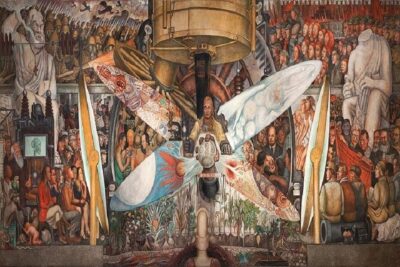
Walking Tour – Impressive murals in Historical Center of Mexico City
Read our review →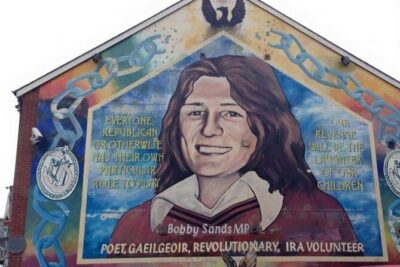
Private Political History & Murals Tour Belfast
Read our review →
2-Hour Food, History and Street Art Tour of Ponce City Market
Read our review →
Historical Shared Tour Salsa, Graffiti & Resistance in Cali
Read our review →
Walking Tour of Houston: History, Architecture, Street Art
Read our review →
Beltline Food, Street Art, and History Walking Tour
Read our review →
Lists this wall walk turns up in