
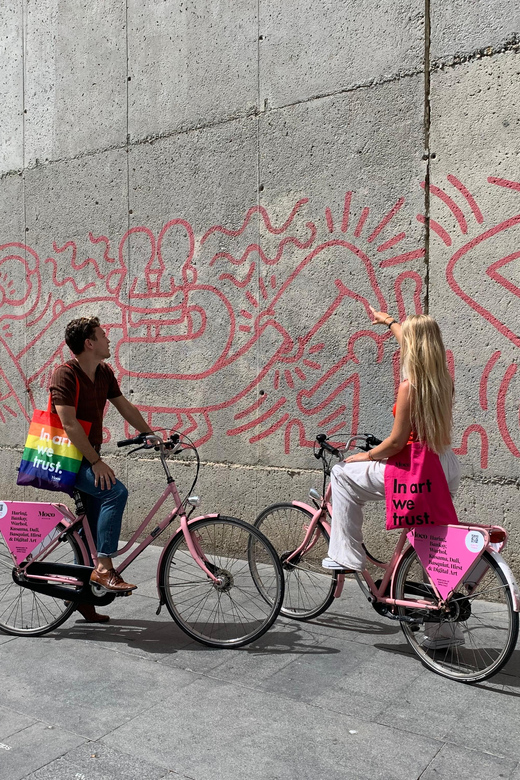
Reviewed · STREET ART BIKE TOURS
Barcelona | Street Art Bike tour
Barcelona’s street art is not confined to one gallery. It appears on side streets, building walls, alleyways, and public spaces, often beside the city’s grandest landmarks. This private 2.5-hour bike tour links those works with the Gothic Quarter, Port Vell, Passeig de Gracia, and Gaudí’s Casa Batlló and Casa Mila.
I like the small private group, which gives you room to ask about an artist or mural without trying to catch a guide’s words over a crowd. I also like the route’s mix of modern art and old Barcelona, from Keith Haring’s Mural del Sida to Barcelona Cathedral. The main consideration is physical and legal: riders must be confident on a bike, at least 160 centimeters tall for the e-bikes, and no children under 16 can join the e-bike tour.
Key points to know before you book
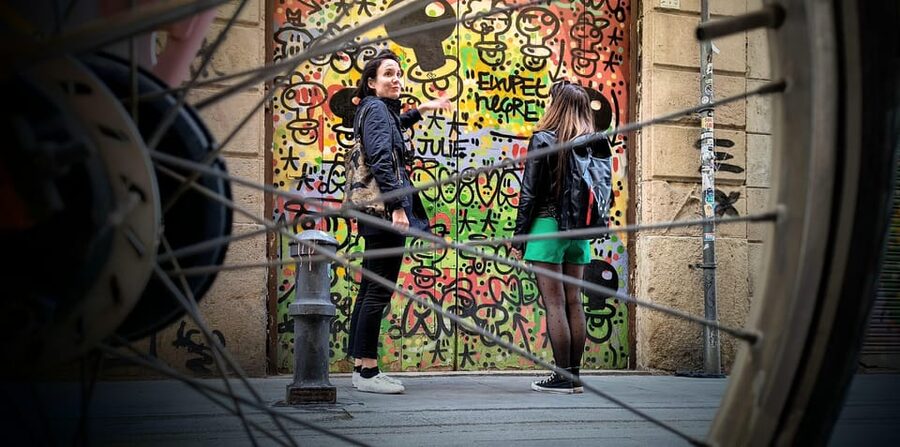
- Keith Haring’s Mural del Sida adds a serious social story to the colorful street art route.
- A private group of up to two makes this a personal introduction to Barcelona’s urban art.
- The route joins art with major sights, including MACBA, the Gothic Quarter, Port Vell, and Gaudí’s houses.
- Electric bikes are used for parts of the ride, but you still need to handle a bicycle with confidence.
- Carrer dels Tallers 45 is both the meeting point and the usual return point.
- Rain will not normally cancel the ride, since free ponchos are provided.
Why this private Barcelona ride works
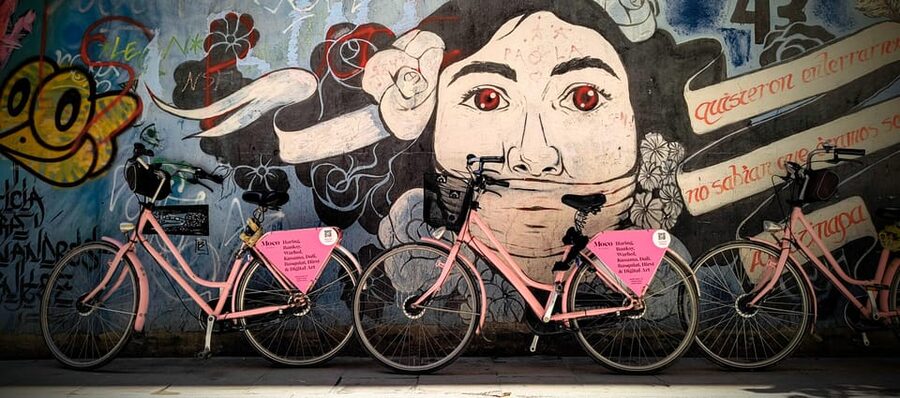
This experience is best understood as a moving art walk. You are not simply pedaling from one photo stop to the next. Your guide connects murals to the streets around them, points out work you might miss on your own, and explains the artists and ideas behind the images.
That matters in Barcelona, where street art can be easy to overlook. A painted wall may sit down a narrow lane, beside a shopfront, or in a neighborhood better known for its old buildings than its contemporary art. With a local guide leading the way, you get context as well as pictures.
The private format is a strong feature. The price is $177 per group of up to two, rather than $177 per person. For two people, that works out to $88.50 each. That is not a budget bike ride, but it is reasonable if you value a guide who can adjust the pace, answer questions, and focus on your interests. For one person, the cost is harder to justify unless you particularly want a private introduction to Barcelona’s street art.
An English-speaking guide leads the tour, and one bicycle is provided for each participant. Water is included, while helmets and child seats are available free on request. Adults should ask for a helmet in advance because helmets are mandatory for children up to age 16, even though children under 16 cannot join the e-bike tour itself.
More Street Art Bike Tours in Spain
- Barcelona Street Art and Graffitti Bicycle Tour
★ 5.0 · 361 reviews - Barcelona | StreetArt Bike Tour Moco Museum
★ 4.6 · 13 reviews - Valencia: Street Art Tour on Bicycle, E-Bike or E-Step
★ 4.8 · 31 reviews
Starting at Carrer dels Tallers 45
The tour begins at Carrer dels Tallers 45, near the Barcelona Ciclo Tour passage. Arrive about 10 minutes early. That gives you time to meet your guide, sort out the bicycles, and make sure the fit feels right before entering the older streets.
Carrer dels Tallers is a useful starting point because the tour quickly reaches central Barcelona’s dense mix of narrow lanes and open avenues. The first section is not about checking off a single famous sight. It gets you moving through the city and lets the guide introduce the way Barcelona’s street art fits into daily life.
The ride includes electric-bike sections, but do not mistake this for a passive sightseeing vehicle. You still need to steer, brake, watch the road, and ride confidently around other people and traffic. Comfortable clothing and shoes are practical choices. A charged smartphone, camera, hat, sunglasses, and sunscreen are also recommended.
Keith Haring’s Mural del Sida
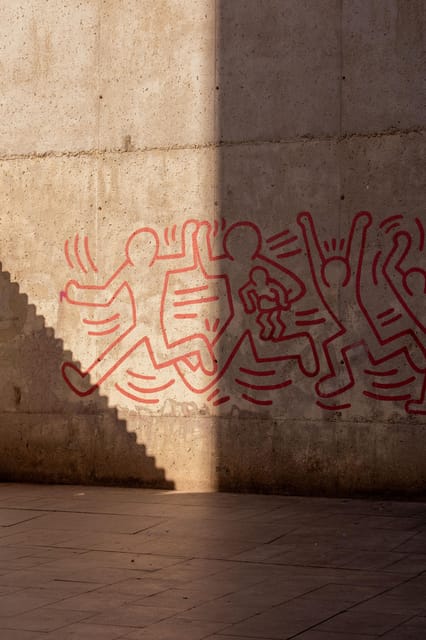
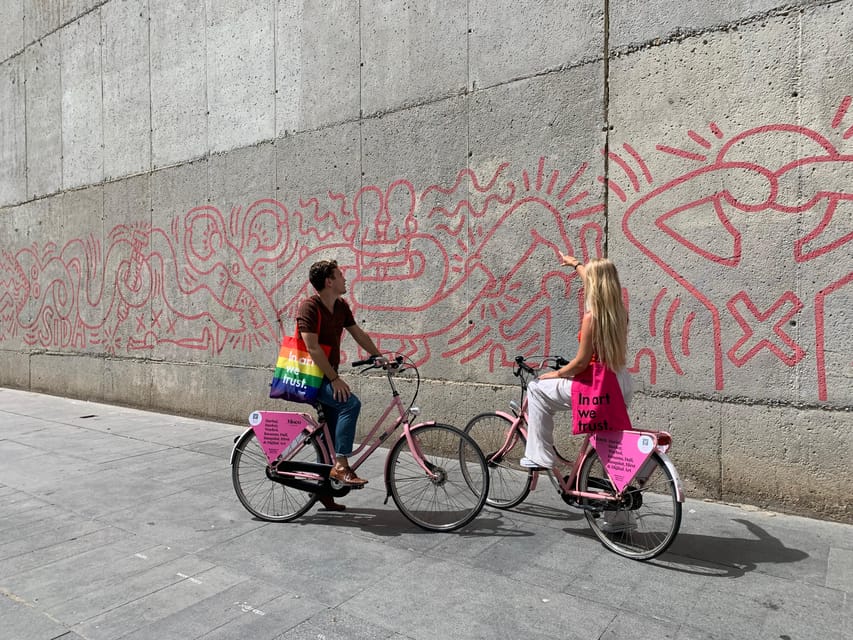
One of the most meaningful stops is Mural del Sida by Keith Haring. The work brings a public-health message into the open, using art to address AIDS and its human cost.
This stop gives the tour more weight than a collection of colorful walls. You will hear about the mural and the artist, then have time for photographs and questions. It is a good example of how public art can carry a direct social message rather than serving only as decoration.
The guide’s explanation is especially useful here. Without context, you might see an arresting image and move on. With context, you can consider why the mural was made, what it communicates, and how its setting affects the way you see it.
El Xupet Negre and Barcelona’s street-art voice
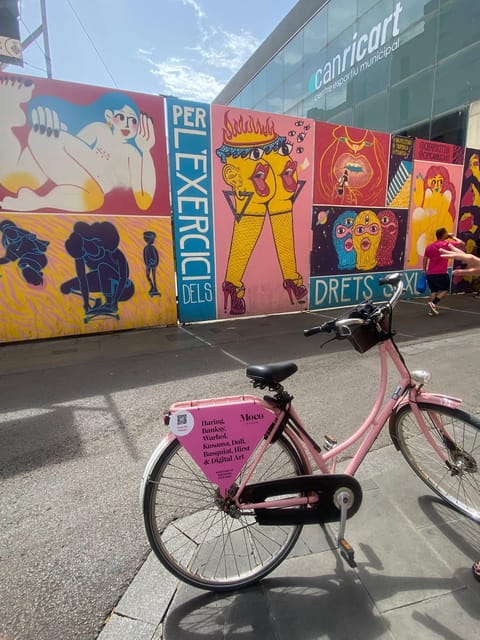
The route also includes El Xupet Negre, associated with Negrelab. This stop shifts the focus toward Barcelona’s own street-art culture and local creative identity.
The contrast with Keith Haring is part of the appeal. One is an internationally recognized artist connected with a major social message. The other helps you look at the city’s homegrown scene and the visual language that developed on Barcelona’s walls.
Expect a guided photo stop rather than a long museum-style visit. You will be outside, on a moving route, and the time at each location is limited. That format suits you if you want an introduction and a broad sense of the scene. If you want to study each mural at length, you may find the schedule brisk.
More Street Art Bike Tours in Barcelona:
- London Bike Tour: Landmarks, Secret Gems, Pub Stop & Street Art
★ 5.0 · 943 reviews - London: Landmarks & Secrets Bike Tour with Pub & Street Art
★ 4.9 · 314 reviews - Mexico City; ART NACO : Murals & Street Art Bike Tour
★ 5.0 · 284 reviews - Mexico City: Art Naco, murals & street art bike tour
★ 4.7 · 166 reviews
CCCB, MACBA, and the Raval streets
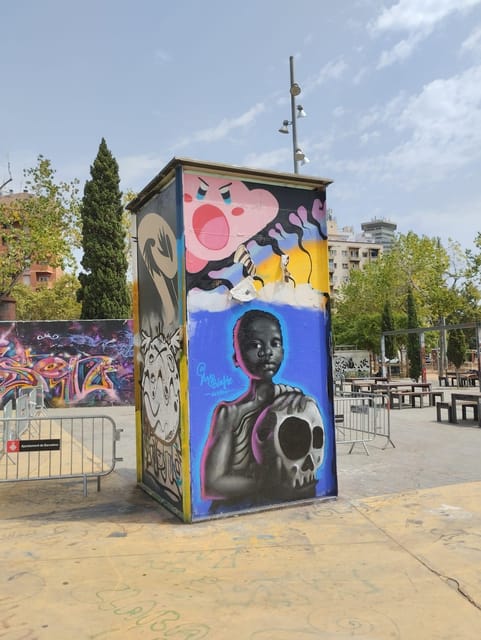
The Centre de Cultura Contemporània de Barcelona and the Barcelona Museum of Contemporary Art provide useful reference points for the street art around them. The ride passes through an area where contemporary culture, older buildings, local businesses, and narrow streets sit close together.
The Barcelona Museum of Contemporary Art, known as MACBA, is a major stop for understanding the city’s modern art identity. You are not given a separate museum visit as part of this tour, so plan on seeing it from the outside and hearing the guide’s comments while riding or stopping nearby.
This is one of the route’s practical strengths. You get a quick introduction to several cultural sites without spending your whole morning indoors. If you want to visit MACBA’s galleries, set aside extra time before or after the bike tour. The tour itself is focused on the city streets and outdoor art.
Carrer de la Lluna and Carrer de la Riereta add a more intimate scale. These streets help show how art appears in the older parts of Barcelona, where the experience can feel less formal than a visit to a museum. You will pass through lanes and streets where the setting is as important as the wall itself.
Àgora Juan Andrés Benítez
Àgora Juan Andrés Benítez is another stop where the local setting matters. The guide provides a photo stop and explains what you are seeing, while the ride continues through the surrounding streets.
Because this is a private tour, you can ask for clarification if a name, symbol, or story catches your attention. That is a better fit for curious visitors than a large group with a fixed script. The provided route includes several stops of about 10 minutes, so the guide has time to speak, but not enough time for long lectures at every location.
You should also expect some passing views rather than a stop at every point. The itinerary mixes guided visits, photo stops, and sights seen while riding. That keeps the tour moving, but it means you should not expect to spend equal time at every place.
Port Vell and El Cap de Barcelona
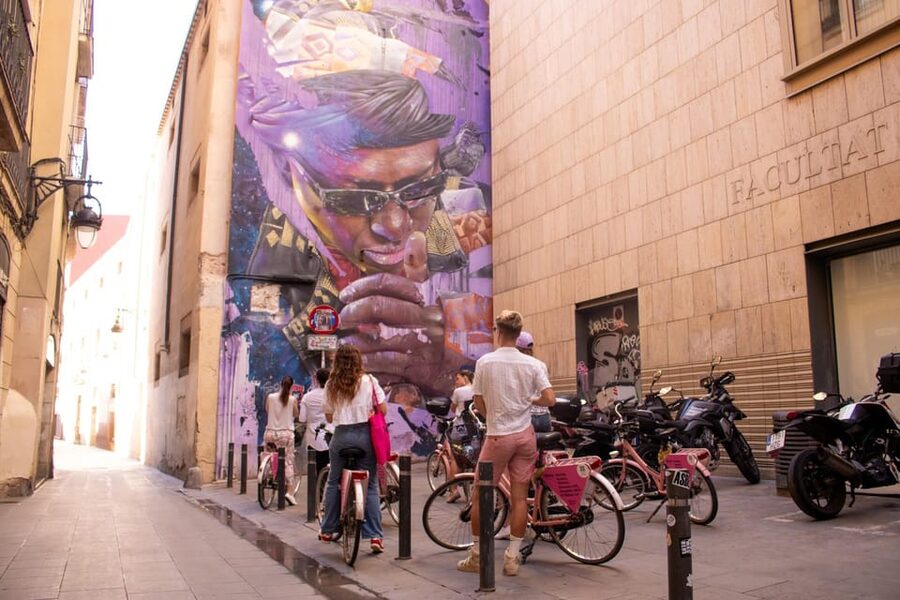
The ride reaches Port Vell, Barcelona’s waterfront harbor area, then continues to El Cap de Barcelona. Port Vell is listed as a brief sightseeing pass, while El Cap de Barcelona receives a guided photo stop.
This section gives your eyes a break from narrow streets. After the close-up walls and older lanes, the harbor area opens the route to broader views and a different side of the city. El Cap de Barcelona also gives you a chance to stop, take photographs, and hear the guide’s explanation.
The waterfront is not the main reason to book this activity, but it improves the overall balance. You are not spending all 2.5 hours looking at walls. The route moves between art, architecture, public spaces, and city views.
The Gothic Quarter and Barcelona Cathedral
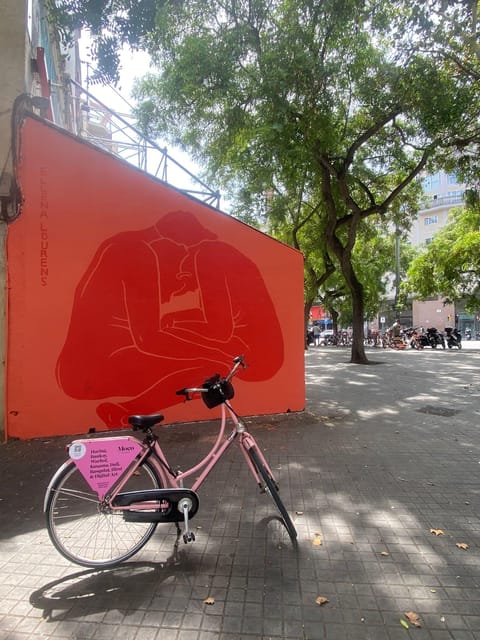
The Gothic Quarter brings the ride back into the city’s oldest streets. Its narrow lanes and irregular layout explain why a bicycle tour can be useful here. You cover more ground than you would on foot, while still getting close to the streets and buildings.
Barcelona Cathedral is another photo and sightseeing stop. The cathedral itself is not presented as a full interior visit, so think of it as part of the outdoor route rather than a substitute for a cathedral tour.
I like this pairing because it shows Barcelona’s cultural layers in one stretch. The street art is not isolated from the old city. It sits beside historic buildings, public squares, and everyday neighborhood life. Your guide can help you see that relationship rather than treating modern murals and old architecture as unrelated attractions.
Riding through the Gothic Quarter does require attention. Streets can be narrow, and the tour is not suitable for anyone who cannot ride a bike. Headphones are not allowed, which is sensible here: you need to hear your guide and remain alert to your surroundings.
Passeig de Gracia, Casa Batlló, and Casa Mila
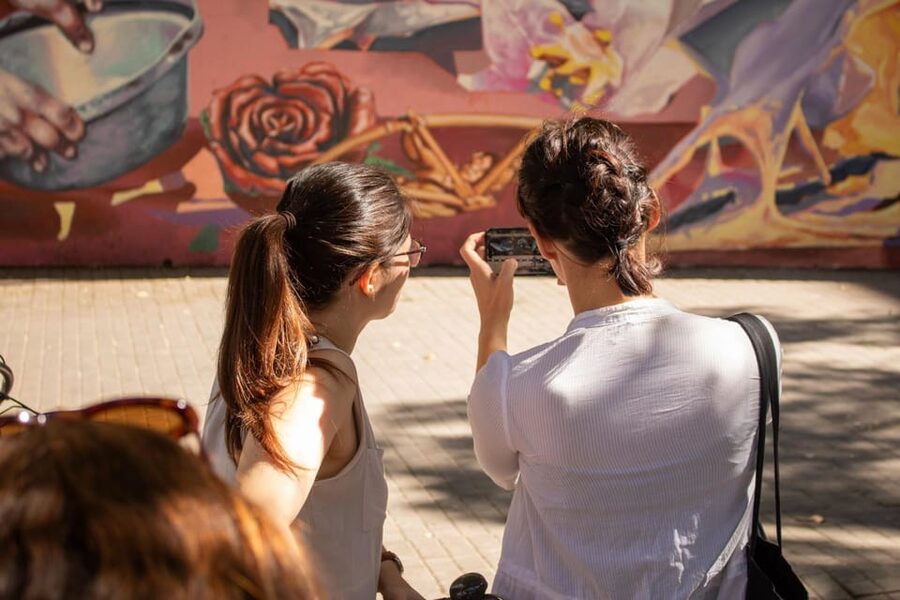
The final major section shifts to Passeig de Gracia, one of Barcelona’s best-known avenues. Here you see Casa Batlló and Casa Mila, two of Antoni Gaudí’s most famous buildings.
The tour includes photo stops and guided sightseeing, but not entry into either house. That distinction matters when planning your day. If you want to tour the interiors, buy a separate admission and allow extra time. On the bike ride, the value is in seeing the buildings as part of the city route and hearing the guide’s comments without committing to a longer indoor visit.
Casa Batlló is listed as a 10-minute stop, while Casa Mila receives a shorter pass and sightseeing segment. These timings suggest a quick orientation rather than detailed architectural study. Bring your camera, but also listen for the connection between Barcelona’s celebrated architecture and the street-level creative culture seen earlier.
The route then returns toward Carrer dels Tallers 45. Depending on the exact starting option confirmed at booking, the meeting and drop-off location is listed as the same address.
What the $177 price includes
For two people, the private-group rate offers a clear advantage. You receive a guide, two bicycles, water, third-party insurance, and the privacy of not sharing the ride with a larger party. Rain ponchos are available if needed, and helmets and child seats can be requested at no extra charge.
Food, drinks beyond the supplied bottle of water, and souvenirs are not included. That is easy to manage on a 2.5-hour tour, though you may want to eat before setting out rather than count on a meal break during the ride.
The strongest value comes from the guide and the route design. You could see parts of the Gothic Quarter, Port Vell, and Passeig de Gracia on your own. What you would not have as easily is the connection between the murals, the artists, the social messages, and the neighborhoods.
The tour has received a top rating, and one verified German booking from October 2024 specifically praised the enthusiastic guide and the amount of information provided. That lines up with the experience’s main promise: the quality depends heavily on the guide’s ability to bring the art to life.
Who should book this bike tour
This tour suits you if you want a lively introduction to Barcelona’s public art and prefer moving around rather than sitting in a museum. It is also a good choice for couples or friends who want a private experience and are happy to pay more for flexibility.
You should be comfortable on a bicycle and meet the 160-centimeter minimum height for the e-bikes. Children under 16 are not allowed on the e-bike tours because of legal restrictions. The tour is not suitable for wheelchair users or anyone unable to ride.
Pack breathable, comfortable clothing and closed, comfortable shoes. Bring sunscreen, a hat, sunglasses, and a camera. A passport or identity card, or a copy, may be required. Do not bring alcohol or drugs, and do not plan to ride barefoot.
The tour operates in rain or sunshine. Free ponchos are provided in wet weather, so rain alone should not stop you. Still, poor weather could make photography less pleasant and the streets more demanding, so dress sensibly.
Should you book it?
Book this tour if street art is a real interest, you want a guide’s stories rather than a self-guided ride, and you meet the e-bike rules. The combination of Keith Haring, El Xupet Negre, local streets, MACBA, the Gothic Quarter, and Gaudí’s buildings gives you a broad look at Barcelona in a short time.
Skip it if you cannot ride confidently, want a full museum visit, or prefer a slow walking tour with long stops. For two people, the $177 private rate is easier to justify than for a solo participant. If that fits your plans, this is a focused way to see Barcelona’s creative side without giving up the city’s older streets and famous architecture.
FAQ
Where does the Barcelona Street Art Bike Tour begin?
The meeting point is Carrer dels Tallers 45 in Barcelona, at the Barcelona Ciclo Tour passage.
How long does the tour last?
The tour lasts 2.5 hours.
How many people can join the private group?
The price covers a private group of up to two people.
Is an English-speaking guide included?
Yes. An English-speaking live tour guide is included.
Are bicycles provided?
Yes. One bike is provided per person. The route also includes electric-bike sections.
Can children join the e-bike tour?
No. Children under 16 cannot join the e-bike tours because of legal restrictions. The minimum height for the e-bikes is 160 centimeters.
Are helmets and child seats available?
Yes. Helmets and child seats are available free on request. Helmets are mandatory for children up to age 16.
What happens if it rains?
The tour operates in rainy weather, and free rain ponchos are provided if needed.
New street art tours in Barcelona
- Barcelona Street Art, Graffiti and Tapas Tour★ 4.0 · 5 reviews
- Private Barcelona Street Art Tour★ 5.0 · 2 reviews
- Barcelona | StreetArt Bike Tour Moco Museum★ 4.6 · 13 reviews
- Barcelona Street Art, Graffiti & Tapas Tour★ 5.0 · 5 reviews
- Street Art, Sculptures & Crime Stories Walking Tour – Barcelona★ 5.0 · 11 reviews
- Barcelona: Insider Street Art Tour with Private Studio Visit★ 5.0 · 21 reviews
- Barcelona: Graffiti E-Scooter Tour★ 4.4 · 9 reviews
- Barcelona Art & Wine: Galleries, Studios & Street Art★ 5.0 · 26 reviews
Street Art Bike Tours, side by side.
London Bike Tour: Landmarks, Secret Gems, Pub Stop & Street Art
Read our review →
Barcelona Street Art and Graffitti Bicycle Tour
Read our review →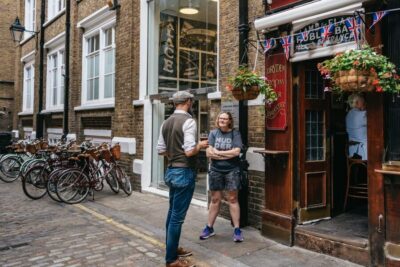
Landmarks & Secrets Bike Tour with Pub & Street Art
Read our review →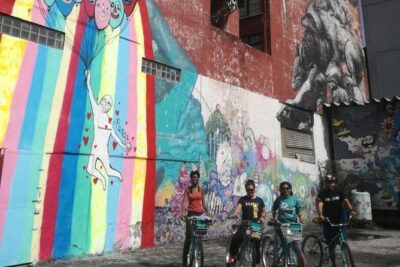
Mexico City; ART NACO : Murals & Street Art Bike Tour
Read our review →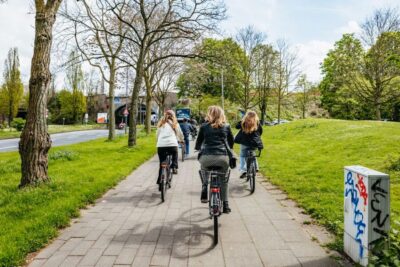
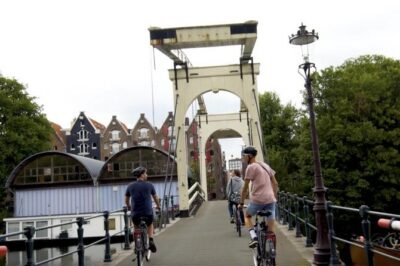
Urban Adventures Amsterdam Bike Tour, Graffiti and Magnet Fishing
Read our review →
E-Bike Guided Tour Downtown St Pete: Sights & Murals
Read our review →Lists this wall walk turns up in