
Reviewed · STREET ART WALKING TOURS
Bilbao Urban and Street Art Walking Tour
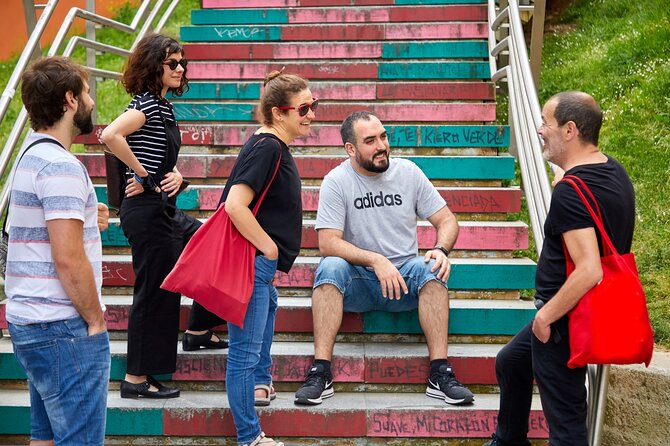
Bilbao’s most interesting art may not be behind the Guggenheim’s titanium walls. This three-hour walk takes you through Bilbao La Vieja and San Francisco, where murals, repurposed buildings, mining remains, and neighborhood projects tell a less polished but more revealing story of the city. I like the mix of street art and social history, and I like that a local craft beer and snack are included. The main drawback is simple: you spend much of the tour outdoors, so rain and comfortable shoes matter.
I also like the small-group limit of 15 people, which should make it easier to hear the guide and ask questions. The guide is the heart of the experience, bringing Bilbao’s cultural changes and art scene into focus with the kind of enthusiasm that turns a city walk into a good conversation. If you want a formal museum tour or a long stop inside galleries, choose something else.
Key details of Bilbao’s creative side
- Start at 11:00: Meet at the Tourné shop on Villarías Kalea, near public transportation.
- Eight stops in about three hours: The route connects historic buildings, street art, cultural centers, and former industrial sites.
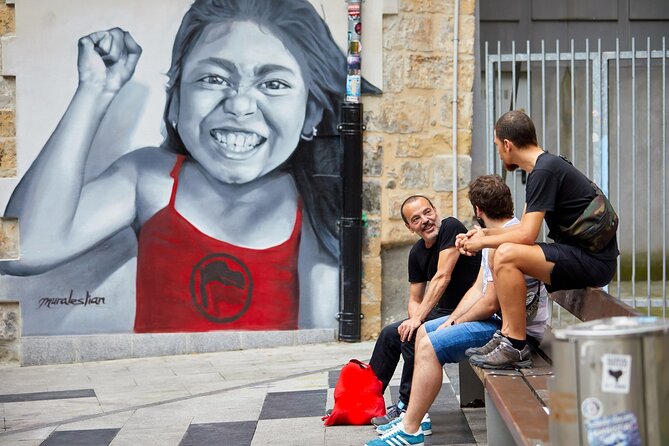
- Street art with local context: You see works near BBK Kuna and throughout Bilbo Zaharra and San Francisco.
- A mining reminder in the city: The old San Luis calcination furnace links modern Bilbao to its industrial past.
- Beer and a snack included: The walk finishes with one local craft beer at Mariaren Bihotza Plaza.
- Small group format: A maximum of 15 people keeps the tour more personal than a large city walk.
Why this Bilbao walk is different from a Guggenheim visit
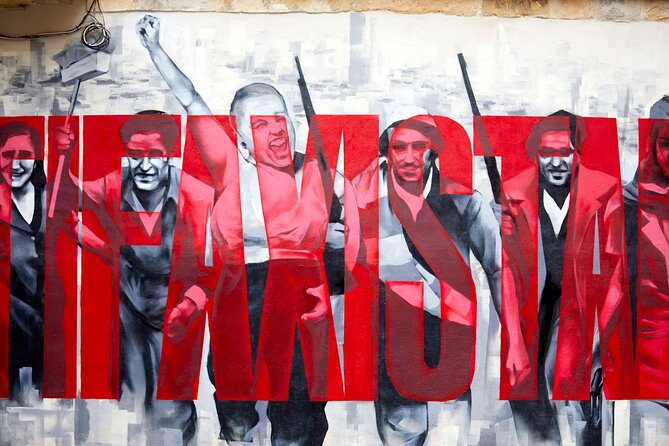
The Guggenheim helped put Bilbao on the international art map, but it did not create the city’s interest in culture. This walk gives you another angle. Instead of focusing on one major museum, it shows how art appears in public spaces, former industrial areas, neighborhood meeting places, and buildings given a second life.
I like that the tour does not treat street art as decoration alone. The stops connect murals and creative projects with Bilbao’s working past and its changing neighborhoods. You see places shaped by railways, mining, religious institutions, migration, regeneration, and new cultural work.
That makes this a good choice for a second day in Bilbao, after you have seen the Guggenheim and Casco Viejo. It gives you a wider sense of the city. You are not simply checking off famous sights. You are walking through areas where the city’s changes are visible at street level.
The price is $49.74 per person. For about three hours, that includes a local guide, one craft beer, and one local snack. The value depends on what you want from a tour. If you mainly need directions, it is more than a self-guided walk would cost. If you want the stories behind the art, historic buildings, and neighborhood changes, the guide adds the part that a map cannot provide.
More Street Art Walking Tours in Spain
- Barcelona: Raval Street Art and Graffiti Walking Tour
★ 4.9 · 60 reviews - Bilbao: Art District Walking Tour
★ 4.8 · 27 reviews - Granada: “Street Art & The Caves” Unique Guided Walking Tour
★ 5.0 · 27 reviews
Starting at Bilbao La Concordia Station
The meeting point is the Tourné shop at Villarías Kalea, 1, in Abando. The walk begins at 11:00, with Bilbao La Concordia Station as the first proper stop.
La Concordia is a fine opening because it immediately gives you a strong architectural marker. Designed at the beginning of the 19th century, the station has eye-catching details inside and out. You only spend about 10 minutes here, but it sets up the route’s main theme: Bilbao’s past is not separate from its newer creative identity.
The station also makes practical sense as a starting point. The meeting point is near public transportation, and the tour ends back at the same meeting point. That takes away the need to figure out a new return route after the beer stop.
Martzana Kaia and the changing riverfront
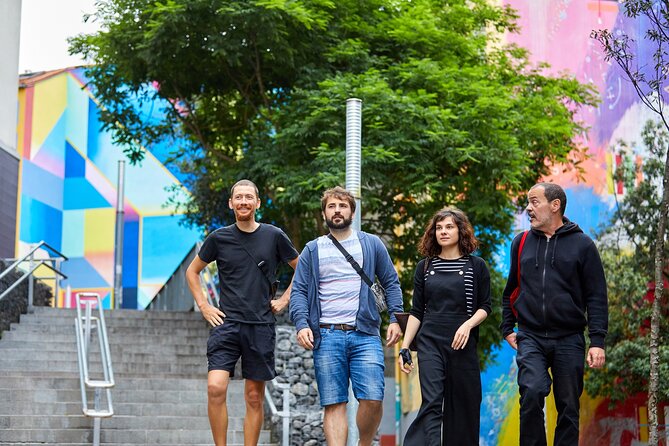
From the station, the route moves to Martzana Kaia, on the left side of the San Antón Bridge. This riverside area takes its name from an old tower house that once stood nearby.
Today, bars and restaurants fill the area, and the stop lasts about 15 minutes. The point is not only to admire the riverfront. It is to see how a part of Bilbao has changed from an older urban setting into a place for eating, drinking, and spending time outside.
This is one of the better places to listen closely to the guide. The neighborhood’s newer social life is part of the story, and the local perspective helps explain how places gain a different role over time. You do not need a long stop here to understand the contrast between the older name and the current use.
BBK Kuna and public art by local artists
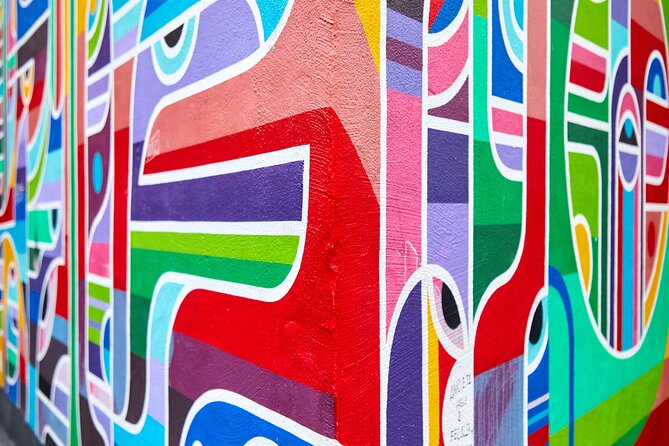
The next stop is BBK Kuna, a former nursery where the children of day laborers were cared for. The building now serves a different purpose, with plans centered on innovation projects and social goals.
You spend about 20 minutes around the building and nearby public art. The visit is external, and admission is not included, so do not expect an indoor museum visit. The value comes from seeing how an older building has been brought into a new civic role and how local artists use the surrounding area.
This is a useful stop for understanding Bilbao beyond its headline attractions. A former childcare building, a modern innovation center, and street art by local creators all occupy the same part of the city. That combination gives the tour more substance than a simple mural hunt.
You should also keep your expectations practical. Public art changes. A work may be repainted, removed, or viewed differently depending on the current condition of the site. The guide’s explanation matters as much as the image in front of you.
Same city, a different set of walls:
- Barcelona Street Art and Graffitti Bicycle Tour
★ 5.0 · 361 reviews - Madrid: Street Art Tour with Local Graffiti Hunter
★ 4.8 · 270 reviews - Street Art Guided Tour in Madrid
★ 5.0 · 175 reviews - Barcelona Street Art Tour with Exclusive Artist Studios Visit
★ 5.0 · 152 reviews
Bilborock, a church turned cultural venue
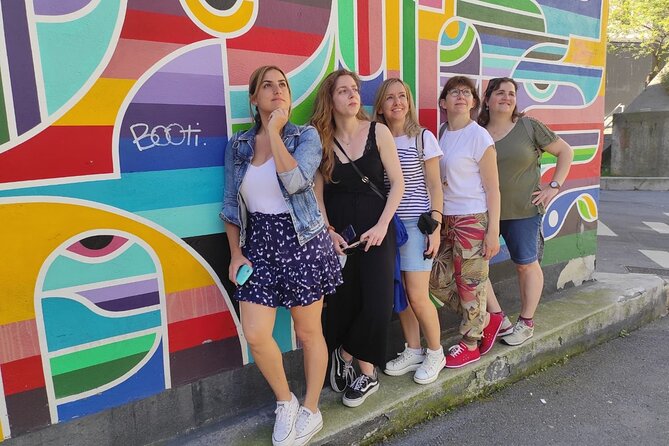
Centro Municipal Bilborock-La Merced occupies a former 17th-century church. It has been converted into a cultural center with a concert hall, cinema, and workshop rooms.
You have about 10 minutes here. That is enough for an introduction and a look at the building, but not enough for a full event or program. The stop is especially appealing if you enjoy adaptive reuse, the practice of giving old buildings new public functions.
Bilborock shows how Bilbao’s cultural life is not confined to purpose-built museums. A religious building can become a place for music, film, and workshops. That change also fits the route’s wider pattern: the city keeps finding new uses for structures shaped by older eras.
The San Luis furnace and Bilbao’s mining past
One of the route’s most unusual stops is the old San Luis mine calcination furnace. You spend about 10 minutes at this industrial remnant, which has been preserved as a reminder of the area’s mining past.
This is the kind of sight that is easy to miss on a standard first-time visit. It is not a polished monument or a famous museum. Its strength is that it makes Bilbao’s industrial identity physical. The furnace points toward the Miribilla neighborhood, an area connected with one of the city’s later urban regeneration projects.
I like this section because it keeps the art from floating free of the city’s working life. Bilbao’s newer creative side developed in a place shaped by labor, factories, mining, shipping, and urban change. The furnace gives that story a solid anchor.
The stop is brief, and the supplied details do not promise an indoor visit or a detailed industrial museum experience. Think of it as a strong visual pause in the walk, followed by context from the guide.
Bilbo Zaharra and San Francisco’s street-level culture
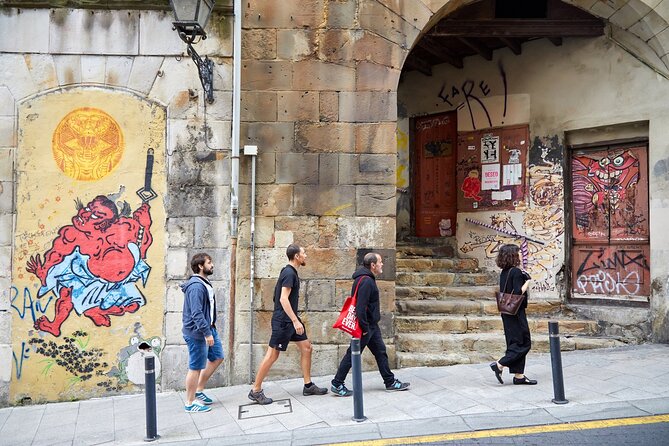
Bilbo Zaharra was once a border area between old Bilbao and Calle de San Francisco. Now it has restaurants, street art, and a strong local atmosphere.
The walk gives you about 15 minutes here. You will see how public art appears across ordinary corners rather than in a single designated gallery. New restaurants and creative work share space with older streets, making this one of the tour’s clearest examples of a neighborhood in transition.
I find this part useful because it asks you to look around instead of only looking ahead. Murals and painted walls are part of the scene, but so are businesses, buildings, and public spaces. The guide’s job is to connect these details without turning the walk into a lecture.
San Francisco is also described as a multicultural neighborhood, and the route treats that character as part of the story. You should expect a real urban neighborhood rather than a staged art district. That can mean a more interesting walk, but it also means the setting will not feel as tidy or carefully arranged as the area around a major museum.
Mariaren Bihotza Plaza and the included beer
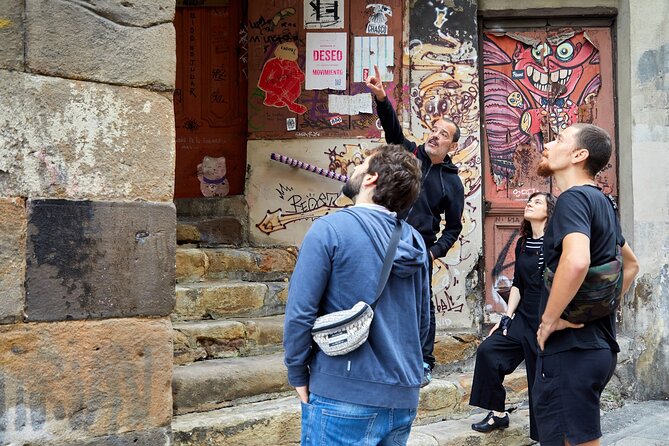
Mariaren Bihotza Plaza is the route’s social finish. It sits at the center of the San Francisco neighborhood and occupies the site of a former Franciscan convent from the 16th century.
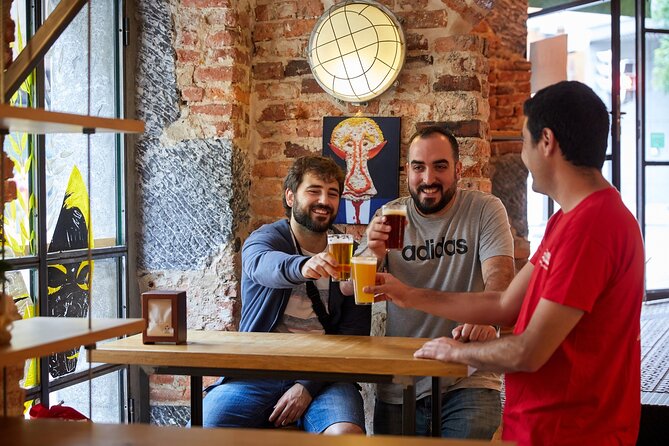
The square is also home to Sarean, a neighborhood meeting space run by a local cultural association. After about 15 minutes here, you finish the route with one local craft beer. A local snack is included as well, while additional food and drinks cost extra.
This ending works because it turns the tour from a sightseeing walk into a chance to pause and talk. The beer is not a full meal, so plan to eat separately if you need lunch. Still, the included drink adds real value, especially after several hours on foot.
If you do not drink beer, the tour information does not specify an alternative. That is worth checking before booking if you have dietary or drink preferences. The snack is also not described in detail, so you should not assume it will meet a particular dietary need.
BilbaoArte and the city’s working art scene
The final listed stop is BilbaoArte Fundazioa, an artistic production center in central Bilbao. Professionals working in screen printing, sculpture, and technology share the space, making it an important part of the Basque cultural scene.
You spend about 20 minutes here. The stop helps complete the tour’s argument: art in Bilbao is not only something displayed for visitors. It is also made in working spaces by people using traditional craft, sculpture, printmaking, and technology.
This is a strong finish for anyone interested in how art gets produced. The Guggenheim presents finished works. BilbaoArte points toward studios, processes, and collaboration. The supplied information does not promise a particular exhibition, workshop, or artist encounter, so treat this as a look at a creative institution rather than a scheduled studio demonstration.
After this part, the activity ends back at the meeting point. The route’s structure gives you a full circle, beginning near a historic station and finishing with a contemporary arts center.
Timing, walking comfort, and group size
The tour lasts approximately three hours and begins at 11:00. The listed stops add up to about 115 minutes, leaving the rest of the time for walking between locations and for the guide’s explanations. That makes the schedule feel reasonably paced rather than rushed.
You should wear comfortable clothes and shoes. The route moves through several neighborhoods, and the tour is built around outdoor viewing. There is no reason to wear formal clothing for this experience.
The maximum group size is 15 people. That is small enough to keep the guide within earshot and large enough to retain the energy of a shared walk. A smaller group also helps when the guide is explaining a mural or pointing out a detail on a busy street.
Most people can participate, and the tour is near public transportation. No specific accessibility details are provided, so contact the provider before booking if you have mobility needs or need to know about surfaces, slopes, or seating.
Who should book this street art tour
I would recommend this walk to you if you enjoy:
- Public art more than formal gallery visits
- Urban change and repurposed buildings
- Local cultural projects and neighborhood life
- Bilbao’s industrial and mining background
- Small-group walking tours
- A casual drink at the end of a morning activity
It is particularly good for people who already plan to see the Guggenheim and want a different side of Bilbao. It also suits anyone who wants a guide to explain why a street, building, or mural matters instead of simply photographing it.
You may want to skip it if your main goal is a relaxed route through Bilbao’s most famous monuments. The tour covers several neighborhoods and includes a mining remnant, a former church, and public art rather than a long list of major landmarks. It also may not suit you if you prefer indoor activities or need a fully detailed food and drink plan.
The strongest part is the guide’s role. The experience depends on a local person who can bring Bilbao’s history, culture, and art together. The published feedback is especially positive about the guide’s passion and ability to make the city feel alive through stories. That is exactly the quality to look for in this kind of walk.
Should you book the Bilbao Urban and Street Art Walking Tour?
Book it if you want Bilbao beyond the Guggenheim. For $49.74, you get about three hours of guided walking, eight thoughtfully connected stops, a craft beer, and a local snack. The tour gives you context for public art while also showing the city’s mining past, cultural spaces, and neighborhood changes.
The best reason to choose it is the combination. You are not only looking at murals. You are seeing a former church, a railway station, a mine furnace, a neighborhood meeting space, and an arts foundation, all linked by the city’s changing identity.
Bring good shoes, dress for the weather, and leave room in your schedule for lunch afterward. If those conditions suit you, this is a useful and fairly priced way to see Bilbao’s creative side at street level.
FAQ
Where does the Bilbao Urban and Street Art Walking Tour start?
The tour starts at the Tourné shop at Villarías Kalea, 1, Abando, 48001 Bilbao, Bizkaia, Spain.
What time does the tour begin?
The start time is 11:00 am.
How long does the tour last?
The activity lasts approximately three hours.
What is included in the tour price?
The price includes a local guide, one local craft beer, and one local snack.
Does the tour visit the inside of BBK Kuna?
The BBK Kuna stop is an external visit only. Admission is not included.
How many people can join the tour?
The group has a maximum of 15 travelers.
New street art tours in Spain
- Small-Group Graffiti Tour and Workshop in El Carmen★ 5.0 · 2 reviews
- Barcelona Street Art, Graffiti and Tapas Tour★ 4.0 · 5 reviews
- Salamanca: Private Guided Street Art Walking Tour★ 5.0 · 2 reviews
- Private Barcelona Street Art Tour★ 5.0 · 2 reviews
- Barcelona | StreetArt Bike Tour Moco Museum★ 4.6 · 13 reviews
- Madrid Street Art Tour (Malasaña Chueca Gran Via & Lavapies)★ 3.5 · 8 reviews
- Málaga: Street Art Tour in the Soho District★ 5.0 · 4 reviews
- Madrid: Hidden Street Art Tour★ 5.0 · 11 reviews
Street Art Walking Tours, side by side.
Naples Spanish Quarters Walking Tour Street Art, Folklore & Sweet
Read our review →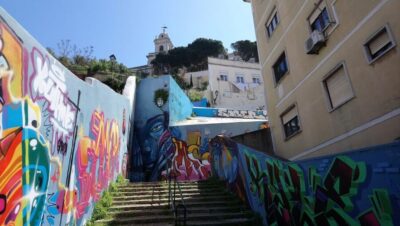
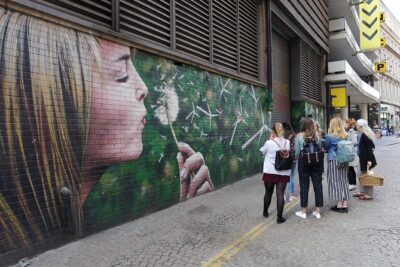

Brooklyn Graffiti & Street Art Walking Tour in Bushwick
Read our review →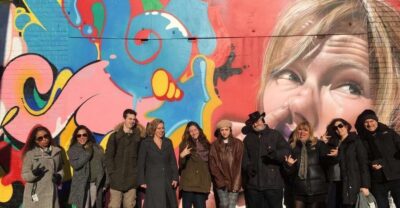
Lists this wall walk turns up in