
Reviewed · MURAL TOURS WITH A LOCAL ARTIST
Melbourne: Street Art Walking Tour with a Street Artist
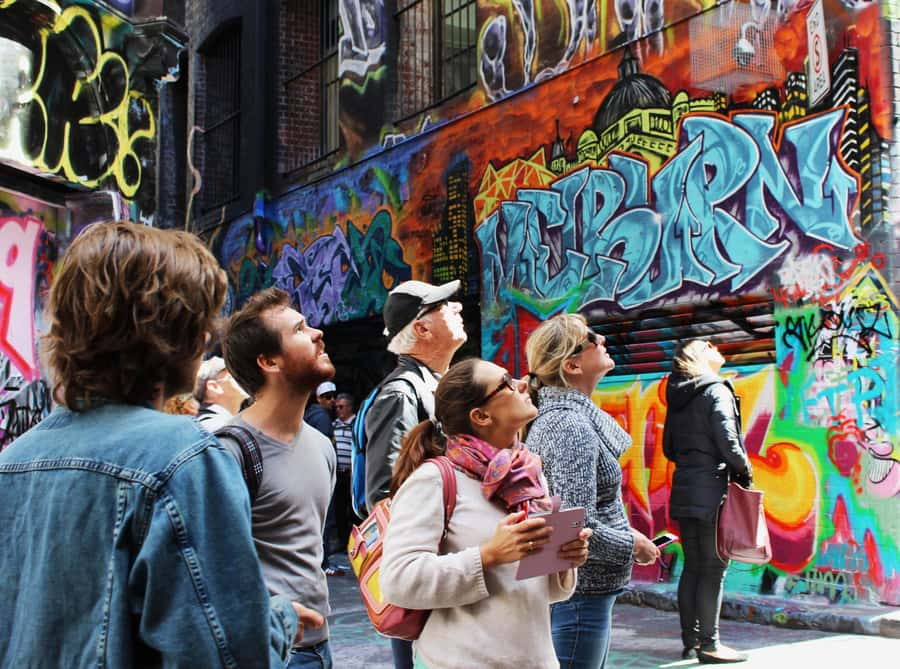
Melbourne’s street art makes more sense when an artist explains it to you. This three-hour walk starts at ACMI, moves through famous lanes and less obvious corners of the CBD, then finishes at Blender Studios, where you can meet artists and see working spaces rather than only finished walls. I especially like the artist-led view and the way the route changes as the art scene changes.
I also like that the tour teaches you how to look, not just where to point your camera. You’ll learn the difference between a tag, graffiti, a mural, and other forms of street art, then finish with market-fresh snacks and drinks. The main drawback is simple: this is a walking tour with a tram ride and no wheelchair access, so comfortable shoes and reasonable mobility are essential.
Key points to know before you book
- Start at ACMI: Meet your English-speaking guide at the street-level entrance on Flinders Street.
- Look beyond the famous lanes: The route includes well-known street art areas and quieter corners you might miss alone.
- Learn from working artists: Guides such as Ben, David, Tom, Matt, and Barek have led tours, with the exact guide depending on the date.
- Visit Blender Studios: The final stop offers a look at artists working in a large studio warehouse at 400 Spencer Street.
- Allow for plenty of walking: The route covers about three hours and includes a 15-minute tram journey.
- Good value at $55: The fee covers the walk, guide, studio visit, and end-of-tour refreshments, but not other food or drinks.
Why an artist’s eye changes Melbourne’s laneways
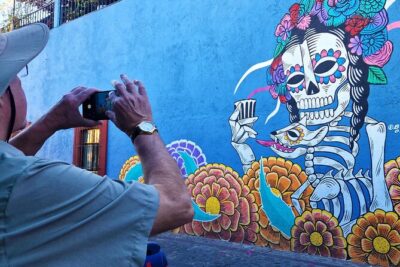
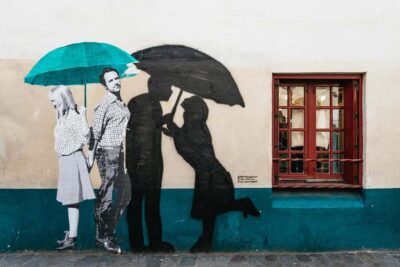
Melbourne’s street art is easy to photograph and surprisingly easy to misunderstand. A quick solo walk can show you colorful walls, stencils, lettering, paste-ups, and large murals, but it may not explain who made them, how they were created, or why one piece is treated differently from another.
That is where this tour earns its keep. Your guide is a street artist or someone directly involved in the scene, so the commentary goes beyond a prepared list of locations. Guides named in recent bookings include Ben Barek, David, Tom, Matt, and Barek. The guide roster can change, but the useful feature remains the same: you are hearing from someone with a working connection to the art form.
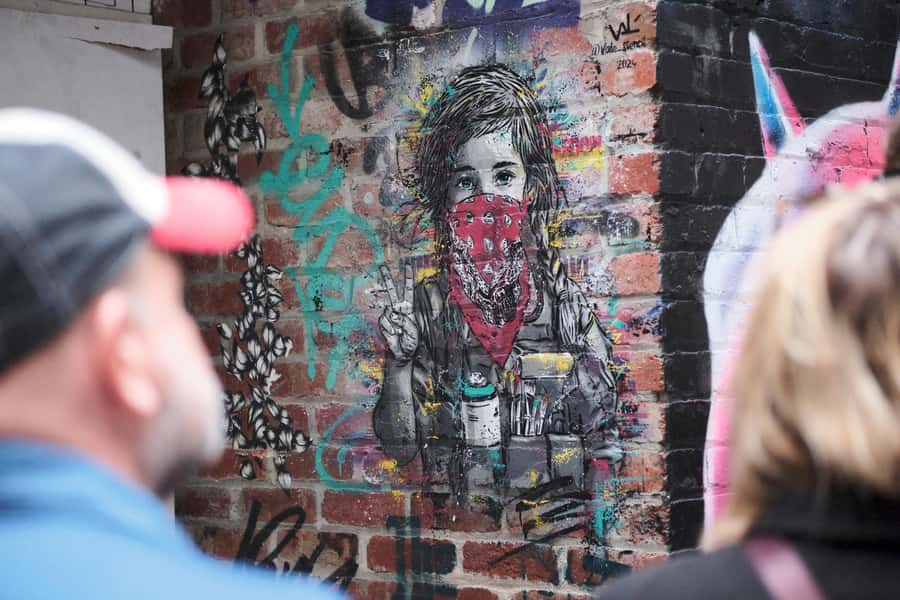
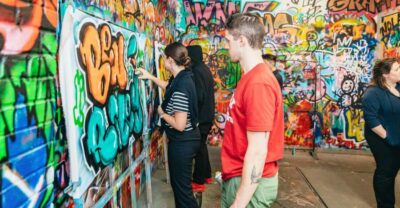
I like the practical lesson in visual vocabulary. You learn how tags differ from larger graffiti pieces, how street art can include several techniques, and how the city’s lanes become a changing public gallery. That context helps you notice small details later, even when you are walking around Melbourne without a guide.
The route is also updated because the walls are not permanent. New pieces appear, older ones are painted over, and some works disappear. That means the tour is not locked into a dusty map from years ago. It also means you should not expect every visit to follow exactly the same path.
More Artist-Led Mural Tours in Australia:
- NYC: Brooklyn Graffiti Workshop with Local Artist
★ 4.8 · 570 reviews - Belleville Street Art Tour with an Artist
★ 5.0 · 237 reviews - Montmartre Street Art Tour with an Artist
★ 5.0 · 144 reviews
Meeting at ACMI and entering the CBD art scene
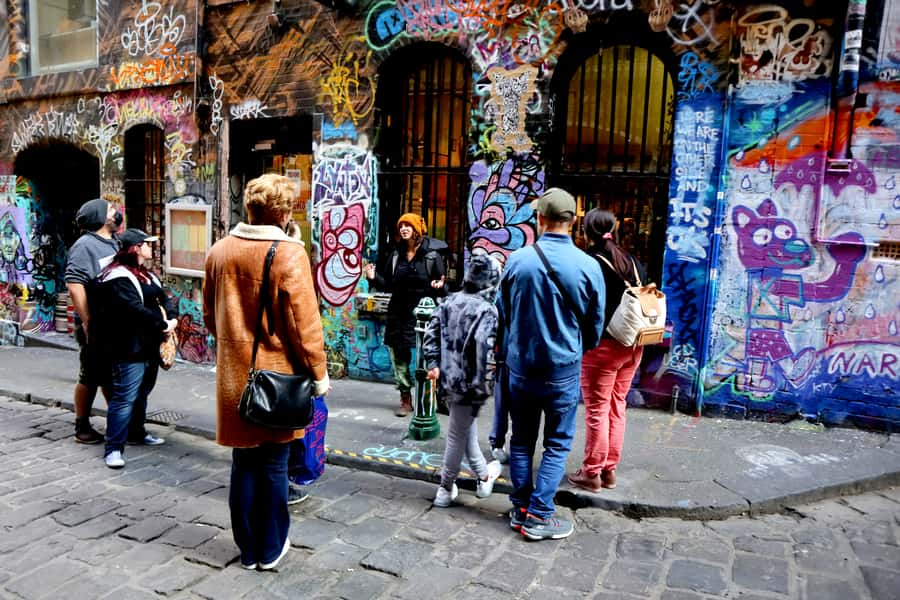
The tour begins at the entrance of the Australian Centre for the Moving Image, known as ACMI, on Flinders Street. The meeting point is at street level, which is useful if you are finding the group in a busy central area.
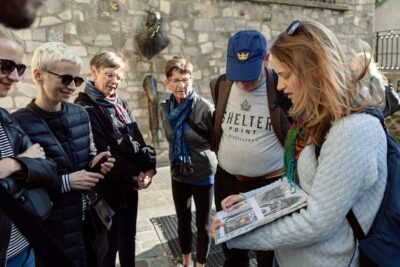
From there, the guide leads you into Melbourne’s laneways. The early part of the tour focuses on the CBD, where famous street art corridors sit close to ordinary city life. You are not simply taken from one photo stop to another. The guide explains the artists and stories connected with the works, along with the rules, styles, and culture that shape the scene.
This is especially useful if you already wandered through some lanes by yourself. Several people who had seen the art before the tour found that the explanations gave them a new way to read it. A wall is no longer just a striking background for a photograph. You begin to ask why that location was chosen, what technique you are seeing, and how the work fits into Melbourne’s wider street art culture.
Expect pauses in open streets and lanes rather than a quiet indoor talk. Traffic, air-conditioning units, passing pedestrians, and general city noise can make it hard to hear at times. One participant found the guide difficult to follow in noisy spots and suggested a portable speaker. If hearing every word matters to you, stay close to the guide and choose a position near the front of the group.
Famous lanes, overlooked corners, and changing artwork
The tour includes popular street art areas, but its value comes from going beyond the standard photo stops. The guide takes you through alleyways and less obvious corners that you might pass without noticing. That can include smaller installations, unusual details, and works that do not announce themselves from the main street.
I would not book this expecting a fixed checklist of particular murals. The route is deliberately modified as the artwork changes. A famous piece may be gone, replaced, or altered by the next visit. The benefit is a more current look at the city, though the trade-off is that you cannot guarantee a particular wall will be included.
The guide also adds the human side of the scene. You hear about artists, styles, and the social or political ideas that can appear in the work. A past participant valued learning about current issues affecting street art, while others enjoyed hearing how artists work within the unwritten rules of the scene.
This makes the walk suitable for people who know little about art. You do not need to identify artists or understand graffiti terms before arriving. The explanations begin with the basics and build from there. If you already follow street art, the local connections and stories may be the more useful part.
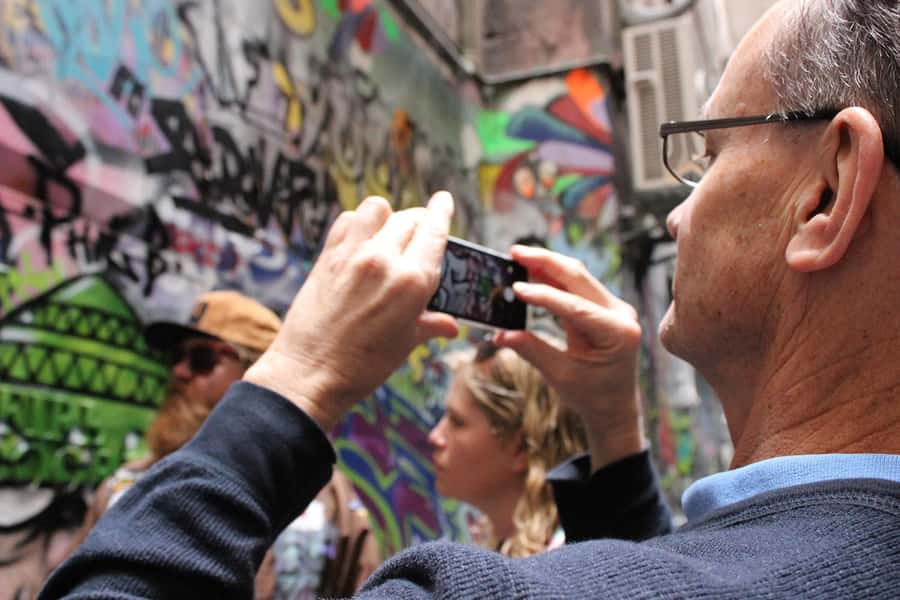
For photographers, the walk offers many opportunities, but bring a camera with realistic expectations. Melbourne’s lanes can be narrow, and other people may be moving through the frame. The tour is about seeing and understanding the work as much as collecting perfect images.
The 15-minute tram ride to West Melbourne
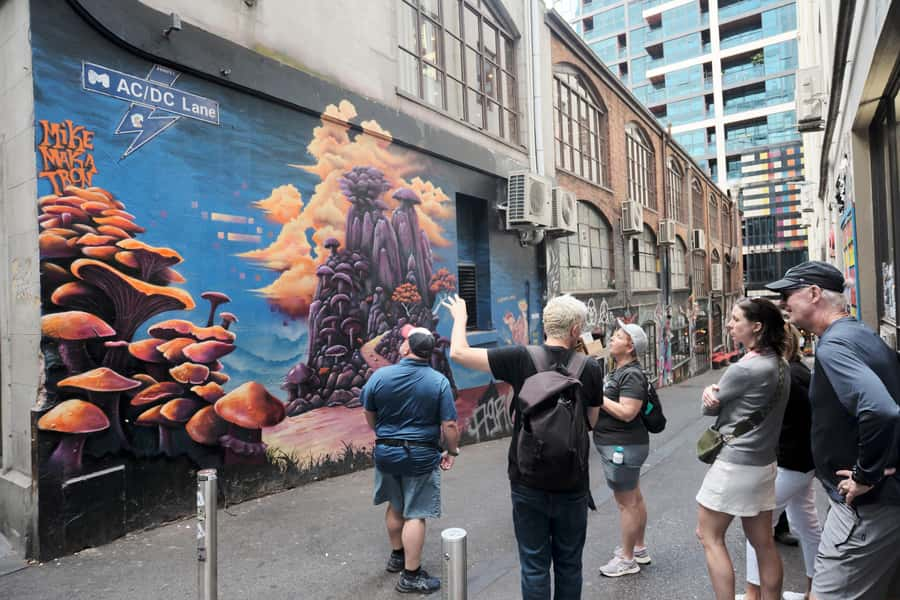
A short tram journey links the CBD walk with the studio visit. The tram ride takes about 15 minutes, so it breaks up the walking and shifts the experience from public lanes to a working art space.
The supplied timing describes a roughly three-hour activity, but the individual parts can vary with the route, traffic, group pace, and time spent at the studio. You should keep the rest of your day reasonably flexible rather than scheduling a tight appointment immediately afterward.
The tram connection also matters because the final stop is not in the central laneways. You finish at Blender Studios, 400 Spencer Street in West Melbourne. The experience therefore feels broader than a standard CBD street art walk. You see art in public spaces, then visit a place where artists make and develop their work.
More Street Art Walking Tours in Australia:
- Sydney: Street Art and Multicultural Food Walking Tour
★ 5.0 · 19 reviews - Hipster and Street Art Walking Tour
★ 5.0 · 13 reviews - Perth: Bar & Street Art Walking Tour
★ 4.6 · 5 reviews - London: Street Art and Graffiti Guided Walking Tour
★ 4.9 · 1,354 reviews
Inside Blender Studios at 400 Spencer Street
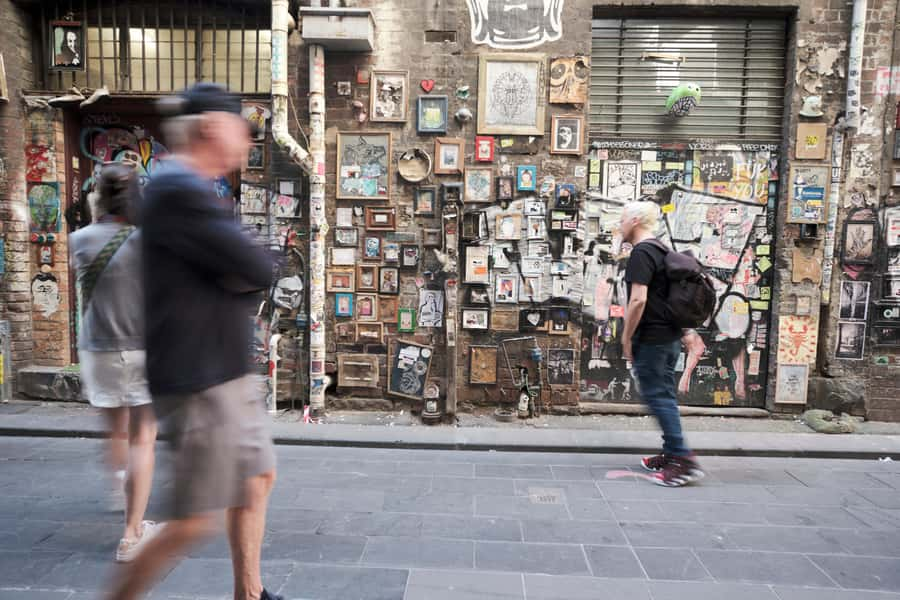
The studio visit is the tour’s strongest extra. At Blender Studios, you enter a large art studio warehouse and see a different side of the scene. Instead of viewing only finished pieces on outdoor walls, you may see artists at work and meet people connected with the studio.
The format is informal and personal. The guide takes you through the space, and you may encounter several artists working in different ways. This helps explain why the public art around Melbourne does not come from one single style or school. The studio brings together a range of creative approaches, including work influenced by street art.
I like this final stop because it gives the walk a sense of connection. You are not only looking at a city-funded mural route and then leaving. You are visiting a place where art is made, talking with artists, and seeing the working environment behind some of the culture you have been exploring.
The studio is also where the tour becomes especially appealing for people who prefer authentic encounters to formal sightseeing. It is not presented as a polished museum display. The warehouse setting and working artists give it a more direct feel. That may be a plus if you enjoy seeing creative work in progress. If you prefer a quiet, highly structured gallery visit, the studio may feel more casual.
The visit finishes with light refreshments. The offering includes market-fresh produce, beer, wine, and soft drinks. This is a pleasant way to slow down after the walk and gives you time to look around and speak with people at the studio. The fee does not cover other food or drinks, so think of this as a generous closing snack rather than a meal.
What $55 buys you
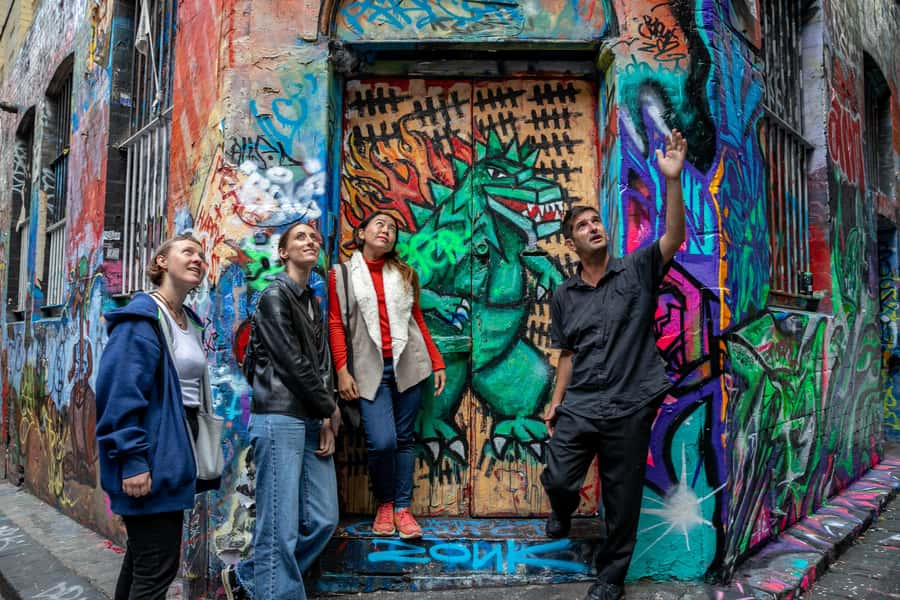
At $55 per person, this is not the cheapest way to see a few Melbourne murals. You can walk through some famous lanes for free. The price becomes easier to justify when you consider what is added: a three-hour guided route, an artist’s interpretation, lesser-known locations, a tram connection, access to Blender Studios, and refreshments at the end.
The strongest value is the interpretation. If you only want a list of streets to photograph, a self-guided walk may be enough. If you want to understand the difference between street art and graffiti, learn about artists and techniques, and see how the public work connects with studio practice, the fee buys more than directions.
The studio access is another important part of the calculation. You are not simply paying for a walk that ends at the last mural. You are also visiting an active art space and meeting artists. That extra stop is what makes this feel like a fuller cultural activity rather than a standard city orientation walk.
Families can enjoy it too. A family with two adults and two teenagers found the subject engaging for everyone, and the mix of walking, visual art, stories, tram travel, and refreshments gives the outing some variety. Still, younger children need to manage a fairly long walk and pauses in noisy city spaces.
Who should book this street art tour
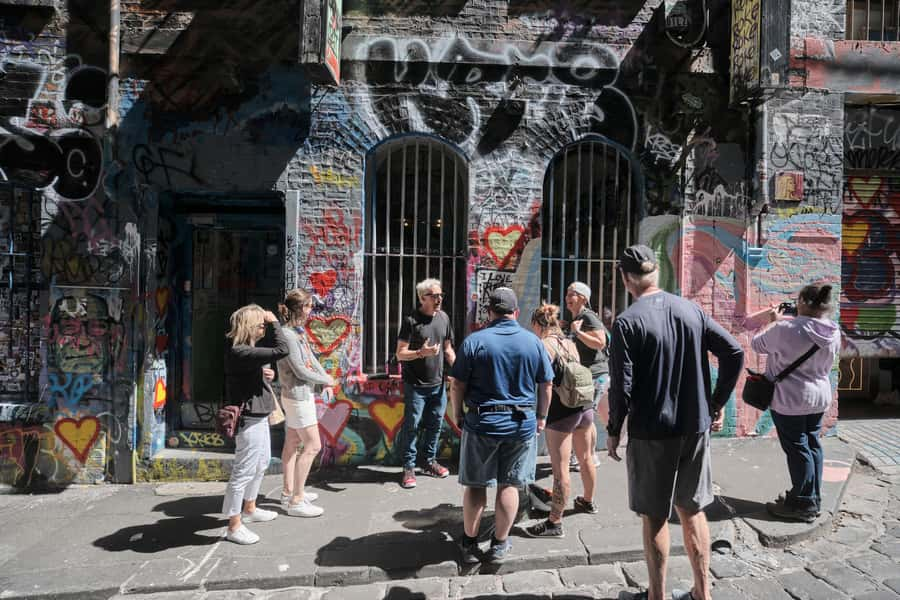
I would recommend it to first-time Melbourne visitors who want a different view of the CBD, as well as residents who have walked the city but never learned the stories behind its walls. One local participant discovered lanes they had never entered, which says something about how easy it is to overlook side streets even in your own city.
It suits you particularly well if:
- You enjoy local culture more than a standard list of landmarks.
- You like meeting artists and seeing work in progress.
- You are curious about graffiti, tags, murals, and street art but do not know the terminology.
- You want a guide to point out small works and locations you might miss alone.
- You are happy to walk for much of the three-hour activity.
- You want a social ending with snacks and drinks at an art studio.
It is less suitable if you have limited mobility, use a wheelchair, or dislike extended walking. The activity is specifically not suitable for people with mobility impairments or wheelchair users. Wear comfortable shoes, carry water, and bring rain gear because much of the experience takes place outdoors.
The tour is conducted in English. Because the art changes and the route is updated, you should also be comfortable with some flexibility. The exact guide may be Ben, David, Tom, Matt, or another member of the artist team, depending on the date.
How to get the most from the three hours
Arrive ready to walk, not just to take pictures. Comfortable shoes matter more than stylish footwear, and a bottle of water is sensible even on a cool day. Rain gear is worth packing because the route is outdoors and the activity continues in mixed weather.
Stay close enough to hear the guide, especially in the noisiest lanes. Ask questions as you go. The tour is built around stories and explanations, and the artist-led format works best when you engage with the guide rather than treating the walk as a photo procession.
Keep some attention on the small details. A large mural is easy to spot, but the guide may also point out a tiny paste-up, a hidden installation, an unusual tag, or a section of wall that reveals how the area has changed. Those details are often what you would miss on your own.
Save some energy for Blender Studios. The final visit is not a quick doorway stop. You will want time to look at the warehouse, see artists at work, enjoy the refreshments, and speak with people there. If the studio portion is the main reason you are booking, do not rush the earlier walk.
Should you book it?
Book this tour if you want Melbourne street art explained by someone connected to the scene, not just a route through photogenic lanes. The combination of changing city artwork, artist stories, lesser-known corners, and the Blender Studios visit gives you a better understanding of what you are seeing for $55.
Skip it if you only want a short, inexpensive stroll or if three hours of walking sounds tiring. For everyone else, especially curious first-time visitors, art beginners, families with active teenagers, and locals looking for a fresh view of the city, this is a strong choice. The studio visit and refreshments make the experience feel complete, while the artist’s perspective gives the walls a meaning you are unlikely to find by wandering alone.
FAQ
Where does the Melbourne street art tour start?
The tour starts at the street-level entrance of ACMI on Flinders Street in Melbourne.
Where does the tour finish?
It finishes at Blender Studios, 400 Spencer Street, West Melbourne VIC 3003, Australia.
How long does the experience last?
The advertised duration is three hours. The route includes guided walking, a tram ride of about 15 minutes, and a visit to Blender Studios.
Is the tour conducted in English?
Yes. The live tour guide speaks English.
Does the price include food and drinks?
The tour includes light refreshments at the end, including market-fresh produce, beer, wine, and soft drinks. Other food and drinks are not included.
How much walking is involved?
The tour involves quite a bit of walking through Melbourne’s laneways and CBD streets. Comfortable shoes and water are recommended.
Is the tour suitable for wheelchair users?
No. The activity is not suitable for wheelchair users or people with mobility impairments.
New street art tours in Australia
- Sydney Small Bars and Street Art Tour★ 5.0 · 14 reviews
- Melbourne Street Art Tour with a Local: Private & Personalized★ 4.5 · 3 reviews
- Melbourne Street Art Quest: Self-Guided Urban Story Game★ 3.5 · 3 reviews
- Fremantle – Convicts, Culture & Street Art★ 5.0 · 8 reviews
- Hipster and Street Art Walking Tour★ 5.0 · 13 reviews
- Hidden Adelaide: Laneways and Street Art Tour★ 5.0 · 6 reviews
- Paint and Palate Street Art Tour with Food★ 5.0 · 21 reviews
- Sydney: Street Art & Small Bar Tour with Complimentary Drink★ 5.0 · 4 reviews
Mural Tours with a Local Artist, side by side.
Street Art Walking Tour with a Street Artist Guide
Read our review →
Private Barcelona Street Art Workshop with a Street Artist
Read our review →Lists this wall walk turns up in