
Reviewed · MADRID MURAL TOURS
Madrid: Hidden Street Art Tour
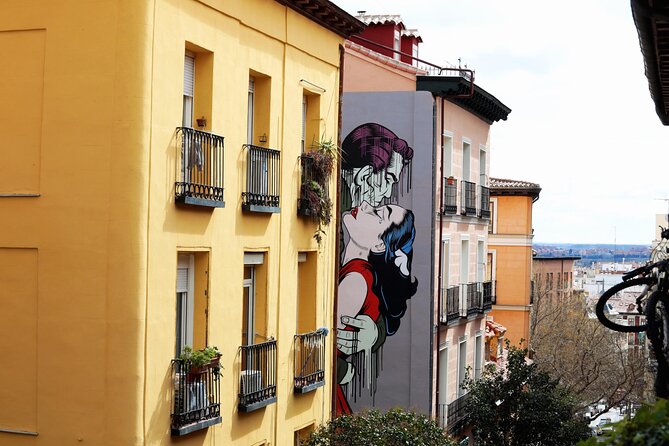
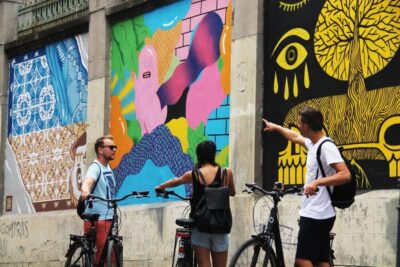
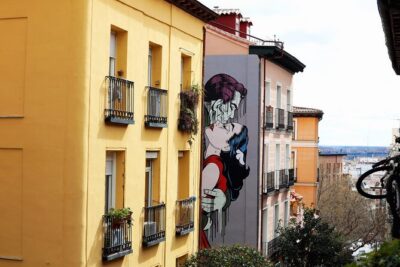
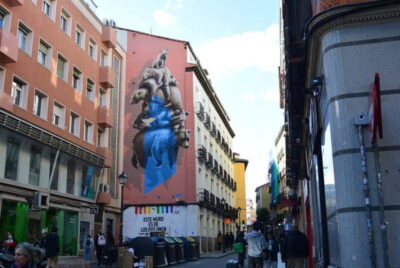
Madrid’s best street art is not confined to a museum wall. In Lavapiés, entire façades carry giant murals, while small tags, paste-ups, ceramic pieces, and odd details wait around corners. This two-hour walk brings you into that mix with a guide who works as an artist or art historian.
I like the small group of no more than 10 because you can ask questions without turning the walk into a street lecture. I also like the visit to a local gallery, which connects the outdoor work with artists working in the neighborhood today.
The main consideration is pace. You cover several streets in two hours, so this is a lively introduction rather than a complete survey of Madrid’s art scene. The gallery is included, but anything you fall in love with there costs extra.
Key points at a glance
- Lavapiés beyond the major sights: Walk through a local neighborhood instead of spending the whole tour near Madrid’s grand monuments.
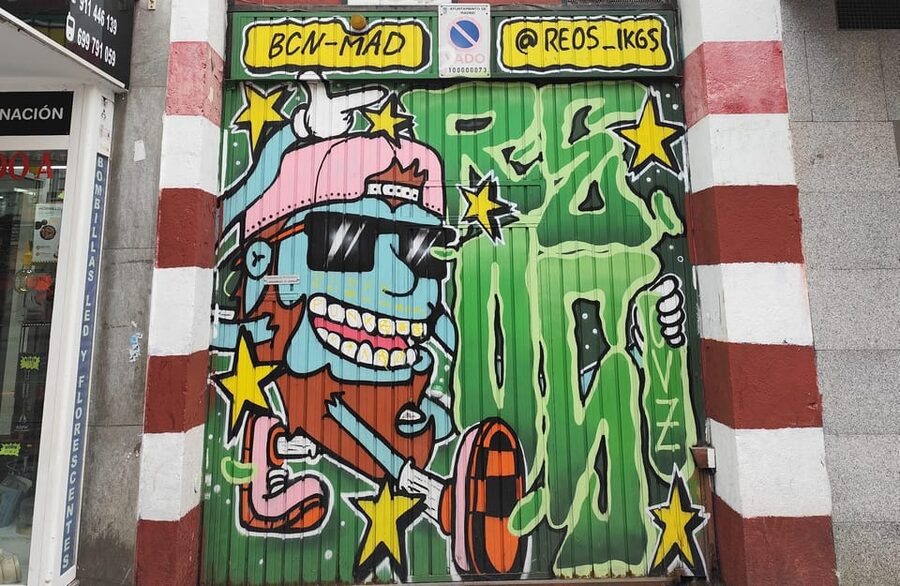
- Big murals and tiny marks: The route covers full-building paintings, tags, paste-ups, ceramic art, and urban sculpture.
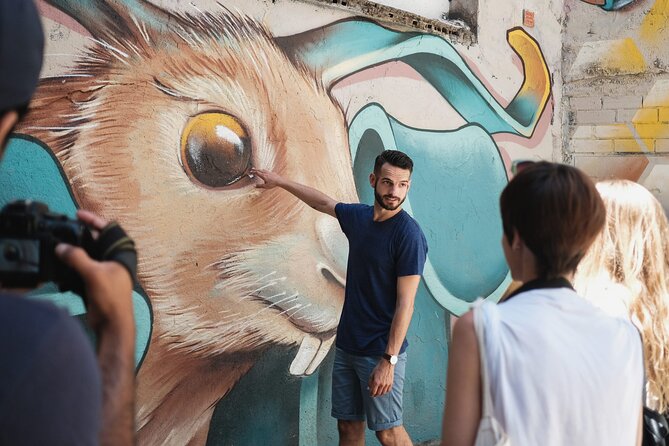
- Artists explain the art: Guides such as Roberto connect each piece with its artist, symbols, cultural references, and setting.
- A useful final gallery visit: End indoors with a chance to meet local artists and see work for sale.
- A compact two-hour route: Expect a focused walk through Calle Argumosa, the area near Reina Sofía, Mercado Antón Martín, and Calle de Embajadores.
- Good practical flexibility: The English-language tour is wheelchair accessible, costs $33, and allows free cancellation up to 24 hours before departure.
Why Lavapiés is the right setting for street art
Lavapiés gives this experience its character. You are not simply being led from one famous wall to another. You are walking through an eclectic Madrid neighborhood where art appears beside cafés, shops, apartment façades, markets, and ordinary residential streets.
That setting matters. Street art makes more sense when you see how it shares space with daily life. A painted wall is not an isolated object here. It belongs to a street, a building, and a community. Your guide helps explain those connections instead of treating every piece as a quick photo stop.
The tour also introduces the local street art scene as something that changes. An annual festival helps keep the work alive and adds new pieces over time. That means the exact selection can shift, which is part of the appeal and part of the limitation. You are seeing a living art form, not a permanent exhibition with fixed labels.
I would choose this walk early in a Madrid stay if you want a better feel for Lavapiés. After two hours, you should be better at spotting different styles on your own, from tags and paste-ups to larger murals and urban sculpture.
More street art tours worth booking in Spain:
- Barcelona Street Art and Graffitti Bicycle Tour
★ 5.0 · 361 reviews - Madrid: Street Art Tour with Local Graffiti Hunter
★ 4.8 · 270 reviews - Street Art Guided Tour in Madrid
★ 5.0 · 175 reviews
Meeting outside Portomarín
The walk begins in front of the Portomarín restaurant. If you arrive early, you can stop inside for coffee or a refreshment, which makes the meeting point easy to manage if you prefer not to rush across Madrid.
The starting point is practical rather than scenic. Do not expect the tour to open with a grand monument or a formal introduction inside a museum. The focus is the street, and the guide gets you moving into Lavapiés soon after meeting.
Because this is a small-group walk, you should have a better chance to hear explanations clearly and ask about pieces that catch your eye. Roberto is one of the guides, and the experience has also been led by other English-speaking guides with backgrounds in art or art history. That mix is important: the guide is not only pointing at walls but explaining how to look at them.
Calle Argumosa: starting with neighborhood life
The first listed walk takes about 10 minutes and leads toward Calle de Argumosa. This street helps set the tone for Lavapiés, where public art is part of an active neighborhood rather than a separate tourist zone.
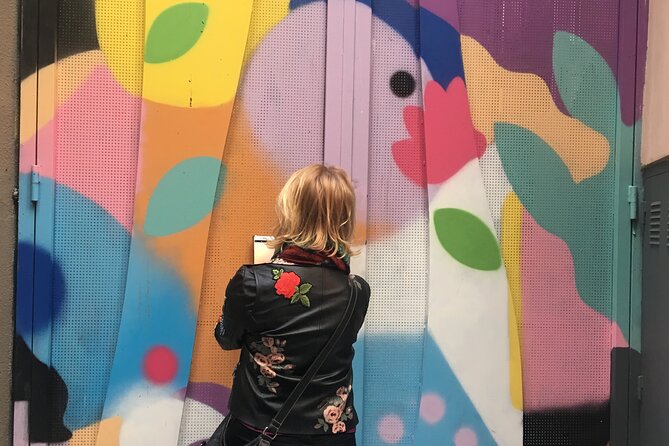
You can expect the guide to draw your attention to work that might be easy to miss if you were walking alone. Street art often rewards slower looking. A large mural catches your eye first, but a small paste-up or painted detail may tell you just as much about an artist’s style.
This is where the tour’s teaching element becomes useful. You learn to separate a tag from a more developed piece, recognize different approaches to making art in public, and notice how artists use walls, doors, corners, and other surfaces. The goal is not to memorize names. It is to leave with a better eye.
The group’s pace is also worth noting. One afternoon guide kept the walk comfortable despite hot weather, and that suggests the route is not meant to be a forced march. Still, you will be on your feet for most of the two hours, with regular stops to look and listen.
Passing the Reina Sofía without entering
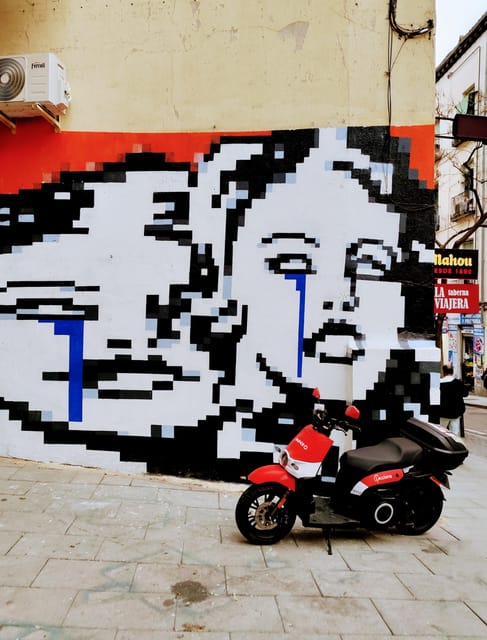
The route passes by the Museo Nacional Centro de Arte Reina Sofía for about five minutes. This is an important distinction: the museum is a reference point on the walk, not an included museum visit.
That brief pass-by gives you a useful contrast. Reina Sofía represents Madrid’s formal art world, while Lavapiés offers art in public space, often without a frame, ticket desk, or wall label. The tour does not ask you to choose between the two. It shows how the city’s art life operates in different settings.
If you have already visited Reina Sofía, this stop can add another layer to your day. If you have not, do not book the street art walk expecting time inside the museum. You will pass it and continue through the neighborhood.
This is also one reason the experience works well for a repeat visit to Madrid. You are not spending two hours on another standard monument circuit. You are seeing an area through its walls and local creative scene.
Same city, a different set of walls:
- Barcelona Street Art Tour with Exclusive Artist Studios Visit
★ 5.0 · 152 reviews - Raval Street Art and Graffiti Guided Tour in Barcelona
★ 5.0 · 81 reviews - Barcelona: Raval Street Art and Graffiti Walking Tour
★ 4.9 · 60 reviews - Barcelona: 3.5-Hour Street Art Tour by Bamboo Bike
★ 5.0 · 56 reviews
Mercado Antón Martín and the art around it
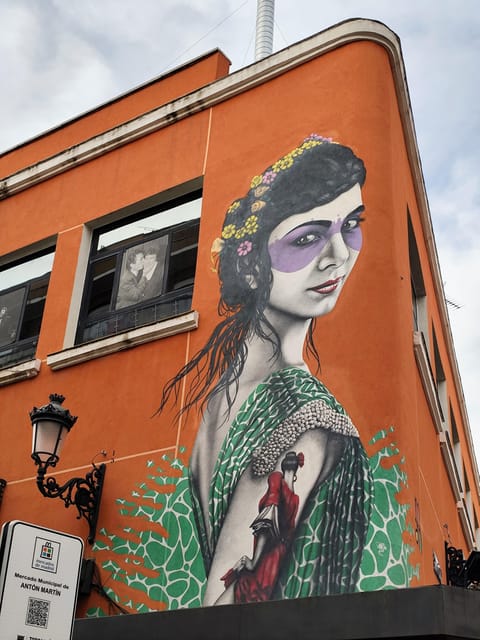
The walk includes about 10 minutes at Mercado Antón Martín for sightseeing. Markets are useful stops on a neighborhood tour because they show the practical side of an area. You get a glimpse of where local life happens, rather than seeing Lavapiés only as a backdrop for photographs.
The market stop also breaks up the rhythm of wall after wall. Street art can become visually busy, especially when you are trying to remember artists, symbols, and styles. A short pause in a market setting gives the route a more grounded feel.
Your guide may point out how public art sits alongside ordinary commerce and movement. That context is one of the strongest reasons to take this tour instead of using a self-guided list of murals. A guide can help you notice relationships between the artwork and the streets around it.
The stop is brief, so I would not treat it as a market tour. You are there for the neighborhood setting and sightseeing, not a long tasting session or a dedicated food visit.
Lola Gil’s ceramic trompe l’oeil
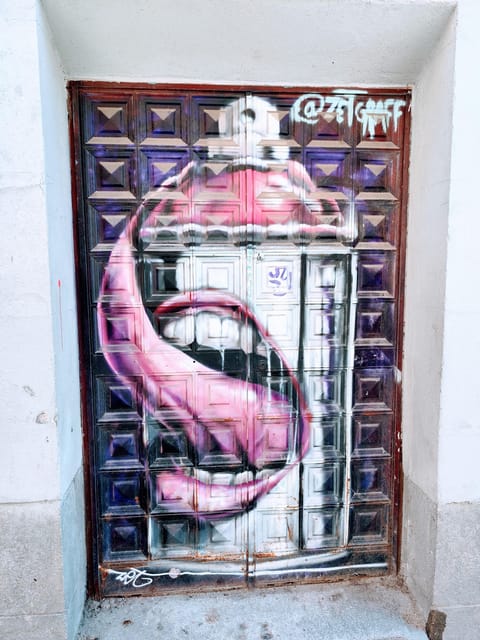
One of the named stops is Lola Gil’s ceramic trompe l’oeil, with around 10 minutes set aside for the visit. The work adds another material and technique to the route. You are not looking only at spray-painted walls. Ceramic art expands the idea of what street art can be.
Trompe l’oeil means an image designed to create an illusion of depth or reality. In a street setting, that effect can be especially playful because the artwork interacts with the actual wall and street around it. This is the kind of piece you might walk past without realizing what you are seeing, which makes a guide’s explanation valuable.
The stop also supports the tour’s wider lesson: urban art comes in many forms. Large murals are easy to spot, but smaller or less familiar techniques can be more rewarding once you know how to read them.
If you like photography, this should be a good place to slow down and look closely. The tour does not promise a set number of photo stops, though, so keep your camera ready throughout the walk.
Calle de Embajadores and the larger murals
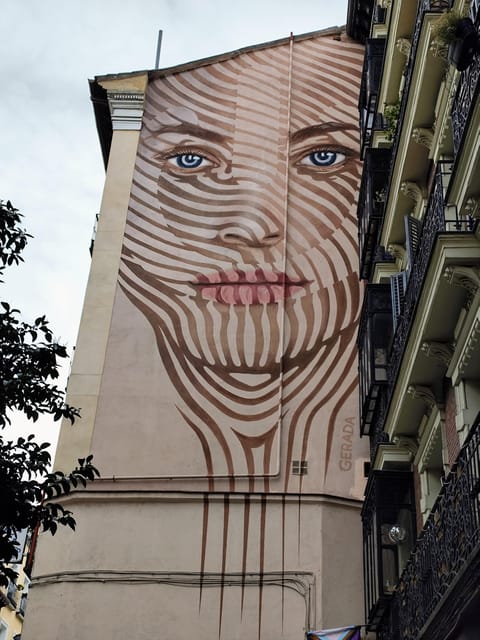
The longest listed section takes about 20 minutes on Calle de Embajadores. This is where the route allows more time for walking, sightseeing, and examining work along the street.
You can expect a mix of scale. The tour includes some of Madrid’s largest murals by internationally known artists, along with less obvious pieces that are not always featured in guidebooks. That range keeps the walk from becoming a simple procession of famous façades.
The big paintings are the obvious photo stops. They can dominate a building and give you a quick sense of the visual force of Madrid’s street art. But I would pay equal attention to the smaller work. Tiny details often show how artists use repetition, humor, personal symbols, and quick interventions to change a street without covering an entire wall.
Your guide explains what the artists’ work can symbolize and points out cultural references. That background helps you avoid reducing every mural to a colorful picture. Some works may be political, personal, playful, or connected to local events. The point is not that one interpretation fits everything. The point is to give you tools for asking better questions.
Calle de Embajadores also places you firmly in a working neighborhood. You will be walking alongside people going about their day, not moving through a purpose-built art district. Be considerate when stopping, keep the group together, and remember that the streets are used by residents first.
Learning the language of the walls
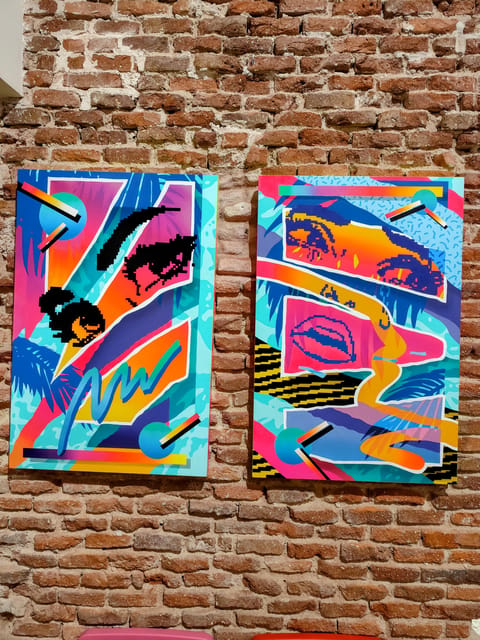
The tour’s greatest practical benefit is that it teaches you how to keep exploring after it ends. You learn the differences between tags, paste-ups, murals, and other forms of urban art. You also get an introduction to urban sculpture and the small visual clues that can be missed by a casual passerby.
I like this approach because Madrid’s street art is not limited to the pieces selected for one route. Once you understand a few styles and techniques, you can notice more work elsewhere in Lavapiés and in other parts of the city.
The guides bring their own art background to the walk. Roberto, in particular, has led the route with explanations of both the artwork and the neighborhood. Other guides have been described as friendly, relaxed, and well informed about the artists, culture, and local history. The useful distinction here is between a guide who recites names and one who helps you see why a piece matters.
The tour is in English. If you want a highly academic lecture, this may feel lighter than a university seminar. If you want a clear introduction that connects art with place, it should suit you well.
Ending at a local gallery
The walk ends with a visit to a local gallery in the neighborhood. This gives the experience a satisfying change of setting after two hours outdoors. You can see how the local art scene continues beyond walls and public spaces, and you may have a chance to meet artists connected with the gallery.
The gallery visit is included as part of the experience, but buying artwork is not. The tour description makes that clear with a little humor: if you find a piece you love, you will need to pay for it.
That is not a problem, but it is worth knowing before you go. Treat the gallery as a chance to look and talk, not as a promised shopping discount or included souvenir. The visit gives you a better sense of the people and work behind the neighborhood’s creative scene.
Because the tour ends there, you may want to leave extra time afterward if you plan to browse carefully or continue exploring Lavapiés. The exact gallery selection and art on display may change, as local work is not fixed in the way a permanent museum collection is.
Is $33 a fair price?
At $33 per person, this is reasonably priced for a two-hour guided walk, especially with a maximum of 10 participants and a gallery visit included. You are paying for local interpretation, not transport, food, or entry to a major museum.
The value depends on how much you want from street art. If you only want a list of mural locations for photographs, you could explore on your own. If you want to understand styles, symbols, artists, and neighborhood context, the guide adds the part that is hardest to recreate from a map.
The small group improves the value. A group of 10 or fewer is easier to manage on narrow streets, and you can ask questions without losing the guide’s attention. It also keeps the walk more personal and less like a large city tour.
The price does not include anything you buy at the gallery. It also does not include a meal, drink, or museum entry. Think of the $33 as the cost of an informed neighborhood walk with an art focus.
Who should book this walk?
I would recommend it to first-time visitors who want to see Madrid outside the main postcard sights, and to returning visitors who have already visited the major museums. It suits adults, older children, and anyone curious about how art functions in a real neighborhood.
It is especially useful for people who enjoy photography but want more than photo stops. The guide gives you a way to understand what you are photographing.
The tour also fits art fans who prefer contemporary work to traditional collections. You will see major murals, but the experience is not only about famous artists. It gives equal attention to small, strange, local, and easy-to-miss pieces.
You should think twice if you dislike walking, want a long stop at every artwork, or expect entry into Reina Sofía. The route is compact and focused, and some art may have changed since the tour was planned. That is the nature of street art.
The tour is wheelchair accessible, though the supplied information does not describe the exact street surfaces or restroom arrangements. If you use a wheelchair, confirm any specific mobility needs before booking.
Practical details before you go
The tour lasts two hours and runs at set starting times, so check availability for your preferred day. It is offered in English with a live guide.
Wear comfortable shoes and bring water, particularly in hot weather. One afternoon group found the pace comfortable despite the heat, but you will still be walking and standing outdoors.
The group is limited to 10 people. You meet in front of Portomarín, where you can stop for coffee or a refreshment if you arrive early.
You can cancel up to 24 hours before the start for a full refund. The reserve-now, pay-later option lets you hold a place without paying on the day you book, which is handy if your Madrid schedule is still changing.
Should you book the Madrid Hidden Street Art Tour?
Book it if you want a personable introduction to Lavapiés, like learning how to read public art, and value a guide who can connect murals with artists and local culture. The gallery ending makes it more than a street photo walk.
Skip it if your priority is museum art, a food tour, or a long, slow examination of every mural. For $33, the strongest value is the interpretation: you leave knowing what to look for, not simply where you have been.
FAQ
How long is the Madrid Hidden Street Art Tour?
The tour lasts two hours.
What language is the tour offered in?
The live guided tour is offered in English.
Where does the tour meet?
The meeting point is in front of the Portomarín restaurant. You can go inside for coffee or a refreshment if you arrive early.
How many people can join the group?
The tour is limited to 10 participants.
Is the tour wheelchair accessible?
Yes, the activity is listed as wheelchair accessible.
Does the tour enter the Reina Sofía museum?
No. The route passes by the Museo Nacional Centro de Arte Reina Sofía for about five minutes. Museum entry is not included.
Is the gallery visit included, and do I have to buy anything?
The visit to a local gallery is included. Buying artwork is optional and costs extra.
New street art tours in Spain
- Small-Group Graffiti Tour and Workshop in El Carmen★ 5.0 · 2 reviews
- Bilbao Urban and Street Art Walking Tour★ 5.0 · 2 reviews
- Barcelona Street Art, Graffiti and Tapas Tour★ 4.0 · 5 reviews
- Salamanca: Private Guided Street Art Walking Tour★ 5.0 · 2 reviews
- Private Barcelona Street Art Tour★ 5.0 · 2 reviews
- Barcelona | StreetArt Bike Tour Moco Museum★ 4.6 · 13 reviews
- Madrid Street Art Tour (Malasaña Chueca Gran Via & Lavapies)★ 3.5 · 8 reviews
- Málaga: Street Art Tour in the Soho District★ 5.0 · 4 reviews
Madrid Mural Tours, side by side.
Madrid Street Art Tour (Malasaña Chueca Gran Via & Lavapies)
Read our review →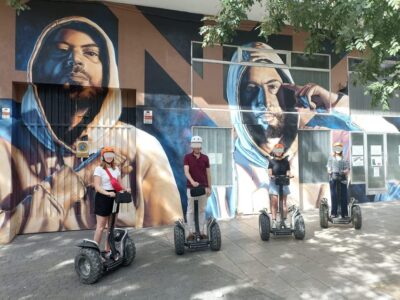
Lists this wall walk turns up in