
Reviewed · STREET ART WALKING TOURS
Derry: Bloody Sunday and Bogside Murals Walking Tour
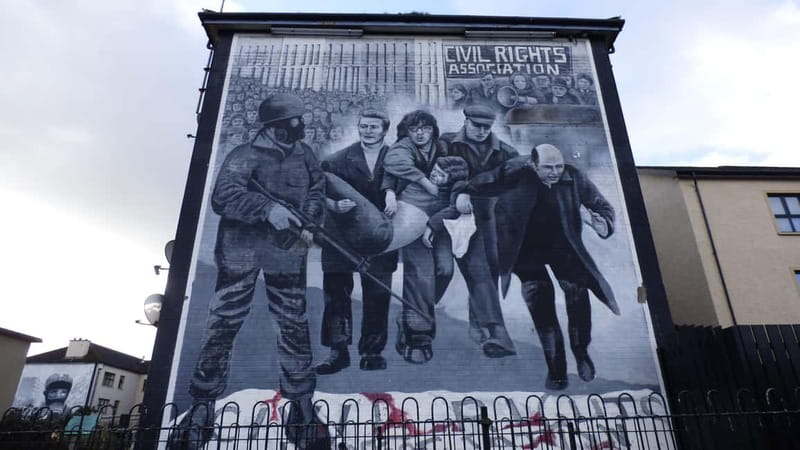
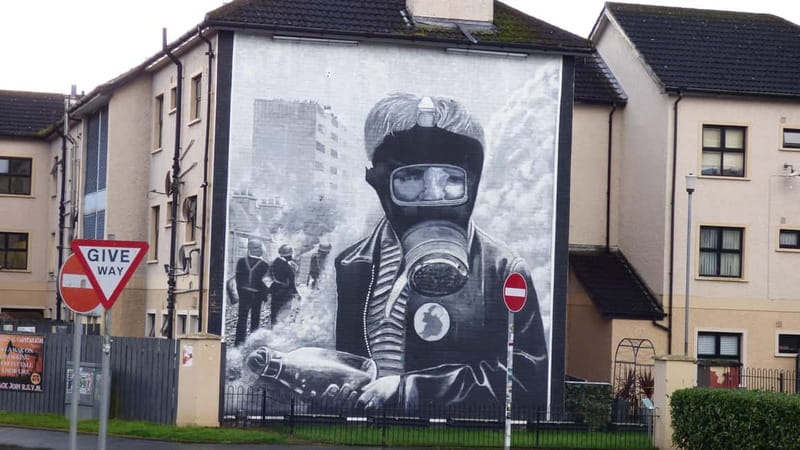
Derry’s Bogside Murals are not just public art. They are a street-level record of partition, protest, violence, grief, and survival. This 90-minute walk brings you to the places where those events happened, including the site of Bloody Sunday in January 1972 and the monument that remembers those killed.
I like two things especially: the tour connects the murals to the events they portray, and guides such as Gleann, Glenn, Angela, Ian, and Michael often add personal or family links to the story. The walk is also easy paced and compact, so you get a lot from a short visit.
The main drawback is the subject matter. Bloody Sunday and the wider Troubles are painful topics, and this is not a light sightseeing stroll. You’ll also need to manage uneven outdoor conditions and changing weather, and the walk is not suited to people with mobility impairments.
Key points
- The Bogside Murals tell the story in pictures, making difficult political history easier to follow as you walk.
- Bloody Sunday is treated as a human event, with time at the massacre site and the memorial.
- Guides bring local connection, with several praised for sharing family experience and personal insight.
- The 1.5-hour route is well paced, giving you a focused introduction without taking up half a day.
- The meeting point is simple to find, outside the Tower Museum at Magazine Gate, just inside the city walls.
Starting at Magazine Gate beside the Tower Museum
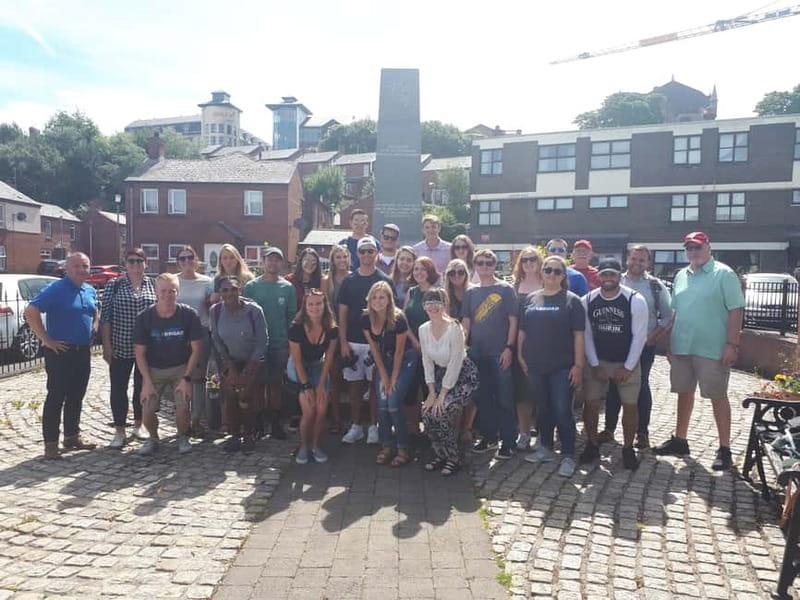
Your walk begins outside the Tower Museum at Magazine Gate, just inside Derry’s city walls. This is a useful starting point because it places you at the edge of the historic center, close to the route toward the Bogside.
Arrive ready to walk outdoors. The tour runs in all weather, so waterproof clothing and sensible shoes matter more here than smart holiday clothes. Rain and wind can make the open streets uncomfortable, and one especially wet outing still went ahead successfully because the guide kept the pace and conversation moving.
The activity lasts about 90 minutes. That is long enough to build a clear story but short enough to fit around other plans in Derry. I would schedule it early in your visit if the history is a main reason for coming. The walk gives you a framework for later visits to the Free Derry Museum, city walls, or other sites connected with the Troubles.
You pay about $35 per person. I consider that fair value for a live local guide, a focused route, and access to context you will not get from simply walking past the murals with a map. The price feels strongest when your aim is understanding, not just taking photographs.
More Street Art Walking Tours in the UK
- London: Street Art and Graffiti Guided Walking Tour
★ 4.9 · 1,354 reviews - Glasgow Street Art Daily Walking Tour: 2pm
★ 5.0 · 648 reviews - Glasgow: Street Art Guided Walking Tour
★ 4.8 · 385 reviews
Seeing Derry through the Bogside Murals
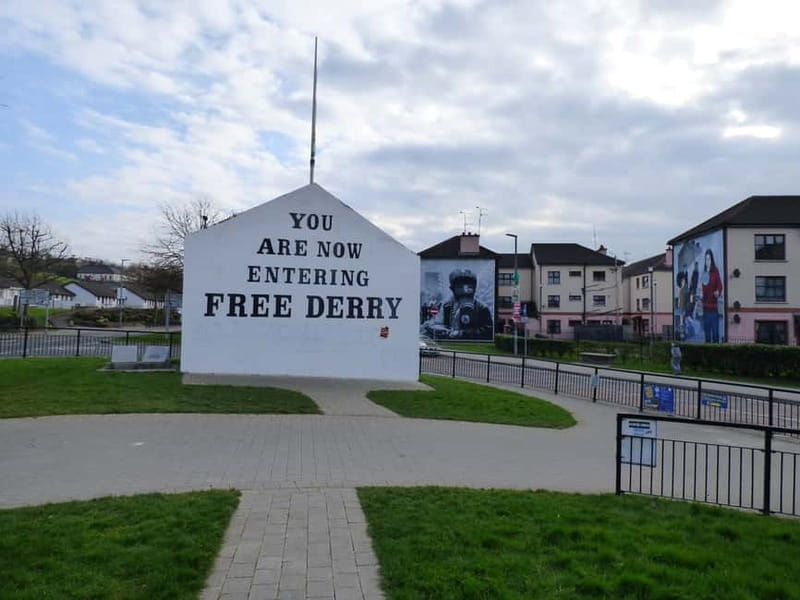
The murals are the visual heart of the walk. They bring political ideas and personal suffering into the open, using walls as a form of public memory. You are not simply shown a collection of painted scenes. The guide explains what the images refer to and how they fit into the story of the Bogside.
That link between image and place is the point. A mural can look striking on its own, but its meaning changes when you learn why it was painted and how local people understood the events behind it. The guide helps you read the walls as part of the area’s past.
The murals also make the tour accessible to people who may not know much about Northern Ireland. You do not need to arrive with a detailed grasp of political parties, constitutional arguments, or the sequence of events. A good guide builds the background as you go, then returns to the human effect.
Several guides receive especially strong praise for making this material clear without turning the walk into a lecture. Gleann is repeatedly described as warm, funny, and highly informed, while Angela is noted for her detailed, engaging explanations. Glenn, Ian, Tony, Laura, Wendy, and Michael also lead tours, so the exact style depends on who is working that day.
Understanding partition and discrimination
Before the walk reaches Bloody Sunday, you hear about the political conditions that shaped Derry in the 20th century. The tour covers the partition of Ireland and the creation of the six-county state, then explains the discrimination faced by Irish Catholics.
This background is essential. Without it, the later events can seem like a sudden burst of disorder. The tour instead shows how political identity, housing, employment, voting rights, and policing fed long-running anger. You get the basic structure before moving into the Civil Rights movement and the violence that followed.
I value this part because it avoids treating Bloody Sunday as an isolated tragedy. The massacre is the focus, but the tour places it within a longer chain of political and social conflict. That makes the story easier to follow and gives you a better sense of why the Bogside became such an important center of protest.
The presentation is not described as detached in a cold academic way. Guides speak from the perspective of Derry and, in some cases, from family experience. That can make the story more personal and immediate, though you should also understand that this is a local account of a contested past. If you want several political viewpoints in equal detail, you may need to add a museum visit or another source.
Walking through the heart of the Civil Rights movement
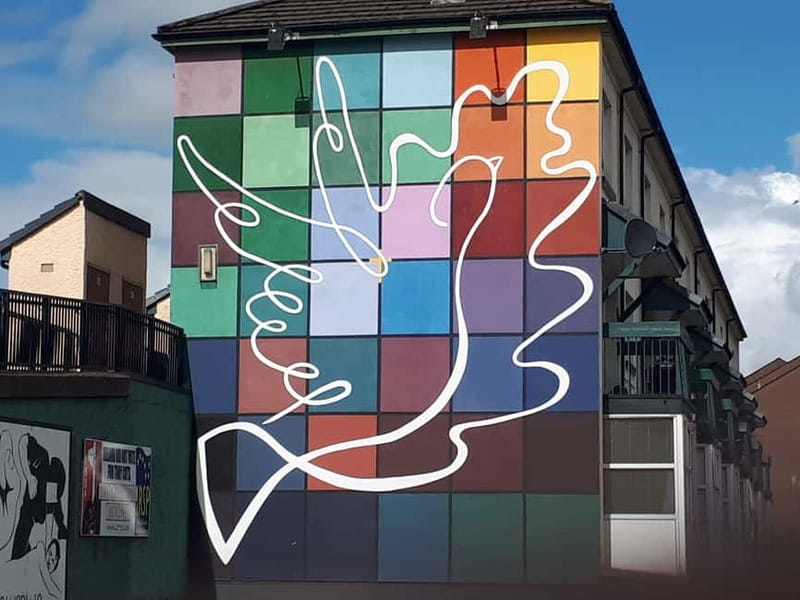
The Bogside was central to the Civil Rights movement, and walking through it gives the history a physical setting. Streets, walls, and open spaces become reference points rather than abstract names.
The tour covers the Battle of the Bogside in 1969, an important turning point in the growth of conflict. Your guide explains how the area became a focus for resistance and how local residents experienced the pressure around them.
This is where the walking format earns its price. A book can explain the sequence of events, but walking through the neighborhood lets you connect the story to distance and place. You see how the murals, streets, and memorials relate to one another. The route remains manageable, and the pace is described as relaxed rather than hurried.
The atmosphere can shift quickly. There may be moments of humor and friendly conversation, followed by material that is upsetting. Guides such as Gleann are praised for handling that balance well, keeping people engaged without making the subject feel casual. That combination of warmth and restraint matters on a tour about loss.
Same city, a different set of walls:
- Belfast: Murals Taxi Tour
★ 4.9 · 2,047 reviews - Belfast’s Political Mural Taxi Tour
★ 5.0 · 1,180 reviews - London Bike Tour: Landmarks, Secret Gems, Pub Stop & Street Art
★ 5.0 · 943 reviews - Shoreditch Street Art Tour London
★ 5.0 · 481 reviews
Reaching the Bloody Sunday site
The most serious section concerns Bloody Sunday, the events of January 1972 in which civil rights marchers were killed. The tour takes you to the site and explains what happened there, then discusses the inquiries that followed.
This part is likely to be the emotional center of your visit. The value lies in standing where the events occurred while hearing the story in a clear sequence. The Bloody Sunday monument provides a place to pause and consider the names and human cost rather than treating the incident as just another date in a timeline.
Some guides also share family connections to the Troubles. That personal link can add force to the account, especially when it helps explain how the events affected ordinary households. It also means the experience may feel more intimate than a standard city tour.
You should allow yourself room to process the material. The walk is not built around entertainment, even though guides often use humor and conversation to keep it approachable. If you are visiting with children or anyone sensitive to accounts of political violence, consider explaining the subject in advance.
The tour also touches on the path toward the Good Friday Agreement of 1998. You will not get a full course on every aspect of the peace process in 90 minutes, but the ending helps show that the story did not stop with Bloody Sunday or the worst years of violence.
What the guide adds to the murals and memorial
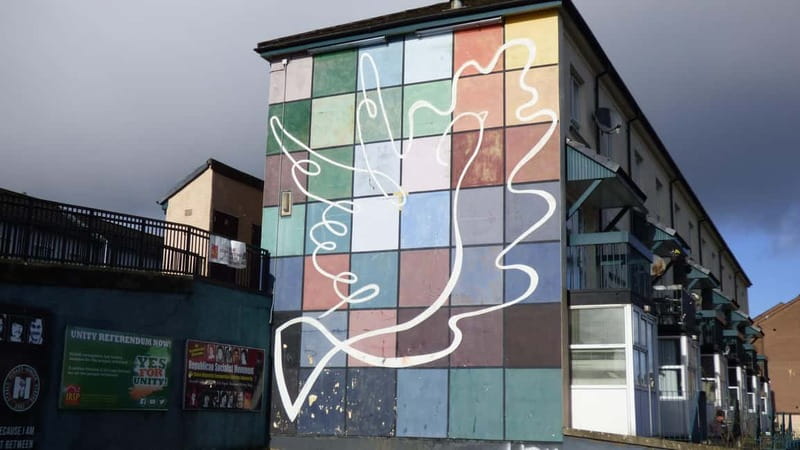
The guide is the key variable in this experience. The route and subject are fixed, but the telling can change with the person leading it.
Gleann is often singled out for combining careful research, personal experience, humor, and a natural speaking style. Glenn is also praised for offering personal insight and answering questions in a way that feels direct rather than rehearsed. Angela is described as detailed, friendly, and easy to listen to. Other named guides include Ian, Tony, Laura, Wendy, and Michael, a local from the Bogside.
Do not expect every guide to tell the story in precisely the same words. That is part of the appeal of a local walking tour. You can ask questions, explain what you already know, and ask for clarification if a political point is unfamiliar. One small group received a route and explanation adjusted to its existing knowledge, which is useful if you are traveling with people from different backgrounds.
The personal element is particularly valuable. Family connections can show how the Troubles were lived, not just how they are summarized in textbooks. At the same time, a personal account is not a substitute for every viewpoint. I would pair this walk with the Free Derry Museum if you want more documents, exhibits, and structured historical material.
How this tour compares with exploring alone
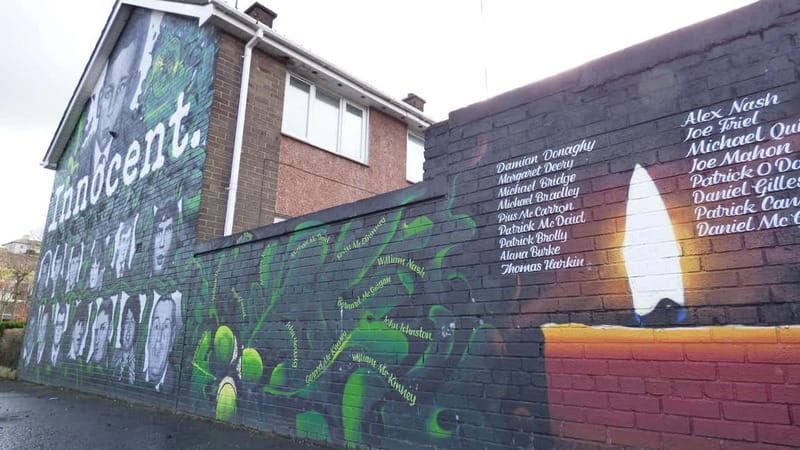
You can walk around the Bogside and see the murals without paying for a guide. You can also photograph the Bloody Sunday monument and read information elsewhere.
What you cannot easily recreate is the order, context, and local explanation. Without a guide, the paintings may blur together, and you may miss why a particular street or wall matters. The tour also gives you a chance to ask questions at the moment they arise.
The tradeoff is that you follow someone else’s pace and focus. The walk is centered on modern political history, not on every attraction inside Derry’s walls. If your priority is architecture, shopping, or a broad introduction to the city, this is too specialized. If your priority is the Bogside and the Troubles, the focus is exactly right.
The walk also appears to suit people with different levels of background knowledge. First-time visitors can learn the essentials, while people familiar with Irish history can ask more detailed questions. The route is described as easy paced, but the provider says it is not suitable for people with mobility impairments. Ask before booking if walking limitations are a concern.
Who should book the $35 walking tour
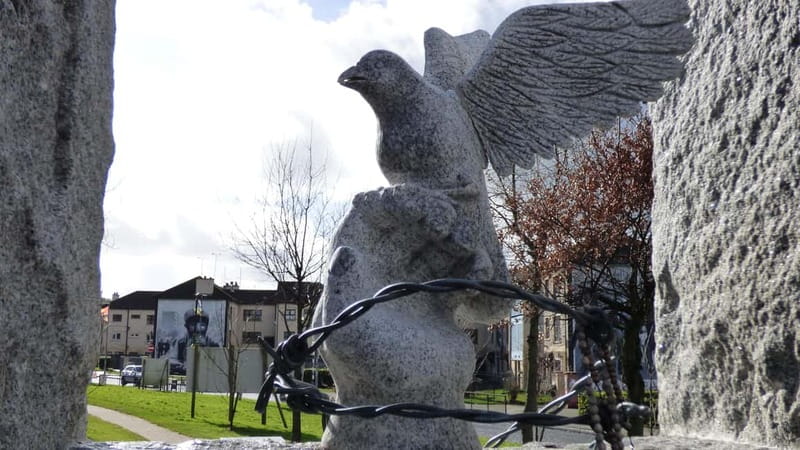
I would book this if you want to understand why Derry’s Bogside matters, not simply see its murals. It is especially useful for first-time visitors, people interested in the Civil Rights movement, and anyone who wants a local perspective on Bloody Sunday.
The tour also works well for travelers building a day around Derry’s modern history. You could visit the Free Derry Museum before or after it, then use the walk to connect indoor exhibits with actual streets and memorials. The tour has also helped people make sense of the wider conflict from the 1960s through the Good Friday Agreement.
I would think twice if you want a cheerful, all-purpose sightseeing tour. The subject is heavy, and the weather may be poor. One person also wanted more discussion of how the Troubles affect life today, noting that the present-day effects may be less visible in Derry than in Belfast. That is a fair limitation: the emphasis is firmly on historical events, murals, Bloody Sunday, and the Civil Rights movement.
Book with flexible clothing and an open mind. Cancellation is free up to 24 hours before the start, and you can reserve now and pay later, which helps if your plans around Derry are still shifting.
My verdict on Derry’s Bloody Sunday and Bogside walk
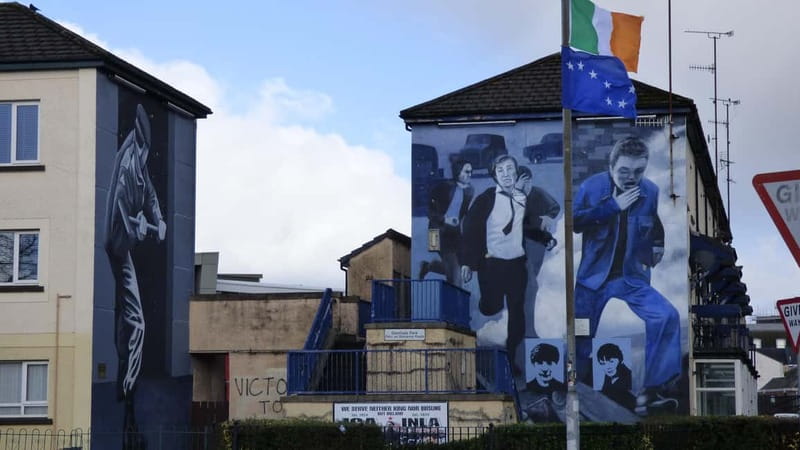
I recommend this tour if the modern history of Derry is on your list. For $35 and 90 minutes, you get a focused route, a live English-speaking guide, the major Bogside murals, the Bloody Sunday site, and the monument.
The strongest reason to go is the guide’s local voice. People such as Gleann, Glenn, Angela, Ian, and Michael bring more than dates to the walk. They explain how the story is remembered in Derry and, at times, how it touched their own families.
You should not expect a neutral, museum-style survey of every side of the conflict, nor a full account of present-day Northern Ireland. But for a clear, moving introduction to the Bogside, the Civil Rights movement, and Bloody Sunday, this is time and money well spent.
FAQ
How long is the Bloody Sunday and Bogside Murals Walking Tour?
The walking tour lasts 1.5 hours.
How much does the tour cost?
The price is $35 per person.
Where does the tour meet?
The meeting point is outside the Tower Museum at Magazine Gate, just inside Derry’s city walls.
What language is the tour conducted in?
The tour is conducted in English with a live English-speaking guide.
What will I see on the walk?
You will see the famous Bogside Murals, the site of the Bloody Sunday massacre, and the Bloody Sunday monument.
What history does the tour cover?
The tour covers partition, the creation of the six-county state, discrimination against Irish Catholics, the Civil Rights movement, the Battle of the Bogside in 1969, Bloody Sunday in 1972, and the inquiries that followed.
Is the walk suitable for people with mobility impairments?
No. The activity is listed as not suitable for people with mobility impairments.
What happens if the weather is bad?
You should be prepared for all weather. The tour takes place outdoors, so suitable clothing and footwear are important.
New street art tours in the UK
- Manchester Street Art: Quest Experience★ 4.0 · 6 reviews
- London Street Art Tour of the East End Semi-Private 12ppl Max★ 5.0 · 23 reviews
- The Great Street Art Experience★ 5.0 · 2 reviews
- London Street Art Tour of the East End Exclusive Walking Tour★ 5.0 · 12 reviews
- Shoreditch Street Art Private Photography Tour including Brick Lane★ 5.0 · 5 reviews
- London Unexpected Private Tour – Markets, Street Art & Camden Town★ 5.0 · 2 reviews
- Private Royal London Bike Tour with pub & street art★ 5.0 · 2 reviews
- 3-Hour Private Tour of East London Graffiti & Street Art★ 4.5 · 5 reviews
Street Art Walking Tours, side by side.

Naples Spanish Quarters Walking Tour Street Art, Folklore & Sweet
Read our review →

Brooklyn Graffiti & Street Art Walking Tour in Bushwick
Read our review →

Lists this wall walk turns up in