
Reviewed · MURAL AND STREET FOOD TOURS
Tucson Food Tours- Locally Owned Mural and History Tour
Tucson’s story is painted on its walls. This 2.5-hour walking tour links downtown murals with old railroad, military, and civic landmarks, giving you a useful first look at the city without sending you far from the center. Guide Karen leads the route with a friendly manner and a clear grasp of local stories.
I like the mix of public art and older buildings, especially the 1907 railroad station and reconstructed Spanish fort. I also like the small maximum of 16 people, which should make it easier to hear the guide and ask questions. The main catch is that the tour requires good weather, and no food tastings are specified despite the company’s food-tour name.
Key points to know before you book
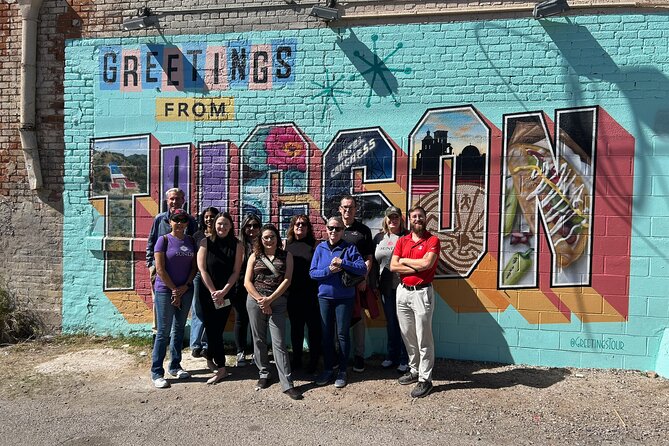
- Karen leads a personal, local walk: You’ll hear Tucson stories from a guide who points out murals and explains the city’s past along the way.
- The route covers four distinct subjects: Railroad history, Spanish colonial Tucson, civic architecture, and contemporary public art all appear within one outing.
- The Southern Arizona Transportation Museum dates to 1907: The restored building once served the Southern Pacific Railroad and now contains a museum and café.
- The Presidio offers Tucson’s earliest European chapter: A reconstructed section of the 1775 fort gives you a visual sense of the settlement’s beginnings.
- The Pima County Courthouse is hard to miss: Its pink Spanish Colonial Revival facade and mosaic dome make it one of downtown’s most recognizable buildings.
- The group is limited to 16 people: That is a useful middle ground between a private tour and a large, impersonal crowd.
A smart first morning in central Tucson
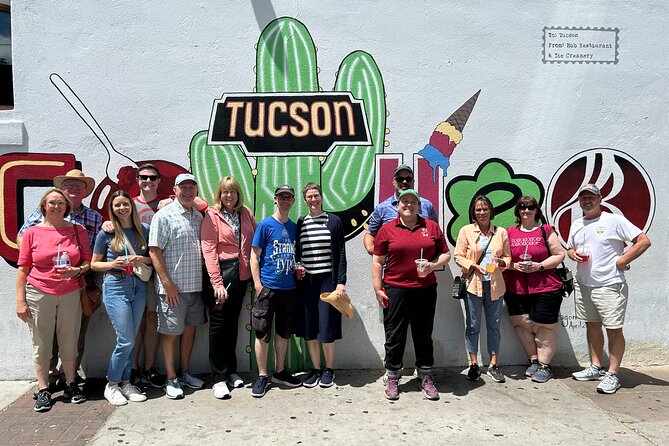
The tour begins at 9:00 a.m. at 311 E Congress St and returns to that same meeting point. That start time works well if you want to get oriented before the heat of the day builds, though you should check the weather before committing.
You’ll walk the route rather than ride between sights. The supplied details do not give a total walking distance, so wear comfortable shoes and be ready for an outdoor outing. The route follows a brew-tour path while adding historic buildings and murals, making it a good fit for someone who wants to see several sides of downtown in one compact trip.
The experience is offered in English, with mobile ticketing and a maximum of 16 people. That size matters. You get the social feel of a small group, but the guide can still speak to the whole party without shouting across a crowd.
More Mural and Street Food Tours in the USA:
- Handcrafted Donuts & Street Art: Wynwood’s Most Unique Food Tour
★ 5.0 · 10 reviews - San Francisco: Mission District Street Art and Food Tour
★ 4.3 · 6 reviews - Austin Street Art and Street Food Tour with Local Guide
★ 5.0 · 4 reviews
The 1907 railroad station and Tucson’s travel story
The Southern Arizona Transportation Museum is the first named stop. The building dates to 1907 and has been restored from its days as a key Southern Pacific Railroad hub. Today, it houses a museum and café.
You have about 15 minutes here, with admission included at no extra charge. That is enough time for the guide to explain why rail travel mattered to Tucson and to point out the building’s place in the city’s growth. It is not a long museum visit, so you should think of this stop as a focused introduction rather than a full morning indoors.
The station adds useful context to the walk. Downtown Tucson was not shaped only by Spanish settlement and civic government. Rail lines brought people, goods, and new connections, and this building gives that part of the story a physical address.
I like this opening because it starts with something you can see and touch. Instead of beginning with a list of dates, you get a restored building that once handled the practical business of moving a city. The café may also appeal if you want a place to pause, though the tour details do not say that café time is built into the schedule.
Reconstructing the Presidio at San Agustin
The Presidio San Agustin del Tucson Museum shifts the story back to 1775, when the Spanish military founded the fort beside the Santa Cruz River near the Native American village called Chuk-shon. The original fort covered 11 acres and was enclosed by a thick adobe wall.
The museum now sits at the northeast corner of the original Presidio site. Part of the fort has been reconstructed, giving you a clearer sense of its shape and defensive character than a bare historical marker could provide. You have another 15-minute stop here, and admission is included.
This is one of the tour’s most useful history stops because it connects Tucson’s modern name and location with the settlement that came before the city you see today. The brief visit will not cover every layer of the region’s past, and the provided information does not describe any interior exhibits in detail. Still, the reconstructed setting gives the guide something concrete to explain.
Pay attention to the location near the Santa Cruz River. That setting helps explain why the site mattered, even if you do not spend a long time inside the museum. The stop is short, so listen for the broad story and save longer museum visits for another part of your Tucson visit if you want more detail.
The courthouse with the pink facade
The Pima County Courthouse is the most immediately photogenic building on the route. It is a Spanish Colonial Revival structure with a pink exterior and a mosaic dome that has become a downtown symbol.
The planned stop lasts about 15 minutes, and admission is free. You can expect the guide to explain the building’s design and place it within Tucson’s civic life. The stop is short enough to keep the walk moving, but long enough for photographs and a quick look at the architecture.
The courthouse also gives the tour a change of pace. After the practical railroad station and fortified Presidio, you get a public building designed to make a statement. Its color and dome are not subtle, and that is part of the fun. If you enjoy architecture, this may be one of the easiest stops to appreciate even without a strong interest in local government.
The route also passes a historic landmark known for a luxurious past and a tragic 1970 fire that killed 29 people. The information provided does not identify the building by name, so I would treat this as a story to hear from Karen rather than a stop you can research in advance from the tour details. It adds a sobering note to the walk and reminds you that Tucson’s downtown history includes loss as well as preservation.
More history behind the walls in the USA:
- 3-Hour Atlanta Beltline Food, Street Art and History Tour
★ 5.0 · 345 reviews - 2-Hour Food, History and Street Art Tour of Ponce City Market
★ 5.0 · 159 reviews - Walking Tour of Houston: History, Architecture, Street Art
★ 5.0 · 59 reviews - Atlanta: Beltline Food, Street Art, and History Walking Tour
★ 5.0 · 47 reviews
Murals that turn downtown into an open-air gallery

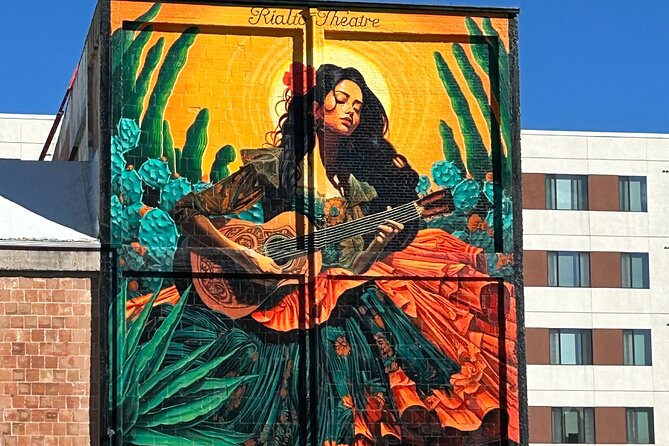
The mural portion is the most modern part of the experience. Tucson’s public art reflects the city’s many communities and its changing cultural life, and the tour uses those walls as a way to discuss local identity.
You should expect the mural stops to be spread along the walking route rather than gathered in one formal gallery. That makes the art feel part of the city rather than separated from it. Karen points out the works and explains their connection to Tucson’s past and present.
The strongest praise for the tour centers on this combination of murals and history. Karen is described as friendly and well informed, and she takes the group to especially interesting examples while explaining Tucson’s background. That matters because murals can be easy to photograph and just as easy to misunderstand. A guide gives you the setting, subject, and local connection that a quick walk-by cannot.
The listing does not name individual artists or give a fixed mural list. That means the exact art you see may be less predictable than a museum exhibition. I see that as a small tradeoff: you may not know every stop before booking, but the route can respond to what is visible and practical on the day.
How the tour earns its time
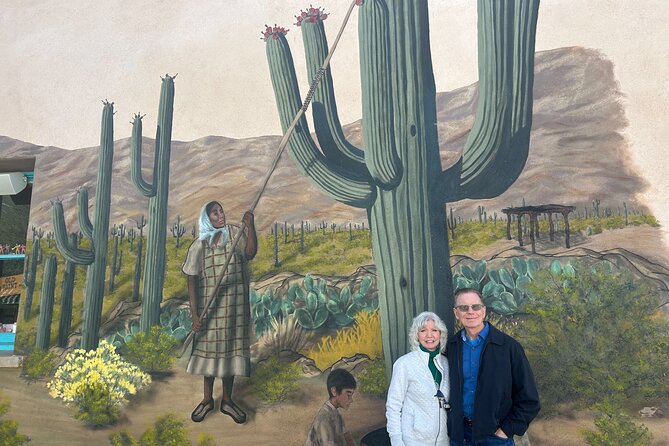
At roughly two and a half hours, this is longer than a quick orientation stroll but shorter than a full day of museums. The pace should suit you if you want a broad introduction and plan to explore more on your own afterward.
The four named stops each receive about 15 minutes, with additional walking and mural viewing between them. That schedule keeps the outing varied. You are not stuck inside one museum for hours, but you also do not spend the entire morning simply marching from wall to wall.
The value comes from the connections. On your own, you could see the courthouse, pass the railroad building, and take photos of murals. What you would miss is the thread linking those places: a city shaped by military settlement, rail transport, public institutions, painful events, and present-day art.
No price is provided in the supplied information, so I cannot judge the dollar cost directly. When comparing this tour with other options, ask what you are paying for: a local guide, included admission at the Presidio, a small group, and a planned route that combines several subjects. Since no food or drink is listed, do not book it expecting tastings or a meal.
Who will get the most from this walk
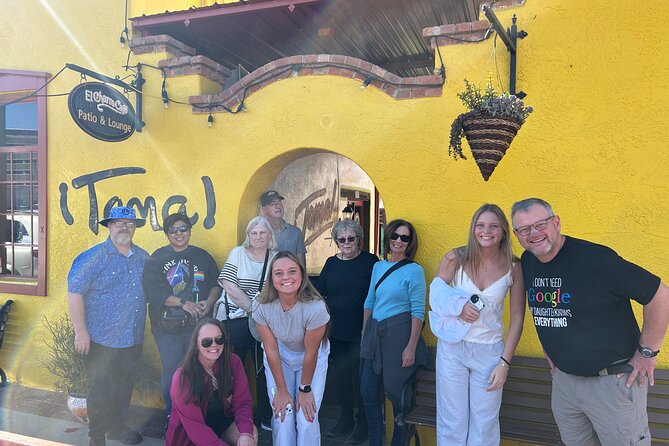
I would choose this tour for a first morning in Tucson, especially if you want help getting your bearings in the central area. It suits people who enjoy a mix of architecture, local stories, and public art rather than a single-subject museum tour.
It also works well for couples, solo visitors, and families who can manage a roughly two-and-a-half-hour walk. Most people can participate, according to the tour information, but the details do not provide a specific accessibility description. If you have mobility needs, ask the provider about walking surfaces, pauses, and access before booking.
Art lovers should like the mural focus, while history fans get the railroad station and Presidio. Architecture fans have the courthouse and other older buildings along the route. If your priority is eating, this is not the safest choice because the supplied details do not promise tastings, restaurant stops, or included food.
The group limit of 16 is another reason to consider it. A small group can make a city walk more relaxed, and Karen’s friendly style appears to be a central part of the experience. Still, guide-led tours vary from day to day, and the route may feel less satisfying if you want long, detailed visits at each museum.
Weather, booking, and practical planning
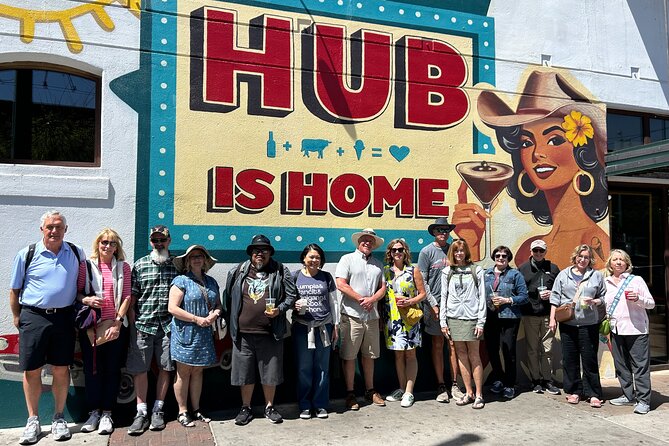
The tour needs good weather. If poor conditions force a cancellation, you are offered another date or a full refund. The same options apply if the minimum number of participants is not reached.
Your own cancellation terms are strict: the experience is non-refundable and cannot be changed for any reason after booking. That makes it wise to check your schedule and the forecast before reserving, especially if your Tucson visit is short.
Confirmation arrives within 48 hours of booking, subject to availability. The mobile ticket is convenient, and the central meeting point makes the tour easy to add to a morning downtown. The activity ends where it begins, so you do not need to arrange a separate pickup.
Should you book the Tucson mural and history walk?
Book it if you want a guided introduction to central Tucson that joins public art with specific historic places. Karen’s friendly approach, the small group size, and the range of subjects give the tour more substance than a simple mural stroll.
Skip it if you are looking for a food crawl, a long museum visit, or a private tour with a fixed list of artworks. The route is best for curious first-time visitors who value context and variety. Check the weather, wear walking shoes, and treat the morning as an orientation to Tucson, not the final word on the city.
FAQ
How long is the Tucson mural and history tour?
The tour lasts approximately 2 hours and 30 minutes.
Where does the tour begin?
It begins at 311 E Congress St, Tucson, AZ 85701.
Where does the activity end?
The tour ends back at the meeting point.
What time does the tour start?
The stated start time is 9:00 a.m.
Is the tour offered in English?
Yes. The tour is offered in English.
How many people can join the tour?
The maximum group size is 16 people.
What happens if bad weather cancels the tour?
If poor weather causes a cancellation, you will be offered a different date or a full refund.
New street art tours in the USA
- Wynwood Walls Street Art & Neighborhood Walking Tour★ 4.9 · 9 reviews
- St. Pete’s Must-Do Murals Tour — The Premier Street Art Trolley★ 5.0 · 22 reviews
- Downtown Sacramento Mural and Art Walking Tour★ 5.0 · 4 reviews
- Sacramento Street Art Walking Tour – See the Murals Sacramento is Famous For★ 5.0 · 6 reviews
- Would I Lie To You? Mural Walks★ 5.0 · 3 reviews
- Richmond’s Street Art Segway Tour★ 4.5 · 3 reviews
- Burning Man Art and Downtown Mural Private Tour★ 5.0 · 2 reviews
- MidTown Mural Pedicab Tour★ 4.5 · 6 reviews
Mural and Street Food Tours, side by side.

Comuna 13 Graffiti Tour, Cable Car & Street Food
Read our review →
Cancun Street Food Tour with Food Stalls, Local Market and Murals
Read our review →

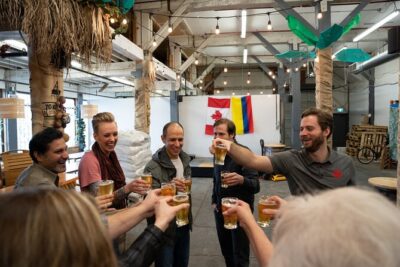
Street Art and Craft Beer 2 in 1 Walking Tour Vancouver
Read our review →
Cancun Walking Food Tour: Local Food, Markets, and Street Art.
Read our review →
Calgary Street Art & Craft Beer 3 Hour Tasting Tour
Read our review →Lists this wall walk turns up in