
Reviewed · MONTREAL MURAL TOURS
The Original Montreal Mural Arts Tour by Spade & Palacio
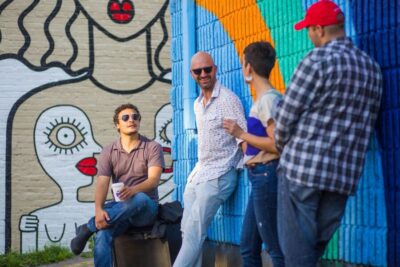
Montreal’s street art is not confined to one polished gallery. It stretches across back streets, alleys, storefront walls, and ten-storey facades. This two-hour walk follows the city’s famous Main, Saint-Laurent Boulevard, where local and international artists have turned an old dividing line between east and west Montreal into an outdoor art route. I especially like the mix of massive murals and tiny pieces you could easily miss, plus the way guides such as Marie, Chris, Mel, Gabriela, and Rod connect each work to the city around it.
I also like the small group, capped at 10 people, and the useful restaurant and bar suggestions handed out at the end. The main drawback is simple: this is a walking tour, and two hours cannot cover every mural in the area. You will be on your feet the whole time, and the experience depends on decent weather.
Key points to know before you book
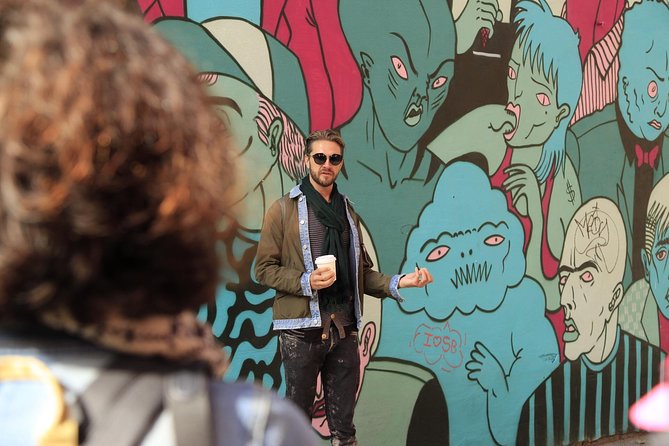
- The route centers on Saint-Laurent Boulevard: See the Main, the historic artery separating Montreal’s east and west sides.
- The art comes in every size: Expect giant festival murals, graffiti, wheat pastes, small installations, and tucked-away details.
- The Plateau Mont-Royal adds local character: Back streets and alleys make the walk feel like neighborhood exploring, not just wall watching.
- Groups stay small: A maximum of 10 people gives you a better chance to hear the guide and ask questions.
- The tour is more than a photo walk: You learn about artists, methods, political ideas, immigration, and Montreal’s MURAL Festival.
Why Montreal’s Main is the right place for street art
Saint-Laurent Boulevard, usually called the Main, has long been more than a road. It became a dividing line between the city’s east and west sides shortly after Montreal was founded, then grew into a meeting place shaped by successive immigrant communities.
That background matters because the murals do not sit in an empty art district. They occupy a street with layers of language, migration, commerce, and neighborhood life. The art reflects that mix. Some walls are playful. Others are political, personal, or tied to local culture. The route gives you a way to see the city as a place where public art belongs in daily life.
The MURAL Festival helped make Saint-Laurent Boulevard one of Canada’s best-known street art corridors. The festival brought artists from Montreal and abroad to create large works in public view, and many pieces still define the area. The tour also looks beyond the famous walls, pointing out smaller works and odd details that reward a careful eye.
I like this approach because it avoids treating street art as decoration alone. You learn about techniques, artists, and the choices behind a piece. You may also start noticing patterns elsewhere in Montreal, and even in other cities. One guide pointed out recurring details such as small men, diamond shapes, and squirrel stickers, turning the walk into a visual treasure hunt.
More street art tours worth booking in Canada:
- Montreal: The Original Locally Owned Street Art Walking Tour
★ 4.9 · 97 reviews - PRIVATE 2-Hour tour of Montréal in Convertible Cadillac + Murals
★ 5.0 · 73 reviews - Street Art and Craft Beer 2 in 1 Walking Tour Vancouver
★ 5.0 · 61 reviews
The first 45 minutes in Plateau Mont-Royal
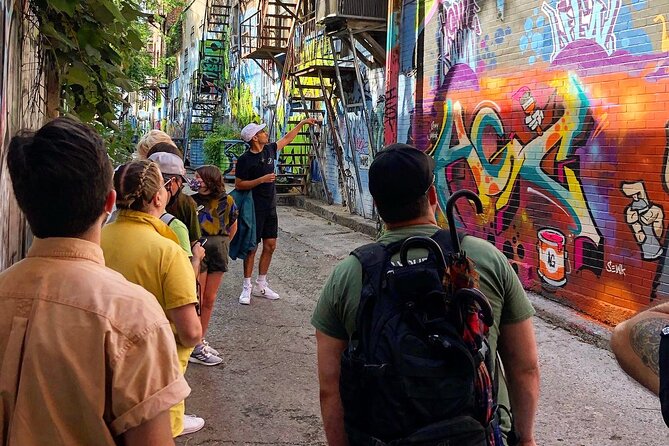
The walk begins at 3526 Boulevard Saint-Laurent and heads through Plateau Mont-Royal. The opening section lasts about 45 minutes and uses back streets, alleys, and neighborhood corners to show you work that is easy to miss from a car or a standard sightseeing route.
This is a smart beginning. You get the scale of the neighborhood before reaching the most famous mural corridor, and the guide can show how street art works at different levels. A small paste-up or sticker may have a very different purpose from a giant painted wall. You may see work created for close inspection, work designed to dominate a building, and pieces that appear briefly before weather or construction removes them.
The route is described as a zigzag walk, so do not expect a straight march from one landmark to the next. That zigzag makes sense in an area where the best art is spread across side streets and alleys. It also means you should wear comfortable shoes and keep your attention on the surroundings. The neighborhood itself is part of the experience, with shops, restaurants, and local streets adding context between the murals.
Guides have different personalities, but the strongest part of this tour is their ability to make the walls readable. Marie is described as especially enthusiastic about Montreal and its public art. Mel is careful around pedestrians and safety while still keeping the group focused on the work. Chris is known for explaining artists, the festival, and local background in a lively way. Gabriela adds small facts about the area, while Rod brings intense personal enthusiasm to the subject.
The company also uses other guides, including Pax, Jeff, and Rodrigo. That variety means the exact tone depends on who leads your walk, but the repeated focus is clear: artists, techniques, local stories, and the way Montreal treats public art as a serious part of urban life.
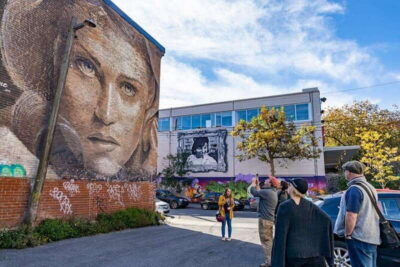
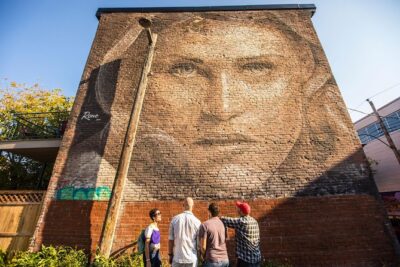
The ten-storey Leonard Cohen mural
A short stop of about 10 minutes is devoted to the massive Leonard Cohen mural. This is one of the route’s most recognizable works and gives you a clear sense of how large Montreal’s public art can become.
The mural is useful as a scale marker. After seeing smaller installations and wall pieces in the Plateau, you encounter a work designed to be read from far down the boulevard. Your guide explains the piece and its connection to Leonard Cohen, one of Montreal’s best-known cultural figures, before the group continues.
Do not expect a long museum-style presentation at this stop. Ten minutes is enough to understand the work and take it in, but the tour keeps moving because the corridor contains far more than one famous wall. The short visit also keeps the pace comfortable for a two-hour walk.
If you enjoy photographing murals, this is likely one of the stops you will want to remember. Still, the value is not only the photograph. The guide’s explanation helps you see how a large wall changes the feel of a street and how public art can honor a person while becoming part of the city itself.
Saint-Laurent Boulevard and the main mural corridor
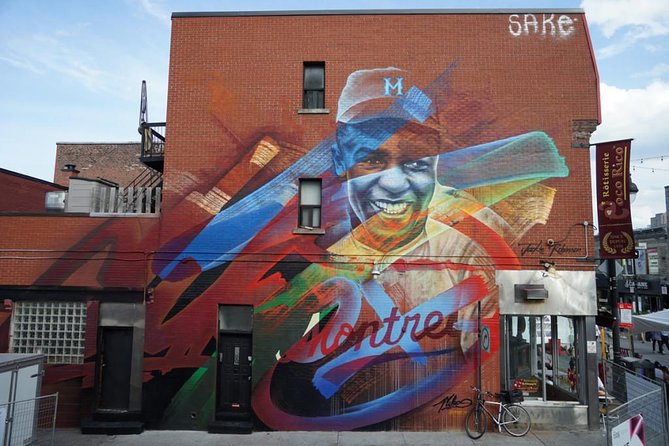
The longest section lasts about an hour and follows Saint-Laurent Boulevard. This is where the walk brings together the area’s immigration story, festival culture, and wide range of artists.
The Main has seen many waves of immigration, and the boulevard became a place where different communities met. The murals around it reflect that shared public space. Some pieces have cultural themes. Some make political statements. Others are simply experiments in color, shape, lettering, or scale.
You will learn about local artists as well as creators from outside Montreal. That balance matters. The tour does not present the city as a backdrop for famous visiting artists only. It shows how Montreal’s own art community helped build the corridor and why the city has become such a strong home for mural work.
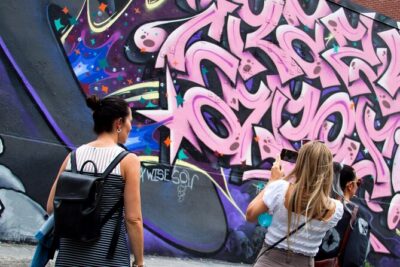
The route includes forms of street art such as wheat pastes, graffiti, and what the company describes as Main classics. The guide may point out work that is easy to overlook, including small installations tucked beside or behind larger pieces. You are not just walking from one postcard wall to another. You are learning to look at surfaces, placement, scale, and changing layers.
The area can also be busy, so the guide’s handling of pedestrian traffic matters. Mel, for example, is praised for keeping the group safe and organized. That practical care is easy to overlook until you are trying to listen beside an active boulevard. A small group helps here. With no more than 10 people, you are less likely to lose the guide or block the sidewalk.
Same city, a different set of walls:
- Toronto Graffiti Alley Street Art Walking Tour with an Expert
★ 5.0 · 55 reviews - Montreal: Guided Walking Tour of Montreal’s Murals
★ 4.8 · 53 reviews - Vancouver Street Art and Craft Coffee 3 Hour Walking Tour
★ 5.0 · 47 reviews - Calgary Street Art & Craft Beer 3 Hour Tasting Tour
★ 5.0 · 44 reviews
Why the small group changes the experience
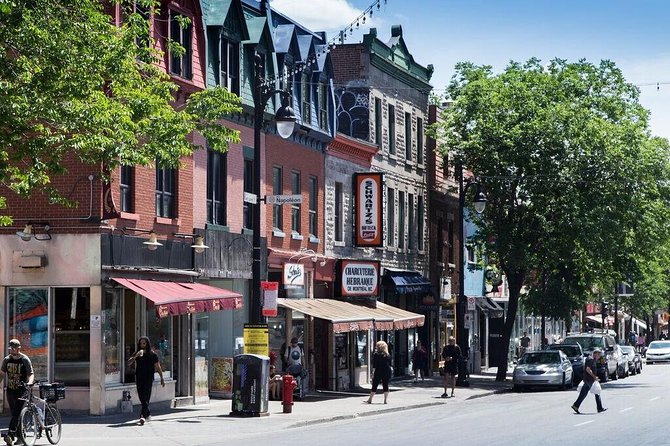
A maximum of 10 people is a useful feature for this particular tour. Street art is often found in narrow passages or along busy sidewalks, where a large group would be awkward. A small group can gather around a detail without taking over the pavement.
It also makes questions easier. If you want to ask why a certain technique was used, how a mural relates to the festival, or whether a piece is local or international, you have a better chance of getting a thoughtful answer. The guides are selected for their personal interest in Montreal’s art scene, and the format gives that interest room to come through.
The many positive comments about Marie, Chris, Mel, Gabriela, Rod, Pax, Jeff, and Rodrigo all point to the same qualities: enthusiasm, clear explanations, attention to the group, and a genuine connection to Montreal. That matters more on a street art walk than a memorized list of dates. The art changes, and the guide needs to respond to what is on the walls and what the group wants to know.
Still, a small group does not mean a private tour. You are sharing the walk with up to nine other people, and the maximum may be reached. The small format improves the experience, but it does not turn the route into a custom art consultation.
What the $30.10 price gets you
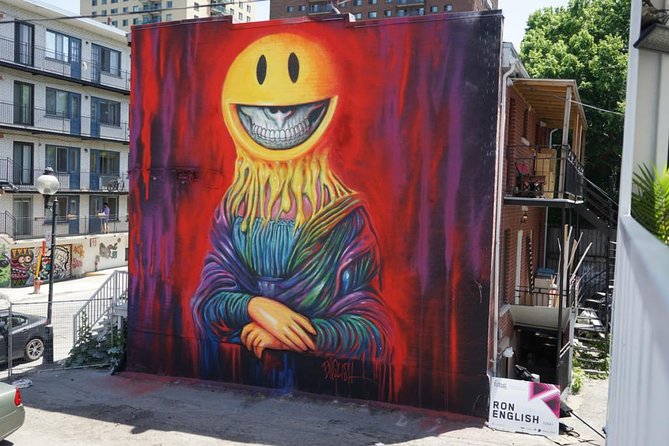
At $30.10 per person, the tour is priced like a modest guided city walk rather than a full-day attraction. The value comes from the guide’s eye and interpretation. You could walk Saint-Laurent Boulevard on your own and see many large murals, but you would likely miss small installations, side-street pieces, and the stories behind the works.
The tour also saves you time. Instead of searching randomly for murals, you follow a planned route through Plateau Mont-Royal and the Main. Two hours is long enough to gain a useful sense of the area without taking over your entire day.
I would consider the price good value if you care about art, neighborhood culture, photography, or seeing a less conventional side of Montreal. It is less compelling if you want a ride, a historical walking tour focused on architecture, or a complete catalog of every mural in the city. No two-hour walk can offer that.
The personal recommendation list adds a little extra value. It includes suggestions for restaurants and bars in Montreal, which is handy because the route ends near Park of Portugal on Rue Marie-Anne. The end point leaves you in an area where you can continue exploring, eat, drink, or shop on your own.
Practical details for the walk
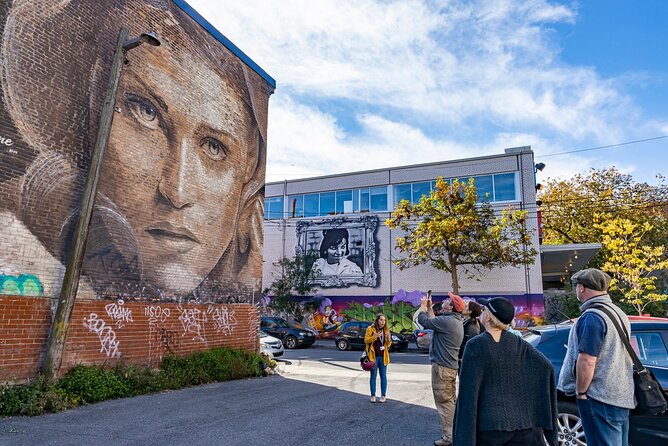
The tour starts at 3526 Boulevard Saint-Laurent and ends at Park of Portugal, Rue Marie-Anne. It is near public transportation, but hotel pickup and drop-off are not included, so you need to make your own way to the starting point.
Plan for moderate walking and continuous time on your feet. One older couple completed the route without trouble, but the tour is still best approached as an active neighborhood walk. Comfortable footwear will make the two hours easier, especially since the route includes back streets, alleys, and boulevard sidewalks.
The activity is offered in English and uses a mobile ticket. Most people can participate, and service animals are allowed. The experience requires good weather, so poor conditions may lead to a different date or a full refund. It also requires a minimum number of participants, and if that number is not reached, you will be offered another date, another experience, or a refund.
Book ahead if your schedule is fixed. The tour is booked about 24 days in advance on average, which suggests that popular dates can fill well before your arrival.
Who will enjoy it most
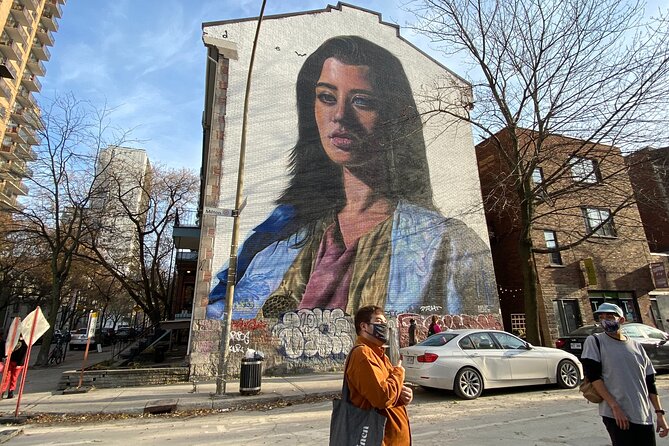
I would recommend this tour to anyone who wants to understand how public art fits into Montreal’s identity. You do not need to know the difference between graffiti, wheat paste, and a commissioned mural before you arrive. The guide explains the forms as you see them.
It is especially good for:
- Art lovers: You get local and international artists, changing styles, festival work, and smaller pieces.
- First-time Montreal visitors: The route introduces Plateau Mont-Royal and Saint-Laurent Boulevard without keeping you in the Old Montreal sightseeing zone.
- Repeat visitors: The art changes as murals fade, new works appear, and temporary installations disappear. A guide can show you something different on another visit.
- Families with older children: One guide made a point of including two young children, who later began spotting street art in other cities.
- Solo visitors: The small group gives you company without the demands of a large group excursion.
- Corporate or school groups: The route offers a clear subject, public-space discussion, and an easy two-hour format.
You may want to skip it if you dislike walking, need a weather-proof activity, or prefer indoor museums. It is also not ideal if your main goal is to see every famous mural. The route offers variety rather than total coverage.
Should you book The Original Montreal Mural Arts Tour?
I would book it if you want a focused, affordable way to see Montreal through its walls. The strongest reasons are the small group, the guide-led explanations, the mix of huge murals and easy-to-miss pieces, and the chance to understand Saint-Laurent Boulevard as a cultural meeting place.
Go early in your Montreal stay if you can. The restaurant and bar suggestions may help shape the rest of your visit, and the walk gives you a useful sense of Plateau Mont-Royal. Leave room afterward to explore near Park of Portugal, since the tour ends in an area worth lingering in.
The one honest limit is coverage. Two hours gives you a strong introduction, not the final word on Montreal street art. If that sounds like the right amount of structure, at $30.10 this is a practical way to see work you might otherwise pass by.
FAQ
How long is The Original Montreal Mural Arts Tour?
The tour lasts approximately two hours.
Where does the tour start?
It starts at 3526 Boulevard Saint-Laurent, Montréal, Quebec H2X 2V1, Canada.
Where does the tour end?
The tour ends at Park of Portugal on Rue Marie-Anne in Montreal.
What areas does the tour visit?
The route includes Plateau Mont-Royal, the Leonard Cohen mural, and Saint-Laurent Boulevard, also known as the Main.
How many people can join the tour?
The tour has a maximum of 10 participants.
Is hotel pickup included?
No. Hotel pickup and drop-off are not included.
Is the tour offered in English?
Yes. The tour is offered in English and uses a mobile ticket.
What happens if the weather is poor?
The experience requires good weather. If it is canceled because of poor weather, you will be offered a different date or a full refund.
New street art tours in Canada
- Vancouver: Street Art & Craft Beer Walking Tour with Tasting★ 4.8 · 14 reviews
- Vancouver: Street Art & Craft Coffee Walking Tour w/ Tasting★ 4.8 · 11 reviews
- Toronto Street Art and Graffiti Walking Tour★ 5.0 · 22 reviews
- Street Art Exploration Game and Self-Guided Tour in Ottawa★ 4.0 · 20 reviews
- All about Montreal’s Murals – Saturday Walking Tour★ 5.0 · 11 reviews
- The Montreal Street Art & Mural Tour★ 5.0 · 17 reviews
- Montreal: Street Art & Mural 2-Hour Guided Walking Tour★ 4.9 · 13 reviews
- Calgary: Street Art & Craft Beer Walking Tour w/ Tastings★ 4.9 · 23 reviews
Montreal Mural Tours, side by side.
The Original Locally Owned Street Art Walking Tour
Read our review →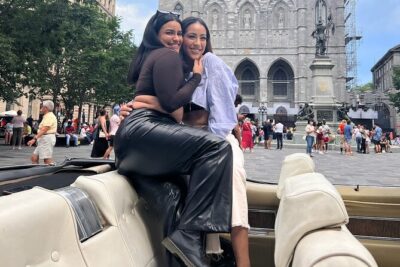
PRIVATE 2-Hour tour of Montréal in Convertible Cadillac + Murals
Read our review →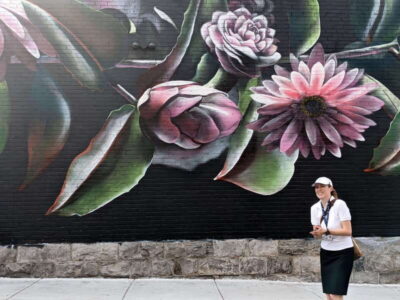
All about Montreal’s Murals – Saturday Walking Tour
Read our review →Lists this wall walk turns up in