
Reviewed · STREET ART WALKING TOURS
Bilbao: Art District Walking Tour
Bilbao’s art story begins well before the Guggenheim. This three-hour walk takes you through old streets, alternative neighborhoods, murals, and local projects before finishing beside the museum’s famous outdoor sculptures. I like that the tour treats the Guggenheim as part of Bilbao’s story, not the whole story.
I especially like the small-group format, which suits a walking tour built around questions and close looks at street art. The stop for craft beer and a snack also gives the outing a welcome local pause. The main drawback is that you do not go inside the Guggenheim, and the route is not suitable for people with mobility impairments.
Key points
- Bilbao before the Guggenheim: Start in one of the city’s oldest artistic areas and learn how local creativity developed before the museum changed Bilbao’s international image.
- Street art with context: Murals and modern pieces are explained through social history, local identity, and everyday life rather than treated as quick photo stops.
- A relaxed three-hour pace: The walk includes plenty of pauses, so you can listen, look closely, and ask questions without feeling rushed.
- A local bar break: Craft beer and a snack are included, adding a simple taste of neighborhood life.
- Guggenheim finish: The route ends with a guided look at the museum’s outdoor sculptures, but the museum ticket is separate.
- Good practical value: At $69, the tour is most useful if you want interpretation, local orientation, and access to areas you might otherwise skip.
Bilbao’s art story starts in La Vieja
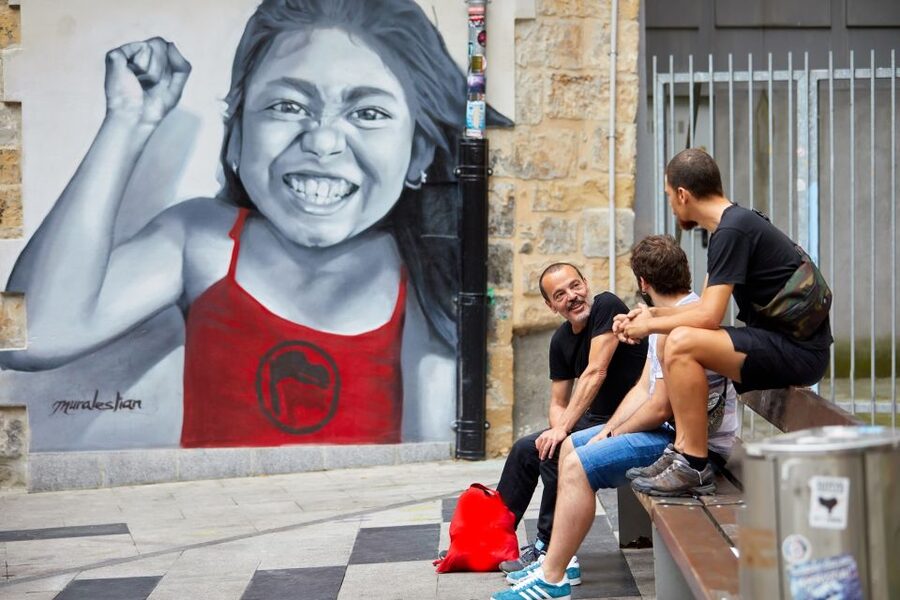
The strongest idea behind this tour is simple: Bilbao did not suddenly become creative when the Guggenheim Museum opened. The walk begins in one of the city’s oldest and most artistic neighborhoods, where older streets meet murals, alternative culture, and new community projects.
That opening matters. If you go straight to the Guggenheim, you see Bilbao’s polished public face. Starting in the older district gives you a better sense of the city’s creative roots and social changes. Your guide sets the museum in context by showing you the local art and neighborhood life that came before it.
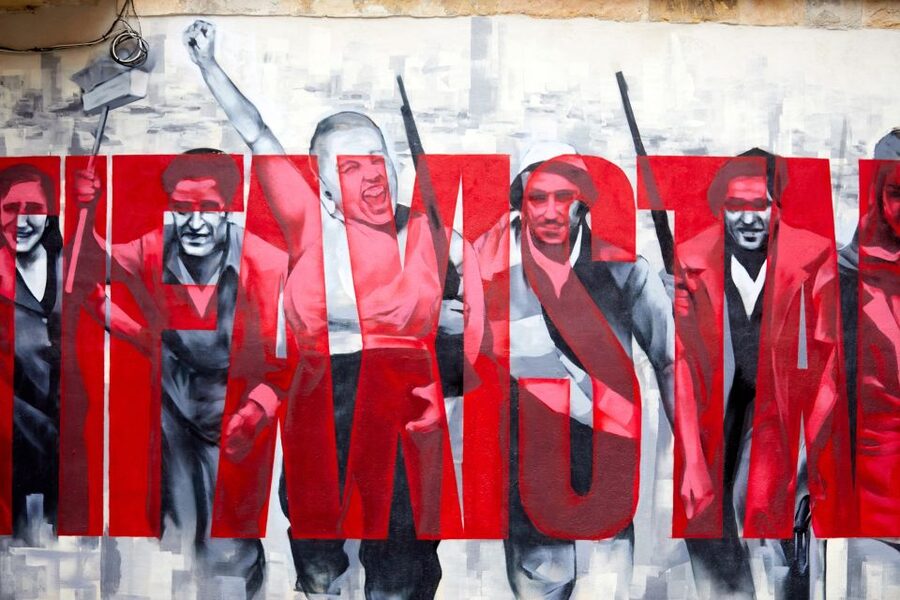
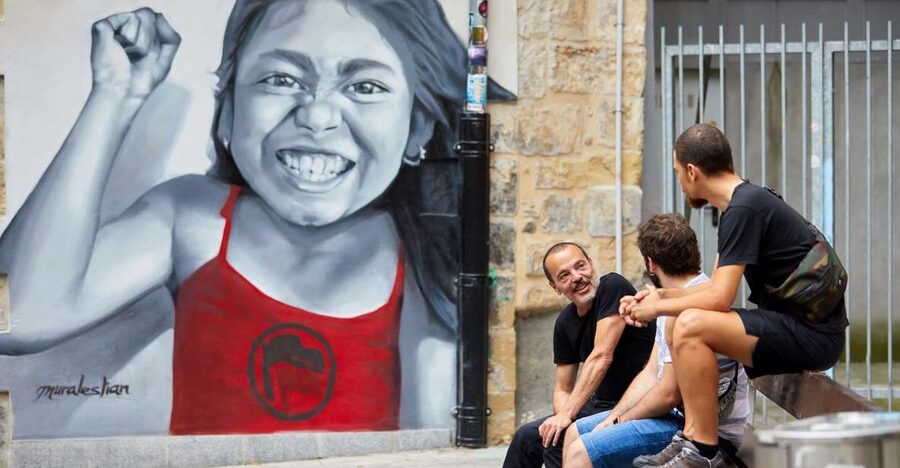
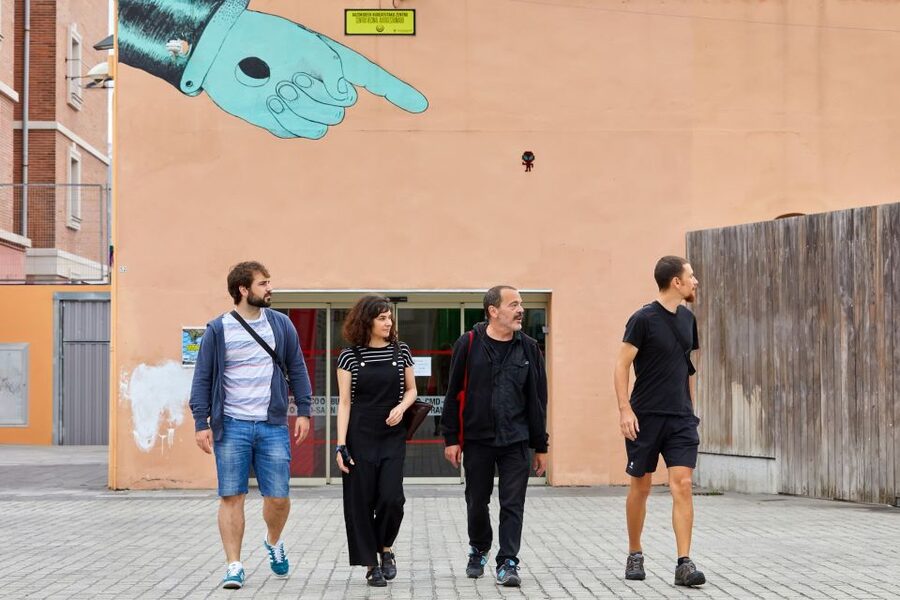
Expect an interpretive walk rather than a formal gallery tour. You will pause at street art, murals, cultural spaces, and other modern pieces while the guide explains what they say about Bilbao. The emphasis is on the ideas behind the work: social criticism, local identity, historical memory, and the way residents use public space.
The exact art you see can change. Street art is not a permanent collection, and outdoor projects may be painted over, altered, or replaced. That is part of the appeal, but it also means you should value the guide’s explanation as much as any single mural.
More Street Art Walking Tours in Spain
- Barcelona: Raval Street Art and Graffiti Walking Tour
★ 4.9 · 60 reviews - Granada: “Street Art & The Caves” Unique Guided Walking Tour
★ 5.0 · 27 reviews - Street Art, Sculptures & Crime Stories Walking Tour – Barcelona
★ 5.0 · 11 reviews
Murals and public art with a local point of view
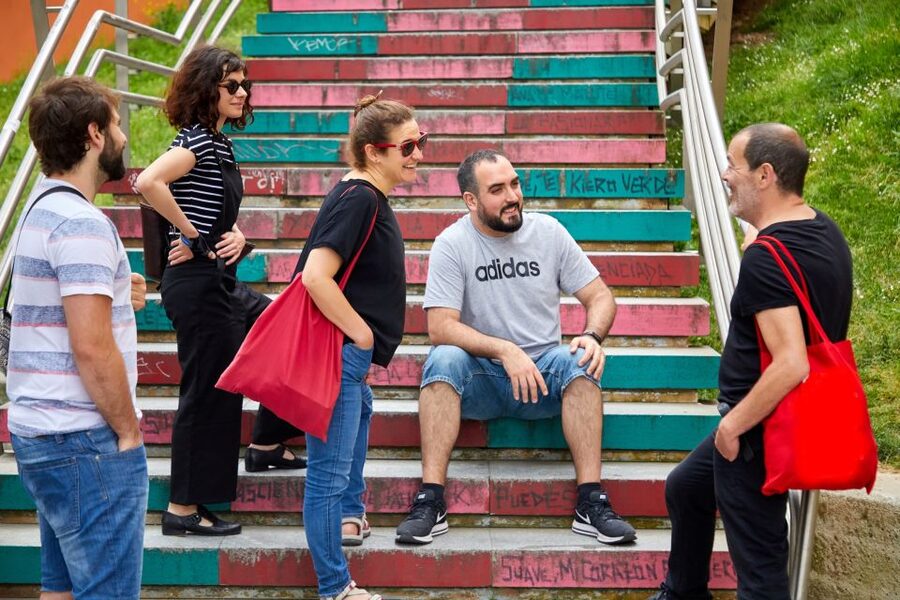
A good street-art walk needs more than a list of painted walls. This one is designed to explain why the work matters. You will hear about the social setting around the pieces and how art has become part of Bilbao’s public conversation.
That approach should suit you if you want to understand the city rather than simply collect photographs. The guide connects modern art to Bilbao’s history, society, and cultural changes. The result is a walk that moves between visual details and larger questions about who a city is for, how neighborhoods change, and how local people express their views.
You may also see local galleries and cultural spaces along the way. The tour description does not promise entry to each one, so think of them as part of the route and discussion rather than guaranteed indoor visits. The focus remains on the streets and outdoor art.
The English-language guide is a major part of the value. The tour is not just transportation between artworks. You are paying for explanation, local background, and the chance to ask about pieces that might otherwise seem puzzling or easy to miss. One guide named in the experience feedback is Txema, who is described as covering not only street art but also Bilbao’s history and wider culture. Guide assignments can vary, so do not assume he will lead every departure.
A walking route that keeps its pace
The tour lasts three hours, which is long enough to cover several areas without turning into an exhausting full-day commitment. It begins at the Tourné Bilbao partner store on C/ de Villarías 1, 48001 Bilbao, and ends in front of the Guggenheim Museum.
That point-to-point shape is useful. You finish near one of Bilbao’s major sights instead of returning to the starting point, so you can continue sightseeing from there. You might choose to visit the museum, look more closely at its exterior, or make your own way elsewhere in the city.
The pace is described as relaxed, with plenty of stops. That is exactly what you want for street art. Walking too fast would reduce the tour to a series of passing walls, while too many long explanations could make three hours drag. The intended balance is a steady stroll with time to stop and listen.
You should wear comfortable shoes and clothes. The route is on foot, and the experience is specifically not suitable for people with mobility impairments. The supplied information does not give a total distance, the number of stairs, or the precise surface conditions, so anyone with walking concerns should ask the provider before booking.
The craft beer and snack break
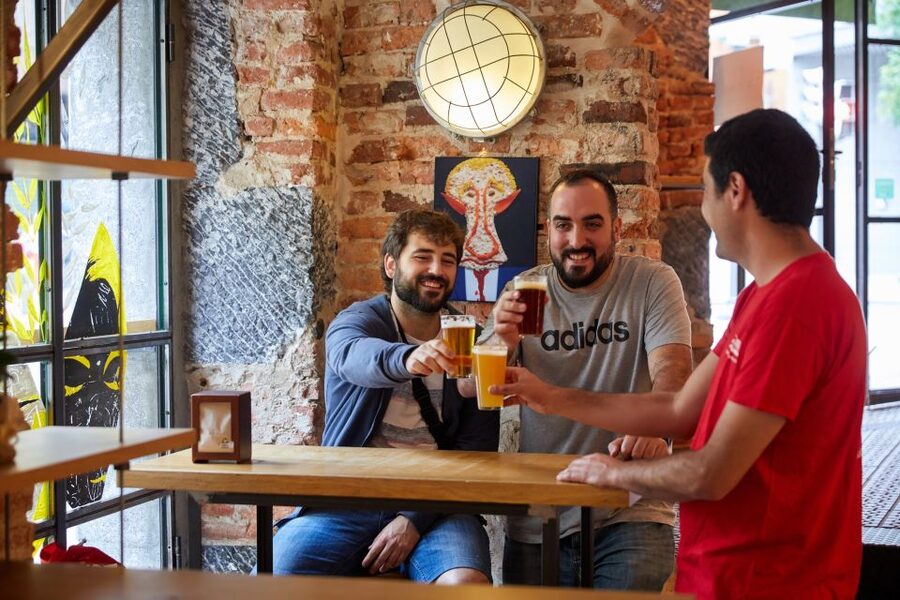
The local bar stop is a small detail, but it improves the shape of the outing. After looking at murals and discussing social history, you get a chance to sit or pause with a craft beer and snack while taking in the neighborhood atmosphere.
This is not presented as a meal, so do not book the tour expecting lunch. It is a short refreshment break included in the price. The value is partly practical, since it gives you time to rest, and partly cultural, since a bar offers a more ordinary view of Bilbao than a museum or landmark does.
If you do not drink alcohol, the supplied details do not specify an alternative beverage. You may want to check with the provider in advance. The same applies to dietary needs, since the snack is included but its contents are not stated.
The stop also helps keep the tour from feeling like a lecture on pavement. You get a moment to chat with the guide and other people in the group, then continue toward the Guggenheim with the earlier parts of the city still in mind.
Same city, a different set of walls:
- Barcelona Street Art and Graffitti Bicycle Tour
★ 5.0 · 361 reviews - Madrid: Street Art Tour with Local Graffiti Hunter
★ 4.8 · 270 reviews - Street Art Guided Tour in Madrid
★ 5.0 · 175 reviews - Barcelona Street Art Tour with Exclusive Artist Studios Visit
★ 5.0 · 152 reviews
Reaching the Guggenheim and its outdoor sculptures
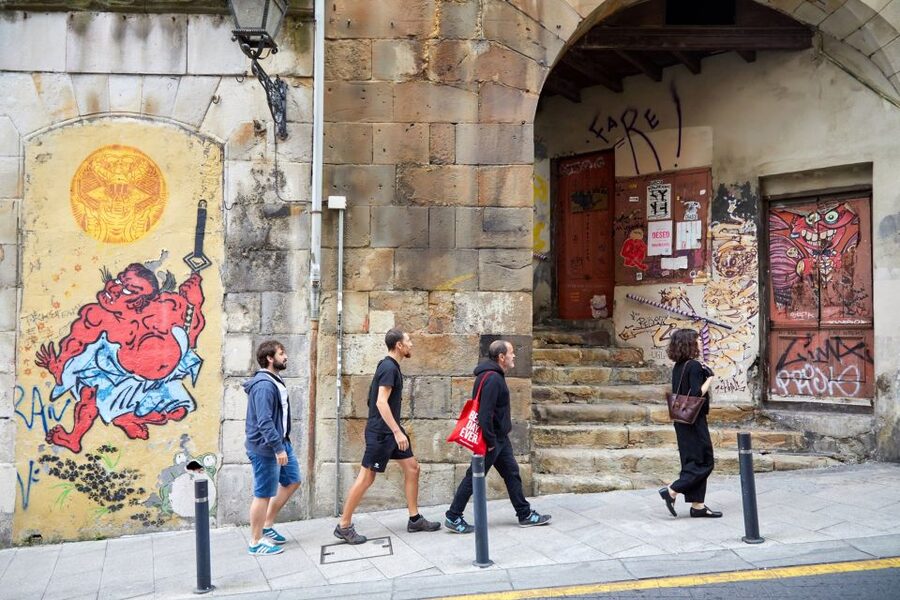
The final section brings you to the Guggenheim Museum, one of Bilbao’s best-known cultural landmarks. Here, the guide explains the impressive sculptures outside the building and shows how the museum fits into the city’s modern art story.
This is a useful ending because it links the alternative neighborhoods to Bilbao’s international cultural image. You have already seen art tied to local streets, community projects, and social themes. At the Guggenheim, you encounter large-scale public art and a landmark known around the world.
The outdoor sculpture guidance is included, but the museum entry ticket is not. That distinction matters when comparing the $69 price with a regular museum visit. You are paying for a guided city walk, street-art interpretation, the bar stop, and the outdoor sculpture discussion. You still need to buy a separate ticket if you want to go inside.
The tour does not promise a guided visit through the Guggenheim’s galleries. If the museum is a top priority, plan your indoor visit separately. Ending outside may be ideal if you already have a museum booking, or if you want to decide later after hearing more about Bilbao’s art scene.
What $69 gets you
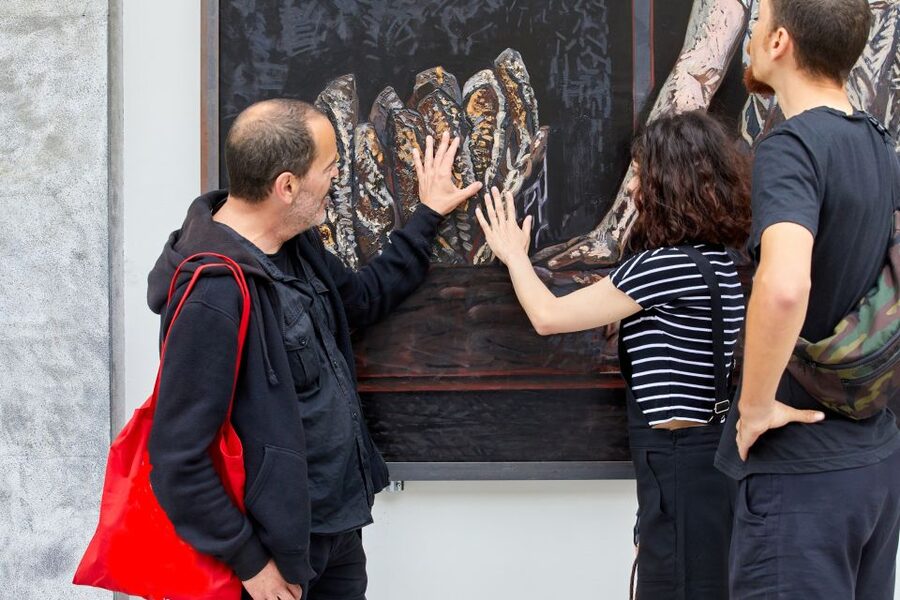
At $69 per person, this is not the cheapest way to walk around Bilbao. You can see public art without a guide, and the route does not include museum admission. The question is whether the interpretation and local access justify the cost for you.
I think the price makes the most sense for three types of people. First, it suits anyone visiting Bilbao for the first time who wants a clear introduction to the city’s art and social history. Second, it works well for people who enjoy street art but want help understanding the messages and local setting. Third, it is useful if you prefer a small-group experience to exploring alone with a map.
The included craft beer and snack add some value, but they are not the main reason to book. The real purchase is the guide’s knowledge of the neighborhoods, public art, and cultural projects. A strong guide can point out details you would walk past and explain how the city changed over time.
The experience has earned a 4.8 rating from 27 reviews, with repeated praise for its clear explanations, good pace, and access to areas people might otherwise miss. The most consistent strength is not a single landmark. It is the combination of local streets, art, and social context.
Who will enjoy this tour most
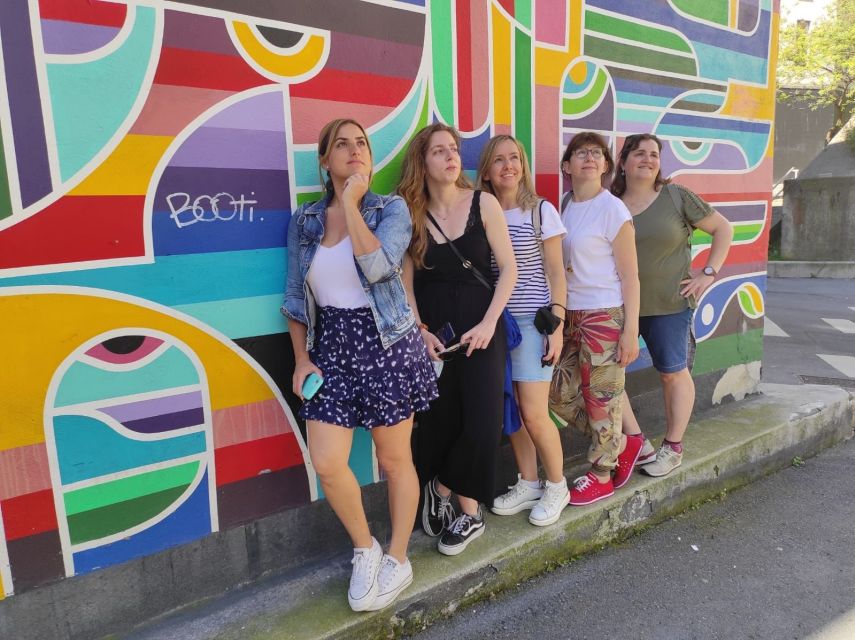
You will probably like this walk if you want to see a less polished side of Bilbao. It is a good match for curious visitors who enjoy murals, modern art, local culture, and conversations about how cities change.
It also suits you if the Guggenheim is not your only interest. The walk gives you a fuller picture of Bilbao by placing the museum alongside older neighborhoods and community-led cultural activity. You get both the city’s everyday side and its internationally known art destination.
The tour may be less suitable if you want a museum-heavy experience, a short highlights walk, or a route with no uneven walking. Since entry to the Guggenheim is not included, people mainly interested in its galleries should reserve museum time separately.
Families, couples, and solo visitors can all find value here, but the supplied information does not give a minimum age or a child-specific format. If you are booking for children, confirm the group arrangements and whether the pace suits them.
How to fit it into your Bilbao plans
The ending at the Guggenheim makes the tour easy to combine with other plans. You could schedule museum entry after the walk, but leave enough time between the tour’s expected finish and any timed ticket. The tour is three hours, and walking tours can occasionally run a little longer if the group has questions.
Another option is to visit the Guggenheim on a different day. In that case, the tour becomes an introduction to Bilbao’s art scene, and you can return to the museum with more context. You may notice connections between the local projects discussed on the walk and the larger public art around the museum.
Because the tour starts at C/ de Villarías 1 and ends elsewhere, plan your route to the meeting point before setting out. You do not need to arrange transport during the tour, but you should allow time to arrive at the starting address without rushing.
The reserve-now, pay-later option and free cancellation up to 24 hours before the tour give you some flexibility. Those policies are useful if your Bilbao plans are still shifting, though you should check the booking conditions for your chosen date.
My call: book it for context, not museum entry
I would book this tour if I wanted Bilbao explained through its neighborhoods, murals, and people as well as through the Guggenheim. The small-group format, relaxed pace, English guide, bar stop, and outdoor sculpture discussion make it a well-shaped introduction to the city’s creative side.
I would skip it if I only wanted to enter the Guggenheim or take a quick photograph outside. Museum admission is not included, and the tour spends much of its time in older and alternative areas rather than inside a major collection.
For the best experience, wear comfortable shoes, arrive ready to walk for three hours, and treat the Guggenheim as the final chapter rather than the main event. If that sounds like the Bilbao you want to meet, $69 is a reasonable price for the local context you receive.
FAQ
Where does the Bilbao Art District Walking Tour begin?
The tour begins at the Tourné Bilbao partner store at C/ de Villarías 1, 48001 Bilbao.
Where does the tour finish?
The walk ends in front of the Guggenheim Museum.
How long does the tour last?
The tour lasts three hours.
What language is the tour conducted in?
The live tour guide conducts the experience in English.
Is entry to the Guggenheim Museum included?
No. The tour includes a guided explanation of the Guggenheim’s outdoor sculptures, but the museum entry ticket is not included.
Is food or drink included?
Yes. The tour includes a break with craft beer and a snack at a local bar.
What should I wear or bring?
Bring comfortable shoes and wear comfortable clothes suitable for a three-hour walking tour.
Is the tour suitable for people with mobility impairments?
No. The experience is listed as not suitable for people with mobility impairments.
New street art tours in Spain
- Small-Group Graffiti Tour and Workshop in El Carmen★ 5.0 · 2 reviews
- Bilbao Urban and Street Art Walking Tour★ 5.0 · 2 reviews
- Barcelona Street Art, Graffiti and Tapas Tour★ 4.0 · 5 reviews
- Salamanca: Private Guided Street Art Walking Tour★ 5.0 · 2 reviews
- Private Barcelona Street Art Tour★ 5.0 · 2 reviews
- Barcelona | StreetArt Bike Tour Moco Museum★ 4.6 · 13 reviews
- Madrid Street Art Tour (Malasaña Chueca Gran Via & Lavapies)★ 3.5 · 8 reviews
- Málaga: Street Art Tour in the Soho District★ 5.0 · 4 reviews
Street Art Walking Tours, side by side.

Naples Spanish Quarters Walking Tour Street Art, Folklore & Sweet
Read our review →

Brooklyn Graffiti & Street Art Walking Tour in Bushwick
Read our review →

Lists this wall walk turns up in